Evolution of comfort food.

A few days ago it was gray, rainy, chilly and no matter what there thermostat said, I could not feel warm.   Peering into the refrigerator, I could not find anything that I wanted to eat and I did not want to cook.  Comfort food was in order, something basic: grilled cheese and tomato soup.

That got me thinking about why grilled cheese and tomato soup was so appealing.  I realized that it was likely because that was comfort food when I was a child–home from school with a cold, or sometimes, just a treat.

I did fix myself a grilled cheese sandwich and tomato soup, and it was wonderful–just what I needed.  Munching away, I started considering, even though this was grilled cheese and tomato soup (our of a can), how different it was from what I had as a child.

Growing up on a farm in the country we were pretty self-sufficient: raised and butchered our own meat, curing our own ham and bacon, canning vegetables, raising chickens for our own eggs, and milking cows so that we had our own butter, milk and cream.  I grew up with home-made bread, cakes, pies as a routine thing.   From that vantage point, “store-boughten” was a treat.

One of those treats was a grilled cheese sandwich made with American cheese and something like Wonder bread–so it all squished down flat under the bacon press.  Heaven was to have that accompanied by a can of Campbell’s cream of tomato soup–yes, the condensed stuff.

Given the home-cured country ham, bacon, and good meats (beef, pork, and maybe even lamb, with some rabbit and maybe venison) a treat was a bologna sandwich!  Extra special if fried.  Probably almost anything that came out of a tin can that required a can opener, and did not come out of a Ball/Mason jar would have been considered a real treat.

The things that came out of the Ball/Mason jars were luscious halves of peaches, whole tomatoes,  pears, apple butter…and I did not appreciate them then–they were just food, nothing special.  Well, how things do change.

Now, even though I admit to really liking mortadella, and having just had a grilled cheese sandwich with cream of tomato soup for comfort food–my idea of quality of comfort food has changed a lot.

My grilled cheese sandwich was made with excellent imported, firm, nutty Swiss cheese, with bread sliced from a whole loaf of Italian bread.   That bread was lightly brushed with extra-virgin olive oil, almost like was done in my childhood, put onto a cast iron griddle and carefully browned on both sides.  Lovely, crunchy on the outside, melted cheese oozing with every bit, and delicious.

My tomato soup, admittedly, did come from a can but what a difference from condensed soup.  It was Progresso chunky tomato with basil, not cream of tomato, but really pretty good for soup out of a can.  I did, however, want cream of tomato soup.  I put half the soup into the refrigerator to be used another time, and after heating the other half in the microwave, I added two teaspoons of heavy cream, and some fresh (frozen) basil to it.

I was quite happy with my comfort food–but I did have to reflect on how my taste has evolved.  The original American-cheese, Wonder-bread sandwich never even occurred to me; no did Campbell’s condensed cream of tomato soup–yet my choice was cream of tomato soup and a grilled cheese sandwich, but such a difference now.

This made me think of other differences then and now.  When I first left the farm and went to the city, I was amazed at “city” or deli ham…thought I liked  that better than “country ham”.  Living alone and cooking for one, I even used mac ‘n’ cheese from a box–very different from what I had grown up with.  I was so thankful to be away from the farm, to not have to milk cows, churn butter, and make cheese.  Now, I seem to  have come back to where I started–I want to grow things, buy from the farmers’ market, and will search out those things that I took so much for granted as a child.


Your own fresh herbs.

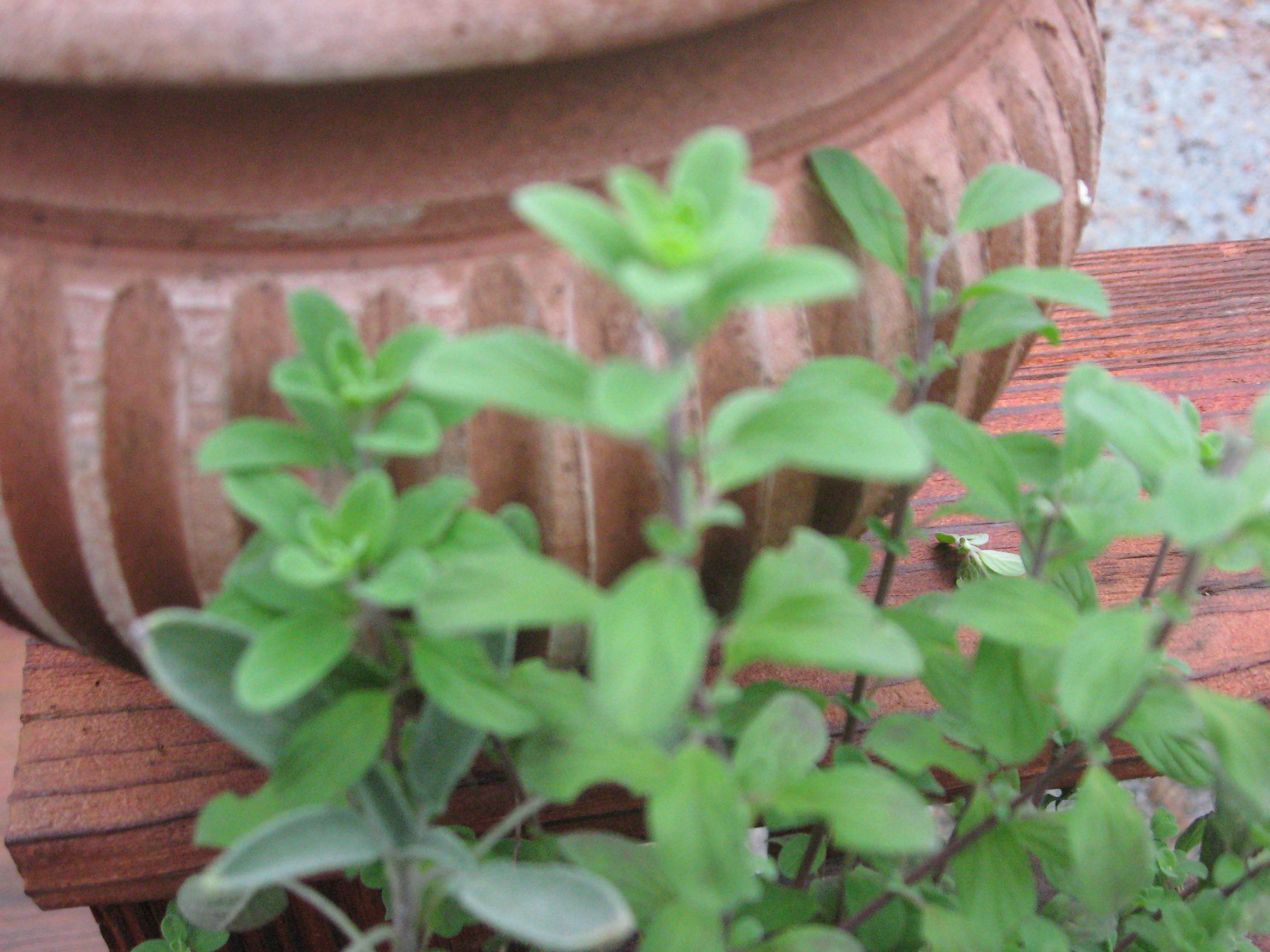
Yes, I digress from actual in-the-kitchen cooking, but it’s the time of the year when the seed catalogs have started to appear in my mailbox, and the birds are beginning to suggest springtime, too.  It’s time for wishful thinking–and ordering seeds and/or plants.  There are so many herbs available that you won’t necessarily find in your local garden center–they will have the basics, and probably lemon thyme, and other flavored thymes.  Fresh herbs are one of the easiest ways to keep your cooking (even if it’s for more than one) exciting and healthy.  I’m not going to suggest that you replace salt with herbs (more on salt a bit later)–just use it judiciously with the fresh herbs.

Even though I purchase fresh herbs from the market during the winter and use some dried herbs, there’s nothing like being able to walk into the garden our even just out onto the deck and snip what herbs you want right now.  You are not in the frustrating position of not having the herbs that you need whenever you want them.  Having them readily available frees you to experiment depending on your mood, or whims as you cook.  Sometimes I don’t know what I want to use until I’m actually smelling the herbs as I brush against the plants.

Herbs are easy and fun to grow.  If you don’t have garden space, you can grow them in containers.  One fairly large pot can be used to grow several herbs, and has the advantage that you need to water less often than if you put your herbs in smaller containers.   I like larger containers with several herbs grouped together for several reasons:  I need to water less often, and I don’t have to be so concerned about them blowing over.  When you plant herbs together, you  do need to consider the moisture and light requirements of the herbs planted together.  Basil and oregano are not likely to be happy pot-mates as they require different moisture levels to be happy.  Most herbs like lots of sun, but there are a few that you may need to have in partial shade or shade so you’ll need to consider that as well.

When I say a “fairly large” container I am think about a three- to five-gallon container.   Pot sizes are usually given as the diameter at the top–so a 4-inch pot would be that wide at the top, possibly tapering to smaller diameter at the bottom.  The larger the diameter of the pot, usually the deeper the pot, so by the time you have a wide surface, say 14 to 16 inches, at the top, you may have a pot that is deeper than you really need for herbs, so don’t waste the extra potting soil!  Use some inert filler in the bottom of that huge pot so that you are using only the amount of soil needed.  Many herbs really need only about  8 inches of depth.   The old Styrofoam peanuts, for example, can be used (newer ones are biodegradable and will not last in the pot).  In order to avoid having to collect them when I need to change soil, I put them into old panty-hose (which take years to break down).  You could also use soft-drink cans, turned on-end, and upside down in the bottom of the pot–just be sure not to interfere with the drainage of your pot.  Because my deck is elevated and I don’t want to have to worry about pots blowing around, I will sometimes use bricks or rock to fill the bottom–just making sure that I can move it if needed.

A good place to start your herb gardening (container or otherwise) is with the basics that you use most often.  For me that is rosemary,  marjoram, Greek oregano (Origanum vulgare hirtum), Syrian oregano (Origanum maru), sage (Salvia officinalis, ‘Extrakta’ or ‘Berggarten‘), French or summer thyme (Thymus vulgaris ‘narrow-leaf French”, summer savory, and French tarragon (Artemisa dracunculus sativa), Thai basil, globe basil, bay (Laurus nobilis), chives, flat-leaf parsley, mint, and cutting celery.   Since you want only one plant of each, it’s probably best to buy plants rather than start from seed.  You can find herb plants at your farmers’ market in the spring, or at the garden center.

I will admit to being a bit of a snob about my herbs–I do want to know exactly what I’m getting, as you can see from the botanical names included with the list above–at least for some herbs, really as many as possible, but especially for bay and for French tarragon.  I don’t plant lemon thyme, et cetera, because I feel that the “citrus” part of the thyme cooks off quickly, so I prefer to add the citrus by using juice or zest of the citrus.   I don’t want Russian tarragon because, to me, the flavor is harsh–just not what I want from tarragon.  The same principle holds with bay–the California bay (Umbellularia californica) is strongly flavored, but  lacks the complexity of the Lauris nobilis or true bay.

Tarragon is another herb were it pays to be particular–it must be from cuttings, as true French tarragon does not produce viable seeds.  The seed packets of “tarragon” are a relative, but lack the finesse of French tarragon.   Other herbs that I’ve listed I like because of particularly high essential oil content, so more flavor.   Once you’ve got the basics, you’ll probably find others that you want to try:  I’ve added shiso, epazote, Spanish tarragon (Tagetes lucida), and given a catalog, I’m sure I can find many others I would love to try.

I generally do NOT combine annuals and perennials–I don’t want to disturb well-established roots of the perennials to remove or add an annual.  one of my containers is likely to contain sage for a nice tall plant with lovely grey-green foliage, oregano, thyme, and perhaps some chives in a 12- to 14-inch pot.   Rosemary can become quite bushy and makes a good tall plant for another container.  My bay gets its own pot, as I want it to be large and tree-like.

Cutting celery is an herb of which I’ve grown particularly fond–it does not head, and yet can give me fresh celery flavor for salads, soups, and the stems even add a bit of crispness.  It can grow with dill, chives, Vietnamese coriander, or stevia, for example.  Parsley usually get a pot to itself.  Cilantro, which bolts easily, gets a 6-inch pot or an area in a planter which gets sequential plantings all summer.   Most dill is not suited to containers as it tends to get huge, and develop a tap root; however, there are a few “dwarf” varieties (Fernleaf being one of those) which can be grown in a container.

Mint must have more moisture than these other herbs, so it gets its own separate pot, perhaps sharing with lemon balm (Melissa officinalis) usually placed out of the blazing summer sun.  My wish list for this summer’s herbs is not complete yet…there are more seed catalogs to go through yet.

It does take a bit of effort to grow herbs: you’ll need to water them, and do some mid-season fertilizing, but it is well worth the effort.  The other thing that you need to do is to keep herbs pinched and trimmed in order to have them bushy and productive.  You’ll not want them to bloom as the flavor is not as good after blooming, so pinch and trim.  To a large extent that happens as you harvest for use.  There are times when I just go out and give them a “butch”.  That’s when you make an herb vinaigrette, share with friends or purée to use under the skin of a roast chicken!  You can also include the leaves in a salad of mesclun or your favorite greens.

Having your own herb garden keeps you supplied without the expense and (even as manyas I used) waste with the packaged supermarket herbs. It also provides a sensual pleasure just to smell them as you walk by, or to deliberately brush through them, just for the heavenly aromas they give off.  Nothing is much more exciting than seeing those first leaves as they come back in the spring, announcing a whole season of wonderful tastes and smells–time to have things just a son goût even if it is single-serving cooking for one.

House cleaning–a digression.

My apologies for the rather large hiatus between posts.  End of the year got a little hectic and some things just kind of got put off–among them cleaning and writing.

While taking a break from working on my ASI indexing examination, tax preparation, and course-preparation for the up-coming term,  and contemplating the need to get out the vacuum cleaner, it occurred to me that if you’re cooking for one, you are most likely cleaning for one, too.  Now house-cleaning is not one of my preferred activities–I’d rather be watching birds (Project Feeder Watch count), or cooking, or reading one of my favorite British or Alaska mysteries, or just having quality time with the cat.

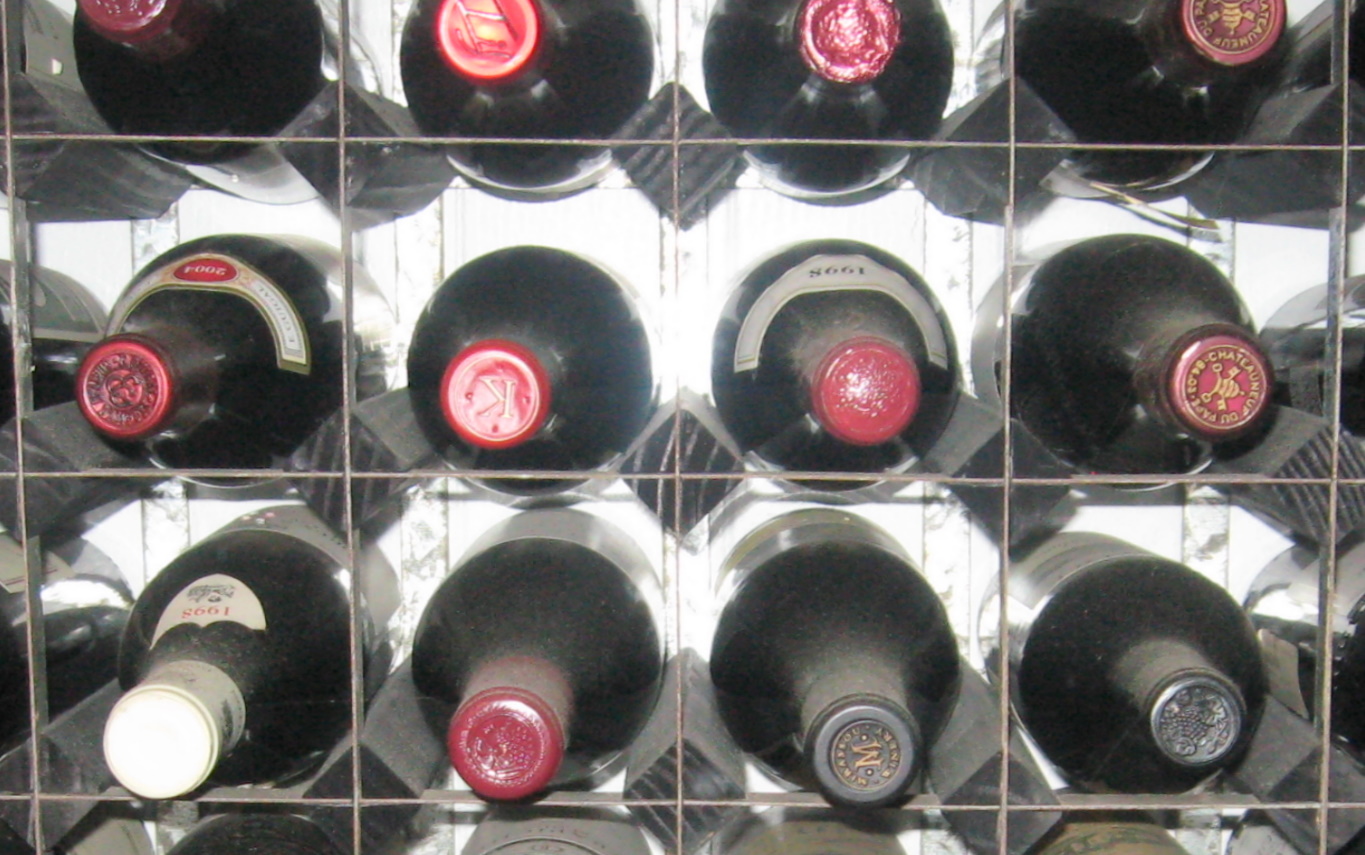
I think that solo dwellers who need to do single-serving cooking, probably also have some issues with cleaning.  I’m a renter, which means that I don’t have lots of space, so my wine collection shares my living-room with me and with the cat.  Now dusty wine bottles may be perfectly suited to the wine cellar in a fine old family manor  in the latest British mystery, but they don’t do a lot for decor in my living room.

Predictably, I have to dust them–and   that is certainly a house-cleaning activity.  As much as I love wine, I don’t love keeping the bottles somewhat dust-free.  To add to the issue, I’m allergic to house dust so stirring the stuff up makes my eyes itch, and my face break out–a sure sign that serious cleaning must happen.  Needless to say, I’m looking for an “easy” way to address this problem, as well as the blades of the ceiling fans and other high places that are generally out of my reach without a ladder.

The vacuum cleaner was not the solution.  As you can see, each bottle has its own little cubby-hole, and in order to use the vacuum cleaner, I’d have to lift each bottle out individually, or remove all from one row so that I could vacuum the next row….et cetera.  Not a viable solution to someone who does not have the support staff of  Martha Stewart, and who does not have a frank OCD. I’ve used torn-up T-shirts for dust clothes–maybe rags is a more suitable term–but again, each bottle had to come out individually, and I’d rough up the corners of the labels.

I’ve pondered the cleaning products in the supermarket aisle  often, and not given in to the lure of the latest product because I have to wonder what chemicals are added to get all this super-duper dust attraction or magnetism.  My better sense tells me that I’d likely be helping the environment and my budget if I did not use some of these products, but  stuck with  things like white vinegar and the like that my grandmother used.  Then a little voice says “but your grandmother was not dusting wine bottles, was not working outside the home….well, you can work through that rationalization for yourself.

I succumbed to trying a Swiffer Duster.  It took seeing the one with the handle that extends, meaning that I could reach all the window tops, the ceiling fan blades and not have to tote out the stepladder.  I discovered that this nice fluffy thing did a great job at getting down the cobwebs, and dusting the ceiling fans, lamp shades, picture frames, and even the fake sunflowers in that huge vase sitting on the floor.  Here was a product that made my cleaning easier (not that I’m always “swiffering” around the house–don’t get me wrong).

The dusters did not turn me into someone who would rather clean than do all the other things mentioned above.  It did make cleaning easier.  I might not have kept buying the dusters, but I discovered that the duster was just the right width to slip into each little wine-bottle cubbyhole and at least remove a lot of dust without having to do a bottle-by-bottle dusting, and the fluffy duster did not catch on the wine labels!  Now  I don’t procrastinate so long between dustings.   I still wonder about what chemicals are used, and consider that while I’m using  the dusters, but I’m in love with the fluffy little blue thingy that fits onto that extend-able handle.  So the barrier was broken–a new cleaning product entered my house.  I find I’m much more likely to pick up that duster and use it than I was to even contemplate dusting each bottle the other way.

Well, sharing my domicile with a cat is another “problem”–the beast (an affectionately used term) sheds.  So there is cat hair in the corners.  Yes–you say that the vacuum cleaner takes care of that.  Very true–but I have to get it out and use it.  I’m willing to do that about every ten days, but what about in between those times? The cat does not shed on my schedule.

Well, I discovered the Swiffer Sweeper (while contemplating the price of a new traditional dust mop).  Does a great job on cat hair, dust bunnies and other household things on the floor.  It also goes under the bottom row of wine bottles without jostling them around!  So, despite my thoughts about the chemicals, et cetera, I have “dust mop” and  dusters in the house.  It is much easier to toss that little square of stuff with all the dust attached, rather than having to wash the  traditional dust mop every once in a while. It’s one of the “perks” of an allergy to house dust that you have to clean the cleaning equipment every so often.

So, I’ve given in to the lure of easy cleaning and chemical assistance with something as mundane as dusting–what next? Enough with the cleaning–time to get back to cooking for myself and the cat!

A favorite herb or spice?

I was recently faced with answering a question on an application for employment that really made me think about herbs and spices.  The question:  What is your favorite spice or seasoning, on what do you use it?  My first inclination was  herbs and spices, and I use them on everything, but I decided that was inappropriate, and gave some thought to the matter.

Well, I’ve decided that I cannot say that I have a favorite herb or spice!  My difficulty in answering this question is that I  love most herbs and spices (not really sure about asafoetida yet), and that my preferences change seasonally, and even with the weather within any particular season.   I likely will not season haricots verts in the middle of the winter as I might with the first fresh ones off the bush in the spring. Crisp autumn weather leads me to use “warmer” herbs and spices than during the heavy, humid summer heat, when I want cool and refreshing seasoning.

As a person who cooks for one and sometimes has several servings of the same vegetable, fruit or meat in a relatively short period of time, I find that one of the best ways not to get that “leftover” flavor is to use different herbs and spices with the same vegetable or meat at different times.  When I come home from the farmers’ market with a huge bunch of greens, I may prep them so that I can use them in multiple ways: first, I may sauté some simply seasoned with good extra-virgin olive oil salt and fresh-ground black pepper.  The second time I use them,  I may add onion, or sweet peppers, and if there is a third use, maybe more robust seasonings like garlic, crushed red pepper flakes.  Sometimes I open up the drawer where my herbs and spices live and just open jars and sniff to determine what I’ll use.  I suppose that I have to admit that even mood affects how I season things!  (I have the same difficulty answering the similar question about what is my favorite color, and to me herbs and spices are very much like painting with a palette of colors.)

There are classic pairings, such as basil with tomatoes, which are wonderful, but fresh sweet marjoram is also wonderful with those luscious summer tomatoes; so is Greek oregano and Syrian oregano, though I suppose I tend to use those even more in the winter or at least cooler weather. Classic combinations not withstanding, I love the process of seasoning my food–of smelling the individual components and blending, and tasting the results, and that is a large part of  cooking for me to fit my taste for a particular ingredient, or season, or mood.  Seasoning can make cooking for one a delight–a son goût!

I’m left without an answer to the question that started all this!  In looking at my selection of herbs (dried in the drawer, or fresh in the pots on my deck) I simply cannot say that there is a favorite.  I have very few prepared mixes of herbs or spices, usually choosing to do my own blends.

I’m not intending to denigrate pre-mixed seasonings, at all, if they are made with quality ingredients and are not mostly salt or sugar.  There is one  mixture of herbs that I do purchase blended, and that I do use when I find myself unable to make up my mind or am really in a rush:  herbs de Provence.   But I’m not willing to say that is my favorite–it’s a regular potpourri of herbs that is useful for meats, vegetables, soups, and stews.  My favorite herbs de Provence I order, as I do almost all of my herbs and spices, from Penzeys Spices. It reflects an admixture of French and Italian herbs that must hark back to Roman influences:  rosemary, fennel, thyme, savory, basil, tarragon, dill weed, Turkish oregano, lavender, chervil, and marjoram.    What’s not to love in that mixture!

I’m sure that good seasoning mixes do fill a niche for many home cooks who don’t love the seasoning process as much as I do, and have a definite place in their kitchens.  I just love the sniffing and tasting part of food preparation.  Penzeys Spices has a great selection to browse if you are finding your way and learning about herbs and spices outside the basics.  You will find lots of salt-free seasoning mixes to try.  That’s one of the good things about cooking for one, it’s definitely a son goût!

Serves how many?

I love cookbooks.  I love to read cookbooks just to get ideas, but one of the most frustrating things is finding a recipe that I think looks wonderful, but it’s for 6 people.  Sometimes it’s something that will freeze well, so I can make it and not have to eat it for a week.  On the other hand, since I am cooking for one (and the cat) I don’t want to pay for the ingredients to make servings for six or eight people, or have so much in the freezer.  (More on freezer use later.)  The dilemma for the single cook is scale the recipe down, not make it, or eat it for a week.  Personally I don’t do left-overs well; I guess I’m easily bored or they begin to taste like something that’s been in the fridge for five days!

Downsizing recipes can be treacherous, especially in going from six to one–the consistency can come out wrong, the seasonings may not be right.  If you are determined to do THAT recipe, perhaps you need to invite friends.

You’ve gotten ideas from those huge recipes that you can use for one.  The problem now is that you need to get away from depending on a recipe slavishly.  You need to move on to improvisation and perhaps some food science to help understand how some specific ingredients react to the application of heat, i.e. cooking.

First improvisation is a must for cooking for one–and it’s not hard–it’s just taking that first step that seems difficult if you’ve always used recipes. A book that I’ve found immensely useful is How to Cook Without a Book by Pam Anderson. This author has provided a wonderful review of various cooking techniques as well as recipes in ratios that promote improvisation of various types of dishes:  stews, salads, an such.  While the proportions given in this book tend to be for 4 people, you can scale them down to something manageable for one person.

I have to admit to being a Kindle addict.  I admit this because I might not have found this cookbook had I not been browsing the Kindle store.  The book is  Ratio: The simple codes behind the craft of everyday cooking byMichael Ruhlman.

My grandmother taught me to cook and one of the things I remember learning from her was the “four parts cake”–frequently referred to as “pound cake” for equal parts of eggs, flour, sugar, and butter.  I was taught to vary the size of this cake by starting with the eggs.  You want a small cake, you use fewer eggs, and that “egg weight” determined the weight of each the other three ingredients.   It was many year before I discovered that this recipe was actually in something published in a cookbook.  While browsing through La Cuisine, by Raymond Oliver I found a recipe with the title pâtè à quatre-quarts which translated as “four parts cake”.  In the English edition this was translated as pound cake, but it was the French title that caught my eye.

In a manner reminiscent of that cake, Ruhlman gives recipes by proportions so that they are easily sized up or down.  This book gives ratios for batters, doughs, stocks and sauces, roux, and even sausages and many other things in ratios so that you have the base ingredients, and then add things like seasonings or “minor” ingredients (seasonings, et cetera) in order to have a finished dish.  This is the kind of technique that can allow cooking for one.

If you don’t want to contemplate doing the math of the ratios (and have an iPhone), there is an app for that.  The cookbook by Michael Ruhlman is now an iPhone app that will help you do the calculations.  Makes me wish I had an iPhone!

Hello world!

If you are reading this, I presume that you’ve read my Musings on Dining Alone and have decided to make an effort to cook yourself, to please your palate, be healthy, and even help on the budget a bit.  Whatever the reason, I’m glad you’re here.

I’ve been cooking for myself and the cat for more years than I am going to admit to publicly.  I’ve decided (after a long discussion with the cat) to hop on   the blog bandwagon.  I’m  looking to exchanging information that will make my cooking for one even better and easier.  So, welcome!  Together lets wipe out left-overs that go green or blue or pink and fuzzy in the refrigerator.