Hive report: Happiness is…

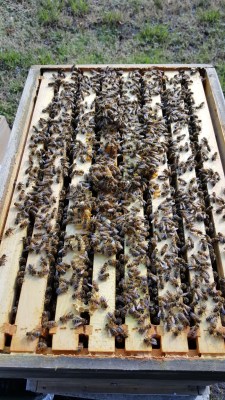
20160116_134424I just finished inspecting hive Salvia with a fellow beekeeper; it looks as if the re-queening was successful. Though we didn’t actually lay eyes on the queen–and we both have trouble seeing eggs–we did see larvae this morning.

Depending on the weather, I may peek into the hive again in ten days or so to see how the ladies are doing, but for now I just happy to have seen little shiny white larvae in the hive. Right we both think that there are good honey and pollen stores for the winter in Salvia.

First on the agenda for tomorrow is to dismantle hive Rosmarinus to see if there is honey that can be salvaged. But for today, a very happy beekeeper!


Hive report: Requiem for a colony

IMG_8426As I approached the hives today to check on the release of the queens, it was obvious even to a novice like me that all was not well with Rosmarinus–bees all around the hive at every crack or join between the supers and under the screened bottom board as well. It looked like robbing going on but without any defense at the hive entrance. Ominous!

When I opened the hive there were very few bees that appeared to be doing the normal bee things that you would expect of the ladies in residence and some webby stuff right under the inner cover. Very few bees doing normal things. As I looked deeper into the hive I saw that the queen had not been released–was dead with attendants in the shipping cage.

There was an obvious problem–slimy looking stuff on the surface of the comb, more of the web-like stuff between frames. Small hive beetles had taken over quickly as the colony weakened even as I attempted to re-queen it.

In retrospect, it’s obvious that I should have put beetle traps in this hive when I first saw that the population was down. Lesson learned–hindsight is so good!  It’s amazing how fast SHB can take over once the population is declining (a lesson I’d really rather have done without–but definitely a learning experience).  This hive was opened twice since queen installation on 06 October 2016–and today–disaster. I would guess that an experienced beekeeper would have seen signs that I missed.

My mission today was to see if the queens had been released so, although with some reservations about the (probable) robbing activity going on from Rosmarinus, I started to open the Salvia colony. No sooner had I removed the telescoping cover and popped the inner cover than I had bees moving from around Rosmarinus to Salvia with fighting taking place on the inner cover. Discretion took over–I smoked and brushed the bees from the inner cover and immediately replaced the outer cover. With foreign bees around the hive I IMG_20150329_133928244_HDRstarted seeing some fighting on the landing board as well, so I put in an entrance reducer. The population of Salvia is good so I think (hope) they can defend the hive now.

I don’t know if that queen has been released–I thought it best not to continue to open the hive with the robbing activity. I’ll try again tomorrow and hope I find better results in this hive.


Hive report: new queen bees

With Matthew approaching NC–or not so much–I’m still relieved to have the new queens tucked into the hives. This was not an experience that I really, really wanted right queens_frankie_20161006_124957now, but it was just thrust upon me.

As noted on my inspection on the 3rd of the month, I found both hives to be queenless–for unknown reasons. I suppose it was a little consolation to know that a couple other beekeepers in the area had found the same thing. The big question for me was what to do. While some beekeepers seem to swear by re-queening hives in the fall I thought this was a bit late to be a really good time to put in new queens. But not to do that was to condemn both hives. Not what a beekeeper likes to do.

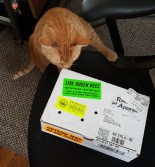
After deliberation and contemplation, I called my local bee store (Bailey Bee Supply) to see if they still had queens. No such luck although I wasn’t surprised–as I said I don’t think beekeepers are doing much “re-queening” at this time of year unless it’s a necessity. Without local queens, I ordered two new queens from Rossman Apiaries (recommended by my local bee store).

The day started cool and sunny and my box of bees arrived late morning. So far so good. I lit the smoker (and it actually did stay lit for even longer than necessary) and headed for the hives with my little white box.

The ladies of the hive Rosmarinus were not particularly pleased to have me tearing off the roof, ripping up the ceiling, and generally messing about especially as this entailed as much shifting of brood boxes and supers to be sure I put the new queen in the optimal locations. While I was moving everything about I did all the shuffling necessary for preparing the hives for winter. (Note optimism here–I’m hoping this is successful and I’ll have this hive next spring.)  The new queen in her little cage with attendants was inserted between two frames in what I hope will be a brood box.

20161006_125908If you’re wondering–the queen bees are put into the hive in the cage to protect her until the workers of the hive accept her as the queen. Bees are not necessarily kind so the queen and the colony need to get used to each other–you can’t just pop a new queen into a colony of thousands of worker bees or she is likely to be killed. The white that you see at one of the queen cages is candy (sugar). Yep, sweet stuff that bees will eat. The worker bees of the hive will gradually eat away the candy  to expose an opening through which the queen can emerge into the hive and (I hope) do her thing! That whole process will take several days and during that time she will be secreting “queen pheromone” and (with luck) the hive will adopt her and take good care of her–and continue getting ready for winter.

This same process was repeated with hive Salvia–but by this time it was overcast, breezier–not prime time to skulk amongst the ladies.  These ladies were just a tad bit testier than usual but their hive is now also shuffled for winter as well as having a new queen “installed”. Makes her sound a bit like software, doesn’t it?

Now my anxious waiting starts–to see if the ladies of the hive and the new queens accept each other.  The waiting is not going to be easy–I’m anxious and curious because this will make the difference in having bees and not having bees.

Now battening down the hatches and hives. Although it looks as if Matthew may miss us it still looks as if we are in for rain for the next several days. I’m much relieved that the new queen bees are in the hives–those little travel cages were not meant for long-term residence.


Hive inspection: 03 October 2016

Lovely fall day, a mere 79 degrees–until you put on the bee jacket. Then I start dripping. Sweat drops on a bee veil make it really interesting to work. I did have on a sweat band, but…!

Not a happy inspection this afternoon. Hive Rosmarinus is queenless–no brood period. Nada, zip, zilch, nothing. No eggs, no larvae, no capped brood. Likewise, no dead bees, or beetles, and only two queen cups. Population about 50% of expected.

On opening hive Salvia, at least I found a lot of bees. All very busy, and signs of pollen and honey stores. But not good here either–very spotty capped brood, but no larvae, or eggs. Salvia has (or perhaps I should say had) a marked queen (second year for her) but I could not find that lovely blue spot. Given that there is only spotty capped brood I suspect that Salvia is queenless too. Not a happy thing to find at this time of the year.

I guess it’s time to talk to some beekeepers more experienced than I am–and maybe a trip to the bee store for two new queens!

Varietal honey

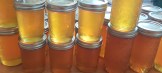
I’ve always loved honey–even as a child–especially comb (also known as cut-comb) honey. Now that I have bees I have my own honey–but it is wildflower honey. It’s a mix of Honey jars 20160702_140009whatever is currently providing nectar for the ladies to tote back to the hive and process into honey.

Varietal  honeys have flavors that can be quite distinctive. (Note that I’m not referring to “infused honey” which has had flavors added–e.g. chilli pepper, which sounds delightful to me, but rather honey which is made exclusively (or almost) from a single flower.) My honey shelf includes varietals such as leatherwood, tupelo, orange blossom, thyme, lavender, eucalyptus, buckwheat, sourwood–and what was purported to be kudzu honey. I think the Hawaiian white is all gone. Always on the lookout for good varietals. It’s a real treat to have these on biscuits or warm, homemade bread, or used in a sorbet, sherbert, or granita where the individual flavors really stand out–or just on morning oatmeal.

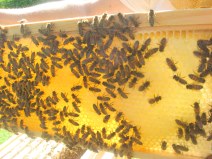
These thoughts on varietal honeys sprang from update from Honey Bee Suite answering the question of whether or not bees made honey from poison ivy/poison oak. Turns out that they do–and the blog post included a link to a source of some really interesting varietals from the Pacific Northwest varietals. I think I really have to have some poison bees on frame of honeyoak honey–especially as I share the experience of having that same kind of reaction to exposure to poison ivy, although mine didn’t involve any horses. Just a lot of poison ivy.

The post on poison ivy/oak honey had a link to a site that has an interesting array of varietal honeys from Old Blue Raw Honey as single season, samplers, and the year-long honey subscription–a serious gift for a honey lover!

To have a varietal honey there has to be enough of the blossoms to let the honey bees do their “monofloral” thing. Even wildflower flavors will vary from season to season as the flora shifts; fall will bring goldenrod and aster nectar for honey. One of the intriguing things about honey in the comb is that you get to variable flavor even within “wildflower” honey.


Ô¿Ô

.

Cool stuff for hot weather

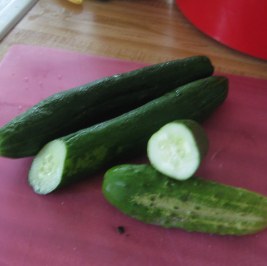
pickling and Amira cucumbers side by side

This hot weather has me looking for cool things–ways to beat the heat. Cucumber is one of the first things that comes to mind when I think of cool, refreshing things–with tomatoes in salad, or with mangos. But thinking really cold, I started  skulking through my old recipes for a dimly remembered recipe for cucumber sorbet with eucalyptus honey.

Eucalyptus honey is fairly dark, with an assertive earthy, spicy flavor with a slightly cool overtone like mild menthol. For some it might be called medicinal, but I found it an interesting combination, with the cool cucumber plus the extra little kick of coolness from the eucalyptus honey. (If you don’t have eucalyptus honey, this sorbet will still be tasty.)

Problem–someone (no names here) didn’t write down the quantities or the source of this recipe–or maybe it was an off-the-cuff invention with whatever was around at the time that obviously included eucalyptus honey.

So, some research. Going to The Perfect Scoop by David Lebovitz (one of my two favorite sources on frozen dessert stuff), and Jenis Splendid Ice Creams at Home by Jeni Britton Bauer (my other ice cream favorite) I found what I needed to fill in the missing quantities for the sorbet.

Cucumber and Eucalyptus Honey Sorbet

Ingredients

  • 2 English or Japanese cucumbers–about 2 pounds–coarsely chopped
  • 5 ounces eucalyptus* honey
  •  1/2 cup water
  • 1/4 teaspoon freshly ground black pepper
  • pinch of salt

Preparation and notes

  • I prefer the English or Japanese cucumbers because you don’t need to remove seeds. This would take about 2 cucumbers. Peeling is not necessary. If you have slicing cucumbers, remove seeds.
  • Combine honey and water; heating is not necessary.
  • Combine ingredients in a blender and puree until smooth.
  • Pour into prepared ice cream maker and freeze according to manufacturer’s directions
  • To make without an ice cream maker, use the method for granitas: pour into a shallow baking dish and place in the freezer. Stir with a fork about every 30 minutes until firm. (This breaks up ice crystals although the texture will not be as fine as with an ice cream maker–but still tasty.)

*A note on honey: Eucalyptus honey is a varietal honey; made from the nectar that bees collect from flowering eucalyptus trees. It is not an “infused” or “flavored” honey–those are made by adding flavoring to wildflower honey. I found the eucalyptus honey in my local Harris Teeter grocery store, next to the orange blossom and wildflower honey.

Ô¿Ô

Some other interesting recipes that I found whilst trolling the internet:


Hive report: Oops!

‘Tis the season to feed the bees–at least until the goldenrod and asters start blooming. quad feeder with jars in placeI’ve been hearing comments from other beekeepers about starving bees. After inspecting the hives last time I decided it was time to start feeding the ladies until the dearth ends–and keeping the feeders filled until the autumn flow begins.

I put 1:1 sugar syrup feeders on both hives. After my sticky mishap when I was starting my first colony, I’ve found that my preferred feeding method is quart Ball/Mason jars with lids that have a number of small holes punched in them. They sit in a frame on top of the  inner cover of the hive, covered with an empty “super”. The great thing about this method of feeding is that the bees cannot get into the upper chamber so the  beekeeper can check food and replace as needed without using smoke or putting on protective gear.

This system works so nicely–quart jars are easier to handle than gallon buckets, and it’s really easy to raise the telescoping top and see how much the ladies have imbibed–IF the  beekeeper has done what the  beekeeper should do. If not, well disaster awaits.

When I went back to check the feeders on hive Rosemarinus I got a real surprise–I had noted in last hive report that because of the weather and the dearth the ladies were a bit testier than usual, but I wasn’t expecting to encounter bees in the chamber with the feeders so no suit or smoke needed. WRONG! Surprise!

When I approached the hive I heard more buzzing (not humming) from the super just below the feeders. Had I been really paying attention that should have warned me that something was amok. But no, I just blithely popped the cover off the feeding box–and then ran like–well, like I had a lot of bees chasing me! The feeder area was full of bees and they didn’t like my intrusion at all.

After making my escape into the house and taking Benadryl to counteract the stings that I had gotten, catching the bees that had ridden into the house on me and putting them back outside, I lit my smoker, suited up, and went back to the hive to find out why I got that nasty surprise.

I think most beekeeping problems are, like most computer problems, human error. This one certainly was. This  beekeeper had made two errors. First, because the ladies were so irritable when  I placed the feeder I did it quickly. My quickness resulted in that feeder frame not sitting flush on the inner cover, so bees that would normally only have access to the underside of the frame could bet into the box around the feeders. But those should have been MY bees and since they really couldn’t get syrup from there, should really have been a big deal.

But my other BIG  beekeeper boo-boo was that I forgot to close the external entrance to where the quart jars lived (that was fixed, too).  Neither the canted frame nor the external upper entrance would (by themselves) have been such a nasty surprise. By my doing both at the same time, I managed to create a nasty situation for both the ladies of the hive and for myself–robbing. (This was not robbing that would have been prevented by the screens.)

The bees in that were in with the quart jars were able to bet under the feeder frame and get to the syrup–as were my bees coming up out of the lower part of the hive. Fortunately, Rosmarinus is a good strong colony and was able to defend the honey super–that’s why I was hearing the major buzzing from the box just below the feeder, but because of needing to defend the hive, they were very testy! (Can’t say that I blame them at all.) I think most of the attacking bees came from the robbers that I disturbed.

After I set the feeder frame properly (with the help of some smoke) that batch of bees dispersed–and not in the direction of my hive (making me even more sure that I had some robbing going on). My ladies were still royally PO’d though.

Õ¿Õ

Refilling the feeders today went well–without smoking or bee suit. Despite heat, humidity, and dearth both hives were nice and calm–no bees where there should not have been bees. The  beekeeper has learned a lesson from this–keep my brain in gear, go slowly, pay attention to what sounds I hear from the hive, and check that I have done what I think I’ve done!

Ò¿Ó

.
Hive report: 21 July 2016

Merde! (Yes, please, pardon my French, but that’s the only expletive that fits today.) The ladies of the hive are royally PO’d. I worked these hives on the 19th and the ladies were just a tad testier than usual. Today I would say that they were a whole lot unhappy.

I was placing feeders on the hives. I hadn’t even gotten the cover off the hive when they came swarming out to show their displeasure. I had to beat a hasty retreat and put on the bee jacket  (which I’ve only worn once before) and the serious gloves (which I’ve never worn before) and use the smoker just to get the feeders on.

True, it’s hot (officially 89ºF but feels like 94ºF) and humid, intermittently overcast, but really! That reaction, the dearth, the fact that I’ve seen some fighting between bees on the landing board, tussles and stinging at the water source, make me think something has disturbed the colony.

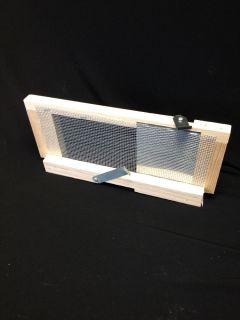
robbing screen for hive entrance

Robbing Screen (image from Bailey Bee Supply)

Given reports from other beekeepers in the area of robbing, I made a quick trip to Bailey Bee Supply for robbing screens for my hives, going for prevention rather than having to try to stop robbing in progress.

This video shows the fighting when “foreign (robber)” bees try to enter. That’s something I don’t want to see at my hives. Both my  colonies are queenright and strong so guards can defend against a few invaders but it can get to a real “frenzy” that will just wipe a hive. Prevention is the way to go.

Hive inspection: 19 July 2016

This time of the year can be hard for bees–we’re  enjoying the results of their work earlier in the year but there’s not a lot for them to tote back to the hive to store in preparation for winter right now. As a beekeeper, dripping sweat in feels-like 97ºF temperatures, it can be a bit difficult to realize the ladies in the hive are in the midst of preparing for winter, or that while we enjoy plenty they are in a dearth of nectar and pollen–that bees can starve at this time of the year if the beekeeper is not keeping up with what the colony needs.

hive addedThis was a routine inspection as, from the outside, both hives appear to be doing well, judging by traffic in and out though not much pollen seems to be carried into either hive. But that’s expected at this time of the year while we’re waiting for asters and goldenrod to bloom.
Although I can see the effect of the dearth with less brood, Rosemarinus colony has almost a full super of honey that is capped. My intention for that box was for cut-comb honey until the ladies declared it partly a brood box. Now there is only a very narrow band of drone brood on the lower edge of the center frames and the areas where brood had been are being filled with pollen and nectar. I was hoping to snatch a couple of the lateral frames for cut-comb honey even this late in the season but the girls have decided to put pollen there so I won’t take those frames now. (Learning experience for beekeeper!). I’m happy to see that much honey and pollen stored at this time of the year. Though I still haven’t seen that queen, I do see evidence that she’s doing what queens are supposed to do–brood in all stages and lots of workers also doing their thing.

Salvia hive (from the swarm earlier in the year) has grown well over the summer–lots of bees. Since I saw brood in all stages I didn’t spend a lot of time searching for the queen, but feel sure that this colony is queenright. The fourth box on this hive had been intended as a honey super so I had put a queen excluder on; the ladies seem to be reluctant to start drawing comb above it. They simply propolized it down to the top of the frames below. I removed it once I managed to free it from all the propolis and hope they will use it to store more honey for the winter. I’ll have to go back into the hive when the fall nectar flow starts to make sure that they are using those frames for honey storage. This hive also had capped honey and what appeared to me to be reasonable pollen stores for this time of year.

Ò¿Ó

I’m so happy to see that both colonies appear to be in fine fettle for this time of year. I’ll put sugar syrup feeders on both hives today even with the honey stores that I saw because we are now in a dearth. When the aster and goldenrod come into bloom I’ll quit feeding until that bloom is over. I just don’t want the bees to have to use the current honey and pollen stores for survival right now. Those need to be saved for wintertime.

I also noticed (thanks to two stings while working the hive) that the girls are a bit testier than usual. After some research on one of my favorite beekeeping websites (Honey Bee Suite) I found a list of things that may make bees more aggressive. Among the things listed were nectar dearth, heat and high humidity, and rainy weather–all of which have been present in the last few days–and two present  right now.  The ground around my hives was definitely wet from the rain of the last few day and the dew point was in the 70s.

I guess I should be grateful that I got only two stings from the ladies! I’m sure I was grumpier after working for several hours in the heat and humidity, so I can understand theirs though I don’t care for the way in which they choose to communicate it to me.

Ô¿Ô

.

Summer plenty

Walking through the farmers’ market we see an abundance of fresh produce. We cook and eat without thinking about the food waste between seed and plate. I’ve posted and reblogged articles about this issue: what has been done in other countries, tips on how not to waste food, making efficient use of leftovers, mindful eating, and grocery shopping for one, all with thoughts about food waste.

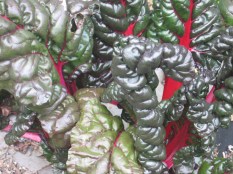
vegetable-chard IMG_0728This morning I read an article from Food 52 on kitchen scraps–with some statistics on food waste. This post gave a lot of recipes using those things that we often consider “scraps”–and some information on how long those (sometimes) impulsive purchases from the farmers’ market will last once you’ve gotten them into the kitchen.

This article has links to 125 (yes–one hundred twenty-five) recipes that focus on using that whole bunch of greens (even the stems) and things we often don’t consider for cooking and eating–radish tops, and even peels and skins of fruits and vegetables. We often discard the stems from chard and other greens when we cook the tender leaves but those stems are just as nutritious if treated just a bit differently–added first to the pot, or even used separately rather than discarded.

I’ve not tried all these recipes, but from my experience, the recipes from sources cited here are usually good. Even if you don’t use the recipes per se I think perusing them can show many ways that we can better use our food.

Õ¿Ó

On a related note, while we are enjoying the benefits of pollinators–honey bees included-Summer Harvest IMG_4487-those ladies of the hive are experiencing a decrease in the nectar and pollen that they can
gather–what we beekeepers call a “dearth” (scarcity or lack of something). We are eating and putting by the “fruits” of their work in the spring–and we don’t think about what is available for them at this time of the year.

I’ll be inspecting my hives tomorrow to see how much honey and pollen is stored. Most likely my ladies are consuming stored honey and pollen while awaiting the start of the goldenrod and aster seasons here in the Piedmont region of North Carolina. If necessary, I’ll be providing supplemental food (sugar syrup with supplements added) for them until the fall nectar flow starts and they can store honey and pollen for the winter.

I’m not planning a second harvest from hive Rosemarinus, or a first harvest from Salvia–they will get to keep all they produce from the autumn nectar flow to see them through the winter.

IMG_8902Feb hive

Ô¡Ó