
Steak is not something that I order when I splurge for a meal in a fine restaurant; it’s too easy to do at home and good for single-serving cooking since it’s portioned when it comes home, and it’s easy to cook.
A good thick-cut, home-cooked steak is one of the things that I don’t mind having left over, since it’s usable as “roast beef” for a yummy sandwich. (No, the roast beef from the deli simply does not do it.) My favorite way to cook the steak is from Cook’s Illustrated, 01 May 2007–it does take a little time and minimal effort, but it’s well worth it.
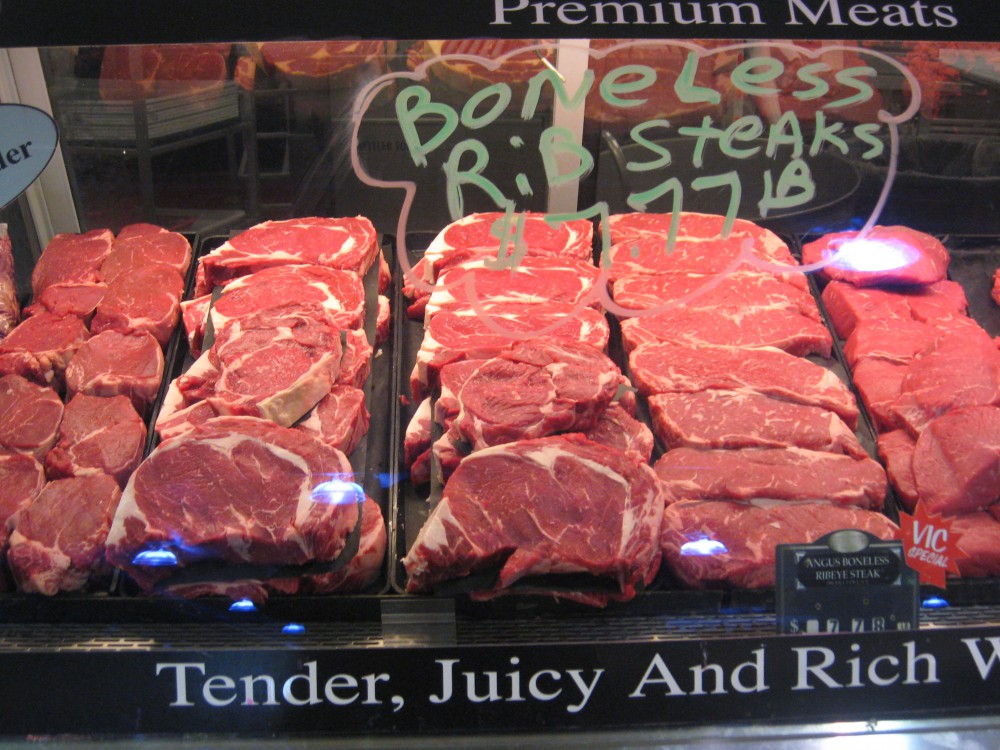 My usual choice of steak is a strip, or New York strip, cut 1-1/2 to 1-3/4 inches thick, with fat cap intact. If I don’t find one lolling about in the butcher case (you won’t likely find this in the pre-packaged section) ask to have it cut the way you want it; my local Harris Teeter will cut to order but generally has thick-cut steaks in the butcher case.
This works fine with rib eye or with filet mignon, as long as it is thick-cut. Personally, I prefer strip or rib-eye to filet. Even with rib eye, it’s still not a substitute for real prime rib roast, but a good “second” so that I plan to have “leftovers”.
Ingredients
- 1 boneless steak (1 1/2 to 1 3/4 inches thick (about 1 pound), strip or rib eye
- Kosher salt and fresh ground black pepper
- 1 tablespoon vegetable oil for searing
Preparation
- Adjust oven rack to mid-position and pre-heat oven to 275 °F .
- Pat steaks dry with paper towel and season liberally with salt and freshly ground black pepper.
- Place steak on wire rack set in rimmed pan and place in oven. (Steak does need to be raised rather in contact with pan).
- Cook until instant-read thermometer inserted in center of steak registers 90 to 95°F for rare to medium-rare, 20 to 25 minutes (or 100 to 105°F for medium, 25 to 30 minutes).
- Heat oil in heavy-bottomed skillet over high heat until smoking.
- Place steak in the skillet and sear until well-browned and nicely crusty–about 1-1/2 to 2 minutes, lifting once halfway through to redistribute fat under the steak.
- Using tongs, turn steak and cook until well browned on the other side, about 2 to 2-1/2 minutes.
- Use tongs to stand steak on the sides and sear on all sides. (This really is worth the effort–and it really does not take long.
- Transfer to cooling rack, tent with foil, and let rest for about 10 minutes–this also is really worth the wait.
- You can prepare a quick pan sauce while the steak is resting, or simply add a pat of herb butter, horseradish, or some blue cheese crumbles to the warm steak.
Add some simple sides like salad or baked potato. Now pour yourself a another glass of that luscious red wine that was breathing while you were cooking, and enjoy.
A son goût!


 a-single-serving.com