Unknown's avatar

About sa.fifer

Lover of good, wholesome food and wine. Cooks for one and the cat. Likes to paint-- a frustrated botanical illustrator and amateur (photographer) and fledgling birdwatcher, beekeeper, and Kindle addict. Works as a freelance indexer.

Real honey!

We are seeing more and more news about bees and honey–honey  adulterated with substances like high-fructose corn syrup. This review of what you might really be getting in that jar from the supermarket is excellent–with good supplemental links. Please read this so you know what might (or might not) be in that jar labelled honey.

Did your honey come from bees?  from YayYay’s Kitchen is a great article. After reading this, I hope you’ll find a local beekeeper or a farmers’ market and buy your honey there.

If you want to be really sure that your honey hasn’t been processed in any way, look for honey in the comb (cut comb or chunk honey)–still just as the bees packaged it. If you want honey extracted from the comb your best bet is still a local beekeeper who can tell you about how the honey was processed during and after extraction from the comb.

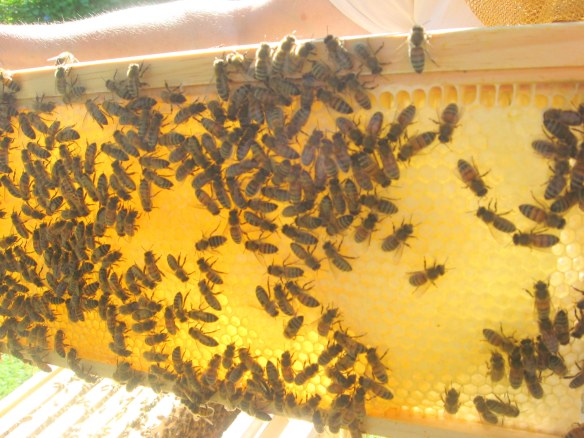
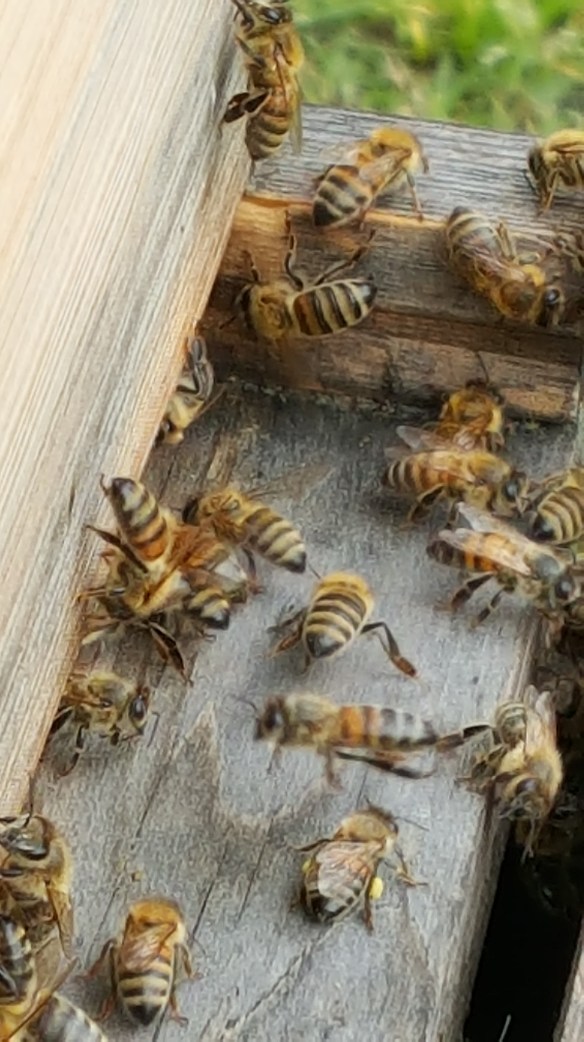
bees on frame of honey

This is a photograph of one of the frames from my Rosemary hive–lots of honey stored here. At the right are cells of honey that are capped. This means that the bees have evaporated moisture from the nectar to a level where fermentation will not take place, then sealed the cells. At the bottom center of the photograph,  you can see cells that are open and being filled with nectar.  These have not had enough moisture removed for capping.

When you buy comb honey the cells will be closed or covered with beeswax (capped). You know that honey is just as the bees made it.

Let’s hear it for the bees and the beekeepers!


Hive report: 15 May 2016

Happiness! My large colony, Rosemarinus, that produced a swarm on 24 March 2016 is now queenright.

Finally, a day with conditions that didn’t make opening the hive to do a major inspection of the colony traumatic for either the ladies of the hive or for me! It was just a bit cooler than I would have liked–the temperature 70 degrees Fahrenheit, with a bit of wind–about 5 mph. The local weather report was cooler than that but the hive was in a sunny location and I decided that I really needed to know if the colony had successfully reared a queen. So I opened the hive today and took a good look inside.

20160116_pupae and burr comb_134800Although I didn’t lay eyes on the queen, it was obvious that she was in there somewhere doing her thing. There was lots of brood in an excellent pattern. There was brood in all stages, but what seemed alike an incredible amount of capped brood.

Though the population was down from the last time I opened the hive, I suppose that is to be expected after the queenless period.  Even so, it seems to be a good strong hive with lots of bees. I’m not experienced enough to tell if the population decrease it what would be expected under those circumstances or if there was a small secondary swarm. What I do know is that the colony is now queenright.

The girls weren’t making much headway on the comb honey super that I put on the hive yet. I moved it down on the hive and placed the super full of capped honey on to. That was an experience–hefting that full super up to shoulder height! It makes me think more seriously that the next hive will be a horizontal Langstroth with the kind of set up that allows honey supers to be put on top. I now know just how heavy an 8-frame honey-fill super really is. Not complaining, just observing.

I’ve now had my third beesting  (note only my third) since I started working with the bees at the end of July last year. I’m still not wearing gloves to work the hive. Every sting that I’ve had has been because I’ve managed to put my finger down on a bee. I still think I’ve lucked out and gotten some good genetics in this colony again.

Yes, I’m happy! Rosemarinus has a queen–even though I haven’t actually seen her, and she is not marked. That’s for next inspection.


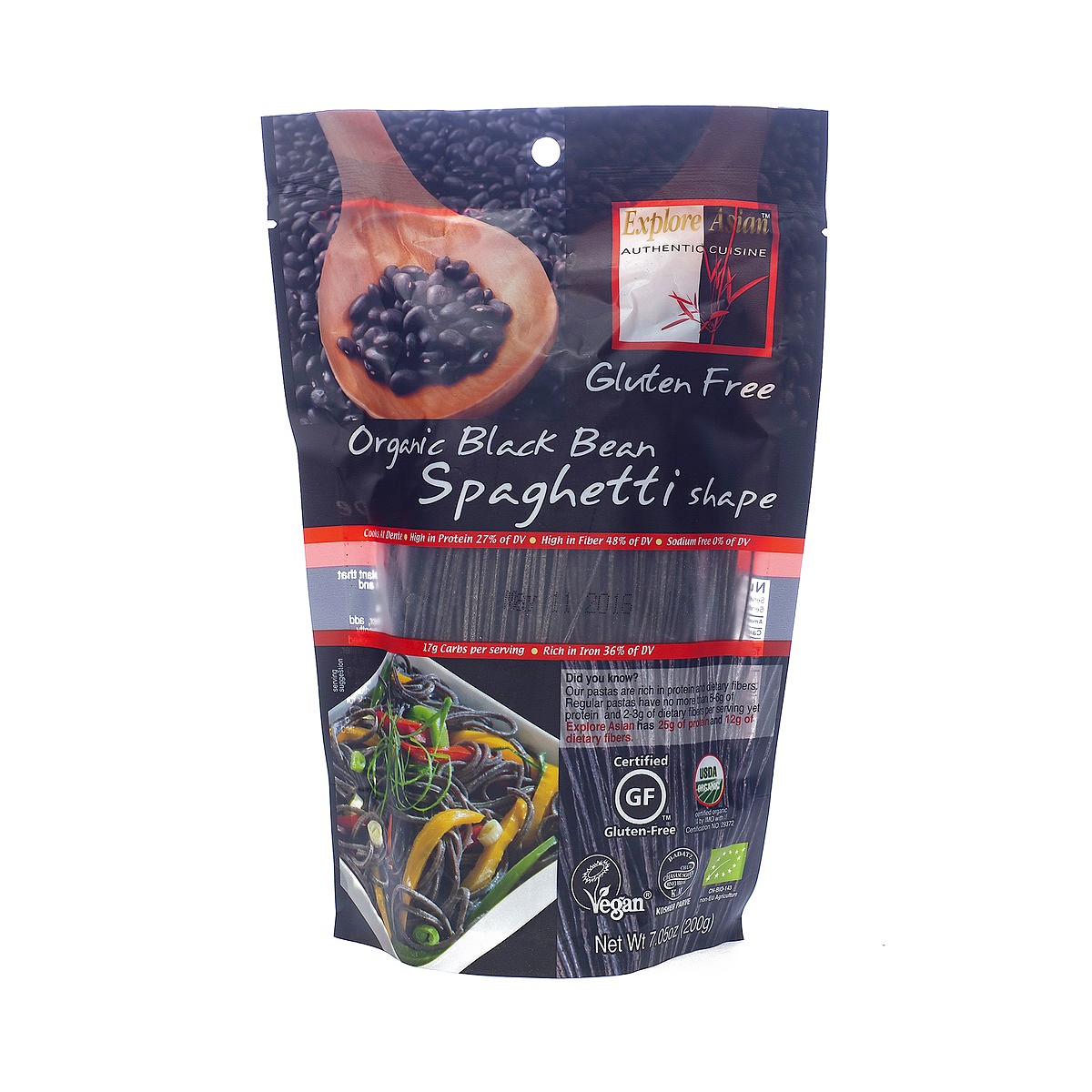
Black bean pasta

I’ve had a long work week, which  ended  in frustration  this evening in–I’m hungry, but the planned meals just don’t DO it. After staring in the fridge for a while, and going back to take a few of those silly online quizzes, I still hadn’t the foggiest idea what I wanted to eat. More peering into cabinets (sardines–nope, tuna–NOT).

While skulking through the pantry, I realized that what I’d most likely cook were I not trying to be really serious about weight loss would be pasta.  Obviously, that won’t do–at least not pasta, as we most commonly think of it.

On my grocery rounds day before yesterday, I noticed that there was a new section of pasta displayed with lots of signage designed to attract attention–it was gluten-free pasta. I’m not gluten intolerant so I usually don’t pay attention to that (and I get really irritated when I see fruits and vegetables touted as gluten free–but I won’t go there now). As I stood perusing the boxes, I had a faint memory of a friend telling me that her grandchildren liked black bean pasta, so I read the ingredients list–and it was only black beans. I found that rather amazing, since so many gluten free products have potato starch or other things that are off limits to me right now. I succumbed–I bought a package of black bean pasta.

I stashed the black bean pasta (pasta?) in the pantry and went straight to  the Merriam-Webster unabridged dictionary to look up pasta. I discovered that it was defined as “an alimentary paste in processed form”. While spaghetti was given in an example nothing was specified as to what the paste was made of.  Ok–it’s black bean pasta.

I spend a little time thinking about why I eat pasta. It’s because I like pasta. I like the different shapes, too. I like the flavor of pasta made from wheat, but there is a texture factor there as well. Maybe there is more than that–maybe there is something about twirling spaghetti or angel hair pasta around a fork to get it into my mouth–part of the process of eating that’s satisfying–more than just the flavor.

What I’d usually make is spaghetti aglio e olio–sorry, that just sounds better that plain olive oil and garlic–so I decided to give the black bean pasta a trial that way. I got out my favorite pasta-cooking gadget. For this to keep with the meal plan in some remote fashion, I needed to add some vegetables. Spinach!  I sautéd the and spinach in the olive oil and dumped it over my black bean pasta. (I know I had a bigger serving of carbohydrate than I should have, even though it was black bean pasta, but at least I had veggies with it.)

The result? A pleasant surprise! It was remarkably satisfying (maybe just because I was hungry); the texture was good though not quite like pasta made from wheat flour. It’s not overwhelmingly “beany” either. It was so satisfying that I had to think that there is more to my liking pasta than just the flavor. Would I rather have had “real” pasta? Yes, but this was good. Black bean pasta is not going to replace the traditional stuff made of durham wheat flour. It certainly beat trying to fake it with spaghetti squash (though I like that too, but it’s definitely NOT pasta–it’s a vegetable so don’t tell me to use it instead of spaghetti).

The final call? I’ll cook  pasta made from black beans again until I can have the traditional kind that we usually think about. I don’t know why I had this resistance to this as pasta since I like soba and rice noodles. It’s a good stand in for this meal plan. After eating that I find that there is also pasta made of chickpeas (garbanzo beans).  I’m sure I’ll find some other uses for it as well, and I’ll explore other “alimentary pastes” to add to the soba and cellophane noodles as well. But I’ll still want that plate of “real” spaghetti aglio e olio!

Õ¿Õ


Smoky, spicy red lentil soup (Always Hungry?)

Lemony Red Lentil Soup with Cilantro

This is one of those “recipes” that really isn’t. Kitchen Express doesn’t give you a list of ingredients–it gives you a paragraph description of what to do–a happening. I don’t always have red lentils, so I’ve made this with De Puy lentils; it simply takes a little longer to cook. This is the “light, bright” lentil soup that I make in warm or hot weather.

The soup below started as the Red Lentil Soup (pages 283-284) in Always Hungry?  However, true to form for me, it evolved–still keeping the spirit of the meal plan. So here’s my version of a seemed to be rather a bland lentil soup when previewed on the page. It evolved on a dreary, rainy, chilly day in May that felt more like regression to March. It’s only mildly spicy and garlicky–you could increase the chipotle powder or add a dash of cayenne.

Serves 4 with big bowls, or 6 with small bowls. Add some meat (lamb would be good) and it’s a meal in a bowl.

Smoky, Spicy Red Lentil Soup

Ingredients

  • 2 tablespoons olive oil (for cooking)
  • Chopped onion–about 1 to 1-1/2 cups
  • 2 medium carrots, diced
  • 2 ribs celery, diced
  • one 14-ounce can of diced tomatoes [fire-roasted are really good in this.]
  • 32 ounces chicken stock
  • 1 cup red lentils
  • 2 or 3 large cloves of garlic minced or pressed (or more according to taste)
  • 1-1/2 teaspoons of herbs de Provence
  • 1 to 1-1/2 tablespoons of pimentón (smoked Spanish paprika)
  • 1 teaspoon chipotle chile powder
  • 1/2 teaspoon red pepper flakes (hot)
  • salt and black pepper to taste
  • one 8-ounce package of frozen chopped kale
  • extra virgin olive oil for drizzling as a tasty garnish

Preparation

  • Heat the cooking olive oil in a good-sized pan and sauté the onions until beginning to brown.
  • Add the carrots and celery and sauté until starting to brown.
  • Add the pimentón, chipotle chilli powder, red pepper flakes, and garlic; sauté until fragrant.
  • Add the chicken stock, tomatoes, and 2 cups water.
  • Add the herbes de Provence
  • Bring to a simmer and cook until the lentils are almost tender. [I moved it to the oven to finish cooking so I could work without worrying about checking it.]
  • Stir in the chopped kale and continue cooking until the lentils are tender.
  • Serve it up and drizzle with a bit of aromatic extra-virgin olive oil.

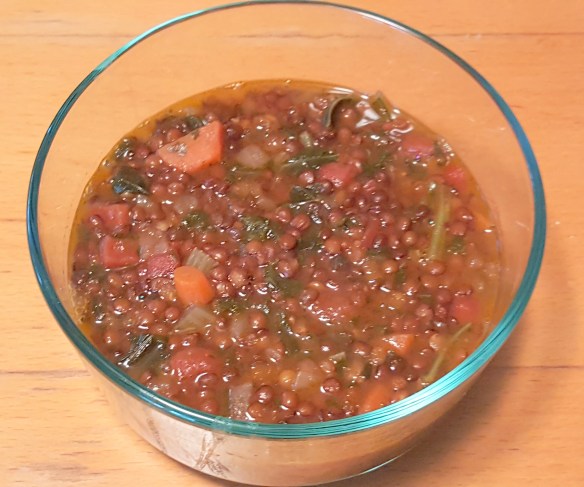
clear glass bowl with lentil soup

Always Hungry? What’s in the pantry?

I don’t do meal planning well…I don’t like to do meal planning.  I’d much rather be spontaneous about my cooking and eating. Okay, I’m a picky eater–my appetite varies with the weather, the season, and even mood. While I’m managing to be moderately successful with the Always Hungry? meal plans, I really appreciate the “how to” section for each phase. It gives me much more freedom to cook what I want to eat. Even so, I’m looking forward to getting past the first two weeks of Phase 2 when I can do even more improvisation. Besides weight loss, one benefit of reading the book and starting this has been a close look in the pantry. In my pantry inventory, I found very few items that were on the discard list so doing without a lot of the prepared or processed things was not really a big issue.

I’m fortunate that from where I live it’s easy for me to stop at the grocery store on my way to and from other errands, so I tend to shop for perishable several times a week–check out the market and see what looks good: meal planning on my feet.  There is a farmers’ market close to me that is open on Wednesday evenings and one on Saturday mornings.

Many times I cook without a recipe and improvise something from what is in the house; improvisation is much easier if you have a well-stocked kitchen and pantry.My only purchase that was specific for the Always Hungry meal plan was the whey protein. That may remain in my pantry after Phase 2 is over–shakes for breakfast work well for me since I really don’t want major food first thing in the morning.  The Stahlbush Island Farms frozen berries have been a huge help with these when fresh berries aren’t of best quality.

There are a number of  things that I almost always have around.  You can find lots of lists in cookbooks for things you “should” always have on hand, but all of those lists need to be modified to suit your tastes.  If you hate anchovies, then there is not much point in having those in the pantry.  I may not want to eat them on a sandwich, but they can add a very subtle, rich background flavor to vegetables like broccoli–used in very small quantities they won’t scream “fishy” at you, and they can stand in for nam pla in providing umami.

Though I do shop for perishables frequently, I want to be able to prepare a meal even if it’s so hot that I just cannot face going outside, so I  keep a reasonably well-stocked freezer, refrigerator, and pantry. Even just from the canned (not many things) and dried goods, I could produce a meal at the drop of a hat.  Canned tomatoes in several forms–diced, whole, fire-roasted (add a little smoky flavor to a dish) and quick sauces–are such a pantry staple that they need not get more than a passing mention.  Sun-dried tomatoes, a tube of tomato paste, capers, and roasted red peppers are some other things that get frequent use.

Some of these supplies also stand in for the emergency kit in case of hurricane or ice storm that results in a power outage.  Peanut butter is a staple, but that doesn’t mean that I want to have to pull that out of the cupboard for supper–that’s snack food or for breakfast on toast, or with slices of apple or stuffed into celery ribs.
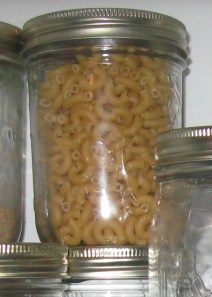
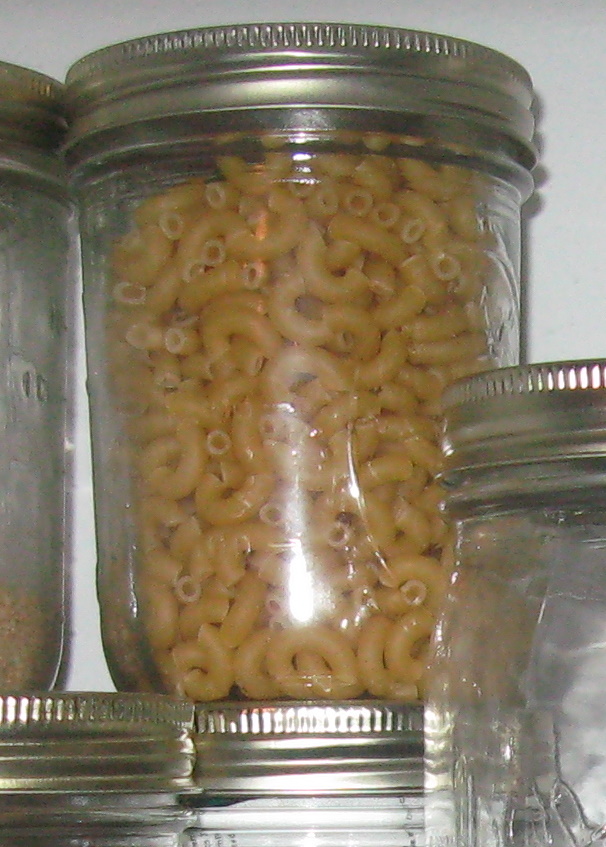
Dry pasta is a great base for improvising, so it’s good to have several different shapes around to harmonize with what is going in it or on it.  Once the package is opened,  if the unused portion is transferred to a Ball or Kerr Mason jars so that it’s tightly sealed it will keep until the next time I need this particular pasta. It will be good to add that back into my meal (in moderation, of course).

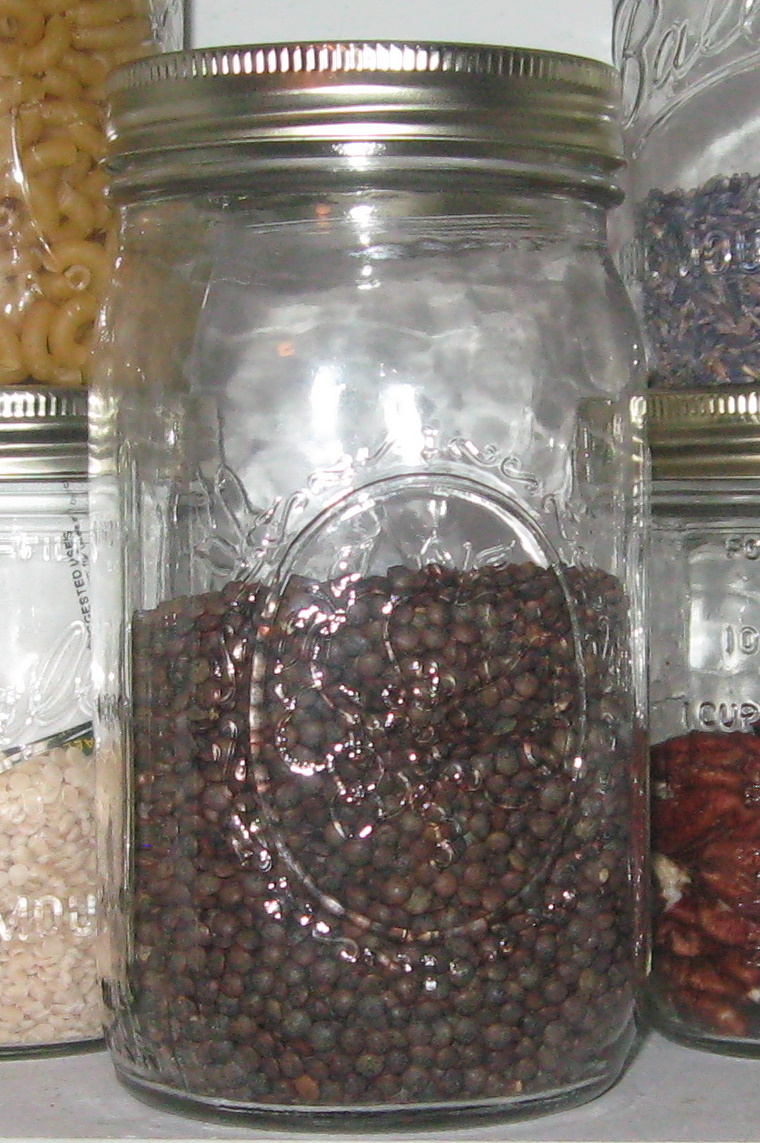
Dried lentils are another pantry staple–they don’t need soaking before cooking; it’s so easy to make a side dish or a soup using them.  There are many kinds of lentils (as there are beans) that can easily add variety to your cooking and allow improvisation.  The basic “brown” lentil can be found in most supermarkets in the section with the dried beans and rice.  My favorite is  the French Le Puy lentil which are small and hold their shape well when cooked. If you use them often, it’s worth looking for other lentils such as small black, or Spanish brown lentils.  You might have to find a “gourmet” store, but these are worth having on hand as a pantry staple. Lentils combine well with rice or other grains, and can be cooked with rice, or alone, in the rice cooker.
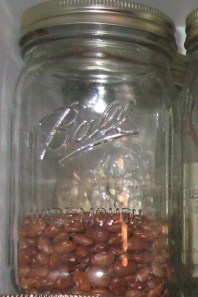
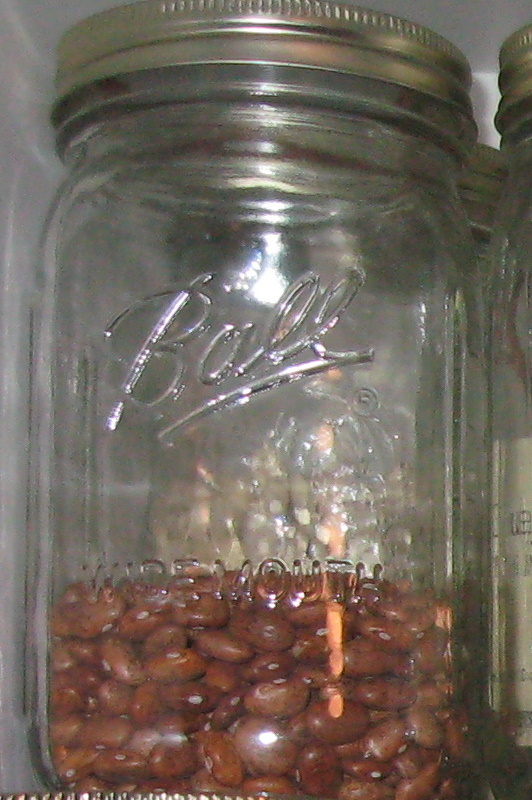
Although it does take a bit of pre-planning cooking your own dried beans instead of using canned ones it is worth the effort, but canned beans are still a pantry necessity. Cooking your own has the advantage of controlling the amount of salt and seasonings.  (That is not to say that I don’t have canned beans of various kinds in the pantry–I do–and I would not want to be without them.)   Some heirloom beans and/or specialty beans have such different flavors that they are worth searching out.  You can soak and cook more than you need for a single serving and freeze them with some of the cooking liquid so that you have them for quick use when you haven’t planned ahead. (One of the reasons I’ve been able to stick with the Always Hungry meals as will as I have is that legumes are part of the program.)
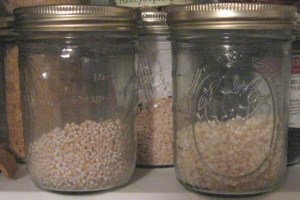
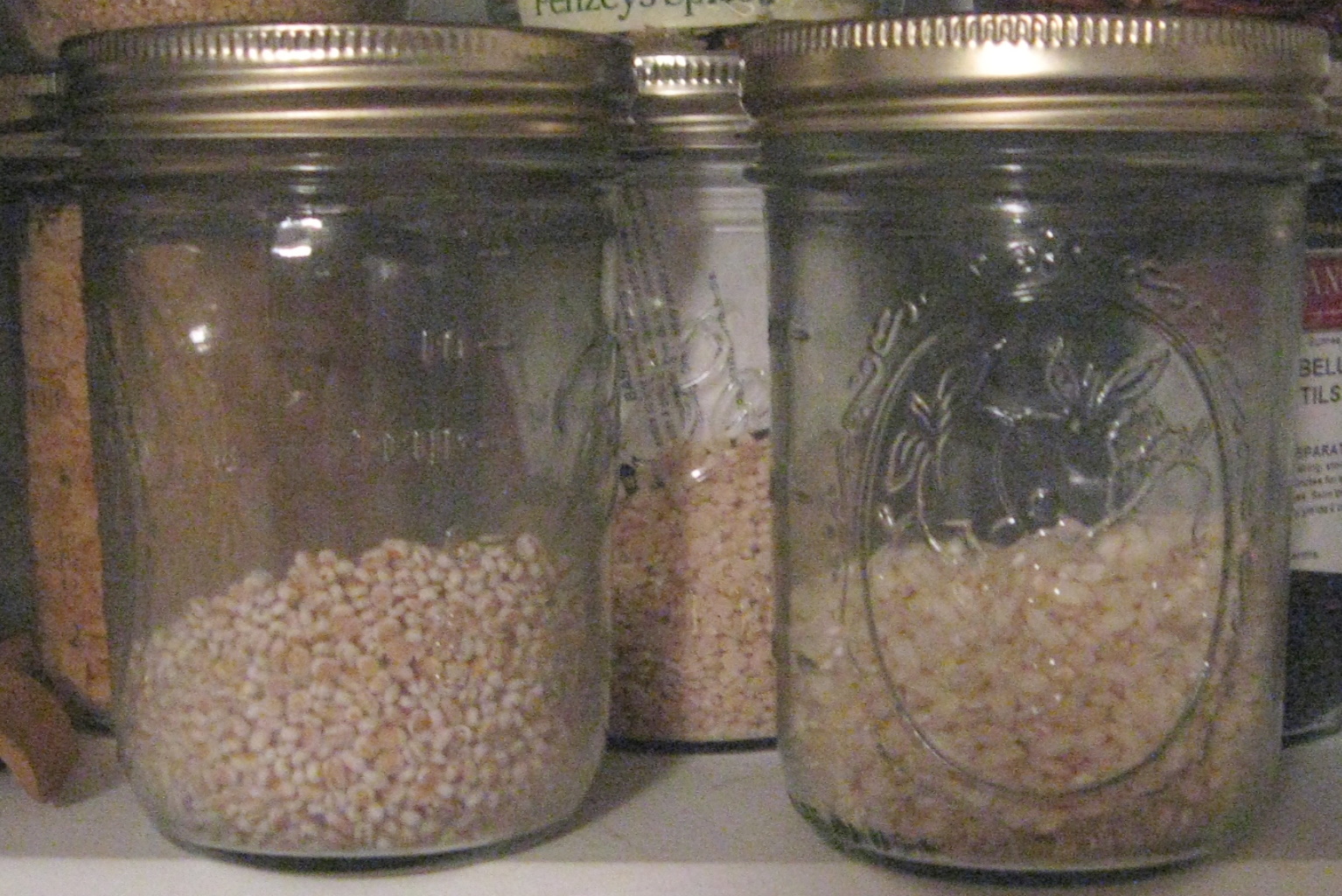
barley and rice

Barley (left) & arborio rice (right)

Grains are another staple in my pantry: rice, barley, quinoa, and some of the commercially available mixes that provide variety in a convenient way.  Being able to add some of these in Phase 2 is so welcome!  Since I love polenta, but corn is off limits, I’m going to try the millet “polenta”, though I don’t expect it to replace the real thing.

Basmati rice (brown or white) is a favorite for long-grain rice.  Since risotto is a great way to improvise a meal,  arborio or another short-grain rice that is suitable for making risotto is on hand too. It’s good to use in soups as well.  Barley is also a grain that to have on hand at all times–it makes a hearty soup, it can be cooked like risotto, and it makes wonderful side dish instead of rice. Depending on the season,  bulgur and couscous, both the fine and the Israeli, are also likely found lurking on my pantry shelves. Especially in the summer, with tomatoes abundant, tabbouleh is quick, healthy, and easy as a salad or a side dish. There are so many good grains that we use all too infrequently, just waiting to be added to out diet.

Though not “dry” cans of broth/stock are good to have on the pantry shelves, right along with the canned beans.  As a further backup, something like Better Than Bouillon in whatever flavor you use most often–chicken is a good compromise.

American Tuna image of canOther helpers for improvisation, include good quality canned tuna (personal preference is for oil packed) which can make a salad heartier, or be used with pasta or beans for a main course salad. Sardines make a good meal with  crackers or bread and fruit. These are good staples in the emergency food kit (which should also contain a can opener–the manual variety) as well. Salmon is part of the pantry, too, for salad or for salmon cakes.

Some other ideas for “pantry” cooking recipes inspired me to add some canned goods to my emergency stash–but that doesn’t include using cream soups and the like for “dump” cooking–that doesn’t particularly appeal to me, but having some carefully selected cans on the shelf can be useful.

There are some freezer things that I have found particularly useful while using the Always Hungry? meal plan adapted for single-serving cooking: chopped kale and spinach, chopped onions lend themselves particularly well to getting green veggies into my breakfast. Instead of the formality of making a fritatta with veggies, I find making scrambled eggs with the veggies much easier and quicker. A handful of chopped onions, a handful of frozen chopped greens quickly sautéed before adding the eggs does the job in a way that fits my morning functionality. If there are some cherry tomatoes lurking in the kitchen, those go in as well. Between supplying that quick handful, the opened bags live inside a zipper-lock freezer bag, right back in the freezer for quick access. I find that i use them so frequently that I don’t even do the vacuum seal–just pressing as much air as possible from the freezer bag will do fine since I buy the smaller bags and use them quickly. Now that I can add starchy vegetables in small quantities I’ve found that the Stahlbush Island Farms frozen butternut squash, sweet potatoes, and beets are good to have for use a handful at a time.

In anticipation of maintaining the weight loss the I have achieved so far (and hope to achieve in Phase 2) there have been two additions to the pantry–the whey protein, and chickpea flour. In addition to the recipes with the meal plan for waffles/pancakes that use chickpea flour, I’m experimenting with making my own crackers from that, rather than the usual wheat-based ones that I like to have around to go with the pickled herring or cheese. Here’s to maintaining weight loss, eating in a healthier way, and enjoying good food.

A son goût!

 

Always Hungry? Starting Phase 2

Phase 1 was successful–I tarried there a bit longer after my slip, but I can now say that my loss in Phase 1 has got me into double digits–more than I expected from reading the book. I need to lose more, but I’m happy with this for a start. I’ve found that this way of eating is very compatible with my cooking style.  I know that I’m going to have to be careful in Phase 2 as I start adding grains into my meals.

During Phase 1 I’ve given a lot of thought to what I really miss most. While I’m now quite fond of lettuce leaves to provide crunch with tuna salad and cucumber slices  with smoked salmon and some labneh with dill–some things just call for crackers. Lettuce leaves just don’t work well with pickled herring or sardines. Crackers have always been a pantry staple to go with my quick tuna or egg salad. They are one of the things I miss most. Don’t get me wrong, I miss fresh, home baked bread, and pasta, too. I was surprised how high on my miss-it list they were. I need to find a substitute for the saltines, or wheat thins that I reach for.

I found an article from The Huffington Post on chickpea flour (besan or gram flour) with lots of pictures and recipes: crackers, cookies, fritters, and crepes to mention only a few. Since legumes are permitted even in Phase 1 (lots of garbanzo beans there, if you remember) I have to try making chickpea crackers–and maybe pasta. How delightful to be able to have my crackers (in moderation, of course)! Kind of like having my cake and eating it too. A little experimentation as I work through Phase 2.

I had a dinner this evening that wasn’t in any phase of the Always Hungry? plan. I enjoyed every bite. I hope that I am well enough into the style of eating that I can just pick up tomorrow and continue without problems. I am looking forward to more grains in the meals.


Hive Report: 13 April 2016

Though not as warm as I’d wished, and much windier than I liked, I thought it was hive inspection time again. Amidst errands and indexing work, I opened both hives on the 13th.

quad feeder base on inner coverSalvia was quick and easy. The queen was in there doing her thing and easily found since she was marked when she arrived here last summer. I found brood in all stages as well as honey and pollen. Looking good but since this is a small colony I’m feeding them. I removed the Miller hive top feeder which I find difficult to handle if there is any syrup still in it (and it seems that there inevitably is). I replaced that with the hive top feeder that I got from Brijean Acres Apiary after a Facebook friend told me how well she like that type of feeder. It sits on the inner cover and holds four quad feeder with jars in placesmall-mouth mason jars. Since my hives are just outside my front door, I can check feed often, so this feeder works well for me. I’m feeding that colony 1:1 sugar syrup with Honey-B-Healthy. (Though they are doing some foraging they are still taking the syrup. When they quit taking it, I’ll quit feeding.)
ô¿ô

Rosemarinus was quite a project–three medium hive bodies, two medium honey supers, and then the one honey super for cut comb honey. This inspection of the hive was to check the queen cells and look for a new queen.

That hive still seems to have an incredible number of bees even after that swarm which was small. It was so windy with gusts that made it difficult to use the smoker. Just getting the girls to move so that I could pick up frames by the ends without smooshing bees was difficult. I was wishing for frame grips when I had to resort to picking up some of the frames in the middle.

I didn’t get a full inspection of the two very heavy honey supers but on earlier inspections, there was no brood in them. I did inspect the three medium hive bodies frame by frame. The swarm happened on 24 March. When I looked in the hive on 31 March, there were some queen cells and some brood. On this inspection, I found no eggs, larvae or capped brood but there were open queen cells. Some looked as if they had been opened from the side. I hope that is a sign that there is a queen lurking in the hive, and I just didn’t have a good enough eye to find her. I saw one closed queen cell that I left in place since I didn’t find a queen.

I’m getting a bit antsy since that same day I saw a group of bees (about the size of the original swarm) flying around quite a distance from the hive. They eventually went back to the hive, and I haven’t had bees collected on the outside of the hive as I did with the original swarm. I saw a good example of a virgin queen at our last DCBA meeting so I’m sure that I might well not have seen a queen even if she were in the hive.  Once I do find her, she will get mark so that it’s easier to find her amongst all the other bees.

Now I have to wait. Not patiently, but wait to see if the colony is going produce their own queen or do I need to purchase one from a supplier. I’m keeping my fingers crossed that the colony will (maybe even already has) provide a queen–these seem to be very gentle, productive girls. I like that!

IMG_8453

Hive check: 01 April 2016

This was my first inspection, though a very quick one, of the new colony in Salvia. The bees are drawing comb on wax and on plastic foundation. Queen (Salem) seen on a lateral frame. Conditions really not optimal for a detailed inspection–as the sunshine quickly disappeared as clouds rolled in and it got much windier. The light wasn’t good for visualizing eggs in the cells, but I THINK I did see some in cells near the queen. I didn’t inspect all the frames with capped brood.

Conditions were really not optimal for a detailed inspection–as the sunshine quickly disappeared as clouds rolled in and it got much windier. (With gusts you could see the bees clinging onto the comb–not a good time to have the queen out in the open.) The light wasn’t good for visualizing eggs in the cells, but I THINK I did see some in cells near the queen. I didn’t inspect all the frames with capped brood.

I now know that the split is on its way!

Love my Hive Tracks Beekeeping software!

Pot roast made for one

beef shankEven though we are getting warmer weather now, there are still some grey, chilly (but not really cold) days here–the kind of day where you want to smell fresh-baked bread or something warm and filling cooking in the kitchen. Even though pot roast is something that reheats well, and freezes well when you make it, I don’t always want a huge batch so I was thinking about alternatives to the usual chuck roast.

Today it’s somewhere between ersatz osso buco and pot roast. I love pot roast, but starting with a huge (for single-serving cooking, at least) chuck roast is just a bit much when you don’t want to stock the freezer for future meals.

I decided that a cut of beef shank would make a great alternative to the chuck roast; just have it cut a bit thicker, and the marrow bone is another benefit.  Since I had this cow shank, I obviously thought of osso buco, though it’s true that  real thing is would be made with veal shanks. Veal shanks (and lamb shanks) are actually too pricey for my budget most of the time–I watch closely for managers’ specials in the butcher case.

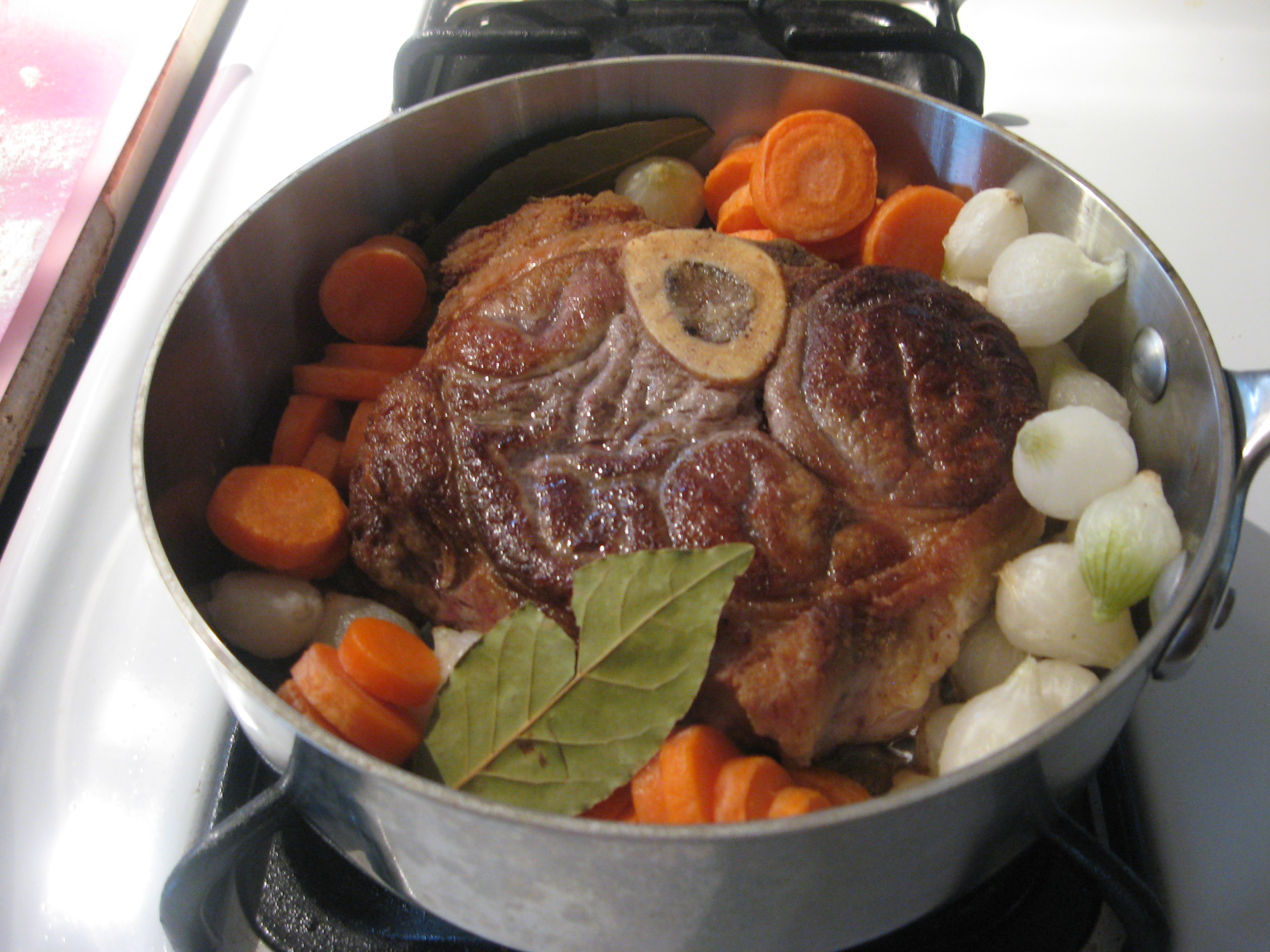
browned beef shank I treated the beef shank just as I would a big chuck roast–I dredged it in flour and browned it in a mix of butter and olive oil.  (Smells luscious while it’s browning . The flavor and smell of butter–yum.)  While that was in progress, I got my veggies ready (meaning I got frozen carrots and onions out of the freezer),

(Note that this is in a pan of the appropriate size–not too big, not too small. There’s no plastic so this can go into the oven for a nice low and slow cooking, covered with its tight-fitting lid.

Once the shank was nicely browned, there not really much to do except tuck some carrots, onions, and bay leaves around IMG_8056the edges, a pinch of salt,  add some dry white wine, and some beef stock–just poured it in until it was about 1/3 of the way up the side of the meat. That’s the reason it’s important to have an appropriate size pot–too large and you have to add too much liquid.  We’re not wanting to make soup here.

Cover with a tight-fitting lid; use foil if necessary  to make sure of a tight seal.  Cook in  a low to medium oven (275 to 300 °F) for about 2 hours or until the meat pierces easily with a fork, and enjoy–without having  too much left over! (A dollop of gremolata would be good with this.)

Hive report: 31 March 2016


RG Queen bee

Queen Salem

First, I’ve officially named my hives now–after herbs. Rosemarinus (#1) and Salvia (#2–the new, split). Now to figure out a consistent way to designate the queens and track the lineage, since I’m allowing Rosemarinus to “make” its new queen. I think I will name the queens after cultivars/varieties of the herbs. Maybe since my first queen was marked with blue (year ending in 5), I think she is Salem. It’s her blue dot that has kept me from losing her twice! The new queen, from the Rosemarinus hive, will be marked with white (year 6) so she’s could  be christened Irene (a white-flowered cultivar of Rosemarinus)–perhaps!  I have to work out something that will be logical and consistent. I can see a problem with that right off–Queen Irene, descended from hive Rosemarinus, but living in hive Salvia?!–perhaps I need to work on this some more. Hives will definitely be named after herbs though.


The performance and temperament of that hive as been so exceptional that I want to keep the genetics as much as possible. Thus, the hive has only capped brood, and queen cells. There have been about half a dozen queen cells made between the time that the first one was found open and this inspection today.

Õ¿Õ

It was blustery, partly cloudy, but warm today so after looking at the weather forecast–rain possible for the next several days–I decided I HAD to inspect Rosemarinus (at least) today. That was quite a job since there are three medium brood boxes, one honey super on regular wired wax frames, and one honey super with thin wax foundation (above a queen excluder) for cut comb honey. All these boxes have bees and all except the cut comb super and being drawn, including the very outside frames.  The girls have been very busy.

I put some wax-coated plastic foundation in that hive and the bees are drawing it out quickly. I’m happy to see that as I think it will make less work on equipment for the beekeeper, with more time to attend to the bees and the cut comb honey production.

I opened Rosemarinus hive to start the colony inspection at 13:00 EDT with less than optimal condition: partly cloudy, steady wind at about 7 mph, with gusts up to 10 or 12 mph. Since this hive is heavily populated despite the swarm (that went into Salvia)  I needed the smoker once I had taken off the cut comb honey super–really don’t want my cut comb honey to be reminiscent of BBQ! It was so windy that it was difficult to use the smoker effectively so the girls did a lot more flying about than usual–I think they get cranky with me taking the roof off their home when it’s windy, but none registered displeasure by stinging me. (Another reason to maintain the genetics that I have going in this hive.)

I finished a pretty thorough inspection at 14:05 EDT with lots of bees buzzing around outside the hive and clustered on the sides of the hive. Since that hive has been without a laying queen for at least seven days it wasn’t surprising that I saw only capped brood–and queen cells.

When I was about two-thirds through the inspection it was getting windier and completely overcast;  more and more bees were flying around me and around the hive. By the time I reached the lower brood box, agitation was setting in so I didn’t inspect each frame individually–I moved them to one side so I could look down between them–lots of bees there as well.  I could see some capped drone brood protruding, so I know that there is brood in all three boxes. The bottom board wasn’t littered with dead bees either.

Since I had inspected the honey super containing wired wax foundation a week ago, I let that one slip in favor of a more in-depth examination of the two brood boxes, and the one where I found the first queen cell.  Unfortunately, the weather didn’t let me do the complete examination of my lower brood box–I just know that there is some brood there, and  a lot of bees.

I’m happy to see multiple queen cells–I now know that the first one has not emerged yet. It was a little tense thinking of only one possible queen, just in case anything went wrong. Because of the weather, I didn’t even attempt a sugar roll for mites today, which leaves me just a bit anxious about levels; I’m going to try the sticky board again to see if I can get at least some idea of mite population. I was planning to treat (if needed) with MiteAway Quick Strips, aka MAQS (formic acid), but I’m hesitant to do that with the developing queens in the hive–at least until the new queen is established.

If the weather is suitable I plan to open Salvia and see how Salem is settling in  I hope that I’ll need to add a second brood box to that hive shortly.

Anticipation!


20160331_115659

Rosemarinus, 31 March 2016