More herbs and a few leeks….

Sunday, as the day after the farmers’ market (when I have to get up at 4 a.m.) is usually a pretty lazy day for me, but I did do a little planting today:  some quinoa–mostly just to see what it’s like when I’m not getting it in a box.  I curious to see if the leaves can really be used like spinach.

My biggest task was planting some leeks.  I love them, but I’ve not ever tried to grow them so this will be fun too.  I know I was amazed the first time I tasted REALLY fresh broccoli–you know, the home-grown, just-picked kind.  I hope there will be a similar experience with the leeks, too.

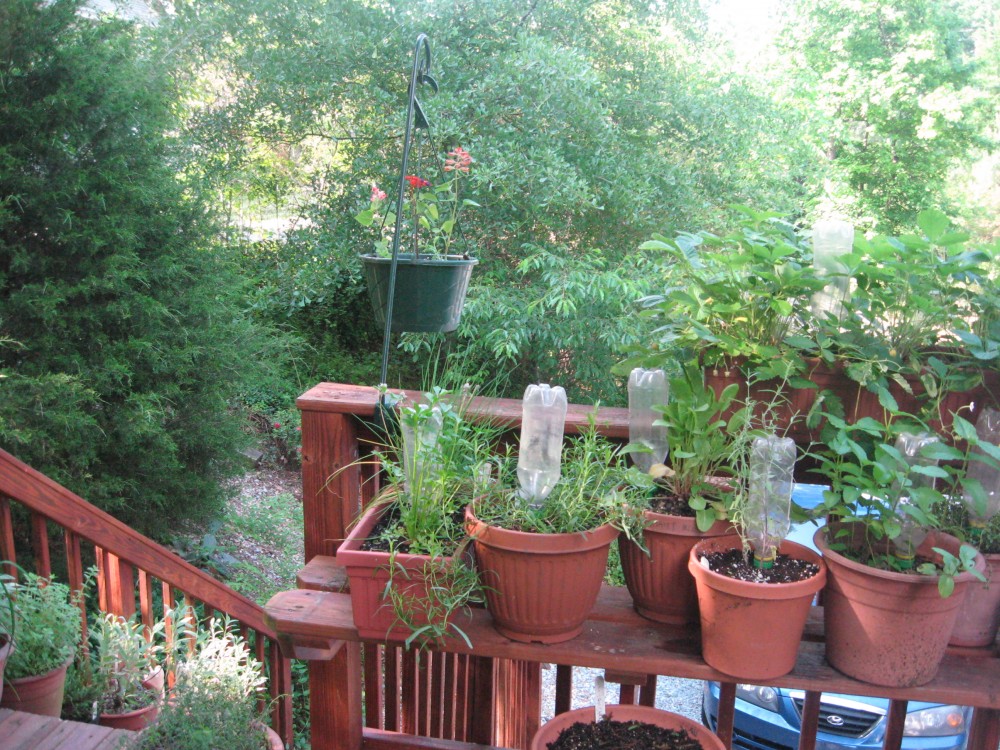
I’ve added a couple more herbs–Spanish tarragon (a.k.a. Tagetes lucida) which did not do well for me last year); papalo (a first time one for me) since I’m always looking for potential substitutes for cilantro; epazote (again–more since it did overwinter), Thai basil, cinnamon basil, lime basil, and lemon basil. The burnet is back and looking healthy as is the Greek oregano, the marjoram.  The Syrian oregano didn’t come back so that needs to be replaced.  I’m most pleased that the French, or summer, thyme is back and looking great; I’ve added some English thyme, too.

My mint is looking really scruffy–unknown kind that I got from a friend and keep for the awesome flavor.  I’ll need to see what I can do to help it along.  Might be time to repot it.  The lemon grass and the fern-leaf dill are looking good too.

Even though I’m always looking for stand-ins for cilantro, I’ve given up on culantro–flavor is okay, but the leaves are very tough, and I seem to have no “luck” at growing it–so on to something else.  I do want to add Vietnamese coriander to the collection too.

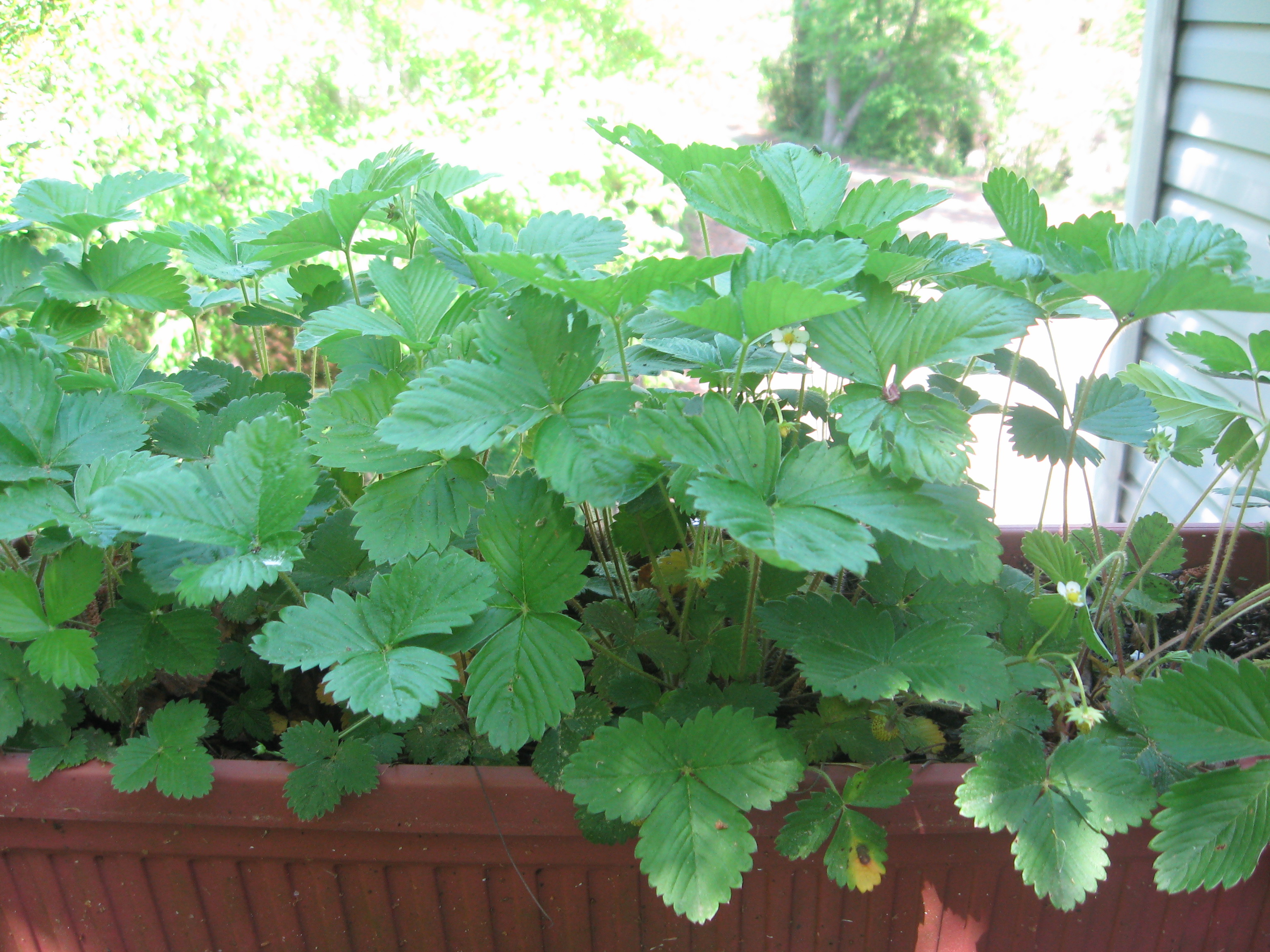
Even though it’s not an herb, I’m most happy to see my planter of alpine strawberries is doing well again this year–I may not get lots of berries, but the flavor is so great.  They never really make it into the kitchen–just get eaten out of hand as I pick them.

Ready for some spring and summer flavors–updates to follow as things grow.

planter of alpine strawberries

alpine strawberries

For basil lovers….

Here is a link to the Herb Companion with information on growing and using basil.  There are descriptions of some of the various kinds–I’m trying cinnamon, lemon and lime basils this summer.  Would not want to be without my Thai basil either.  I love the spicy globe basil, but seem to have a hard time growing it.

Under-appreciated vegetables: celery

bunches of celery in the Harris Teeter produce department

celery

It seems that celery is a problem for many of us who do single-serving cooking!  I’ve seen comments to that effect in several cookbooks dedicated to cooking for one.  One of my “things” to do with that head of celery is to make mirpoix or soffrito and stash it in the freezer so that I’ll have it to facilitate making a quick meal.  That works, but you need only so much of that in the freezer and how many celery sticks can you munch on?  Buying the precut celery stick is the produce department is NOT  an option–they keep even less well than the whole head of celery.  Admittedly, I like celery ribs stuffed with peanut butter and pimento cheese, but again, how many can you–or should you–eat?  Or, buy it off the salad bar at the supermarket–but then you may not have it when you need it unless you’re willing to make a trip

One thing that I’ve found helpful is to store the celery in a partially open zipper-lock bag with a paper towel that’s been dampened and then squeezed as dry as possible.  This extends the storage time, but still I end up tossing a lot of celery on the compost heap.  There must be a better solution.

I think that perhaps the best solution to this is to recognize that celery is a vegetable with nutritional value and learn to use it as a vegetable and not just as a seasoning.  Until I started this research I was not aware of many recipes treating celery as a vegetable on its own.  (I’m not including its use in salads or as a snack, or even to add crunch to caponata.)  I’ve been looking for more celery recipes.

My first stop was my favorite vegetable cookbook (note that I did not say vegetarian cookbook), The Victory Garden Cookbook (see bibliography).  I was amazed at how many recipes were given for celery–I think that this goes to show my  under-appreciation of celery!  (Yes, I know it’s popular in stir-fries, too–but there’s a recipe for a stir-fry of celery as a veggie!)

There are recipes for braised celery (p. 79-80), celery slaw (p. 78), and salads (Celery Antipasto p. 78 and Celery Rice Salad, p. 78) as well as the expected Cream of Celery Soup (p. 81) I found a Chilled Celery-Lemon Soup (p. 81) that certainly looks intriguing as a way to use celery as a vegetable. There are other recipes here that look as if they have potential for celery as a vegetable.  (At least go to the library and check this book out and try some of these.)

I went to Eat Your Books and ran a search on the books that I’ve added to my bookshelf.  Turned out that there were lots of recipes for celeriac (later discussion), but I did not find many for simple stalk celery; here are a few of the ones that I did find:

  • Celery à la Grecque (Céleri à la Grecque) from Mastering the Art of French Cooking, Volume One by Julia Child and Louisette Bertholle and Simone Beck.
  • Braised celery stalks with onion, pancetta, and tomatoes from Essentials of Classic Italian Cooking by Marcella Hazan
  • Braised and gratinéed celery stalks with Parmesan cheese  from Essentials of Classic Italian Cooking by Marcella Hazan
  • Risotto with celery from Essentials of Classic Italian Cooking by Marcella Hazan

If you feel like trying this approach to the celery crisis that often afflicts those of us who do single-serving cooking here is a starting point–all it really takes is a trip to the library!  If you do an online search you need to search for “stalk celery”, “rib celery”, or “celery stalks” or you will probably get lots of recipes for “celeriac” or “celery root” which is a great vegetable, but likewise under-appreciated in American every-day cooking!

Another solution might be to search for recipes for Florence (bulb) fennel and substitute celery in some of those with possible changes of seasoning.

That is not a lot of recipes–I think that it likely reflects celery as seasoning, not as a vegetable, but I think well worth exploring.   Have celery–I’m going to experiment.  I’ll keep you posted!

A son goût!  

Cornish hen braised in milk

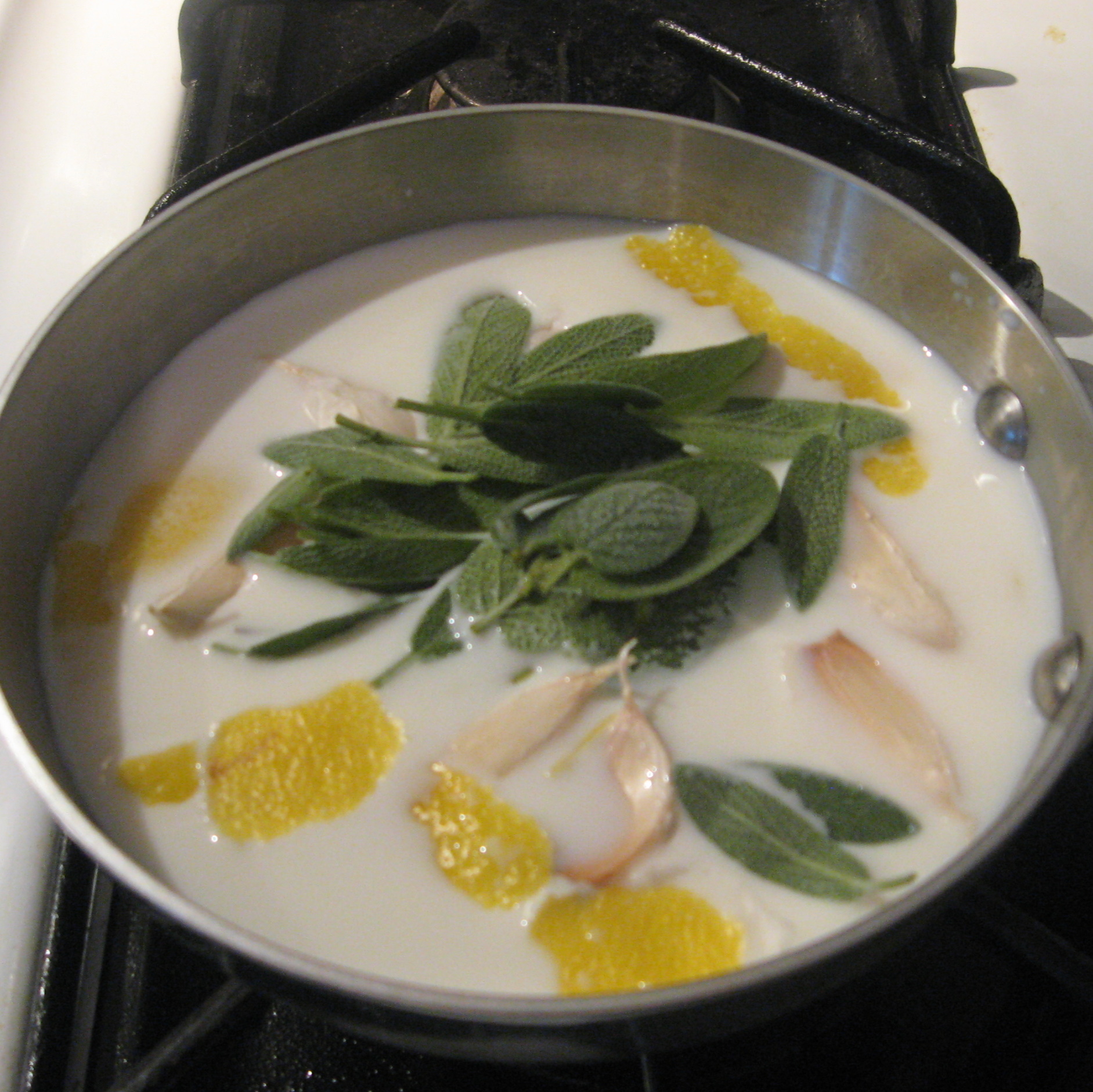
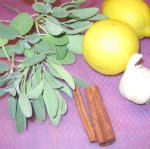
sage, cinnamon, garlic and lemon

I had an earlier post about braising chicken in milk, when I tried the recipe using chicken pieces since that gave me something more like a single serving.  Flavor was great, but I thought that for something a bit scaled down, but more in keeping with the original recipe, I would try this with a Cornish  hen and see how that worked. One of the advantages of these little birds is that they are more in keeping with  Jamie Oliver’s recipe, rather than the chicken parts that I tried originally. This might be a way to keep with the spirit of the original recipe, but scale it down to something closer to single-serving size.  While this is a recipe that might do well on second runs, I really don’t want as much as whole chicken would make.
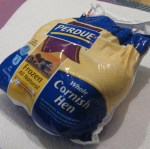
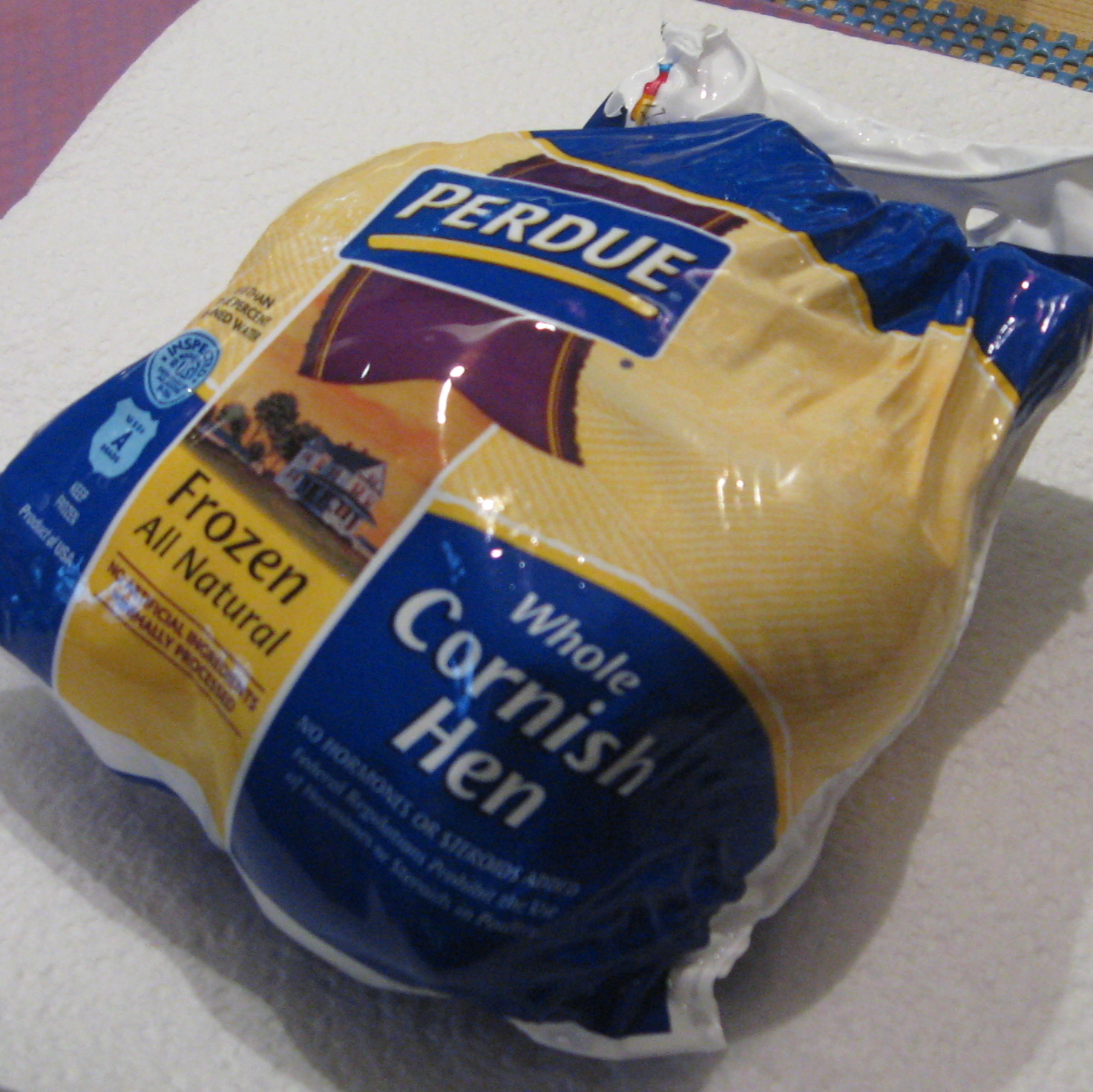
Well, the weather has turned to fall with blowing leaves, and chilly temperatures so this seems an excellent time to try this again…and my grocery shopping provided me with a lovely price on a pair of (frozen) Cornish hens–about 1 to 1-1/4 pounds each.

A Cornish hen–either male or female regardless of calling it a “hen”–is a special breed of chicken (in the USA sometimes also called a poussin, though that is really French for a very young, small chicken that is usually about a pound in weight).  Since my supermarket does not offer poussins, but does have the Cornish hen (which is a young, hybrid chicken–of Rock Cornish with some other breed–not over 2 pounds by USDA specifications) that’s what I’ll use; I was fortunate enough to find some hens that were just about a pound or a pound and a quarter each.

While browsing some of my favorite blogs, I found a discussion of Jamie Oliver’s recipe–where an oversight  of lid on instead of off for part of the time was compared to the bird braised in an open pot.  This made me think of the French chicken in a pot that I had cook recently–one of the things that was  impressive about that was how the flavors seemed to permeate the meat itself.  I decided to try this with the  lid on for part of the time just for that reason.  (I do have two Cornish hens–so maybe I need to do the same here–one each way!
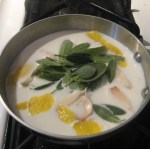
One of the things I discovered when doing the chicken parts was that just because you are using 1 pound of chicken instead of 4 pounds, you might not want to just take a quarter of the seasoning ingredients–the flavor was good, but perhaps a bit on the wimpy side; so I have to find a way to optimize that when cutting the recipe to single-serving size.  I decided that this time, I will make up the seasonings and milk as if I were doing the large chicken (in the 2 cups of milk).  I thought I’d simmer the seasonings in the milk and taste to see what that was like, cool it and add what seemed appropriate for the size of my bird and my pot.

The petit brasier was a no go–too big around–so I used my 4-quart All-Clad pot as being the closest thing to a “small” dutch oven.  The whole stick of butter was obviously not necessary so I used just enough (about 2 tablespoons) with the olive oil (about 2 tablespoons as well) to brown the hen.  (One thing I did discover is that the skin on a Cornish hen is much more fragile and has much less fat under it than does a more mature chicken.)  Just the smell of the hen browning in the butter and the olive oil is fabulous!

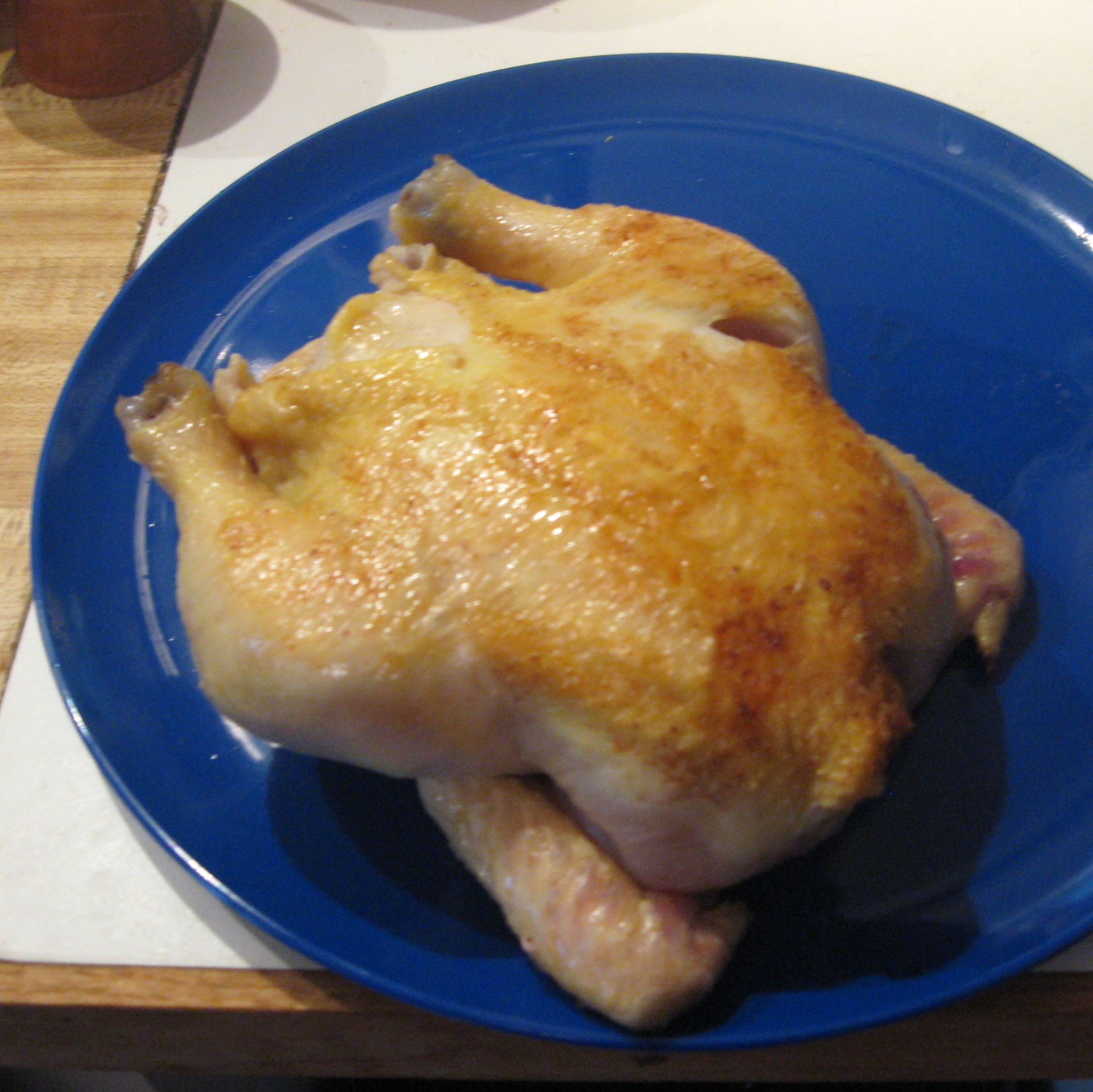
browned bird on plate

There was not much fat in the cavity either so I returned about half of the butter/olive oil mixture to the pot with the chicken.  Giblets were mostly not included–just the neck, but I browned that and included it in the braising pot for  extra flavor.

So here’s my bird, browned, and ready to go back into the pot to braise with the seasoned milk.  (Next time I’m doing a Cornish hen or poussin, I think that I’ll try using just half the milk with half to three-quarters of seasonings even though these birds are only about a quarter the weight of the chicken called for in the original recipe.)

browned bird in the pot with milk and seasonings

After steeping the other seasonings in the warm milk, and then letting it cool a bit, I tasted it–very lemony and sage-y, but not much garlic or cinnamon yet; (that came out later in the braising process).  I divided the milk and the other seasonings in about half since that looked like about the right amount of liquid (the eyeball test!!).  It took about 1 cup of milk (and I added half the solids) so the rest went into the freezer for a repeat, or perhaps just to braise some chicken thighs or poach some breasts. ( I did put the cinnamon into the braising pot with this bird).

braised Cornish hen

Since it was a smaller bird and the braising liquid was already warm, I reduced the oven temperature to 325 ° F since I wanted enough braising time to let the flavors actually get into the meat (as it did in the French chicken in a pot).  I decided to go with lid-on for about 30 or 35 minutes and see how it looked then, and finish the braising with the lid off so that the liquids reduced more.
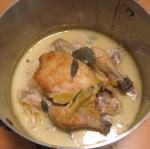
bird in pot after 30 minutes in the oven with lid off

lid off for about 30 minutes

After another 30 minutes in the oven with the lid off, the sauce has reduced some and it looks falling-off-the-bone tender.

Somewhere along the way, all those unlikely, highly individual, and potent seasonings have turned into a complex, earthy  taste and aroma.

I’m ready to eat!

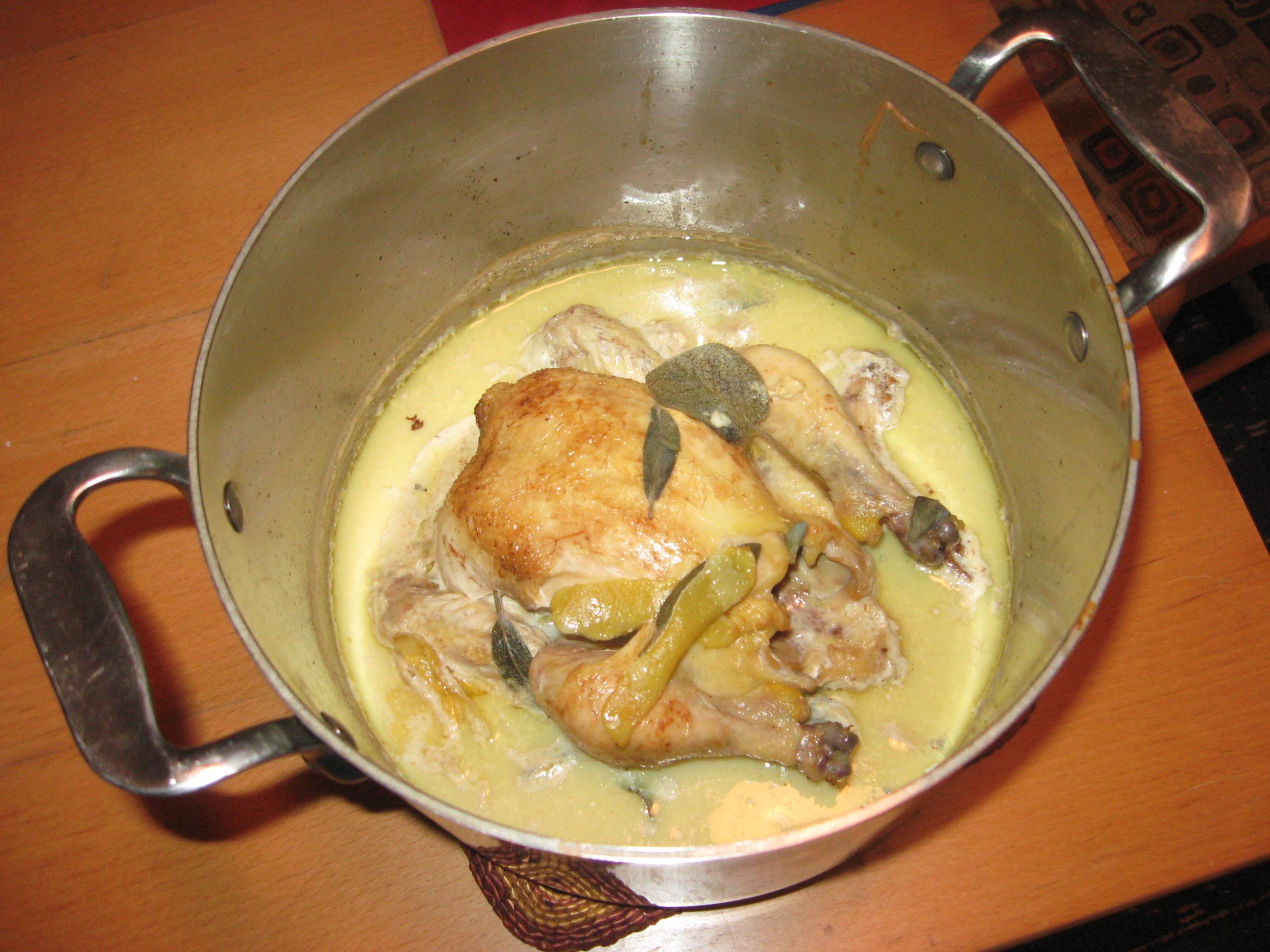
Admittedly this does not look like it’s going to be a dish that lends itself to elegant presentation, but it’s certainly a keeper for comfort food.  Braised in a container that could go directly to the table it would make a nice casual presentation as the skin does brown more after the lid comes off.

•♦•«»•♦•

The  pot  that I used was just a bit deeper than I might have liked, but better too deep than too wide since that would need too much liquid to reduce by the time the hen was done.  Unfortunately, the bird was just a bit too tall to fit into my small chef’s pan–but this was close enough.  The sauce does look “curdled” but tastes wonderful!  Just the thing for a damp, drizzly, autumn or winter evening!

chocolate mug with sage-lemons IMG_4796The original recipe for a whole chicken would be great for causal company–this is definitely a keeper!   I had this with basmati rice, roasted baby carrots and baby zucchini.  Sautéed  spinach, or maybe broccoli raab would be good too.  I think that the slight bitterness of the broccoli raab would be a great contrast to the way that these seasonings meld into a very earthy background to the chicken.

A son goût!

More on growing herbs

For those just starting gardening, and growing herbs is a great place to start, here’s an article from The Herb Companion that addresses the joys of having a kitchen garden of herbs (in containers), and how easy it can be.  You’ll probably find that it’s addictive!  Once you know how easily you can grow them almost any where, and how useful they are, you’ll not want to be without fresh herbs in season.

Chervil & Savory

Chervil (Anthriscus cerefolium)

Chervil (Anthriscus cerefolium) is a wonderful herb, but unless you grow it yourself, you’re unlikely to every taste it.  It’s too delicate to be found in the grocery store in the little plastic boxes or in bunches.  I’ve not see it at the farmers’ market as a cut herb either.

As the plant is delicate, the flavor is too:  hints of anise/tarragon and parsley but subtle–which is not something you’d say about French tarragon.

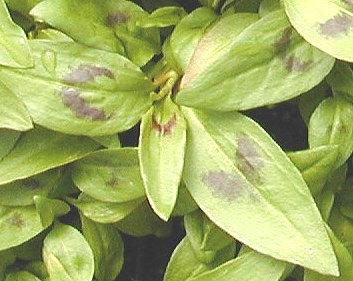
Chervil seed is easy to germinate but the plant is difficult to transplant as it has a taproot. It likes rich, moist soil that is well drained, and would like to be in partial shade. You can sow outside several weeks before the last frost.  It is another herb that like cooler weather, but it may be prolonged by providing some shade, e.g. planting it under other plants. Like cilantro, it is a fast-growing annual that will flower quickly.  If you cut off the flowers you can prolong the foliage to some extent, but the old leaves will change color (from the lovely greet to yellow and purple) and become tough and lose flavor.  If it becomes one of your must-have herbs, you can sow successively (as with cilantro) throughout the growing season.

To harvest, cut sprigs about two inches above the ground, taking the older leaves from the outside of the plant, but be sure to leave the new center leaves as this is where the new growth is occurring.  As with most other herbs, you should not harvest more than one-third of the plant at a time since it needs the leaves for photosynthesis.

In cooking, use it where you want delicate flavors e.g. with mild fish or seafood.  It would do well with young poultry that has more delicate flavor than the older bird.  Chervil would be good with young vegetables–e.g. baby carrots, or fresh baby peas.   The leaves are mild enough to add to salads, and to use as a garnish in place of parsley.  It could be used with many of the same foods as tarragon, only where you’d like a more delicate touch–e.g. with eggs. It’s so mild that you will want to use lots of it–quite in contrast to tarragon.

I am not a fan of dried chervil–it seems to lose a lot of flavor and come across somewhat hay-like, even when I’m sure I’ve obtained it from a supplier with good turnover of their dried herbs.  So for me, it’s one of the signs of spring, right along with the new peas.

♦♦♦

Image from Mountain Valley Growers

Winter savory (Satureja montana)

Savory is not going to be found in the grocery store shelves either.  Two savories, summer (Satureja hortensis) and winter savory (Satureja montana) have very distinctly different growth and appearance.

Summer savory is an annual about 12 to 18 inches tall that tends to be rather sparse, lanky looking with grayish green leaves that will last only until frost.  Winter savory is a perennial, evergreen or semi-evergreen, shrub with a bushy habit, usually not taller than about 12 inches.  It’s leaves are glossy, dark green and closely spaced.

While both have are spicy, rather than sweet flavor (like tarragon or chervil), the winter savory is spicier and hotter than the summer, but they can generally be used interchangeably, though the milder summer savory is best with fresh summer veggies.  I think that the savories are most commonly associated with northern European cooking than with American cooking.

Both winter and summer savory are sometimes known as the “bean herb” as they are particularly used with dishes made with dried beans;  the somewhat milder summer savory is great with fresh beans as well (fava, lima, or green beans).  Other uses include with cabbage, Brussels sprouts, and with summer squash, and roasted potatoes.  It’s potent enough to use in marinades for beef, lamb, as well as chicken and pork.

The summer savory is easily started from seed.  Summer savory is not fond of being transplanted (if starting indoors use peat pots so that you do not have to disturb its roots).  It does will is average soil that is well drained, but well watered.   It will want plenty of sun and does need to be well fertilized.  Blooms will appear between the leaves on the upper portion of the plant.  At that point you should cut the plant back by about one-third in order to prolong its culinary use by encouraging more foliage.

Winter savory can tolerate poorer soil than the summer, but it also must be well drained. It also wants plenty of sun.  It is hardy to about zone 5,  if the roots are not wet during the cold weather.  Wet roots in the winter may well mean no savory in the spring–really true of most perennial herbs!    After or as it blooms (I prefer not to let my herbs bloom), it should also be cut back to encourage it to be bushy and increase foliage, which is what you want for cooking.

Both are harvested by cutting springs from the plant–remember not to cut more than one-third of the plant at a time so that it can keep growing and producing.  If you need to store savory,  wrap in a slightly damp paper towel and place in a zipper-lock back.  Summer savory should hold for about a week, and winter for about two weeks.

USDA hardiness zones

I’ve talked about growing your own herbs, and I’m sure I’ve mentioned that certain perennials are hardy in some zones and not in others.  If you are unfamiliar with these, here is a link  from the National Gardening Association which will answer some questions about hardiness zones, and will let you check out your zone.  Remember that drainage can affect hardiness, and it will make a difference if the plants are in pots, rather than in the ground.

It’s not only cold that affects your plants:  It’s thought that plants begin to suffer physiological damage at temperatures above 86 ° F.  From the American Horticultural Society, here is a link to a downloadable heat zone map; online this map may be viewed at the Southern Gardening website.  This gives the average number of days when the temperature is above 86 ° F

In using either of these (cold hardiness or heat zones) you have to consider where your plants are being grown–in the ground, in pots, the soil drainage, and water availability, among other things.

Epazote & Mexican Mint Marigold

Epazote (Chenopodium ambrosiodes)

Epazote (Chenopodium ambrosides) is an herb that is used in Mexican cooking (sometimes even referred to as “Mexican herb”).  It’s difficult to describe the flavor.  I’ve asked a number of customers at the farmers’ market who have used it and we agree that flavor is a bit like cilantro (or culantro) with a bit of citrus thrown in for good measure, with perhaps a bit of bitterness.  It is one that has become a part of my kitchen garden each year now.  It’s not really a pretty herb, but it is tasty. (Image from Mountain Valley Growers).

It is a tender perennial (dies back to the ground at frost but emerges again in the spring) hardy to USDA zone 8.  It is an heat-loving herb that will develop best flavor in full sun.  It is tolerant of some, but not complete, drying out.   In colder regions it may be over-wintered indoors.

Young leaves can be treated like sorrel–added to other greens, wilted and added to soups, but use sparingly until you’re acquainted with the taste as it can be potent. It is said to reduce the flatulence that can occur after eating beans, and had other medicinal uses by Aztecs.

As with most herbs, I think it is best used fresh, although it can be dried, and is available from Penzeys Spices.  That is how I first used it, but extrapolating from that use, I decided that I wanted to try the fresh herb–and it’s become permanent part of my herb garden.

Mexican mint marigold/Spanish tarragon (Tagetes lucida)

Spanish/Mexican tarragon (Tagetes lucida)

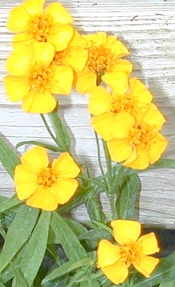
If you find it impossible to get French tarragon (Artemisia dracunculus sativa) to thrive, but would like a reasonable tarragon flavor, the you might want to investigate Spanish tarragon (Tagetes lucida) or Mexican mint marigold.   This plant does better in hot, humid weather than French tarragon.  It is an annual/tender perennial that likes sun, even moisture (but not wet feet) and average soil.  It can be up to 3 feet in height. 

The flavor is anise/licorice rather than what you expect of other “marigolds”.   It is a better substitute for French tarragon than is Russian tarragon.  In recipes calling for French tarragon, you can substitute this herb is the same quantity.  It does break down more quickly than French tarragon with cooking so might need to be added later, or additional added at the end of cooking if the flavor has weakened with heat.  In vinaigrettes, flavored vinegar and sauces it can be used as French tarragon.  Good with eggs, chicken, mild seafood and tomatoes as is French tarragon. 

Harvesting & using herbs

Now that you have all those lovely herbs growing in your kitchen garden (or just in containers) you need to get them into the kitchen and use them.  There are some general things that apply to harvesting and using almost all herbs in order to get the best flavor in your dishes.

Even though there are “classic” combinations (e.g. basil and tomatoes) don’t be afraid to experiment…that’s the point of having this selection available at your kitchen door!  Smell and taste the leaves of your herbs.  Think about the dish you’re cooking, how you feel today….

Try something different–fresh oregano or marjoram with the pasta sauce today; or maybe even tarragon or fennel with tomatoes.  (Yes, the leaves of that Florence/bulb fennel can be used as seasoning too.)   Experiment!  Taste!  Smell!  That’s what herbs are all about.

In reading through cookbooks, you’ll find may different opinions about when to harvest, whether or not you want herbs to bloom.  Here are a few generalizations about growing, harvesting, and using those wonderful plants that come from my experience:

  • For best flavor you want to keep most of your herbs from blooming; once the plant starts blooming and making seed it is less flavorful.  (You can find all sorts of articles pro and con; this is my opinion.)  To do this you will want to pinch out forming flowers at the tips.  This is particularly true for basils.
  • You generally need to keep herbs trimmed or they can get very unruly, lanky and leggy and straggly.  If you’re not using enough to keep them bushy, and retard blooming, then give them a “butch” every once in a while to keep them bushy and full.
  • Rosemary is an exception it’s not “pinchable” as it blooms along the stems themselves.
  • If you have several plants or if you want to use the flowers (they are edible) then you may want to let part of them bloom–they are lovely, but you sacrifice flavor in exchange for the blooms.
  • Don’t harvest more than one-third of the plant at a time–the herb needs enough leaves to keep growing since it depends on the leaves for photosynthesis and growth.
  • Fresh herbs are best when harvested as needed–not to be stored in the refrigerator for days. That is the whole point of having those pots on the deck.  When I need to trim, I either find something to do with the trimmings (make an herb vinaigrette or put the leaves in salads), or give them to friends…I won’t store them in the fridge.
  •  You’ll be cutting springs rather than picking individual leaves for most herbs (e.g. thyme, tarragon, sage), and then stripping the leaves from the stems (if the stems are woody or tough).
  • Bay is an exception: harvest by picking individual leaves, not sprigs, and not the newest leaves on the plant.  To harvest bay leaves, take the individual leaf and pull downward sharply.
  • You may want to add herbs at several times during cooking:  early to allow flavors to “meld”, but also again near the end in order to have the fresh flavor as many herbs lose some flavor with heating; you can give you dish a “fresh” boost by adding a bit more of the fresh herbs at the end of cooking.
  • If your recipe calls for dried herbs and you are substituting fresh herbs, you’ll need to use about three or four times as much of the fresh as the dried:  e.g. one teaspoon of dried thyme = one tablespoon of fresh thyme.
  • The way that an herb is cut can affect the flavor of a dish.  The more finely it is cut, the more rapidly the essential oils will diffuse into your dish, and the faster the essential oils may dissipate with heating.  Coarsely chopped herbs will release flavor more slowly and “hang around” longer.
  • You can preserve herbs for off season use by freezing but just throwing them into the freezer in a bag doesn’t do well. You can freeze them in ice by coarsely chopping them, packing them in ice-cube trays, and then cover with cold water and freeze. Color may suffer, but flavor is preserved  though you have to consider the effect that the extra water will have on adding to a dish.
  • My favorite way of freezing is to make a “pesto”–an herb and oil purée–of the herbs and pack into zipper-lock freezer bags.  You can cut off what you need.  This has the advantage of not adding additional water, and I think that it keeps flavor better than water and is more versatile.  The approximate proportions for this would be 1/4 cup oil for each gently packed cup of fresh herbs.  This works with basil, tarragon, marjoram, oregano, dill and cilantro.


Cilantro & coriander

Cilantro image Johnnyselectseeds.com

Cilantro (Coriandrum sativum)

Cilantro and coriander (Coriandrum sativum) are the same plant–just different parts used at different times–cilantro (herb) and the seeds (coriander–the spice).  I think cilantro (the herb) may be a love-it-or-hate-it flavor.  I like it, and even make a cilantro soup (no kidding).  It’s readily available in most grocery stores, but that large bunch does not keep well once you’ve used that little bit you need for single-serving cooking.  It’s a must-have for salsa, with chili, and Mexican and Asian dishes.

One way to have a continuing supply of cilantro when you want it is to grow your own, but that has its own problems, too.  It likes rich soil, plenty of  even moisture, and sun. Coriander seeds germinate easily. It can be direct sown in the garden or in a container and the foliage cut as you need it. It does best in spring and fall when the weather is cooler (even though it is a tropical plant).  Having a supply all summer (during tomato season) is going to take a bit of effort.

The difficulty with growing cilantro is that it’s not like  perennial herbs or parsley (a biennial) that just lasts all summer. Cilantro is a very quick-growing annual–it’s going to bloom and go to seed (bolt) as soon as it gets hot, perhaps even before it can develop a good crop of foliage, which is what you really want.  If you cut off the flower/seed head you can have the foliage for a bit longer. You can try giving it some shade in the hottest part of the day and perhaps prolong it a bit.

You can do succession planting…a little every two or three weeks depending on how much you use in conjunction with the above suggestions.  If you really love the stuff, then successive planting may help you keep a supply.

There is a benefit of growing your own: you can allow it to go to seed and you have coriander. The seeds, when not dried have some of the flavor of  cilantro and some of the flavor of coriander–so it’s fun to try using them in different ways too.

Frankly, I don’t think that even succession plantings works well  in the hot, humid, North Carolina summers–the small plants can bolt even before there is enough foliage for a single serving of something, and certainly NOT enough for cilantro soup. (This is a potato-based soup that I’ve made hot, but I think I’d like to try it as a cold summer soup too, garnished with some chopped tomatoes….that’s the fun of cooking for one.)

Culantro (Eryngium foetidum)

Another possible solution to get the cilantro flavor is to grow a substitute for it, such as culantro (Eryngium foetidum) sometimes found under the names of saw-tooth herb, or Mexican coriander, among many other names as well.  It is a native of South America and Mexico.  This is an herb which is widely used in Caribbean cooking, and in India, and East Asia as well.  It has the flavor of cilantro–but is a perennial plant (grown as annual in many climates).  The disadvantage of this herb is that the leaves are tough–not at all soft like cilantro leaves.  An advantage is that it’s tolerant of hot, humid climate.  Purportedly, it is increasing in use in industrial herb production as its leaves hold flavor when dried much better than Coriandrum sativum.  I’m trying a pot of it on my deck this summer.  Last summer I tried to germinate seeds and it was a total flop.  I was fortunate enough to find a plant at Stone Brothers & Byrd here in Durham this year so I’m going to try it again.

Vietnamese cilantro (Polygonum odoratum)

There is a second alternative for cilantro (Coriandrum sativum) flavor is  Vietnamese coriander or Polygonum odoratum. I have not been fortunate enough to find this one locally this year–it’s another that I want to explore the possibility of growing for the farmers’ market.  This herb is frequently used in Vietnamese cooking.  It has some “cilantro” flavor so is a possibile substitute.  The big advantage here is that it’s easy to grow.  It likes afternoon shade or even dappled shade all day, but needs to be evenly moist.  It’s fast enough growing that you may need to divide or transplant to a larger pot several times a season.  If it becomes root bound it will quit producing leaves.  It is a tropical plant that will die back at freezing (32 ° F/ 0 ° C).  Not all bad, as it can be kept indoors over the winter in a bright spot.  I had this on the deck last summer and was very pleased with it.  I just did not have enough light to maintain it indoors during the winter.   Now I need to find another plant.

(This image is from Mountain Valley Growers.  For some additional discussion of these herbs you can go to their website.  I’ve ordered from this supplier before and been very pleased with the quality and condition of the plants when they’ve arrived.  They also have some great recipes on that site too. There’s a lot of information on herbs and their use at this website.)

All things considered, I expect that I’ll buy cilantro from the grocery store when I need large quantities for the soup, but for single-serving amounts, I’ll  keep trying succession planting, culantro leaves, and hope to find Vietnamese cilantro locally rather than have to special order it.  (The problem with ordering for herb suppliers is that there is frequently a minimum order which needs to be met…I really don’t need six new herbs on my deck now–but I’m certainly considering it because I’d really like to have this one again.)  I’ll be letting some cilantro go to seed to try more of the green seeds as seasoning, too.

One additional solution to help you through the hot weather is to make “pesto” (leaving out the cheese and nuts) from cilantro leaves and keep it covered with a thin film of oil.  That holds remarkably well in the refrigerator (just like pesto)–about a week.   I’ve not tried freezing this as you can pesto, but I have used a frozen product during the winter.

There frozen cilantro available in the  Dorot (a company in Israel) line of frozen, chopped herbs.  I’ve used their cilantro/coriander during the winter when I need small quantities for things like adding fresh cilantro flavor to chili con carne, and been very pleased with it.  If you go to the Website you can find a store near you that carries the products.  (Image from Dorot.)