A cucumber is a cucumber is a….

Another summer delight is the cucumber.  I know–they’re available year-round in the supermarket, but my favorites seldom show up in good condition in the market except at the farmers’ market during the summer, because I can get something besides the “slicing” cucumber (though that will do in a pinch).
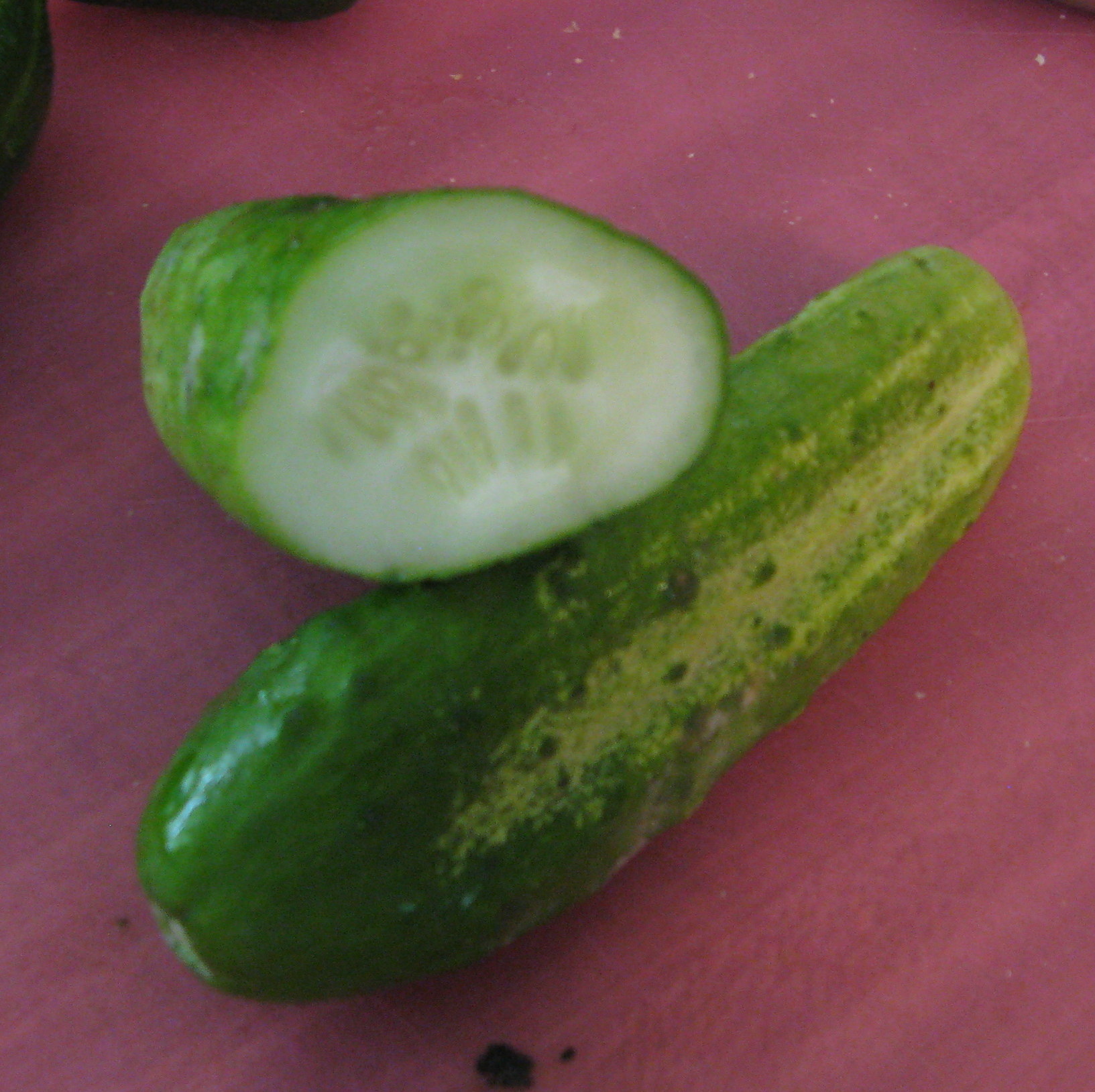
short chubby pickling cucumber with typical coloration

pickling cucumber

I like my cukes to be drier and without pronounced seeds, so I use pickling cucumbers to eat instead of the “slicing” or “field” cucumber.   During the winter, I’ll use the English (the big long ones in the plastic wrap) or the “baby” cucumbers since they have less developed seeds–and I can’t see having to scrape out that much of my cucumber.  A less watery cucumber (than the slicer) is desirable since I like to put them into cucumber and tomato salads, white bean salads, macaroni salads and all sorts of things like that–they are so cool and crunchy. I really don’t want to scrape out the seeds and salt to remove water!

.

cut Amira cucumber with small seed cavity and seeds

the Amira cucumber

Until recently, I’d been using pickling cucumbers, but a friend has introduced me to the Amira cucumber which she has grown in her garden regularly for some years; it’s now become my new favorite cucumber! Long, slender, with a deep green, thin skin, and seeds that are not very pronounced at all, and it is without the one downside of the pickling cucumber–a tendency to bitterness, especially in hot, dry weather. I’ll be planting some of these next summer, to take the place of the Diva (a slicer that does not need more than one plant to set fruit) cucumbers that I have been planting for the last few years.

.

Cucumbers are a member of the gourd family (Cucurbitaceae)which also includes squash, gourds, and melons. Cucumbers come in three main types: commonly called field or “slicers”, pickling, and “hothouse” or English cucumbers.

  • The American slicing (also garden, salad,  or field cucumbers) have a thicker skin and are usually waxed (for the supermarket) to prevent dehydration.  Since the skin is thicker, I prefer these peeled and because of the larger seeds which may be bitter and tough, and likely will need to be scraped out. These are a “wetter” cucumber and need to be salted to draw out excess moisture before use in salads. (Sorry, no pictures since I don’t have any of those around the house!) In the supermarket, these are the loose ones, with the waxed skin.
  • The pickling cucumber is noticeably different from the slicing or salad cucumber–there are gradations of color, and the skin is bumpy. These are usually shorter and chunkier than slicing or salad cucumbers, but they are perfectly good to use in place of slicing cucumbers.  (These will include gherkin and cornichon types which are smaller than other varieties of pickling cucumbers.)  When these are found in the supermarket, they usually seem to be dehydrated, since they are not waxed.
  • The English, Japanese, or “hothouse” cucumbers, which are longer and skinnier, and have small seed cavity and small seeds that don’t need to be scraped out. These are sometimes called “burpless” since they do not contain some of the compounds in the skin which can cause digestive distress to some people. These are found wrapped in plastic instead of waxed; the skin is thin so they don’t need to be peeled.

Favorite things to do with summer cucumbers include cucumber sandwiches, tomato and cucumber salad (with onion and herbs) as a side dish, or add cheese (maybe feta or ricotta salata) for a light meal (especially with fresh bread to soak up the juice), and I like to add them to other summer salads like white bean salad or pasta salad.  Slices are great as a crudity with hummus or other dip (baba ganoush). Then there’s that dish of cucumbers and onions, thinly sliced with a bit of sugar and vinegar and marinated.  Or combine them with yoghurt or sour cream, or even make a cold cucumber soup that’s easy and refreshing.

Recipes for cucumber salads or soups can be found on the web or in most cookbooks, but I’d especially recommend one of the vegetable cookbooks listed in the bibliography–Marian Morash’s The Victory Garden Cookbook, pages 92-101 for cucumber basics and some more novel uses such as sautéed  cucumber, and even baked stuffed cucumbers.

pickling and Amira cucumbers side by side

Amira and pickling cucumbers
Baby eggplant

Since eggplant are such a common, inexpensive, vegetable at all the summer farmers’ markets, I’m looking for ways to use more of them.  If you look at the nutritional value of this vegetable it looks like a worthy addition to my diet–vitamins, minerals, manganese, phosphorous, potassium, iron, and protein.  So what’s my problem? I think it’s one of the most beautiful vegetables in the market–right up there with ripe bell and chili peppers, and it’s not that I don’t like it–but I certainly don’t LOVE it like I so some other veggies.  Then there’s the size–I will eat veggies I don’t love, but I certainly DO NOT want leftovers lingering in the fridge.

baby eggplant in colander

baby eggplant

This summer I’m seeing baby eggplant at the markets–they are really cute and maybe more manageable in my diet. I have a lot of them now, so I’m looking for things to do with them. My usual “treatment” for eggplant is to brush it with some good, fruity olive oil and then grill it or put it on the griddle. Since I don’t have the grill fired up this evening, I think I’ll try simply roasting some of them as a first step in discovering things to do with baby eggplant.

For more ideas of things to do with this surfeit of this vegetable, I’ve been browsing the Internet. (If you simply google “baby eggplant recipes” you get 37,500,000 hits, so I though I do a little screening.)

I’ve found several recipes that look worthwhile–some more involved than others, but still looking appealing to me, since some of these bloggers were willing to confess to not loving eggplant, too.  So, I’ll share some of these “finds” with you.

halves of baby eggplant roasted

roasted baby eggplant

There are some starting points for this vegetable–for my first attempt, I simply halved them, popped them into the oven on a baking sheet after brushing them with a little olive oil; in about 10 or 15 minutes seemed soft, so I broiled them for just a few minutes to caramelize the tops at bit.  (I think next time I’ll put a little cheese–goat, feta, or maybe Parmigiano-Reggiano on top before the broiling.) Smelled wonderful with the carmelization.  Seasoning?  I had them with just a sprinkle of Fleur de Sel that neighbor gave me for doing cat care for her.  I’m likely going to try brushing them with some of the oregano oil that I made when I had to cut back by Greek oregano, or maybe some garlic oil….

I’m probably not yet ready to say that I LOVE eggplant, but these little bites certainly were good even with minimal adornment. Some of the ones left after this evening will probably find their way as a side for white bean, tomato, cucumber salad for lunch or a light supper tomorrow.

Baby vegetables?

One of the culinary “rages” a few years ago was micro-greens, and now it seems to be baby vegetables. Do you know what a baby vegetable is?

It’s not a very precise term in culinary lingo. If you’re interested in the culinary history of baby vegetables, take a look at “Eating Babies: A Study of Youth Horticulture” from Slate Magazine. We seem to have gone through a phase of the only-good-veggies-or-fruits-are-huge-ones. So we’ve selected for the “big” produce. (Think about storage onions, for example–how I would love to be able to buy small onions!) So now we’ve made small veggies (or fruits) a “gourmet” item–and created confusion with terms.

We really should not think of baby vegetables in the same way that we think of ourselves or even as we think of cows, or chickens, or hogs, as babies, adults, or the like.  There have been so-called “baby carrots” in the supermarket for a long time–but those are NOT really “baby”–they are full-grown, mature (adult?) carrots that have been reshaped by some entrepreneur who had a surplus of gnarly, misshapen carrots that could not be sold any other way. Now, these “baby-cut” carrots are made from carrots bred for increased sugar, rather than the misfits. So those still should be called “baby-cut carrots”, not baby carrots.

Then consider cherry and grape tomatoes–are those “baby” vegetables?  Well, yes–they are smaller versions of Solanum lycopersicum.  Some are big like the Big Boy, or the Cherokee Purple.  Others are smaller, or miniatures, like the Sungold, Sweet 100, or currant tomatoes, but we don’t call them baby tomatoes–but we could by the common usage of the term “baby” vegetable.

So is a baby vegetable just something that has been picked while still young and small? In many cases, that answer to that is a resounding no!  Just like haricots verts are not pole beans or Kentucky Wonder beans picked immature or tiny–they are a different strain or cultivar of Phaseolus vulgaris.

So, are there really baby carrots? What about baby artichokes? Baby eggplant?  Some carrots labeled “baby” are simply immature carrots that have been pulled because the carrot patch needed thinning, not because they were ready to eat. Frankly, most of that ilk of “baby” carrot is pretty tasteless–not really what I want when I want a carrot–but mature, small carrots I love! Yes–there are carrots that are bred to be small at maturity–and taste good too. (But then, neither do I want the 3-pound mega-carrot–I’ll use that for making stock.)

The term “baby” should be reserved for use with those things that have been bred to be small,  grown to be mature, full-flavored, miniature, ripe produce, with essentially the same caloric value and nutritional value of the larger vegetable or fruit. According to the AgriLife Extension from Texas A&M System there are about 50 types of baby vegetables grown and marketed in the U.S. (This number may be low now as this material was in their archive, but it gives you some idea of the growth of the baby vegetable market.)

The term dwarf usually applies to plants–which may be small, but may grow full-sized fruits. To further complicate matters, plants respond to their environment, so some fruits and vegetables will be “dwarfed”–or grow smaller, if plant too thickly, or closer together–e.g. cabbage.  Some smaller heads are simply standard cabbage that is planted close together–e.g. 8 inches instead of 18 inches in the garden.

jar of baby food from Gerber

baby vegetables

Obviously I feel that the “baby” vegetable is a misnomer–that should be the puréed stuff that Gerber puts out to be fed to small, immature humans, and we should use miniature to refer to small veggies and fruits!

(Yes, the image is from Gerber.com!)

Adding to panzanella….

dark purple eggplant

Black beauty eggplant fruits

You’ve probably noticed that I haven’t said much about one or two of the prominent summer vegetables–eggplant and summer squash. Well, here’s something that looks like it would be a good use of the ubiquitous eggplant that I’ve ignored except for baba ganoush and caponata. I no quarrel that eggplant nutritious, inexpensive, and the like.

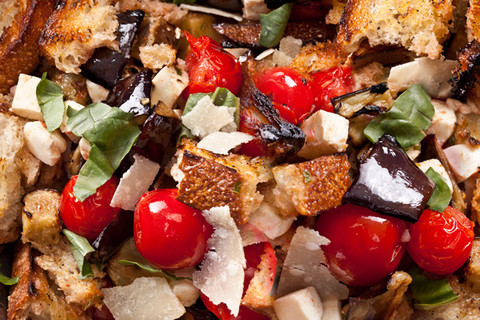
I’ve already posted about another summer favorite of mine–bread salad or panzanella so I was pleased to see this recipe for a bread salad using grilled eggplant.  This kind of salad is so easy to fix single-serving amounts that I wanted to pass this along as another way to make use of a summer vegetable.  The image below was included with the recipe on the website Chow.com.

bread salad with grilled eggplant closeup

Kitchen pestilence

If you have never had anything with more than four legs in your kitchen, or you’re totally frantic when you encounter something with six legs, you probably should stop reading here, because this kitchen pest has six legs, and is undoubtedly one of the peskiest thing to invade the kitchen or the rest of the house.

I’m not talking about palmetto bugs, nor weevil, or things that get into the dried staples in the pantry!  I can avoid those by using the glass canning jars for storage. Spiders? Nope, those have eight legs, and besides they are good pest control. I’m talking about something that seems to invade my kitchen (and if I’m not prompt to eradicate them, the spread through the house).   If you’ve ever had them you’ve probably already guessed what they are! Those little gnat-like things called fruit flies!

They go by several other names: vinegar flies, bar flies, common fruit fly, and I’ve even heard drain flies (since they breed there)–members of the family Drosophilidae. Wikipedia says that they are “nuisance flies” rather than pests. In a strict horticultural sense that is true, but they certainly are pesky if they invade your home. They are attracted to wine, vinegar, any fermenting fruit or vegetable. In the summer when the kitchen is replete with fruits, and vegetables, like tomatoes (which should not be refrigerated), it’s easy to have a little spot of fermentation sneak up on you–and then, there are the fruit flies or Drosophila.  Just so you know what they look like, here is an image from Wikipedia.

When they appear in your kitchen, it’s usually a sign that there is something “rotten” around–or at least fermenting.  If you’re making vinegar (I do make my own), or have open wine they’ll show up–maybe through poorly screened windows or doors, or they may be carried into your home on fruit or vegetables…and they breed–like, well, like flies!  Some Drosophila species can infest thin-skinned fruit and berries.  There are lots of ways for them to find a way into your kitchen.

fruit fly (Drosophila sp.)
Drosophila sp.

The immediate question is now how to get rid of them.  Obviously the first step is to get rid of whatever attracted them.  Maybe that’s enough, but if they keep appearing around the kitchen or house, more drastic things may be needed.

They can breed in all sorts of places around the kitchen.  In drains, garbage disposals, even where there is un-noticed spilled fruit juice.  They will breed in trash cans, or unwashed recycling.  They lay eggs on the surface of fruit or vegetables if there is an area of fermentation.  Then those eggs hatch into larvae–yes, little white, wiggle, icky things, and you’ll soon have more, and more, and more….

It’s essential to eliminate all the breeding place (e.g. drains)–some which are not obvious.  The University of Kentucky College of Agriculture has a fact sheet, which covers some of the places where they may breed, and methods for getting rid of an infestation.

I don’t want to use even a “kitchen pesticide” around the cat or around the kitchen.  You can go to the hardware store or garden store and spend $7 or $8 for a cute little trap that is shaped like an apple or some other ambiguous fruit, but you can also make you own quite easily: The fact sheet describes how to do this.  My experience has been that cider vinegar, wine, or wine vinegar is much more effective at luring them into the trap–in my case, a bottle with a funnel set on top, instead of a paper cone/funnel.  If the infestation is severe, you might even resort to “fly strips” to help eradicate them.

I’d hope never to need any of this information, but I usually have to deal with at least one infestation in late summer and fall when there’s lots of fruit around–I hope you don’t, but if you do, maybe this will help.

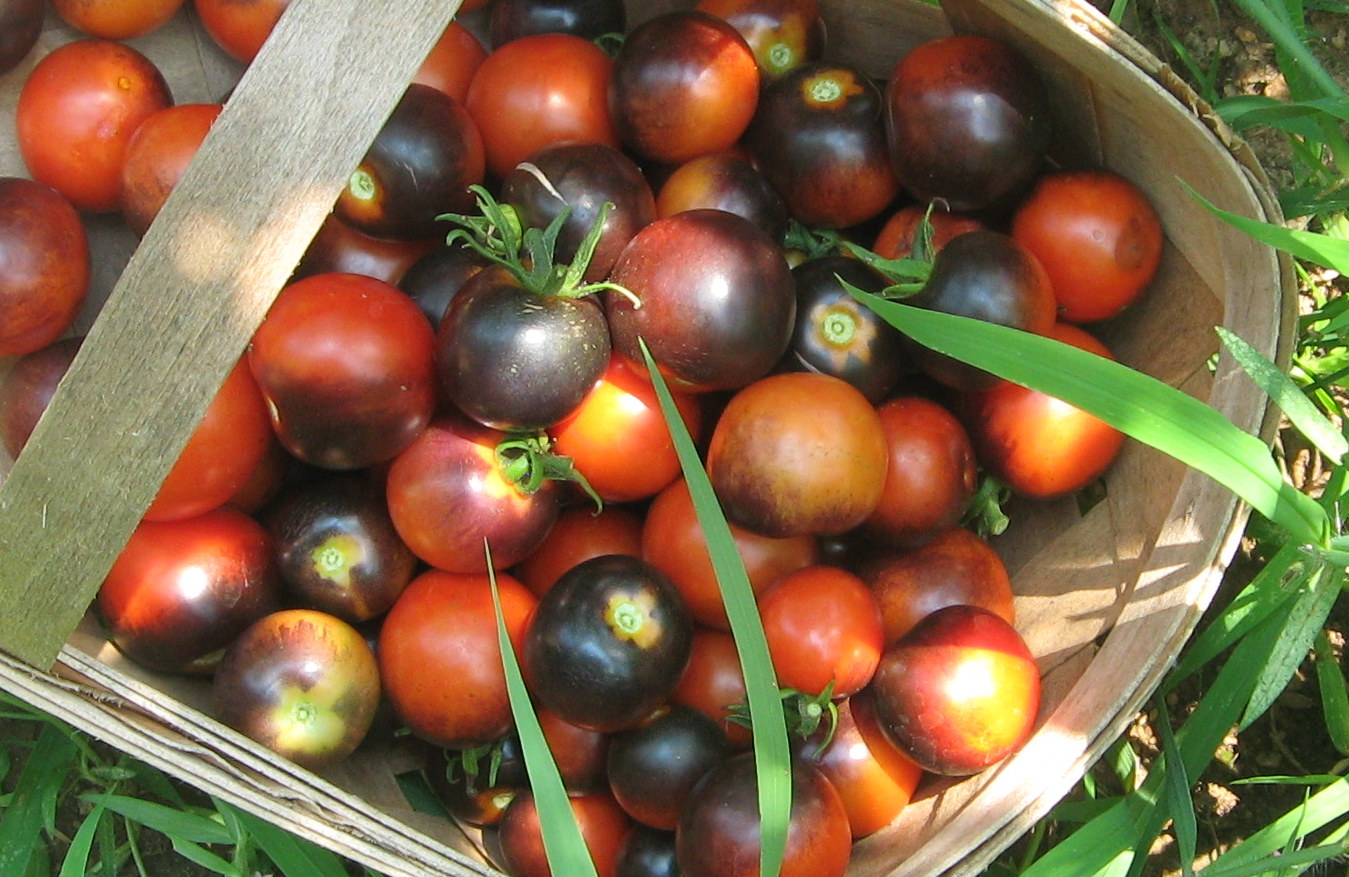
Indigo Rose Tomatoes

When you’re just getting thoroughly tired of winter–about late November or  very early January–the seed catalogs start to appear in the mail box.  You spend hours happily looking through them and anticipating planting seed.  There are all those gorgeous pictures and the descriptions.  For me this is especially a problem with tomatoes.  So, every year I end up wanting something new–in addition to those heirlooms that I always want (Black Krim, Cherokee Purple). Last year my new addition was a Japanese Black Trifle.  It’s now become one of the regulars, and is close to replacing the Black Krim because it tastes wonderful and produces more tomatoes.

This past winter the tomato that aroused my curiosity most was an Indigo Rose, described in Johnny’s Select Seeds as a cocktail sized tomato, dark purple because of the anthocyanins (anti-oxidants) which develop in areas of the skin exposed to direct sunlight. To further titillate, it was described as ” good flavor with ‘plummy’ overtones. Developed by Jim Myers at Oregon State University using traditional plant breeding techniques. Moderately vigorous. Compact indeterminate. Organically grown.”  Now, who could possibly resist that in the midst of grey skies and cold rain?  Yes, I ordered some seeds.

Sprays of unripe Indigo Rose Tomatoes on the vine

unripe Indigo Rose tomatoes

Now we are harvesting them from the garden and fields–the acid test, so to speak.  I’ll concede that they are moderately vigorous, compact indeterminate, and very striking when you see them in the garden even when unripe the purple anthocyanin pigment is really obvious.

As they ripen to red (thus, the “Rose”, I guess) they really are lovely–impressive to be perfectly honest about it.

The very first ones that I tasted left me somewhat ambivalent about the taste–maybe I  tried them before that were appropriately ripe, or maybe I just like a different style of tomatoes–anyhow, there were different opinions.

Ripe Indigo Rose tomatoes

ripe Indigo Rose on the vine

Now that I’ve tasted some that I’m sure are really ripe, and tried them in several different ways, other than just eaten out of hand, I’m more interested in exploring different things to do with them.

I have to say that they are not going to make it on to my bacon, lettuce, and tomato sandwich–not nearly tart enough to stand up to the really good dry cured kind of bacon that I like to put on my BLTs.  (I would put a Black Krim, or a Japanese Black Trifele, or a Brandy Boy on my BLT, though.) But–there are lots of tomatoes that I really like for different uses that don’t make it onto the BLT either–so no strike against the Indigo Rose for that reason.

My impression eating them out of hand is that they are a very low acid tomato.  Usually I prefer higher acid tomatoes–a balance of tomato-tart and tomato-sweet.  So this is not going to be my choice of tomato for my sloppy, eat-over-the-sink-with-mayo tomato sandwich (which needs to be on white bread, too, by the way!) either.

But–one of my other summer favorites is insalata Caprese.  One of the fun things to do when making this salad is to have different kinds of tomatoes–lots of visual appeal–like Green or Red Zebras, some pink, some purple–whatever!  I tried these with the fresh mozzarella and extra-virgin olive oil, and just a tiny drizzle of a good balsamic vinegar.  The sweet-tartness of the balsamic really showed the sweet tomato flavor of the Indigo Rose tomatoes.  I did not (I know Indigo rose tomatoes in basket after pickingit’s heresy, but I did not) put basil on this salad–I used Syrian oregano, and it was a lovely salad.

For more taste and visual contrast I might combine these with an orange or yellow (also lower acid) tomato, but not with high acid tomatoes–I think that would just make the Indigo Rose ones taste bland–but that’s the next experiment!  A reason to go tomato shopping at the Wake Forest Farmers’ market tomorrow.

Another way that I’d like to try them is slowly oven-roasted to concentrate the flavors–I think that will really bring out the sweet, plummy flavor–again another experiment.  They are a good size to use in green salads, but I’d want a pretty mellow vinaigrette with them–maybe just extra-virgin olive oil and balsamic vinegar.

Cured Salmon

Summer is a time when I’m looking for foods that are satisfying, but light, cool, and refreshing; that often is a run to the local Harris Teeter for sushi–however, one of my favorite special treats is this cured salmon with good fresh homemade bread and a few trimmings like capers, minced sweet onion, thinly sliced cucumbers and radishes, maybe some cream cheese, and last, but certainly not least, champagne.  I think that the serves eight is if you’re using it as an appetizer or hors d’oeuvre.  With trimmings you could have a light meal for three or maybe four, depending on appetite.

Cured Salmon in Molasses

Reference:  Pépin, Jacques, Jacques Pepin’s Table.  KQED Books,San Francisco, 1991, pp.118-120.  ISBN  0-912333-19-7

Servings: 8,  preparation time: 3-4 days.

For this recipe I want wild-caught salmon as it has a firmer texture than farm-raised, and a better flavor to stand up to the spices in the cure.  Much of the farm-raised salmon is not fat enough to work really well in this recipe.  It loses an incredible amount of fluid in the process of curing.  The best that I have ever done was wild salmon—King salmon.

Ingredients:

  • Large salmon fillet (about 1 ½ pounds) preferably center cut, of even thickness, throughout, with the skin left on but all bones removed.
  • ¼ cup coarse (kosher style) salt
  • 1 tablespoon sugar
  • 1-teaspoon ground cumin
  • ½ teaspoon ground allspice
  •  ½ teaspoon paprika
  • ¼ teaspoon ground nutmeg
  • ¼ teaspoon cayenne pepper
  • ¼ cup dark molasses
  • 2 tablespoons dark soy sauce

Preparation

  •  Lightly score the skin of the salmon in a lattice pattern so the salt, sugar, and spices will penetrate through it to cure the flesh.  (It is easier to cut through the skin in you hold the blade of the knife perpendicular to the fillet and run the entire length of the blade across the skin, instead of attempting to score it with just the tip of the blade.)  Place the salmon in the center of a large piece of plastic wrap.
  • In a small bowl, mix together the salt, sugar, cumin , allspice, paprika, nutmeg, and cayenne.  Spread the mixture evenly on both sides of the salmon, and wrap the salmon tightly in the plastic wrap.  Place in on a tray, and refrigerate overnight, or for at least 12 hours, to cure.
  • When ready to proceed, mix the molasses and soy sauce together in a small bowl.  Unwrap the salmon, but don’t remove it from the plastic wrap.  Pour half of the molasses mixture over the top of the salmon, and spread it evenly over the surface. Then turn the salmon over, and coat the other side with the remainder of the molasses mixture.  Re-wrap the salmon in the plastic wrap, place it on the tray, and return it to the refrigerator for 24 hours.
  • Unwrap the salmon, and remove it from the marinade.  It will have absorbed most of the marinade.  Discard any remaining marinade, pat the fish lightly with paper towels, and arrange it on a wire rack over a tray.  Refrigerate it for another 24 hours to dry out.
  •  At serving time, slice the salmon thinly on a slant, and serve two or three slices per person with buttered bread.  Garnish the salmon, if desired with chopped, onion, capers, and a drizzle of olive oil.

Enjoy!


Choicest summer fruit–figs!

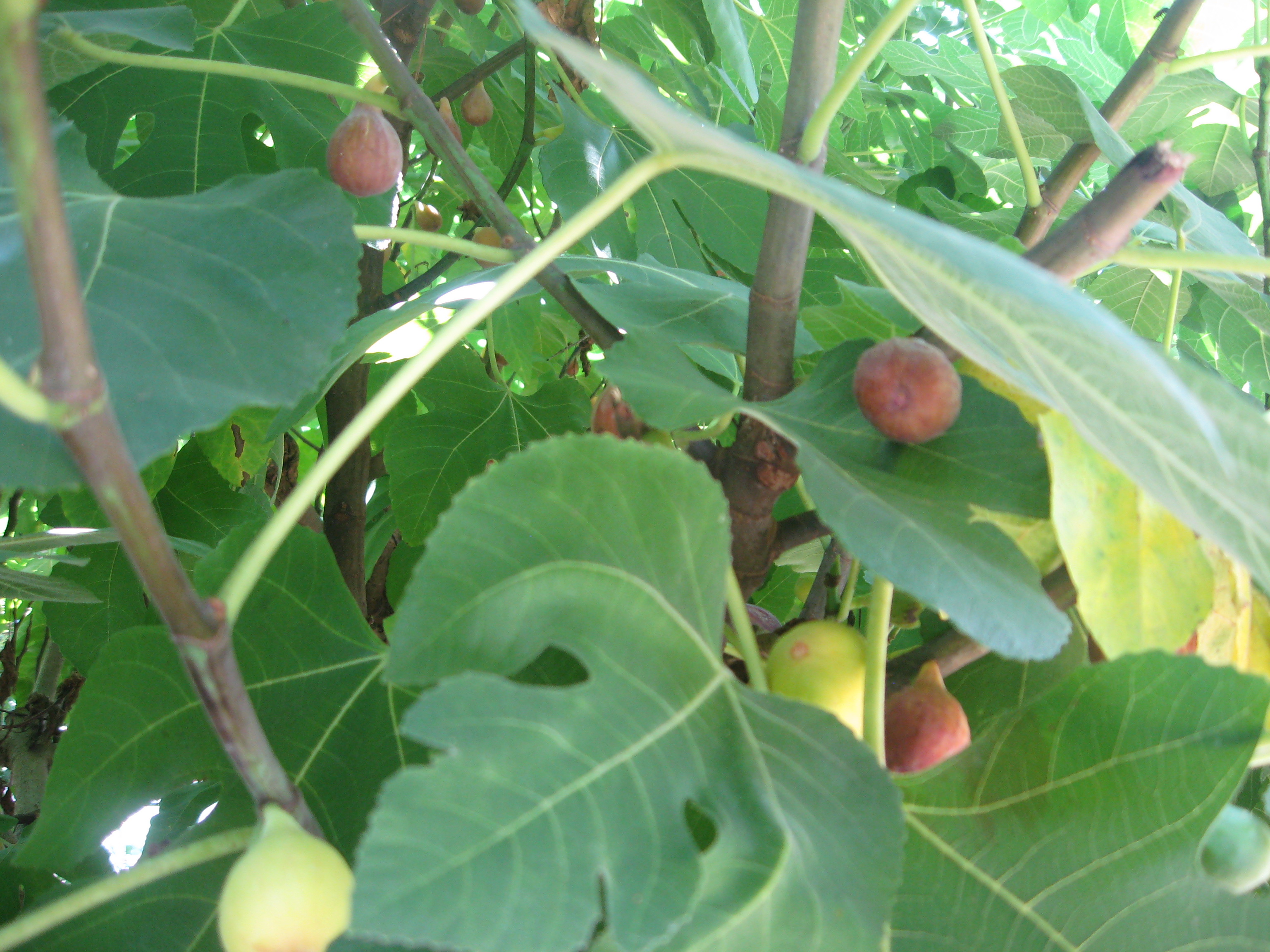
figs on tree

ripe and unripe figs on tree

One of the high points of summer for me is when figs are ripe–eat them fresh, ripe from the tree early in the morning while they are still cool from nighttime, or in the heat of the afternoon when they are fragrant and warm from the afternoon sunshine.  Absolutely luscious!  They never even make it into the house.  Should the crop be so plentiful that they do make it into the house, then get out the prosciutto–fresh figs are even better than melon with that lovely ham! Or, some good cheese–goat cheese, or Gorgonzola, or other  blue, or a sheep’s milk cheese like Etorki or aged Manchego They are never better than when you can pick them truly tree-ripened.

Too many times, figs are sold unripe, mostly because they are very perishable and delicate when at peak ripeness.  Another reason figs are frequently picked before peak ripeness is the competition: birds, squirrels, bees, wasps, and ants–all those critters have an eye for the perfectly ripe fig!  If you want to eat them ripe from the tree you have to be willing to share because unfortunately, figs do not ripen after they are picked–pick a green fig and you’ll always have a tasteless fruit that will leave you wondering why anyone would want to eat them, much less get excited about them.

It’s really hard to describe the taste of a fresh, ripe fig–it’s certainly much different  from dried ones, and a world away from Fig Newtons.  I think that a ripe, fresh fig has some peach and berry flavors–it will vary somewhat with the variety of fig, but still—it’s not likely to be what you’d expect from eating dried ones.

So how do you tell if a fig is ripe? They should be soft–but please be gentle when you press on them. Really, you can tell if they are going to be soft by looking at the color (you do need to know the color of the variety when ripe). The Brown Turkey figs first turn yellowish-green–they will likely be just starting to soften then, but still do not have much flavor yet.  As they ripen more they begin to turn a lovely rosy brown–but wait!  They’re not ready to eat yet.

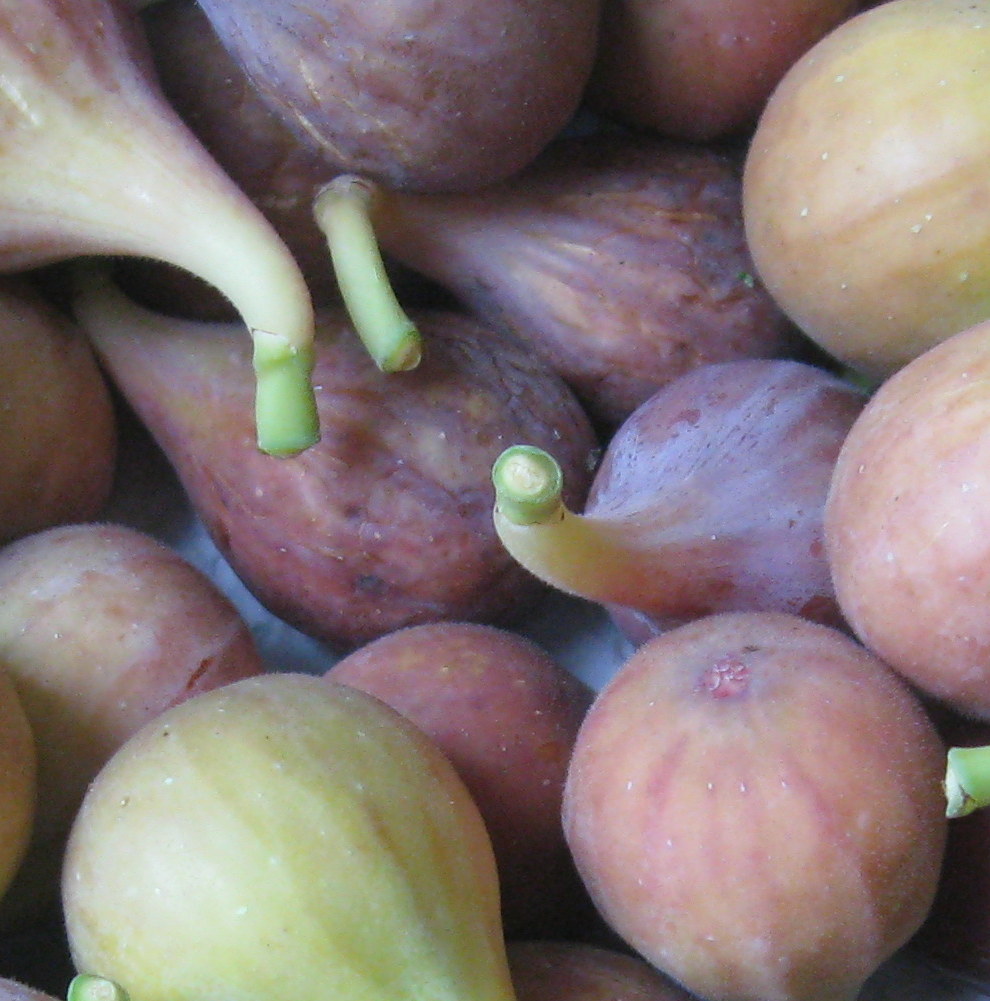
Figs hang in a drooping way from the tree (you can see how the stem ends are curved in the photograph above).  When ripe they should separate easily from the tree when you lift them up against that curve. If they don’t they are not ripe!

For best flavor, they should begin to show some tiny surface fissures in the skin (not deep cracks) almost like crazing on pottery glaze, and the small round area at the blossom end should have started to  open or to show a split. On some figs you may actually see a drop of clear liquid there.

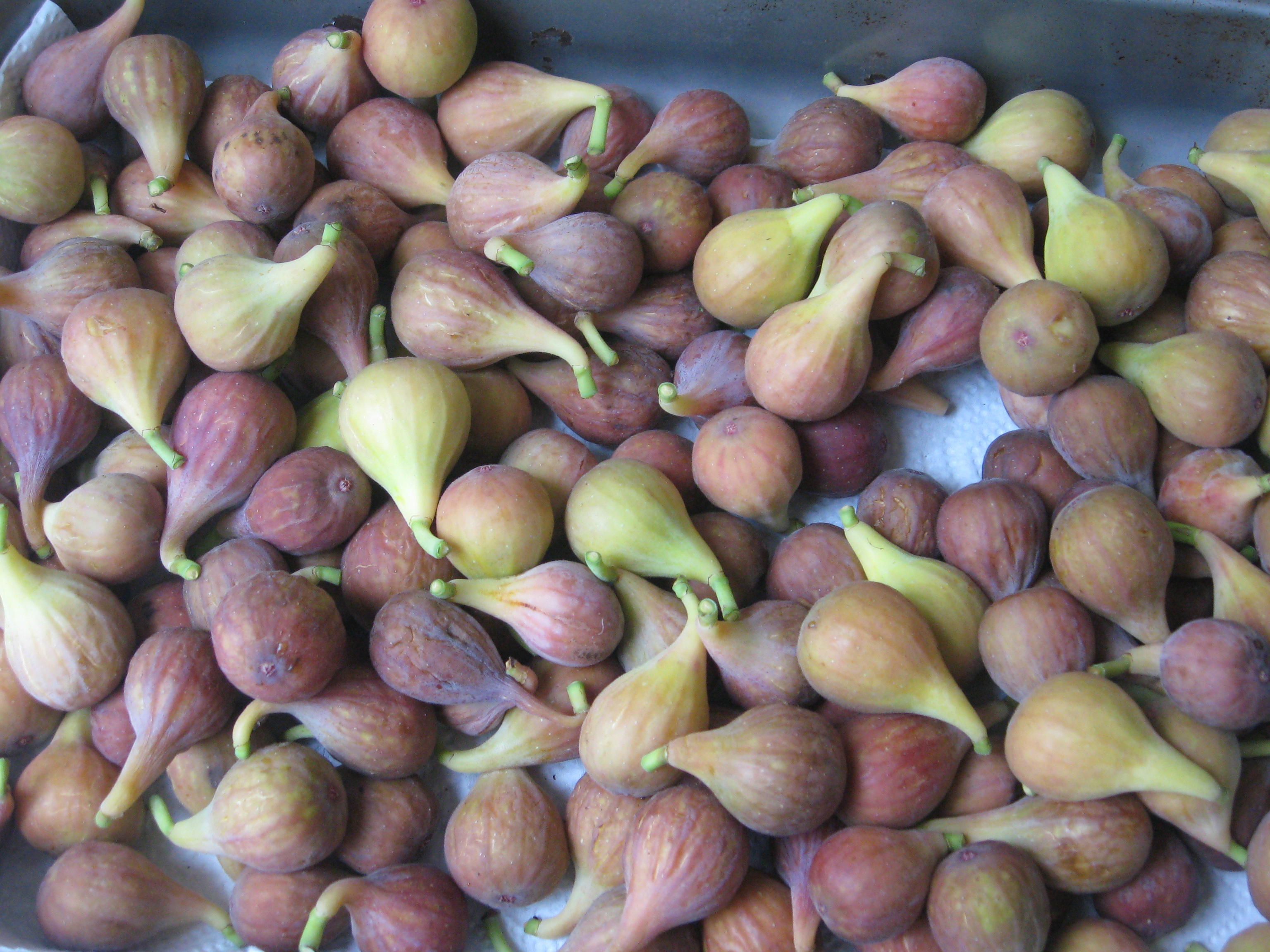
To find ripe figs if you don’t have your own tree, you need to head to the farmers’ market. The common fig here is the Brown Turkey which is in season approximately from July to September. I’ve just harvested several pounds of figs–but the tree still has lots of small green figs that should ripen in a second flush in a few weeks.

Should you have an excess of fresh figs, you should use some with duck–the recipe is complicated, but the result is unforgettable–worth the effort.  What else can you do with fresh figs?  Fig ice cream, poach some and serve with pound cake or vanilla ice cream, fresh fruit tart….but best of all, just eat them unadorned.

If you find you have some that are not quite what you’d like to eat out-of-hand, then you can make a lovely dessert by poaching them in Campari.  This is a recipe that I found in Jacques Pepin’s The Shortcut Cook (page 248) for which I’ll give you the basics here:

Poached Fresh Figs with Campari

Ingredients

  • 1 cup fruity white wine
  • 1/4 cup sugar
  • 1/4 cup lime juice
  • about 20 small, ripe figs
  • 2 teaspoons cornstarch dissolved in 2 tablespoons water
  • 2 tablespoons Campari

Preparation

  • Combine wine, sugar and lime juice and bring to a boil.
  • Add figs, cover, and simmer for about 4 to 5 minutes. Figs should be tender when tested with the tip of a knife, but should not burst open.
  • Transfer to a bowl with slotted spoon.
  • Reduce the liquid in the saucepan to 1 cup if there is more than this.
  • Add cornstarch slurry and bring to a boil to thicken.
  • Cool sauce to room temperature then stir in the Campari and pour over figs.

These are delightful served over pound cake with a dollop of sour cream or crème fraîche, or spooned over good vanilla ice cream.  (I like to add just a hint of cardamom to this poaching liquid.)

brown turkey figs picked ripe

ripe Brown Turkey figs

Barley flour….

I’ve got barley flour now, so I can try the oat bread with barley instead. I like barley as well as oats, so this should be fun (and maybe healthy).  I think I can just substitute barley flour for oat flour, but I guess I should do a little research on the two before I do, though.

Panzanella (Bread Salad)

lots of tomatoes laid out on table

tomatoes, tomatoes…

Tomatoes, tomatoes and more tomatoes! So many ways to eat tomatoes…caprese salad, good old-fashioned tomato sandwiches–good white bread, mayonnaise, and juicy tomatoes; a sandwich that has to be eaten over the kitchen sink.   Then there is the BLT!  All good, but what else can you do with the summer abundance of tomatoes? Obviously  you can freeze some, or make sauce to freeze for winter use,  but one of my summer favorites is panzanella, or bread salad.  Since stale bread is a fact of life, even when you bake your own pretty much “on demand”, here is one of my favorite ways to use it up and to enjoy summer tomatoes.

This is a summary and adaptation of  my “go-to” recipe from Marcella Hazan’s Essentials of Classic Italian Cooking (pp. 554-555):

Ingredients

  • 1/2 garlic clove, peeled
  • 2-3 flat anchovy fillets, chopped fine
  • 1 tablespoon capers, soaked and rinsed
  • 1/4 yellow bell pepper, ribs and seeds removed
  • 1/4 cup extra-virgin olive oil
  • 1 tablespoon good red wine vinegar
  • 2 cups firm bread (cut into 1/2-inch squared), trimmed of crust and toasted
  • 3 fresh, ripe, firm tomatoes
  • 1 cup cucumber cut into 1/4-inch dice
  • 1/2 medium sweet onion, diced
  • fresh-ground black pepper and salt to taste

Preparation

  • Mash the garlic, anchovies, and capers to a paste.
  • Toss  the pepper, garlic, anchovy, olive oil, and vinegar together in a bowl.
  • Put the toasted bread (and any crumbs) in a small bowl.
  • Purée one tomato in food mill; add to bread an allow it to steep for 15 minutes or longer.
  • Skin and seed the other 2 tomatoes and cut into 1/2-inch pieces (picking out some of the seeds if there are too many).
  • Add the cut tomatoes and the bread squares to the bowl with pepper, garlic, anchovy, oil and vinegar mix, and  add the cucumber and the onion; toss thoroughly.

While the recipe calls for peeling the tomatoes, I don’t usually do this unless the skins are very tough–I’ve no objection to the extra fiber, and some objection to the extra work that peeling them takes.  I don’t pick out seeds either–I think that the “jelly” surrounding the seeds adds extra flavor and an acidity that is lost by removing them–however, if you want a more refined version, by all means peel and remove seeds. (If you keep the “jelly” and seeds, it increases the tartness of the tomatoes, so you might want to decrease the wine vinegar–just taste it and season accordingly.) You can add fresh herbs of your choice–basil, marjoram, oregano, Syrian oregano (zaatar)–whatever strikes your fancy!

If this cookbook is not in your library, there is also a recipe for a simpler version of panzanella at Epicurious.com.

If you’d like to make this a meal in itself, add some good quality canned tuna or your homemade tuna confit to it. Cucumbers and onions are certainly optional.  Some fresh mozzarella would work here too.

The basic recipe above makes four to six servings, but it’s very easy to cut this down to make a single-serving quantity–just eyeball it!

I decided that this had potential for a bacon, lettuce and tomato salad so I did some modification: omitted the anchovies, capers, and the pepper.  I prepared the bread and the tomatoes as for the panzanella, and substituted balsamic (or rice wine) vinegar.  I kept the cucumber for it’s crunch and freshness and the sweet onion, even though they are not part of the BLT.  I added crumbled crisp bacon, and had this over romaine lettuce.

Since I did this improvisation  (it just wasn’t something that I needed a recipe for), I’ve googled “BLT salad” and found lots of variations on that theme, especially with the dressing.  Since I’m one who does like mayonnaise with my BLT, I’ve looked for dressings using it, but haven’t found anything I like better than the basic oil and vinegar, though I may be adventurous and try a creamy dressing with mayonnaise, thinned with buttermilk in the future.

A son goût!