Colcannon

Here’s another that is really good!

Rufus' Food and Spirits Guide's avatarRufus' Food and Spirits Guide

Nothing goes together like potatoes and cabbage.

Colcannon

  • 1 small head cabbage quartered and cored
  • 6-8 medium boiling potatoes peeled
  • 2 slices bacon, chopped fine
  • 6 green onions, white and green parts chopped fine and separated
  • Milk
  • Butter
  • Salt/pepper

In a large pot, salt and boil enough water to cover cabbage. Add cabbage and parboil until almost cooked. It should have a bit of bite. Strain, reserving water, and slice cabbage into quarter-inch strips once cool. Bring strained water back to a boil and cook potatoes until tender, adding more water if needed, about 45 minutes. Meanwhile render fat from bacon and set browned bacon bits aside. Mash potatoes with milk, butter, to desired consistency. Add green onion parts, bacon, salt and pepper. Reheat bacon fat and saute white parts of green onion. Add sliced cabbage and cook until softened stirring often.  Mix cooked cabbage with mashed potatoes and serve…

View original post 1 more word

Mashed Potatoes with Gruyere and Olive Oil

This sounds great–I have done mashed potatoes with olive oil but I like the sound of the additions here.

Rufus' Food and Spirits Guide's avatarRufus' Food and Spirits Guide

Yes, we really like messing with this classic dish. Leave the skins on. The tang from the Greek yogurt will make you feel like you’re eating a really creamy, loaded baked potato.

Mashed potatoes with Gruyere and Olive Oil

  • 3 lbs potatoes, boiled until tender with skins on (Russet or red will work)
  • 1 cup shredded Gruyere
  • 2 tbsp butter
  • 3/4 cup Greek yogurt
  • 1/2-3/4 cup milk
  • salt/pepper to taste
  • 1 tbsp extra virgin olive oil (plus more to taste)

Drain and mash potatoes with butter and cheese. Stir in yogurt and enough milk to reach your desired consistency. Add olive oil and taste. Add salt, pepper and, if desired, more olive oil to taste. Serve hot.


View original post

Lunches to go–or to eat at home.

Just a quick note to share this link:  Solo Lunches.  It’s one of the budget conscious, health-oriented things we can do.  Just because it’s a brown bag, that does not mean it has to be boring!  Check this out–I think that there are some good suggestions here. I am certainly going to be trying some of them even at home.

About lentils

lentils in Mason/Ball jar on pantry shelf.

lentils

Lentils (Lens culinaris), closely related to beans and peas, are dried after harvesting; you’ll find them on the shelves of your supermarket, gourmet stores, and online. They have been a staple food in many areas for over 8000 years, likely originating while in Turkey.  They are a staple food for many south Asian cultures, Middle Eastern, and Mediterranean countries.  The Latin word for lentils, lens, was used in the 17th century to describe eye glasses because of the similarity in shape

Like other legumes, lentils are low in fat and high in protein and fiber, but they have the added advantage of cooking quickly.  Lentils have a mild, often earthy flavor, which lets them pair well as side dishes, in salads, and soups.  Lentils have traditionally been used as a meat substitute.  Like other pulses, when paired with grains they offer excellent quality protein in our diet.

Before cooking, always rinse lentils and pick out stones and other debris–usually they are quite free of debris, but it’s always good to check them before cooking.  Unlike dried beans and peas, there’s no need to soak them. Lentils cook more slowly if they’re combined with salt or acidic ingredients, so add these last.  Bigger or older lentils take longer to cook.  Store dried lentils for up to a year in a cool, dry place. Substitutes: dal OR split peas OR black-eyed peas  More varieties are appearing even on the supermarket shelves, but specialty sources offer a wide variety with which to experiment.

The quick cooking and nutritious nature of lentils make them an obvious choice for winter soups. They are also good cooked and chilled for salads or mixed with bread crumbs to stuff vegetables. Blend lentils with middle eastern couscous and use as a bed for seafood and poultry.  Use them instead of beans  for summer salads with fresh tomatoes and other veggies.

Here is a little information about the various kinds of lentils.  More synonyms and alternative names can be found in the Cook’s Thesaurus.

  • Brown Lentils:  The average grocery store lentil is the brown lentil. You’ll likely find these on the shelves with the dried beans.  They tend to get mushy if overcooked.  If you want them to be firm, add oil to the cooking water and cook the lentils just a short while, say 15 minutes.
  • Black beluga lentils are a very popular legume in South Asia, they are used to make a beautiful black lentil soup. Some of the names that they my go by are Beluga lentil = black beluga lentil = beluga black lentil = petite beluga lentil. When they’re cooked, especially in salads with a tiny bit of oil, they glisten so that akes them look like beluga caviar.
  • Petite crimson lentils are “crimson” in color, which is a deep orange-red. These lentils tend to lose their shape when they are cooked and are an excellent choice for thickening soup.
  • Petite golden lentils are a small firm, golden lentil that is rounder in shape than many other  lentils; one of the reasons that this lentils holds its shape so well when cooked.  They have a soft texture.
  • Ivory white lentils are a creamy white colored small lentil that is really a peeled black lentils, known in India as urid dal.
  • French green lentils: (also called French green lentils, du Puy lentils,  lentilles du Puy, lentilles vertes du Puy.)  By many chefs, these are considered the “best”, most delicate lentils.  They have the typical earthy flavor, but also  are a bit “peppery”. These hold their shape well better than many other lentils,  but take longer to cook, but still do not need presoaking. While I love all lentils, and typically have several kinds in the pantry, these are the ones that I would not want to be without!)
  • Red lentils are the common seen in the supermarket.  It’s a lovely salmon pink in the dried form, but it turns golden when cooked.  These lentils cook faster than others.  They’re best in  purées or soups.
  • Spanish pardina lentils (also known as Spanish brown lentils or Continental lentils) are smaller the brown or red lentil–about the same size as a petite green or black lentil.  They have a particularly nutty flavor, and they hold their plump, round shape when cooked. This makes them a particular favorite with e for use in summer vegetable/lentil salads.
  • Dal is the Indian term for peas, beans, or lentils that have been split and often skinned, but the name is sometimes used for all lentils, peas, or beans, or to cooked dishes made with them. Split lentils don’t hold their shape well, so they’re often cooked into soups or purées.

Most of these can be interchanged in recipes as long as you take into account how quickly they cook and the final textures–some are softer than others. Generally the split ones tend to lose shape faster, so don’t do well for salads, or side dishes where you want them to keep their shape, but will be fine in soups–especially if you’d like your soup to be a little thicker.  Any of these would work in the lentil soup recipe that I gave earlier–though I usually use the lentils du Puy even for that.

Aside from using them instead of beans in summer salads, I think that lentils make an awesome side dish to go with grilled salmon–there’s something about the earthy flavor that combines SO well.  If you have “leftover” grilled salmon, try using it with some lentils to make a cool, but hearty summer salad with some tomatoes and cucumber to it.  Combined with a grain, this can be a very nutritious vegetarian dish–or not.

Here is a link to a lentil salad that makes me drool on my keyboard just looking at the recipe:  Warm Salad of Lentils with Duck Fat from the Hudson Valley.  Love’s description of the lentilles du Puy is marvelous.  (Each time I cook duck, I carefully keep some of the fat, sealed and refrigerated to use for things like this.)  Add some greens, and this is a one-dish meal that’s in my group of comfort foods.  Lentils will also work in the sausage, beans and greens one-dish meal.

Lots of uses, quick-cooking, nutritious, tasty, inexpensive…what more could you want?  Try some!

Under-appreciated vegetables: celery

bunches of celery in the Harris Teeter produce department

celery

It seems that celery is a problem for many of us who do single-serving cooking!  I’ve seen comments to that effect in several cookbooks dedicated to cooking for one.  One of my “things” to do with that head of celery is to make mirpoix or soffrito and stash it in the freezer so that I’ll have it to facilitate making a quick meal.  That works, but you need only so much of that in the freezer and how many celery sticks can you munch on?  Buying the precut celery stick is the produce department is NOT  an option–they keep even less well than the whole head of celery.  Admittedly, I like celery ribs stuffed with peanut butter and pimento cheese, but again, how many can you–or should you–eat?  Or, buy it off the salad bar at the supermarket–but then you may not have it when you need it unless you’re willing to make a trip

One thing that I’ve found helpful is to store the celery in a partially open zipper-lock bag with a paper towel that’s been dampened and then squeezed as dry as possible.  This extends the storage time, but still I end up tossing a lot of celery on the compost heap.  There must be a better solution.

I think that perhaps the best solution to this is to recognize that celery is a vegetable with nutritional value and learn to use it as a vegetable and not just as a seasoning.  Until I started this research I was not aware of many recipes treating celery as a vegetable on its own.  (I’m not including its use in salads or as a snack, or even to add crunch to caponata.)  I’ve been looking for more celery recipes.

My first stop was my favorite vegetable cookbook (note that I did not say vegetarian cookbook), The Victory Garden Cookbook (see bibliography).  I was amazed at how many recipes were given for celery–I think that this goes to show my  under-appreciation of celery!  (Yes, I know it’s popular in stir-fries, too–but there’s a recipe for a stir-fry of celery as a veggie!)

There are recipes for braised celery (p. 79-80), celery slaw (p. 78), and salads (Celery Antipasto p. 78 and Celery Rice Salad, p. 78) as well as the expected Cream of Celery Soup (p. 81) I found a Chilled Celery-Lemon Soup (p. 81) that certainly looks intriguing as a way to use celery as a vegetable. There are other recipes here that look as if they have potential for celery as a vegetable.  (At least go to the library and check this book out and try some of these.)

I went to Eat Your Books and ran a search on the books that I’ve added to my bookshelf.  Turned out that there were lots of recipes for celeriac (later discussion), but I did not find many for simple stalk celery; here are a few of the ones that I did find:

  • Celery à la Grecque (Céleri à la Grecque) from Mastering the Art of French Cooking, Volume One by Julia Child and Louisette Bertholle and Simone Beck.
  • Braised celery stalks with onion, pancetta, and tomatoes from Essentials of Classic Italian Cooking by Marcella Hazan
  • Braised and gratinéed celery stalks with Parmesan cheese  from Essentials of Classic Italian Cooking by Marcella Hazan
  • Risotto with celery from Essentials of Classic Italian Cooking by Marcella Hazan

If you feel like trying this approach to the celery crisis that often afflicts those of us who do single-serving cooking here is a starting point–all it really takes is a trip to the library!  If you do an online search you need to search for “stalk celery”, “rib celery”, or “celery stalks” or you will probably get lots of recipes for “celeriac” or “celery root” which is a great vegetable, but likewise under-appreciated in American every-day cooking!

Another solution might be to search for recipes for Florence (bulb) fennel and substitute celery in some of those with possible changes of seasoning.

That is not a lot of recipes–I think that it likely reflects celery as seasoning, not as a vegetable, but I think well worth exploring.   Have celery–I’m going to experiment.  I’ll keep you posted!

A son goût!  

More tomatoes….

I’m back from the farm–LONG day, but I planted lots of tomato seeds (about 560) since we’ll sell some and plant about 450 in the field.  I’ve lots of new and interesting varieties that we’re trying that I’ll let you know about soon.

Transplanted and planted lots of herbs today as well: epazote, shiso, chervil, lime basil, papalo, Greek oregano, zaatar (Syrian oregano), fern leaf dill, some very potent sage that I love, to mention just a few.  Transplanted lemon grass, sweet  basil…. I’m disappointed that I’ve not gotten seeds for French thyme yet.

And then we moved on to the flowers……

Sweet potato & chile hash

Basic Sweet Potato & Chile Hash

Adapted from FineCooking, November 2001”Delicious Wayswith Sweet Potatoes” by Karen & BenBarker. (There are more awesome recipes in the article.The Chile Mayonnaise recipe is a keeper, too.)

Here is a recipe that I love–the combination of the sweetness of the sweet potato, with the slight “burn” of the chile pepper is just great.  The hash is excellent on its own–with grilled meats, or fish as well, and a fantastic accompaniment to eggs any way you like them.   It holds well in the fridge so “leftover” is not a bad thing with this.  If you ignore quantities, just pay attention to the flavors, you can use that half sweet potato left from the roasted Brussels sprouts to get a similar side dish in single-serving quantity since the recipe calls for you to precook the sweet potato.

Ingredients

  • 1 pound sweet potatoes, peeled and cut into ½-inch cubes
  • 6 tablespoons olive oil; more as needed.
  • 1 small onion, diced (to yield 1 cup)
  • ½ red bell pepper, diced (to yield ½ cup)
  • 2 small fresh poblano or Anaheim chiles (or other medium-hot chiles), cored, seeded, and diced (to yield ¾ cup)
  • 2 tablespoons minced garlic
  • 1-2 jalapeños, cored, seeded, and minced
  • 2 teaspoons coarse salt; more to taste
  • 2 tablespoon chopped fresh cilantro
  • 2 tablespoons chopped fresh oregano
  • 1 tablespoon fresh lime juice
  • Freshly ground black pepper

Preparation

  • Cook the diced sweet potatoes in boiling salted water until firm-tender, about 3 minutes.  Drain well and set aside.
  • In a large nonstick skillet, heat 3 tablespoons of the oil over medium heat.
  • Cook the onion, red pepper, and diced chiles, (except the jalapeños) stirring frequently, until all are well softened and the onion is golden brown, about 20 minutes.
  • Stir in the garlic and jalapeños, cook for 1 minute. Transfer to a plate.
  • Increase the heat to medium and heat the remaining 3 tablespoons oil in the pan.
  • When the oil is not, add the sweet potatoes and cook, tossing frequently, until the edges begin to brown, about 10 minutes.
  • Return t he onion and pepper mixture to the pan.
  • Stir in the salt, cilantro, oregano, and lime juice; season with pepper to taste….

What to do with all that butternut squash….

I love butternut squash, but there’s the usual problem–it’s a lot of squash when you’re cooking for one. This recipe looks like a keeper to me. I’ll be sure to make this with part of the butternut squash that is sitting on my kitchen counter!

AvocadoPesto's avatarAvocado - Pesto

I had to do something with the leftover butternut squash from the root vegetables I made last week. This butternut squash was huge and could easily be the star of two main dishes. Not wanting to just roast it again I decided to make a gratin. I found some recipes online and adapted them to include the ingredients I had on hand. The final result – delicious. Butternut squash, caramelized onions, mushrooms and melted gruyere. A great vegetarian side or main dish served with a leafy green salad.

Butternut Squash Gratin

Serves: 6

Start to Finish: 60-70 minutes

Ingredients:

1/2-1 butternut squash, peeled, halved, seeds scooped out, and chopped

1 onion, halved and thinly sliced

1 1/2 teaspoons brown sugar

1 tablespoon balsamic vinegar

5-10 button mushrooms, sliced into thick pieces

6 ounces Gruyere, shredded

salt and pepper, to taste

basil, slivered

Directions:

1. Preheat oven to 425 degrees F…

View original post 127 more words

Tomato basics

I think that tomatoes are the reason many people think about starting a garden–and a lot of visits to the farmers’ market, too–but there is something special about picking a tomato that you have grown yourself.  The tomatoes are one of the first things that I look at when the seed catalogs start coming in about December or January.  There are literally dozens of varieties to choose from in any catalog.  It’s hard to decide–I always want to order too many.  While I’m looking in the seed catalogs, I have to make myself stop and think realistically about how much room I have in my garden, how many I can care for, how am I going to use the tomatoes, and how many can I honestly, really, truly use.  No matter how much you like them, there is a limit to how many you can use.

You  need to consider where you will grow the plants.  Tomatoes need lots of sun (at least six hours a day), even moisture, and good soil and fertilizer–just like any fruiting plants.  If you can’t give the plants enough sunlight, you’ll need to buy tomatoes at the farmers’ market because they absolutely beyond your control.  You can control the moisture and nutrition by applying fertilizer.

There are several ways to grow tomatoes–a traditional garden, even if only a small one, or in a container if you can meet the sun requirements on your deck or balcony.  There are advantages to both ways.  Most of the information here is applicable to either setting.  One advantage to container gardening is that since you will start with a soil-less potting mix that is sterile, you will avoid soil-borne diseases, and lots of weeds.

Image from The Regulator Bookshop

For full-size tomatoes, you need to plan on a container that is about 5 gallons since the tomatoes are heavy feeders with a large root system. (If you are thinking of “patio” tomatoes then you may be able to use a smaller container, but remember that in hot weather, you’ll need to water often.)  If you’re new to container gardening, you might check The Bountiful Container (see bibliography) for more detailed information (and other things that you can grow in containers, too).  This is an important part of choosing you tomato seed or plant if you are considering container on the deck or balcony.

To get an idea of the varieties available, you should go browse a seed catalog such as Johnny’s Select Seeds, Territorial Seeds, or some others that Google brings up–I’m just suggesting these as I know that they have lots of tomatoes, and some growing information.

When you’re looking at the seed catalogs you’ll see that plants are categorized in many ways–size, shape, early, late or mid-season, and may be designated as “determinate” or “indeterminate”.  Let’s look at what those things mean.

Determinate tomatoes have a kind of built-in height limit which they reach and then stop.  It’s not only height–but determinate tomatoes tend to produce their fruit in a  more compressed time.  That might be early, mid- or late-season.  So if you’re going to be on vacation in mid-summer, and you’ve planted a mid-season tomato, you may miss you tomato crop and the birds, squirrels, or the neighbors will have gotten the benefit of you tomato.  Tomato varieties that you’d plant out in the garden can be determinate–but large and still need support because of the heavy fruit load.  Patio tomatoes are also determinate–but have been bred to be even shorter–and may not need staking or trellising.  In fact some are short enough to be grown in hanging basket tomatoes or allowed to droop over the sides of a large pot.

Indeterminate tomatoes don’t have that build-in height limit–they keep growing, and growing, and growing, and–a bit like the Energizer Bunny–until cold weather kills them.  Since indeterminate tomatoes produce fruit starting at the bottom and continue upward as long as the weather permits.  They can get very large.  Whether the tomato is determinate or indeterminate is not related to the size of the fruit…so you can have a short plant that bears very large fruit, or an indeterminate plant that is very tall–and produces tiny one-inch cherry tomatoes.

Most tomatoes will need some kind of support–they’re pretty big plants unless you’ve decided to grow plants bred for patio or deck–and even those may need a support–unless they are going to be in a hanging basket,  just because of the weight of the fruit.

Tomatoes come in three basic types: slicing tomatoes–standard, round tomatoes like you see on your sandwich, or often  in insalata caprese; paste tomatoes, sometimes called “plum” tomatoes–with lots of flesh, usually used for cooking, and cherry tomatoes–small, round or perhaps grape- or pear-shaped that are usually very sweet and good for snacking, garnish, or eating out-of-hand.  Since I have limited space, I like one of each type, and because I want as long a season of picking ripe tomatoes, I’d want indeterminate ones.

Once you’ve figured out  these things you need to consider how you’re going to get those plants.  Are you going to start from seed or are you going to buy plants?

For your very first time growing a tomato, I recommend that you buying plant.  True, you likely will not have the selection that you’ve seen in the seed catalogs, but you won’t have the hassle of getting soil, containers, erratic germination, and things like that to contend with. You’ll be able to find more varieties at a farmers’ market or a good garden center, than at one of the “big box” home improvement garden centers.  Besides, if you buy at the farmers’ market the vendor will be able to help you with your choices and good advice.

Now that you have this tomato plant there are a couple more things you  need to consider.  Tomatoes are heat-lovers (well, within reason) so you really want to wait until after danger of frost is past to put them outside.  They’ll be happiest if the  soil has warmed up, and the nighttime temperatures are above 55 ° F  (12 to 13  ° C).

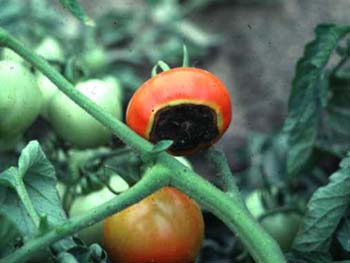
Now, a few other particulars about putting that plant in a larger container or out in the garden. You bought this plant in a small container, but to plant it properly you need to dig a big hole. Much of the stem/stalk needs to be buried to the lowest set of leaves.  Yes, really.  (There is a video to show you how the roots develop when planted deep.)   That gives the plant lots of area to form roots–and remember that tomatoes really need to slurp up lots of food and moisture, so they need to develop large root systems.  Roots will form all along that buried stem and that a good thing.  Water well immediately after planting.  If you have it, put compost in the bottom of the hole that you dug before putting in the plant, or if not, then water with a dilute fertilizer solution.  This plant is going to be busy growing and producing fruit so it needs good nutrition so unless your potting mix contains time-release fertilizer, you’ll want to feed it with dilute fertilizer or fish emulsion weekly or biweekly.  Remember that a tomato plant in a container is dependent on you since it’s root growth is limited by the container.  Tomatoes need calcium to support the tissues so adding oyster shell or quick-release lime will provide needed calcium and prevent blossom end rot in you fruits.

Here is another video which will give you some more details on growing tomatoes in containers, including pruning (suckering) indeterminate tomatoes.
image of blossom end rot (Ohio State University)

blossom end rot

Now, what can go wrong?  Blossom end rot is one of the things that can spoil your tomatoes–it’s from a lack of calcium so adding oyster shell or quick-lime in the hole when you plant can help prevent this.  Other factors contributing to blossom end rot are wide fluctuations in moisture–or even too much water–even moisture is important to tomatoes. No matter how it looks, blossom end rot is a physiological disorder of you plant,  not the result of any infestation of virus, fungus or other tomato pest.

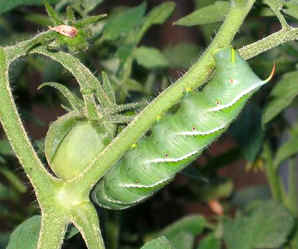
image of tomato hornworm; Colorado State University Cooperative Extension

hornworm

Since we share the world with insects, there are some problems with pests on your plants. You need to watch for signs of these so that you can control them before too much damage to your plant. One you may see is the hornworm.They have a voracious appetite and you may first discover that you have them by seeing tender parts of leaves eaten away with only the ribs left, or the black/very dark green droppings from the caterpillar.  The best way to control them on a few plants is just to pick them off.  There are other pests which may infest you plants–aphids, black flies, and other–but these are the most common ones here–and fairly simple to prevent or manage.   There’s the internet and/or your garden center to help you identify and manage others that cannot be covered here. There are many more potential pests and problems, such as wilts and blights,  but that is beyond the scope of this post.  You will likely not encounter these problems if you’re growing in a container.

You must keep in mind that if you ask three tomato growers for an opinion on how to grow the best tomatoes you will probably get four opinions.  What’s here is my attempt to cull the opinions and give you some facts to get started.  Now, you can anticipate….
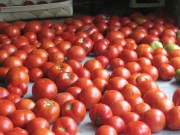
tomatoes laid out on table

tomatoes, tomatoes...and more tomatoes