Hot Cocoa

It’s been a chilly, damp, drippy Monday–the kind of day that takes an inordinate amount of caffeine to achieve a minimally functional state. The day’s to-do list included taking the cat to the vet. Of course it was raining  when I toted Frankie out to the car, and it was raining when we came out of the veterinarian’s office. Frankie was lucky–he was in the carrier and dry (not that he was at all appreciative of that).  Now we’re back indoors.  It’s still chilly, damp, drippy Monday–but now dark.  It’s time for a warm beverage that must have chocolate in some form in it–but there must be lots of if.  That means hot coca!

The hot chocolate is sipping chocolate–thick, rich, creamy–for when you feel truly decadent and in need of something sensuous as well as chocolate. There are times when chocolate is required–after a long walk in the snow, or after you’ve finished all the errands that made you go out on a cold, damp, grey, and miserable day. Those are the times when I want hot cocoa–a lighter beverage that comes in a BIG mug (and maybe even whipped cream) to warm me up. It has to be lighter than drinking chocolate because I want to drink more just because. I don’t want the stuff from the grocery store shelves that is supposedly “hot cocoa” but is usually too sweet and lacking in cocoa/chocolate flavor (e.g. Swiss Miss or Nestle’s).

Some chocolatiers have cocoa or drinking-chocolate prepared mixes that are very good–Chuao chocolate Spicy Mayan (expensive and really drinking chocolate), Starbucks, Ghiradelli, to mention a few of the up-scale ones. Even with these, I feel that the cocoa flavor is a bit lacking–I end up using more than suggested on the package,  and they are often sweeter than I like–I’m paying for lots of sugar and powdered milk. For a review of a hot cocoa mixes see Serious Eats.

Scharffen Berger does have sweetened cocoa powder–though more flexible, you’re paying for sugar (that you can get at the grocers inexpensively and you probably already have it in the kitchen).  So, how do I get my great big, steaming, warming mug of hot cocoa?

I’ll start with a premium cocoa: Valrhona is a favorite, Ghiradelli but  you can use the cocoa powder of your choice. The basic recipe for hot cocoa for one is from Epicurious. (On particularly miserable days, I recommend doubling the recipe even if it is just for one.)

Simple Hot Cocoa for One

Ingredients

  • 2 tablespoons unsweetened cocoa powder
  • 1 to 2 tablespoons sugar (depending on how sweet you like it
  • Pinch of salt
  • 1 cup milk or any combination of milk, half-and-half, or cream
  • 1/4 teaspoon vanilla extract

Preparation

  • Whisk together the cocoa, sugar, salt, and about 2 tablespoons milk in a small saucepan over medium-low heat until cocoa and sugar are dissolved.
  • Whisk in the rest of the milk and heat it over medium heat, whisking occasionally, until it is hot.
  • Stir in the vanilla and serve.
  • If you like it frothy, blend it in the blender
  • This recipe multiplies easily. When you get up to a quart of milk, use 1/4 teaspoon salt

For a bit more oomph, you can use both chocolate and cocoa together–and if you don’t want to do more that heat milk to get you cocoa and chocolate fix, here is a recipe for The Best Hot Chocolate Mix from Cook’s Illustrated, November/December 2014, page 23 that makes enough mix for 12 one-cup servings. Frankly, I get less than 12 since I usually use a big mug.

The Best Hot Chocolate Mix

Ingredients

  • 1 cup (7 ounces) sugar
  • 6 ounces unsweetened chocolate, chopped fine
  • 1 cup (3 ounces) unsweetened cocoa powder
  • 1/2 cup (1-1/2 ounces) nonfat dry milk powder
  • 5 teaspoons cornstarch
  • 1 teaspoon vanilla extract
  • 3/4 teaspoon kosher salt

Preparation

  • Process all the ingredients in food processor until ground to powder (30 to 60 seconds, or as needed)
  • Store in airtight container at room temperature for up to 2 months.

Making hot chocolate

For 1 serving:

  • Heat one cup milk (whole, 2%, or 1% low fat) over medium heat until steaming and bubbles appear around the edge of the pan.
  • Add 1/4 cup (4 tablespoons) hot chocolate mix
  • Continue to heat, whisking constantly, until simmering (another 2-3 minutes)
  • Pour into a heated mug and serve

Ò¿Ó

Hot chocolate or hot coca sometimes begs to be dressed up with some additions like Krupnikas or perhaps Jabberwok. If you’re going to add a sweetened liquor like Krupnikas, you may not want to use a mix (as above) that contains sugar. You can only tell by tasting.

Other liqueurs that to dress up hot chocolate or cocoa beverages:

Ò¿Ó

It’s always fun to dress up your hot cocoa–but for me, forget the marshmallows (unless they are homemade), and the whipped cream (unnecessary when you use at least part half-and-half), but adding some spices or other flavors can be fun. Sometimes I make hot chocolate with favorite chocolate bars:  Chuao Spicy Mayan bars, and I sometimes use that to make hot chocolate. My local Harris Teeter has a “house” dark chocolate with orange that makes a great cup of hot chocolate, and the pear and dark chocolate is a way to get a boost if your bar doesn’t include the liqueurs.

Ò¿Ó

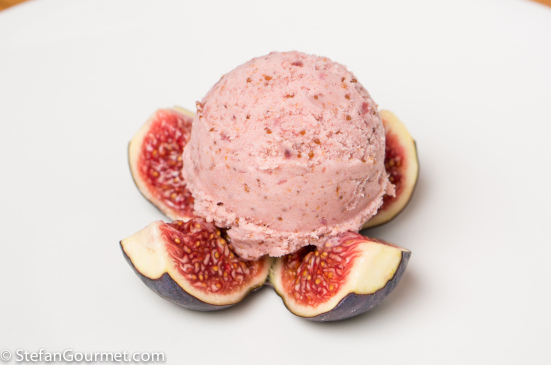
Fresh Fig Ice Cream (Gelato di Fichi)

I just have to pass along this post from Stefan’s Gourmet Blog. I love figs, love ice cream, and this is easy. I’ll be anticipating the fig season next year, though we have brown Turkey figs here, rather than the deep purple ones.

StefanGourmet's avatarStefan's Gourmet Blog

DSC07595

Fresh figs have to be imported and because they are quite perishable they are not often of a great quality, but sometimes some nice figs are available in the Netherlands. A nice way to use them is to make ice cream. I’ve used a recipe from SeriousEats that uses lemon zest and lemon juice to enhance the flavor, and it was very nice indeed. The recipe is quite easy as nog eggs are involved. Here’s what I did…

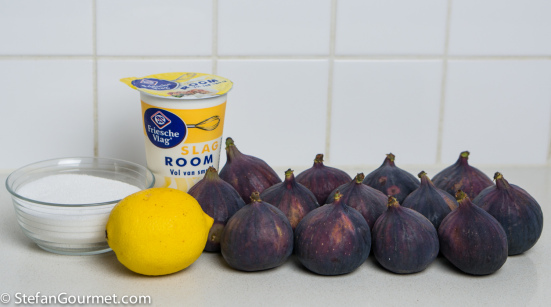
Ingredients

DSC07462

Makes about 750 ml (3 cups)

900 grams (2 lbs) fresh figs, plus additional figs for garnish (optional)

1 untreated lemon

150 grams (3/4 cup) sugar

250 ml (1 cup) heavy cream

Preparation

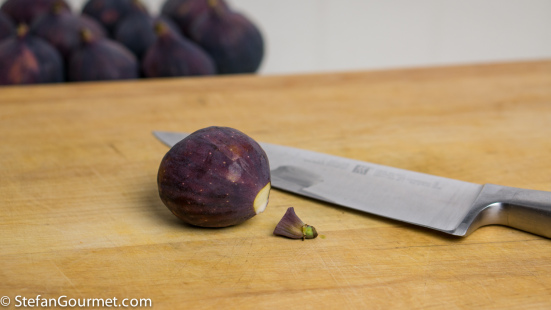
DSC07465

Wash and dry the figs and remove the tough stem.

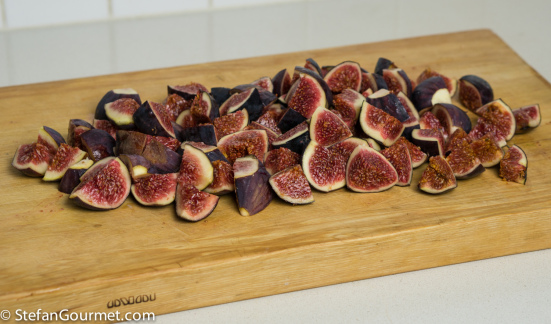
DSC07467

Chop the figs.

DSC07468

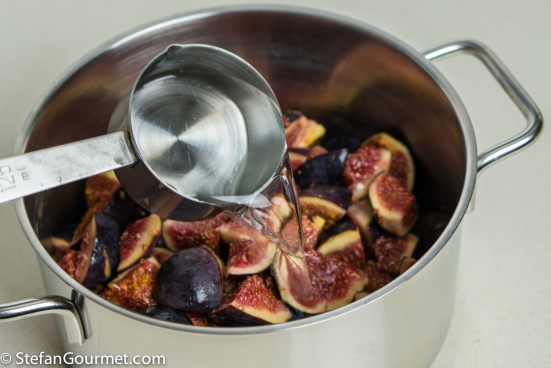
Put the figs in a saucepan with 125 ml (1/2 cup) of water.

DSC07469

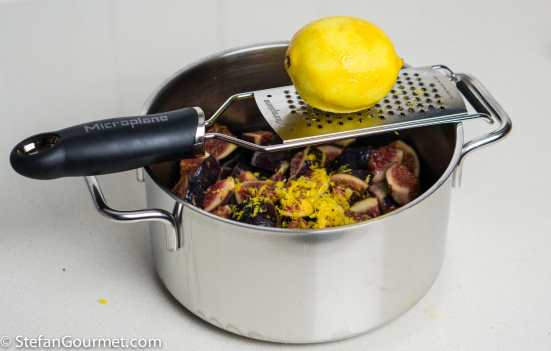
Add the grated zest of a lemon.

DSC07471

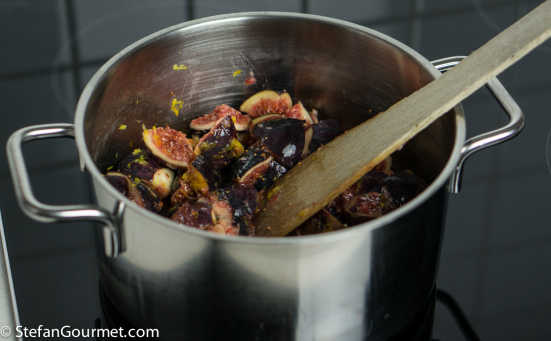
Bring to a boil, stirring…

View original post 133 more words

Hot Chocolate–with Krupnikas

In anticipation of National Chocolate Day–drink up!

I love chocolate, and I would be unlikely ever to turn down good hot chocolate or cocoa. I’m glad fall is finally here with relief from the hot humid, muggy weather; however, today is the ninth day of measurable rain in a row, and what with hurricane Joaquin making its way north along the coast, we’ve got several more days of gray, rainy weather coming–maybe a record-breaking string of rainy days. Well, after a brief lull this afternoon, the rain is back. As I listen to the rain on the metal roof, what better to do on chilly, grey, soggy, damp, rainy days than make hot chocolate or hot cocoa?  A real comfort beverage even if you don’t enhance it with spirits. So start with a good cup of hot chocolate or hot cocoa. . . .

First, let’s be clear about the definitions of hot cocoa, and hot chocolate. These terms are often used interchangeably by Americans and use the terms to apply to some really atrocious mixes. If you’re really “into” this beverage there’s a whole lingo you should know. however there is a difference (Amano chocolate page). In a nut shell: hot cocoa is made with cocoa powder, milk and/or water. It’s a thinner beverage. Hot chocolate (also called drinking, or sipping, chocolate) is made with chocolate (often shaved or ground to melt faster) which, because of the natural fat in chocolate makes it a richer beverage.

So, when I say hot chocolate that’s what I mean–and I do distinguish that from hot cocoa–not that I don’t like both in different situations. (This really excludes most ready-packaged mixes–especially the “grocery store shelf” ones.)

So first you must make hot chocolate:

Simplest creamy hot (sipping) chocolate

Ingredients (1 serving)

  • 2 ounces of premium chocolate dark chocolate (unsweetened and/or semisweet) pieces
  • 1 cup half-and-half
  • pinch salt
  • vanilla to taste (optional)
  • honey to sweeten to taste

Preparation

  • Place chocolate (cut if in large block) into microwave-save container. The container needs to be large enough to allow you to whisk the warmed mixture vigorously.
  • Add honey and pour half-and-half over.
  • Microwave for about 2 minutes–until milk/half-and-half is steaming, but not boiling.
  • Add pinch of salt, and whisk vigorously until the chocolate is emulsified and mixture is slightly thickened.
  • Taste and add more honey if needed, and vanilla if desired.
  • Pour into a carefully warmed mug, sit back, and enjoy.

Ò¿Ó

Don’t serve this in a thin, fancy cup–even though it’s rather decadent. I use a mug warmed thoroughly with almost-boiling water so that this creamy, sensuous beverage will stay warm while i sip it slowly. Don’t bother with whipped cream–it’s rich enough without.

Ò¿Ó

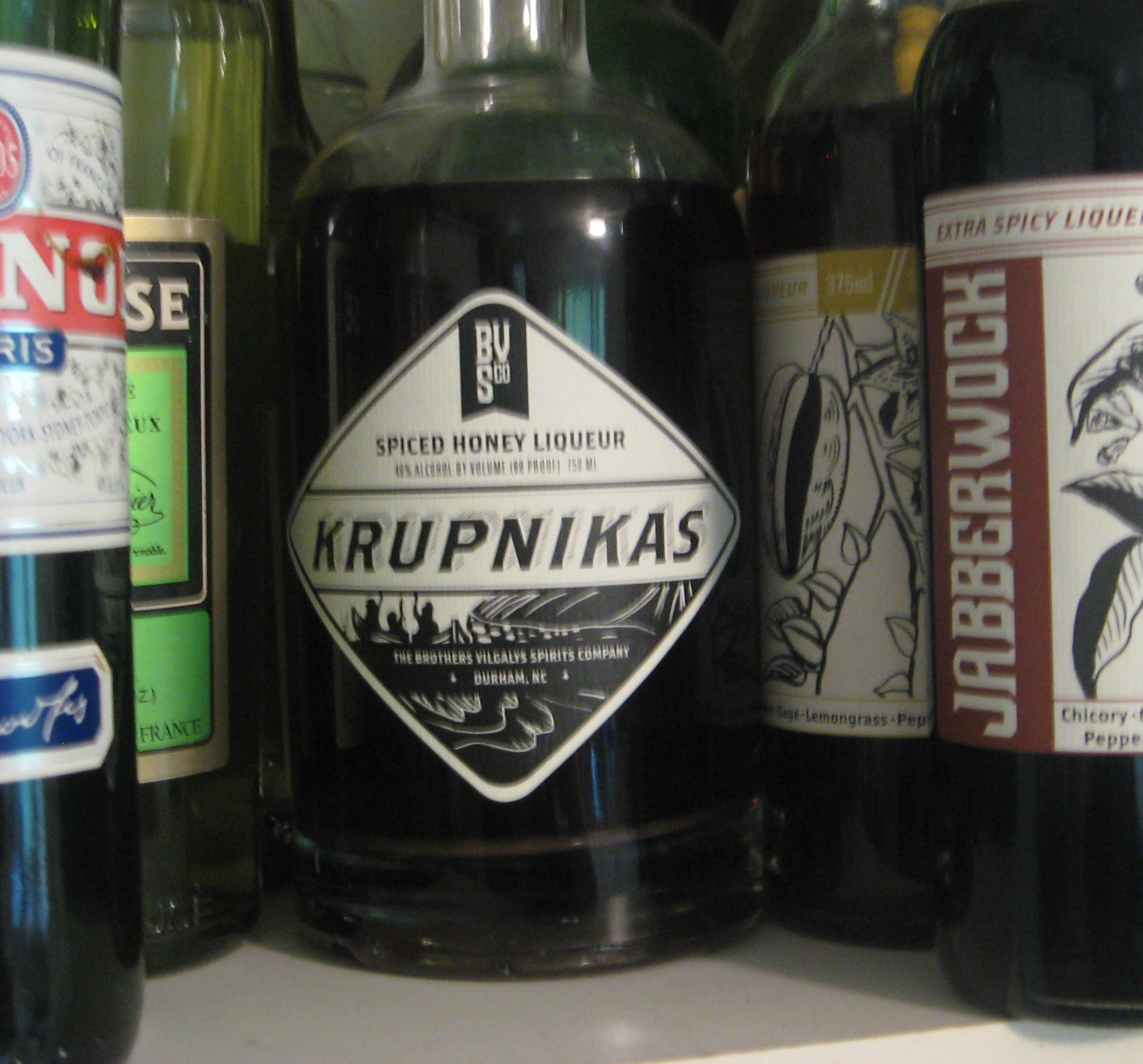
Now you have a very dark creamy cup of chocolate. Good as is, but it’s fun to add some different flavors. With all this cold rainy weather, I’ve been experimenting with additions. One of my favorite inspirations was to add a splash of Krupnikas–a spiced honey liqueur. Awesome!

Another liqueur from the Vilgalys Brothers Jabberwock–a very spicy–with coffee, chicory, lemongrass, eucalyptus, manzano and chipotle peppers–makes a spicy cup of hot chocolate–probably my favorite so far.  A splash of Chambord would not be amiss either! if you want fruit rather than spice.

Ò¿Ó

Kupnikas_crop_IMG_8320

Ò¿Ó

Quince Ratafia and Other Home-made Hooch

This really says fall.

Linda Duffin's avatarMrs Portly's Kitchen

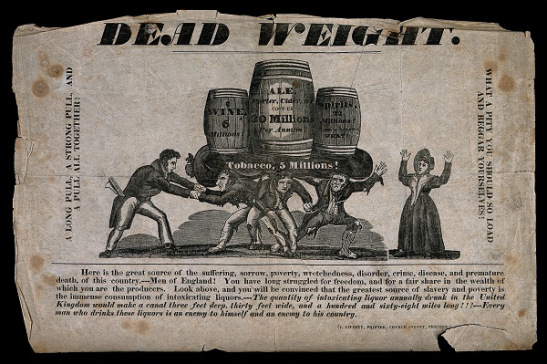
Image of temperance poster Picture: Wellcome Library, London.

It is not illegal to own a still in the UK but it is illegal to make alcohol unless you have a distiller’s licence: I believe penalties for a first offence include a fine of up to £6,500, five years in jail or both. I would submit that this draconian punishment has more to do with the tax man than it does with any temperance movement. There’s nothing to stop us, though, buying booze someone else has made legally and putting our own spin on it.

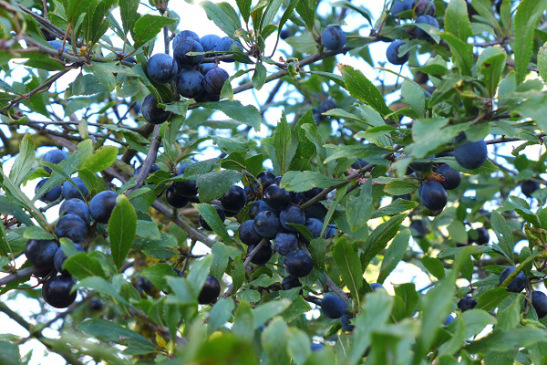
Sloe gin is an annual favourite. Last year we made bullace gin for the first time and it is stonkingly good, alone or as a cocktail ingredient. The blood orange shrub (an old name for an an acidulated alcohol) is a bit too marmalade-y for my taste.

Image of sloes growing in hedgerow

The general rule of thumb when making sloe or bullace gin (or vodka or…

View original post 255 more words

Recipe: Apothic Dark Red Wine Cake

I like this wine–just for drinking, and can imagine that this will be awesome.

winebyari's avatarWine by Ari

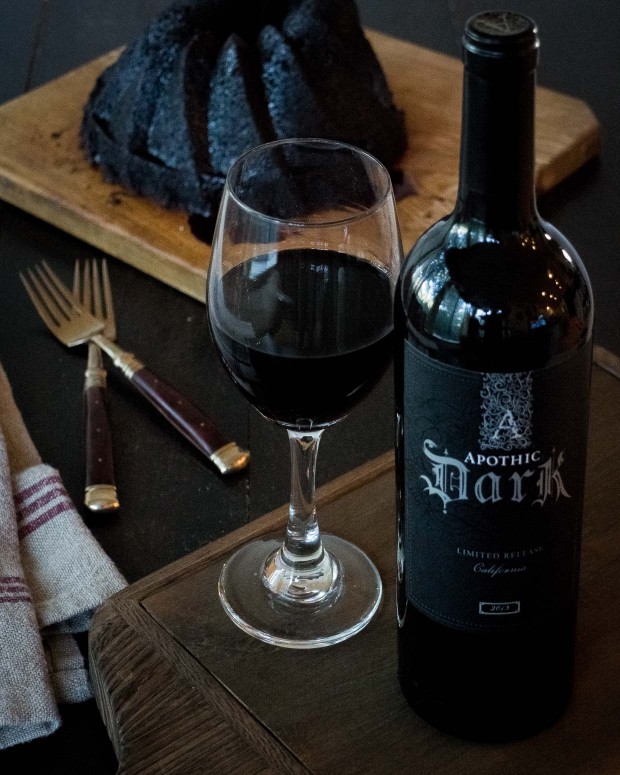
Apothic-Cake-2-3-620x775


I came across this amazing recipe for Apothic Dark Red Wine Cake from Chasing Delicious.

Apothic Dark Red Wine Cake

Ingredients

  • 6 ounces flour
  • 2 ounces cocoa powder
  • 1 teaspoon baking soda
  • ½ teaspoon salt
  • 8 ounces unsalted butter, at room temperature
  • 14 ounces vanilla sugar (or granulated sugar)
  • 2 eggs
  • 1 teaspoon vanilla extract
  • 1⅓ cup sweet red wine (try Apothic Dark)
  • 1 cup cinnamon red wine sauce, recipe below

Instructions

  1. Preheat an oven to 350°F.
  2. Butter and flour or grease a bundt pan. Set aside.
  3. Mix together the flour, cocoa powder, baking soda and salt in a large bowl. Set aside.
  4. Beat the sugar and vanilla together until light and fluffy, about 5 minutes.
  5. Add the eggs, 1 at a time, and then the vanilla, mixing well after each addition.
  6. Add half of the dry mixture and mix in well. Pour in the wine and mix…

View original post 207 more words

Beets in a surprising place

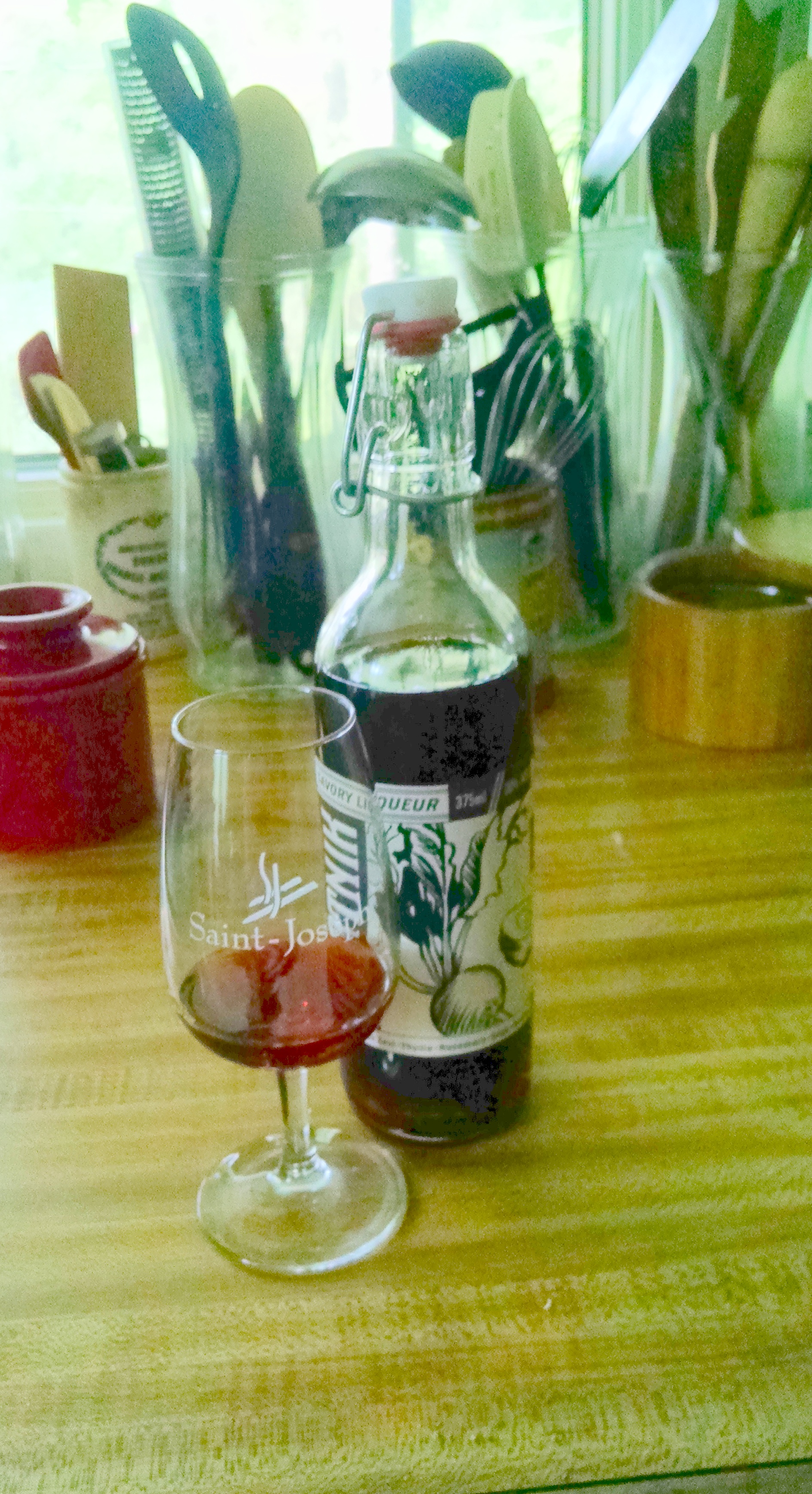
bottle and glass of Beatnik

Beatnik liqueur

If you’re any sort of a “regular” here I’m sure that you are aware that I think beets are under-appreciated vegetables. I’ve posted a number of beet recipes that I’ve found on other blogs and that I like. Last week I got an unusual (I mean they don’t bombard you with emails) from the Brothers Vilgalys who produced the Krupnikas about which I posted.  Well the email introduced some new liqueurs. (Note that this is a liqueur; it is not a cocktail called beatnik.)

The first that I’m sampling is the Beatnik. I don’t know what that conjures up for you, but it is a fantastic taste.  (You aren’t surprised, are you? Not given my fondness for beets!)

I suppose that the last place you’d expect beets to show up would be in a liqueur.  I was surprised when I read the description, but I just had to try it.

So, here is a liqueur with beets in it, described in the email as “An unusual liqueur made with Beets & Savory Herbs. Draws a bit of inspiration from an old Estonian liqueur I read about. Goes great with Gin drinks.”

I can tell you it is awesome! The beets are tempered/seasoned with orange zest, rosemary, thyme, sage, and fennel. I doubt that you could pick each one out as they blend so smoothly.  I’m sampling it “straight” this evening, but I’m going to try a splash of seltzer, as I’ve found that the Krupnikas (for warm weather) does nicely with that.

There are three others. I had a telephone call from the Woodcroft ABC store this afternoon to let me know that these had arrived. The Beebop was missing (that one has rhubarb and other goodies), but Jabberwock (coffee, chickory and some spicy things) and Zaphod (which is a fruity, minty one) were available.  I’ll be reporting on those in the fairly near future.

I’m just entranced by the nose of the Beatnik. The beets are certainly not obscured by the herbs and the orange zest–it all just blends together into a lovely earthy, beety, resiny, woodsy flavor.  In a word, awesome.

It gives me some ideas for seasoning beets as a vegetable too.

An Overview of the Châteauneuf-du-Pape Appellation and Its Wines

Châteauneuf-du-Pape is one of my favorite wine regions. It’s great to see this information pulled together here. Thank you!

Stefano's avatarFlora's Table

As a prelude to our next post in which we will temporarily leave Italy and review a French Châteauneuf-du-Pape wine, in this post we will provide a brief overview of the southern French wine region that goes by the same name, including its history, terroir, permitted grape varieties and winemaking practices.

In General

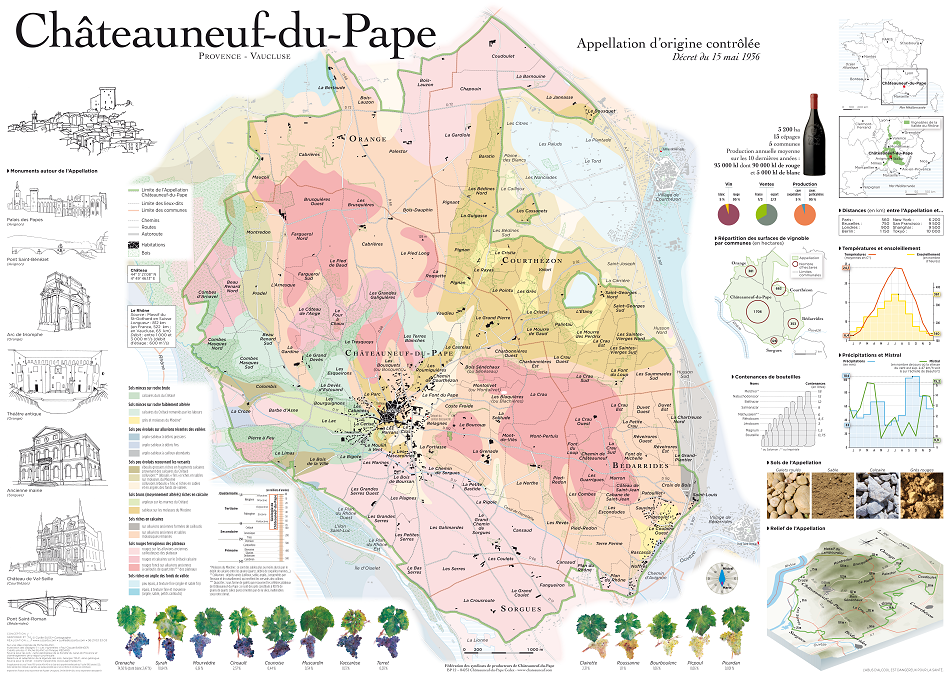
Châteauneuf-du-Pape is an area encompassing 3,200 HA of vineyards that is located in the southern part of the Rhône Valley, in France, between the towns of Orange (to the north) and Avignon (to the south).

Châteauneuf-du-Pape Appellation Map Châteauneuf-du-Pape Appellation Map – Courtesy of Fédération des syndicats des producteurs de Châteauneuf-du-Pape

Thirteen different grape varieties are authorized in the Châteauneuf-du-Pape vineyards, with Grenache, Syrah and Mourvèdre (the so-called “GSM“) being the dominating varieties, as well as the traditional core grapes in the Châteauneuf-du-Pape blend (see below for more information about these grape varieties). Other permitted varieties include Cinsaut

View original post 1,178 more words

Wine areators do work

Great to know that this actually works. I was given one quite recently so haven’t used it much yet. I don’t think it’s quite as straight-forward as this one, but does definitely help. Thanks for the tip about old wines!

Areators, what?

s_marchiori's avatarthewinelifestyle

Dear readers,

Have you ever wondered how and if the areators for red wine work? Well, let’s find out.

Recently, I have seen many types of this kind of accessory, which are different from the traditional decanter: they don’t have the function of decanting the red wine sediments, but allow to oxygenate the red wine very quickly. It’s an handy accessory: for example, if we have guests for dinner and we don’t have time to open bottles an hour or two before drinking it!

1_Ventorosso_areator_Thewinelifestyle

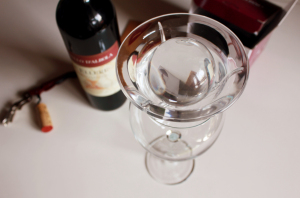
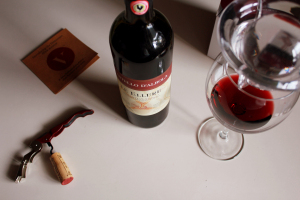
I really like this type of aerator, the Ventorosso, ease to use, with a very linear and functional design: it is composed of a base, to be placed above the glass, and a sphere on which you pour the red wine, so as to increase its surface exposed to air, “opening” it faster than a simple wine rotation in the glass.

2_Ventorosso_areator_Thewinelifestyle

Let’s go a bit ‘in…

View original post 192 more words

Pernod Absinthe

As a fan of Pernod, both to drink and to in cooking (you can’t make bouillabaisse without it can you?), I found  this while browsing the Chef Mimi blog. There’s stuff here about Pernod that I didn’t know–but am pleased to know. So here’s Chef Mimi’s post on The King of Denmark reblogged, but you should go check out this blog for other recipes and good stuff.  (This post has made me want to see if I can find the absinthe version.)

Something warming–Krupnikas!

trees with snow

February snow

In preparation for the snow that was supposed to (and did) arrive last night, I had a few errands to run yesterday afternoon–there are some basic necessities for inclement weather: cat food, cat litter, TP, candles, and supplies to aid in keeping warm in case of power outage. (You will please note that bread and milk do not appear anywhere on that list.)  I stayed well away from the grocery store.

The important errand yesterday was to Wild Birds Unlimited for a huge bag of safflower seeds for the feeders which provide much entertainment for Frankie as well as for me. For keep-warm supplies, the was ABC store.

Quite recently while I was enjoying lunch at the Hope Valley Diner, another regular customer and I were have a very food-oriented conversation and Krupnikas was mentioned.  I’d not heard of it before. From his description of it I definitely had to remedy that oversight since I’m particularly fond of honey,  herb- and spice-based liqueurs such as Chartreuse (both green and yellow).

snowy deck

Snow day

Since the ABC store was conveniently (as in driving right past it) near the bird-food store, I thought this kind of weather would be ideal for trying some warming spirits while having relaxed bird-watching day and quality time with the cat.

Krupnikas is traditional Lithuanian-style  spiced honey  liqueur being  made right here in Durham, North Carolina! I thought it was necessary for me to try this one in the spirit of continuing education and experimentation. Thus, a stop at the ABC store. According to Wikipedia, krupnik or krupnikas (Polish or Lithuanian) was created by Benedictine monks–does this suggest why I might like this as well as Chartreuse? Bottle of Krupnikas located, bought, and carted home along with bird food. Errands completed.

While waiting for the snow to arrive last night, I poured myself a reasonable tot of Krupnikas–neat in a snifter since this was apparently the traditional way of serving it. Warmed by hands around the bowl of the snifter, the aroma was sweet, somwhat floral from the honey, with spices, and a bit of  orange-like citrus component that brightened up the warm spices.

The taste–wow–definitely warm, cozy,  almost cuddly, but certainly not fuzzy, though it feels very smooth and rich in the mouth.   The first sip gives warm brandy/cognac-like “burn” with sweetness, followed by floral honey sweetness and the spices that linger after swallowing. The spices are very warm and complex, without any one being dominant.

I’ve only tried this neat as a sipper, but if you check the  Facebook page and the website for The Brothers Vilgalys Spirits  there are suggestions using Krupnikas in mixed drinks.  I’m going to be trying it with coffee as you would brandy; the White Lithuanian sounds really good (as I do like brandy Alexanders occasionally).

For me, this is definitely a keeper that will live right with my bottles of Chartreuse! I can see it as an apéritifs and/or digestif, or as a sipper for relaxing with friends, or the cat and a good book. I’m glad I found out about this–especially as it’s made here in Durham. Another way to be a locovor!

As well as the Krupnikas made with neutral grain spirits, there is also Mystic Bourbon Liqueur (Barrister & Brewer)  and other products made here in Durham that need to be investigated. For those of you interested, this is available from distributors outside NC.  spiced honey liqueur