Dicing onions

Ok, I’m lazy–even about some things in the kitchen–like dicing onions; however, I’m not at all sure that it’s possible to cook without onions.Being out of onions is like–well, my mind simply boggles at the thought.

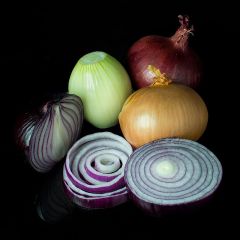
800px-mixed_onionsI use lots of onions, meaning that I cut up a lot of onions, but I’ve never understood the “usual” way that we’re told is “proper” to dice onions. I can understand it if your onions are HUGE, I suppose, or if you have a touch of OCD (I may have, but not about diced or chopped onions). I’ve always thought that onions were essentially self-dicing with little effort on my part–after all they come with layers already there. Another aspect of dicing or chopping onions–I’ve never been one to expose myself to unnecessary risk so why the cuts parallel to the cutting board? (Yes, I know that you’re supposed to have your hand on top so it’s impossible to cut yourself. Be sure to check on that the next time you’re dicing an onion properly. Where’s you hand?)

My lazy approach has always been kind of a two-part thing: First don’t buy huge onions. Secondly, I bypass those horizontal cuts, doing only the vertical cuts. For diced, do the vertical cuts close together; for chopped, farther apart. Easy!

Recently, I stumbled over a video from The New York Times Cooking Techniques on how to dice an onion that omitted those cuts. How refreshing!

Since I’m doing single-serving cooking most of the time, I often use shallots. Then there’s the truly, completely lazy way to deal with the onions. For cooking purposes when I want chopped onions I often reach into the freezer for that bag of frozen chopped onions. If I want lots of onions for something like caramelized onions, then I’ll get out the knife and go to work.

Another lamb and garbanzo bean stew

Yesterday was the day for a trip to the supermarket–as usual dictated not by coupons but by me being low enough on milk that I was not going to be able to make enough caffè latte to get me awake and doing what I needed to do today. As usual, I didn’t go with preconceived notions of what I might bring home to cook.

I got my milk and eggs–just not possible to be out of eggs, but I was–and did my usual troll past the butcher counter. I found a manager’s special that was simply too good to pass up: lamb stew meat at a great price. Since my agenda today was mostly minor chores I thought I’d have time to cook, so I came home with lamb stew meat and actually remembered to soak (in brine) the garbanzo beans last night. You’re probably thinking so what?

Well, it’s fall and that makes me want to cook hearty stuff and lamb stew just seemed to be a really good idea: economical, tasty, some to go in the freezer for quick meals, and some to eat now. Unfortunately, the weather is not really cooperating–my thermometer is showing 82ºF right now–but at least it’s cooler in the evenings now so stew is not completely amiss. Still, so what?  Right?

Well, as I started my morning caffeination by browsing Facebook I was informed that I had memories from two years ago. Now I’m still not convinced the FB really cares about my memories, but the top item on the list was my post about making–yep!–lamb and garbanzo bean stew in the oven. Well, same today: it’s unseasonably warm again, but not too humid, and it’s sunny and breezy today so it’s oven rather than slow-cooker version this time. Since I did forget to soak the Romertopf  ahead of time, I just pulled out the Dutch oven instead.

I did look for recipes last night but didn’t really find anything inspiring, so today’s lamb stew was a “kitchen happening”–let’s just see what turns out. That two-year-ago lamb stew was an oven version of a slow cooker recipe. This year, given the weather I decided that I’d (again) do oven braising. (The slow-cooker version was good, but no way as good as the one done in the oven.)  I haven’t looked back to see what went with that version–all I really remember is that I used canned beans that time.

Oven-braised lamb and garbanzo stew (2016)

Ingredients

(I’m not giving much in the way of measurements here since this was a “kitchen happening”)

  • Lamb stew meat (about 3 pounds with some bones included)
  • Garbanzo beans (brined over-night)
  • Lots of onions (cheated and used frozen chopped ones)
  • Bay leaves–2 large
  • Salt about 1-1/2 teaspoons, give or take–will taste later
  • French thyme (dried)
  • Marjoram (dried)
  • Garlic powder (Oops–not a single head of garlic in the house!)
  • One 14-ounce can of diced tomatoes–drat, out of fire-roasted ones.
  • Smoked Spanish paprika
  • Olive oil as needed for browning lamb

Preparation

  • Brown stew meat (bones included; they will make good stock as the beans and lamb cook ).The bones are big enough to get out easily when the stew is done. Add to Dutch oven.
  • Saute onions until just golden, and add to Dutch oven with meat, beans, and tomatoes
  • Deglaze skillet with water and add to braising pot
  • Add  salt, herbs, and spices.
  • Bring to a simmer on the stove-top
  • Place in a 185ºF oven  and cook until beans and meat are tender–about 3 hours.

Ò¿Ó

Here I was, again, making this lovely stew in unseasonably warm weather but still cool enough to use the oven rather than the slow-cooker. Cooking my own garbanzo beans was well worth the thought and bit of effort that it took to soak them. Brining them seems to make them cook much more quickly. Leaving the bones in with the meat really gave a lot of lamb flavor–worth the effort of taking them out after the meat was done.

I love this combination of lamb and garbanzo beans–it seems that I’ve used different seasonings almost every time this “happens” in my kitchen, but it’s good every time! No recipe needed just season as you like…a son gôut!


Cool stuff for hot weather

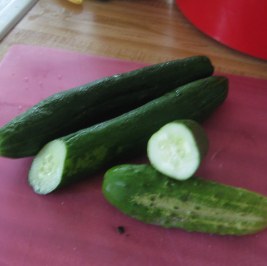
pickling and Amira cucumbers side by side

This hot weather has me looking for cool things–ways to beat the heat. Cucumber is one of the first things that comes to mind when I think of cool, refreshing things–with tomatoes in salad, or with mangos. But thinking really cold, I started  skulking through my old recipes for a dimly remembered recipe for cucumber sorbet with eucalyptus honey.

Eucalyptus honey is fairly dark, with an assertive earthy, spicy flavor with a slightly cool overtone like mild menthol. For some it might be called medicinal, but I found it an interesting combination, with the cool cucumber plus the extra little kick of coolness from the eucalyptus honey. (If you don’t have eucalyptus honey, this sorbet will still be tasty.)

Problem–someone (no names here) didn’t write down the quantities or the source of this recipe–or maybe it was an off-the-cuff invention with whatever was around at the time that obviously included eucalyptus honey.

So, some research. Going to The Perfect Scoop by David Lebovitz (one of my two favorite sources on frozen dessert stuff), and Jenis Splendid Ice Creams at Home by Jeni Britton Bauer (my other ice cream favorite) I found what I needed to fill in the missing quantities for the sorbet.

Cucumber and Eucalyptus Honey Sorbet

Ingredients

  • 2 English or Japanese cucumbers–about 2 pounds–coarsely chopped
  • 5 ounces eucalyptus* honey
  •  1/2 cup water
  • 1/4 teaspoon freshly ground black pepper
  • pinch of salt

Preparation and notes

  • I prefer the English or Japanese cucumbers because you don’t need to remove seeds. This would take about 2 cucumbers. Peeling is not necessary. If you have slicing cucumbers, remove seeds.
  • Combine honey and water; heating is not necessary.
  • Combine ingredients in a blender and puree until smooth.
  • Pour into prepared ice cream maker and freeze according to manufacturer’s directions
  • To make without an ice cream maker, use the method for granitas: pour into a shallow baking dish and place in the freezer. Stir with a fork about every 30 minutes until firm. (This breaks up ice crystals although the texture will not be as fine as with an ice cream maker–but still tasty.)

*A note on honey: Eucalyptus honey is a varietal honey; made from the nectar that bees collect from flowering eucalyptus trees. It is not an “infused” or “flavored” honey–those are made by adding flavoring to wildflower honey. I found the eucalyptus honey in my local Harris Teeter grocery store, next to the orange blossom and wildflower honey.

Ô¿Ô

Some other interesting recipes that I found whilst trolling the internet:


Black bean pasta

I’ve had a long work week, which  ended  in frustration  this evening in–I’m hungry, but the planned meals just don’t DO it. After staring in the fridge for a while, and going back to take a few of those silly online quizzes, I still hadn’t the foggiest idea what I wanted to eat. More peering into cabinets (sardines–nope, tuna–NOT).

While skulking through the pantry, I realized that what I’d most likely cook were I not trying to be really serious about weight loss would be pasta.  Obviously, that won’t do–at least not pasta, as we most commonly think of it.

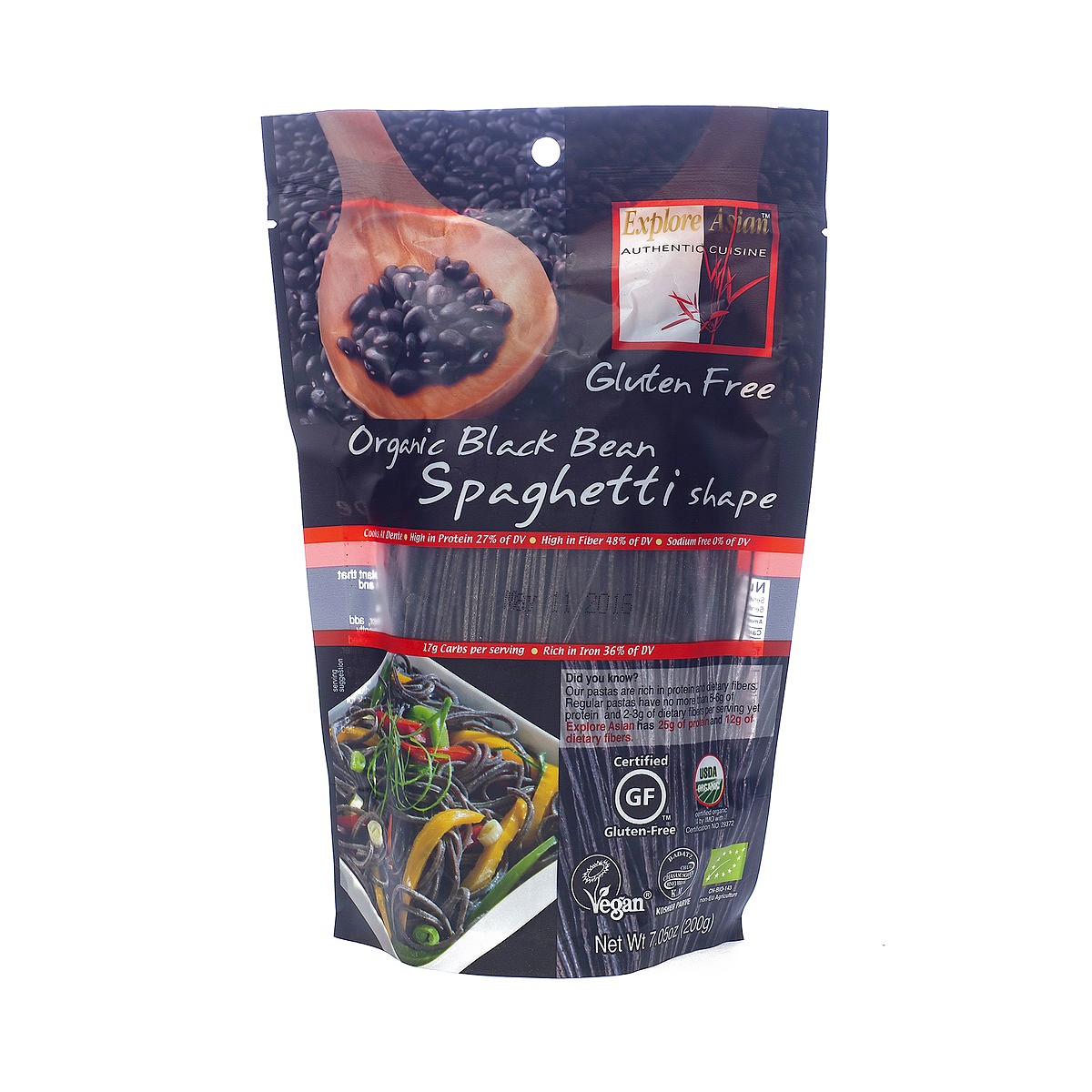
On my grocery rounds day before yesterday, I noticed that there was a new section of pasta displayed with lots of signage designed to attract attention–it was gluten-free pasta. I’m not gluten intolerant so I usually don’t pay attention to that (and I get really irritated when I see fruits and vegetables touted as gluten free–but I won’t go there now). As I stood perusing the boxes, I had a faint memory of a friend telling me that her grandchildren liked black bean pasta, so I read the ingredients list–and it was only black beans. I found that rather amazing, since so many gluten free products have potato starch or other things that are off limits to me right now. I succumbed–I bought a package of black bean pasta.

I stashed the black bean pasta (pasta?) in the pantry and went straight to  the Merriam-Webster unabridged dictionary to look up pasta. I discovered that it was defined as “an alimentary paste in processed form”. While spaghetti was given in an example nothing was specified as to what the paste was made of.  Ok–it’s black bean pasta.

I spend a little time thinking about why I eat pasta. It’s because I like pasta. I like the different shapes, too. I like the flavor of pasta made from wheat, but there is a texture factor there as well. Maybe there is more than that–maybe there is something about twirling spaghetti or angel hair pasta around a fork to get it into my mouth–part of the process of eating that’s satisfying–more than just the flavor.

What I’d usually make is spaghetti aglio e olio–sorry, that just sounds better that plain olive oil and garlic–so I decided to give the black bean pasta a trial that way. I got out my favorite pasta-cooking gadget. For this to keep with the meal plan in some remote fashion, I needed to add some vegetables. Spinach!  I sautéd the and spinach in the olive oil and dumped it over my black bean pasta. (I know I had a bigger serving of carbohydrate than I should have, even though it was black bean pasta, but at least I had veggies with it.)

The result? A pleasant surprise! It was remarkably satisfying (maybe just because I was hungry); the texture was good though not quite like pasta made from wheat flour. It’s not overwhelmingly “beany” either. It was so satisfying that I had to think that there is more to my liking pasta than just the flavor. Would I rather have had “real” pasta? Yes, but this was good. Black bean pasta is not going to replace the traditional stuff made of durham wheat flour. It certainly beat trying to fake it with spaghetti squash (though I like that too, but it’s definitely NOT pasta–it’s a vegetable so don’t tell me to use it instead of spaghetti).

The final call? I’ll cook  pasta made from black beans again until I can have the traditional kind that we usually think about. I don’t know why I had this resistance to this as pasta since I like soba and rice noodles. It’s a good stand in for this meal plan. After eating that I find that there is also pasta made of chickpeas (garbanzo beans).  I’m sure I’ll find some other uses for it as well, and I’ll explore other “alimentary pastes” to add to the soba and cellophane noodles as well. But I’ll still want that plate of “real” spaghetti aglio e olio!

Õ¿Õ


Smoky, spicy red lentil soup (Always Hungry?)

Lemony Red Lentil Soup with Cilantro

This is one of those “recipes” that really isn’t. Kitchen Express doesn’t give you a list of ingredients–it gives you a paragraph description of what to do–a happening. I don’t always have red lentils, so I’ve made this with De Puy lentils; it simply takes a little longer to cook. This is the “light, bright” lentil soup that I make in warm or hot weather.

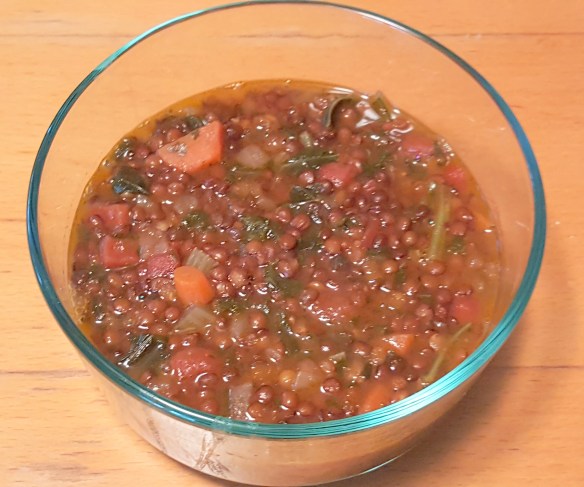
The soup below started as the Red Lentil Soup (pages 283-284) in Always Hungry?  However, true to form for me, it evolved–still keeping the spirit of the meal plan. So here’s my version of a seemed to be rather a bland lentil soup when previewed on the page. It evolved on a dreary, rainy, chilly day in May that felt more like regression to March. It’s only mildly spicy and garlicky–you could increase the chipotle powder or add a dash of cayenne.

Serves 4 with big bowls, or 6 with small bowls. Add some meat (lamb would be good) and it’s a meal in a bowl.

Smoky, Spicy Red Lentil Soup

Ingredients

  • 2 tablespoons olive oil (for cooking)
  • Chopped onion–about 1 to 1-1/2 cups
  • 2 medium carrots, diced
  • 2 ribs celery, diced
  • one 14-ounce can of diced tomatoes [fire-roasted are really good in this.]
  • 32 ounces chicken stock
  • 1 cup red lentils
  • 2 or 3 large cloves of garlic minced or pressed (or more according to taste)
  • 1-1/2 teaspoons of herbs de Provence
  • 1 to 1-1/2 tablespoons of pimentón (smoked Spanish paprika)
  • 1 teaspoon chipotle chile powder
  • 1/2 teaspoon red pepper flakes (hot)
  • salt and black pepper to taste
  • one 8-ounce package of frozen chopped kale
  • extra virgin olive oil for drizzling as a tasty garnish

Preparation

  • Heat the cooking olive oil in a good-sized pan and sauté the onions until beginning to brown.
  • Add the carrots and celery and sauté until starting to brown.
  • Add the pimentón, chipotle chilli powder, red pepper flakes, and garlic; sauté until fragrant.
  • Add the chicken stock, tomatoes, and 2 cups water.
  • Add the herbes de Provence
  • Bring to a simmer and cook until the lentils are almost tender. [I moved it to the oven to finish cooking so I could work without worrying about checking it.]
  • Stir in the chopped kale and continue cooking until the lentils are tender.
  • Serve it up and drizzle with a bit of aromatic extra-virgin olive oil.

clear glass bowl with lentil soup

Always Hungry? What’s in the pantry?

I don’t do meal planning well…I don’t like to do meal planning.  I’d much rather be spontaneous about my cooking and eating. Okay, I’m a picky eater–my appetite varies with the weather, the season, and even mood. While I’m managing to be moderately successful with the Always Hungry? meal plans, I really appreciate the “how to” section for each phase. It gives me much more freedom to cook what I want to eat. Even so, I’m looking forward to getting past the first two weeks of Phase 2 when I can do even more improvisation. Besides weight loss, one benefit of reading the book and starting this has been a close look in the pantry. In my pantry inventory, I found very few items that were on the discard list so doing without a lot of the prepared or processed things was not really a big issue.

I’m fortunate that from where I live it’s easy for me to stop at the grocery store on my way to and from other errands, so I tend to shop for perishable several times a week–check out the market and see what looks good: meal planning on my feet.  There is a farmers’ market close to me that is open on Wednesday evenings and one on Saturday mornings.

Many times I cook without a recipe and improvise something from what is in the house; improvisation is much easier if you have a well-stocked kitchen and pantry.My only purchase that was specific for the Always Hungry meal plan was the whey protein. That may remain in my pantry after Phase 2 is over–shakes for breakfast work well for me since I really don’t want major food first thing in the morning.  The Stahlbush Island Farms frozen berries have been a huge help with these when fresh berries aren’t of best quality.

There are a number of  things that I almost always have around.  You can find lots of lists in cookbooks for things you “should” always have on hand, but all of those lists need to be modified to suit your tastes.  If you hate anchovies, then there is not much point in having those in the pantry.  I may not want to eat them on a sandwich, but they can add a very subtle, rich background flavor to vegetables like broccoli–used in very small quantities they won’t scream “fishy” at you, and they can stand in for nam pla in providing umami.

Though I do shop for perishables frequently, I want to be able to prepare a meal even if it’s so hot that I just cannot face going outside, so I  keep a reasonably well-stocked freezer, refrigerator, and pantry. Even just from the canned (not many things) and dried goods, I could produce a meal at the drop of a hat.  Canned tomatoes in several forms–diced, whole, fire-roasted (add a little smoky flavor to a dish) and quick sauces–are such a pantry staple that they need not get more than a passing mention.  Sun-dried tomatoes, a tube of tomato paste, capers, and roasted red peppers are some other things that get frequent use.

Some of these supplies also stand in for the emergency kit in case of hurricane or ice storm that results in a power outage.  Peanut butter is a staple, but that doesn’t mean that I want to have to pull that out of the cupboard for supper–that’s snack food or for breakfast on toast, or with slices of apple or stuffed into celery ribs.
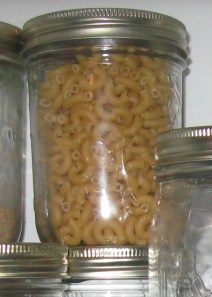
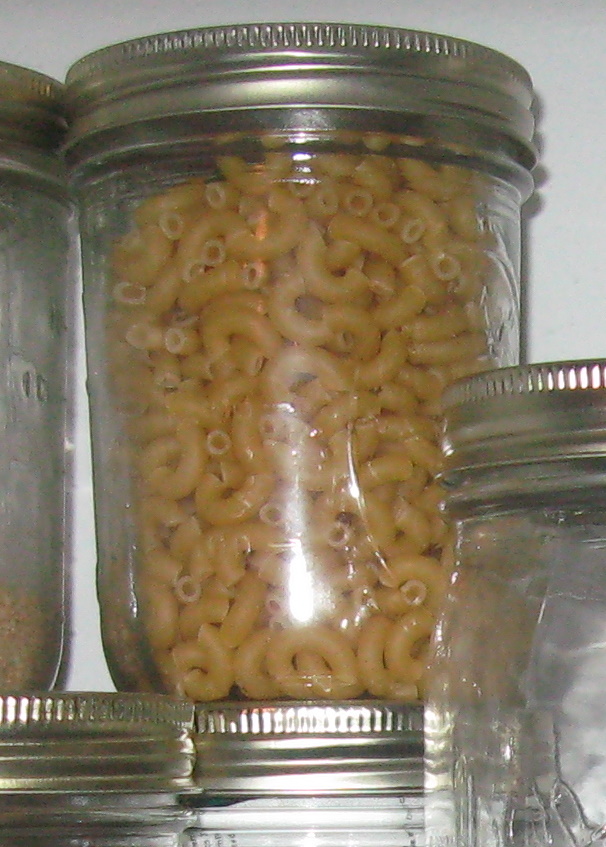
Dry pasta is a great base for improvising, so it’s good to have several different shapes around to harmonize with what is going in it or on it.  Once the package is opened,  if the unused portion is transferred to a Ball or Kerr Mason jars so that it’s tightly sealed it will keep until the next time I need this particular pasta. It will be good to add that back into my meal (in moderation, of course).

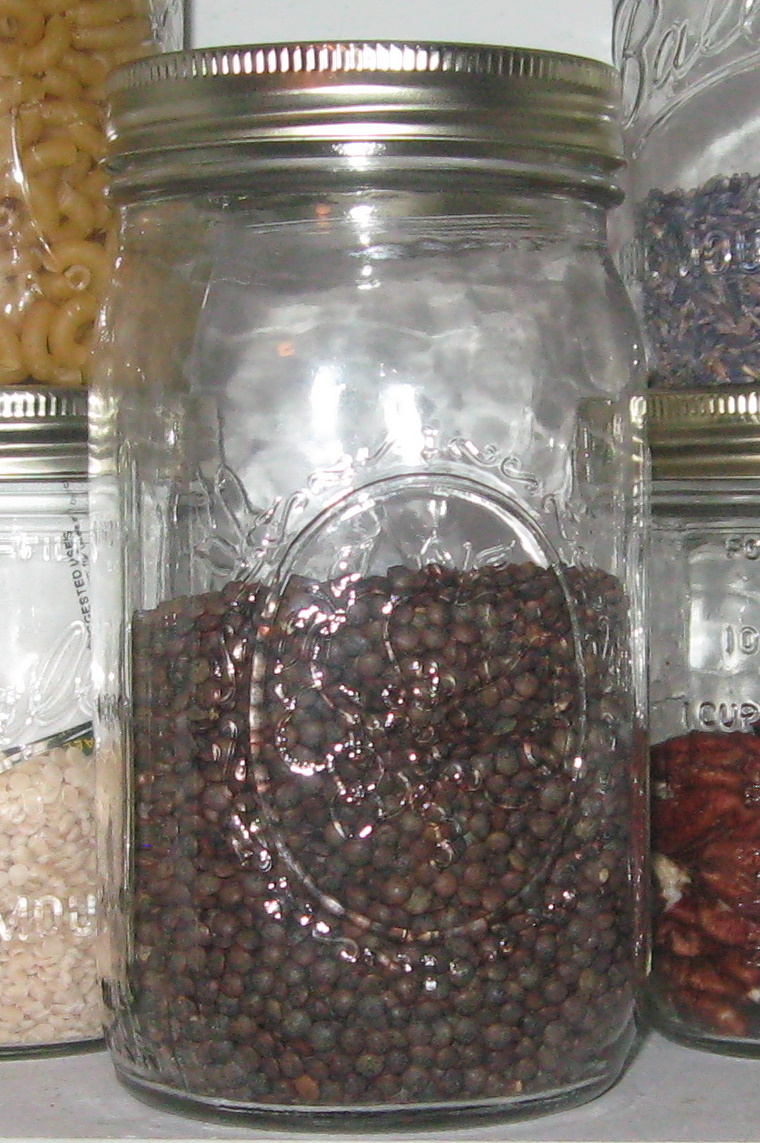
Dried lentils are another pantry staple–they don’t need soaking before cooking; it’s so easy to make a side dish or a soup using them.  There are many kinds of lentils (as there are beans) that can easily add variety to your cooking and allow improvisation.  The basic “brown” lentil can be found in most supermarkets in the section with the dried beans and rice.  My favorite is  the French Le Puy lentil which are small and hold their shape well when cooked. If you use them often, it’s worth looking for other lentils such as small black, or Spanish brown lentils.  You might have to find a “gourmet” store, but these are worth having on hand as a pantry staple. Lentils combine well with rice or other grains, and can be cooked with rice, or alone, in the rice cooker.
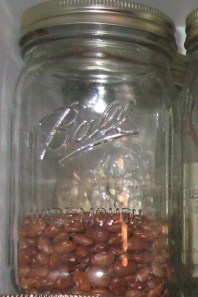
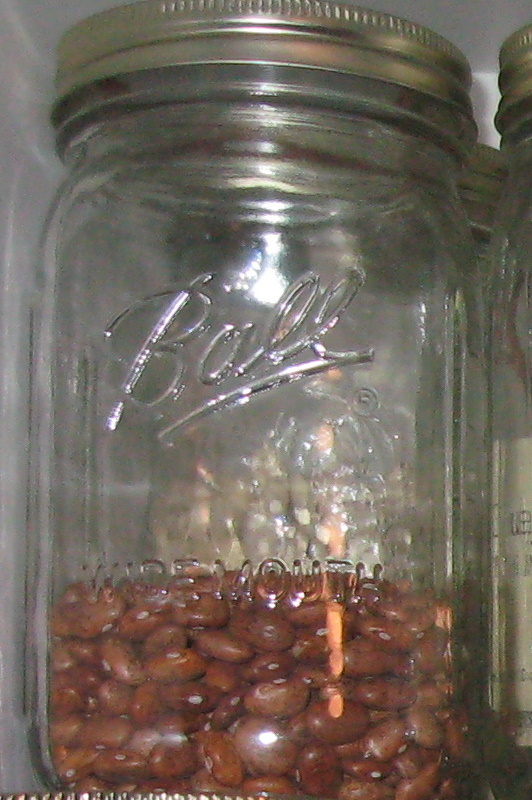
Although it does take a bit of pre-planning cooking your own dried beans instead of using canned ones it is worth the effort, but canned beans are still a pantry necessity. Cooking your own has the advantage of controlling the amount of salt and seasonings.  (That is not to say that I don’t have canned beans of various kinds in the pantry–I do–and I would not want to be without them.)   Some heirloom beans and/or specialty beans have such different flavors that they are worth searching out.  You can soak and cook more than you need for a single serving and freeze them with some of the cooking liquid so that you have them for quick use when you haven’t planned ahead. (One of the reasons I’ve been able to stick with the Always Hungry meals as will as I have is that legumes are part of the program.)
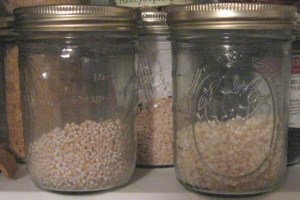
barley and rice

Barley (left) & arborio rice (right)

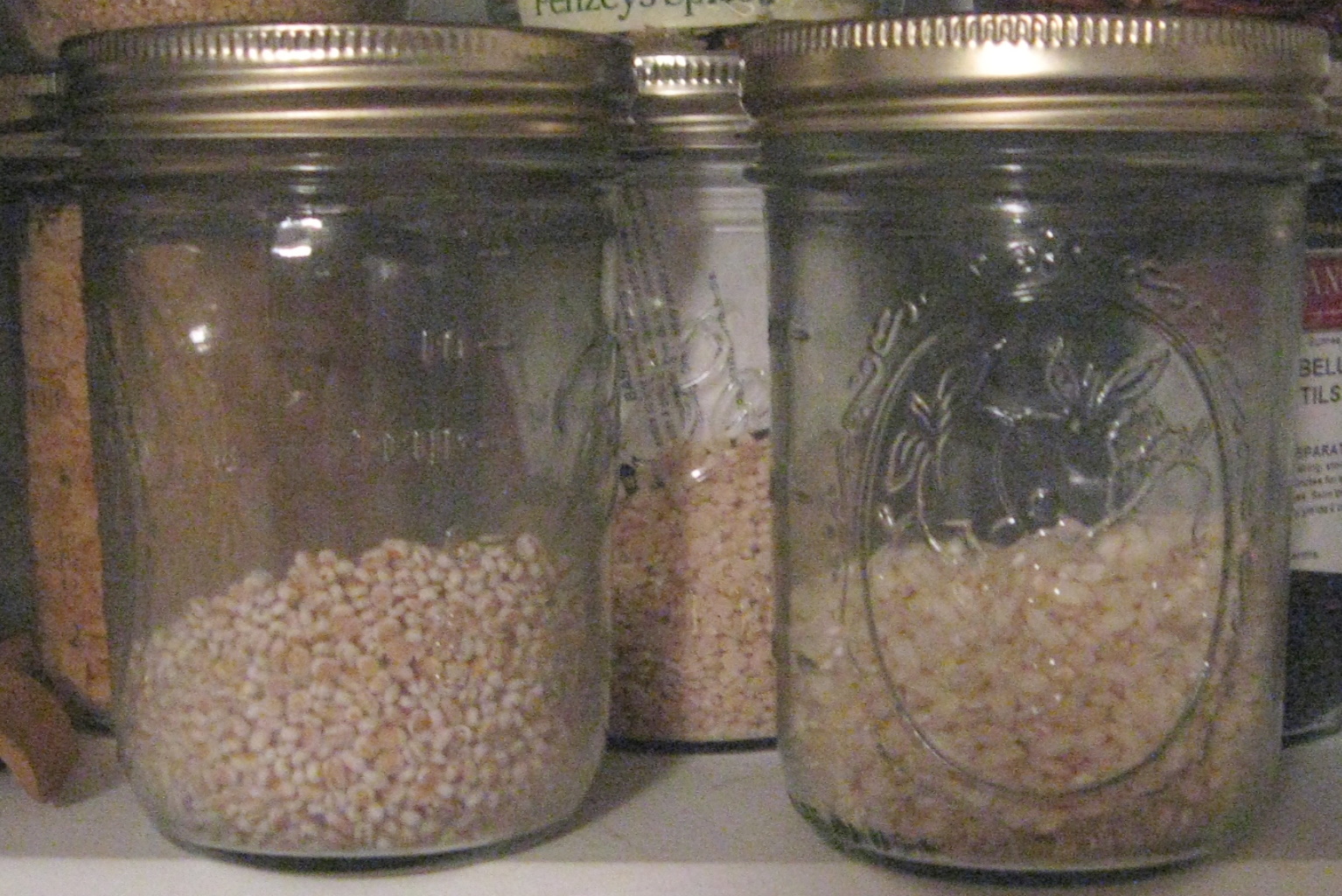
Grains are another staple in my pantry: rice, barley, quinoa, and some of the commercially available mixes that provide variety in a convenient way.  Being able to add some of these in Phase 2 is so welcome!  Since I love polenta, but corn is off limits, I’m going to try the millet “polenta”, though I don’t expect it to replace the real thing.

Basmati rice (brown or white) is a favorite for long-grain rice.  Since risotto is a great way to improvise a meal,  arborio or another short-grain rice that is suitable for making risotto is on hand too. It’s good to use in soups as well.  Barley is also a grain that to have on hand at all times–it makes a hearty soup, it can be cooked like risotto, and it makes wonderful side dish instead of rice. Depending on the season,  bulgur and couscous, both the fine and the Israeli, are also likely found lurking on my pantry shelves. Especially in the summer, with tomatoes abundant, tabbouleh is quick, healthy, and easy as a salad or a side dish. There are so many good grains that we use all too infrequently, just waiting to be added to out diet.

Though not “dry” cans of broth/stock are good to have on the pantry shelves, right along with the canned beans.  As a further backup, something like Better Than Bouillon in whatever flavor you use most often–chicken is a good compromise.

American Tuna image of canOther helpers for improvisation, include good quality canned tuna (personal preference is for oil packed) which can make a salad heartier, or be used with pasta or beans for a main course salad. Sardines make a good meal with  crackers or bread and fruit. These are good staples in the emergency food kit (which should also contain a can opener–the manual variety) as well. Salmon is part of the pantry, too, for salad or for salmon cakes.

Some other ideas for “pantry” cooking recipes inspired me to add some canned goods to my emergency stash–but that doesn’t include using cream soups and the like for “dump” cooking–that doesn’t particularly appeal to me, but having some carefully selected cans on the shelf can be useful.

There are some freezer things that I have found particularly useful while using the Always Hungry? meal plan adapted for single-serving cooking: chopped kale and spinach, chopped onions lend themselves particularly well to getting green veggies into my breakfast. Instead of the formality of making a fritatta with veggies, I find making scrambled eggs with the veggies much easier and quicker. A handful of chopped onions, a handful of frozen chopped greens quickly sautéed before adding the eggs does the job in a way that fits my morning functionality. If there are some cherry tomatoes lurking in the kitchen, those go in as well. Between supplying that quick handful, the opened bags live inside a zipper-lock freezer bag, right back in the freezer for quick access. I find that i use them so frequently that I don’t even do the vacuum seal–just pressing as much air as possible from the freezer bag will do fine since I buy the smaller bags and use them quickly. Now that I can add starchy vegetables in small quantities I’ve found that the Stahlbush Island Farms frozen butternut squash, sweet potatoes, and beets are good to have for use a handful at a time.

In anticipation of maintaining the weight loss the I have achieved so far (and hope to achieve in Phase 2) there have been two additions to the pantry–the whey protein, and chickpea flour. In addition to the recipes with the meal plan for waffles/pancakes that use chickpea flour, I’m experimenting with making my own crackers from that, rather than the usual wheat-based ones that I like to have around to go with the pickled herring or cheese. Here’s to maintaining weight loss, eating in a healthier way, and enjoying good food.

A son goût!

 

Always Hungry? Starting Phase 2

Phase 1 was successful–I tarried there a bit longer after my slip, but I can now say that my loss in Phase 1 has got me into double digits–more than I expected from reading the book. I need to lose more, but I’m happy with this for a start. I’ve found that this way of eating is very compatible with my cooking style.  I know that I’m going to have to be careful in Phase 2 as I start adding grains into my meals.

During Phase 1 I’ve given a lot of thought to what I really miss most. While I’m now quite fond of lettuce leaves to provide crunch with tuna salad and cucumber slices  with smoked salmon and some labneh with dill–some things just call for crackers. Lettuce leaves just don’t work well with pickled herring or sardines. Crackers have always been a pantry staple to go with my quick tuna or egg salad. They are one of the things I miss most. Don’t get me wrong, I miss fresh, home baked bread, and pasta, too. I was surprised how high on my miss-it list they were. I need to find a substitute for the saltines, or wheat thins that I reach for.

I found an article from The Huffington Post on chickpea flour (besan or gram flour) with lots of pictures and recipes: crackers, cookies, fritters, and crepes to mention only a few. Since legumes are permitted even in Phase 1 (lots of garbanzo beans there, if you remember) I have to try making chickpea crackers–and maybe pasta. How delightful to be able to have my crackers (in moderation, of course)! Kind of like having my cake and eating it too. A little experimentation as I work through Phase 2.

I had a dinner this evening that wasn’t in any phase of the Always Hungry? plan. I enjoyed every bite. I hope that I am well enough into the style of eating that I can just pick up tomorrow and continue without problems. I am looking forward to more grains in the meals.


Cabbage steaks

As a fan of cabbage in many forms other than coleslaw, I was delighted to find this recipe on Avocado Pesto for Vegan Cabbage Steaks with Tahini sauce. Try it–you’ll have a very pleasant surprise.

Addendum:  In reviewing my notes I realize I used only 2 teaspoons of mustard rather than 2 tablespoons  called for in the recipe. The dijon mustard that I have is REALLY potent. I think with 2 tablespoons that would have been the only flavor you’d get.

Always Hungry? NOT!

The Always Hungry? plan is back effect, with a few modifications.  I’ll  admit to my “oops” which was not because I was hungry! I just wasn’t thinking–good food, good company, open mouth, insert food.

My continued  issue is that there’s too much food on the meal plans for what I usually eat and my usual level of activity–I typically don’t “do” snacks”. Perhaps now that the weather is improving, but not yet sweltering, I can get more active.

The other difficulty for me is breakfast. Not only am I not at my peak function first thing in the morning, I just don’t want food.  I love breakfast food–eggs, omelettes, and the like–but just not in the morning. Perhaps as I manage to get off by butt and increase my activity I’ll eat more from the meal plan set out for this program.

For right now, brunch is a concept that fits well with my desire for foods. But, brunch interferes with snacks, so I’m using the snacks as “lunch” and having brunch, or I’m using the Power Shake for Phase 1 as breakfast, and lunch and dinner from the meal plan.

It sounds as if I’m really mucking this around, but I’m being very conscious of the appropriate balance of macronutrients for this phase: protein 25%, carbohydrates 25%, and fat 50%.  Despite my changes and that “slip”, it’s working!

tomato, mozzarella, and garbanzo bean salad, with lemon tahini dressing

tomato, mozzarella, and garbanzo bean salad, with lemon tahini dressing


Always Hungry? Cabbage Casserole

white cabbage cropped IMG_6018One of the recipes from Always Hungry?  that I wanted to try was the Cabbage Casserole (pages 236-237) since I feel that cabbage is an underappreciated vegetable that should be (at least) a winter staple. I suspect that when many people hear cabbage mentioned as an edible thing, they think “coleslaw”, or the St. Patrick’s Day corned beef and cabbage, or, perhaps, stuffed cabbage.

The other advantages to me were that it was an “all phases” dish, and I didn’t see anything that would make it impossible to freeze for later use. So, the Cabbage Casserole happened today. When I’m trying a new recipe, I like to make it as directed, except for seasonings that I thought needed adjustment for my taste. As usual, I found one thing that I felt could be modified without changing the results, but would make the recipe easier.

The directions call for blanching the cabbage in boiling water. I assumed (yes, I do know what “assume” does to you and me) that the blanching was to soften the cabbage a bit so that the texture wouldn’t be crunchy in the finished dish–just as you soften the leaves when making stuffed cabbage with whole leaves. Instead of blanching, I put the cabbage, with a splash–maybe a tablespoon–of water into the microwave until it had softened–about 5 minutes, then proceeded with the layering of the meat mixture, the cabbage, and the apple-tomato mixture as instructed in the recipe. Then, into the oven.

Ò¿Ó

cabbage casserole and serving on blue plate

cabbage casserole

The casserole is out of the oven, and I’ve enjoyed a serving. It’s another keeper. I’m surprised and pleased. The seasoning as in the recipe is good as is, though for my taste, I may add a little more garlic next time. The amount of cinnamon is perfect.  It’s another keeper even though it’s associated with a weight-loss program. The final result has a bit more liquid than I hoped, even though I baked it uncovered a little longer than the recipe called for. The recipe did not call for draining the tomatoes, but I’ll do that next time.

The microwave was apparently a good substitute for the blanching: the cabbage is tender, and not at all crunchy. I’ll happily eat this again, looking forward to having a glass of a hearty red wine to accompany it.

cabbage casserole up close

.