Quinoa pudding

I’m happily not intolerant/or sensitive to lactose or gluten, but this summer pudding looks like a must-try to me, since I really like quinoa!

foodrefashionista's avatarThe Food ReFashionista

Sweet, cool, soothing, filling, and easy to make—this is a pudding that’s just right for hot summer days.  This dish is also a new version of a versatile favourite. (Earlier warm pudding versions used dried cranberries and puréed pumpkin or squash.)

I keep finding myself coming back to this pudding recipe whenever a possible ingredient makes itself  known: in this case, aging bananas crying out to be puréed.   But bananas are calorie-expensive, my rational mind argued.  But they’d be delicious in this pudding, my stomach-inclined mind replied.  Think of something! 

That something was to tweak the original recipe by using liquid egg substitute instead of whole eggs and almond milk instead of soy milk.  That didn’t make a significant change in taste but it did lower the Weight Watcher points and, hence, calories.  My stomach-inclined mind immediately thought of adding chocolate or coconut, but I ignored it as best I could!

Printer-friendly…

View original post 181 more words

A one-dish meal.

A lot of us eventually reach the point when we realize we are getting a bit rotund (or worse) and start thinking about watching (or losing) weight, or maybe just being more conscious about nutrition.  With several of those things in mind (or should I really say on my mind) I did some web browsing.

I found a website that I’d like to share with you:  A Slice of Nutrition.  I found this through another blog that I follow, My Imperfect Kitchen, that had a post by Avital Greenbaum as a guest blogger–Chicken, Zucchini, and Quinoa. 

One dish meals are very appealing to me–at least some of the time, because I can be lazy, have a good meal and not have to wash lots of pots and pans.  (No, Frankie refuses to do that!)  I’ve had quinoa in breakfast cereals, and things like that but after reading how healthy it is, I decided I need to try it in a main dish and this looked like a great place to start.

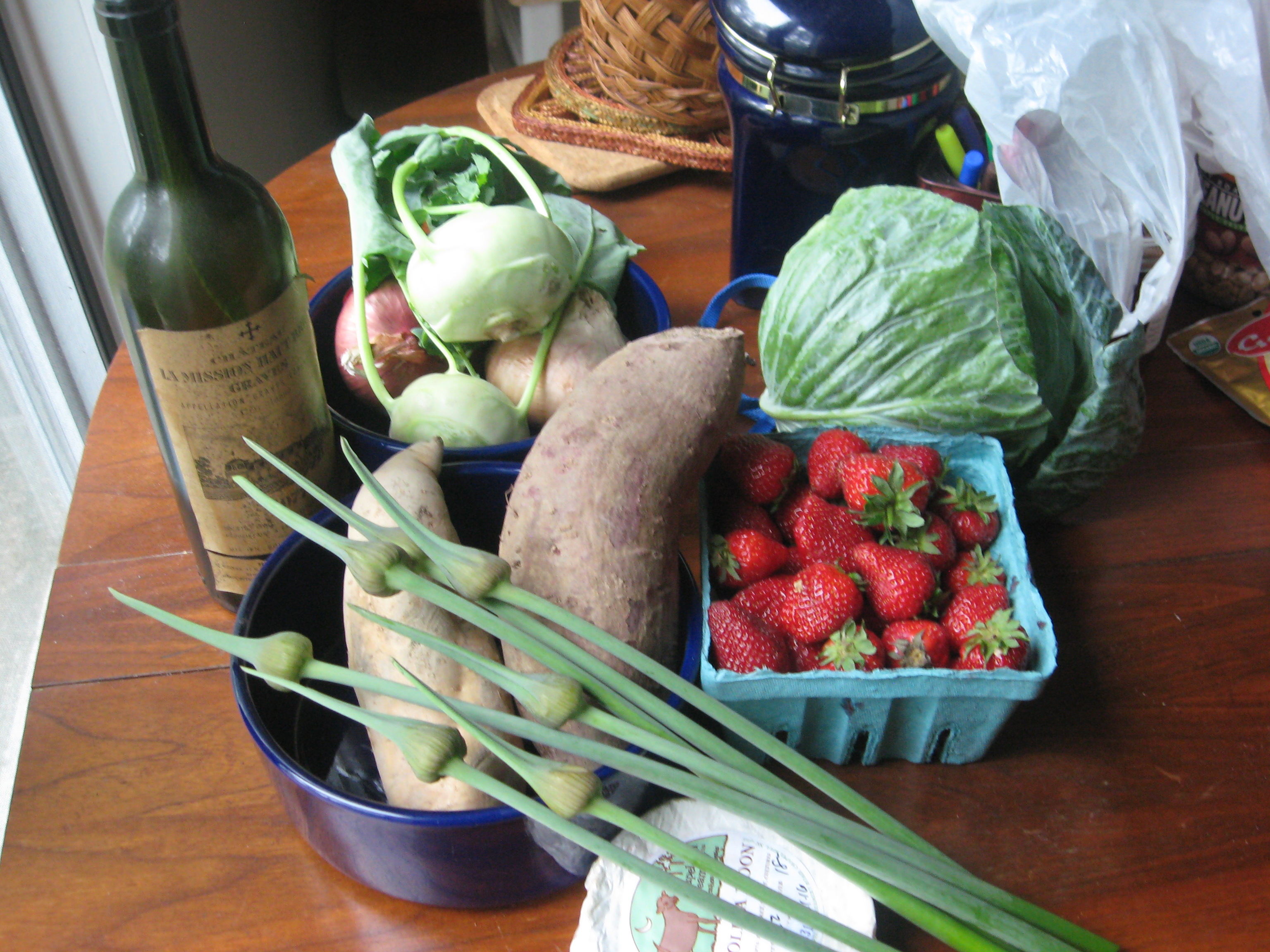
Garlic scapes lying next to a basket of strawberries

garlic scapes

I do have to admit that, as well as being constitutionally unable to make a small pot of soup, I seem to be unable to leave a recipe alone when I’m making it.  I did almost follow this one.  Instead of garlic powder, I had fresh, green garlic scapes from the farmers’ market.  Those went it, and I added some mushrooms; otherwise, I left it alone.  This one-dish meal is now in the oven (despite the heat) getting ready for my supper.

Since my veggies are included with the dish, I think that all I’ll need to add is some of those luscious ripe strawberries as dessert!


Baking dish with chicken and quinoa

Chicken, zucchini & quinoa

This is a keeper–only a few minutes prep, and it’s unattended cooking with tasty results. The quinoa is very light–good in hot weather.  I think that it might make some very tasty “salads” with lentils for satisfying summer meals when the weather is sweltering and I want a light meal.

More herbs and a few leeks….

Sunday, as the day after the farmers’ market (when I have to get up at 4 a.m.) is usually a pretty lazy day for me, but I did do a little planting today:  some quinoa–mostly just to see what it’s like when I’m not getting it in a box.  I curious to see if the leaves can really be used like spinach.

My biggest task was planting some leeks.  I love them, but I’ve not ever tried to grow them so this will be fun too.  I know I was amazed the first time I tasted REALLY fresh broccoli–you know, the home-grown, just-picked kind.  I hope there will be a similar experience with the leeks, too.

I’ve added a couple more herbs–Spanish tarragon (a.k.a. Tagetes lucida) which did not do well for me last year); papalo (a first time one for me) since I’m always looking for potential substitutes for cilantro; epazote (again–more since it did overwinter), Thai basil, cinnamon basil, lime basil, and lemon basil. The burnet is back and looking healthy as is the Greek oregano, the marjoram.  The Syrian oregano didn’t come back so that needs to be replaced.  I’m most pleased that the French, or summer, thyme is back and looking great; I’ve added some English thyme, too.

My mint is looking really scruffy–unknown kind that I got from a friend and keep for the awesome flavor.  I’ll need to see what I can do to help it along.  Might be time to repot it.  The lemon grass and the fern-leaf dill are looking good too.

Even though I’m always looking for stand-ins for cilantro, I’ve given up on culantro–flavor is okay, but the leaves are very tough, and I seem to have no “luck” at growing it–so on to something else.  I do want to add Vietnamese coriander to the collection too.

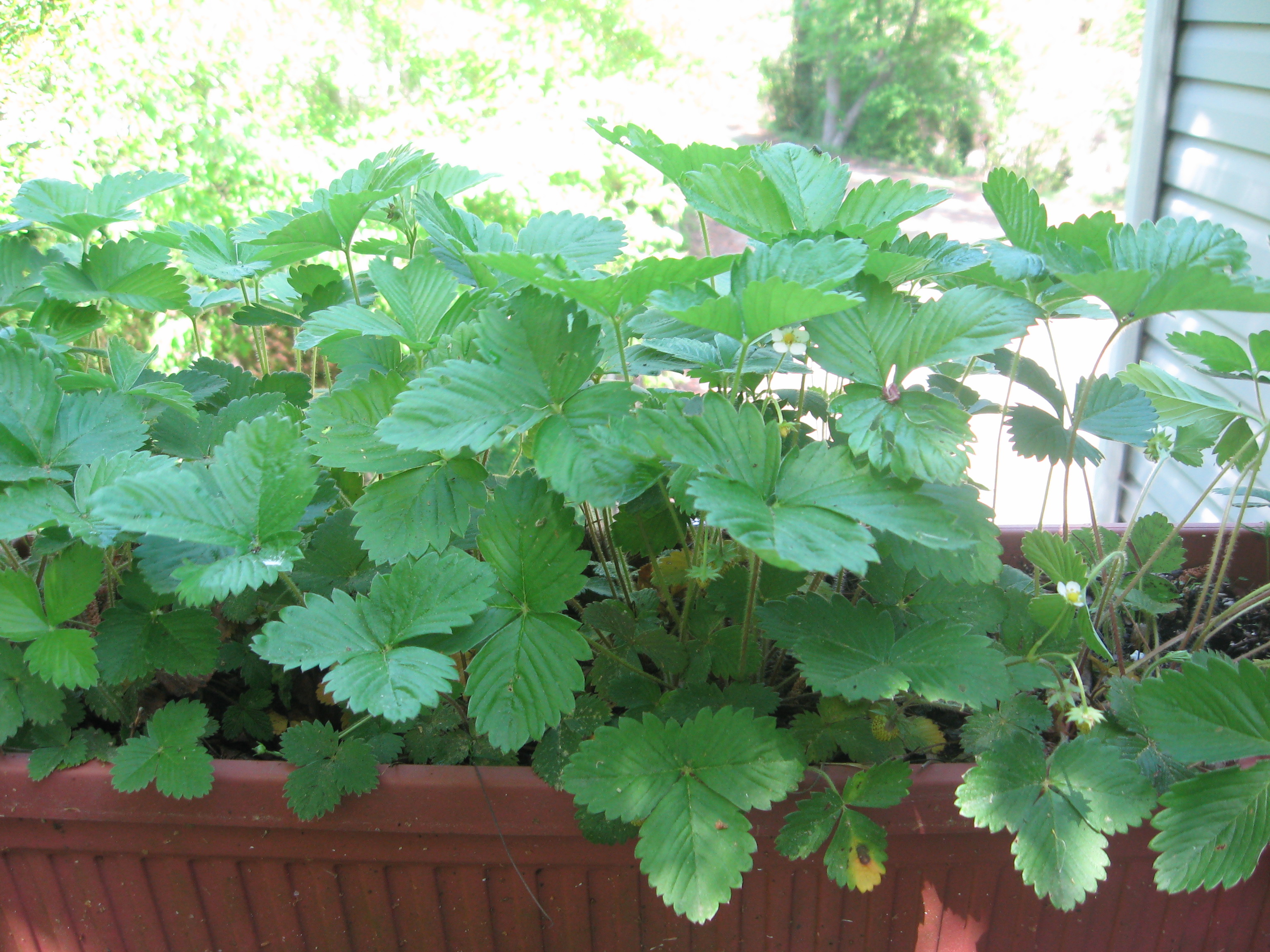
Even though it’s not an herb, I’m most happy to see my planter of alpine strawberries is doing well again this year–I may not get lots of berries, but the flavor is so great.  They never really make it into the kitchen–just get eaten out of hand as I pick them.

Ready for some spring and summer flavors–updates to follow as things grow.

planter of alpine strawberries

alpine strawberries

Some good eating ahead…

I’m back from the farmers’ market ready to settle in for the afternoon with some hot chocolate, book, and cat.  It was a chilly market this morning with the wind blowing a lot of the time–it was more than just breezy–so it feels so good to be indoors.

brought home from the farmers' market.

treasures from the farmers' market

I came home with lots of “finds” from the market:  strawberries, kohlrabi, both white and blue sweet potatoes, cabbage, garlic scapes, and one of my favorite cheeses (Carolina Moon) from Chapel Hill Creamery.  Now for some meal planning!

The weather is still cool enough that I think that the cabbage is going to be joined by some country-style pork ribs in one of my favorite “comfort foods”–braised pork and cabbage. A fair number of the strawberries have already disappeared while I was at the market–breakfast.  I’m still contemplating the fate of the garlic scapes, the sweet potatoes, and the kohlrabi, though some of the kohlrabi may just be eaten as a salad, just dressed with a vinaigrette.  Perhaps the other will find its way into the sauté pan.

I’m still contemplating the garlic scapes–a quick search has turned up a number of possibilities from blogs that I like to read.

I was so pleased to see white sweet potatoes at the market–they’re not as moist as the yellow/orange ones–that’s likely to end up as a baked potato.  I’ve read about blue ones, but this is my first time to try one, so that will be an experiment.  The grower tells me that the blue keeps it color when cooked and that the texture is similar to the white–but that may call for some research and recipe hunting although I might just roast a mix of the white and the blue so that I can taste them  side by side.

The cheese?  Well, that’s likely to be paired with some good bread and a nice robust red wine as my evening snack!

Tomatoes, tomatoes, and more tomatoes…..

It’s so easy to run out of room to plant tomatoes, and to plant (and produce) more than you can actually, really use!  Especially in December and January when you’re drooling over the seed catalogs and yearning for really good tomatoes.   There are some that I just have to plant every year.    The list gradually gets modified as I read about and try new varieties, though I often plant heirlooms, even though they may not be the most productive.

Given limited space, I don’t usually plant “paste” or “plum” tomatoes–I’ll settle for buying good quality canned tomatoes for sauce and winter use.  I usually only plant indeterminate tomatoes, and those that are good for eating–cherries and medium-sized fruits.  The first requirement is that they must taste really good–I like some acid tang in my tomatoes, but I like complex flavor too–so here are some of the ones that I plant at home.

I don’t want absolutely huge tomatoes either–I use a lot of “cherry” or “grape” tomatoes since they do well in salads, and as snacks.  I really want a tomato that is the right size for me to eat at one time since refrigerating a cut tomato changes the flavor and texture in a way that really makes it inedible as an uncooked tomato!
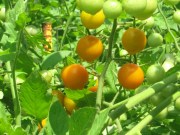
Sungold cherry tomatoes on the vine

Sungold

Topping the “must-have” list are Sungold cherry tomatoes–it’s summer candy and snack food!  These are a deep tangerine orange, small, cherry tomato–about the size of a dime–that grows in clusters. You won’t find them in the grocery store–they are fragile–a bit of rain and they split very easily.  If you want them, you’ll need to visit your local farmers’ market or plant your own.  They’re very productive, early indeterminate tomato–meaning that the do get tall and gangling as they continue to put out new growth.  The good thing about this is that they will keep on producing tomatoes until frost–in the mild NC climate, I’ve sometimes picked them in December.  If you’re growing them, you’ll soon learn that if you hear a rumble of thunder you should run right out and pick  the ripe ones so that they don’s split in the rain.

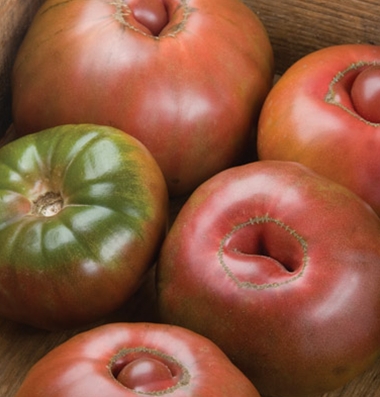
photograph of Black Krim tomato fruit from Johnny's Select seeds.

Black Krim

Even though they don’t produce a lot of fruit, I almost always plant Black Krim tomatoes.  (Since I don’t have pictures of my own, I’ve gotten some from various catalogs/websites from which I usually buy seeds.)  I always wish that they were more productive, but I like them so well that I’m very grateful for the few that I do get from each plant.   These are a slicing tomato that is usually about 8 to 16 ounces in size.  The flavor is very complex–often characterized as “smoky”.  These are in the “beefsteak” category–meaty, with few seeds.  These are not going to be the most regular, round tomatoes that you’ll get from the garden, but they are luscious. They do need to be harvested while the shoulders are still green–while they may seem slightly under-ripe.  I think that they get “over-ripe” easily and then they will not have good texture–they’ll just kind of disintegrate.

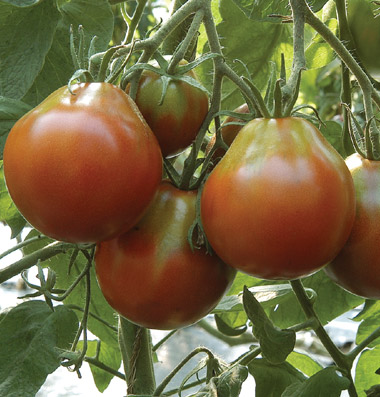
pear-shaped Japanese Black Trifele tomatoes on the vine.

Black Trifele

Another “must-have” for me is the Japanese Black Trifele tomato.  Again, no photograph of my own so I’ve used the one from Johnny’s Select seeds.  (Yes, I am very partial to the “black” tomatoes–there’s something about the flavors of them that has me hooked!)  These are a smaller tomato–about 4 to 6 ounces–that are great in insalata caprese, or any other way that you care to serve them up.  These are also indeterminate plants that will continue to produce over a long season.   Like the Black Krim, they should be harvested while the shoulders are still green.   These are a “potato leafed” tomato–if you’re used to the usual tomato leaf shape, these can look distinctly un-tomato like.

Indigo Rose cherry tomatoes..very deep red to purple.  From Johnny's Select Seeds.

Indigo Rose

A new addition for me this year is the Indigo Rose tomato–I’ve not seen it before this year, nor have I tasted it, but from the catalog descriptions it was just not possible to pass it up!   Since it’s new, the photograph comes from Johnny’s Select Seeds.  I can’t wait to see how these look and taste from my garden.   I should share what I was looking at in December so here’s the description from Johnny’s Select Seeds: “Anthocyanins are powerful anti-oxidants. In the early stages of fruit development, Indigo Rose develops a dark purple pigment in its skin where exposed to direct sunlight. Green when unripe, purple-red when ripe, the 1-2 oz., cocktail-sized tomatoes have good flavor with ‘plummy’ overtones. Developed by Jim Myers at Oregon State University using traditional plant breeding techniques. Compact indeterminate.   Days to Maturity or Bloom:   75.

Black Cherry cherry tomatoes.

Black Cherry

Another (if my plants succeed) that I hope to have is  the Black Cherry tomato.  Again, a cherry tomato that’s about an ounce or just a bit under, with maroon exterior and a wine red meat.  I first planted these two years ago.  They’re an indeterminate tomato as well–they were very productive for a long season.  (The deer ate the plants last year.)  I’ll hope that I’m lucky enough to have my own pictures of the ones in my garden this year–but  until then, these are courtesy of Johnny’s Select Seeds catalog.

That’s the selection so far…under consideration for the very few remaining spaces–maybe even only one–on the tomato trellis is a basic red slicing tomato…nothing huge, just something tasty!  Time to prowl the farmers’ market, though I might end up with another “specialty” tomato since the plants that we put in the field to harvest  for the farmers’ market provide me with a good supply of more basic red slicing tomatoes–like Brandy Boy, John Baer, Valley Girl, Champion, and others.  That means that I can get really esoteric with my choices for the home garden and still have the basics in good supply!
For basil lovers….

Here is a link to the Herb Companion with information on growing and using basil.  There are descriptions of some of the various kinds–I’m trying cinnamon, lemon and lime basils this summer.  Would not want to be without my Thai basil either.  I love the spicy globe basil, but seem to have a hard time growing it.

Gardening and farming…..

Tomato plants in flats....I’ve obviously been doing something other than writing posts for this blog!  What I HAVE  been doing is getting plants ready for the farmers’ market–and now each Saturday morning begins at four a.m. as I try to put enough coffee into my system to get me ready to be at the farmers’ market to start setting up by 6 o’clock.

Today I took some time to work on my home garden.  I planted some seeds:  beans (French ones for haricots verts), and cucumbers; and planted some Yukon Gold potatoes.  We plant lots of potatoes for the farmers’ market (Purple Majesty, Red Thumbs, Russian Bananas)–but for my home use I decided to do a potato that is intermediate in starchso that I can use them for more things.

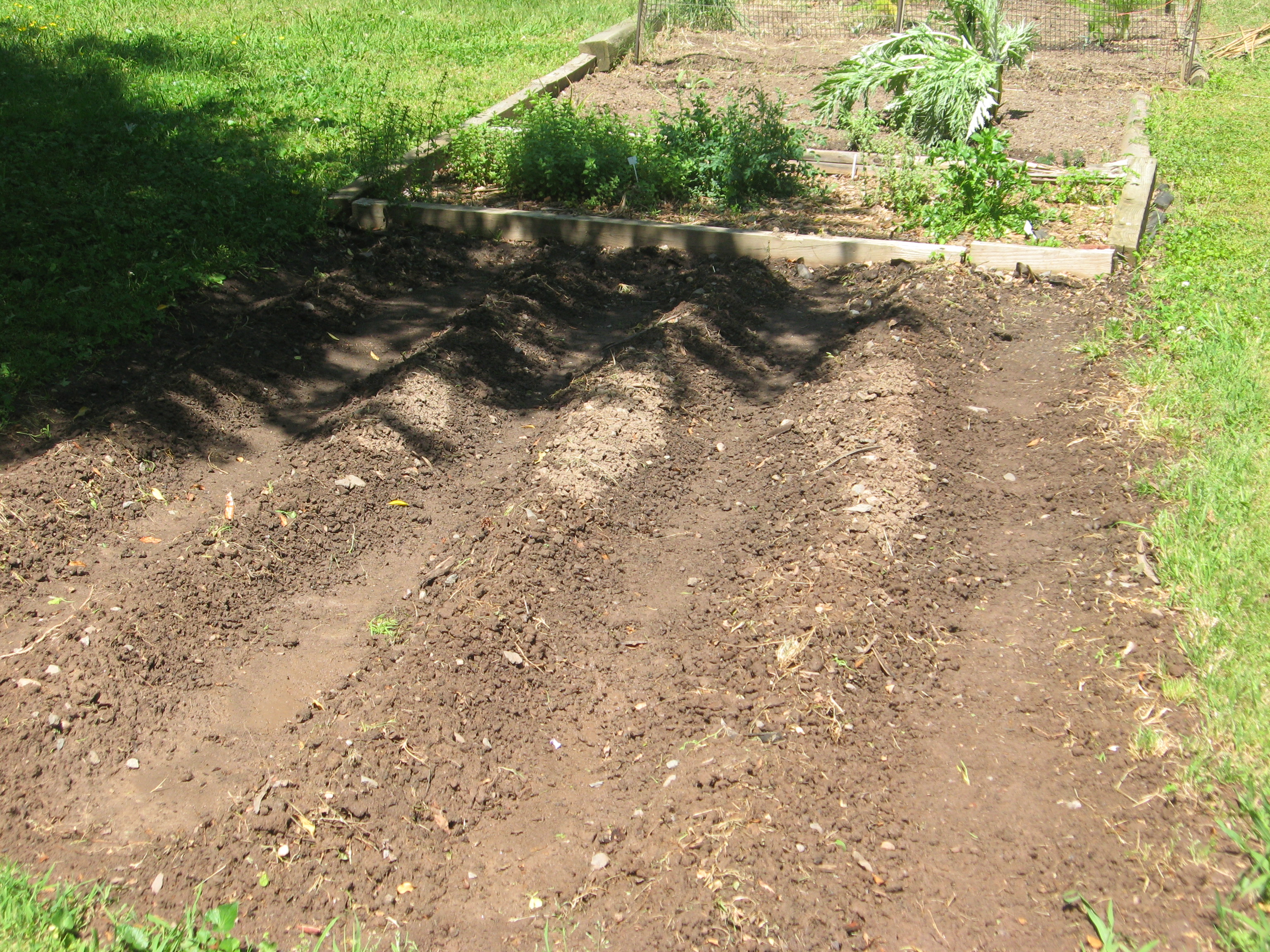
The potato patch

potato patch

Here is the potato patch–just planted and thoroughly watered.  It’s a bit later than I really should have planted them, but we’ll see what happens.  The ones on the farm that we planted about three weeks ago are showing nice small plants, so this feels a bit behind for me–but it’s really the first chance I’ve had to plant the home garden. I’ll be hoping to see green leaves popping up before long even with this late start.  One of the things I am anticipating is some truly “new” potatoes!  (See “Potato Basics.)

♦◊♦

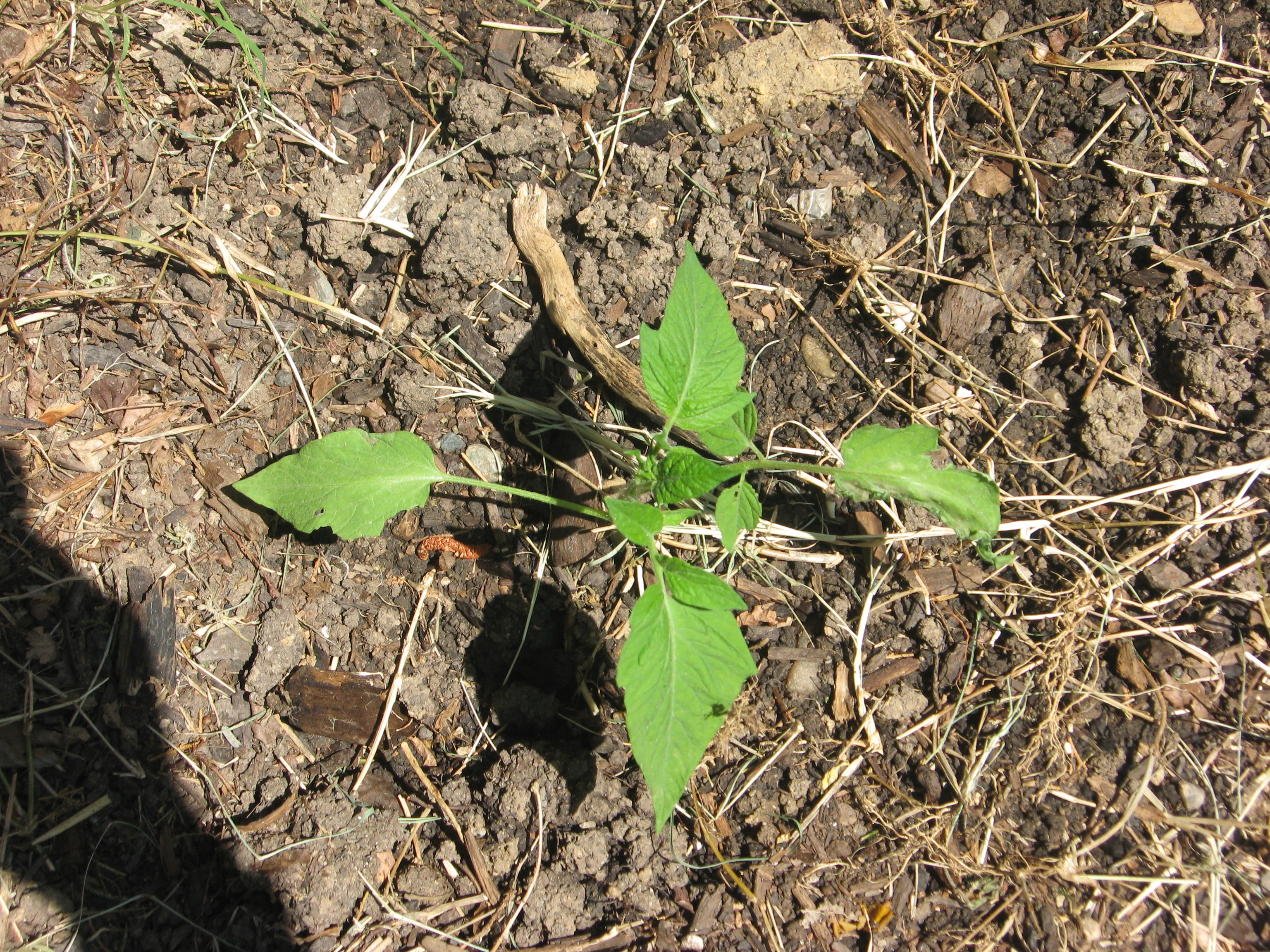
Japanese Black Trifele tomato just planted

Japanese Black Trifele tomato

I’ve also planted the first tomatoes:  a Japanese Black Trifele and a Black Krim. These are from those tiny plants that were transplanted from the floats as soon as they had their first true leaves…so it feel good to be able to put these plants out in the garden now.  I’ve room for about four more plants, so I soon have to decide what those are going to be: most likely one Sungold cherry tomato since those are like summer candy for me, and a new one–a Cabernet–which is a grape tomato…and that will leave me room for one more that I want to try–an Indigo Rose–new this year.  I’ve some very tiny plants of Black Cherry that I want to add as well.  So it anticipation now!

Last summer the deer just demolished my entire garden–including an Italian Tree tomato that was about six feet tall–I’m hoping for better luck this year.  I’m trying to find ways short of a huge fence to help keep out deer because I really do like my  tomatoes!

◊♦◊

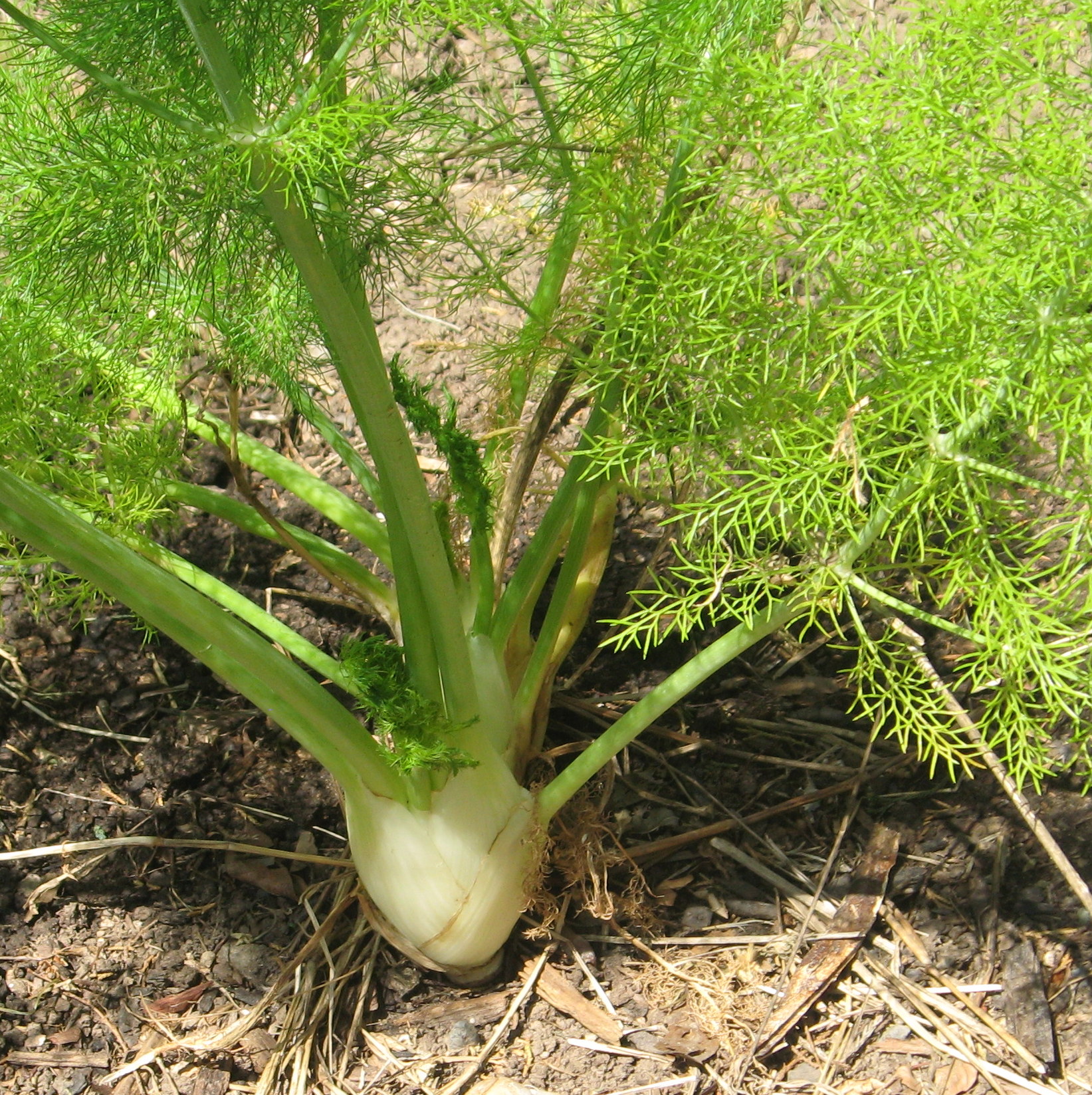
fennel (Foeniculum vulgare)

Foeniculum vulgare

The very pleasant garden surprise that I had this spring was that the fennel (Foeniculum vulgare)  that the deer ate right to the ground last summer came back this spring.  Though it’s usually grown as an annual, I’m hoping that if I’m very careful when I cut the bulbs I can have a perennial fennel crop since it’s one of my favorite veggies to use for braising, or for salad/slaw type dishes. Those lovely green leaves can be used as an herb for adding to salads, or seasoning if you like the flavor of fennel.

♦◊♦

clump of walking onions

walking onions

One of the things that the deer did not eat was my  “walking” onion so now I have a lovely clump (they’ll soon be walking, too) of perennial onions in the garden.  Now that these are established and starting to produce bulblets, they should give a continuous source of “green” onions for me…I’ll continue to buy my “storage onions from the grocery store since use so many of those.  I’d need an incredibly large garden to grow my supply of those–and a lot of appropriate storage space, too; it’s just not practical–but I certainly like the concept of perennial vegetables close at hand–for a good part of the year.

◊♦◊

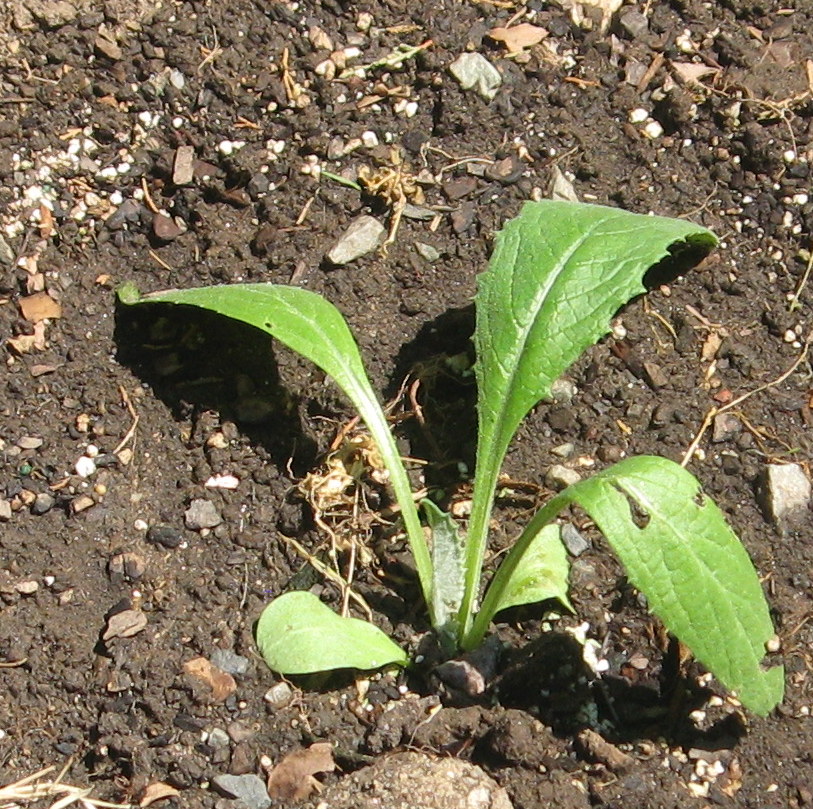
Small globe artichoke plant

artichoke plant

My last addition to the garden today was an artichoke.  Looks tiny now, but it will get bigger–and it will give “globe” artichokes–and, though it’s supposed to bear flowers this year, I know it may not give many until next year.  This is one of the plants that we started from seeds to sell at the farmers’ market.

I’m sure that there will be more impulsive additions as the season progresses!  Most likely more tomatoes since they are a summer favorite of mine and if the deer leave them alone, I’ll have many more than I can use because I just have to try different ones.

This doesn’t include the herbs that I’ve added this year.  More on those later–right now I’m just excited to have these veggies planted–and hoping that the deer and the rabbits will leave them alone.  Since a serious fence is not an option, I’m going to try the stakes and mono-filament approach–but then I may consider asking the hair-dresser for hair to sprinkle in the garden.

Creme Fraiche Panna Cotta with Strawberry Mousse and Puree

I love panna cotta–I’m going to be waiting for some really good strawberries to try this one. My mouth is watering in anticipation just reading this post!

AvocadoPesto's avatarAvocado - Pesto

I don’t care much for sweets but I do thoroughly enjoy a good panna cotta, creme brulee and cheesecake every so often. Notice a pattern here? Maybe it’s just the silky velvety consistency that I’m drawn too. It really doesn’t get smoother than panna cotta. Traditionally made with cream, milk, sugar and gelatin this time I went for panna cotta with a twist – the twist being creme fraiche (which I recently discovered when making a Valentine’s Day creme fraiche cheesecake). The result – a denser richer panna cotta than the standard but one that pairs perfectly with an airy strawberry mousse and strawberry puree. I’ve made panna cotta dozens of time since Daring Bakers first introduced me to it and I’ve noticed that going lighter on the gelatin and omitting honey produces the wibbly wobbly delicate panna cotta, whereas honey in place of almost all the sugar yields…

View original post 350 more words

Quinoa with Artichokes, Asparagus and Kale

This looks like a great way to get quinoa into my diet!

AvocadoPesto's avatarAvocado - Pesto

I tried quinoa once a while ago and wasn’t that impressed with it – it was kind of dry and flavorless and just sort of turned into mush in your mouth. But after seeing numerous quinoa recipes online and reading about all the various health benefits (high in protein, plant derived calcium, iron, and fiber, with magnesium to regulate blood pressure and relax muscles and manganese and copper to work as antioxidants)  – I knew it deserved another chance. I figured even if I didn’t like it that much the second time around, consuming such a superfood would still be worth it. But let me tell you – I LOVED it. I must have completely over cooked it the first time because with this recipe it was delicious. I couldn’t stop  myself from getting seconds, and then thirds – it was that good. The combination of textures and flavors is…

View original post 310 more words

Smoked Salmon

Definitely need to try this during the summer. The smoked lamb shanks worked so well.

Rufus' Food and Spirits Guide's avatarRufus' Food and Spirits Guide

There is nothing better than smoked salmon when it comes to fish sandwiches. Of course smoked salmon is one of those foods that can probably be added to anything to make it taste better.

This is a great way to practice how to smoke food since it takes only a couple hours and is easily done on a home barbecue. For basic steps on how to smoke go here. When smoking salmon, or any fish, I like to make a large foil tray to hold the meat. This keeps the fish from breaking apart and makes it very easy to remove from the grill. Just fold a couple of sheets of tin foil together slightly longer than the fish fillet and then fold up the sides about an inch to create the tray. Then with a fork punch a bunch of small holes in the bottom to allow air…

View original post 135 more words