Another cookbook for single-serving cooking

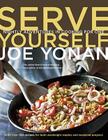
Cover of Serve YourselfI’m always browsing cookbooks–especially those that appear to deal with single-serving cooking.  A friend recently mentioned Serve Yourself: Nightly Adventures in Cooking for One to me. True to form, I immediately went in search of it–and was pleased to find it available in Kindle format.

I really identified with a statement made in this book: “…we solo artists deserve just as varied a diet as anyone.  While I love having some leftovers around that can morph into new dishes, I also appreciate the beauty of starting and finishing a single cooking project on a given night.” (Kindle location 173)

One of the things that I find delightful is that there are suggestions and recipes that are incredibly helpful in allowing morphing leftovers.  These include condiments (to use not only on leftovers) but suggestions on using those extra ingredients that seem to be the bane of single-serving cooking–such as what’s left of that bottle of wine that you opened to go with dinner yesterday evening.  Personally I think that this is a book worth having in your library if you cook for one, but I suggest that, at least, you check the local library and peruse this one.

I’d also recommend his website for fun reading of his “Cooking for One” column for more thoughts on cooking for one, and more recipes.  Even cooking for one it can still be a son goût!  

Cool pink things for summer

After the wonderful strawberry ice cream yesterday afternoon, I more “cool pink” for supper: watermelon with feta cheese and mint.

It’s right up there with beet soup for a refreshing summer meal or side dish.  I probably should not even call it a salad:  no dressing or anything except the natural juices.  I’ve seen suggestions for dressings such as buttermilk/lime, but I’ve not tried that–have some buttermilk in the fridge so maybe I’ll taste it with that  when I make more this afternoon.

There really is no recipe for this:

  •  watermelon, cut into pieces or cut with  melon-baller.  Use however much you think you might eat–I usually add some extra  because I will usually eat more.
  • mint–preferably spearmint  (Kentucky Colonel is especially good), chopped medium or cut into chiffonade–several sprigs
  • feta cheese–your favorite feta cheese, cut into small cubes or crumbled.
Toss the watermelon and the mint and let this chill in the refrigerator for about an hour.  You want the mint and melon to “meld”–if you don’t do this, you get separate flavors of mint and melon (which is not bad either) instead of something like mintmelonmint.  After this melding, add the feta cheese, and eat!
If the melon stands with the feta cheese, the texture of the melon becomes a bit soggy, presumable from the salt in the feta cheese,  so it’s best made freshly.  You can let the mint/melon mix stand in the fridge longer, though.
I suspect that other salty cheese could be substituted for the feta–e.g. pecorino or some of the Greek cheeses.

Cannellini & Italian sausage supper

One Italian sausage provides seasoning and a bit of meat for two meals.  The starting point gives enough for two servings.  When I’m using the Italian sausage for two separate meals like this, I usually buy sweet instead of hot, since I can readily add the heat I’d like with crushed red pepper flakes at the time I’m preparing the meal.

  • 1 medium onion, halved lengthwise and thinly sliced
  • 1 sweet Italian sausage, meat removed from the casing and crumbled
  • 4 cloves garlic, minced
  • 1 tablespoon olive oil
  • 2 cups cooked, drained white beans (cannellini or great northern) or 15-ounce can rinsed and drained
  • 2 tablespoon water

In a 12 inch skillet with a tight-fitting cover, add the olive oil; when the skillet is heated add the sliced onion, and cook until it is beginning to brown. Add the sausage and brown.  Add minced garlic and cook about 2 minutes.  Add the rinsed beans, and cook covered about 5 minutes.

Remove half the bean/onion/sausage mixture to be used for a second meal.  Cool and refrigerate.

Meal 1:

  • Half the bean/onion/sausage mixture
  • about 15 grape/cherry tomatoes, halved
  • 1/4 cup antipasto salad mix (pitted olives, peppers, carrots) from the salad bar, chopped finely.
  • several sprinkles of crushed red pepper flakes
  • 2-3 teaspoons chopped fresh sweet marjoram or Turkish/Greek oregano, or 1/2 teaspoon dried herbs.
  • a single-serving size handful of haricots verts
  • 1 teaspoon water
  • salt and fresh-ground black pepper to taste (the antipasto salad is salty so taste before you add additional salt.

Add the herbs, the chopped antipasto salad, crushed red pepper flakes and mix well.  Over medium low heat, add the tomatoes, lay the haricots verts on top of the cannellini beans, add the water, cover tightly and continue to cook until  the haricots verts are tender.  Serve with shavings of Pecorino Romano over the canellinni beans, and the haricots verts on the side, drizzled with a few drops of extra-virgin olive oil.

Meal 2:

  • the reserved cannellini bean/onion/sausage mixture
  • about 15 grape/cherry tomatoes, halved
  • 3 generous handfuls baby spinach
  • 1 tablespoon water
  • salt and fresh-ground black pepper to taste

Place the cannellini bean/onion/sausage in sauté pan, add the water, halved tomatoes, and cover.  Heat gently for about 5 minutes (until starts to steam).  Add the spinach, cover, and allow spinach to wilt.  Toss to combine with the bean mixture.

I had this with some steam-sautéed carrots as an additional vegetable.  Add a glass of good friendly red wine and its a very satisfying meal that’s easy and economical.

That fourth chicken thigh…

As I mentioned in my previous post regarding what to do with a package of four chicken thighs when you are cooking for one (and the cat) and don’t do leftovers, chicken soup was in the making with some leftovers (rice, garbanzo beans) as a start.

The broth from cooking those four chicken thighs was so intense that I was able to add a bit of water to it, so I have two servings of chicken soup.  (Soup being a leftover that I tolerate better than other leftovers.)  To keep the time invested to a minimum, I did use a convenience product:  frozen soup mix vegetables .   I do use those for winter use since it lets me have a lot of variety without purchasing all the individual vegetables;  I can throw a handful or so into something for quick soup.  As you can see there was okra, peas, corn , celery, potatoes, green beans, and onion.Not having any canned tomatoes open, I used some of the grape cherry tomatoes, halved and tossed into the mix.

I boned the chicken thigh and added it to the broth and veggies, popped the whole thing into the microwave for six minutes to cook the veggies.  The broth from cooking the thighs had been seasoned only with a bit  of salt to allow for maximum flexibility in what I could do with the meat, so it was a tad bland. I supplemented the previous seasoning with a dash of herbes de Provence, and some crushed red pepper flakes to add a bit of zing.  Made and great bowl of soup

chicken soupGiven lots of veggies, the rice, and beans, and the very flavorful broth, the fourth chicken thigh provided reasonable portion f meat for the two servings of soup.  When we consider that most of us eat much more meat than we  need nutritionally, I was very pleased with the flavor of this quick meal.   All I added was a green salad with cucumbers, radishes, grape tomatoes, black grapes, fresh herb leaves, with a drizzle of extra-virgin olive oil and a squeeze of lemon juice.   With the addition of a glass of red wine (from a box) it was a very satisfying meal.  I have no idea of a calorie count–but I do think it was a healthy meal, particularly for evening when I know I’m going to be very sedentary.

Admittedly, there is a snack for later in the evening: some black grapes, grape tomatoes, and a few nuts, maybe pistachio, or Brazil nuts, or hazel nuts, or a mixture (only a tablespoon or two, though).

Lots of flexibility in terms of what you can do when you’re making a small quantity.   I suspect that the remaining serving, which will be used in a day or two, will get some additional “perking” before it becomes a meal, but I know I’m starting with a good base of tasty broth and a bit of meat.  In looking over what’s likely to be available , I suspect that I’ll add a bit of cabbage, and maybe some chile pepper to that last batch–but who knows.

Even though I bought the more expensive, free-range, organic chicken I think it was economical:  essentially five meals from that one package of chicken.  The extra flavor from the chicken paid off.

A son goût!

Take four chicken thighs…

If you are going to cook for one, you need to get away from recipes that specify exact quantities–it’s a step toward learning to improvise as you cook.  I’d urge you to take a look at Kitchen Express by Mark Bittman–you don’t have to buy it, thought it’s a great book to have; go to the library and check it out. (It’s also available for Kindle, too)  Other simple, and simply good recipes can be found at The New York Times, and at Mark Bittman.com.  You will find recipes that are easy to do for one because they are “quantity-less” in the sense of the typical recipes.  They don’t call him “minimalist” without a reason–a very few ingredients can make some wonderful eating.

Now for those four chicken thighs, cooked as described in “The Microwave in my Kitchen”, here’s what has been done with some, and what is intended for that fourth one:

1.  Chicken salad for a sandwich, quickly made by adding some minced red onion, a bit of cutting celery (See Herbs page) leaves and stems, salt, fresh-ground black pepper, a squeeze of lime juice (or lemon juice), and a drizzle of extra-virgin olive oil.

2.  A warm meal of chicken with  part of a can of chickpeas left from a previous use.  Sautéed a handful of onion in olive oil until softened, added a big clove of garlic, the chicken cut into bite-sized pieces, added some halved grape tomatoes, about a tablespoon of chopped sun-dried tomatoes, a dash of Syrian oregano (still growing on my deck); finish with salt and fresh-ground black pepper to taste.   Add a  single-serving salad of mixed greens and had a quick, satisfying meal.

3.   The third piece went to make some quick chicken hash for Sunday breakfast as follows:  In a 12-inch nonstick skillet sauté a handful of diced onion  in olive oil until just starting to brown.  Add two minced garlic cloves (I like lots of garlic),  and cook for two or three minutes.   Meanwhile, open a can of diced potatoes (I told you this was quick–obviously you can start with raw potatoes and sauté them until tender) and brown them lightly. Rinse and drain the potatoes, add to the skillet and sauté until they start to brown.

Remove half the potato mixture–this is destined for another use.  Remove the meat from the chicken thigh if it was bone-in and dice the meat.  Add this to the potato mixture in the skillet, along with some (about 1/2 teaspoon) fresh thyme (again still growing on my deck) and continue to sauté.  When the potatoes and chicken are slightly browned, remove to a plate and keep warm.  Cook one egg (or two if you are really hungry) to medium, and serve over the chicken hash.

The portion of potatoes that you removed from the skillet can be used in different ways: the are likely to become a kind of quick version of a Spanish tortilla by just  warming and adding a couple of eggs and serving with a salad or vegetable.

4.  With the broth obtained from cooking the thighs in the microwave, I plan make a meaty chicken soup using that fourth chicken thigh, using that bit of  rice left  from another meal.  I’ll add more veggies, perhaps a bay leaf, and some of my “lazy” favorite (and only) herb mix, herbs de Provence. I’ll see when the time comes–since I don’t do leftovers, I probably shouldn’t do predictions either.

There will be a follow-up on that fourth piece of chicken to let you know where my improvisation lead me.  I’ll give you another example, using a recipe from Kitchen Express for a lentil soup that just blew my mind (See An Awesome Lentil Soup).  It was such an unexpected combination of flavors, and it is one that I keep using to improvise with other ingredients, as well as coming back to the original.  It’s a recipe where I could also make use of the last piece of chicken.

“Convenience” foods for cooking for one

Time frequently seems to be of the essence when cooking–for one or for many.  There are some things that I discovered that save me lots of time–and that means that I’m much more likely to cook a meal, rather than do carry-in, or reach for the peanut butter jar!

When you see “convenience” food, I dare say your first thought is processed, open-heat-and-eat food.  That’s not what I’m talking about here.  I’m thinking of things you prepare yourself with choice ingredients, and freeze, or otherwise “put by” for later uses that can shave time off of recipes.

How many recipes do you have that start with  a “flavor base” like  sofrito (Spanish), soffrito (Italian), mirepoix or mirepois (French)?    Lots, probably.  How many times have you passed on that recipe because you don’t have those, you did not want to spend the time mincing, dicing, or you pulled that bag of celery out of the crisper, and–yuck–it’s no longer fit to use!   Cooking for one, I find celery a particularly frustrating ingredient.  I like celery–but it always seems to go bad in the crisper.

Many flavor bases to start soups, stews, et cetera begin with carrots, celery, onion, diced or minced and sautéed  in olive oil (or maybe butter).  True it’s only a few minutes work to do this–if you have the ingredients.  My solution to this has been to take celery, carrots, onions, and use the food processor to chop a large batch of this useful mixture, sauté in a mild olive oil with just a touch of salt, and then pack it into small containers in lots of a couple tablespoons (or freeze in ice-cube trays and transfer to zipper-lock bag), and put it in the freezer so that when I need it, I have the basic prepared carrots, celery and onions, to which I can add garlic and herbs as needed for a particular recipe, and I’m off to a running start.

I do keep canned beans around as a “convenience” food, but I much prefer to cook my own dried legumes (pulses).  Since that is a time consuming thing, I have found a way to make those into “convenience” ingredients:  cook a large batch until almost fully cooked, and then freeze with some of the liquid in small quantities–a cup or so, whatever you would most likely use.  I’ve found that they hold well in the freezer, and can finish cooking quickly, so that you have the advantage of home-cooked quality, without the time investment.  I’ve done this with lentils (my favorites being the French LePuy) of all sorts.  True, lentils cook quickly and do not require soaking, but I can still save time with these.   I particularly like to do this “precook” with beans since that means that I can have lots of variety and have the convenience of canned, with specialty beans that are very tasty.

Grains can also be done this way too.  That left-over serving of rice that I’m sure I’m not going to use this week gets labeled, dated, and put into the freezer for a quick serving when I don’t want to take the time of cook rice from scratch.

Risotto is another favorite main dish for me–right in my category of comfort food with mac ‘n’ cheese, and tomato soup; I don’t find cooking it to be difficult–in fact it’s rather relaxing, but time consuming.  I’ve tried some of the “quick” recipes (see Risotto post) and have not been too dissatisfied with them, but I’ve also found that I can make a big batch of risotto to the point where it’s ready for the addition of the Parmigiano-Reggiano, and then freeze it is serving-size batches.   It will thaw quickly, and lets me have risotto fairly frequently.   It’s easy to add vegetables or seafood or other quick-cooking things as you finish this preparation.

Another “convenience” ingredient is homemade broth or stock.  While I will admit to keeping canned/boxed broth/stock on hand, I much prefer to have the real homemade thing, and that is not hard to do:  make a large batch on a cold rainy day when it’s good to be indoors; freeze it in small quantities for future use.   I’ve found a very quick way to make chicken broth too.  More about that later.

All these little conveniences can add up to much better small-time cooking with big-time flavor even when cooking just for one.

A new cookbook

A few weeks ago, I had a friend visiting (as a house guest) from California.  We were out and about doing some things that I don’t usually do: visited A Southern Season to browse for housewares and foods, and we visited The Regulator Bookshop. Both were having their summer sales.  As usual, I came home with things that I did not expect to buy.

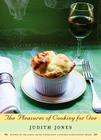
One of my “finds” at the bookstore was The Pleasures of Cooking for One by Judith Jones.  This is an admixture of philosophy of eating alone as well as some recipes, and, best of all, lots of tips for not having left-overs.  While some of the recipes are for things that cannot be bought in small quantities (like pork tenderloin) she provides recipes and suggestions about make several different dishes from the “left-overs” so that they really don’t taste like left-overs. While this does require some meal planning, the emphasis here is on flexibility and improvisation.  I was impressed that the recipes here were real meals for real enjoyment.  I think that this is a worthwhile addition to my cookbook library.

Cool & refreshing

A bit of a digression here.

We’ve had some real scorchers here this summer.    Friday and Saturday I had to be outdoors almost all day: getting ready for the Farmers’ Market on Friday (digging potatoes, onions) and Saturday, at the market.  Both days were 90+ ° F  and I guzzled Gatorade and water like both were going out of style. I don’t really like Gatorade, but I drink it because it works when I’m outdoors and sweating like a dripping faucet.   Sunday I was lucky enough to be able to stay indoors!

Today I was just doing chores around the house. It was nice enough to have the windows open (thermometer on the back porch reading a mere 83 ° F). In addition to the usual water for thirst, I wanted something (NOT Gatorade) with a little zip to drink. Bored with plain water, I certainly did not want to go to the grocery store and buy flavored water because to me most of the zero-calorie beverages have a very chemical, strange taste, and  the controversy over the quality of bottled waters.   Iced tea was just not appealing either.

Standing on the deck looking at the herbs, I found inspiration in the emerald green leaves of the mint that grows happily in a pot there.  I took about a dozen mint leaves and one fairly large stevia leaf (Stevia rebaudiana ‘AC™ GIIA11’ originally obtained from Richter’s Herb Specialists).  I bruised all the leaves with a pestle, added a cup of water, microwaved it for two minutes, and diluted it in a half-gallon jug (with filtered tap water).  Adding ice, I had a lightly flavored glass of water that was very refreshing to drink.Here is another refreshing-sounding drink recipe for this really hot weather.

Heat makes me want cool refreshing things but they must have something a to satisfy my need for protein.  A  friend posted a “recipe” for watermelon and feta cheese salad with mint.  I’ve eaten so much of it in the last few days.  Needs no extra dressing or anything like that. The flavor synergy between the mint and the watermelon is awesome!  Watermelon is such a great hot-weather food that I’ve been on the lookout for other watermelon things.  This watermelon lemonade sounds great too.  A local restaurant here had the watermelon/feta/mint combination on the menu with a buttermilk-lime dressing.  As tempting as that was on the evening that I ate there, I passed on that because I had been eating the other version for the last two days.  The addition of the citrus made me wonder about adding some mint to the watermelon lemonade watermelon to the mint water (above) for a summer quaff.  Another thing to try before the summer is over.

Serves how many?

I love cookbooks.  I love to read cookbooks just to get ideas, but one of the most frustrating things is finding a recipe that I think looks wonderful, but it’s for 6 people.  Sometimes it’s something that will freeze well, so I can make it and not have to eat it for a week.  On the other hand, since I am cooking for one (and the cat) I don’t want to pay for the ingredients to make servings for six or eight people, or have so much in the freezer.  (More on freezer use later.)  The dilemma for the single cook is scale the recipe down, not make it, or eat it for a week.  Personally I don’t do left-overs well; I guess I’m easily bored or they begin to taste like something that’s been in the fridge for five days!

Downsizing recipes can be treacherous, especially in going from six to one–the consistency can come out wrong, the seasonings may not be right.  If you are determined to do THAT recipe, perhaps you need to invite friends.

You’ve gotten ideas from those huge recipes that you can use for one.  The problem now is that you need to get away from depending on a recipe slavishly.  You need to move on to improvisation and perhaps some food science to help understand how some specific ingredients react to the application of heat, i.e. cooking.

First improvisation is a must for cooking for one–and it’s not hard–it’s just taking that first step that seems difficult if you’ve always used recipes. A book that I’ve found immensely useful is How to Cook Without a Book by Pam Anderson. This author has provided a wonderful review of various cooking techniques as well as recipes in ratios that promote improvisation of various types of dishes:  stews, salads, an such.  While the proportions given in this book tend to be for 4 people, you can scale them down to something manageable for one person.

I have to admit to being a Kindle addict.  I admit this because I might not have found this cookbook had I not been browsing the Kindle store.  The book is  Ratio: The simple codes behind the craft of everyday cooking byMichael Ruhlman.

My grandmother taught me to cook and one of the things I remember learning from her was the “four parts cake”–frequently referred to as “pound cake” for equal parts of eggs, flour, sugar, and butter.  I was taught to vary the size of this cake by starting with the eggs.  You want a small cake, you use fewer eggs, and that “egg weight” determined the weight of each the other three ingredients.   It was many year before I discovered that this recipe was actually in something published in a cookbook.  While browsing through La Cuisine, by Raymond Oliver I found a recipe with the title pâtè à quatre-quarts which translated as “four parts cake”.  In the English edition this was translated as pound cake, but it was the French title that caught my eye.

In a manner reminiscent of that cake, Ruhlman gives recipes by proportions so that they are easily sized up or down.  This book gives ratios for batters, doughs, stocks and sauces, roux, and even sausages and many other things in ratios so that you have the base ingredients, and then add things like seasonings or “minor” ingredients (seasonings, et cetera) in order to have a finished dish.  This is the kind of technique that can allow cooking for one.

If you don’t want to contemplate doing the math of the ratios (and have an iPhone), there is an app for that.  The cookbook by Michael Ruhlman is now an iPhone app that will help you do the calculations.  Makes me wish I had an iPhone!