Unknown's avatar

About sa.fifer

Lover of good, wholesome food and wine. Cooks for one and the cat. Likes to paint-- a frustrated botanical illustrator and amateur (photographer) and fledgling birdwatcher, beekeeper, and Kindle addict. Works as a freelance indexer.

Hive report: new queen bees

With Matthew approaching NC–or not so much–I’m still relieved to have the new queens tucked into the hives. This was not an experience that I really, really wanted right queens_frankie_20161006_124957now, but it was just thrust upon me.
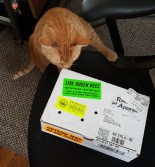
As noted on my inspection on the 3rd of the month, I found both hives to be queenless–for unknown reasons. I suppose it was a little consolation to know that a couple other beekeepers in the area had found the same thing. The big question for me was what to do. While some beekeepers seem to swear by re-queening hives in the fall I thought this was a bit late to be a really good time to put in new queens. But not to do that was to condemn both hives. Not what a beekeeper likes to do.

After deliberation and contemplation, I called my local bee store (Bailey Bee Supply) to see if they still had queens. No such luck although I wasn’t surprised–as I said I don’t think beekeepers are doing much “re-queening” at this time of year unless it’s a necessity. Without local queens, I ordered two new queens from Rossman Apiaries (recommended by my local bee store).

The day started cool and sunny and my box of bees arrived late morning. So far so good. I lit the smoker (and it actually did stay lit for even longer than necessary) and headed for the hives with my little white box.

The ladies of the hive Rosmarinus were not particularly pleased to have me tearing off the roof, ripping up the ceiling, and generally messing about especially as this entailed as much shifting of brood boxes and supers to be sure I put the new queen in the optimal locations. While I was moving everything about I did all the shuffling necessary for preparing the hives for winter. (Note optimism here–I’m hoping this is successful and I’ll have this hive next spring.)  The new queen in her little cage with attendants was inserted between two frames in what I hope will be a brood box.

20161006_125908If you’re wondering–the queen bees are put into the hive in the cage to protect her until the workers of the hive accept her as the queen. Bees are not necessarily kind so the queen and the colony need to get used to each other–you can’t just pop a new queen into a colony of thousands of worker bees or she is likely to be killed. The white that you see at one of the queen cages is candy (sugar). Yep, sweet stuff that bees will eat. The worker bees of the hive will gradually eat away the candy  to expose an opening through which the queen can emerge into the hive and (I hope) do her thing! That whole process will take several days and during that time she will be secreting “queen pheromone” and (with luck) the hive will adopt her and take good care of her–and continue getting ready for winter.

This same process was repeated with hive Salvia–but by this time it was overcast, breezier–not prime time to skulk amongst the ladies.  These ladies were just a tad bit testier than usual but their hive is now also shuffled for winter as well as having a new queen “installed”. Makes her sound a bit like software, doesn’t it?

Now my anxious waiting starts–to see if the ladies of the hive and the new queens accept each other.  The waiting is not going to be easy–I’m anxious and curious because this will make the difference in having bees and not having bees.

Now battening down the hatches and hives. Although it looks as if Matthew may miss us it still looks as if we are in for rain for the next several days. I’m much relieved that the new queen bees are in the hives–those little travel cages were not meant for long-term residence.


Pork confit


Cool weather inspires cooking! Something warm and cozy–confit as a “pantry” staple for a starting point for multiple dishes. With the weather a bit up in the air I decided to make something that would give me lots of possibilities even if Matthew decides to visit.

Confit was originally made as a method of preserving meat–often duck or goose, but it’s a method that can be applied to other meats, fish, and seafood–e.g. tuna which I love for summer salads and cold meals but it’s a great starting place for cool-weather meals too. The traditional method is to poach meat in fat (oil) at low temperatures which yields meat that is intense in flavor, and absolutely luscious in texture. If you’re wondering, it’s NOT greasy! The Science of Cooking addresses many of the questions often asked about confit.

With cool weather here I decided to opt for my favorite meat–pork–and to try a slightly different method of achieving the end results. This inspiration sprang from finding country-style spare ribs on special at my local Harris Teeter market. Since the weather wasn’t quite cool enough for me to want to have the oven on for hours, I decided to use the my multi-function pot in slow-cooking mode to make pork confit.

packaged pork from the meat counter in the supermarket

Since country-style spare ribs have a lot of fat on them I decided that I didn’t need to submerge them in oil–the fat would render from them as they cooked in the slow-cooker. From experiments when I was trying to do monk fish sous vide, I knew that the slow-cooker mode would keep the temperature at 185ºF. Most confit recipes suggest temperatures between about 190ºF and 200ºF. I thought 185ºF would be workable (especially since the confit will be refrigerated after cooking) but will be covered with the rendered pork fat.

I took my country-style spare ribs and salted them liberally over night–e.g. “dry brine”, then rinsed, and patted them dry. Because of the fattiness of this cut, I added only a couple s tablespoons of olive oil in the bottom of the cooker and packed in the meat. I didn’t add seasoning other than the previous salting so I have a flavorful (but kind of “blank” canvas) to build other dishes. I set the cooker for eight hours and went on to do other things–like hive inspections.

The liquid which (intensely flavored broth/gelatin) was separated from the fat that was rendered and will ultimately make its way into soup or as “au jus” with the confit. The meat is now tucked away in the fridge sealed in the fat. Since this was originally a method of preserving meat, now with the addition of refrigeration, there is a long shelf-life if you separate the broth/gelatin liquid from the fat and then “seal” the meat in the fat. Old method, but useful in modern cooking.

This cooking method works with any meat–a favorite in this household is confit made with chicken (especially leg quarters or thighs). I think that this fall as “turkey” season rolls around I will try to find thighs to cook this way. It might improve my attitude toward turkey given the flavor and texture changes that result from the confit process.

The result? Absolutely as good as if I had done it in the oven though requiring less added fat than I would have added for that method.  Enough fat rendered to submerge the meat about three-quarters of the way up the sides. Even without additional seasonings the meat is luscious immediately after cooking–pure unadulterated pork flavor.

What’s on the menu for supper? Well, I’m thinking cabbage steak (done under the broiler) with pork confit that has been quickly reheated and browned (also under the broiler) but with the tahini sauce replaced with the juice from the confit process.

Ô¿Ô

Krups rice cooker IMG_3796

.


Hive inspection: 03 October 2016

Lovely fall day, a mere 79 degrees–until you put on the bee jacket. Then I start dripping. Sweat drops on a bee veil make it really interesting to work. I did have on a sweat band, but…!

Not a happy inspection this afternoon. Hive Rosmarinus is queenless–no brood period. Nada, zip, zilch, nothing. No eggs, no larvae, no capped brood. Likewise, no dead bees, or beetles, and only two queen cups. Population about 50% of expected.

On opening hive Salvia, at least I found a lot of bees. All very busy, and signs of pollen and honey stores. But not good here either–very spotty capped brood, but no larvae, or eggs. Salvia has (or perhaps I should say had) a marked queen (second year for her) but I could not find that lovely blue spot. Given that there is only spotty capped brood I suspect that Salvia is queenless too. Not a happy thing to find at this time of the year.

I guess it’s time to talk to some beekeepers more experienced than I am–and maybe a trip to the bee store for two new queens!

Lavender honey

If you’re curious about varietal lavender honey here is a post you should read–from HoneyBeeSuite.com. I’ve never had any except the French and some that I believe is from the Pacific Northwest. Love both–though I have some other likes, too, I think lavender is an all-time favorite.

Been working….

I know I’ve been missing–I’m back now. I’ve just finished an BIG indexing project that was horrendously complicated by software and file difficulties and thus expanded to consume all possible time.

In the process the kitchen is a disaster–my eating has consisted either of going out (simply to get away from the computer and out of the house) or simply grazing. Needless to say, that kind of eating has made it’s mark when I step on the scales. Now it’s time for me to get back to cooking like the Always Hungry? meal plan calls for. It’s depressing when I realize how much I slipped cooking that at least kept in the spirit of the plan.

But…time to get things back on track. The one thing I did do during this work time was to modify the cabbage casserole from the Always Hungry?  plan to work in the slow cooker. Took a bit of doing, but the final dish tasted just as good. I’ll update that in a couple days. Meanwhile I’m just having a lazy Sunday to recuperate from the work schedule.


Varietal honey

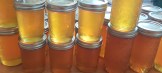
I’ve always loved honey–even as a child–especially comb (also known as cut-comb) honey. Now that I have bees I have my own honey–but it is wildflower honey. It’s a mix of Honey jars 20160702_140009whatever is currently providing nectar for the ladies to tote back to the hive and process into honey.
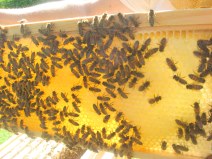
Varietal  honeys have flavors that can be quite distinctive. (Note that I’m not referring to “infused honey” which has had flavors added–e.g. chilli pepper, which sounds delightful to me, but rather honey which is made exclusively (or almost) from a single flower.) My honey shelf includes varietals such as leatherwood, tupelo, orange blossom, thyme, lavender, eucalyptus, buckwheat, sourwood–and what was purported to be kudzu honey. I think the Hawaiian white is all gone. Always on the lookout for good varietals. It’s a real treat to have these on biscuits or warm, homemade bread, or used in a sorbet, sherbert, or granita where the individual flavors really stand out–or just on morning oatmeal.

These thoughts on varietal honeys sprang from update from Honey Bee Suite answering the question of whether or not bees made honey from poison ivy/poison oak. Turns out that they do–and the blog post included a link to a source of some really interesting varietals from the Pacific Northwest varietals. I think I really have to have some poison bees on frame of honeyoak honey–especially as I share the experience of having that same kind of reaction to exposure to poison ivy, although mine didn’t involve any horses. Just a lot of poison ivy.
The post on poison ivy/oak honey had a link to a site that has an interesting array of varietal honeys from Old Blue Raw Honey as single season, samplers, and the year-long honey subscription–a serious gift for a honey lover!

To have a varietal honey there has to be enough of the blossoms to let the honey bees do their “monofloral” thing. Even wildflower flavors will vary from season to season as the flora shifts; fall will bring goldenrod and aster nectar for honey. One of the intriguing things about honey in the comb is that you get to variable flavor even within “wildflower” honey.


Ô¿Ô

.

Chile (or chilli or chili) paste for the pantry

I was perusing the list of favorite blogs that I follow on WordPress. When I got to the Chef Mimi blog I found an idea (and a recipe) that I just have to share.

I always have dried chilli peppers around the house, but they mostly just get used when I’m making chilli con carne because they take time and usually some unplanned effort to use.  I’d not thought of making paste out of them! A wonderful thing to have on hand. This will take you to the recipe for Ancho Chile Paste. No matter how you name those peppers they are great to have in the kitchen–and this makes them easier to use.

(I’m not going to give up my ancho chile powder from Penzeys Spices, though.)

Cool stuff for hot weather

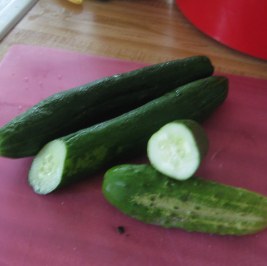
pickling and Amira cucumbers side by side

This hot weather has me looking for cool things–ways to beat the heat. Cucumber is one of the first things that comes to mind when I think of cool, refreshing things–with tomatoes in salad, or with mangos. But thinking really cold, I started  skulking through my old recipes for a dimly remembered recipe for cucumber sorbet with eucalyptus honey.

Eucalyptus honey is fairly dark, with an assertive earthy, spicy flavor with a slightly cool overtone like mild menthol. For some it might be called medicinal, but I found it an interesting combination, with the cool cucumber plus the extra little kick of coolness from the eucalyptus honey. (If you don’t have eucalyptus honey, this sorbet will still be tasty.)

Problem–someone (no names here) didn’t write down the quantities or the source of this recipe–or maybe it was an off-the-cuff invention with whatever was around at the time that obviously included eucalyptus honey.

So, some research. Going to The Perfect Scoop by David Lebovitz (one of my two favorite sources on frozen dessert stuff), and Jenis Splendid Ice Creams at Home by Jeni Britton Bauer (my other ice cream favorite) I found what I needed to fill in the missing quantities for the sorbet.

Cucumber and Eucalyptus Honey Sorbet

Ingredients

  • 2 English or Japanese cucumbers–about 2 pounds–coarsely chopped
  • 5 ounces eucalyptus* honey
  •  1/2 cup water
  • 1/4 teaspoon freshly ground black pepper
  • pinch of salt

Preparation and notes

  • I prefer the English or Japanese cucumbers because you don’t need to remove seeds. This would take about 2 cucumbers. Peeling is not necessary. If you have slicing cucumbers, remove seeds.
  • Combine honey and water; heating is not necessary.
  • Combine ingredients in a blender and puree until smooth.
  • Pour into prepared ice cream maker and freeze according to manufacturer’s directions
  • To make without an ice cream maker, use the method for granitas: pour into a shallow baking dish and place in the freezer. Stir with a fork about every 30 minutes until firm. (This breaks up ice crystals although the texture will not be as fine as with an ice cream maker–but still tasty.)

*A note on honey: Eucalyptus honey is a varietal honey; made from the nectar that bees collect from flowering eucalyptus trees. It is not an “infused” or “flavored” honey–those are made by adding flavoring to wildflower honey. I found the eucalyptus honey in my local Harris Teeter grocery store, next to the orange blossom and wildflower honey.

Ô¿Ô

Some other interesting recipes that I found whilst trolling the internet:


Hive report: Feeding the ladies.

quad feeder with jars in placeThe hives are quiet–I think mostly the ladies are hanging out at the feeders as there’s not much blooming right now. Goldenrod is anticipated but it’s hot and dry. I need to go for a walk on the Third Fork Trail to see what is happening there since I’m sure my bees make it that far to forage. Judging from the rate the sugar syrup disappears there’s not much coming into the hive.

It’s about time for me to do another inspection but I can’t do mite treatment right now because of the heat,  and I doubt that there’s been an increase in food stores yet, so I’ve put it off (and hoping for some cooler weather to don the bee suit since the ladies were so testy last inspection).

I did make a trip to the bee store (Bailey Bee Supply) to get some jars for the honey that will go on display at the state fair (No, not the little bear ones). As I was driving along looking at the roadside I did see a tiny bit of yellow showing on the tips of the goldenrod as I approached Hillsborough–but not around the Durham area; certainly no asters yet.

Now…must go buy more sugar!