Dandelion greens for supper

soon to be supper

soon to be supper

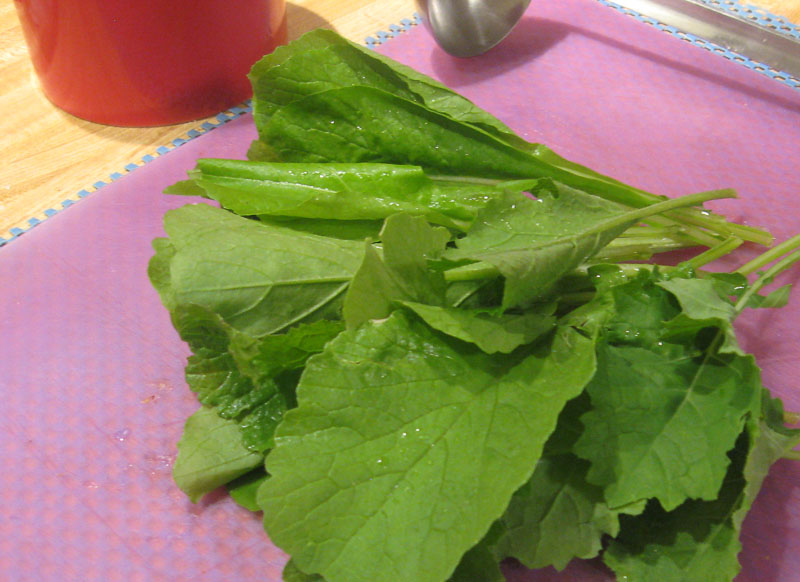
Yesterday, it was sunny, a bit breezy, but warm enough to have the doors and windows open (in spite of the pollen).  Today, that warmth and sun is somewhere else, so I needed some sort of cool weather, one-pot meal.  (One-pot particularly since I’m right in the midst of a big indexing project, too.)  My rapid trip through the local Harris Teeter left me with a lovely big bunch of dandelion greens, and a pair of Sicilian sausages to play with.  Add onions, red bell peppers, and a little garlic and it will be supper.

Although the  dandelions are blooming (and that’s good–my bees will be here soon) I didn’t go out and forage for the greens.  I took the wimpy way out and bought them.  But they still taste good.

The dandelion greens from the supermarket are going to be older, tougher leaves than I’d pick were I out foraging.  The really young  leaves can be used as salad greens, uncooked.  These need cooking. Whether cooked or raw, dandelion greens are bitter–in a good way that makes them pair particularly well with the “sweetness” of Sicilian or Italian sausages.

Sicilian sausages

Sicilian sausages

The Sicilian sausage is similar to Italian, but has orange added so  it is “brighter” and not quite as “sweet” as Italian, nor as spicy as hot Italian, but the contrast between the sweet spices of the sausage and the bitterness of the greens is lively–certainly not bland.  Since these sausages are not hot, I added some hot red pepper flakes when I was seasoning the greens.

The sausages were browned (as described by Nigel Slater in his Real Food:

all in the pot

all in the pot

Very, very slowly and gently in a bit of olive oil.  (If you’re cooking for one, at least get some of his books from the library–they’re fun, easy reading, and have some good advice about food, and cooking in general, and one particularly.)

I added two medium onions thinly sliced, a red bell pepper cut into strips, and three large cloves of garlic (chopped), to sweat with the sausages for a bit, and finally, the chopped dandelion greens (with the very bottoms where there was only stem and no leaf removed with a hefty  pinch of kosher salt.  No extra liquid is required as the onions and peppers will give off some liquid, and the moisture left on the greens after washing is enough for cooking in the covered brasier. The domed lid will accommodate that pile of greens until they wilt down to not much volume like most greens.

Other than a pinch of kosher salt, garlic, and the red pepper flakes, I didn’t add other herbs or spices as I thought the seasoning of the sausages was enough contrast to the bitterness of the greens.

sausages and greens

ready to serve

I would really have liked to add some cannellini beans, or other white beans, but since I’m trying low-carbohydrate eating to lose some weight, I just couldn’t do it–though it was tempting, and I love beans. (A small display of will power, here.)

As you can see, there’s no recipe for this–you just use peppers, onions, and greens so that it looks right, keeping in mind that greens do really cook down to less than you expect when you look at them raw. I would have used a smaller amount of vegetables had I been adding the cannellini (or garbanzo) beans to this–or added another sausage.

That second sausage and the rest of the veggies have been popped into a heavy-duty freezer bag, with as much air removed as possible, to await another chilly, rainy day when I need something warming to eat–my version of the TV dinner.

ÒΔÓ

Wine?  But of course! Nothing really fancy. Just part of a bottle–my last one unfortunately–one of my favorite “everyday” Chateau d'Oupia Les Heretiques, IGP Pays de l'Herault, France labelwines: Chateau d’Oupia Les Heretiques.   It’s a blend of old-vine Carignan (90%) and Syrah (10%) that has some bright clean, cherry, plum, and spice that goes nicely with a lot of my casual cooking–even just a burger, or just sipping without food.  It’s also in the price range to make it “everyday”. It’s time to go to the Wine Cellar at Sutton Station and get some more of this.

plate of sausage, veggies

A son goût!


…and now it’s turkey soup!

Remember those turkey thighs that I roasted a couple days ago? They have really been a bargain.  I spent about $5 on the package of thighs–two small-to-medium ones.

I had my roast turkey with sides of potatoes and cabbage (with juniper berries). Then I had two full-size sandwiches, and a half sandwich for lunches. Now I’m finishing the turkey thighs with a very hearty bowl of soup (and a  glass of good wine).

small Rival Crockette

a crockette

I popped those thigh bones (with what meat wasn’t easy to carve for sandwiches) in to my tiny little single-serving crock-pot to make some stock–I just added a little salt, a bay leaf, the brown stuff that I deglazed from the roasting pan, and enough water to cover the bones. After slow cooking overnight, I removed the thigh bones.  The meat just fell off into the pot.

In the same little crock-pot (don’t want extra dishes to wash), I added a small handful of barley, some dried mushrooms of various sorts–including shiitake, chanterelle, and porcini. The other things that went into this soup were the leftover cabbage (with juniper berries) and a few potatoes that were roasted with the turkey.  (You may be thinking that this is pretty heavy on starch, but to finish the soup, I added some green stuff.)

small leaves of greens

mixed greens

About half an hour before I was ready to eat, I went out to the garden (which I share through the good graces of a neighbor) and picked a good size handful of small kale, turnip, and mustard greens.

After washing, I cut these in bite size pieces (though that was almost unnecessary as they were really not as big as my hand). They went into the crock-pot; in about 20 minutes they were still bright green but tender.

I did a final adjustment of salt using French Grey sea salt, and finally added several drops of black truffle oil to finish the soup.

-<>^<>-

I’ve had my bowl of soup for supper this evening–and it looks as if I’ll get one more meal out of those turkey thighs–with the barley, and the amount of meat that was left on the bones, there is easily another serving of this soup for lunch or supper tomorrow. (I’m sure that by the time I reheat it, those greens won’t be quite so bright green, but the flavors may have melded with the other ingredients so it should be good–maybe even better than this evening.

bowl of soup with greens

a warm, hearty supper

-<>^<>-

I opened a bottle of wine this evening that was a completely unknown to me. It was a limited release called “Dark” from Apothic. I was completely beguiled by the description that said that it “blends dark fruit flavors of blueberry and blackberry with opulent notes of coffee and dark chocolate”.  How could I possibly pass that up? (I found it while shopping at Harris Teeter–just after I had bought a case of something called “Besieged”–more about that one later.)

I was surprised how dark it was when I poured it into the glass! (I even tried to take a picture–but it just looks almost black–so forget that.) It is definitely a “big” wine and right out of the bottle it was fruity and mellow–but after breathing for a bit it lives up to its description.

I thought it might overwhelm my bowl of turkey soup, but with the juniper berries, the rather emphatic mushrooms, the flavors of the greens, and the truffle oil, it turned out to be a great combination.  Fortunately there is some of the wine left for tomorrow’s soup! This is one time when I’m looking forward to the “leftovers”.

A pork and kale braise

It’s been chilly, cloudy, and grey–just the kind of weather for soups, stews, and braises. It’s also time to get the freezer stocked with some quick, easy food as I’ve got indexing projects coming in–some while I’m still teaching this Fall term.  With lots of grading to do as well, I wanted something that would take care of itself while I worked–so out comes the all-purpose “rice” cooker for some slow-cooked food.

I’m a great fan of pork almost any way you fix it so when I found a package of boneless pork ribs–just the ticket for the slow-cooker–while I was doing my grocery shopping on Thursday it obviously went into the cart. Big package, but on special, so it came home with me to make a lazy meal, and some to go into the freezer for quick meals when I’m really busy, or when I need comforting, peasant-style food. Can’t pass up inexpensive on something I really like.

Braised pork and kale from the slow-cooker

Ingredients

  • boneless pork spare ribs, about 2 pounds
  • 1 packaged of frozen, chopped onions
  • chopped kale, one frozen “family” pack
  • 6 large garlic cloves
  • 1 14.5-ounce can of fire-roasted tomatoes
  • 2 tablespoons of Hatch chili powder
  • 2 teaspoons of kosher salt, adjust to taste as needed when cooking is finished

Preparation and cooking

  • cut pork into about 2-inch pieces
  • add half package of kale and onions, mixing
  • layer in pork, sprinkle with salt, chili powder
  • add remaining kale and onions
  • add fire-roasted tomatoes with juice
  • close the lid and set for 8 hours
  • shred pork using two forks (if desired)
  • check seasoning and adjust as necessary.

No, no pictures as  this is NOT a photogenic dish, but it sure is tasty! And there’s certainly nothing like complicated technique involved here.

Great served with a side of spicy black beans, or garbanzo beans, or just a big bowl on its own. This particular time I had a roasted winter squash as a side with it. (Now, to turn the rest of the winter squash into another meal–maybe stuffed with some Sicilian sausage that also went into the grocery cart.)

There was more liquid than I had anticipated when this was finished cooking, so after packing some in zipper-lock bags to go into the freezer (with SOME juice), the extra juice with some kale and some shredded pork is going to turn into soup–details will evolve when it’s used–but that’s an additional meal out of that pack of spare ribs!

Turnip greens…

Loose mustard greens

While having leisurely Sunday morning coffee I was browsing through the Huffington Post and discovered a presentation on rediscovering mustard greens (though I didn’t realize that they were lost or misplaced). If mustard greens need rediscovery, then perhaps turnip greens need rediscovery (or just discovery) too. One of my favorite things to do with heartier greens (those that need longer cooking, unlike spinach) like collards, mustard, kale, dandelion, or chard is to braise them with sausages for a one-pot meal that is easy to make in any quantity–and reheats and freezes well.

Just recently I was the happy recipient of a LOT of turnip greens from a gardener who likes the bottoms–the turnips and not the green tops. Some of these were older–so a bit spicier, with some of the “horseradish” tang that you find in mustard greens as well.

Even though it was warm weather, I had just started an intense indexing project and wanted some easy food–braised greens with sausage.  No need for a recipe and certainly not labor-intensive or needing a lot of attention while it cooked. (I thought about using the pressure cooker, or the slow cooker but just did this on the stove-top this time)

hot italian sausage IMG_6092I started by dicing and sautéing a large onion, then added a mix of sweet and hot Italian sausage, removed from the casings, to brown lightly.  Of course it needed garlic–about half a dozen large cloves, minced. (The garlic mellows a lot during cooking.)  Since the greens had their own “heat” and I had used hot Italian sausage, I didn’t add the hot red pepper flakes that I would have used with other sausages, or other greens–e.g. kale or collards.

Once the garlic had sautéed enough to become aromatic, I added the washed and cut up greens (still wet from washing) and a can of diced tomatoes. In a tightly lidded pot, I left this over low heat until the greens were almost tender–about 45 minutes. (Since these were older turnip greens, I did remove the stems before cooking.)

In went one can (rinsed) of pinto beans (not on the low-carb diet, but…) and continued to cook about 30 minutes more to let the beans pick up some of the flavor of the greens and the sausage. Home-cooked dried beans would have been better, but since I didn’t have any of those in the freezer, and hadn’t planned ahead–canned ones had to do for now.

And there you have it, a quick supper, and a couple of servings for the freezer for several more quick, comforting meals.  Since the greens were spicy, the sweet Italian sausage added a nice counterpoint. I’m glad to have some tucked away in the freezer since I suspect that will be the last of the turnip greens for the summer–as the weather gets hotter the greens get a bit more assertive. If I’m lucky and there are more, I’ll probably do this again, but omit the hot Italian sausage. Or think about doing this with lamb sausage…so many possibilities, and so easy–and reasonably healthy as well.

All you need to add is a glass of a nice sassy, robust red wine, and maybe some good crusty bread (if you’re not on a low-card diet). A son goût!

Spinach and Roasted Red Pepper Hash

A very rainy day (Andrea is passing through here–or close at least)–the kind that promotes leisurely activity and thoughts of good food–warm but not too heavy. I’m being leisurely and browsing food blogs–and have found some very appealing recipes that I thought would be good to share.

A new take on a Southern tradition…

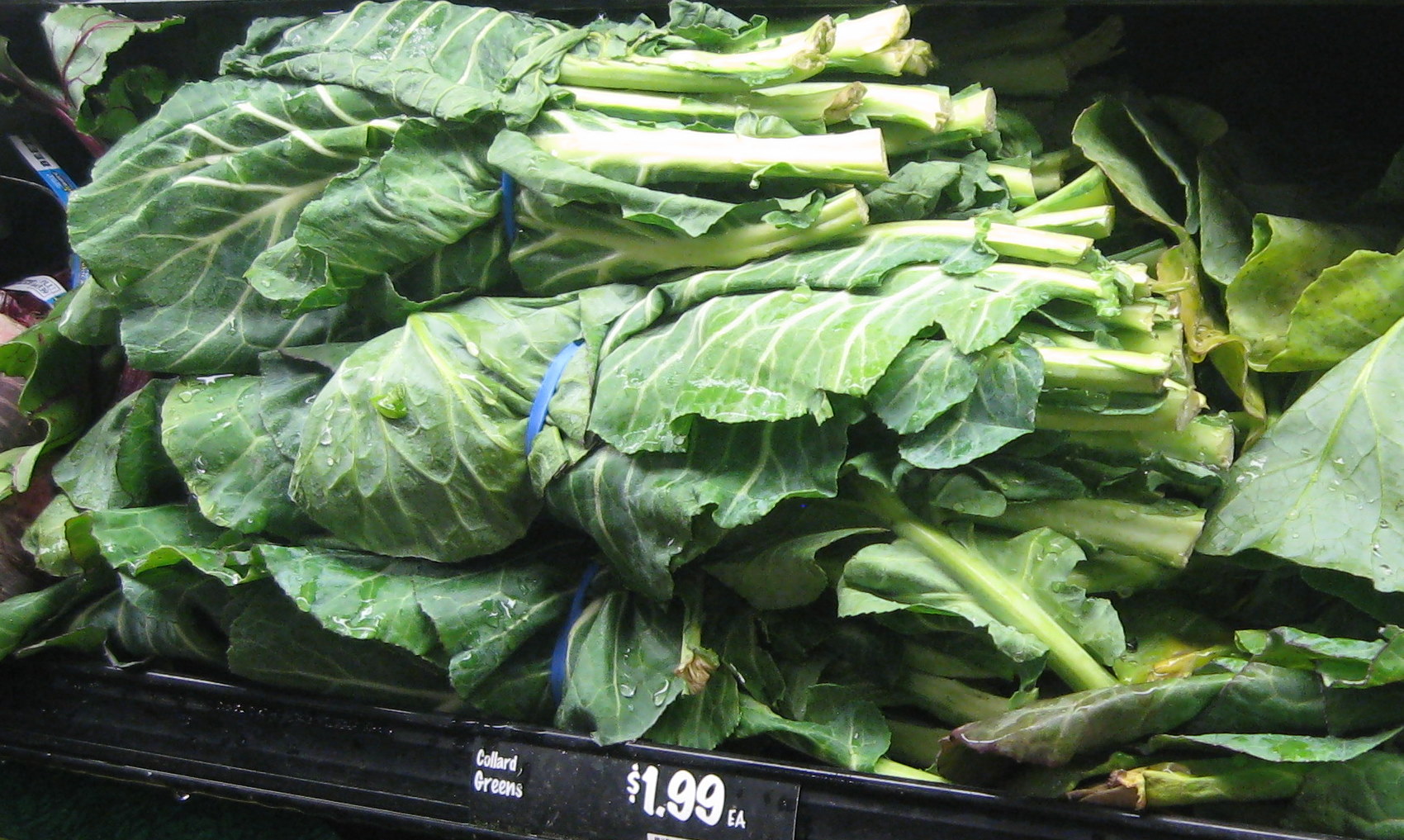
Produce display of bunched collard greens

collard greens

I’m not a native to the “real” South, so I was intrigued to learn about the custom of having collard greens and black-eyed peas as a mandatory part of New Year’s day dinner.  I like greens–so not big thing about the collard greens.  I like pulses, legumes, and all those things too.  Again, no big deal.  Unfortunately, I may be a less finicky eater than some of my friends and acquaintances.

On several occasions I’ve been the delegated to prepare those dishes for New Year’s day meals.  So–dinner for eight or so, I prepare collard greens and black-eyed peas in a traditional Southern style–well, talk about leftovers–everyone had the mandatory dishes–about a teaspoon of each!   Next year, I lucked out again–make collards and black-eyed peas. I made a much smaller quantity of each, but still had mega-leftovers.  Enough of that!

Next time I was delegated to bring collard greens and black-eyed peas to a New Year’s Day gathering, I decided that something had to be done to make those palatable to the kind of guests at the meal–true we’re all foodies, but some of us more than others.  I decided that the problem was not collards and black-eyed peas per se, but rather that they just did not fit with lovely roast duck with a nice fruit sauce.  I decided that I needed to present them differently.

Personally, I’d happily make a one-dish casserole of the collard greens, some sausages, and the black-eyed peas–a variation on one of my favorite recipes from Jacques Pepin’s The Short-cut Cook That still did not fit with New Year’s Day festivities.

My next though was that all these people (in fact, most people  I know) really like risotto.  After perusing a number of recipes, it seemed that as long as you could add most anything to basic risotto, as long as you did the appropriate pre-cooking.

I decided that it was time for collard greens and black-eyed peas to make a début as risotto ingredients.  Thankfully, the frozen vegetable case at my local supermarket came to the rescue: frozen collard greens (chopped), and frozen black-eye peas!  Happiness.

I started the basic risotto recipe with onions, white wine, olive oil, and sautéed  the rice.  I used home-made chicken stock for the liquid.  Frozen collard greens are already blanched, chopped, so all I did was to thaw them,  give them a bit more in the way of a rough chop, and since they are rather “tough” greens, steam-sautéed  them (without adding any more liquid) until close to being done.

The black-eyed peas seemed a bit more problematic since I knew that those can turn to mush easily as they’re fragile; I cooked those separately until almost done (according to the directions on the package).

When the risotto was close to being done, I added the collard greens and the black -eyed peas, and then finished the risotto with the Parmigano-Reggiano as usual.

Taking into account my earlier “luck” with collards and black-eyed peas, I made less than I though eight or so people would eat.  Wrong again–needed more–these foodies wanted seconds!

A son goût!  

Greens, with dill and feta cheese

So many greens do well in cold weather–and can be simple to fix.

emmycooks's avatarEmmy Cooks

Welcome to Emmy Cooks!  You can see more of my favorite recent recipes by clicking the “My Favorite Recipes” category on the sidebar (here are July, August, and September).  If you like what you see here, you can sign up on the sidebar to receive a daily recipe by email, add the RSS feed to your blog reader, or follow Emmy Cooks on Facebook, Twitter, or Pinterest.

Some days, maybe most days, simpler is better.

I had a plan to make this week’s greens into a tart of some sort, or maybe spanakopita, or at least green tartines.  But those things take time, and some days I don’t have time.  I piled all my greens into a pan to wilt, then chopped and dressed them with olive oil, lemon juice, dill, and a sprinkle of feta cheese.  It was better than good enough.

View original post 231 more words

Dandelion greens

I finished my teaching week this afternoon and found myself in need of an attitude adjustment.  It’s been a busy, hectic week but I still can’t figure out what I supposedly accomplished in all that business.  Still laundry to do and other household chores….

dandelion greens bunched in the Harris Teeter produce department

dandelion greens

In prowling through the grocery store (my local Harris Teeter) the other day I found absolutely lovely dandelion greens.  I haven’t had dandelion greens very often since I was a kid growing up on the farm.  Then they were a springtime treat–the young tender ones in a wilted salad with bacon dressing.  I thought that I’d try them in a one-dish meal based on a recipe from Jacques Pepin’s Shortcut Cook–quick, easy, and in the comfort-food category.  I decided that a good complement to the bitterness of the dandelion greens would be Siciliansausage which Harris Teeter makes in the meat department.  It’s a bit like Italian, but spicier and with much less fennel.

fresh store-made sausages

freshly made sausages

Remove sausage from casing, brown; add chopped onion and continue with the browning, then add a couple of garlic cloves, minced.  Add the chopped dandelion greens, stems about 10 minutes before the leafier parts (still wet from washing), cover and simmer. Depending on the spiciness of the sausage you might want some red pepper flakes. This particular sausage is strongly enough flavored that I did not add anything else.  When the greens are almost cooked, add some cooked pinto beans (in this case I’m resorting to canned ones). For a change from beans, add some diced potatoes to cook with the sausage and the greens.

Finish with a tiny drizzle of good fruity extra-virgin olive oil and it’s good to go, add some of my homemade oat bread, and ripe and fragrant Bartlett pears.

It’s certainly easy, reasonably quick–it takes about 15 to 20 minutes for the greens to cook, but it sure does contribute to attitude adjustment!  (Sorry, no pictures–it’s not photogenic.)  It’s good for single-serving cooking since I can buy the sausages individually, and if I’m using mustard, kale, I can buy those loose in the amount needed I don’t have leftovers.  If there is more than I’m going to use at once, I’ll take out some of the sausage and greens to be used later, perhaps as an omelette filling.

A son goût! 

More herbs and a few leeks….

Sunday, as the day after the farmers’ market (when I have to get up at 4 a.m.) is usually a pretty lazy day for me, but I did do a little planting today:  some quinoa–mostly just to see what it’s like when I’m not getting it in a box.  I curious to see if the leaves can really be used like spinach.

My biggest task was planting some leeks.  I love them, but I’ve not ever tried to grow them so this will be fun too.  I know I was amazed the first time I tasted REALLY fresh broccoli–you know, the home-grown, just-picked kind.  I hope there will be a similar experience with the leeks, too.

I’ve added a couple more herbs–Spanish tarragon (a.k.a. Tagetes lucida) which did not do well for me last year); papalo (a first time one for me) since I’m always looking for potential substitutes for cilantro; epazote (again–more since it did overwinter), Thai basil, cinnamon basil, lime basil, and lemon basil. The burnet is back and looking healthy as is the Greek oregano, the marjoram.  The Syrian oregano didn’t come back so that needs to be replaced.  I’m most pleased that the French, or summer, thyme is back and looking great; I’ve added some English thyme, too.

My mint is looking really scruffy–unknown kind that I got from a friend and keep for the awesome flavor.  I’ll need to see what I can do to help it along.  Might be time to repot it.  The lemon grass and the fern-leaf dill are looking good too.

Even though I’m always looking for stand-ins for cilantro, I’ve given up on culantro–flavor is okay, but the leaves are very tough, and I seem to have no “luck” at growing it–so on to something else.  I do want to add Vietnamese coriander to the collection too.

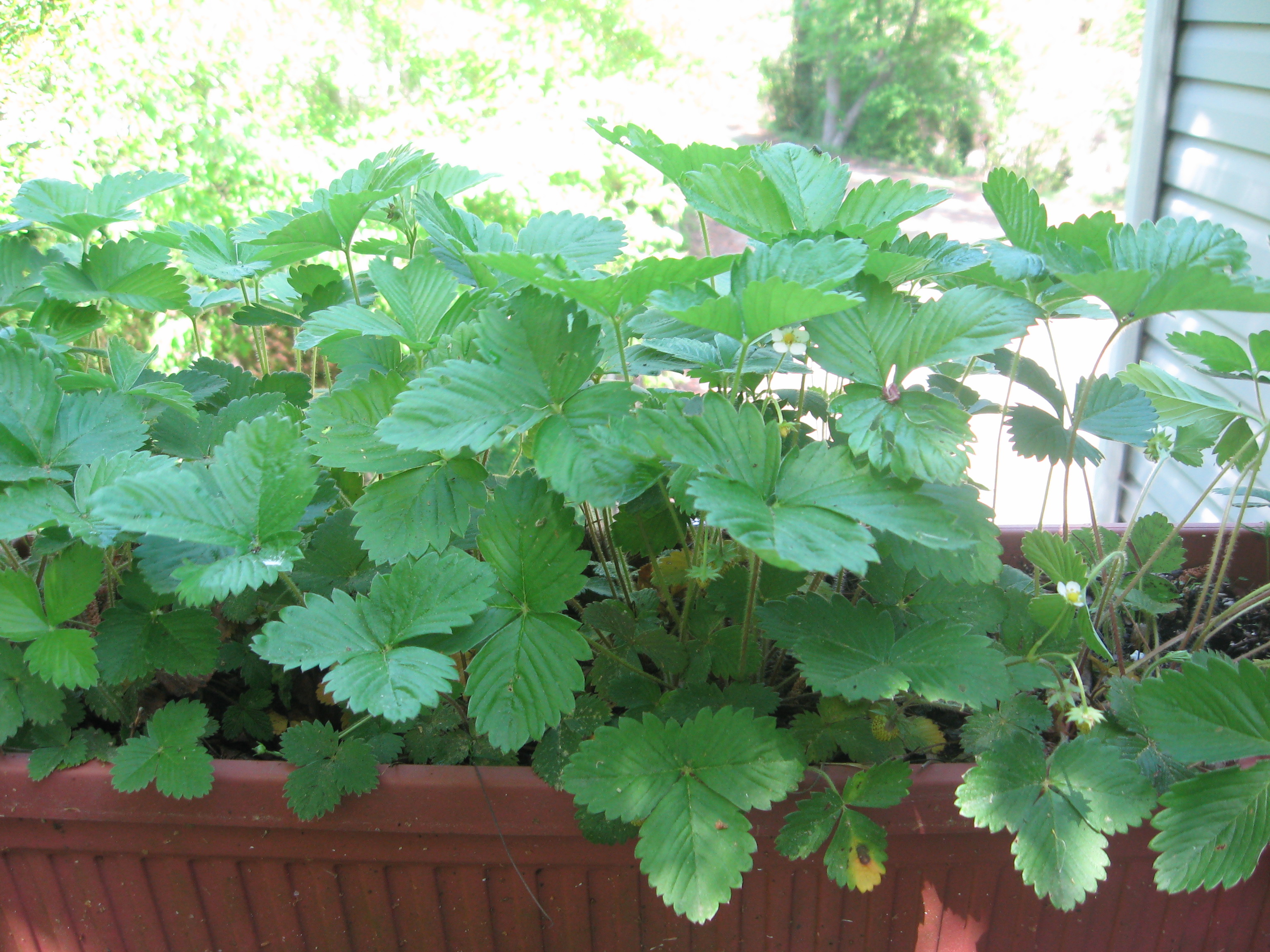
Even though it’s not an herb, I’m most happy to see my planter of alpine strawberries is doing well again this year–I may not get lots of berries, but the flavor is so great.  They never really make it into the kitchen–just get eaten out of hand as I pick them.

Ready for some spring and summer flavors–updates to follow as things grow.

planter of alpine strawberries

alpine strawberries

About lentils

lentils in Mason/Ball jar on pantry shelf.

lentils

Lentils (Lens culinaris), closely related to beans and peas, are dried after harvesting; you’ll find them on the shelves of your supermarket, gourmet stores, and online. They have been a staple food in many areas for over 8000 years, likely originating while in Turkey.  They are a staple food for many south Asian cultures, Middle Eastern, and Mediterranean countries.  The Latin word for lentils, lens, was used in the 17th century to describe eye glasses because of the similarity in shape

Like other legumes, lentils are low in fat and high in protein and fiber, but they have the added advantage of cooking quickly.  Lentils have a mild, often earthy flavor, which lets them pair well as side dishes, in salads, and soups.  Lentils have traditionally been used as a meat substitute.  Like other pulses, when paired with grains they offer excellent quality protein in our diet.

Before cooking, always rinse lentils and pick out stones and other debris–usually they are quite free of debris, but it’s always good to check them before cooking.  Unlike dried beans and peas, there’s no need to soak them. Lentils cook more slowly if they’re combined with salt or acidic ingredients, so add these last.  Bigger or older lentils take longer to cook.  Store dried lentils for up to a year in a cool, dry place. Substitutes: dal OR split peas OR black-eyed peas  More varieties are appearing even on the supermarket shelves, but specialty sources offer a wide variety with which to experiment.

The quick cooking and nutritious nature of lentils make them an obvious choice for winter soups. They are also good cooked and chilled for salads or mixed with bread crumbs to stuff vegetables. Blend lentils with middle eastern couscous and use as a bed for seafood and poultry.  Use them instead of beans  for summer salads with fresh tomatoes and other veggies.

Here is a little information about the various kinds of lentils.  More synonyms and alternative names can be found in the Cook’s Thesaurus.

  • Brown Lentils:  The average grocery store lentil is the brown lentil. You’ll likely find these on the shelves with the dried beans.  They tend to get mushy if overcooked.  If you want them to be firm, add oil to the cooking water and cook the lentils just a short while, say 15 minutes.
  • Black beluga lentils are a very popular legume in South Asia, they are used to make a beautiful black lentil soup. Some of the names that they my go by are Beluga lentil = black beluga lentil = beluga black lentil = petite beluga lentil. When they’re cooked, especially in salads with a tiny bit of oil, they glisten so that akes them look like beluga caviar.
  • Petite crimson lentils are “crimson” in color, which is a deep orange-red. These lentils tend to lose their shape when they are cooked and are an excellent choice for thickening soup.
  • Petite golden lentils are a small firm, golden lentil that is rounder in shape than many other  lentils; one of the reasons that this lentils holds its shape so well when cooked.  They have a soft texture.
  • Ivory white lentils are a creamy white colored small lentil that is really a peeled black lentils, known in India as urid dal.
  • French green lentils: (also called French green lentils, du Puy lentils,  lentilles du Puy, lentilles vertes du Puy.)  By many chefs, these are considered the “best”, most delicate lentils.  They have the typical earthy flavor, but also  are a bit “peppery”. These hold their shape well better than many other lentils,  but take longer to cook, but still do not need presoaking. While I love all lentils, and typically have several kinds in the pantry, these are the ones that I would not want to be without!)
  • Red lentils are the common seen in the supermarket.  It’s a lovely salmon pink in the dried form, but it turns golden when cooked.  These lentils cook faster than others.  They’re best in  purées or soups.
  • Spanish pardina lentils (also known as Spanish brown lentils or Continental lentils) are smaller the brown or red lentil–about the same size as a petite green or black lentil.  They have a particularly nutty flavor, and they hold their plump, round shape when cooked. This makes them a particular favorite with e for use in summer vegetable/lentil salads.
  • Dal is the Indian term for peas, beans, or lentils that have been split and often skinned, but the name is sometimes used for all lentils, peas, or beans, or to cooked dishes made with them. Split lentils don’t hold their shape well, so they’re often cooked into soups or purées.

Most of these can be interchanged in recipes as long as you take into account how quickly they cook and the final textures–some are softer than others. Generally the split ones tend to lose shape faster, so don’t do well for salads, or side dishes where you want them to keep their shape, but will be fine in soups–especially if you’d like your soup to be a little thicker.  Any of these would work in the lentil soup recipe that I gave earlier–though I usually use the lentils du Puy even for that.

Aside from using them instead of beans in summer salads, I think that lentils make an awesome side dish to go with grilled salmon–there’s something about the earthy flavor that combines SO well.  If you have “leftover” grilled salmon, try using it with some lentils to make a cool, but hearty summer salad with some tomatoes and cucumber to it.  Combined with a grain, this can be a very nutritious vegetarian dish–or not.

Here is a link to a lentil salad that makes me drool on my keyboard just looking at the recipe:  Warm Salad of Lentils with Duck Fat from the Hudson Valley.  Love’s description of the lentilles du Puy is marvelous.  (Each time I cook duck, I carefully keep some of the fat, sealed and refrigerated to use for things like this.)  Add some greens, and this is a one-dish meal that’s in my group of comfort foods.  Lentils will also work in the sausage, beans and greens one-dish meal.

Lots of uses, quick-cooking, nutritious, tasty, inexpensive…what more could you want?  Try some!