Roasted Okra

I discovered something really neat on the Chef Mimi blog this evening.  I have grilled and roasted fresh okra, but I’d never thought of trying frozen okra.  So glad to know I can do that.

I don’t do okra in any way that is going to produce “slime”–just can’t handle that, but roasted or grilled is good. If you think you don’t like okra, try some done like this.

Roasted Okra.

Zucchini with Tomatoes and Mint

This even sounds good to me–and I’m not a huge zucchini fan so I thought I’d share this one.

Zucchini with Tomatoes and Mint.

Ratatouille (slow-cooker)

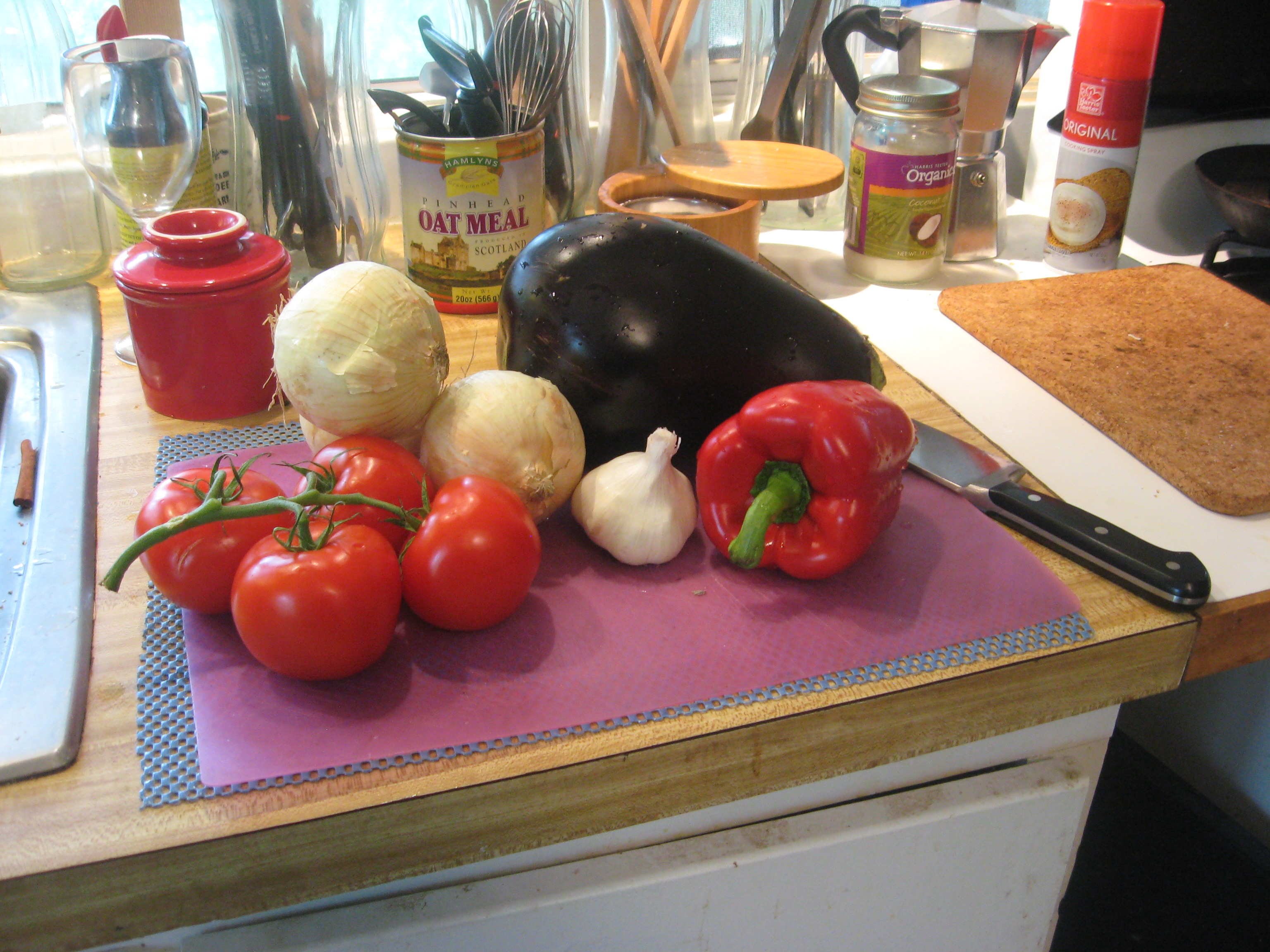
vegetables for ratatouilleDuring the summer abundance of eggplant, squash, and tomatoes  we’re often in the OMG-what-can-I-do-with-these-zucchini mode. Ratatouille and caponata  provide some good eating even when the hot weather has rather killed the appetite. I thought that being able to do this in the slow-cooker instead of stove-top would be an advantage in sweltering weather that is already taxing the A/C without adding more heat.

It’s easy to find ratatouille recipes–a quick search on the internet will provide a plethora.  The question:  are they  “good” recipes”?  I’m not sure I can tell you what (specifically) tells me “good”, “passable”, or “oh yuk”.  Most likely past experience, and reading a lot of food science, and (from America’s Test Kitchen) “why this recipe works”.

Here is a ratatouille recipe given by a friend, from Food.com, reproduced below. I’ve never made ratatouille in a slow cooker so I thought this was worth trying. In reading the recipe, I had only a couple questions, so I decided to make the recipe as directed–well, almost–as much as I can–I’m just a compulsive tinkerer, and constitutionally unable to follow a recipe strictly, but almost.  ratatouille ingredientsLooking at the recipe, I knew I’d want more garlic. Had I not been using part frozen peppers (from a Kitchen Disaster), I would not use green peppers–I prefer ripe (red, yellow, or orange) like them. I’m changing the herbs to thyme and oregano,  rather than basil (for reasons explained below in Cook’s notes).  My other question about this recipe had to do with that quantity of tomato paste. Why?

When I started the prep, I was still undecided about the tomato paste.  My inclination was to leave it out because this is an “all fresh” dish, and (to me) tomato paste tastes canned and cooked. Since this does not call for the tomato paste to be added until later, my obvious solution is to wait and see how it tastes, especially since these are summer tomatoes. If  I were wanting to supplement the “tomato” part of the flavor I would likely add some sun-dried tomatoes, rather than tomato paste–unless there is a dearth of “umami” (which is one of my reservations about slow-cooker dishes).

Slow Cooker Ratatouille (Food.com)

The modifications that I made on this recipe on the first round are shown in parentheses after the ingredient. These were just to meet my seasoning preferences, not for any other reason.  Don’t hold this on “warm”–it just doesn’t do well.

Serves: 6 to 8

Ingredients

  • 1 large eggplant, peeled and cut into 1 inch cubes
  • salt
  • 2 medium onions, chopped
  • 2 cups chopped fresh tomatoes–about 3 medium
  • 1 large green bell pepper, cut into 1/2 inch squares
  • 1 large red bell peppers or 1 large yellow bell pepper, cut into 1/2 inch squares
  • 3 medium zucchini, sliced
  • 3 tablespoons olive oil
  • 3 tablespoons dried basil (substitute 1/2 teaspoon thyme and 1/2 teaspoon Turkish oregano)
  • 2 garlic cloves, crushed through a press (4 garlic cloves)
  • 1/2 teaspoon fresh ground pepper (held until end as I think it gets bitter with long cooking)
  • 1 (6 ounce) cans tomato paste
  • 1 (5 1/2 ounce) cans pitted ripe olives, drained and chopped coarsely (oil cured black olives)
  • 3 tablespoons chopped fresh basil (substitute chopped fresh oregano)

Directions

  1. Sprinkle the eggplant with salt; let stand in a colander 1/2- 1 hour to drain.
  2. Press out excess moisture.
  3. Rinse the eggplant with water and pat dry with paper towels.
  4. Place the eggplant in crock pot.
  5. Add onions, tomatoes, bell peppers, zucchini, olive oil, basil, garlic, pepper and 1/2 tsp salt.
  6. Mix well.
  7. Cover and cook on high setting about 3 hours or until the vegetables are tender but still hold their shape.
  8. Stir in the tomato paste, olives, and the fresh basil.
  9. Serve hot, room temperature or chilled.

Notes:  Being of scientific orientation, I decided to do an experiment–half the recipe is cooked as above; and the other half cooked separately, with modifications after I had tasted the results of the original method. First, I had to cook for an additional hour–I thought my rice cooker/slow cooker ran rather hot, but not according to this.  After tasting I did add the tomato paste as the tomato flavor was not at all pronounced, but I think the tomato paste (unless browned before adding) doesn’t add the depth I want. I needed more salt (which kind of surprised me because I don’t usually need to add much. Oregano and thyme needed to be bumped up as did the garlic. Those minor things were done to the first batch. So far the onions  have stayed crispy and I think I’d prefer them a bit softer so maybe microwave them before putting into the slow cooker (that had to wait because they were already mixed with the other vegetables). This came out with more juice than I’d expected.

Now for the second batch. I’m adding more olives, more garlic (sliced rather than pressed), some red pepper flakes (about 1/8 teaspoon) for a little zing (but not a lot of heat), and sun-dried tomatoes (instead of tomato paste), a bay leaf, and increasing the oregano and thyme. Instead of increasing salt, I’m going to add just a touch of nam pla (fish sauce)–or an anchovy fillet mashed would work. This is not intended to make it at all fishy just more flavorful. This needs to be stirred after an hour so that the bottom veggies don’t mush and the top be a bit undercooked. Check for doneness–don’t just trust the time. I prefer my veggies cooked but with a little “tooth” to them, so in my slow cooker this finishes in about 2 hours. I like this one as there’s no added liquid, except the dash of nam pla and what the veggies give off. Minced fresh oregano added the last 15 minutes of cooking leaves it very fresh tasting.

Bottom line: this is quick and works if you want a very light ratatouille, not complex ratatouille.  I don’t want my ratatouille over whelmed with herbs and garlic, but I’d like to make it a bit more complex, or layered flavor–maybe it needs a little more umami It has the advantage of being very quick to assemble.

Ò¿Ó

As you likely know if you’ve read other posts, I’m somewhat partial to recipes from America’s Test Kitchen.  When the published Slow Cooker Revolution I had to check it out.  I was hoping that those recipes would improve my attitude to (and increase use of ) my slow cooker. There’s no denying it’s convenience, but generally I’ve simply not been happy with the results when compared with oven or stove-top methods.

A comparison of America’s Test Kitchen recipe with the one above is interesting. One of my “complaints” is that their recipes sometimes  seem more complicated–though they do increase flavor.  The recipe below is from the Slow Cooker Revolution (Kindle edition). This is the recipe that inspired me to try the one above.  The cooking instructions are quite extensive so I’m only going to summarize them for purposes of comparison. I’m trying to find a compromise of best flavor and easy preparation.

Slow-cooker ratatouille (America’s Test Kitchen)

Serves: 10 to 12

Ingredients

  • 6 tablespoon extra-virgin olive oil
  • 2 eggplants (2 pounds), cut into 1-inch chunks
  • 3 zucchini (1-1/2 pounds), cut into 1-inch chunks
  • 2 onions, halved and sliced 1/4-inch thick
  • 2 red bell peppers, stemmed, seeded, and cut into 1/2-inch pieces
  • 2 cloves garlic, minced
  • 2 teaspoons minced fresh thyme or 1/2 teaspoon dried
  • 1/4 cup all-purpose flour
  • 1 (28-ounce) can diced tomatoes, drained, juice reserved
  • 1/4 cup chopped fresh basil or parsley
  • Salt and pepper
  • Grated Parmesan cheese, for serving

Preparation

  1. Brown eggplant, half at a time, in olive oil (5 to 7 minutes), and transfer each batch to slow cooker.
  2. Brown zucchini, half at a time, in olive oil, transferring each batch to slow cooker.
  3. Cook onions, bell peppers, garlic, and thyme until softened and lightly browned (8 to 10 minutes), stir in flour and cook for 1 minute. Whisk in reserved tomato juice, scrape up browned  bits, and smooth out lumps, and transfer to slow cooker.
  4. Stir tomatoes into slow cooker, close and cook until vegetables are tender (4 to 6 hours).
  5. Season with salt and pepper as needed.

Notes:  The time it takes to brown the vegetables really is not that long, so it’s worth the extra flavor. It’s a drastic difference, even when you add some umami-hyping ingredients to the Food.com recipe.

The differences here are, notably, the use of flour to thicken, the lack of tomato paste, and the preparation of the eggplant. One of my reasons for trying the recipe from Food.com is the handling of the eggplant, with the idea that salting to remove fluid might eliminate the need for flour–I doubt that you’d know there was flour in this recipe simply by tasting.

After tasting the first batch of the recipe from Food.com with the adjustments noted in Notes, it’s a keeper for simplicity. The America’s Test Kitchen is a bit richer since you’ve browned the veggies. Either is good–depends on the time and effort you want (or have) to invest.

. . . a son goût

Ö¿Ö

cooked ratatouille

?

Beets in a surprising place

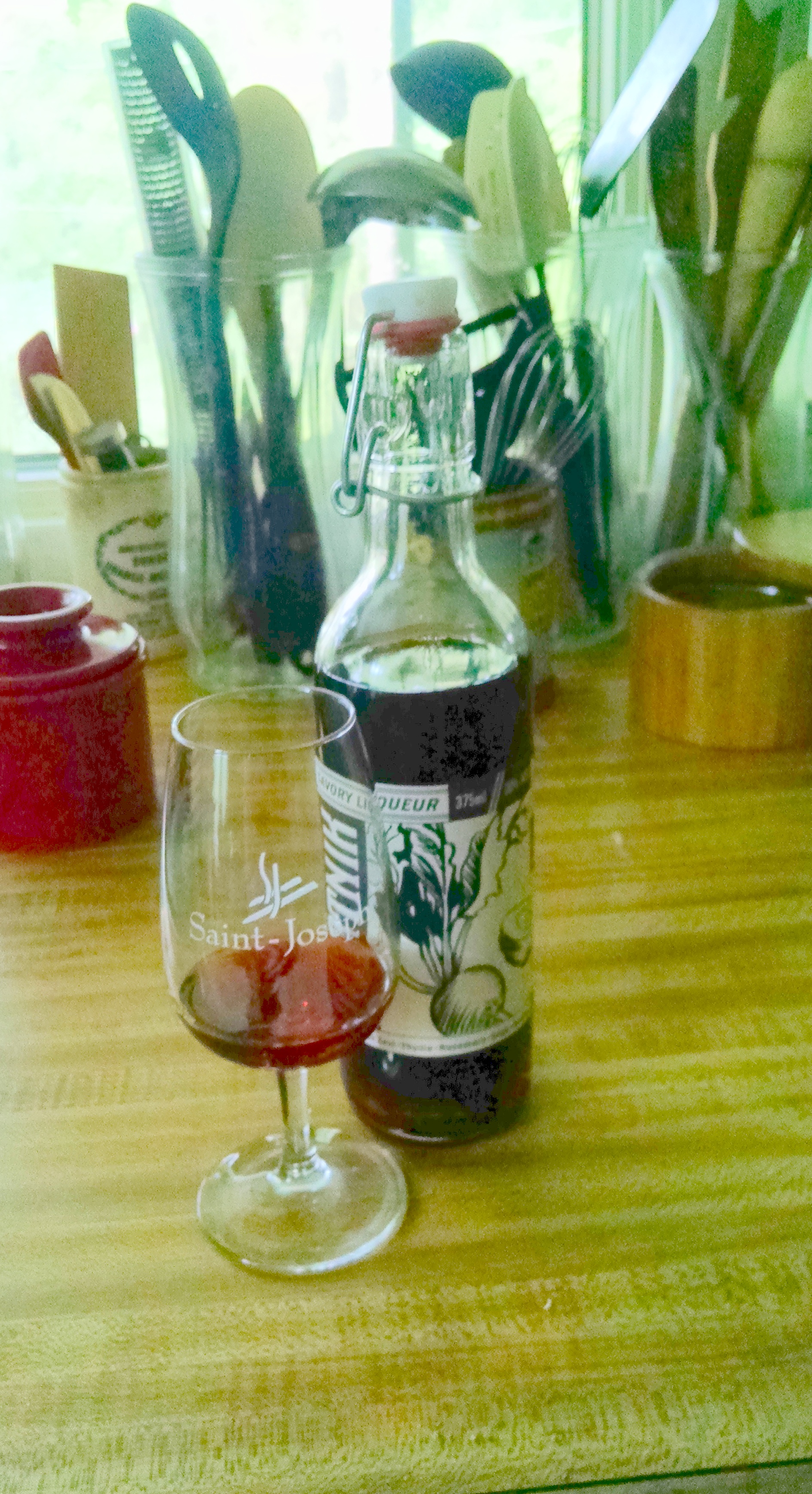
bottle and glass of Beatnik

Beatnik liqueur

If you’re any sort of a “regular” here I’m sure that you are aware that I think beets are under-appreciated vegetables. I’ve posted a number of beet recipes that I’ve found on other blogs and that I like. Last week I got an unusual (I mean they don’t bombard you with emails) from the Brothers Vilgalys who produced the Krupnikas about which I posted.  Well the email introduced some new liqueurs. (Note that this is a liqueur; it is not a cocktail called beatnik.)

The first that I’m sampling is the Beatnik. I don’t know what that conjures up for you, but it is a fantastic taste.  (You aren’t surprised, are you? Not given my fondness for beets!)

I suppose that the last place you’d expect beets to show up would be in a liqueur.  I was surprised when I read the description, but I just had to try it.

So, here is a liqueur with beets in it, described in the email as “An unusual liqueur made with Beets & Savory Herbs. Draws a bit of inspiration from an old Estonian liqueur I read about. Goes great with Gin drinks.”

I can tell you it is awesome! The beets are tempered/seasoned with orange zest, rosemary, thyme, sage, and fennel. I doubt that you could pick each one out as they blend so smoothly.  I’m sampling it “straight” this evening, but I’m going to try a splash of seltzer, as I’ve found that the Krupnikas (for warm weather) does nicely with that.

There are three others. I had a telephone call from the Woodcroft ABC store this afternoon to let me know that these had arrived. The Beebop was missing (that one has rhubarb and other goodies), but Jabberwock (coffee, chickory and some spicy things) and Zaphod (which is a fruity, minty one) were available.  I’ll be reporting on those in the fairly near future.

I’m just entranced by the nose of the Beatnik. The beets are certainly not obscured by the herbs and the orange zest–it all just blends together into a lovely earthy, beety, resiny, woodsy flavor.  In a word, awesome.

It gives me some ideas for seasoning beets as a vegetable too.

Beet pizza

Looking through the WordPress blog reader, I found a lovely picture–it was a beet pizza  post on Dinner for (N)one.  Looks really good, given how much I like beets.  I wanted to re-blog it because it looked so great, but somehow the electronic world of cyberspace is being obstreperous this afternoon.  So, I’m just posting the link without the gorgeous pictures.

Beet salad with feta

I’m in a work rush with a close deadline on a book that I’m indexing and that means that any heavy duty cooking (anything that requires turning on the stove, or pushing a button on the microwave) is out for the next few days. In need of lunch, I perused the fridge contents.

There was a package of Melissa’s Produce steamed, peeled, baby beets that I  brought home from the  supermarket produce section; toted home and put in the vegetable bin (sometime ago, and not yet used) so I made the easy beet salad from Chef Mimi’s blog this afternoon. This was a great light, quick,  warm-day lunch.

The beets are vacuum sealed in heavy plastic.  The texture is perfect–just like I’d steamed and peeled them myself–and they have a long shelf-life so I can always have them around without feeling that I absolutely HAVE to have beets today, or even tomorrow.

It’s not that cooking beets is difficult, but when there’s a really pressing deadline and I need lots of work time, I go for convenience and speed  but I don’t want to sacrifice taste. That usually rules out canned vegetables (except for beans and tomatoes) though I admit to not have checked out canned beets in ages because I really never liked the taste;  I can see that I need to revisit the canned ones again, too.

These vacuum packed ones just moved beets right up with canned beans as a convenience item in my pantry.

(Let me be clear about my comments on any products mentioned in my posts:  I have no connection (except as a consumer) with Melissa’s Produce, nor with Stahlbush Island Farms (mentioned below.  I get no remuneration for comments or use of these products.)

Now, I tasted the beets straight from the package and then made my salad.  I didn’t spiralize them, so my salad wasn’t as pretty as that pictured on Cher Mimi’s blog, but it was tasty.  I doubt that I could tell those vacuum-sealed, pre-cooked beets from ones that I had steamed and peeled myself (unless I looked at the color of my hands).  You could put those in a bowl and serve as a vegetable without anything except warming them and adding seasoning of your choice.

I have one more “convenience” product that I want to check out:  Stahlbush Island Farms sliced frozen beets that I found in the frozen food section at my local Harris Teeter.  I didn’t go to the frozen foods section expecting beets (probably the farthermost thing from my mind just then–I was looking for chopped kale) but right next to the Stahlbush Island Farms chopped curly kale, were sliced beets. As slicedbeetswebyou’ve probably gathered, I’m incapable of leaving something like that in the store.  So, I have those in the freezer to try next.

One of my other summer favorites is beet soup. I can certainly speed up making that if I use one of these products!  I can replace the beet greens with Swiss chard–maybe even find it frozen as well.

One of the appealing things about the frozen beets is that I can use some and put the remaining ones back in the freezer without having leftover veggies.  Since they are sliced, but uncooked, I have more flexibility. With the vacuum packed ones or a can, you have to do something with  the rest of the beets so that they don’t linger too long in the fridge and grow interesting colors of mold, and eventually find the way to the garbage.

My only “regret” with the Melissa’s beets was that I really like  beets roasted instead of steamed.  The first way I’ll try the frozen ones is roasted as suggested on the website.

ÒΔÓ

Until I found these products in the frozen food section, I’d never heard of Stahlbush Island Farms, but after looking at the website and the products, I’ll certainly follow up to check out some of the grains and legumes that are frozen, as well as fruits. (Again, no connection, except as a consumer, and picky at that.)

I noticed black raspberries on the product list. I’m a fanatic about black raspberries–there’s a big difference in flavor from the red ones that we see in the stores, not that those aren’t good, but black raspberries are what I grew up with, and thus my idea of what raspberries should be.

Radishes: Easter Egg vs. French Breakfast

Radishes are a sure sign of spring to me. The ones you grow yourself will be quite different from the one you get in the plastic bags at the supermarket.

Radish sandwiches are awesome–with a little salt and European-style butter on pumpernickel (especially freshly baked) accompanied by a glass of champagne.

We don’t usually think of radishes being treated as a vegetable.  Here are some other things to do with them, e.g.  radish soup.

Sharon Rawlette's avatargettin' fresh!

I grow a lot of radishes. My husband, who’s not keen on too many vegetables, loves them. As does his father, who regularly sits down to an entire bowl, which he eats plain except for a sprinkling of salt. So every spring I make sure to put in a healthy radish patch, just to make sure I have some left for me!

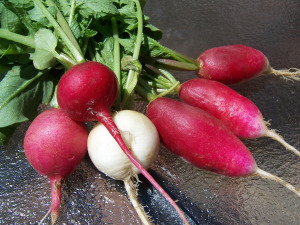
Radish Varieties L: Easter Egg, R: French Breakfast

The two varieties I’ve been regularly growing for the past few years are Easter Egg and French Breakfast. Easter Egg is actually a mixture of varieties, which is one of its primary advantages. Radishes grow very quickly (mine mature anywhere from 4-6 weeks from sowing, depending on the weather), and they also quickly pass their prime. Sowing a mixture of varieties helps space out the harvest a bit, and with Easter Egg, you have that variation built in.

French Breakfast radishes mature slightly earlier than…

View original post 331 more words

Hard-copy or digital?

Eat Your Vegetables: Bold Recipes for the Single CookI’m a sucker for cookbooks–especially by an author that I know has great recipes and knows about cooking for one!  I have Joe Yonan’s book Serve Yourself and love it–now I find that he’s got another that I want–Eat Your Vegetables.  Now comes the debate–do I do hard-copy or digital?

I do love books–and I’m sure that I’ll never be without some of the “hard copy” in my possession. But–there are advantages to the digital, especially as e-readers improve. But there are several attractions of digital versions–given my aversion of house cleaning it’s certainly much easier to dust the e-reader than a shelf of books. And, I love being able to have a selection of books no matter where I am.  There’s the price, too–since the e-edition is usually less expensive (though I can’t use the word “cheaper” here). Then there are some of the downsides….

Right now I’ve got reading material in several different e-readers: Kindle (just the third generation, not the Kindle Fire), Google,and  Kobo account.  That is frustrating.  I have the Kindle app installed on laptop, notebook, droid….you should see me trying to figure out where to look for Nigel Slater’s Ripe! Is it in Google, or Kobo–I am sure it’s not the Kindle–since there are color photographs, but….

[Hiatus here…skulking on the internet for availability in various e-readers,  and discovering eBook management and  converter software]

I’m back–just finished reading the introductory material to Eat Your Vegetables, and quickly perusing some of the recipes. It’s another winner for cooking for one–in digital format!

Love digital, but I still do  buy hard-copy when a book that  I want to read is not available electronically!  For example, Nigel Slater’s cookbooks, when they aren’t available on Oyster, either–tough to be an addict!

Dandelion greens for supper

soon to be supper

soon to be supper

Yesterday, it was sunny, a bit breezy, but warm enough to have the doors and windows open (in spite of the pollen).  Today, that warmth and sun is somewhere else, so I needed some sort of cool weather, one-pot meal.  (One-pot particularly since I’m right in the midst of a big indexing project, too.)  My rapid trip through the local Harris Teeter left me with a lovely big bunch of dandelion greens, and a pair of Sicilian sausages to play with.  Add onions, red bell peppers, and a little garlic and it will be supper.

Although the  dandelions are blooming (and that’s good–my bees will be here soon) I didn’t go out and forage for the greens.  I took the wimpy way out and bought them.  But they still taste good.

The dandelion greens from the supermarket are going to be older, tougher leaves than I’d pick were I out foraging.  The really young  leaves can be used as salad greens, uncooked.  These need cooking. Whether cooked or raw, dandelion greens are bitter–in a good way that makes them pair particularly well with the “sweetness” of Sicilian or Italian sausages.

Sicilian sausages

Sicilian sausages

The Sicilian sausage is similar to Italian, but has orange added so  it is “brighter” and not quite as “sweet” as Italian, nor as spicy as hot Italian, but the contrast between the sweet spices of the sausage and the bitterness of the greens is lively–certainly not bland.  Since these sausages are not hot, I added some hot red pepper flakes when I was seasoning the greens.

The sausages were browned (as described by Nigel Slater in his Real Food:

all in the pot

all in the pot

Very, very slowly and gently in a bit of olive oil.  (If you’re cooking for one, at least get some of his books from the library–they’re fun, easy reading, and have some good advice about food, and cooking in general, and one particularly.)

I added two medium onions thinly sliced, a red bell pepper cut into strips, and three large cloves of garlic (chopped), to sweat with the sausages for a bit, and finally, the chopped dandelion greens (with the very bottoms where there was only stem and no leaf removed with a hefty  pinch of kosher salt.  No extra liquid is required as the onions and peppers will give off some liquid, and the moisture left on the greens after washing is enough for cooking in the covered brasier. The domed lid will accommodate that pile of greens until they wilt down to not much volume like most greens.

Other than a pinch of kosher salt, garlic, and the red pepper flakes, I didn’t add other herbs or spices as I thought the seasoning of the sausages was enough contrast to the bitterness of the greens.

sausages and greens

ready to serve

I would really have liked to add some cannellini beans, or other white beans, but since I’m trying low-carbohydrate eating to lose some weight, I just couldn’t do it–though it was tempting, and I love beans. (A small display of will power, here.)

As you can see, there’s no recipe for this–you just use peppers, onions, and greens so that it looks right, keeping in mind that greens do really cook down to less than you expect when you look at them raw. I would have used a smaller amount of vegetables had I been adding the cannellini (or garbanzo) beans to this–or added another sausage.

That second sausage and the rest of the veggies have been popped into a heavy-duty freezer bag, with as much air removed as possible, to await another chilly, rainy day when I need something warming to eat–my version of the TV dinner.

ÒΔÓ

Wine?  But of course! Nothing really fancy. Just part of a bottle–my last one unfortunately–one of my favorite “everyday” Chateau d'Oupia Les Heretiques, IGP Pays de l'Herault, France labelwines: Chateau d’Oupia Les Heretiques.   It’s a blend of old-vine Carignan (90%) and Syrah (10%) that has some bright clean, cherry, plum, and spice that goes nicely with a lot of my casual cooking–even just a burger, or just sipping without food.  It’s also in the price range to make it “everyday”. It’s time to go to the Wine Cellar at Sutton Station and get some more of this.

plate of sausage, veggies

A son goût!