Braised pork and cabbage (Caribbean seasoning)

I’m of the opinion that cabbage is a much under-appreciated vegetable!  It’s good for so many things besides the traditional “coleslaw”.  One of my favorite things is to use it in braises.  Here is one of my favorites:  Braised pork and cabbage.  Again, it’s versatile, freezer-friendly, and the quantities are flexible.

Heads of savoy cabbage

Savoy cabbage

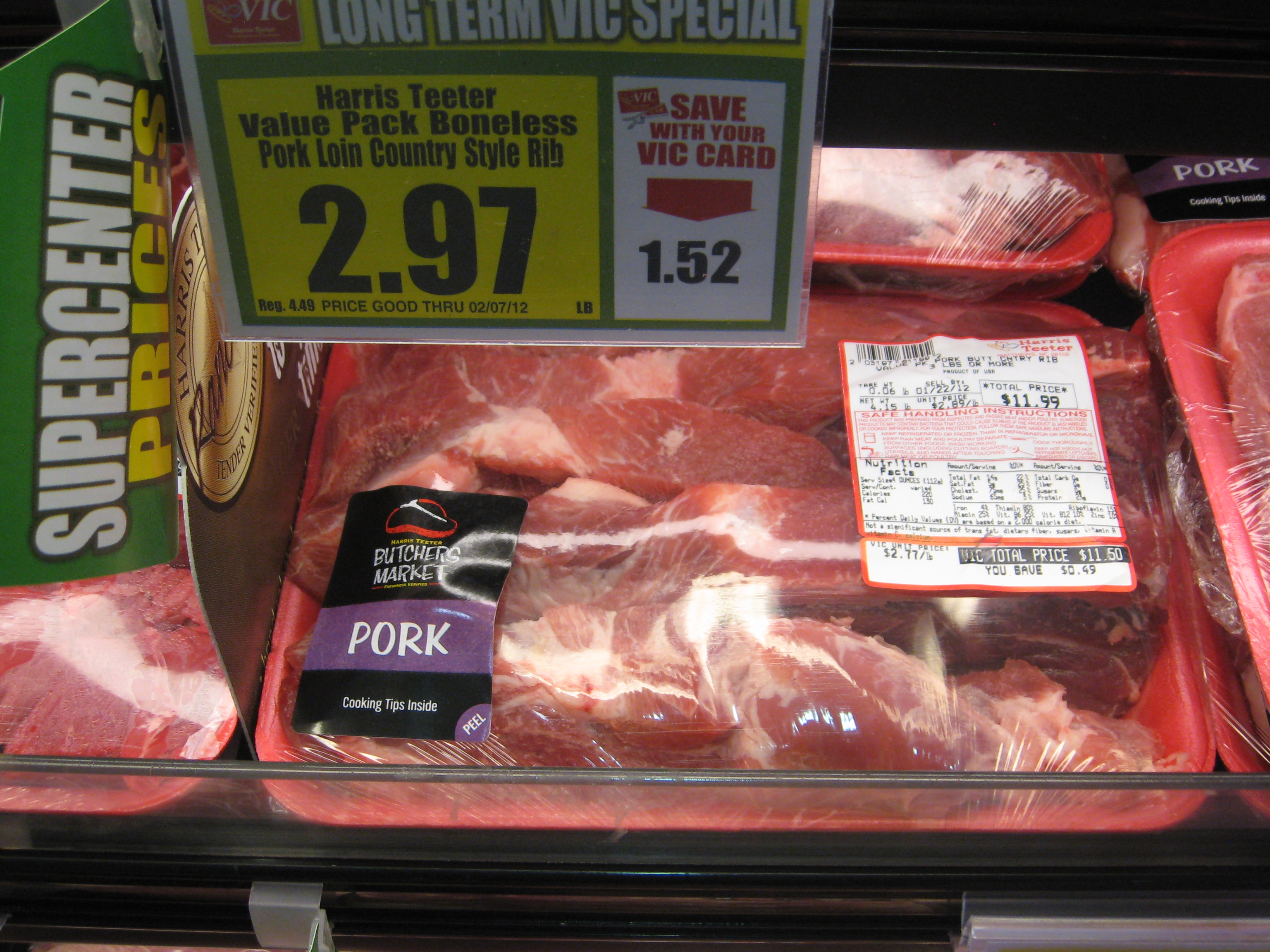
A particular favorite is from Jacques Pepin’s Cuisine Economique.  I’ll give you the basic recipe here ingredients as given in that recipe and summary of the preparation.  If you’re interested in ways to take economical cuts of meat and make them into something really good, this is a book worth looking at (See Bibliography).  The recipe is here not to give you quantities, but to suggest seasoning.  While this recipe suggests a larger cut of pork, I usually get the boneless country ribs to use for this–they are really more like pork butt than are loin chops.

Braised Pork and Cabbage (p. 247)

Ingredients

  • 2 teaspoons salt
  • 2 teaspoons dried oregano
  • 1/2 teaspoon allspice powder
  • 1 teaspoon cumin powder
  • 1/4 teaspoon cayenne pepper
  • a 4-pound pork roast (loin tip, shoulder, or pork butt)
  • 1 tablespoon virgin olive oil
  • 1 large or 2 medium-size heads Savoy cabbage (about 2-1/2 pounds), leaves cut into 2-inch pieces and core cut into 1/2-inch pieces
  • 2 large onions (about 1 pound), peeled and sliced
  • 1 tablespoon of sugar
  • 1/2 cup cider vinegar
  • 1 tablespoon dark soy sauce
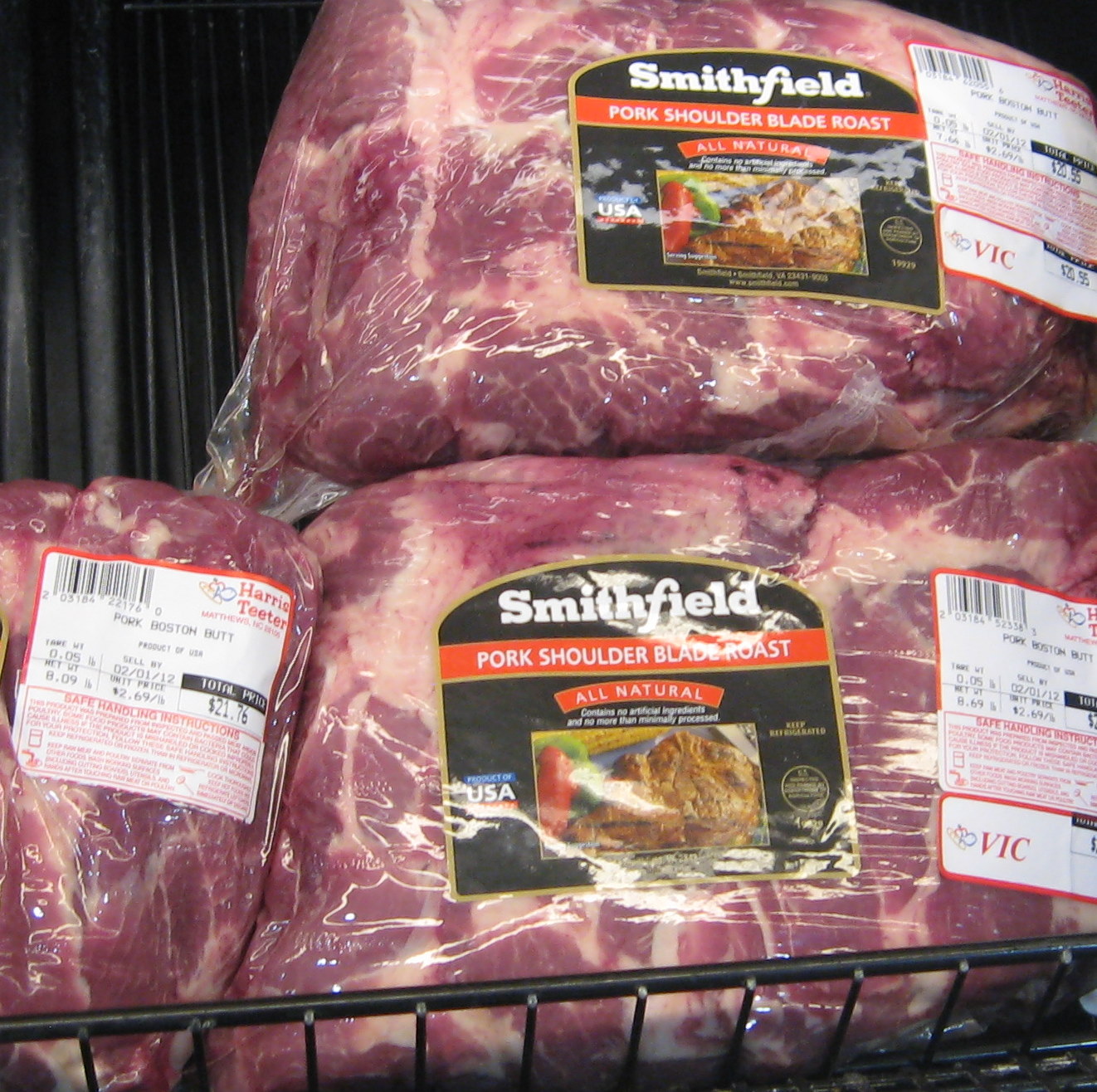
packaged pork boston butt

boston butt shoulder roast

Preparation

  • Mix the salt, oregano, cumin, allspice, cayenne, and rub the mixture all over the meat.  (See Notes.)
  • Heat the olive oil in a heavy pot.  When hot, brown the meat over medium-to-high heat for about 30 minutes (See Notes) until well browned on all sides.
  • Cover tightly and place in a preheated 325 ° F oven and cook for 45 minutes to a hour.
  • Remove the meat and transfer to a platter.
  • Combine the cabbage, onions, sugar, vinegar, and soy sauce in the pot.
  • Put the meat on top of the cabbage, cover, and return to the oven for about 2 hours until the roast has released juice and is fork tender.
  • Slice the meat and serve with the cabbage and juices from the pot.

Notes:

  • The cooking times will vary to some degree with the type of meat you use–shoulder, butt and ribs have enough fat and connective tissues to need long slow cooking. A supermarket loin roast, which I would not use, can easily become dry with long cooking unless brined.   I do not usually make this with a roast, but with big, meaty,  country-style spare-ribs, with about  1 to 1-1/2 pounds.  Even using about a quarter of the meat, your cooking time will still be longer than a quarter of these times–you just need to check the doneness)
    country ribs

    butt country ribs

  • You’ll probably want to use the quantities given for the rub ingredients–and I like to put these on the meat for at least several hours (if not a day before) browning it.  There is a lot of surface area to cover with the ribs.
  • This is also a freezer-friendly dish–I love to have a single-serving sized portion to pull out when I need comfort food on a cold day or I’m just in a hurry for food.
  • I like to serve steamed potatoes with it–or add one of those single servings to a  single-serving amount of rice as it cooks (in the rice cooker) for a complete meal.
  • A Riesling or Gewürztraminer wine is excellent with this dish.
Another use for Ball/Mason jars…..

This was just on my Facebook news feed from Savory Simple.  I have never found a travel mug that cleaned up easily…and they are not cheap!  Since I use wide-mouth canning jars for so much of my storage, I have them around in various sizes.   Definitely have to have one of these gadgets!

Link

I’ve just spent some time browsing the web while cleaning out my email inbox.  One of those was from Epicurious–a website that I use for features like The Food Dictionary and recipes from some cooking magazines to which I like to have access, but to which I don’t want to subscribe or have hard copy (e.g. recipes from Gourmet, Bon Appétit, Self, and other sources) since many of the recipes don’t fit my cooking style.

The most recent email was about eCookbooks–whole cookbooks available for purchase online.  Being a cookbook addict, and short of space for another bookcase, I’ve looked at Kindle editions of some books (Mark Bittman’s Salted and Food Matters Cookbook) and I find this an appealing option.

In checking out relative prices, I used Salted since I have the Kindle edition of that.  The Kindle price was $18.99; the hardcover edition, $23.10 plus shipping; and $18.99 from the eCookbook service at Epicurious.com, so price is moot on Kindle or eCookbooks.

The preview on eCookbooks does not let you access the index to see how that functionality compares with what’s available on the Kindle edition. Obviously I’m not about to buy a second copy of something that I already have, but I’m seriously considering trying this service, especially to see if the indexes really work and are in a format that can be easily used.

As I am already a subscriber to Eat Your Books, I’ll be interested to see if the page references from that service can be “translated” to the eCookbook as well.   I’m sure I’ll have more information for you on the service shortly!

Oyster-corn chowder

I’m an oyster lover!  One of the few Christmas traditions that I do keep is Christmas eve with Handel’s Messiah, and oysters in some form.  I got this tradition from my grandmother–Christmas was oyster time.  My uncle would drive to the coast and bring home a bushel of oysters on Christmas eve day.  We had oyster stew (more like poached oysters the way my grandmother made it) on Christmas eve, and fried oysters on Christmas day.  I don’t do the fried oysters, but I’ve staunchly held onto the tradition of having oyster “stew” of some sort on Christmas eve with friends who also love oysters.

I’m always looking for recipes for oyster chowder, or the like, so that I can try something new while oysters are in season.

This year’s oyster chowder is one of my absolute favorites from Jacques Pepin Celebrates (pp.19-21).  I’m so taken with this recipe that I wanted to share it with any of you out there who love oysters.  I think that you’ll also like the little cornbreads with it.

Oyster-and-corn chowder with small cornbreads 

Small cornbreads (8 individual servings)

Ingredients

  • 2 tablespoons unsalted butter
  • 1/2 cup sliced leek (or shallots)
  • 1/3 cup all-purpose flour
  • 1/2 cup cornmeal
  • 1/2 teaspoon salt
  • 1 teaspoon sugar
  • 1 teaspoon double-acting baking powder
  • 1 large egg
  • 3 tablespoons milk

(To make preparation easier, you can combine all the dry ingredients ahead of time so that all you have to do is add the wet, mix, and spoon into muffin tins. )

Preparation

  • Preheat the oven to 425 ° F
  • Using 1/2 tablespoon of the butter, butter your muffin tins or pans.
  • Melt the remaining butter in a small skillet and sauté the leeks or shallots over medium heat about 90 seconds, and cool.
  • Mix the dry ingredients in a bowl
  • Add the wet ingredients:  egg, milk, and finally the sautéed leeks or shallots and stir well.
  • Divide among your pans.
  • Bake for 10 to 12 minutes until set and nicely browned.

Chowder

Ingredients

  • 3 dozen oysters, shucked with liquid retained
  • 3 cups corn kernels
  • 3 tablespoons unsalted butter
  • 1 medium leek, trimmed, quartered, and thinly sliced
  • 1 medium onion, peeled and chopped
  • 3 or 4 large garlic cloves, peeled, crushed and finely chopped
  • 3 cups milk
  • 1 cup heavy cream
  • 1 teaspoon salt (more or less depending on the saltiness of the oysters)
  • 1/2 teaspoon fresh-ground black pepper
  • 1 tablespoon minced chives

Preparation

  • Check the oysters, removing any shells, and return to the liquid
  • Heat the butter in a heavy pan, and add onion and leeks.
  • Sauté over medium heat for 3 or 4 minutes, or until translucent, but NOT browned
  • Add garlic, stir for 20 or 30 seconds until it smells fragrant.
  • Add milk and cream.
  • Bring to a boil. (You can quit here, cool, and hold in refrigerator until you’re ready to make the chowder.)
  • Bring back to a strong boil (if you’ve prepared this in advance).
  • Add corn (in winter, substitute frozen for fresh–I think that it’s better than supermarket corn-on-the-cob.  I particularly like the white shoe-peg kernels. For frozen, I rinse in a strainer under cold water and drain well to at least partially thaw it.)
  • Turn the heat down to medium to medium low–you do not want to boil this again now.
  • Add oysters and the oyster liquid.
  • Heat until the temperature reaches about 170 or 180 ° F  at the most.
  • If you’re not using a thermometer your want the edges of the oysters to just begin to curl.  Don’t boil it–the oysters will turn tough and harshly flavored.
  • Should any scum come to the surface, skim it away.
  • Add the chives, mix well, and serve with the cornbreads.

(This recipe is easily cut down or doubled, but I usually make the whole amount and just have it as the main course, with a salad (bitter greens, mesclun, and fruit and shaved Parmigiano-Reggiano to follow).  I like champagne with this–as awesome treat for a special evening.

Variations:

  • Add some chipotle chili power or ancho chili powder to taste.
  • Add minced red bell pepper, and/or poblano for a red and green touch.  I would  not add green bell pepper to this as their flavor is too bitter/green  to complement the oysters.
  • Add minced ripe jalapeños or Serrano to give just a hint of heat.  This is not a chowder that you want to have much heat.  It should be gentle on the tongue!
  • Substitute shallots for the leeks.

A son goût!

Fried Eggs, Spanish-style (Huevos Fritos a la Española)

For a leisurely (but easy) meal–especially weekend breakfast, try some Spanish-style fried eggs.  The combination of the olive oil and good free-range eggs is absolutely wonderful–right up there with eggs Benedict as far as I’m concerned–and do love those, too!  A good friend who has lived in Spain introduced me to these.

Huevos Fritos à la Española

Ingredients

  • 2 eggs of size of your choice
  • olive oil
  • salt and fresh-ground black pepper

Preparation

These are best made in a skillet that is just large enough to hold your eggs; otherwise it takes a lot of olive oil.  I have a small (4-inch) cast iron skillet that I got very inexpensively at the hardware store.  It’s the same skillet that I use for toasting small quantities of spices, et cetera.

  • preheat your skillet
  • pour enough olive oil into your skillet to be about 1-inch (2.5 cm) deep and heat the oil.
  • break each egg into a saucer and slide it into the hot oil.
  • gently fold the whites over the yolks.
  • cook only until the white is set–one to three minutes over moderately heat–or to your preferred doneness.
  • meanwhile, make toast
  • lift the eggs out of the skillet and place on toast.
  • season with the salt and fresh-ground black pepper and serve immediately.

Last-minute gift ideas for the cook

Knives are such an important and often used part of kitchen equipment!  Many times when you’re cooking for only one or two it’s much faster and easier to chop thing with a knife rather than use a food processor.   At least that’s true if your knives are in good condition–that is sharp–and sharp knives are much safer, and easier to use than dull ones.

Most knife sets come with a steel–but the purpose of a steel is NOT sharpening truly dull knives.  The steel is intended to even and straighten an edge–in other words,  to keep a knife sharp.

Even knives that have been well cared for eventually need sharpening.  It’s possible to sharpen with a stone–but most of us don’t truly have the necessary skill to do this–it’s time-consuming, tedious, and we likely won’t get the best results.  So, you might want to have your knives professionally sharpened.

However, there are some alternatives to professional sharpening or using a stone; there are now very good manual and electric sharpeners that can be used successfully by anyone.  That’s one possibility for a gift for the cook in your life, or for yourself. Cook’s Illustrated has tested both manual and electric sharpeners.

Anolon manual knife sharpener

For manual sharpeners, the AccuSharp knife and tool sharpener (model AccuSharp 001) is an inexpensive, easy to use possibility.  The Anolon Universal Knife Sharpener 3-Stage  Whetstone (model number 52255) are possible options.  I prefer the three-stage style.  Chef’s Choice also has manual knife sharpeners which have had generally good reviews as well, and are reasonably priced.

—<>—

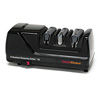
Electric knife sharpner image from Chef's Choice catalog

Electric sharpeners are predictably more expensive, but somewhat easier to use.  It’s a good investment for keeping knives  in good repair, and it’s something that might not buy for herself, and that makes it an especially appreciated gift. The Chef’s Choice electric sharpening products seem to generally have good reviews.

—<>—

steel for knives

A steel would also make a great gift for the cook–used every time you pick up a knife to cut, it evens and aligns the cutting edge.  It won’t replace a sharpener, but will help keep knives in good condition at each use between sharpening.

—<>—

To help those knives keep that sharp edge, some other kitchen accessories that your cook might welcome might be a knife block  or perhaps a magnetic strip which affixes to the wall. If knives are kept in a drawer, knife protectors might be welcome, or in-the-drawer

       —<>—

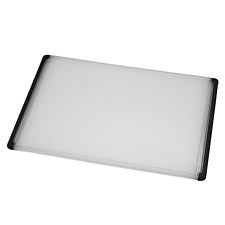
from OXO websiteAnother important way of keeping your knives in good condition is to use an appropriate cutting board–one that is “soft”.  Glass or ceramic boards will dull the knife edge so get plastic or wood/bamboo.  This need not be expensive–The OXO Good Grips cutting and carving board is an excellent choice.  The no-slip strips are great.  If the cutting board does not have these, you can always put a damp kitchen towel under it to keep it from sliding.

—<>—

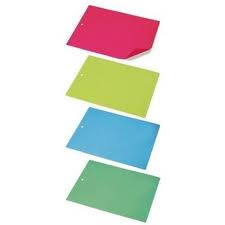
Four color-coded flexible cutting mats

For safe food preparation, flexible plastic cutting mats or chopping mats are also great to have in the kitchen (and they are inexpensive, too).  Some come in different colors to make it easy to keep those used for meats, poultry, seafood/fish, and veggies to avoid bacterial cross-contamination.  Another nice thing about these is that they can be easily used to transfer chopped ingredients to pan or bowl.  Recommended by Cook’s Country is the set of four chopping mats by Progressive International Food Safety Chopping Mat set of four for around $10, but you don’t need to find that specific brand.

Both the cutting board and the chopping mats will eventually show wear and tear and will need to be replaced, but it’s a small investment to keep your costly knives sharp so that cooking is easier and more enjoyable.


Spanish potato omelette (Tortilla Española)

Another favorite egg dish (though I don’t make this as often as the basic omelette) is tortilla Española or Spanish potato omelette–this takes a bit more time than basic omelette, but it is serious comfort food.  Though most recipes that I’ve seen recommend serving it at room temperature (and I love it that way too), I like the first serving still warm.  I don’t mind having some of this around to eat as recommended, at room temperature, especially in hot weather.  I usually make the entire 4 servings of this.

This recipe is adapted from The food of Spain and Portugal: The Complete Iberian Cuisine by Elisabeth Lambert Ortiz (p. 231) and allioli (p. 239).

Tortilla Española

Ingredients

  • 500 gm/1 pound potatoes, peeled and diced or thinly sliced (preferably waxy potato–red or Yukon gold).
  • 250 gm/8 ounces (about 3 medium) onions, finely chopped or sliced thin
  • salt and fresh-ground black pepper
  • 250 ml/8 fluid ounces (1 cup) olive oil
  • 5 large eggs, lightly beaten

Preparation

  • season the potatoes and onions with salt and pepper.
  • heat the oil in a large, heavy frying pan (skillet), preferably nonstick.
  • cook the potatoes and onions covered over low heat until soft, but not browned; stir gently from time to time.
  • drain the potatoes and onions through a sieve, reserving the oil.
  • stir the eggs with a little salt and pepper
  • add the potato and onion mixture, mix gently and allow to stand for 10 to 15 minutes.
  • wipe out the frying pan/skillet and add 4 tablespoons of the oil, and heat
  • add the egg, potato, and onion mixture and spread it evenly
  • cook over moderate heat shaking the pan occasionally to keep it from sticking.
  • when the omelette begins to brown underneath, put a plate over the skillet and invert the pan and slide the omelette onto the plate.
  • heat a little more oil and return the omelette to the pan with the browned side up.
  • cook it just long enough to brown the underside.
  • transfer to a warmed plate and serve hot or at room temperature.
As a garlic lover, I love to accompany the with allioli (garlic mayonnaise) so here is a recipe for that accompaniment:   
 

Allioli à la Catalana  (Garlic mayonnaise, Catalan-style)

Ingredients

Makes about 1 cup; will keep in the fridge for several days.  This is for serious garlic lovers–there is a less potent variation given in the book, as well as variations using egg yolks.

  • 1/2 large head of garlic, peeled and crushed.
  • 1 teaspoon (5 mL) lemon juice (or white wine vinegar)
  • 250 ml (1 cup) olive oil at room temperature
  • 1/2 teaspoon salt.

Preparation

  • put the crushed garlic into a small bowl (or a large mortar).
  • add the lemon juice or vinegar
  • stir to mix
  • gradually add the oil, stirring in the same direction until the oil is absorbed and the mixture has a mayonnaise-like consistency.
  • stir in salt to taste.

You don’t need to use expensive oil–the garlic flavor is very strong.  This can be made in a food processor or blender, but I think that it’s more trouble to clean either of those than to make it by hand.

If you don’t care to make the allioli from scratch, you can add crushed garlic to a good commercial mayonnaise, and adjust seasoning to taste with lemon juice (or vinegar).  When I do it this way I use Hellmann’s® mayonnaise–it is quicker, but not quite as good as making it from scratch.

Fast food: basic omelette

Whether you choose to spell it omelette or omelet, it’s still a god-send when cooking for one,  when you need fast food (even for several), or when you just want to make a meal without going to the grocery store.

Omelettes come in several styles–thin and rolled or folded, or thick and puffy; usually with filling or other added ingredients.  It’s the filling/topping possibilities that make this a meal in itself–these can range from a simple cheese filling to mixtures of vegetables, and even jam or jelly for a sweet treat.

My favorite style is the thin, folded (not puffy) with a filling of some sort–even “leftover” caprese salad in the summer time, or cheese, mushrooms, onions, and spinach–there are lots of “classic” fillings for omelettes that you see on restaurant menus–Denver, Spanish, Mexican, Greek, et cetera but there are virtually endless possibilities.

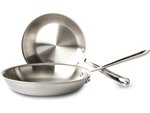
First, choose the appropriately sized pan:  I use an 6- to 8-inch skillet (All-Clad) when cooking a 2- or 3-egg omelette just for me (and the cat).  Too small and All-Clad stainless steel skilletthe omelette will be too thick to fold and too large, the omelette is too thin.  Just like other cooking for one, the size of the pan is important.

An omelette is most easily made in a skillet or frying pan because the slanted sides allow you to roll or fold the omelette easily.  You may see ads for “omelette pans” but the plain skillet or frying pan is the only thing that you need so long as it is of good quality and heat is conducted evenly.  Nonstick is not necessary–any good skillet, if preheated and oil added appropriately works fine.

If your filling needs cooking, e.g. mushrooms, onions, peppers, or the like, prepare that by sautéing the ingredients and setting them aside. You should allow about 1/4 to 1/3 cup of filling for each two eggs.  Your imagination and your taste are the only limitations on what can be used as a filling for your omelette.  Cheese of your choice is always good–add a salad and you’ve a meal right there.  Fresh herbs with tender greens such as spinach can be quickly sautéed with a little butter and/or olive oil and used as a filling.  In the summer, tomatoes, summer squash are possibilities.  Leftover boiled or roasted potatoes or roasted root veggies–certainly.  Even “tough” greens such as kale or chard can be used if precooked. Leftover fish or smoked salmon works well.  Even creamed spinach from the freezer, or just some of the salsa from a jar.  Recycle some of the sausage-potato casserole as omelette filling….

For a flat, folded (or rolled) omelette, I start with two large eggs, add a splash of milk or cream, a pinch of salt, and beat the eggs until yolks and whites are well blended.  I like to beat them with chopsticks or a fork since I don’t want the omelette to puff.

From Cook's Illustrated

French omelette

Using a whisk will incorporate air and those bubbles will expand and give you a somewhat puffy omelette, which I don’t like as well as the thinner, folded or rolled style.  I also prefer not to have my omelettes browned–I want that nice cooked, but still moist style.

For an evenly cooked omelette without spotty browning, you need to preheat your pan thoroughly (5 or 6 minutes) before adding the eggs so that they will cook evenly.

Over medium-high heat, add some butter (about 1-1/2 teaspoons).  When the foam subsides, pour in the beaten eggs, and pull the edges as they set toward the center of the pan, allowing unset egg to run to the edge–maybe 30 rule out 45 seconds.

Spread your filling over the surface of the omelette, cover (foil or a plate if you don’t have a lid that fits your frying pan) and remove from the heat for about 60 to 90 seconds to allow the residual heat to finish setting the eggs on the top of the omelette; it should appear moist, but not runny.  If it’s not set enough, return to the heat briefly with the cover still in place.

When cooked to your taste, use the chopsticks or fork to roll or fold the omelette.  I usually simply fold it into thirds, or even in half, rather than rolling it up. Turn out on a plate, and it’s ready to eat.

—<§>—

Omelettes are ubiquitous…for an interesting survey of variations (including some seen on restaurant menus) see the Wikipedia article on omelettes.  Your taste is your guide to making this a quick, delectable meal.

A son goût!  

Veal chop

Today I absolutely HAD to go to the grocery store to retrieve some “paper products”…just no way to put it off any longer.  Procrastination was definitely not an option.  So, after giving my lecture this morning, I had a bowl of oatmeal (I try not to go to the grocery store when I’m hungry), and headed out to the store for one item.

Well, while I don’t like shopping for some things, I do find it hard to go through the grocery store without meandering around through the produce, fish, seafood, and meat counters, and occasionally (especially around the holidays when they have chocolate cherry bread) the bakery.

Today my meandering took me past the meat counter.  I usually do check what might be on special–especially when I’ve not decided on that night’s supper–I might well find something that’s not usually in the budget marked down because, while it’s still fine, it’s sell-by date is approaching.   Today is wasn’t a “need to move it” but a “manager’s special”.

I found a lovely veal rib chop (bone in and thick) as a store special (read cheap for veal).  My oatmeal just was not enough to allow me to pass that up–so I came home with a veal chop–since chops of any kind are always wonderful for single-serving cooking.  Now, what to do with this chop?

veal rib chop with whole fresh sage leavesAs comfortable as I am with improvising, I do sometimes want a recipe.  I know that some where in all my cookbooks there is a recipe for “sage-sage scented veal chops” that I just want to look at.  How do I find that recipe?  Off to Eat Your Books. (I know I’ve mentioned it before, but Eat Your Books is wonderful if you’ve got cookbooks and want to find recipes–and they are now indexing magazines and blogs as well as books.)

The recipe is from Every Night Italian (p. 127) by Giuliano Hazan was the inspiration for this (but could not remember who or where to find it).  Thank you, www.EatYourBooks.com!  This is so simple that you really don’t need a recipe.

Sage-scented Grilled Veal Chops

Ingredients

  • one veal chop (at least 1 inch thick, and I prefer about 1-1/2-inch thickness)
  • fresh sage leaves cut into strips or chopped
  • olive oil

Preparation

  • Cut the sage leaves into strips (chiffonade)
  • Pat the sage, with the olive oil, all over the chop
  • Let stand (at room temperature) until your grill is ready–about 30 to 40 minutes.
  • See Ready to Cook (below) for cooking method

Ò¿Ó

I’ve followed these directions, but I’m a sage lover and I want a bit more sage flavor (even with mild veal) than I get with that standing time, so I’ve tried to find ways to bump up the sage.

I’ve tried processing the sage leaves with some olive oil into a nice green slurry and rubbing that on the chop.  That works well in you have only a short time to get your sage flavor into the chop–but don’t leave that one more than about an hour or you’ll totally over-sage your chop.  Sage is potent even as a fresh herb, some varieties more than others.  I would not cook a chop this way if I did not have fresh sage.

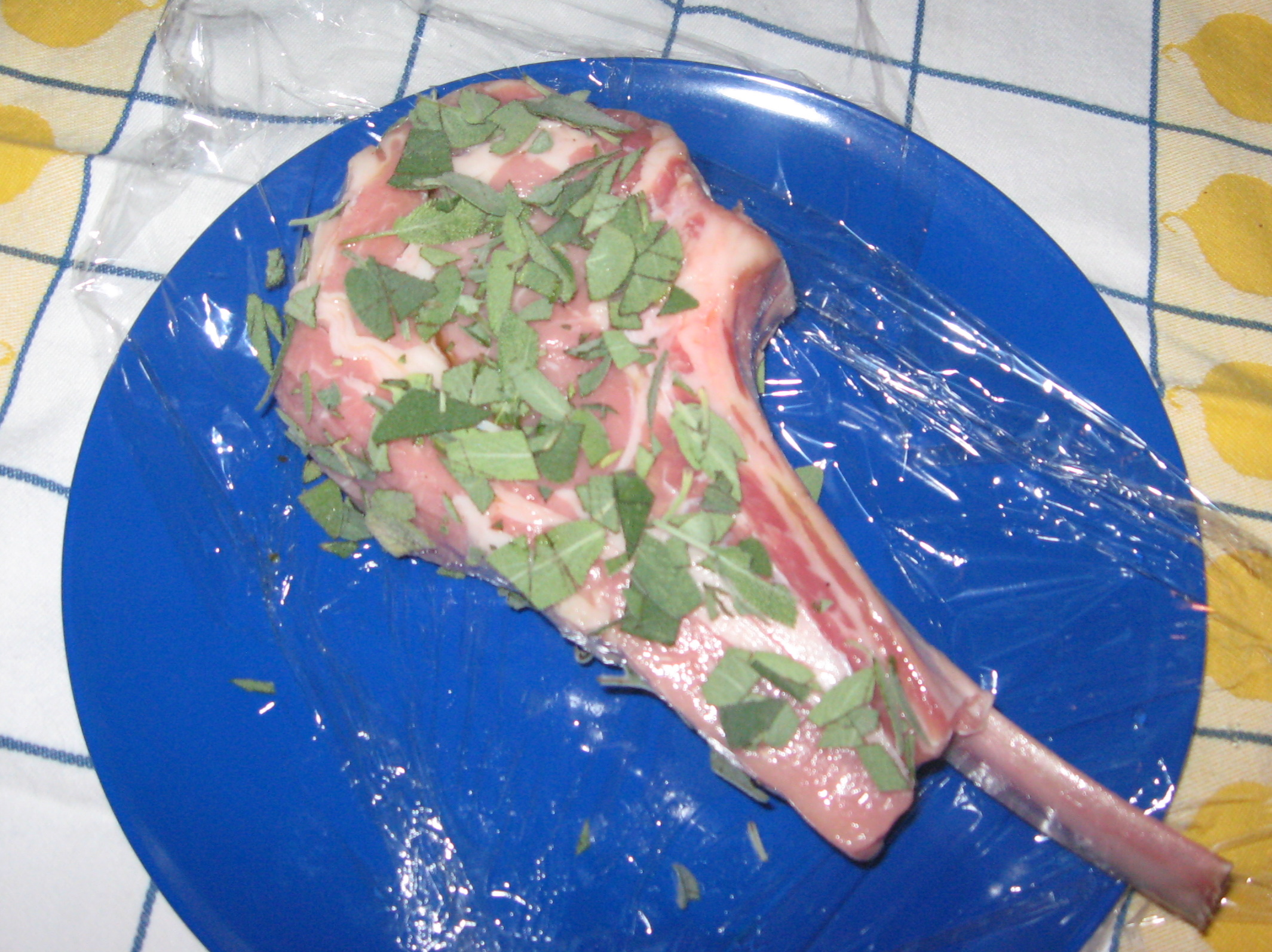
veal chop covered with coarsely chopped sage leaves

I’ve gotten the flavor that I want by very coarsely chopping the sage or even just thoroughly bruising the leaves and patting them over my chop, wrapping it in plastic film, and letting it sit in the refrigerator at least over night, or up to one day, and then cooking it.
So here’s my chop, rubbed with olive oil covered with the sage leaves, ready to go into the refrigerator until I’m ready to cook in tomorrow evening. Depending on the weather, it will be ready to  charcoal grill it, or griddle it, or even pan-sear it.

Ready to cook…..

When you’re ready to cook the chop, wipe off the sage leaves. The high heat doesn’t improve the flavor of sage, and can actually burn them, so I like to remove them.  You’ll want to salt and pepper the chop as you start to cook it.  You want to cook the chop to an internal temperature of 130 ° F (medium rare–for my taste) or a bit longer for medium.

  • If you’re cooking on a gas or charcoal grill, you will want to have  two-levels of heat–high to start brown the chop, and a lower temperature to finish the cooking since it’s a thick chop.
  • If you are pan-searing you’ll need about 2 tablespoon of oil.  Heat the oil over medium-high heat until it starts to smoke, and put your seasoned chop in the pan.  Let it cook without moving it for 4 to 5 minutes when it should be browned on one side. Using tongs, flip the chop and reduce the heat to medium and continue cooking until  it’s at 130 ° F (or desired doneness).
  • For griddling, I use a cast-iron griddle that fits over two burners–so I can kind of have  “two-level” heat with the two burners at different levels. Again, let the chop cook for about 5 minutes without moving it.  Once I’ve turned the chop and moved the chop to the somewhat cooler end, I can put veggies on to cook while the chop finishes.   (If you’re working on a grill-pan, then adjust the heat as you would for the pan searing, but with the heavy cast iron it does take a bit for the heat to adjust.
So quick and easy!

Õ¿Ô

I ended griddling my chop because it was a damp, rainy day–it was still wonderful.  Added a few steamed fingerling potatoes and some sautéed  broccoli raab (with garlic and red pepper flakes). It was a fine  meal.

(I’m sure I won’t  do this again until there’s another special as it’s a splurge even then, but worth every penny!)

A son goût!