Unknown's avatar

About sa.fifer

Lover of good, wholesome food and wine. Cooks for one and the cat. Likes to paint-- a frustrated botanical illustrator and amateur (photographer) and fledgling birdwatcher, beekeeper, and Kindle addict. Works as a freelance indexer.

Caramelized apple pie

What a lovely dessert–and not difficult, really. I’m not wild about just apple pie, but the caramelization and the wine combination. I just had to share this one even though you don’t see many desserts posted here.

s_marchiori's avatarthewinelifestyle

Dear readers,

Today I tought about the caramelized apple pie recipe, really tasty and quite simple to prepare: your weekend will be much sweeter!

Let’s go step by step to prepare the recipe and you will see it will be less difficult than expected.

Ingredients (12 slices):

2 egg yolks
2 entire eggs
200 gr of flour (7 oz)
200 gr of sugar (7 oz)
50 gr of melted butter for the mixture (1.8 oz)
60 gr butter to melt in the pan for the “caramelized” process (2.1 oz)
80 gr of sugar to caramelize the apples (2.8 oz)
Juice of half a lemon
250 gr of thinly sliced ​​apples (moisten with a few drops of lemon juice to prevent them discoloring) (8.8 oz)

Preparation

Beat and mix the two egg yolks in a bowl, the two whole eggs and 200 grams of sugar.
Melt the 50 gr of butter for a minute…

View original post 398 more words

Just a toss of the dice…

jar of recipe dice image from leafcutter designs

a new kitchen gadget

I recently received a delightful care package from a friend visiting in New Mexico–both blue and white posole, some Hatch chilli powder, and something that made me realize how often I do get on about improvisation being desirable–if not a necessity–when cooking for one.

Along with the edibles, there was a jar that looked like it would contain herbs or spices–that would not have surprised me at all since my friend knows how much I love to try different herbs and spices, and there was posole and chilli powder there. But that little jar was not an herb or a spice. it was…and improvisational device!

Recipe dice for me to play with. Unfortunately, between indexing and teaching, I haven’t had a lot of time to “play”, but I think that this can call forth some serious improvisation. Combine this with a book like Pam Anderson’s How to Cook without a Book which gives you ratios instead of specific amounts and let the fun begin. I really don’t have a problem improvising–more like I have trouble NOT improvising, even with a recipe in front of me, but I think this is going to be fun.

If you’re hesitant about improvisation, this just might provide a nudge toward giving up a recipe.  These dice have whimsical designs of veggies, fruits, herbs…even suggestions on how to use the dice. May be just the trick for a day when I can’t decide what I want to cook or eat.

Sausages, greens, and beans this evening

Today has been a particularly bone-chilling, dreary, damp, windy, rainy day with temperature steadily dropping this afternoon; looking out the windows you see puddles of water everywhere and you can’t really walk anywhere without getting wet feet;  this calls for  something filling, flavorful, and warm for supper.  (I also need to “tidy up” the freezer to get rid of some of the partial packages of this and that which have accumulated from single-serving cooking.) Since I’m really fond of charcuterie, that seemed like a good starting point for comfort food tonight.

plate of greens, edamame, and a sausage

sausage, beans, and greens for supper

I found Sicilian sausages (house-made) at Harris Teeter when I went shopping yesterday (in 70°F weather, but knowing the forecast) so I got some sausages for a one-pot meal.  Part of tidying up the freezer involves using the bits and pieces living in there, so I thought I’d improvise on one of my favorite meals: braised green, sausages, and beans. The Sicilian sausages are similar to spicy (not  raging hot) Italian with orange zest added so it does well with any rather mellow greens, like turnip, or kale.

I was pretty confident that I had greens of some ilk in the freezer, beans, onions and the like as well; all I needed for my supper was the sausages.  What I found in the freezer to go with my sausages were turnip greens and edamame (soybeans).

I browned the sausages in olive oil, added onions, some garlic, the turnip greens, and edamame and a bit of water.  After reaching a simmer on the stove-top I popped the covered pot into the oven at 425°F oven and went back to the computer to keep working.  After about half an hour in the oven, I uncovered the pot for about 15 minutes to let a little more liquid cook off and supper was ready!

I usually use two sausages to make this–one is quite adequate for a single serving.  I like to put the “leftover” in the freezer for a quick meal later as this freezes and reheats well.  There are lots of easy variations on this dish–use other types of beans like cannelinni, borletti, or pinto–or potatoes to fill this out.  Vary the greens–if you have a sweeter sausage, then mustard greens make a great contrast with their sharp, slightly hot flavor. This can be turned into soup really easily too: slice the sausage, add some broth, add some pasta, and a whole new meal.

There are so many delicious sausages out there and an almost infinite variety of greens to pair them with. You don’t need exact measurements here at all so it does well for single-serving meals.  Just cruise through the produce department and eyeball the greens: frisée, dandelion, kale, mustard…  Bitter greens pair well with sweeter sausages like lamb or sweet Italian–have fun, improvise and a son goût!

Wine? of course!  This just needs a good “everyday” red–even something out of a box, like the Portuguese Alandra box red.  We are, after all, talking peasant comfort food here.

—Ô¿Ô—

Pernod Absinthe

As a fan of Pernod, both to drink and to in cooking (you can’t make bouillabaisse without it can you?), I found  this while browsing the Chef Mimi blog. There’s stuff here about Pernod that I didn’t know–but am pleased to know. So here’s Chef Mimi’s post on The King of Denmark reblogged, but you should go check out this blog for other recipes and good stuff.  (This post has made me want to see if I can find the absinthe version.)

New food groups?

Always looking to try new things, so here’s an interesting ideas things to eat:

Sunday Suppers: Winter Whites

Great soups for suppers in the winter; all my favorites so I need to share this–white can be wonderful!

Rufus' Food and Spirits Guide's avatarRufus' Food and Spirits Guide

The kidneys make this What our garden looks like these days

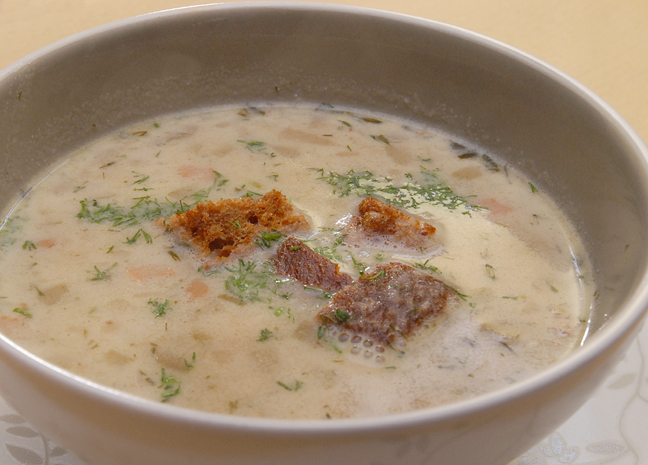
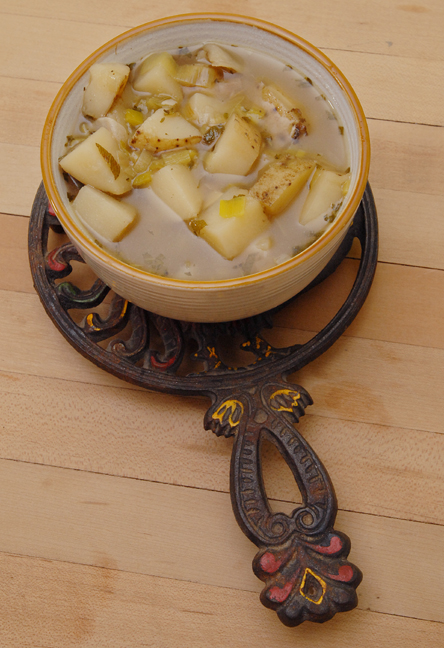
We’ve been spared the snow that’s blanketed much of the country, but early this week a layer of ice made our landscape more than a little frosty. Instead of making us feel a little blue, we’re craving food that warms us up. But of course we’re all about coordinating our colors. Here are some of our favorite winter whites:

Cream of Potato Soup (above) and Potato Leek Soup (below)

That there is perdy I’m gonna need a bigger bowl

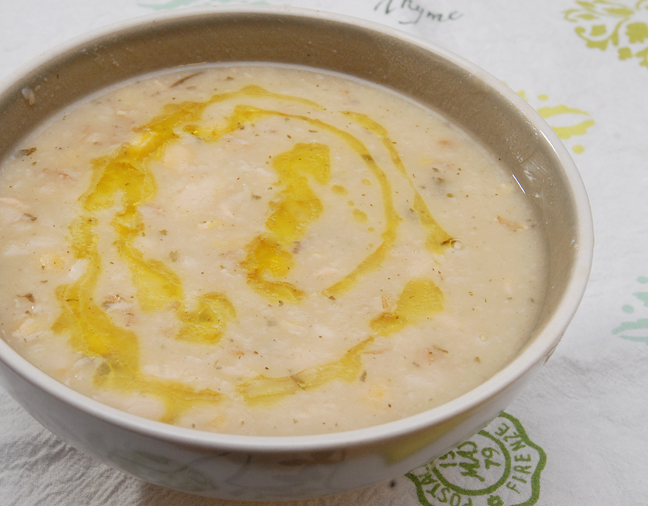
White Bean Soup with Farro

Drizzle more olive oil if you want Drizzle more olive oil if you want

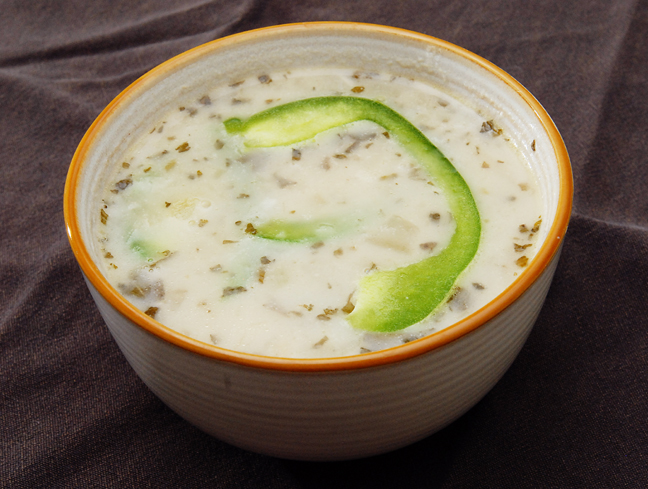
Cream of Potato Soup with Roasted Garlic

Campbell's eat your heart out Campbell’s eat your heart out

If only we’d get a little snow instead of ice we could whip up some of this:

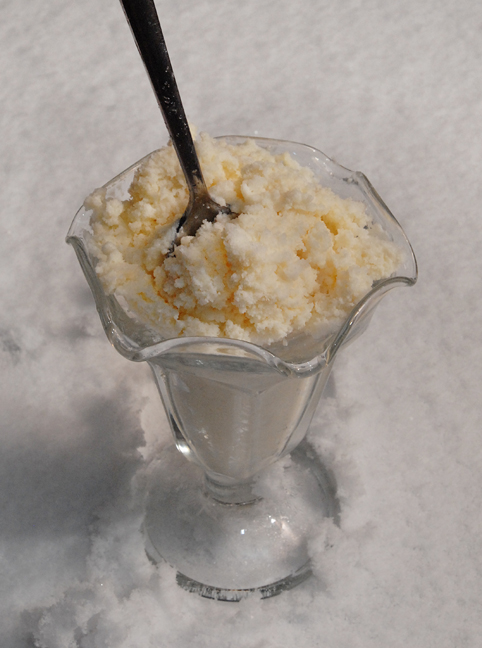
Tastes like vanilla icecreamSnow cream

View original post

How important is cooking?

Cover of Catching FireHave you ever wondered about the history of the application of heat to food?  When did it start? What has it done for human  evolution, culturally and physically?

Catching Fire: How Cooking Made us Human (ISBN: 0465013627) by Richard W. Wrangham, a biological anthropologist/primatologist, at Harvard University, discusses the importance of cooking in human evolution. What impact did the shift from raw food to cooked food have?  He suggests that it affected the evolution of the brain and the gastrointestinal system.

This book presents a very different perspective on “humanity”–cooking food, rather than dependence on raw food, allowed social, household, and marriages. It’s an interesting perspective on our development as humans.

(I notice that this author has another book Demonic Males: Apes and the Origins of Human Violence, ISBN-13: 9780395877432. I find the title intriguing and given the author’s style I’d certainly like to read that one too!)

Something warming–Krupnikas!

trees with snow

February snow

In preparation for the snow that was supposed to (and did) arrive last night, I had a few errands to run yesterday afternoon–there are some basic necessities for inclement weather: cat food, cat litter, TP, candles, and supplies to aid in keeping warm in case of power outage. (You will please note that bread and milk do not appear anywhere on that list.)  I stayed well away from the grocery store.

The important errand yesterday was to Wild Birds Unlimited for a huge bag of safflower seeds for the feeders which provide much entertainment for Frankie as well as for me. For keep-warm supplies, the was ABC store.

Quite recently while I was enjoying lunch at the Hope Valley Diner, another regular customer and I were have a very food-oriented conversation and Krupnikas was mentioned.  I’d not heard of it before. From his description of it I definitely had to remedy that oversight since I’m particularly fond of honey,  herb- and spice-based liqueurs such as Chartreuse (both green and yellow).

snowy deck

Snow day

Since the ABC store was conveniently (as in driving right past it) near the bird-food store, I thought this kind of weather would be ideal for trying some warming spirits while having relaxed bird-watching day and quality time with the cat.

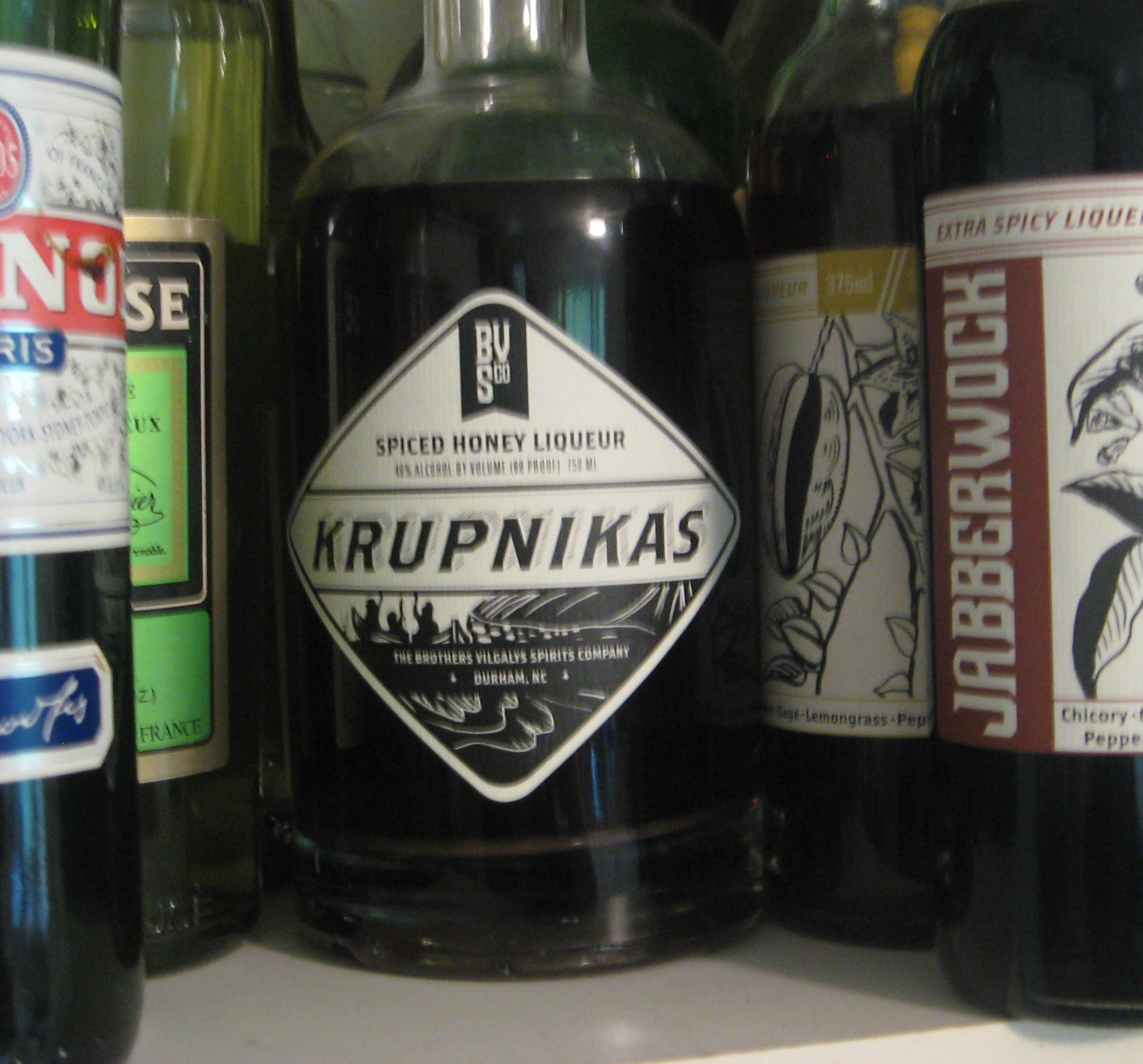
Krupnikas is traditional Lithuanian-style  spiced honey  liqueur being  made right here in Durham, North Carolina! I thought it was necessary for me to try this one in the spirit of continuing education and experimentation. Thus, a stop at the ABC store. According to Wikipedia, krupnik or krupnikas (Polish or Lithuanian) was created by Benedictine monks–does this suggest why I might like this as well as Chartreuse? Bottle of Krupnikas located, bought, and carted home along with bird food. Errands completed.

While waiting for the snow to arrive last night, I poured myself a reasonable tot of Krupnikas–neat in a snifter since this was apparently the traditional way of serving it. Warmed by hands around the bowl of the snifter, the aroma was sweet, somwhat floral from the honey, with spices, and a bit of  orange-like citrus component that brightened up the warm spices.

The taste–wow–definitely warm, cozy,  almost cuddly, but certainly not fuzzy, though it feels very smooth and rich in the mouth.   The first sip gives warm brandy/cognac-like “burn” with sweetness, followed by floral honey sweetness and the spices that linger after swallowing. The spices are very warm and complex, without any one being dominant.

I’ve only tried this neat as a sipper, but if you check the  Facebook page and the website for The Brothers Vilgalys Spirits  there are suggestions using Krupnikas in mixed drinks.  I’m going to be trying it with coffee as you would brandy; the White Lithuanian sounds really good (as I do like brandy Alexanders occasionally).

For me, this is definitely a keeper that will live right with my bottles of Chartreuse! I can see it as an apéritifs and/or digestif, or as a sipper for relaxing with friends, or the cat and a good book. I’m glad I found out about this–especially as it’s made here in Durham. Another way to be a locovor!

As well as the Krupnikas made with neutral grain spirits, there is also Mystic Bourbon Liqueur (Barrister & Brewer)  and other products made here in Durham that need to be investigated. For those of you interested, this is available from distributors outside NC.  spiced honey liqueur

Pasta from the microwave?

Okay, you know I use my rice cooker to cook some kinds of pasta, but when Cook’s Illustrated  reviewed microwave pasta cookers and gave it a thumbs up, I had to try–I mean that should be even faster and easier than rice cooker, right?

from Amazon.com

I ordered the Fasta Pasta Microwave Cooker.  Delivered quickly, and needless to say, got tried out quickly. I’ve cooked both ravioli and capellini in it successfully.  Cooking times are obviously going to vary with the power of the microwave, but generally the times given on the included card have been very accurate.  It’s easy to move around as there are handles on both side.

The drain slots in the lid did not let the capellini slip through.  I’m really surprised–but I think that will be my method of choice for cooking pasta in the future.

(Image from Amazon.com, and should take you to page–however, I don’t have an affiliate association with them, so I get no remuneration if you order through here.)

Fårikål (Norwegian lamb and cabbage stew)

Cold, rather dreary day so I’m making some warm, cuddly, comfort food from my most recent cookbook, The Kitchen of Light by Andreas Viestad.
I made the lamb and cabbage stew–well, sort of–I had goat meat in the freezer so I substituted that for lamb.  As I’m writing, I’m smelling it cooking–and practically drooling on my keyboard.

The stew is in the oven in my “small” Dutch oven (did not make the whole recipe). It smells SO good. I’ve been reading posts from a friend on Facebook singing the praises of this stew–reheats well–which means I can make a batch and freeze some.

The seasoning of this stew is bay leaves and black peppercorns–a lot of black peppercorns, cooked with the meat and cabbage.  This surprised me when I read the recipe because I’ve seen sources saying that black peppercorns will be bitter with long cooking, so it’s not usually added until late in cooking, though this is not dry heat, so that may make a big difference. This recipe calls for 1 to 2 tablespoons of black peppercorns.  (From tasting so far, I think I’m going to want to add more black peppercorns.)

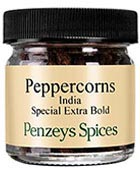
Product.DisplayNameReally good, fresh-ground black pepper is one of my favorite spices.  I’ve gotten hooked on the India Special Extra Bold Tellicherry  and that’s what I’m using in this recipe.  Regular Tellicherry or Malabar pepper should also work.

Fårikål (Norwegian lamb and cabbage stew)

This recipe is adapted  from The Kitchen of Light (Andreas Viestad)–It’s easily adapted for single-serving cooking, but also suitable for making the full recipe and reheating/freezing.

Ingredients

  • 6 pounds of bone-in lamb shoulder, trimmed and cut into 1-1/2-inch pieces.
  • 4 pounds of green cabbage, shredded
  • 1 to 2 tablespoons black peppercorns
  • 2 bay leaves
  • 3 tablespoons unsalted butter
  • 1 tablespoon all-purpose flour
  • 4 cups cold water
  • fine sea salt (to taste)

Preparation

  • Layer the meat and cabbage in a large pot
  • Add black peppercorns, bay leaves, butter, and sprinkle in flour
  • Add water
  • Bring to a simmer, covered,
  • Cook about 2 hours over medium-high heat about 2 hours
  • To increase spiciness, add 1 more tablespoon peppercorns and cook an additional 15 minutes
  • Season to taste with salt
plated lamb and cabbage stew

Lamb and cabbage stew (from Wikipedia)

My first adaptation was the use of goat meat since that’s what I had in the freezer–as well as goat brown stock.

The goat meat was excellent, but in the future  I’ll use bone-in lamb shoulder chops, cut into appropriate-sized chunks.  My other adaptation of this recipe was to put it in the oven to cook at 300°F until the meat was very tender. It’s unlikely that I’ll want to make full quantity  of this recipe–more likely half, which will still give more than one meal, and  some to freeze.

This is NOT a pretty dish.  By the time the meat is really tender, the cabbage is NOT going to be pretty and bright green.  There’s more discussion of this dish on My Little Norway.  I like more peppercorns than that recipe uses–I actually added a lot more–and finished my serving with carefully roasted black peppercorns, coarsely crushed.

This has me looking for other recipes using cabbage–which I think is an under-appreciated winter vegetable. Too often I think it’s thought of as “slaw”.  After reading Viestad’s cookbook and North: The New Nordic Cooking of Iceland  by Gunnar Karl Gislason and Jody Eddy,  I want to explore more Scandinavian cooking.  I found lots more recipes on New Scandinavian Cooking, too–and the manifesto of the “New Nordic Cuisine”.

For a beverage with this dish? Well, a porter would be excellent. If I were doing wine, I think I’d look for something really robust–something that has at least some alicante bouchet in it, or maybe a Minervois–I think this calls for some research!

A son goût!