Vegetable cookbooks….

At the Wake Forest Farmers’ Market today, purple-hull peas made an appearance. There were lots of questions about them.  What are they? They certainly don’t look like what most folks are used to as “peas”.  How do you cook them?  Do you eat the pods? What do they taste like?

One of the joys…or perhaps frustrations, for some…of a trip to the farmers’ market is that you find “new” vegetables–uncommon ones, or simply regional ones–like purple-hull peas which are not necessarily included in a vegetarian cookbook.  So you need general, basic information–not fancy recipes; just the basics for starters.  Where to go?

There are lots of vegetarian cookbooks out there–some very sophisticated with wonderful recipes that make vegetables into worthy main courses or entrées; however, that’s not what you need to begin cooking a vegetable that is completely new to you.  For that what you want is the nitty-gritty information of how to prepare it–do you shell it, peel it–or how best to cook it.  The more sophisticated vegetarian books may just call for the ingredient and not give you the those basics or even just some simple recipes.

One of my favorite vegetable (note that I didn’t say vegetarian) cookbooks (and gardening information too) is The Cover of The Victory Garden CookbookVictory Garden Cookbook by Marian Morash.  It’s organized by veggies in alphabetical order so you can go directly to beets, kohlrabi, cauliflower or whatever, and find information on growing, preparing, buying the vegetable.  There’s a highlighted section of special information that includes yields (how much usable vegetable do you have after preparation/trimming or peeling), how to store and preserve, microwave instructions, and even suggestions for things to do with what is left from your first use (especially useful if you’re doing single-serving cooking).  Now that’s a vegetable cookbook!  The recipes given go from the most basic to more advanced. Terms (e.g. string and snap beans) are explained.  It’s a great place to start with a new vegetable.

The one I have in my library was published in 1982– I guess it’s time for me to go to the Regulator Bookshop and browse through the cookbooks again to see if there’s a new edition and if it has significant additions.  As for pink-eyed purple-hull peas…well, unfortunately, the closest this book came was black-eyed peas. True, they’re a Southern thing…and that’s another post coming up.

Another cookbook for single-serving cooking

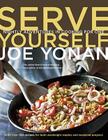
Cover of Serve YourselfI’m always browsing cookbooks–especially those that appear to deal with single-serving cooking.  A friend recently mentioned Serve Yourself: Nightly Adventures in Cooking for One to me. True to form, I immediately went in search of it–and was pleased to find it available in Kindle format.

I really identified with a statement made in this book: “…we solo artists deserve just as varied a diet as anyone.  While I love having some leftovers around that can morph into new dishes, I also appreciate the beauty of starting and finishing a single cooking project on a given night.” (Kindle location 173)

One of the things that I find delightful is that there are suggestions and recipes that are incredibly helpful in allowing morphing leftovers.  These include condiments (to use not only on leftovers) but suggestions on using those extra ingredients that seem to be the bane of single-serving cooking–such as what’s left of that bottle of wine that you opened to go with dinner yesterday evening.  Personally I think that this is a book worth having in your library if you cook for one, but I suggest that, at least, you check the local library and peruse this one.

I’d also recommend his website for fun reading of his “Cooking for One” column for more thoughts on cooking for one, and more recipes.  Even cooking for one it can still be a son goût!  

Where do I find recipes?

While one of the secrets of cooking for one easily is learning to improvise, I can understand some hesitancy to throw thing into the pot without some guidance–it is a learned skill.  If you are not one of us who avidly reads cookbooks, and owns a few dozen or more, and you are not up to just improvising, where do you find recipes to start with?  I’ve mentioned a few cookbooks that I think are good to get you started on improvising dishes and meals, but I can understand that you might not want to go out and buy cookbooks, so I’m going to suggest some places where you can find recipes.

First, check some of  the blogs that I have listed on my blog roll: Former Chef and Closet Cooking both have some delightful recipes.  Another source that I recommend is Mark Bittman’s column The Minimalist in the New York Times.  The author stresses a few good ingredients for great flavor rather than complicated dishes, so that makes it particularly good if you are trying to work into improvisations of your own.

A neighbor and friend just introduced me to another website that might well be worth exploring:  All Recipes.com.  A neighbor (who also cooks for one) has shared some of the dishes that she has made following recipes from this site, and they have been excellent:  a braised cabbage with keilbasa, and a chicken soup using adzuki beans and kale. This website does require registration, but it is free.  A feature of this website that might be most useful to you if you are just starting with improvisations and changing recipe sizes is a calculator that will do this for you–you do not even have to do the math.  This should help you get a feel for doing this with other recipes.  There are lots of recipes here, ranging from some that use canned ingredients (for example, condensed soup and mixed vegetables) to those using fresh ingredients–you get to choose.

Since I’m a soup lover, and soup usually keeps well, and lends itself to “re-seasoning” and adding additional ingredients to change it, I have found the Swanson Broth website to be useful.  Obviously, I prefer homemade stocks and broths, but there are times when it just isn’t possible; you need some “convenience” ingredients like canned broth in the pantry.  I’ve found Swanson broth to be acceptable.  They have some great, quick recipes which, while they tout Swanson broth and stocks, are very usually use no other processed/prepared ingredients, and can be flexible in quantity.  One of my favorites is the corn and red pepper chowder.  This is quick, easy, and very easy to “refresh” for a different taste from the leftovers.  You might want to change the seasoning:  add one of those chipotle peppers that you froze after you opened the last can.  I particularly like to drop in a few shrimp to poach while I gently reheat the left over soup.  A really quick make-over can be done with a favorite seasoning such as Penzeys Southwest Seasoning.

Other places to look for recipes are purveyors of specialty foods (doesn’t mean you have to buy anything) or cookware.  Cooking.com, Williams-Sonoma, and Penzeys Spices all have recipes on their websites.  Sure, they are touting their wares, but the recipes are good and reliable.

Other sources of recipes are from websites of cooking magazines (and the magazines, too) like Cook’s Illustrated, Cook’s Country, Fine Cooking, and America’s Test Kitchen. Another worthwhile site for those of use looking for single-serving meals is Judith Jones’ Meals for One (at Ophra.com). Her cookbook, The Joys of Cooking for One, is one that’s great for promoting improvisation while cooking for one and eating well.  You’ll find recipes for one on that website.

As you cook more, you’ll find that there are particular chefs whose recipes just seem to click with your style and flavors that you like.  Always check for blogs by these chefs.  One of the latest that I’ve added is Jamie Oliver’s website.  His recipes just “click” for me.  Many websites and/or blogs allow you to register (free) for newsletters or e-mail updates.  If you really like the style of that particular chef, that is a good thing to do.    If there are several, you might consider Google Alerts, or other tools like that.

There are lots of recipes out there–they may not be single-serving recipes, but they will give you ideas for things to try as you learn to improvise.

An awesome lentil soup!

Being both a cookbook/food addict and a Kindle addict, it’s probably no big surprise that I’d have to have a cookbook on my Kindle.  My first one was the Cook’s Illustrated, special Kindle edition (only for Kindle, I believe) which is a great book to have available.  But you can’t expect a cookbook addict to stop at one can you?  Certainly not!

The second one that I downloaded was Kitchen Express. Having the instant gratification of looking, trying a sample, and viola, there it is,  just naturally leads to an I-must-cook-something-out-of-it-now frenzy in the kitchen.  Now I have to say that I love the way that book is organized (aside from the thrill of being able to search using the Kindle).

The weather probably contributed to my choice of a first recipe to try–rainy, but certainly not cold–but the kind of weather to make you want something like comfort food.  I’ve always liked lentils–the cook quickly, freeze well, and all sorts of things.  Given the rain, I searched for lentils and found a recipe for which I had all the ingredients except one: a lemon!  I looked at the description of the recipe, and decided that I had to have a lemon.  Not wanting to go to the grocery store in the rain, I called my closest neighbor to see if she had a lemon I could borrow.  Luck was with me–she had several.

Now having all the ingredients, I made lentil soup (and returned the lemon in a large bowl of soup). Both of us have subsequently done a lot of improvisation around this basic recipe, so I’d like to share it with you, and hope it will inspire you to do some variations.  Here is the recipe reproduced from Mark Bittman’s Kitchen Express. *

Lemony Red Lentil Soup with Cilantro

Red lentils cook very quickly, but allow more time if you substitute and other type.

Cook a copped onion in olive oil in a saucepan until soft; add one cup of red lentils and four cups of chicken broth and bring to a boil; continue simmering until the lentils are soft.  Puree a handful of cilantro with a few tablespoons of olive oil and a pinch of salt; set aside. If you like, puree half the lentils until almost smooth; return them to the pan. Add about two tablespoons of lemon juice or more to taste.  Stir in the cilantro puree, adjust the seasonings, and serve with crusty bread or a mound of rice in the center.”

I’ve done lots of variations on this one: used lime instead of lemon, added some rice, pureed it or not; there are so many ways to improvise with a recipe like this.  I’ve had the same basic soup with garbonzo beans.  There’s something about the combination of the citrus and the cilantro that just makes this kind of sparkle.  I like to add a bit of the citrus zest to brighten this even more that just the juice.  The pureed cilantro keeps very well in the fridge if the surface is covered with oil (and it’s a great addition to chili con carne to add some fresh contrast).

Well, it’s a few months later, and now we have cold weather, real serious soup weather!  I just finished making another half recipe of this with the chicken broth from cooking some chicken thighs.  Now that it’s colder I wanted to “hearty” the soup up a bit, so I used some French (green) DePuy lentils (which I prefer to red, even though they take a bit longer to cook) and added the chicken meat from one of the thighs that I cooked in the microwave to get both meat and broth.

The only complication that I’ve found with this recipe for one is that bunches of cilantro from the grocery store are huge.  As much as I like cilantro I can never use it all.  In the summer I plant successive pots of cilantro so that there is always some to pick.  In the winter, it’s a different story: want to make this but don’t have cilantro.  I’ve found a great stand-in for the fresh cilantro in the frozen foods department at the grocery store: Dorot Chopped Cilantro (www.dorotfoods.com).  It’s frozen, fresh cilantro in cubes equivalent to 1 teaspoon each.  Nothing is quite like the fresh, but I’ve been rather pleased with this as a stand-in, so it has become a freezer staple for my kitchen.

I’ve just finished a supper of a first course of steam-sautéed vegetables–a medley of carrots, broccoli, and red bell pepper, followed by a hearty bowl of the lentil soup with the chicken meat added.   Since I made a half recipe, I’ll have enough for another bowl in a day or two.  I’ll add another splash of lemon and a bit of cilantro to perk it up, and perhaps have it with (as the recipe suggested) a mound of rice–another satisfying, healthy, and easy meal.

This recipe lends itself so easily to improvisation.  Try it–you’ll find something to please your palate.

A son goût!

* I’ve been searching on how to cite a Kindle reference properly since I don’t have the hard copy.  According to Amazon discussions, the font size does NOT affect the location: so here that is: 1187-98.  Since I’ve given you the exact recipe title, I’m sure you’ll have no difficulty locating it in the book.


Cooking vegetables quickly

No matter how much you like to cook, sometimes you just want to prepare veggies quickly, but still want them to taste good.  One of my favorite ways to quick-cook vegetables is a technique that I learned from How to Cook without a Book by Pam Anderson, who really stresses improvisation and good food.

One of her techniques that I’ve found useful for vegetables is the “steam/sautéed” method.  It’s a very simple technique, using both “wet” and “dry” cooking in a single pan, without boiling or blanching and draining.  You can facilitate speed by how you cut the vegetables–smaller pieces cook more quickly than larger chunks.  This book is an excellent resource to help you learn to improvise and adjust quantities for single servings, doing away with leftovers. Recipes are simple, and presented in a manner that makes them very easy to adjust serving sizes, giving the necessary ingredients and there are variations given so that you get the feel of improvising.

To cook vegetables this way, you need vegetable, some fat, and flavorings.  The recipes in the book are presented starting with one pound of vegetables, but are easily down-sized to a single serving.  The basic ratio of these recipes is (p. 204):

  • 1/3 cup water
  • 1 tablespoon fat
  • 1/2 teaspoon salt
  • 1 pound prepared vegetable
  • optional aromatics (1/2 small onion, sliced thin, or 2 medium garlic cloves, minced)
  • optional spices (dried or fresh herbs and or flavorings)
  1. Bring the water, fat, salt, and vegetable, along with the optional aromatics, spices, dried herbs and/or other flavorings to a boil in a Dutch oven or a large deep skillet. Cover and steam over medium-high heat until the vegetable is brightly colored and must tender, 5 to 10 minutes, depending on the vegetable size.
  2. Remove the lid and continue to cook until the liquid evaporates, 1-2 minutes longer, adding optional fresh herbs and/or other flavoring at this point. Sauté to intensify flavors, 1-2 minutes longer.  Adjust seasonings, including pepper to taste and serve.

The cooking instructions are simple. I’ll give you an example of a recipe from this book, and of the technique (above):

Steam/Sautéed Carrots with Cumin (p.209)

  • 1 pound carrots, peeled and cut into 1/2-inch coins
  • 1 tablespoon butter
  • 1/2 teaspoon ground cumin
  • 1 tablespoon minced fresh parsley or cilantro leaves

Follow the Steam/Sautéed Vegetables recipe (p. 204), adding the cumin with the carrots and the parsley once the carrots start to sauté.

One pound of carrots is approximately 5-6 medium or 4 large, so it’s easy to adjust the proportions here for two medium carrots.  For me, 1 large carrot is about the right amount for a serving of vegetable.  The amounts of fat, spices, and water are easily adjusted (see Measurement Conversions), and they do not have to be exact–you can add a bit more water if the vegetable is not quite tender enough, and a bit extra will evaporate once the pan is uncovered.  You’ll adjust the seasonings to taste, as well.

You will need to consider whether your vegetable is “soft” (vegetables which normally give off water as they cook) may not need the steaming before the sauté step), but  vegetables that do not give off moisture as they cook, like the carrots, green beans, cabbage or broccoli, do need this step.  The amount of water will vary with the density of the vegetable–you will learn to judge that, always remembering that you can add more water a tablespoon or so at a time as needed.

Dried herbs and spices (except black pepper) should be added with the vegetable in order to have the flavors develop.  Because fresh herbs can lose volatile oils with heat exposure, these need to be added at the end so that the freshness is retained.  With this technique is easy to prepare vegetables for small-time cooking, keeping the big-time taste.

Fresh-baked bread

The smell of fresh-baked bread is one of the best that I know (along with bacon and fresh-ground brewing coffee).  I cannot think of anything much more pleasurable than hot, fresh bread with butter and maybe some exquisite (unprocessed) raw honey.  I’ve found that even when cooking for one on a busy schedule it not impossible to bring that wonderful taste and aroma into my kitchen with a minimal investment of time.

Buying bread from the bakery is fine, but for me, I keep ending up with stale bread.  I can make bread crumbs for later use, but that fills my freezer with more bread crumbs that I’ll ever need.  I could freeze part of the bakery loaf, but even though that helps, it’s still not the same as fresh bread from the oven.  I’ve baked bread the usual way: proofing, letting it rise, punching it down, letting it rise…successfully.  I put small loaves in the freezer, and as long as I remembered to pull them out to defrost in the fridge over night, I could have fresh bread with minimal effort and in quantities appropriate for one person.  That was fine when I was a telecommuter; I could use my breaks to knead the bread, and take the few minutes necessary to pop it into the oven.  I had my small loaves; but, I had to remember to defrost it. When I was no longer a telecommuter, that did not work quite so well, so when I heard about the dough being kept in the refrigerator, I had to try it.

Deli-style rye breadThe no-knead, wet-dough technique described in Artisan Bread in Five Minutes a Day by Jeff Hertzberg and Zoe Francois lends itself admirably to cooking for one.  I was skeptical when I first heard about this, but since I love good, fresh bread, I bought the book and gave it a try.  It has made fresh bread for one an easy thing to do.  When I’m in need of an attitude adjustment, nothing does it better than to go into the kitchen and with minimal effort have my home smelling of fresh bread.  The main attraction of this method for me was that the dough could be kept in the refrigerator for about two weeks (less for dough enriched with eggs).  I can reach in and grab a handful of dough, form a small loaf, let it rise (shorter time for small loaf), and bake.  The hands-on time is minimal.  The results are wonderful.

To give you a sample, here is an adaptation of the Master Recipe a free-form boule from Artisan bread in Five Minutes a Day.  For measuring the flour, just dip and then level your measuring cup with a spatula (scoop and sweep)–no sifting required.  You can bake this on a cookie sheet, but if you really get into this, you will probably want to get a baking stone, but even baking on a cookie sheet, you have some good bread.  Be sure to use dry-ingredient measuring cups for the flour. I assuming that you likely don’t have a stand mixer or  a large food processor, so I’m given the hand mixing instructions here.  I think that the only “tricky” part is shaping the loaf; not having the pictures in the book, here is a link to a video which will show you the mixing and shaping technique.

Ingredients for dough to make four 1-pound loaves:

  • 3 cups lukewarm water
  • 1-1/2 tablespoons granulated yeast
  • 1-1/2 tablespoons kosher salt or other coarse salt
  • 6-1/2 cups unsifted, unbleached, all-purpose white flour
  • cornmeal for your cookie sheet or parchment paper

Add yeast and salt to the lukewarm water in a 5-quart bowl or lidded (not airtight) container.  Mix in the flour all at once with a wooden spoon.  If the mixing becomes too difficult with the spoon, use your hands (wet) to work in the flour, but do not knead the dough.  Now, allow to rise at room temperature (covered) for about 2 hours until the dough as doubled, or starts to collapse (flattens on top).  Refrigerate the dough overnight since it’s easier to shape the loaves with cold dough.

When you’re ready to bake, prepare you cookie sheet, or parchment paper with a light sprinkling of flour or cornmeal.  Now, sprinkle a bit of flour on the surface of the dough and pick up a handful (about grapefruit-size for a one-pound loaf). Sprinkle with flour and shape, as if you were pulling a blanket from the top down around it to the bottom side.  Don’t knead–this shaping should take only about a minute.

Place the loaf on cornmeal on the cookie sheet or on parchment paper, and let it rest for about 40 minutes for the one-pound loaf.

Preheat you oven to 450 ° F  with the rack in the middle of the oven.

After the bread rests for 40 minutes, dust the top of the loaf with flour.  Using a serrated knife, slash a 1/4-inch deep cross on top so that you control how the crust breaks open when it expands in the oven.

The crust will be best if you use steam in the oven; you can do this by using the broiler pan on the lower rack, and pouring in a cup of hot tap water when you put the loaf in to bake.  Baking will take about 30 minutes, or until the crust is brown.

Store the remainder of the dough in the refrigerator until you’re ready to make another loaf.

I started with the master recipe, and have now worked my way through a number of others: deli-style rye, brioche, chocolate bread (yum), brioche filled with chocolate ganache, the Portuguese broa (a corn bread–great for the Thanksgiving holidays), olive oil dough, and others.  Every recipe has worked as it should.  It’s great to be able to make myself a crusty baguette one day, and a boule, or sandwich loaf the next time–all from the same batch of dough.  Since I use some bread for sandwiches, I frequently bake mine in an Italian bread pan which lets me have an oval loaf , larger than a baguette, that works well for the kind of sandwiches I make.  This pan is perforated so you get a better crust than using a non-perforated pan.  The pan is nonstick, but with the wet dough you will still need to us a cooking spray to prevent sticking, and the dough will ooze into the perforations sightly, but it can usually be removed easily.

The container that I use to hold my dough is a Rubbermaid that I got from the grocery store.  It has a good lid, and is not airtight.  If you are hand mixing you could , just mix in this container.  The corners are slightly rounded, but I find it’s difficult to get all the dry flour mixed around the edges, so I usually mix in a bowl and transfer the dough into this container.  If the lid on the container fits very tightly, you will need to leave it loose of because of the gases that are formed during the fermentation.

Of course, I was excited when the second book, Healthy Bread in Five Minutes a Day appeared.  I’ve just gotten the Kindle version of that one, and  anxious to try some of the recipes there.  I’ve been interested to see comments about this technique on other blogs.  An adaptation of the master recipe for whole grain bread can be found on the Former Chef blog, along with some helpful photographs that should make you want to run to the kitchen and bake.   I intend to take this evening to peruse this book and see what gems I can find.  To be on the safe side, I’ll start with the master recipe to see how the dough handles.  Based on my previous experience with these recipes I’m expecting great things.

More recipes and baking tips can be found in Zoe Francois’s blog, Zoe Bakes. New recipes and tips are available at Artisan Bread in Five website as well.

I’m hooked on having fresh bread in such an easy way.  The loaves in the photograph are brioche just out of the oven.  If you really need an attitude adjustment, the smell of the brioche (especially when filled with chocolate ganache) will definitely do it!  More about brioche coming  soon.  Happy baking!

The microwave in my kitchen

I guess I’m not really fond of many small appliances or kitchen gadgets.  There seem to be a lot that just take up drawer space or counter space and don’t work that well.   In many ways the microwave has mostly been just a “gadget” in my kitchen.  Most of the microwave recipes that I found were just not that good: edible, but that’s about it. Many of the early cookbooks that I looked at seemed to suggest that anything could be cooked well in the microwave.  Admittedly, I’ve not looked at a lot of newer ones because they seemed so uncritical about what does or does not cook well in the microwave.  So for me it was for melting chocolate, making popcorn, heating a cup of water….

I’ve revised my opinion slightly after finding the Microwave Gourmet cookbook by Barbara Kafka.  This author is a traditionally trained chef, and approached the microwave in a very skeptical frame of mind, and that has produced a useful microwave cookbook.  There is no hesitation in saying what NOT to cook in the microwave.

One of the really useful features of this book  is a dictionary where you can look things you might want to know about cooking in the microwave, and find times, suggested container sizes in which to cook it.  I’ve use this more than almost any other part of the book, except possibly the information on how to arrange foods in containers in order to have them cook properly.

I’ve tried the microwave risotto, and it’s not bad for times when you don’t want to spend the time standing by the stove stirring for 25 minutes or so.  (I’m anxious to compare the results of this with the Cook’s Illustrated simplified risotto.)

The most-used recipe in that book for me is the one for quick chicken broth or stock.  I’m mostly a stove-top or oven stock maker, but this is great when you don’t have canned stock or want some really good broth for soup.  Here is the recipe:

Use bones (carcass from the roast chicken, or necks, backs, wings, or giblets (except liver).  You can collect these in the freezer until you have enough, or if you’re lucky, you can buy backs cheaply and make this whenever you need to.

  • 2 pounds chicken
  • 4 cups water

For 4 cups, place the bones and water in a 2-quart dish and cover tightly with microwave plastic wrap.  Cook at 100% for 30 minutes.  (Cook 40 minutes for broth that will jell.)

For 2 cups, use 1 pound bones, and 2 cups water.  Cook for 20 minutes.

This cookbook has directions for making  the classic stocks and broths in the microwave–including vegetable and fish/seafood broths.  Although I’m sure I will not give up the stove-top or oven long, slow preparation of stock I think that I’ll turn to the microwave more frequently, especially in hot weather.  I’ve not done a side-by-side tasting of each method, but this is certainly better than canned!

I’ve also cooked chicken in the microwave according to instructions in this book and been pleased with the results.  I use chicken thighs instead of breasts, but instructions/times can be found in the Dictionary section of this cookbook.  An unexpected benefit of cooking the chicken this way  is some very good strong broth; just enough to make one good  serving of chicken soup.  To me the texture of the chicken is a bit different when done in the microwave– more chewy, but not tough, or disagreeable at all (I actually like that “chew”).  I expect that I’ll be using the microwave more often to cook chicken now.

Eat Your Books to find recipes!

I have  found a resource that I have to rave about: a website called Eat Your Books. For those of us who have LOTS of cookbooks it’s a real treasure.  How many times have you stood, staring at the bookshelves, wondering where  you saw that recipe for beef tongue?  (Okay, maybe not many for tongue, but how about that overflow of tomatoes in the summer and the zucchini and eggplant?)  Well, there’s caponata, ratatouille….but where are the recipes. This site does not provide recipes–it provides the means for you to find them in your own books!

Eat Your Books is a site that has indexes of cookbooks (over 1,200 now and growing).  You put those virtual books on your virtual bookshelf on the website, and you can then search the indexes for recipes.  A friend discovered this and told me about it.  It’s not free, but is definitely worth the price.  I signed up for a trial membership and spent the time adding some of the titles that I own, and took it for a test drive.  I tried some common things (eggplant, tomatoes, and zucchini), and some rather esoteric things (beef tongue, beef heart). Worked like a charm.  (Of course, I did have several cookbooks that had  beef tongue recipes.)  The tomatoes, zucchini, and eggplant were there too.  The search is not quite Google so it made a difference if I searched for tomato-zucchini, or tomatoes and zucchini, but once you get the hang of it, it’s like having the world at your fingertips.

Another great thing that the site does is list the major ingredients with each recipe so that you can evaluate the potential from the list of recipes.  So, though I had tomatoes and zucchini, I did not have peppers, so I could rule out some recipes right at the search point.

Needless to say my test drive was a short one.  I was preparing food for the time when I was having a house guest, so I really gave the “trial” a good workout, and decided this was a must-have for me.  Because it was still in “beta” testing, there  was a special rate for a lifetime membership and I opted for lifetime rather than annual. The beta testing is over now and the “real” version is up and working but I think there may still be a special lifetime membership offer.   I have only entered about 40 of my titles so far, but it’s well worth the effort to do this.  I cannot imagine being without this website now. There is a blog and community pages as well.

At the present time, there are rarer books that are not included, but the numbers are growing all the time, and new features are being added.  You can also suggest books to be indexed.

A new cookbook

A few weeks ago, I had a friend visiting (as a house guest) from California.  We were out and about doing some things that I don’t usually do: visited A Southern Season to browse for housewares and foods, and we visited The Regulator Bookshop. Both were having their summer sales.  As usual, I came home with things that I did not expect to buy.

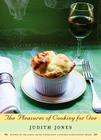
One of my “finds” at the bookstore was The Pleasures of Cooking for One by Judith Jones.  This is an admixture of philosophy of eating alone as well as some recipes, and, best of all, lots of tips for not having left-overs.  While some of the recipes are for things that cannot be bought in small quantities (like pork tenderloin) she provides recipes and suggestions about make several different dishes from the “left-overs” so that they really don’t taste like left-overs. While this does require some meal planning, the emphasis here is on flexibility and improvisation.  I was impressed that the recipes here were real meals for real enjoyment.  I think that this is a worthwhile addition to my cookbook library.

Serves how many?

I love cookbooks.  I love to read cookbooks just to get ideas, but one of the most frustrating things is finding a recipe that I think looks wonderful, but it’s for 6 people.  Sometimes it’s something that will freeze well, so I can make it and not have to eat it for a week.  On the other hand, since I am cooking for one (and the cat) I don’t want to pay for the ingredients to make servings for six or eight people, or have so much in the freezer.  (More on freezer use later.)  The dilemma for the single cook is scale the recipe down, not make it, or eat it for a week.  Personally I don’t do left-overs well; I guess I’m easily bored or they begin to taste like something that’s been in the fridge for five days!

Downsizing recipes can be treacherous, especially in going from six to one–the consistency can come out wrong, the seasonings may not be right.  If you are determined to do THAT recipe, perhaps you need to invite friends.

You’ve gotten ideas from those huge recipes that you can use for one.  The problem now is that you need to get away from depending on a recipe slavishly.  You need to move on to improvisation and perhaps some food science to help understand how some specific ingredients react to the application of heat, i.e. cooking.

First improvisation is a must for cooking for one–and it’s not hard–it’s just taking that first step that seems difficult if you’ve always used recipes. A book that I’ve found immensely useful is How to Cook Without a Book by Pam Anderson. This author has provided a wonderful review of various cooking techniques as well as recipes in ratios that promote improvisation of various types of dishes:  stews, salads, an such.  While the proportions given in this book tend to be for 4 people, you can scale them down to something manageable for one person.

I have to admit to being a Kindle addict.  I admit this because I might not have found this cookbook had I not been browsing the Kindle store.  The book is  Ratio: The simple codes behind the craft of everyday cooking byMichael Ruhlman.

My grandmother taught me to cook and one of the things I remember learning from her was the “four parts cake”–frequently referred to as “pound cake” for equal parts of eggs, flour, sugar, and butter.  I was taught to vary the size of this cake by starting with the eggs.  You want a small cake, you use fewer eggs, and that “egg weight” determined the weight of each the other three ingredients.   It was many year before I discovered that this recipe was actually in something published in a cookbook.  While browsing through La Cuisine, by Raymond Oliver I found a recipe with the title pâtè à quatre-quarts which translated as “four parts cake”.  In the English edition this was translated as pound cake, but it was the French title that caught my eye.

In a manner reminiscent of that cake, Ruhlman gives recipes by proportions so that they are easily sized up or down.  This book gives ratios for batters, doughs, stocks and sauces, roux, and even sausages and many other things in ratios so that you have the base ingredients, and then add things like seasonings or “minor” ingredients (seasonings, et cetera) in order to have a finished dish.  This is the kind of technique that can allow cooking for one.

If you don’t want to contemplate doing the math of the ratios (and have an iPhone), there is an app for that.  The cookbook by Michael Ruhlman is now an iPhone app that will help you do the calculations.  Makes me wish I had an iPhone!