Is it chili, chilli, chile…pepper?

The cool weather has inspired me to make renew the winter supply of one of my favorite comfort food: chili con carne. Looking over my stock of these spicy, flavorful peppers–pasilla guajillo, ancho, chipotle, jalapeno, serrano–brought on this rumination about what we call them.  I’m obviously terribly ambivalent since it seem I have to keep looking to see what I used last time.

In reference works like Merriam Webster Unabridged Dictionary, Encyclopedia Britannica or even Wikipedia, you find all these forms listed for what we call the spicy fruits of the genus Capsicum. Sometimes it’s with the “pepper”, other times it’s just chili. Other sources like The Deluxe Food Lover’s Companion seen to prefer chile.

Frankly, I really liked the suggestion of Harold McGee in On Food and Cooking that we simply use the chilli (which is what he does), from the original Nahuat where these lovely spicy, piquant fruits came from!

So, I guess it’s time to make some chilli con carne!

“Ancient Herbs”

I got a wonderful gift from a friend in California who knows how much I like food, cooking, reading, and herbs–a book–real hard-copy–on Ancient Herbs by Marina cover of Ancient Herbs bookHeilmeyer.

This is a look at the plants found in ancient Greek and especially Roman kitchen and pleasure gardens, for medicinal and culinary use complete with the mythological, religious, and culinary significance.

The illustrations themselves are wonderful–taken from early nineteenth century botanical works.  The author also includes quotations from ancient writings describing uses of these herbs in that era–some peculiar and some still current.

It’s not a cookbook, but while reading, I’ve found some combination that I do want to try: such as the combination of anise and pork from Apicus, the Roman gastronome. Although the book does not give recipes, I see many wonderful culinary experiments coming out of this book.

<>|<>

Book information:

ISBN-10: 0892368845
ISBN-13: 9780892368846 
Published: J. Paul Getty Museum, 03/01/2007 
Pages: 108 
Language: English 

Cleaning out the fridge….

cropped-img_2208.jpgOne of the things that I particularly “hate” having to do is to “clean out” the refrigerator.  That’s not just because it means that I am going to find some very revolting, icky, slimy celery in the crisper or that I’m composting food, which is, admittedly wasteful.  It’s the fact that refrigerator seems to be a good reflection of life in general around this household.

When the refrigerator needs a major clean-out, it also likely means that there are dust bunnies that are likely bigger than the cat, stacks of laundry, and other chores that desperately need attention as well, because I’ve not found the time to do them–even a few minutes a day. (I could do with a house elf!)

Since I consider myself a foodie, it’s a pretty sad commentary when I’ve let the refrigerator get to the major clean-out state–it means that I’ve been too dependent on those one-a-day multivitamins and sandwiches rather that cooking quick but healthy meals for myself or even popping something into the slow-cooker! It means that I’ve let other things take over–more than I should.  After all, 30 minutes to cook a meal would really be well spent–and I would probably be more efficient at other tasks after the break.

I’ll admit that I hadn’t realized how much a major indexing project (the book was over 1000 pages–and the deadline was moved to a sooner-rather-than-later date after I started the project) was going to affect my daily routine.  I hope that I’ve learned something, and the next one won’t require cleaning out the refrigerator because I’ll have done a little advance planning or used my software-mandated breaks from the computer more wisely.

Regrettably, meal-planning is not the answer here–I don’t do well with the if-it’s-chicken-it-must-be-Tuesday sort of thing. Perusing what was in the freezer didn’t do me much good either–mostly food that will be great in cooler weather, but totally unappealing in hot weather, or else things like stock, or soup base which wouldn’t be fast to make right then.

Each time I have to clean out the fridge, it’s a bit like making New Year’s resolutions–I solemnly vow to not let this happen again–but then most of us know what happens to New Year’s resolutions.

<>◊<>

The fridge is now tidy–the slimy celery and other small pieces of residual vegetables have gone to the compost bin (that stuff had a real head start on breaking down!) so I’m ready to start again, though  I haven’t gotten to the laundry or to chasing out the dust bunnies (at least those are not going to get slimy) this afternoon.
School time again….

Finishing up an indexing project and getting my four medical terminology classes ready to go, has kept me busier than I really like to be, but we’ve had the first week of classes so the students are settled in now.  I have a bit more free time to read food stuff.

I pick up a copy of the Independent this afternoon and found an interesting article about the heritage of southern cooking–I guess I should probably make that Southern cooking.  I don’t think the article from the Indy is online, but I’d like to give you a link to the Afroculinaria blog.  I think all of us, living in the South, or anywhere in the US should read some of this.  It’s a part of our heritage and history, in more ways than just food.


I do love science….

I’ve always been prone to analyze things, to want to understand the WHY behind what’s going on.  It’s not surprising that I view cooking as an applied science and like data.  That’s one of the reasons my favorite cooking magazines are Cook’s  Illustrated and Cook’s Country. (Nope, no affiliate program or anything like that–just my personal preference.) I particularly like the experimental data about what works and what doesn’t–and the same for kitchen equipment, supermarket products. What’s not to love about realistic data about how that piece of equipment is going to survive if you drop it?  Or how easy it really is to clean and reassemble?

I was just browsing my latest issue of Cook’s Illustrated–yes, the hard copy one, and I found a section titled “Common Cooking Myths, Debunked”.  If you’re not a subscriber, this is still worth reading–check the library or the magazine stand in your local grocery store.  The debunking includes information on which part of the tomato has most flavor (supports my predilection for NOT seeding and peeling tomatoes), where the hottest part of the chili pepper really is, among other myths that seem to float around amongst cooks. Understanding the how and why of cooking makes improvisation so much easier–which in turn makes cooking for one so much easier since you don’t have to depend on recipes nearly so much.

Another feature of these magazines that I like is the equipment review–I’ve just been researching portable induction units, since I’ve decided that is going to be my birthday present from Frankie (the cat) to me this year–seems a great idea for energy-saving–must be cooler than having a gas burner on for the time it takes to cook dried beans–which is something I’m inclined to do in the summertime; they make such good, hearty cool meals. I’ve read the Cook’s Illustrated reviews so now I’m ready to go shopping, with their review in mind–especially since no manufacturer knows about the reviews until after publication of the results.  (OK–I sound like I’m selling something–sorry!  It’s just enthusiasm of an inquiring mind!)

Get Cooked…

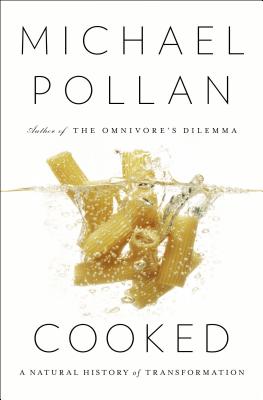
ISBN 9781594204210Obviously I’m a fan of food science and curious about the history of food and cooking in any culture. Michael Pollen’s Cooked: A Natural History of Transformation is a good read; a fascinating review of cooking origins, history, and consequences of both cooking and not cooking.

As usual, Pollen’s style makes this book easy reading, but raises interesting questions about the role of cooking in the development of Homo sapiens.

The book follows Pollen as he attempts to master four cooking techniques: fire, air, water, and earth and describes the place of the cook in relation to nature and culture.

He raises questions about what cooking is, what cooking does for us, and the place we have let processed food assume in our modern culture. It’s an interesting synthesis of history, food science, and archeological discoveries. The implications of NOT cooking, allowing the food processing industry to assume the role of the cook, are something we all need to consider.

This is not a recipe book but it certainly increases understanding of food preparation—cooking—using heat (barbecue), air (baking), water (braising), and earth (fermentation).

The links will take you to an independent book shop were you can order it in various editions—but I get nothing—it’s not affiliate marketing of anything like that.

Supermarket special….

Andrea is passing close to us and the rain is the kind that makes you want to have quality time with the cat and a good book–so glad to be indoors.  But, my unpreparedness did make me venture out (cat litter very low–very serious problem!); fortunately, out and back before the heavy rain started.

tuna medalions

tuna

I came home with an impromptu purchase–the local HT had lovely looking tuna (wild caught) on sale.  I’m going to make a small batch of tuna confit to use with my summer salads, though I suspect that one of the small “steaks” is going to supplement the grilled or griddled shrimp for supper.

I’m really intrigued by the sous vide cooking technique–and I’m constantly drooling over recipes from Stefan’s Gourmet Blog!  Such perfectly cooked meat, and the veggies, too. But, as Stefan points out, it takes equipment!  I’d love to try tuna like that as it seems that fish do well that way.

For now,  I  will settle for the very slow “poaching” as an alternative.  It certainly beats the average canned tuna (unless you can get one of the canned variety that is hand packed, and cooked only once.

I keep wondering if there are any low-budget ways of trying the sous vide  technique! I think some research is called for here.

…and planting continues

I’ve been working on planting the herbs on my deck this weekend–though it’s been raining off an on so it’s not going as fast as I’d hoped. In the past I’ve tried filling in the bottoms of very deep pots to decrease the amount of potting mix needed, I’m not doing that this time around. Going to go with the advice posted by in “Growing Herbs in Containers.”

As usual, when I’m skulking among little plants at the nursery, I’ve come home with some unplanned ones:  Vietnamese coriander (Persicaria odorata) and Cuban oregano (Plectranthus amboinicus) for the herb garden–and they are looking good, but my summer savory crumped.  Guess I’ll have to get another one…which means I’ll probably come home with more than that….

Love or Loathe

A great veggie–especially straight from the garden. If you can’t grow them check your farmer’s market.

Promenade Claire's avatarPromenade Plantings

I could be writing about the recent death of Margaret Thatcher couldn’t I? She has managed to divide opinion in life and in death. But this isn’t a political blog, life on the Promenade  is about gardening, growing and eating great food and here’s the parallel, my last post All about Brussels– not the sizeable Belgian City but the vegetable sprouting kind also polarised opinion. From reading the comments left here on the Promenade – you either love or loathe them.

It seems that many of us have suffered the long slow killing of Brussels Sprouts by interminable boiling. Boiling them to the point where they turned a greyish-green, soft and soggy, waterlogged and unpalatable, cooked to the point where they have given up on the will to live. I know my Granny cooked them like that and I bet there are a few of you who can relate to my memories. Why…

View original post 595 more words

This looks and sounds delicious! After my contemplation of what to do with truffle oil, this looks like a place where a few drops added at the very end might just make this even more awesome.

GreedyFrog's avatarThe Greedy Frog

image

Winter is dragging on, my mood is as gloomy as the weather, and I feel like I am going to be cold forever.

I wish I could just burrow under the duvet and wait for the temperatures to start climbing again before venturing back out, but I can’t do that because I would most probably get sacked. Unfortunately, my job cannot be done from home, and it definitely cannot be done from under a duvet, so like most other people I have to suck it up, leave my bed and wrap up in a lot of layers in order to go to work. And it sucks.

Sadly, taking your duvet to work isn’t normally very practical either. So, what to do? What could make up for having to get out of bed?

In my opinion, the next best thing to a duvet is probably soup. It is warm, comforting and satisfying, and…

View original post 291 more words