Dandelion greens

I finished my teaching week this afternoon and found myself in need of an attitude adjustment.  It’s been a busy, hectic week but I still can’t figure out what I supposedly accomplished in all that business.  Still laundry to do and other household chores….

dandelion greens bunched in the Harris Teeter produce department

dandelion greens

In prowling through the grocery store (my local Harris Teeter) the other day I found absolutely lovely dandelion greens.  I haven’t had dandelion greens very often since I was a kid growing up on the farm.  Then they were a springtime treat–the young tender ones in a wilted salad with bacon dressing.  I thought that I’d try them in a one-dish meal based on a recipe from Jacques Pepin’s Shortcut Cook–quick, easy, and in the comfort-food category.  I decided that a good complement to the bitterness of the dandelion greens would be Siciliansausage which Harris Teeter makes in the meat department.  It’s a bit like Italian, but spicier and with much less fennel.

fresh store-made sausages

freshly made sausages

Remove sausage from casing, brown; add chopped onion and continue with the browning, then add a couple of garlic cloves, minced.  Add the chopped dandelion greens, stems about 10 minutes before the leafier parts (still wet from washing), cover and simmer. Depending on the spiciness of the sausage you might want some red pepper flakes. This particular sausage is strongly enough flavored that I did not add anything else.  When the greens are almost cooked, add some cooked pinto beans (in this case I’m resorting to canned ones). For a change from beans, add some diced potatoes to cook with the sausage and the greens.

Finish with a tiny drizzle of good fruity extra-virgin olive oil and it’s good to go, add some of my homemade oat bread, and ripe and fragrant Bartlett pears.

It’s certainly easy, reasonably quick–it takes about 15 to 20 minutes for the greens to cook, but it sure does contribute to attitude adjustment!  (Sorry, no pictures–it’s not photogenic.)  It’s good for single-serving cooking since I can buy the sausages individually, and if I’m using mustard, kale, I can buy those loose in the amount needed I don’t have leftovers.  If there is more than I’m going to use at once, I’ll take out some of the sausage and greens to be used later, perhaps as an omelette filling.

A son goût! 

Under-appreciated vegetables: celery

bunches of celery in the Harris Teeter produce department

celery

It seems that celery is a problem for many of us who do single-serving cooking!  I’ve seen comments to that effect in several cookbooks dedicated to cooking for one.  One of my “things” to do with that head of celery is to make mirpoix or soffrito and stash it in the freezer so that I’ll have it to facilitate making a quick meal.  That works, but you need only so much of that in the freezer and how many celery sticks can you munch on?  Buying the precut celery stick is the produce department is NOT  an option–they keep even less well than the whole head of celery.  Admittedly, I like celery ribs stuffed with peanut butter and pimento cheese, but again, how many can you–or should you–eat?  Or, buy it off the salad bar at the supermarket–but then you may not have it when you need it unless you’re willing to make a trip

One thing that I’ve found helpful is to store the celery in a partially open zipper-lock bag with a paper towel that’s been dampened and then squeezed as dry as possible.  This extends the storage time, but still I end up tossing a lot of celery on the compost heap.  There must be a better solution.

I think that perhaps the best solution to this is to recognize that celery is a vegetable with nutritional value and learn to use it as a vegetable and not just as a seasoning.  Until I started this research I was not aware of many recipes treating celery as a vegetable on its own.  (I’m not including its use in salads or as a snack, or even to add crunch to caponata.)  I’ve been looking for more celery recipes.

My first stop was my favorite vegetable cookbook (note that I did not say vegetarian cookbook), The Victory Garden Cookbook (see bibliography).  I was amazed at how many recipes were given for celery–I think that this goes to show my  under-appreciation of celery!  (Yes, I know it’s popular in stir-fries, too–but there’s a recipe for a stir-fry of celery as a veggie!)

There are recipes for braised celery (p. 79-80), celery slaw (p. 78), and salads (Celery Antipasto p. 78 and Celery Rice Salad, p. 78) as well as the expected Cream of Celery Soup (p. 81) I found a Chilled Celery-Lemon Soup (p. 81) that certainly looks intriguing as a way to use celery as a vegetable. There are other recipes here that look as if they have potential for celery as a vegetable.  (At least go to the library and check this book out and try some of these.)

I went to Eat Your Books and ran a search on the books that I’ve added to my bookshelf.  Turned out that there were lots of recipes for celeriac (later discussion), but I did not find many for simple stalk celery; here are a few of the ones that I did find:

  • Celery à la Grecque (Céleri à la Grecque) from Mastering the Art of French Cooking, Volume One by Julia Child and Louisette Bertholle and Simone Beck.
  • Braised celery stalks with onion, pancetta, and tomatoes from Essentials of Classic Italian Cooking by Marcella Hazan
  • Braised and gratinéed celery stalks with Parmesan cheese  from Essentials of Classic Italian Cooking by Marcella Hazan
  • Risotto with celery from Essentials of Classic Italian Cooking by Marcella Hazan

If you feel like trying this approach to the celery crisis that often afflicts those of us who do single-serving cooking here is a starting point–all it really takes is a trip to the library!  If you do an online search you need to search for “stalk celery”, “rib celery”, or “celery stalks” or you will probably get lots of recipes for “celeriac” or “celery root” which is a great vegetable, but likewise under-appreciated in American every-day cooking!

Another solution might be to search for recipes for Florence (bulb) fennel and substitute celery in some of those with possible changes of seasoning.

That is not a lot of recipes–I think that it likely reflects celery as seasoning, not as a vegetable, but I think well worth exploring.   Have celery–I’m going to experiment.  I’ll keep you posted!

A son goût!  

Under-appreciated veggies: Brussels sprouts

bagged Brussels sprouts at Harris Teeter supermarket

Brussels sprouts

Obviously I’m writing this because I have Brussels sprouts in hand now!  They are a favorite winter veggie in my kitchen but I think they are sometimes under-appreciated and under-used by those of us doing single-serving cooking, possibly because the come in packages that contain too many.  Some of these may be underused because we’ve had them prepared in ways that did not really let them make their best impression.  I thought I’d address some of these, especially the cool weather crops–starting with one that seems to be a love-it-or-hate-it vegetable: Brussels sprouts.  Until I started cooking for myself, I was in the hate-it camp.  Most of the Brussels sprouts that I had were over-cooked, mushy, and bitter; in a word, nasty!

Fortunately, I’ve discovered ways to make Brussels sprouts a desirable vegetable because they have some excellent qualities: they are  inexpensive and readily available in the wintertime.  They are nutritious–I’ll not give you all the details here, but you can find all that sort of information from the Nutrient Database Laboratory.  They are versatile–you can use them as a substitute for cabbage in some recipes, and (a concern if you’re cooking for one), they store well in the fridge.

First, storage:  Brussels sprouts often come prepackaged in a mesh bag that’s about a pound or so.  That’s a lot of Brussels sprouts if you’re cooking for one and had to use them all at one time.  Fortunately that’s not the case–they’re small, separate units so you are not trying to preserve a cut vegetable (always more difficult)–big bonus for those cooking for one.  I store mine with a paper towel that has been dampened and then squeezed mostly dry, in a partly open zipper-lock bag in the vegetable drawer.   I’ve seen suggestions (The Victory Garden Cookbook–see bibliography) that the flavor gets stronger with storage.  I’ve not found that to be a problem, but that may be because I do keep my fridge really cold, and the damp paper towel helps even out moisture. However, if you do find that you don’t like the taste after they’ve been stored for a few days, the other option of something to do with the rest of the bag would be to blanch and freeze part of them.  Blanching is simple:  bring a large pot of water to a boil, salt it heavily (after it’s come to a boil), and put in the Brussels sprouts for about 2 minutes; then “shock” in an ice bath, drain, and freeze.  (The purpose of the blanching is to stop enzyme action, and it keeps the color bright and green.)

Now for cooking them. Personally I’m not a fan of boiling veggies as a method of cooking them (other than blanching before freezing)–there are so many nutrients that are water soluble!  So my preference is for some cooking method that does not involve putting them into huge quantities of water to cook completely.  So that leaves steaming, stir-frying, roasting, and  microwaving.  The best way to avoid having “nasty” sprouts is NOT to overcook them.

I’ve added them to soups, used them instead of cabbage with braised pork, and added them to one-dish meals like roasted potatoes with sausages, and lots of other things.  They lend themselves well to improvisation and substitution.

Recipes for steaming, blanching, roasting and microwaving can be found in a number of cookbooks so I’ll not post here, except for the recipe that I just made to go along with my baked sweet potato.

For more information on how to cook and specific recipes, I suggest you might want to check The Victory Garden Cookbook by Marian Morash (see bibliography).  As I was sitting here at the computer writing this, my e-mail notification popped up and said it had received a notification of a new post from domestic diva M.D., a blog that I think is worth following for anyone who cooks.  I was surprised to see that the subject was  roasted Brussels sprouts.  

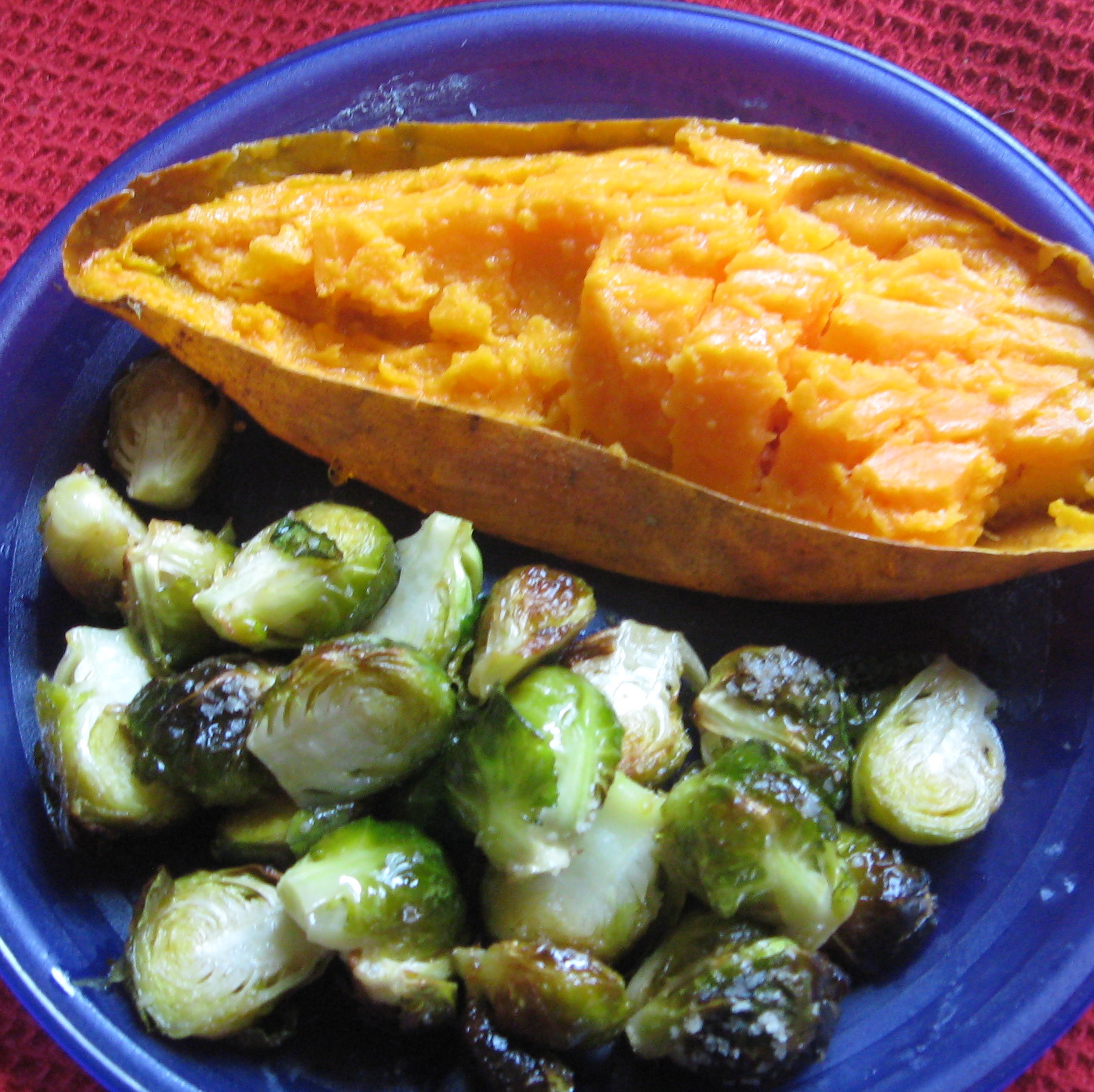
Since it was about lunch time, I was preheating the oven to bake a sweet potato (a very large sweet potato so that I’ll have some for another use as well).  I read the recipe and grabbed the last of the Brussels sprouts from the fridge.  I didn’t have the full amount, but this is a recipe that does not depend on the quantity–which is great for us solo cooks.  Since I was baking my potato in a 350 ° F oven, I did alter the cooking time just a bit–I popped the Brussels sprouts prepared as in the recipe into the oven for about 45 minutes right along side my sweet plate with half  a baked sweet potato and roasted Brussels sproutspotato, and there was my colorful, nutritious lunch!  This is the kind of improvisation that can make cooking for one easy–many recipes aren’t dependent on how many you have or how many you want to cook and eat right now.

You should check out this recipe.  I’d not used garlic powder with them before, but it was yummy and much easier to use than minced garlic.  One of the comments on this post suggested adding Parmesan cheese–I did not try that because I’m out of Parmigano-Reggiano (horrors!), but it sounds  like something that would taste great!

Cooking dried beans

We’re all aware that we should have more whole grains, beans, and legumes in our diet–we’ll talk about grains later, but let’s consider dried beans now.  They taste good, are good for you, and economical.

Beans are a pantry staple for me–both canned and dried.  The canned ones are mostly for “emergency” use.  It’s very easy to cook your own dried beans–especially if you use a slow cooker or put them in a slow over.  Either way, they are on their own without needing attention from you, other than checking them occasionally.

The advantages of cooking your own are multiple: the texture and flavor are likely going to be better than those coming out of a can; you can control seasoning (and the amount of salt), and you have so many more different heirloom beans with different flavors!  Yes, different flavors–not all beans taste alike–and even from the supermarket, you have a lot to from which to choose. If you find that you do like beans, then it’s worth a venture into a gourmet store, or online to find some the wonderful heirlooms that are available.

It does need a bit of planning.  First, you’ll need to sort them to remove any debris like small stones and broken beans–but that’s easily done if you just put the beans on a plate or a rimmed baking sheet.  Since dried beans do need to be rehydrated,  it’s best if you soak your beans overnight.   The quick-soaking methods are not recommended as they can affect the nutrition and the texture of your cooked beans. (Cook’s Illustrated, “Dried Beans 101). Once cooked you can freeze them so that you have a supply of cooked beans on hand when you need them.

Soaking in tap water can toughen them, depending on the mineral content of your tap water.  To avoid this, it’s best to soak them in brine; three (3) tablespoons of salt to each gallon of water will keep the tap water from toughening them, and even displace some of the minerals (calcium and magnesium) that occur naturally in the skins.

You want to cook beans at a gentle simmer so that they don’t break up or split open.  That’s easy with a slow cooker, or in the oven at a very low heat; an advantage of either of these methods is that they don’t require your attention–just a periodic check to see if they are done yet.  It’s an easy thing to do on the weekend when you want to have a lazy day.  In the slow cooker, they can cook while you’re away.

What seasonings you use will depend on what you’re planning to do with these beans.  If I’m cooking a large quantity to freeze some for various uses, I will likely keep the seasonings to a minimum–some onion, bay leaves–to have more flexibility in what I do with them later.   One caution, though:  it seems that most food scientists agree that adding acidic ingredients can keep dried beans from softening during cooking.  So you don’t want to add acidic things (like tomatoes) until the beans are tender.  If you see older recipes that suggest adding baking soda to the cooking water, I would give that a pass as the alkalinity can affect the nutrition.

Occasionally you’ll get a batch of beans that just don’t soften with cooking–that probably means that they are very old, so buy your dried beans where there is a good turnover and don’t let them linger on your pantry shelf for years–go ahead and cook them and freeze them.  I think that you’ll find that if you have them readily available you will use them.

Once you “get into” beans, you’ll find that there are so many wonderful varieties. For an introduction to some of them, take a look at The Cook’s Thesaurus.  Keep in mind that lentils and some “peas” don’t need soaking so may be substituted if you’ve not planned ahead.  Additional nutritional information and survey of some varieties of dried beans can be found at Fruit & Vegetable of the Month (CDC).

My pantry is almost never without canned beans either:  black beans, navy beans, cannellini beans, pinto beans, and garbanzo as the basics, but those are more for when I’ve not planned ahead or for emergency use.  There are huge differences in the taste and, particularly, the texture of canned beans, so you’ll want to explore using different brands for the “emergency” pantry stash. Some store brands (Harris Teeter) are fine for basic uses, but as the texture can vary, you need to buy according to the used–if I’m making a cold bean salad in the summer, I might want Goya, or Progresso instead.

Spanish potato omelette (Tortilla Española)

Another favorite egg dish (though I don’t make this as often as the basic omelette) is tortilla Española or Spanish potato omelette–this takes a bit more time than basic omelette, but it is serious comfort food.  Though most recipes that I’ve seen recommend serving it at room temperature (and I love it that way too), I like the first serving still warm.  I don’t mind having some of this around to eat as recommended, at room temperature, especially in hot weather.  I usually make the entire 4 servings of this.

This recipe is adapted from The food of Spain and Portugal: The Complete Iberian Cuisine by Elisabeth Lambert Ortiz (p. 231) and allioli (p. 239).

Tortilla Española

Ingredients

  • 500 gm/1 pound potatoes, peeled and diced or thinly sliced (preferably waxy potato–red or Yukon gold).
  • 250 gm/8 ounces (about 3 medium) onions, finely chopped or sliced thin
  • salt and fresh-ground black pepper
  • 250 ml/8 fluid ounces (1 cup) olive oil
  • 5 large eggs, lightly beaten

Preparation

  • season the potatoes and onions with salt and pepper.
  • heat the oil in a large, heavy frying pan (skillet), preferably nonstick.
  • cook the potatoes and onions covered over low heat until soft, but not browned; stir gently from time to time.
  • drain the potatoes and onions through a sieve, reserving the oil.
  • stir the eggs with a little salt and pepper
  • add the potato and onion mixture, mix gently and allow to stand for 10 to 15 minutes.
  • wipe out the frying pan/skillet and add 4 tablespoons of the oil, and heat
  • add the egg, potato, and onion mixture and spread it evenly
  • cook over moderate heat shaking the pan occasionally to keep it from sticking.
  • when the omelette begins to brown underneath, put a plate over the skillet and invert the pan and slide the omelette onto the plate.
  • heat a little more oil and return the omelette to the pan with the browned side up.
  • cook it just long enough to brown the underside.
  • transfer to a warmed plate and serve hot or at room temperature.
As a garlic lover, I love to accompany the with allioli (garlic mayonnaise) so here is a recipe for that accompaniment:   
 

Allioli à la Catalana  (Garlic mayonnaise, Catalan-style)

Ingredients

Makes about 1 cup; will keep in the fridge for several days.  This is for serious garlic lovers–there is a less potent variation given in the book, as well as variations using egg yolks.

  • 1/2 large head of garlic, peeled and crushed.
  • 1 teaspoon (5 mL) lemon juice (or white wine vinegar)
  • 250 ml (1 cup) olive oil at room temperature
  • 1/2 teaspoon salt.

Preparation

  • put the crushed garlic into a small bowl (or a large mortar).
  • add the lemon juice or vinegar
  • stir to mix
  • gradually add the oil, stirring in the same direction until the oil is absorbed and the mixture has a mayonnaise-like consistency.
  • stir in salt to taste.

You don’t need to use expensive oil–the garlic flavor is very strong.  This can be made in a food processor or blender, but I think that it’s more trouble to clean either of those than to make it by hand.

If you don’t care to make the allioli from scratch, you can add crushed garlic to a good commercial mayonnaise, and adjust seasoning to taste with lemon juice (or vinegar).  When I do it this way I use Hellmann’s® mayonnaise–it is quicker, but not quite as good as making it from scratch.

Egg basics

In my kitchen, being out of eggs is right up there with being out of onions, garlic, and chocolate!

The egg is packaged by nature to have a long shelf-life–as long as they are treated properly between hen and home.  I want the hen to be treated properly as well so I buy my eggs from the farmers’ market where I know the farmers.  That gives me better eggs–yellower yolks and more omega-3 fatty acids nutritionally, and better flavor.  (Cook’s Illustrated had a blind tasting of eggs with differing levels of omega-3 fatty acids and guess who won?  High omega-e fatty acids did give yolks a richer taste.) Color of the shell has nothing to do with quality of the egg–that has to do with the breed of chicken and how its diet.

The down side of eggs?  Well, there’s Salmonella but a little care is purchasing, storage, and cooking really takes care of that–buying fresh eggs from someone you know is a good start.  Your vendor should have the eggs refrigerated and you should keep them cool until you get to your refrigerator.

Once home, store eggs in the refrigerator, either in the carton or in a closed container.  If your refrigerator has those little plastic dents on the door to hold a dozen eggs, ignore it.  That’s not the place to store eggs for several reasons: it’s not cold and there are frequent temperature changes as you open the door.  Eggs need some protection to avoid moisture loss, and agitation of opening and closing the door can affect texture/consistency of the whites particularly.  You can also store eggs in a closed container to further retard moisture loss, but can accentuate

The expected “shelf-life” of eggs is really several weeks past the sell-by date (for supermarket eggs).  Eggs seldom spoil, although  some moisture loss will occur, nutritional value remains good for a long time–after all, think of the purpose of the egg.  Eggs can pick up odors in the refrigerator since the shells are porous.

Because of the potential for Salmonella food poisoning, eggs do need to be cooked carefully, but from one or two eggs anyone with a normal immune system is very unlikely to get Salmonella enteritis from a sunny-side, over-easy or soft-cooked egg if handled properly.  For one thing, egg dishes should be served promptly and not left sitting out.

For soft-cooked eggs, it is possible to “pasteurize” them by holding them at a temperature of 140 ° F for 30 minutes–this is a temperature that does not continue to harden the yolks, but will kill bacteria.  Eggs which reach a cooking temperature of 160 ° F are safe.

Sometimes you need to know egg sizes since they are not interchangeable. Harold McGee, in Keys to Good Cooking gives the following weights for egg sizes:

  • jumbo = 2.5 ounces or 70 grams
  • extra-large = 2.25 ounces or 63 grams
  • large = 2 ounces or 56 grams
  • medium = 1.75 ounces or 49 grams
These equivalents will let you correct for the size eggs that you have and what is called for in a recipe, since eggs purchased at the farmers’ market are not likely to be of uniform sizes.
For more detailed discussion of eggs, see Keys to Good Cooking and Kitchen Science by Harold McGee. There are also lots of fun and useful egg facts in these two books.

Tuna confit…

Steaks and chops lend themselves beautifully to cooking for one.  One of my favorites is tuna steak, griddled or grilled–served with a side of spinach risotto  and a salad it’s a very quick, easy meal.  If there is leftover from the tuna steak, it can be used in tuna salad.  But sometimes I want to tuna salad when I don’t have leftover tuna steak.  What to do then?

I dislike the “average” can to tuna that is fishy, mushy, and buy the “solid white albacore” which is likely packed in water, but still dry since it’s cooked twice in the processing (Cook’s Illustrated, July/August 2011). I love the expensive, olive-oil packed European tuna–but my budget doesn’t permit it so I’m always looking for alternatives.

One of the things that I like about Cook’s Illustrated is the comparison of products readily available in the American supermarket–that is, after all, where I do most of my shopping. Those products are reviewed without knowledge of the manufacturer, and are not supplied by the manufacturer–so I do tend to give them some credence.
American Tuna image of canIn the July/August issue, there is a comparison of major brands of canned tuna and some newcomers on the market.  The two newcomer brands were Wild Planet Wild Albacore Tuna and American Tuna Pole Caught Wild Albacore. Both these were single-cooked products and had much less liquid and more tuna.  True there were a bit more expensive but not nearly so prohibitive as the European canned products.  There are a variety of different products available from both companies (salmon, sardines). In both cases, products are available with no salt added, or with sea salt add–such a simple ingredient list on the tuna:  albacore tuna (and maybe sea salt)–nothing else.
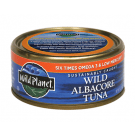
Image of Wild Planet albacore canSince I like tuna and use it both as a salad ingredient and as a staple in my “emergency” food supply, I wanted to check this out.  I went in search of some of both.  I found the Wild Planet albacore tuna and tried it in a simple non-mayonnaise tuna salad.  I was impressed–I’ll definitely be buying this for my tuna.  I have yet to find American Tuna, but given the review in Cook’s Illustrated, I suspect that I’ll like that one too.  I found the Wild Planet tuna at Whole Foods.  Though Kroger was listed on the retail list, the one closest to me did not have it on the shelf.  The American Tuna products are listed as being available at Whole Foods but apparently have not reached out local Whole Foods yet.  I’ll be watching.

I’ve tasted (and love) the expensive “gourmet” European tuna, but it’s not in my budget, so these products at a more reasonable price are welcome.

There is another alternative for good tuna which will approach the European canned tuna, though not really for the “emergency” food supply since that needs to be canned.  That is to make your own tuna confit.

Confit was originally a way of preserving meats–pork, goose, and duck–by cooking them very gently in their own fat, straining the fat and using it to seal the meat away from air for storage.  It produces meats that are markedly different in texture from those cooked in other ways–smooth, velvety are the adjectives that come to mind, at least in reference to duck and chicken.

I’m lucky to live close to a Harris Teeter which has high-grade tuna.  Every once in a while they will have it on a managers special, or will have smaller pieces left from cutting the tuna steaks which are sold at a reasonable price as “tuna medallions”.  Every time I see those (or steaks) on sale I get some and make my own tuna confit.  So for you tuna lovers, here is a master recipe from Fine Cooking 46, pp. 68-69, January 6, 2004.  I usually halve the recipe since I’m a solo cook.

Tuna Confit

Ingredients

3 cups good-quality olive oil (but not best); more if needed to cover the tuna during cooking
1 medium yellow onion, cut in 1/2-inch slices
2 sprigs fresh rosemary
6 sprigs fresh thyme
1 bay leaf
1 tsp. black peppercorns, coarsely cracked
Zest of 1 lemon, pared in strips
3 Tbs. coarse salt
2 lb. top-quality fresh tuna (yellowfin or ahi), cut into 1-inch-thick steaks

Preparation

  • Combine the oil, onion, herbs, peppercorns, lemon zest, and salt in a deep sauté pan or Dutch oven.  Heat to between 140° and 150°F, stirring occasionally and cook for 20 minutes to infuse the flavors of the aromatics into the oil and to pasteurize it for a long shelf life. Taste the oil; it should be slightly salty. Leave to cool and infuse for about 30 minutes; the oil will be warm.
  • Put the pan back over medium-low heat and slip the tuna into the barely warm oil. (Add as many pieces as will fit in one layer. The tuna must be covered by the oil; add more if needed.) Slowly bring the oil to 150°F again. Turn off the heat, take the pot off the heat, and let the tuna cook slowly in the warm oil. After a minute or two, test for doneness by breaking into the flake of the tuna. The fish should be cooked to medium rare-slightly pink inside and still tender to the touch. If the tuna isn’t quite done, return it to the oil for another minute. Repeat with any remaining pieces of tuna.
  • Transfer the tuna to a storage dish (I prefer glass or crockery, but an airtight plastic container will  do fine) and let it cool. Let the oil cool separately and then strain the oil over the fish, discarding the aromatics. If the tuna isn’t completely covered in  oil, add more fresh olive oil to the storage dish. If not using right away, cover the container tightly and refrigerate. The tuna will keep, covered in oil and refrigerated, for up to 2 weeks.

Nutrition information (per ounce of tuna)

  • Calories (kcal): 60
  • Fat (g): 3
    • Fat Calories (kcal) 30
    • Saturated Fat (g) 0.5
    • Monounsaturated Fat (g) 2
    • Polyunsaturated Fat (g) 0.5
  • Protein (g)  7
  • Carbohydrates (g) 0
  • Sodium (mg) 85
  • Cholesterol (mg) 15
  • Fiber (g) 0
♦♦♦

It’s easy to make this with much less than a pound of tuna–I occasionally do it with a single tuna steak in the summer when I’m really eating lots of salads and want to have them be a meal.

I use the confit to make tuna salad–but usually without mayonnaise–this is not dry so it’s not necessary to have the mayo to make it edible.  I generally pat it dry and use just a drizzle of extra-virgin olive oil with herbs, and some scallions, or cucumbers, or really splurge and do a salad à la niçoise.

Budget shopping

Mostly I don’t like shopping–unless it’s food related shopping.  So most of the time, I like going to the grocery store (even if it’s just the supermarket). I make lists for things like dish detergent, or paper towels, and the like, but I don’t make lists for my food except in a very general way.  I want to shop for what looks good, is priced right, or maybe even something unusual.  In short I do meal-planning on the hoof.

Yesterday was one of those shopping days–I came out feeling like I had gotten some bargains and that doesn’t happen often.  I went to get milk specifically, but my general list was for meals for the weekend and into the first of next week.  Since I have had a bit of a splurge on eating out recently (OnlyBurger two days in a row) it’s time to eat in.

When I’m shopping where I’m comfortable about the quality of the meats and produce and the handling of perishables , I’ll sometimes find some real bargains.  Yesterday was one of those days.

I found tuna medallions at a great price which means that I’m going to be making some tuna confit to have for lunches or light suppers since that will keep in the refrigerator for two or three weeks (if it lasts that long).

My next “find” was a rib-eye steak that had a healthy mark-down tag on it–its sell by date was yesterday evening, but it looked good so that came home with me for supper last night.  (It was really tasty.)

My other glorious find was a plump 4-1/2 or 5 pound, free range chicken that had been marked down to half price since the sell-by date was today.  That means that as long as I’m planning to cook the chicken tomorrow and treat it appropriately in the intervening day (I keep my refrigerator really cold, about 34 or 36 ° F, constantly monitored with a thermometer), I’ve gotten a real bargain and something that I would not usually buy.

True, it’s a lot of chicken for one person and I may be looking to invite friends for a meal and still have more meals for me (and the cat) but I haven’t made roast chicken in a while.  Now I can have fun perusing the wine selection and thinking about how I’m going to cook that bird.  Weather permitting, it may go on the grill to be smoked, but I’ll see what tomorrow brings.

Storing things….

One of the problems that single-serving cooks continually face is things that change texture and colors as they languish in the refrigerator.  These are not always leftovers from the meal you cooked a week ago, or the little box you brought home from the restaurant when you couldn’t clean your plate (even though you knew then it was unlikely that you’d actually eat what was inside).  Having things “go bad” is a perpetual problem for those of us cooking for one…that head of celery, that whole head of romaine lettuce….

There are lots of tips, tricks, and suggestions that I’ve found about how to store things that plague the single-serving cooks but I’m always looking for better ways to store those bits and pieces until I can use them.   I’m always on the lookout for things that actually do work.

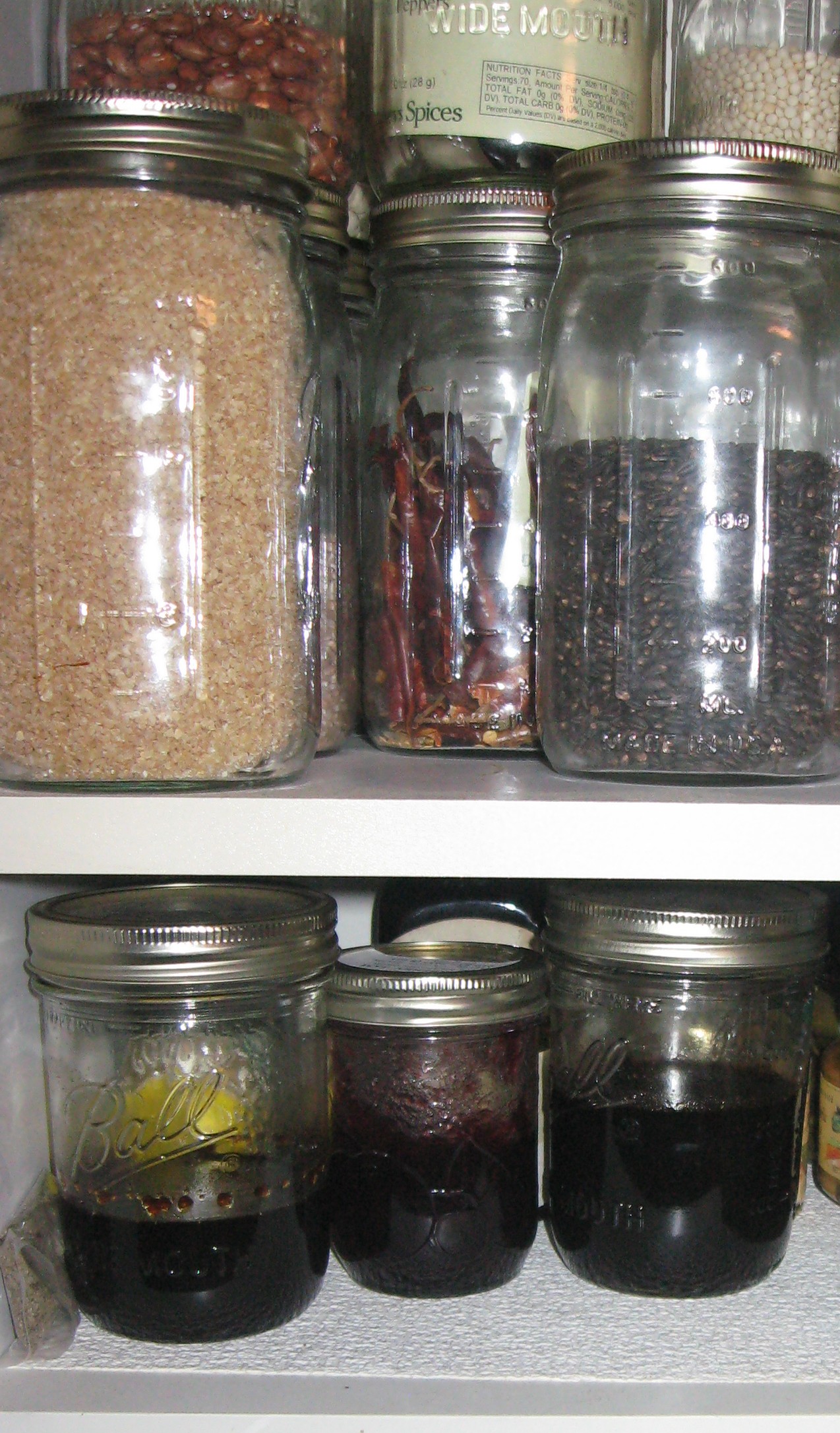
Ball-Mason jars for storageOne of my favorite sources for information like this is Cook’s Illustrated because they actually do experiments to find out what works and what does not.  This doesn’t seem to lend itself well to a post for each suggestion, so I thought I’d add a reference page on Storing Stuff as a place to collect information about storage methods for the things that you are likely to use as a single-serving cook.   If you have a successful method that you use as a solo cook, please post it.

Smoked salmon salad

It was  just hot enough this evening that I didn’t really want to cook–not all that hungry, but wanted something easy and light.  Rummaging in the pantry, I found that I had Chicken of the Sea wild-caught, smoked Pacific (Alaskan) salmon in the pouches, so I made a salad to have with some good crisp flatbread and fruit (melon and cherries) on the side.

Quantities are approximations–precise measurement is certainly not necessary to make something like this–use your judgement.

Ingredients: 

  • approximately 1/3 to 1/2 cup sweet onion, diced
  • approximately 1/3 to 1/2 cup cucumber (seeded if needed), diced
  • two packages (6 ounces) smoked salmon slightly broken up into chunks
  • lemon juice to taste
  • lemon zest to taste (about 1/8 to 1/4 teaspoon
  • drizzle of extra-virgin olive oil sufficient to moisten
  • fresh-ground black pepper to taste
  • salt to taste  (taste before adding any
Assembly:  combine all ingredients and mix gently.  Taste and adjust seasoning.
Variations:
  • replace extra-virgin olive oil with a dollop of sour cream and add chopped fresh dill
  • if you have leftover grilled or griddled salmon steak or fillet this is even better
  • if you are not using smoked salmon, a dash of chipotle chile powder gives a bit of smoky taste and zip
  • add minced green or red chile pepper (jalapeño, poblano or serrano) to taste.
There are all sorts of possible variations here…fix it to suit yourself.
A son goût!