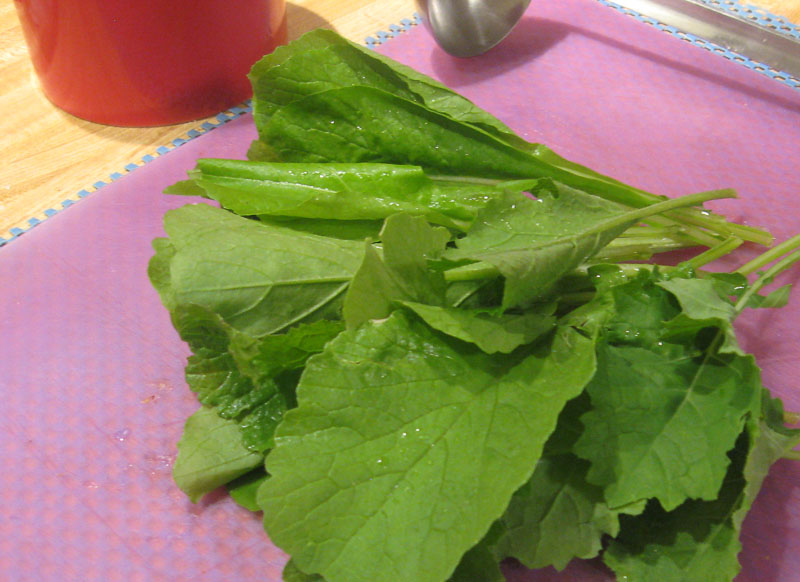
Radishes: Easter Egg vs. French Breakfast

Radishes are a sure sign of spring to me. The ones you grow yourself will be quite different from the one you get in the plastic bags at the supermarket.

Radish sandwiches are awesome–with a little salt and European-style butter on pumpernickel (especially freshly baked) accompanied by a glass of champagne.

We don’t usually think of radishes being treated as a vegetable.  Here are some other things to do with them, e.g.  radish soup.

Sharon Rawlette's avatargettin' fresh!

I grow a lot of radishes. My husband, who’s not keen on too many vegetables, loves them. As does his father, who regularly sits down to an entire bowl, which he eats plain except for a sprinkling of salt. So every spring I make sure to put in a healthy radish patch, just to make sure I have some left for me!

Radish Varieties L: Easter Egg, R: French Breakfast

The two varieties I’ve been regularly growing for the past few years are Easter Egg and French Breakfast. Easter Egg is actually a mixture of varieties, which is one of its primary advantages. Radishes grow very quickly (mine mature anywhere from 4-6 weeks from sowing, depending on the weather), and they also quickly pass their prime. Sowing a mixture of varieties helps space out the harvest a bit, and with Easter Egg, you have that variation built in.

French Breakfast radishes mature slightly earlier than…

View original post 331 more words

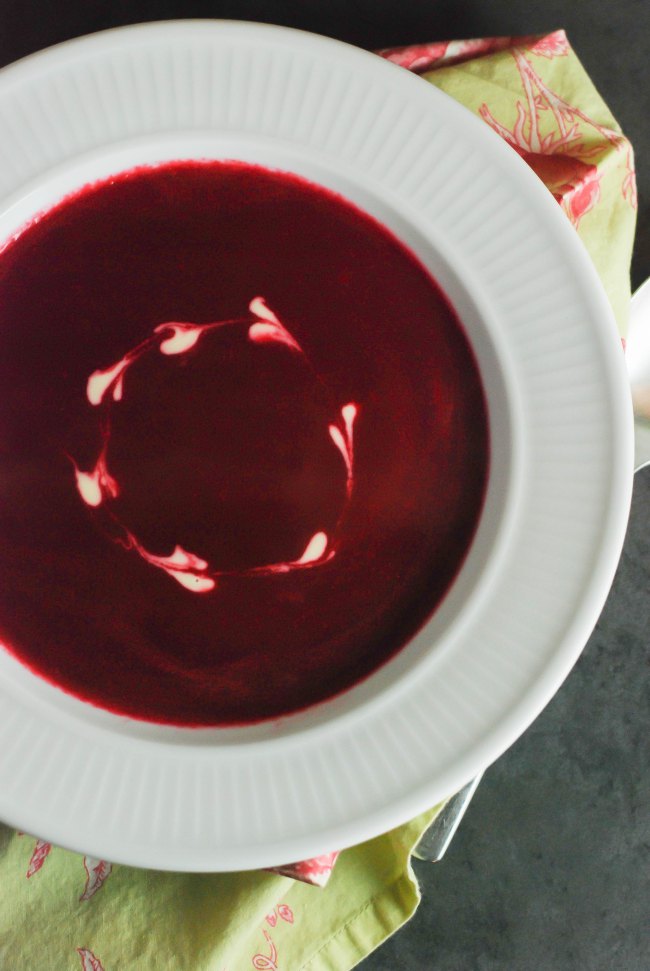
Roasted beet soup

I really think that beets are right up there with cabbage as under-appreciated vegetables. I’ve another cold beet soup recipe some time ago, but I wanted to share this one with any beet lovers out there. Enjoy–either hot or cold.

Wendy Ellen Thomas's avatarWendy's Place

Spring is here and I’ve got little baby beet seedlings in the greenhouse but I can’t wait 65 days for them to make beets.

Roasted beet soup-7So until then I’m getting organic beets at the store. They are a vegetable, in my opinion, that spans all seasons. We ate this roasted beet soup hot and cold and both were delicious. So if you’re still freezing your tush off- heat it up. If you are in CA and it’s gone straight from winter to summer- keep it cool.

PRINT RECIPE: {ROASTED BEET SOUP}

  • 1½ lbs roasted, trimmed beets (about 4-6 medium-lg beets)
  • 2 ½ qts chicken stock- or veggie if you prefer
  • 3 T olive oil
  • 5-6 cloves garlic
  • 1 T honey
  • 1 tsp apple cider vinegar
  • 1 tsp salt
  • 1/8 tsp white pepper
  • 2-3 T sour cream or crème fraîche

It is super simple. The beets are roasted with skin on. I…

View original post 275 more words

Sunday Suppers: Winter Whites

Great soups for suppers in the winter; all my favorites so I need to share this–white can be wonderful!

Rufus' Food and Spirits Guide's avatarRufus' Food and Spirits Guide

The kidneys make this What our garden looks like these days

We’ve been spared the snow that’s blanketed much of the country, but early this week a layer of ice made our landscape more than a little frosty. Instead of making us feel a little blue, we’re craving food that warms us up. But of course we’re all about coordinating our colors. Here are some of our favorite winter whites:

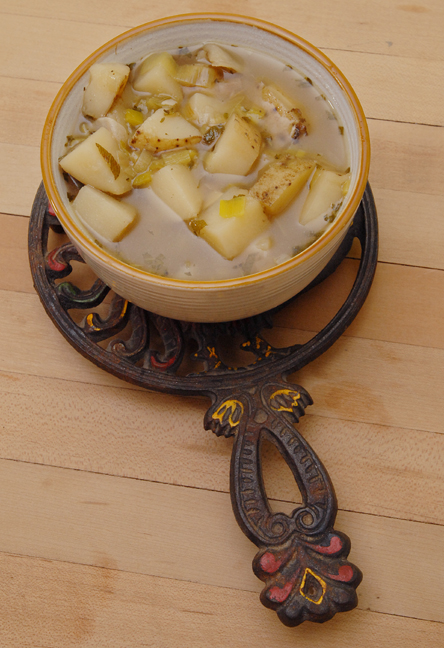
Cream of Potato Soup (above) and Potato Leek Soup (below)

That there is perdy I’m gonna need a bigger bowl

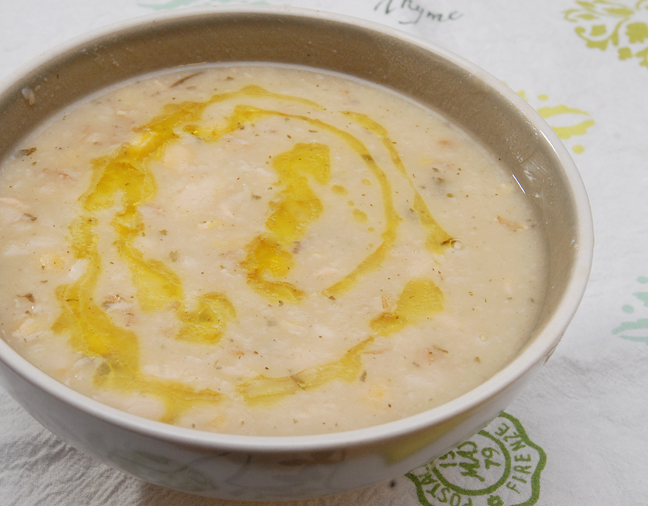
White Bean Soup with Farro

Drizzle more olive oil if you want Drizzle more olive oil if you want

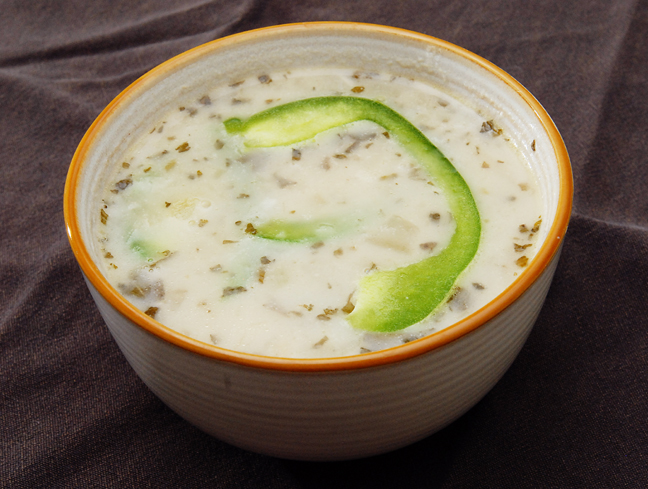
Cream of Potato Soup with Roasted Garlic

Campbell's eat your heart out Campbell’s eat your heart out

If only we’d get a little snow instead of ice we could whip up some of this:

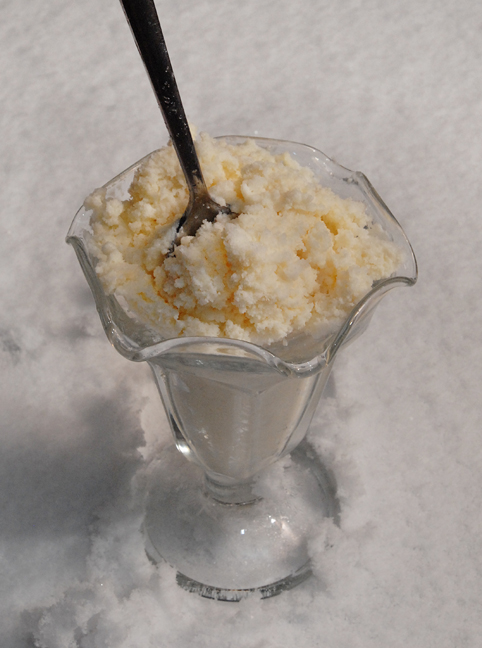
Tastes like vanilla icecreamSnow cream

View original post

Fårikål (Norwegian lamb and cabbage stew)

Cold, rather dreary day so I’m making some warm, cuddly, comfort food from my most recent cookbook, The Kitchen of Light by Andreas Viestad.

I made the lamb and cabbage stew–well, sort of–I had goat meat in the freezer so I substituted that for lamb.  As I’m writing, I’m smelling it cooking–and practically drooling on my keyboard.

The stew is in the oven in my “small” Dutch oven (did not make the whole recipe). It smells SO good. I’ve been reading posts from a friend on Facebook singing the praises of this stew–reheats well–which means I can make a batch and freeze some.

The seasoning of this stew is bay leaves and black peppercorns–a lot of black peppercorns, cooked with the meat and cabbage.  This surprised me when I read the recipe because I’ve seen sources saying that black peppercorns will be bitter with long cooking, so it’s not usually added until late in cooking, though this is not dry heat, so that may make a big difference. This recipe calls for 1 to 2 tablespoons of black peppercorns.  (From tasting so far, I think I’m going to want to add more black peppercorns.)

Product.DisplayNameReally good, fresh-ground black pepper is one of my favorite spices.  I’ve gotten hooked on the India Special Extra Bold Tellicherry  and that’s what I’m using in this recipe.  Regular Tellicherry or Malabar pepper should also work.

Fårikål (Norwegian lamb and cabbage stew)

This recipe is adapted  from The Kitchen of Light (Andreas Viestad)–It’s easily adapted for single-serving cooking, but also suitable for making the full recipe and reheating/freezing.

Ingredients

  • 6 pounds of bone-in lamb shoulder, trimmed and cut into 1-1/2-inch pieces.
  • 4 pounds of green cabbage, shredded
  • 1 to 2 tablespoons black peppercorns
  • 2 bay leaves
  • 3 tablespoons unsalted butter
  • 1 tablespoon all-purpose flour
  • 4 cups cold water
  • fine sea salt (to taste)

Preparation

  • Layer the meat and cabbage in a large pot
  • Add black peppercorns, bay leaves, butter, and sprinkle in flour
  • Add water
  • Bring to a simmer, covered,
  • Cook about 2 hours over medium-high heat about 2 hours
  • To increase spiciness, add 1 more tablespoon peppercorns and cook an additional 15 minutes
  • Season to taste with salt
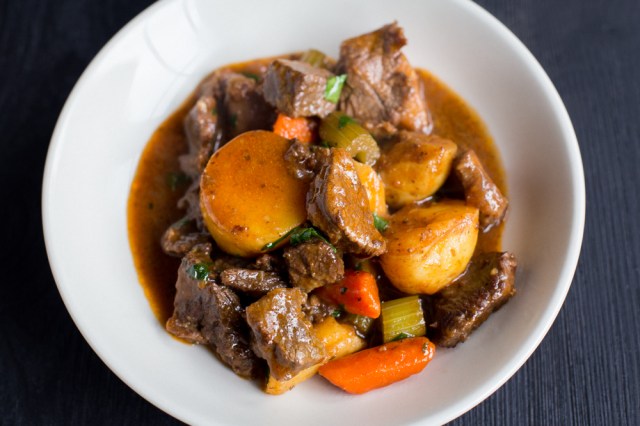
plated lamb and cabbage stew

Lamb and cabbage stew (from Wikipedia)

My first adaptation was the use of goat meat since that’s what I had in the freezer–as well as goat brown stock.

The goat meat was excellent, but in the future  I’ll use bone-in lamb shoulder chops, cut into appropriate-sized chunks.  My other adaptation of this recipe was to put it in the oven to cook at 300°F until the meat was very tender. It’s unlikely that I’ll want to make full quantity  of this recipe–more likely half, which will still give more than one meal, and  some to freeze.

This is NOT a pretty dish.  By the time the meat is really tender, the cabbage is NOT going to be pretty and bright green.  There’s more discussion of this dish on My Little Norway.  I like more peppercorns than that recipe uses–I actually added a lot more–and finished my serving with carefully roasted black peppercorns, coarsely crushed.

This has me looking for other recipes using cabbage–which I think is an under-appreciated winter vegetable. Too often I think it’s thought of as “slaw”.  After reading Viestad’s cookbook and North: The New Nordic Cooking of Iceland  by Gunnar Karl Gislason and Jody Eddy,  I want to explore more Scandinavian cooking.  I found lots more recipes on New Scandinavian Cooking, too–and the manifesto of the “New Nordic Cuisine”.

For a beverage with this dish? Well, a porter would be excellent. If I were doing wine, I think I’d look for something really robust–something that has at least some alicante bouchet in it, or maybe a Minervois–I think this calls for some research!

A son goût!


Instant Stew

I’ve just recently started looking at what can be done with a pressure cooker; this looks like a good place to start so I thought I would share this.

Russ's avatarThe Domestic Man

First of all, sorry about that title. Just like the elusive free lunch, there is no such thing as an “Instant Stew”. You see, I recently asked my Facebook followers what dish they’d like to see me develop, and I received several requests for pressure cooker and stew recipes. We use (and love) an electric pressure cooker called an Instant Pot, so that’s what I used for this recipe (and hence the name).

At its heart, this dish is similar to many of my other stew recipes, but with a new approach. When it comes to simple weeknight recipes, many folks like the idea of crockpot stews (wherein you leave the ingredients to slow-cook while away at work). But I’ve found that more often than not, the vegetables become too mushy and tired after a long simmer. This is where a pressure cooker really shines, as it shaves a…

View original post 130 more words

Hot & sour soup

Swanson hot and sour brothOccasionally  my curiosity gets the better of me while I’m meandering through the supermarket and I bring home something that I usually would not buy.  This time is was a box of Swanson’s Chinese Hot & Sour Flavor Infused Broth.  Usually the “flavor infused” would be a signal to walk on by. Since I do use Swanson’s chicken and beef broths and stocks, I stopped and looked at the ingredients. I was pleasantly surprised when I didn’t feel as if I were in the chemistry lab stockroom, so I bought it.

I do really like hot and sour soup–it’s my usual test of a Chinese restaurant–usually disappointing since my standard was set in Hong Kong!  I don’t see another trip to Hong Kong in the future, so I thought I’d try it.  My expectations were not really high as I opened the box and tasted it, but it was better than I’d thought–the hot and the sour were pretty well-balanced.  It’s main problem was that it tasted boxed–in other words, it needed some brightening up–like most boxed or canned stocks or broths.

Armed with my box of broth, I decided that although I wanted hot and sour flavor, I didn’t want to buy esoteric ingredients that I might not use again for a while just to try it out.  I thought maybe I could do something that was in the “spirit” of hot and sour soup with what I found in the fridge and pantry without a trip to the Asian market. So no tree ears or lily buds, and not even bamboo shoots.

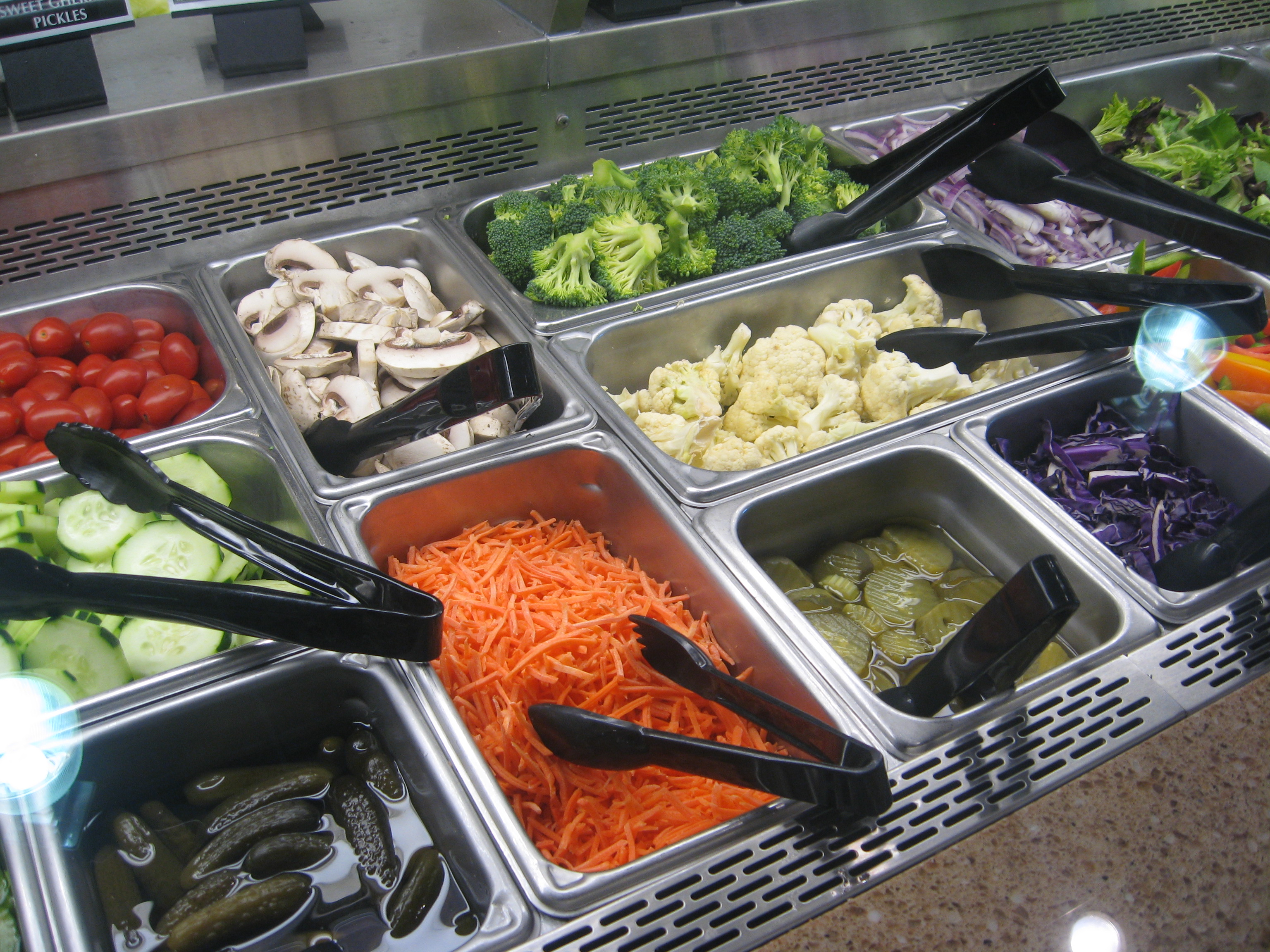
vegetables on salad bar at Harris Teeter

prepared veggies

I found a basket of sliced mushrooms  in the fridge,  shelled edamame and collard greens in the freezer, water chestnuts in the pantry, and some rotisserie chicken and some pork in the fridge that needed given a re-do.  My only addition was a very large handful of julienned carrots (from the salad bar of my local Harris Teeter).

Since this was one of those OMG-I-don’t-have-time-to-cook occasions, I got out the rice cooker (cum slow-cooker) and added the hot and sour “flavor-infused” broth.  I sautéed  the mushrooms in just a bit of peanut oil until browned and gave the carrots a brief swish through the pan with the mushrooms, deglazed the skillet with a bit of the broth, and poured that into the slow-cooker. I added the edamame, collard greens, and the water chestnuts and set it for two hours.

When the collard greens and edamame were done (about 2 hours) I added the chicken and  pork  to heat through.  At the same time I added a piece of fresh ginger root and a small clove of garlic to “freshen” the flavors up a bit.

Obviously not a traditional hot and sour soup, but it was a good test of the “flavor infused” broth, and pretty tasty with the chicken and pork to add some richness, and the textural variety of the mushrooms, greens and water chestnuts.  A garnish  of green onions when served finished it off nicely. (I didn’t add the eggs, either.)

Verdict on the broth–not bad–actually much better than I expected– but if I’m going to make traditional real Chinese hot and sour soup (with tree ears and lily buds) I will start with my own stock–besides, I really like my hot and sour soup with pork. But if it’s just hot and sour I want, I might use another box of “flavor infused” broth!

A son goût!

Potato and cabbage soup

I like soup for a meal–if it’s a good hearty soup with lots of veggies and maybe some meat in it. All it takes is cold weather and I’m especially interested in soup. Well, we’ve got the cold weather right now and it’s apparently going to last a while, too. I’ve a small “dinner” ham–I’ve sliced part of it to use for sandwiches, and cubed part–some will go in mac ‘n’ cheese (in the rice cooker), and it seemed that part of it would be good for soup–some to eat now and some to freeze for later meals.

Looking in the fridge, I discovered a head of cabbage and some red potatoes, and, of course, ham.

  • a medium yellow onion, chopped and lightly browned in a scant tablespoon of bacon fat (or oil).
  • Two good serving of ham, in 1/2-inch cubes, browned.
  • Garlic, about 6 good-size cloves, coarsely chopped, and cooked with the ham and onion until it starts to smell fragrant.
  • several healthy shakes of hot red pepper flakes added and “toasted” with the ham an onions.
  • about 1/2 teaspoon of kala jeera (black cumin) added to toast just a bit with the contents of the pan.
  • Two bay leaves added to the pan.
  • Three cups water to degaze the good brown fond from the bottom of the pan (add more later if needed when all the ingredients are in the pot). Bring to a simmer.
  • Three medium red potatoes cut into 1/2- to 3/4-inch cubes and added to the pot.
  • Cabbage, 1/2 small head cut into 3/4-inch pieces, or shredded if you prefer, added to the simmering pot. Add more water if needed to just barely cover.
  • Put the pot into a 250°F oven, and ignore for about 2 hours (I was working on an index and didn’t want to have to mind the pot on the stovetop).
cabbage, potato, and ham soup

meal in a bowl

Since cabbage keeps so well, I almost always have it in the crisper, and potatoes, too. I’ve done similar soups  (starting with the onions, potatoes, and cabbage–varying the seasoning, of course) with various sausages–kielbasa being a particular favorite. I’ve used leftover roast, steak, chicken, or chops in similar soups as well. If the meat is already cooked, I’ll use broth (vegetable, chicken, or beef) instead of water.

The kala jeera has a rather flowery flavor (and you want to use it in small amounts as it could be a bit overwhelming, but the hint of the floweriness was a nice contrast to the smokiness of the ham and the earthiness of the cabbage.

Posole

There is one good thing about having to hike out to the dumpster with the trash, especially when you’re cooking something.  If you stay in the kitchen too long you olfactory sense habituates to the aromas.  Take out the trash and you get a great new olfactory preview when you get walk back into the kitchen–especially if you spend a bit of time chatting with the neighbor who is also taking out the trash.

This cold weather has me cooking stew-y sorts of things.  A friend sent me a care package from New Mexico recently: blue and white corn with a recipe for making posole (or pozole, if you’d rather). Today was the day, since I was organized enough to remember to soak the dried corn overnight.  By the time I had sauteed everything, browned the pork, onions, garlic, added the oregano (had to do Turkish rather than Mexican until I do another Penzeys order), and the chilli pods I wasn’t fully appreciating the aroma of the cooking. I popped the covered dutch oven into the oven and took– out the trash.

When I opened the door and walked into the living room, I was definitely getting a fresh sensation: the browned pork, the oregano, the chillis–this smells like warmth and comfort on a cold day!

White Corn Posole

This is the recipe that came with the package of Los Chileros de Neuva Mexico package of white corn posole. I more or less followed the recipe–

Ingredients

  • 6-8 chile pods
  • 2 pounds cubed pork (or beef)
  • 3 cloves garlic minced
  • 1/2 teaspoon Mexican oregano
  • 1 teaspoon of salt.

Preparation & assembly

  • Soak the posole (12 ounces) in water to cover overnight.
  • Boil the posole in salted water for about 2 hours.
  • Add meat, chilli pods, oregano and garlic.
  • Cover and simmer for another hour or until the posole is tender, stirring occasionally.

<>\/<>

My first deviation from the recipe was to brown the pork (in a little bacon fat) before adding the liquid and the other ingredients. My second deviation was to use 4 chilli pods (ancho and guajillo) and then about 2 teaspoons of Hatch chilli powder.  I had tasted before adding the chilli powder–and it’s wasn’t spicy enough. I’ll see what it’s like when I reheat it. My other deviation was to add way more garlic.

I’d looked at other recipes for posole online, and found lots of recipes calling for other ingredients–cumin, coriander, and even tomatoes. I decided to start with this simple, rather a straightforward one for my first try at posole.

I really think that Mexican oregano is a must–the Turkish just isn’t quite right here–it’s sweeter than the Mexican to my taste and would fit better with the corn flavor. I’m likely to add some cumin and coriander next time around as well. I may add onions (caramelized) as well. It’s a recipe in evolution now. I think a little more “brown” in the flavor would be good, as well as some smoke from either chipotle peppers or from pimentón–but definitely Mexican oregano next time. I used water here and not pork stock, but I think that pork stock would be tastier–especially if the bones/meat were browned before making the stock.

Even though this is a simple soup/stew, a bowl of this is very satisfying on a cold day when you need warmth and a full tummy!

My friend also sent blue corn–which I’ve only had in tortilla chips, so it will be interesting to see how that compares to the white. I do suppose you could make this with canned hominy, but this seems to have more corn flavor that I remember from canned hominy. I’m going to enjoy trying out different seasonings here.

Now there is chicken soup….

Since I cooked a whole chicken for Christmas dinner (chicken-in-a-pot), I have cold chicken for sandwiches and salad, and I’m getting another two meals from that same bird from what meat left on the carcass.

Rather than spend lots of time picking bits of meat off the carcass when I needed to be indexing, I popped it into a very low oven (I guess I could have used the rice-cooker/slow-cooker) overnight, since I don’t mind having the oven on in chilly weather to help warm the place up; it reduces other heating.  This morning, what meat was left simply fell off the bones.

The chicken-in-a-pot made some serious broth, some of which went with Christmas  chicken au jus. There were onions and garlic in the pot with the chicken that the recipe called for discarding after straining the broth.  They actually tasted good so I put them back in with the carcass.  I added lentils and barley to that broth, both of which cook in about 30 minutes, some aleppo pepper and a few red chilli flakes, seasoned to taste with sea salt, for a very hearty chicken soup for supper–all with very little effort on my part. (And there another serving of that which is going in the freezer for another chilly day.)

Though this was a pricey chicken, I can’t complain–the flavor was worth it, and I’ve had enough additional meals that tasted so good to make it not such an extravagance as it seemed at first.

…and now it’s turkey soup!

Remember those turkey thighs that I roasted a couple days ago? They have really been a bargain.  I spent about $5 on the package of thighs–two small-to-medium ones.

I had my roast turkey with sides of potatoes and cabbage (with juniper berries). Then I had two full-size sandwiches, and a half sandwich for lunches. Now I’m finishing the turkey thighs with a very hearty bowl of soup (and a  glass of good wine).
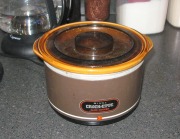
small Rival Crockette

a crockette

I popped those thigh bones (with what meat wasn’t easy to carve for sandwiches) in to my tiny little single-serving crock-pot to make some stock–I just added a little salt, a bay leaf, the brown stuff that I deglazed from the roasting pan, and enough water to cover the bones. After slow cooking overnight, I removed the thigh bones.  The meat just fell off into the pot.

In the same little crock-pot (don’t want extra dishes to wash), I added a small handful of barley, some dried mushrooms of various sorts–including shiitake, chanterelle, and porcini. The other things that went into this soup were the leftover cabbage (with juniper berries) and a few potatoes that were roasted with the turkey.  (You may be thinking that this is pretty heavy on starch, but to finish the soup, I added some green stuff.)
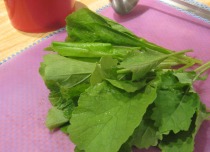
small leaves of greens

mixed greens

About half an hour before I was ready to eat, I went out to the garden (which I share through the good graces of a neighbor) and picked a good size handful of small kale, turnip, and mustard greens.

After washing, I cut these in bite size pieces (though that was almost unnecessary as they were really not as big as my hand). They went into the crock-pot; in about 20 minutes they were still bright green but tender.

I did a final adjustment of salt using French Grey sea salt, and finally added several drops of black truffle oil to finish the soup.

-<>^<>-

I’ve had my bowl of soup for supper this evening–and it looks as if I’ll get one more meal out of those turkey thighs–with the barley, and the amount of meat that was left on the bones, there is easily another serving of this soup for lunch or supper tomorrow. (I’m sure that by the time I reheat it, those greens won’t be quite so bright green, but the flavors may have melded with the other ingredients so it should be good–maybe even better than this evening.

bowl of soup with greens

a warm, hearty supper

-<>^<>-

I opened a bottle of wine this evening that was a completely unknown to me. It was a limited release called “Dark” from Apothic. I was completely beguiled by the description that said that it “blends dark fruit flavors of blueberry and blackberry with opulent notes of coffee and dark chocolate”.  How could I possibly pass that up? (I found it while shopping at Harris Teeter–just after I had bought a case of something called “Besieged”–more about that one later.)

I was surprised how dark it was when I poured it into the glass! (I even tried to take a picture–but it just looks almost black–so forget that.) It is definitely a “big” wine and right out of the bottle it was fruity and mellow–but after breathing for a bit it lives up to its description.

I thought it might overwhelm my bowl of turkey soup, but with the juniper berries, the rather emphatic mushrooms, the flavors of the greens, and the truffle oil, it turned out to be a great combination.  Fortunately there is some of the wine left for tomorrow’s soup! This is one time when I’m looking forward to the “leftovers”.