A pork and kale braise

It’s been chilly, cloudy, and grey–just the kind of weather for soups, stews, and braises. It’s also time to get the freezer stocked with some quick, easy food as I’ve got indexing projects coming in–some while I’m still teaching this Fall term.  With lots of grading to do as well, I wanted something that would take care of itself while I worked–so out comes the all-purpose “rice” cooker for some slow-cooked food.

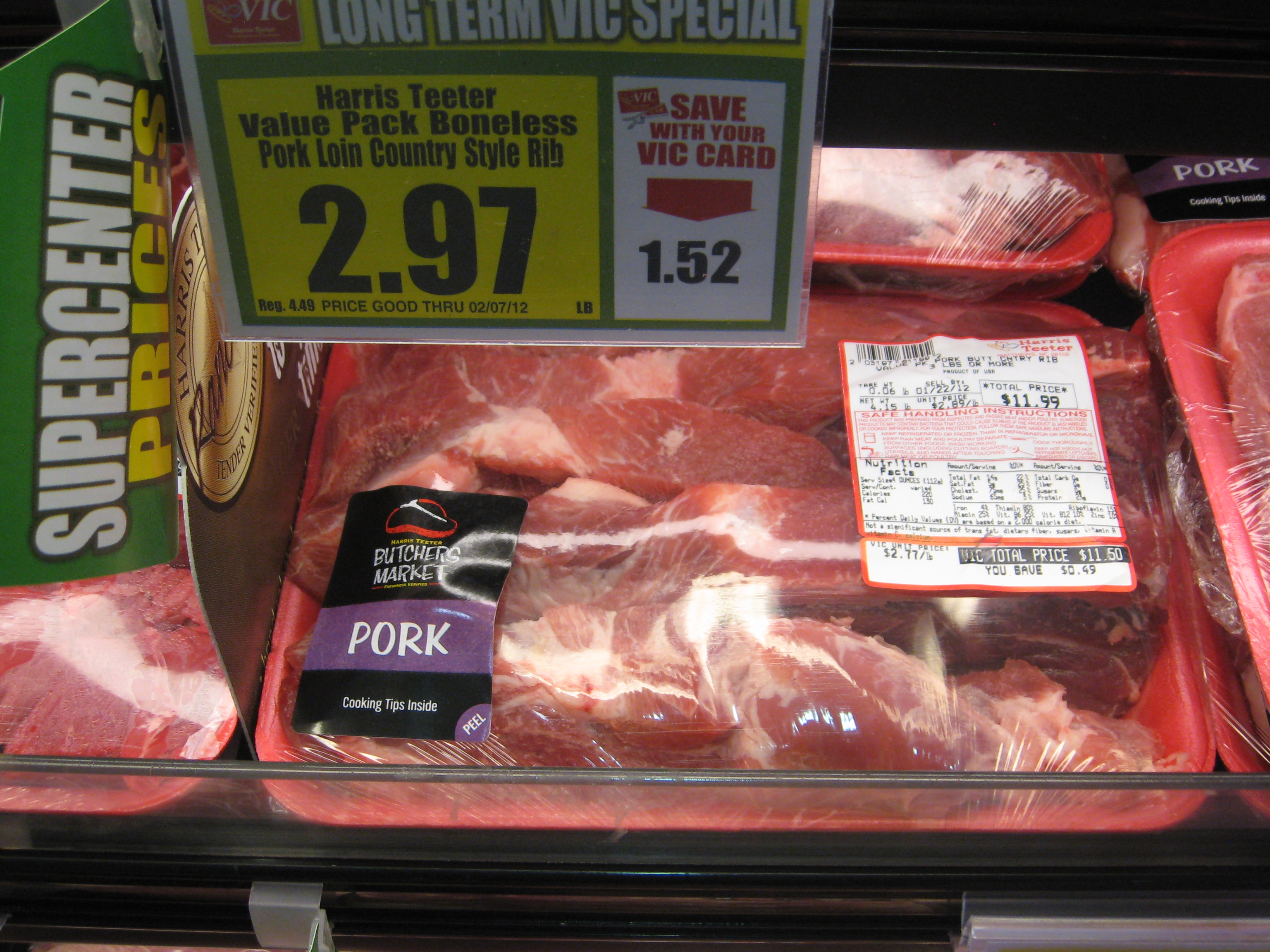
I’m a great fan of pork almost any way you fix it so when I found a package of boneless pork ribs–just the ticket for the slow-cooker–while I was doing my grocery shopping on Thursday it obviously went into the cart. Big package, but on special, so it came home with me to make a lazy meal, and some to go into the freezer for quick meals when I’m really busy, or when I need comforting, peasant-style food. Can’t pass up inexpensive on something I really like.

Braised pork and kale from the slow-cooker

Ingredients

  • boneless pork spare ribs, about 2 pounds
  • 1 packaged of frozen, chopped onions
  • chopped kale, one frozen “family” pack
  • 6 large garlic cloves
  • 1 14.5-ounce can of fire-roasted tomatoes
  • 2 tablespoons of Hatch chili powder
  • 2 teaspoons of kosher salt, adjust to taste as needed when cooking is finished

Preparation and cooking

  • cut pork into about 2-inch pieces
  • add half package of kale and onions, mixing
  • layer in pork, sprinkle with salt, chili powder
  • add remaining kale and onions
  • add fire-roasted tomatoes with juice
  • close the lid and set for 8 hours
  • shred pork using two forks (if desired)
  • check seasoning and adjust as necessary.

No, no pictures as  this is NOT a photogenic dish, but it sure is tasty! And there’s certainly nothing like complicated technique involved here.

Great served with a side of spicy black beans, or garbanzo beans, or just a big bowl on its own. This particular time I had a roasted winter squash as a side with it. (Now, to turn the rest of the winter squash into another meal–maybe stuffed with some Sicilian sausage that also went into the grocery cart.)

There was more liquid than I had anticipated when this was finished cooking, so after packing some in zipper-lock bags to go into the freezer (with SOME juice), the extra juice with some kale and some shredded pork is going to turn into soup–details will evolve when it’s used–but that’s an additional meal out of that pack of spare ribs!

Turnip greens…

Loose mustard greens

While having leisurely Sunday morning coffee I was browsing through the Huffington Post and discovered a presentation on rediscovering mustard greens (though I didn’t realize that they were lost or misplaced). If mustard greens need rediscovery, then perhaps turnip greens need rediscovery (or just discovery) too. One of my favorite things to do with heartier greens (those that need longer cooking, unlike spinach) like collards, mustard, kale, dandelion, or chard is to braise them with sausages for a one-pot meal that is easy to make in any quantity–and reheats and freezes well.

Just recently I was the happy recipient of a LOT of turnip greens from a gardener who likes the bottoms–the turnips and not the green tops. Some of these were older–so a bit spicier, with some of the “horseradish” tang that you find in mustard greens as well.

Even though it was warm weather, I had just started an intense indexing project and wanted some easy food–braised greens with sausage.  No need for a recipe and certainly not labor-intensive or needing a lot of attention while it cooked. (I thought about using the pressure cooker, or the slow cooker but just did this on the stove-top this time)

hot italian sausage IMG_6092I started by dicing and sautéing a large onion, then added a mix of sweet and hot Italian sausage, removed from the casings, to brown lightly.  Of course it needed garlic–about half a dozen large cloves, minced. (The garlic mellows a lot during cooking.)  Since the greens had their own “heat” and I had used hot Italian sausage, I didn’t add the hot red pepper flakes that I would have used with other sausages, or other greens–e.g. kale or collards.

Once the garlic had sautéed enough to become aromatic, I added the washed and cut up greens (still wet from washing) and a can of diced tomatoes. In a tightly lidded pot, I left this over low heat until the greens were almost tender–about 45 minutes. (Since these were older turnip greens, I did remove the stems before cooking.)

In went one can (rinsed) of pinto beans (not on the low-carb diet, but…) and continued to cook about 30 minutes more to let the beans pick up some of the flavor of the greens and the sausage. Home-cooked dried beans would have been better, but since I didn’t have any of those in the freezer, and hadn’t planned ahead–canned ones had to do for now.

And there you have it, a quick supper, and a couple of servings for the freezer for several more quick, comforting meals.  Since the greens were spicy, the sweet Italian sausage added a nice counterpoint. I’m glad to have some tucked away in the freezer since I suspect that will be the last of the turnip greens for the summer–as the weather gets hotter the greens get a bit more assertive. If I’m lucky and there are more, I’ll probably do this again, but omit the hot Italian sausage. Or think about doing this with lamb sausage…so many possibilities, and so easy–and reasonably healthy as well.

All you need to add is a glass of a nice sassy, robust red wine, and maybe some good crusty bread (if you’re not on a low-card diet). A son goût!

Chilli con carne redux update

I’ve finished the “fast” version of the chilli con carne that I posted about in Chilli Con Carne Redux!  I’ll concede that it’s only sort of faster in terms of the active prep time–it still needs to cook long and slowly, but it is a success.  I don’t think that I can tell the difference (tasted side-by-side with the more laborious version from the freezer) and friends have given it the nod of approval.  So here are the changes and additions to the original chilli con carne that I posted.

  • After the bacon browned, 3 tablespoons of tomato paste was added while the onions were sautéed, and this was browned–again to enhance the umami, not to add tomato flavor.
  •  None of the meat (pork or beef) was browned before adding liquids.
  •  Added bay leaves to increase the earthiness (used five large for this 6 pounds of meat).
  •  Added Mexican oregano–about 2 rounded teaspoons. (You really do want Mexican oregano for this–much different flavor than Turkish or Greek (Mediterranean) oregano–after all it is an unrelated plant, but worth having in the kitchen if you like chili.)
  •  Sun-dried tomatoes (about 1/2 cup chopped) were added for more umami even though this was NOT made in a slow cooker, I was not aiming for tomato-flavored chili.
  • During the cooking time I tasted some in a bowl with a little fish sauce added (yep, I did get up the nerve to try this) and it tasted wonderful; so I added about 4 or 5 tablespoons of fish sauce.  (I suspect that if you don’t have fish sauce a couple of anchovy filets thrown in would have the same effect.)
  • The final thickening was one with a brown roux made with masa harina.  For the fat in this roux I reserved about 1/4 cup of the fat from the de-fatting step.  I heated this and made sure that all liquid was evaporate, then added about 6 tablespoons of masa harina and cooked it until it was a medium brown and toasty smelling.
  • Because of my work schedule, this was cooked in a lower oven (about 195° F) for about 10 hours.

After another run on this I’ll have to post a revised recipe for the “fast” and easier version, but if you feel so inclined you can work with these changes–after all chili con carne is one of those things that really doesn’t need a recipe to be followed strictly.

Chilli con carne redux….

I love my chilli con carne–but it’s very a very time-consuming kitchen project so after considering umami in the slow cooker I though I’d try a few shortcuts, with some umami boosts.

I usually buy a big chuck roast and cut it up myself, but I found that my local Harris Teeter had stew mean which was chuck roast already cut up, so I bought a big package of that.  Some time saved there.  I did have to cut the pork, but I bought  spare ribs so that all I had to do was cut them into chunks–another bit of time saved.

One thing that takes a lot of time is browning that much meat, so I thought I try bypassing that step since I still plan to cook it in the conventional oven very slooooowly, letting evaporation and concentration happen so there should get a little browning as the liquid reduces.

I toasted all the spices (cumin and coriander) and the chilli peppers that went into the pot and added a little tomato paste that had been browned.  I know that fish sauce (nam pla) and soy sauce are supposed to boost umami, but I just couldn’t put either of them into the pot.  If this doesn’t work, I guess I’ll try that next time.

The pot of chilli con carne is ready to go into the oven as soon as the oat bread comes out.  So some hours from how, I’ll know if this worked or not….

Cool-weather one-dish meals

links of hot Italian sausage

hot Italian sausage

Come cool (or cold weather) I’m ready  for hearty, warming food (healthy and simple is fine too).  One of my favorites because it  will reheat well if there are leftovers, it’s easily modified if there are second runs,  there’s nothing fixed about the quantity, and there are SO many variations with seasonal ingredients is a recipe from Jacques Pepin’s The Short-cut Cook for a stew of sausage, greens and beans.  It can be made from ingredients found in your supermarket (Harris Teeter, in my case).

This serves six, but it’s easily halved and it’s freezer-friendly for later use.  I’m reproducing and adapting the basic recipe here for you:

loose mustard greens (Harris Teeter Fresh Market)

mustard greens

Sausage Stew with Mustard Greens and Beans (p. 178)

Ingredients

  • 1-1/4 pounds of hot Italian sausage
  • 2 onions (about 8 ounces total) peeled and quartered.
  • 2 cans (1 pound each) red kidney beans
  • 1 small jalapeño pepper, minced (optional)
  • 1 teaspoon ground cumin
  • 1 package (10 ounces) frozen chopped mustard greens

Preparation

  • Divide the sausage meat and form into balls with your hands (dampened).
  • In  a heavy pot, over medium-to-low heat, cook the meatballs for about so minutes covered, turning about every 5 minutes, until they begin to brown.
  • Add the onions and cook for 10 minutes.
  • Add the beans (with their liquid), the jalapeño pepper, the cumin.
  • Bring to a boil and cook gently for about 10 minutes.
  • add the mustard greens, allowing them to thaw in the hot liquid for a few minutes and then break them up.
  • Cover and cook for about 10 minutes longer (or for a total of 50 minutes)
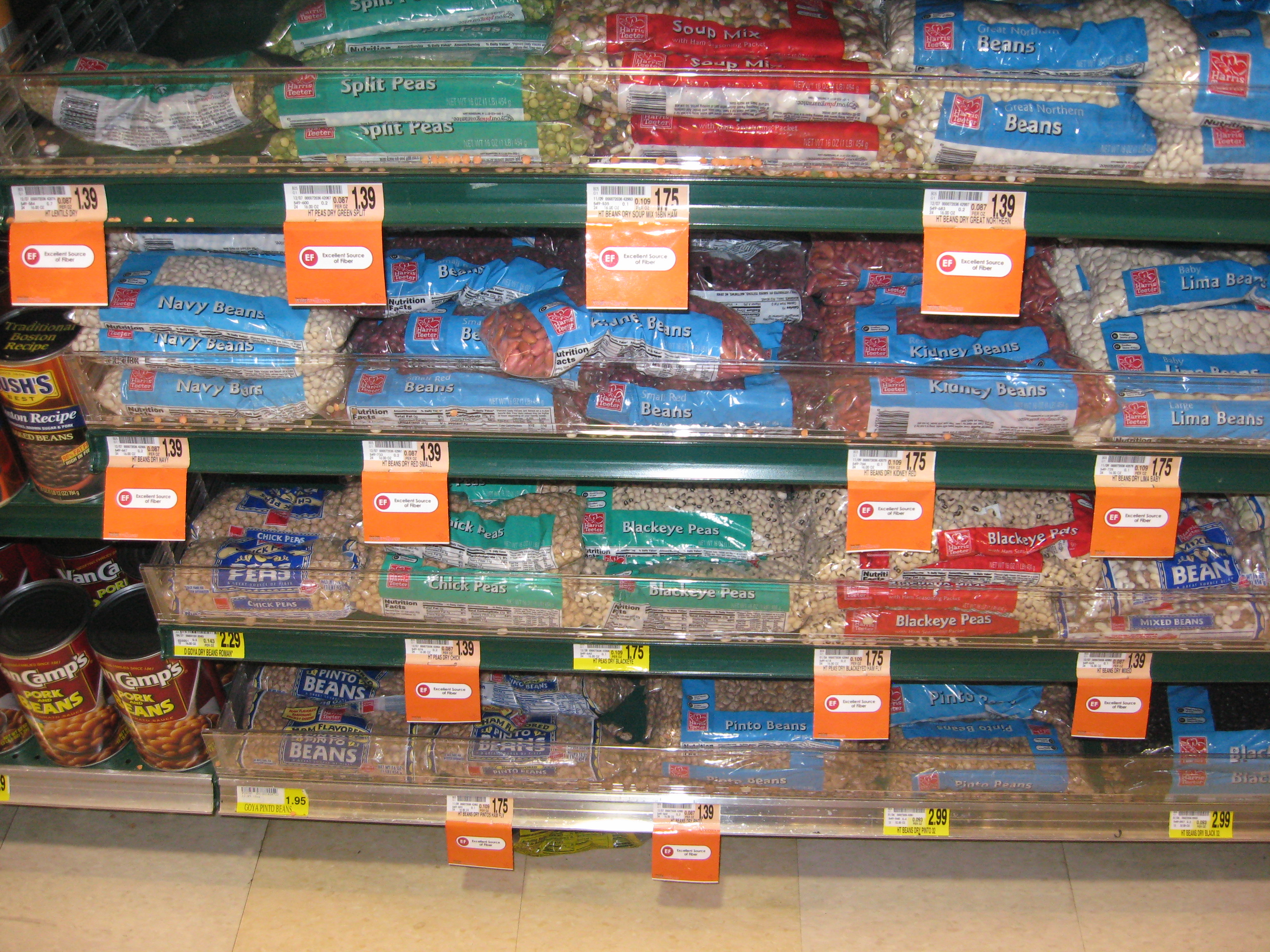
dried beans

dried beans

Now, how many variations are there on this basic recipe?  Well, go look at the canned beans or the dried beans…there are so many possibilities.  Even though this recipe calls for the liquid from the canned beans, I really don’t like the taste so I drain and rinse the beans and substitute an equal amount of water or chicken stock instead…but do whatever works for you.  If you’ve cooked your own dried beans, then by all means use the liquid from the beans.

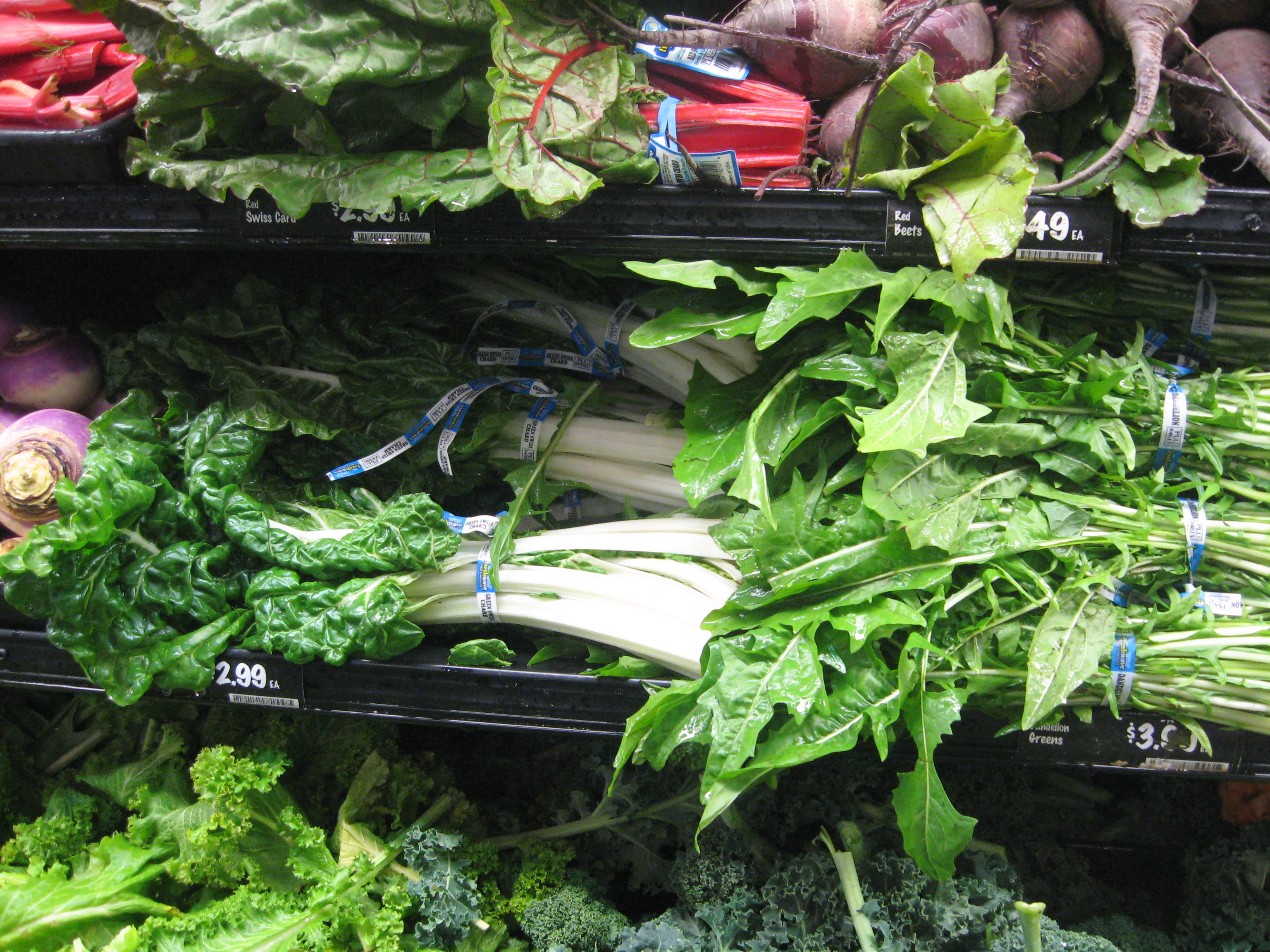
produce displace of winter greens

winter greens

Now go check out the frozen greens in the supermarket–or the fresh ones in the produce department. (I don’t like spinach in this since it’s so tender that  it cooks to slime–but kale, collards, mustard, even cabbage will work–any of the “tough” greens that need longer cooking).

You want more variations?  Okay go to the meat department and check out the varieties of sausage that are available–polish sausages, bratwurst, and if you’re lucky, you’ll find store-made fresh sausages: bangers, lamb sausages, chicken sausages, bratwurst, et cetera.  So there are lots of variations with some minor changes in seasoning.  I know that If I ask, I can find out what seasoning is in the sausages, and adjust the seasoning of my one-dish meal accordingly.  When you want to make a single-serving, you can buy just one or two sausages.

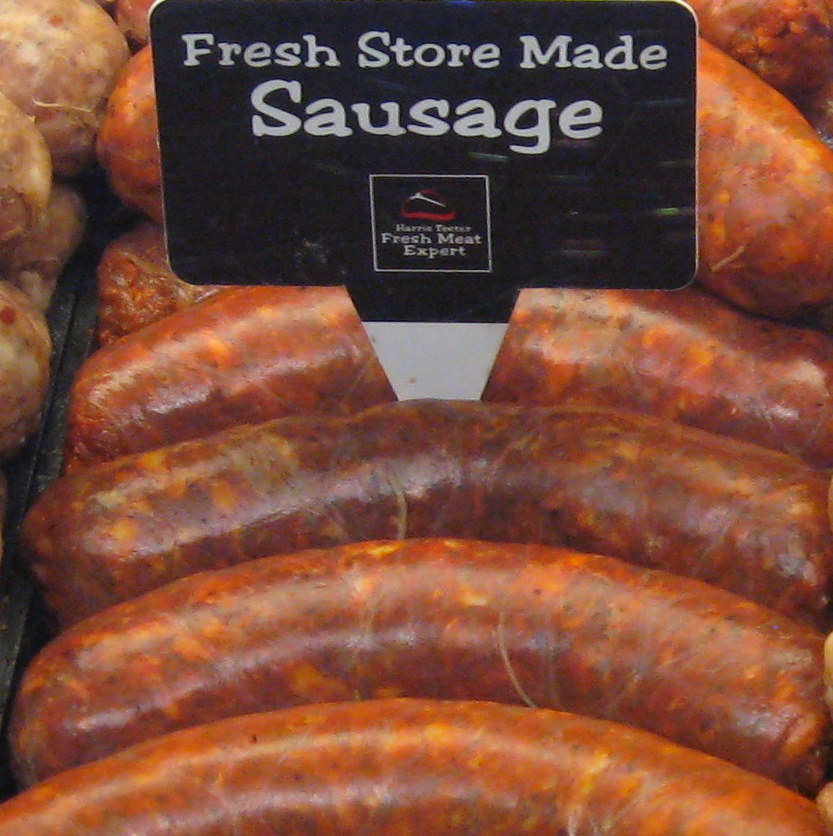
sausages in display case in meat department of Harris Teeter

sausages

If you like this sort of thing, here a link to The Kitchn where you’ll find a great sounding recipe for beans and greens with a slightly different touch.  These are such versatile ingredients–and just add a bit of rice or pasta and you’ve got a whole meal, with or without the meat.

Braised pork and cabbage (Caribbean seasoning)

I’m of the opinion that cabbage is a much under-appreciated vegetable!  It’s good for so many things besides the traditional “coleslaw”.  One of my favorite things is to use it in braises.  Here is one of my favorites:  Braised pork and cabbage.  Again, it’s versatile, freezer-friendly, and the quantities are flexible.

Heads of savoy cabbage

Savoy cabbage

A particular favorite is from Jacques Pepin’s Cuisine Economique.  I’ll give you the basic recipe here ingredients as given in that recipe and summary of the preparation.  If you’re interested in ways to take economical cuts of meat and make them into something really good, this is a book worth looking at (See Bibliography).  The recipe is here not to give you quantities, but to suggest seasoning.  While this recipe suggests a larger cut of pork, I usually get the boneless country ribs to use for this–they are really more like pork butt than are loin chops.

Braised Pork and Cabbage (p. 247)

Ingredients

  • 2 teaspoons salt
  • 2 teaspoons dried oregano
  • 1/2 teaspoon allspice powder
  • 1 teaspoon cumin powder
  • 1/4 teaspoon cayenne pepper
  • a 4-pound pork roast (loin tip, shoulder, or pork butt)
  • 1 tablespoon virgin olive oil
  • 1 large or 2 medium-size heads Savoy cabbage (about 2-1/2 pounds), leaves cut into 2-inch pieces and core cut into 1/2-inch pieces
  • 2 large onions (about 1 pound), peeled and sliced
  • 1 tablespoon of sugar
  • 1/2 cup cider vinegar
  • 1 tablespoon dark soy sauce
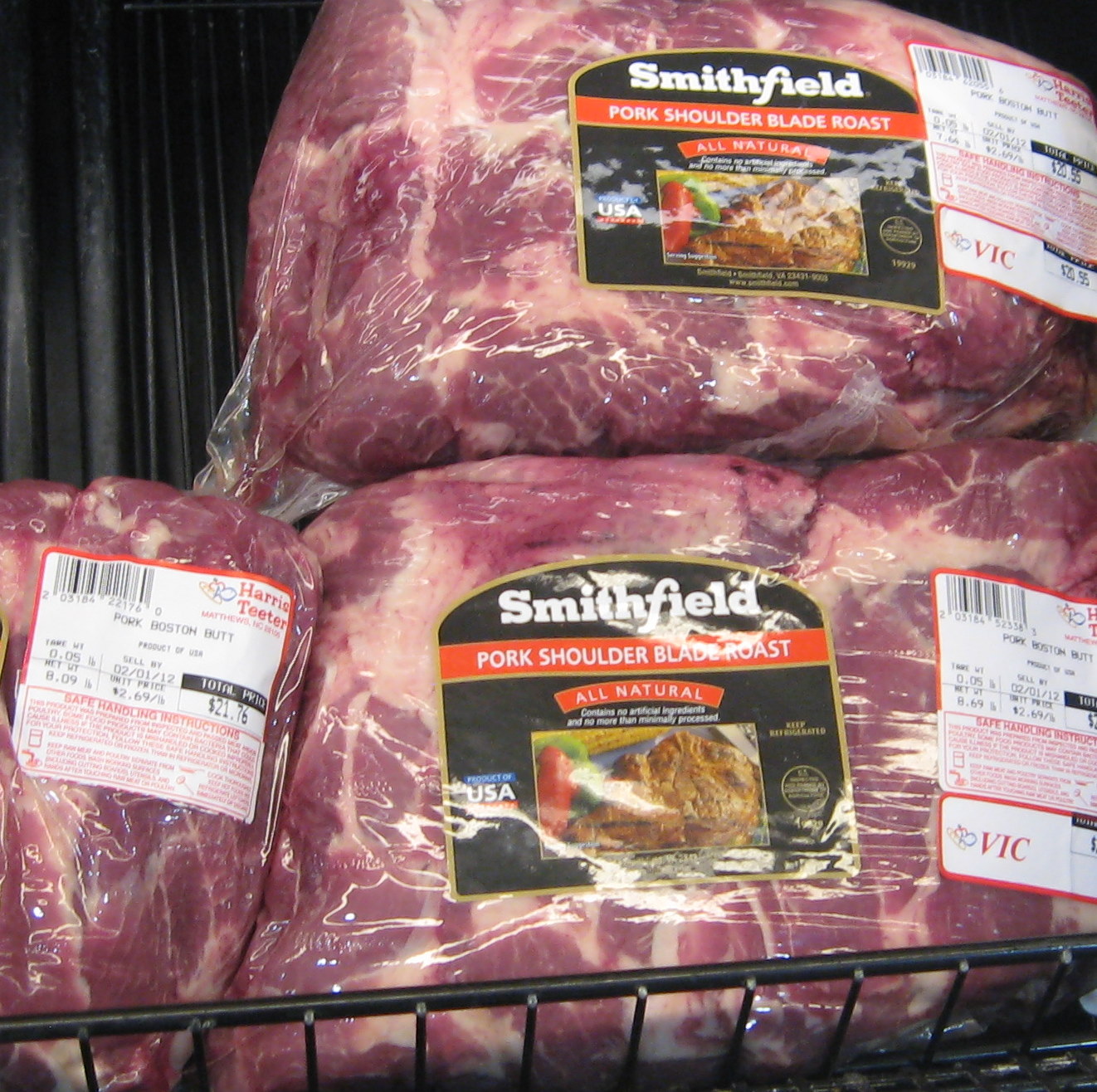
packaged pork boston butt

boston butt shoulder roast

Preparation

  • Mix the salt, oregano, cumin, allspice, cayenne, and rub the mixture all over the meat.  (See Notes.)
  • Heat the olive oil in a heavy pot.  When hot, brown the meat over medium-to-high heat for about 30 minutes (See Notes) until well browned on all sides.
  • Cover tightly and place in a preheated 325 ° F oven and cook for 45 minutes to a hour.
  • Remove the meat and transfer to a platter.
  • Combine the cabbage, onions, sugar, vinegar, and soy sauce in the pot.
  • Put the meat on top of the cabbage, cover, and return to the oven for about 2 hours until the roast has released juice and is fork tender.
  • Slice the meat and serve with the cabbage and juices from the pot.

Notes:

  • The cooking times will vary to some degree with the type of meat you use–shoulder, butt and ribs have enough fat and connective tissues to need long slow cooking. A supermarket loin roast, which I would not use, can easily become dry with long cooking unless brined.   I do not usually make this with a roast, but with big, meaty,  country-style spare-ribs, with about  1 to 1-1/2 pounds.  Even using about a quarter of the meat, your cooking time will still be longer than a quarter of these times–you just need to check the doneness)

    country ribs

    butt country ribs

  • You’ll probably want to use the quantities given for the rub ingredients–and I like to put these on the meat for at least several hours (if not a day before) browning it.  There is a lot of surface area to cover with the ribs.
  • This is also a freezer-friendly dish–I love to have a single-serving sized portion to pull out when I need comfort food on a cold day or I’m just in a hurry for food.
  • I like to serve steamed potatoes with it–or add one of those single servings to a  single-serving amount of rice as it cooks (in the rice cooker) for a complete meal.
  • A Riesling or Gewürztraminer wine is excellent with this dish.

Pot roast with brown gravy

You’ll notice that I said “gravy”–this is too much of a comfort food to use “sauce” because what you’re getting is plain, down-home gravy that needs bread or potatoes to complement it.

After I got my Christmas present (See The Petit Brasier) I had to give it an immediate test run.  What better to test than a favorite braised dish:  pot roast.  This was nothing fancy at all.  You’ll note that I’m not even saying it had a sauce–I really did mean good, old-fashioned, down-home, satisfying brown gravy, lots of onions, and good tender beef.

Even though I say I dislike leftovers, there are some exceptions and pot roast is one of the exceptions.  Sometimes I get the great big chuck roast and make a lot of it and put it in the freezer in single-serving packages, right with the chili, the stock, and some soups so that I can have an “instant” meal–the microwave is great for defrosting and individual portion.  I don’t always want to have to pack and freeze leftovers, so with the small braiser, and a cooperative butcher or meat department at the supermarket, I can make a small pot roast that’s good for two, or maybe three meals since there are some very easy ways to kind of spiff it up for the reruns.

This is really not a recipe–it’s a happening–quantities are approximate as the amount of oil you need will vary with the size of you pan, the amount of mushrooms and onions you are going to sauté–just use what you need.  (Improvise! Wing it!  Just do it–it will work.)

Ingredients

  • 1-1/2 to 1-3/4 pound piece of chuck roast
  • 4 or 5 small onions (or 3 medium to large ones) sliced moderately thinly
  • 2 teaspoons flour, plus flour for dredging the beef
  • about 3 tablespoons olive oil (divided as needed for  sautéing mushrooms and onions.
  • 8 ounces of mushrooms, sliced (more if you really like mushrooms)
  • 1 to 1-1/2 cups of water or stock
  • salt and fresh-ground black pepper to taste
  • about 8-10 medium garlic cloves.

Preparation

  1. Pat the pot roast dry with paper towels and dredge in a flour seasoned with salt and pepper.  Let it stand while you cook the onions and mushrooms.
  2. Slice the mushrooms and sauté in a little of the olive oil until they release their liquid and brown.  When brown and liquid has evaporated, remove to a bowl.
  3. Add a bit more olive oil, and sauté the sliced onions until they start to brown and caramelize.  When partly browned, remove to a bowl with the mushrooms.
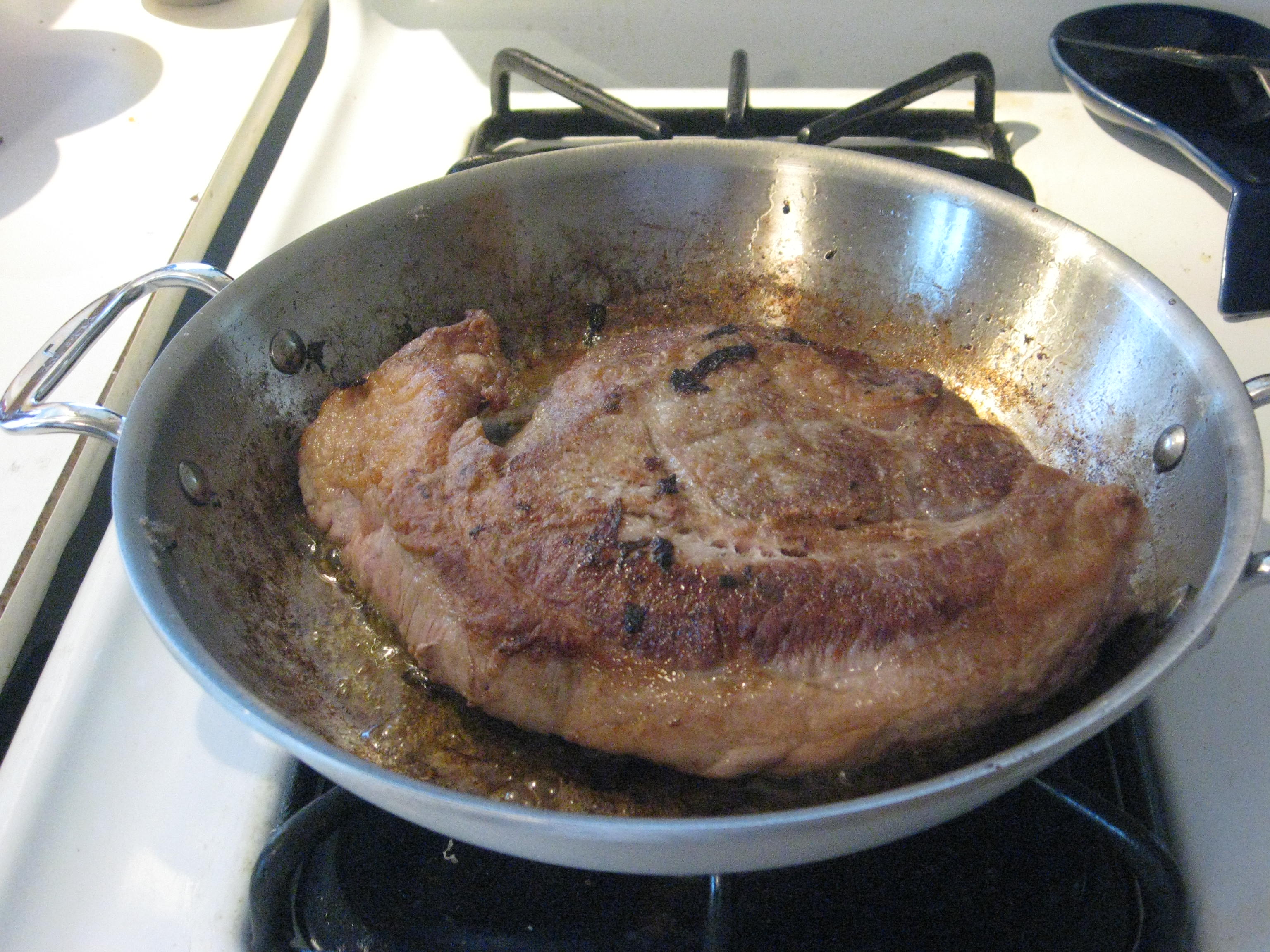
  4. Add the additional olive oil, as needed, and brown the beef well on both sides. Put it to the side for final assembly.
  5. Take the rest of the olive oil, and the 2 teaspoons of flour, and brown the flour in the oil until it turns a nice golden brown and smells toasty.  Turn the heat down, add the stock or water to the browned flour.
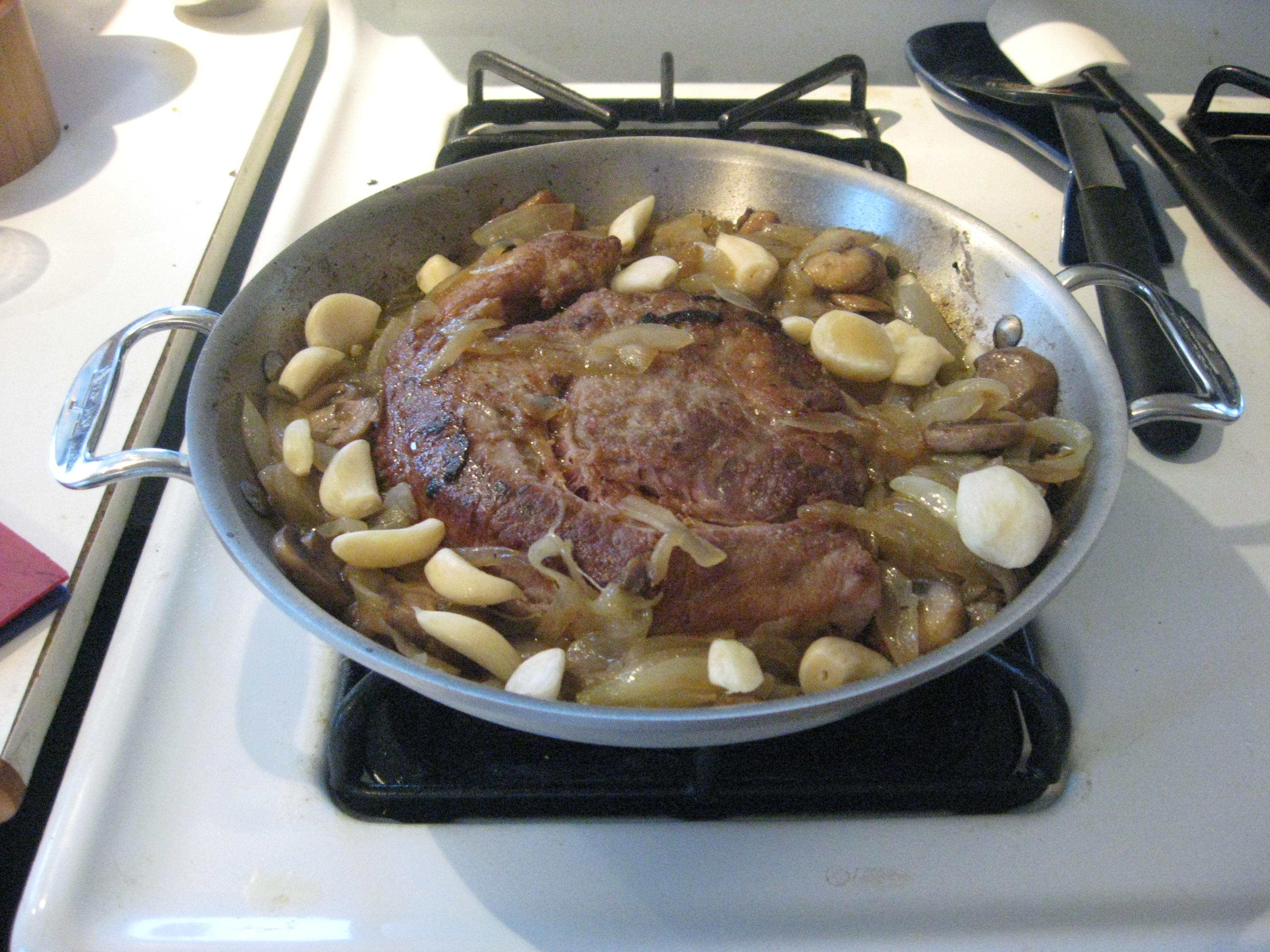
  6. Add the sautéd onions and mushrooms, and return the browned roast to the pan, with the onion/mushroom mixture around the sides, sprinkle the garlic cloves over the top.
  7. Bring to a simmer on the stove top, cover and place in a 295-300 ° F oven and cook until fork tender–about 2-3 hours (unattended).  Check periodically to see if you need to add more liquid.  You need just enough to make nice thick gravy, and the onions are going to cook down to help thicken the gravy.

For that first meal, all you really need is a salad, maybe a baked potato….or some noodles.For the second serving, stir a tiny dollop of sour cream into the portion of brown gravy for this serving to add some tang and be a bit “stroganoff-ish”, add some steam-sautéd (See Cooking Vegetables Quickly) carrots, or spinach as a side.   What about the third?  As you reheat, add some tomato paste, or some tomato sauce to the last bit for a different taste.

It’s pure unadulterated comfort food.  Even if it’s not a single serving, it’s an appropriate quantity for small-time cooking, but it sure has big-time taste.  It’s great what having the right size pan does for cooking for one.

A son goût!

Chilli con carne

I love weather where I can get up want to put on clothes and  warm food like oatmeal for breakfast!  This morning I turned on the space heater in the office for a bit.  This means it’s time to cook things that will give me quick comfort food during the colder weather.

One of my favorites  for winter is chilli con carne–a version that I learned from a cook who spoke no English,  by watching it being made.  I’ve only made one modification to that original “recipe”–and that has been to add some sun-dried tomatoes; otherwise, it’s as I saw it made originally.

This is not a recipe that has fixed amounts–you’re going to have to taste and season it to suit yourself.  It’s a bit time consuming, but since it’s a large quantity and freezes well, it’s well worth the time and effort.

You can manipulate the “heat” by leaving in some seeds from the chile peppers, or by adding cayenne or crushed red pepper flakes to achieve the desired hotness.  I usually leave the seeds in about half the chile peppers–I’d consider it mild to moderate in heat, depending on the particular batch of chile peppers.

Ingredients:

  • 4 slices bacon or fatback minced, browned and reserved
  • 6 to 8 medium yellow onions, chopped
  • 2 tablespoons ground cumin
  • 2 tablespoons ground coriander
  • 3 pounds beef, diced or coarsely ground
  • 3 pounds pork, diced or coarsely ground (shoulder preferred to loin)
  • 4-5 chipotle peppers in adobo (1 small can)
  • 2-3 dried ancho chilli peppers, toasted and crumbled (seeds removed)
  • 2-3 dried guajillo or pasilla  negro chilli peppers, toasted and crumbled (seeds removed)
  • 1/2 cup minced garlic
  • 1/2 to 3/4 cup masa harina, toasted; cornmeal can be substituted if you don’t have masa harina)
  • 32 ounces of beef broth/stock
  • kosher salt to taste (approximately 3 teaspoons)

Assembling the chili:

  1. In a large dutch oven, sauté bacon until brown and crisp; remove and reserve.
  2. Remove all but about 2 tablespoons of fat, reserving excess, and add the chopped onions; cooking slowly until caramelized.
  3. Meanwhile, toast the dried chilli peppers by holding in the flame of a burner until aromatic.  Remove seeds and crumble.
  4. Toast the masa harina in a small skillet and set aside.
  5. Add cumin and coriander to the onions and sauté until aromatic.
  6. Add garlic and sauté for about 1 minute.  Remove to a bowl and set aside.
  7. Add additional bacon fat if needed, and brown meats in small batches, transferring to the bowl with other ingredients.
  8. Remove excess fat from dutch oven, and deglaze by adding beef stock.
  9. Transfer meats and other ingredients from the bowl to dutch oven, add chipotle peppers and adobo sauce, sun-dried tomatoes, and salt.  Stir in the toasted masa harina.
  10. Cover tightly and place the dutch oven in a very low (275 ° to 295 ° F) oven and allow to cook for approximately 4-6 hours, tasting and adjusting seasoning as needed.  Add water or more stock if it becomes too dry, but I prefer this to be a thick chili.

I’ve tried this once in a crock-pot or slow cooker, and just not been happy with the final result.  I think that the oven cooking allows just enough evaporation and concentration to do good things with the flavor that just cannot be gotten with a crock-pot.  It was certainly edible when done in the crock-pot, but just lacked a little something.  Were I doing this in hot weather, I’d certainly use the crock-pot, but since the weather is cooler now, the oven heat is not a problem, and I get to savor the aroma as it cooks.