Spiced Strawberry Sorbet

It’s summer time–I know that you don’t want to hear me complain about heat and humidity, so I won’t.  There are some things that are good about it–and one of them is strawberry season.  I’ve enjoyed some of the local ones that I’ve gotten at Harris Teeter (so happy to see them carrying local produce). When strawberries are perfectly ripe I just want to eat them completely unadorned. But the hot weather makes me think about cool things like sorbet, ices, and ice cream.

bowl of washed strawberriesHere’s a recipe that I’ve had for literally years.  It’s so good that I wanted to share it with you as one more way to enjoy the season’s strawberries. (Thanks to Google, I can tell you that I got this recipe from Epicurious.com). Just as in making the sour cream strawberry ice cream, you don’t want berries that are just “okay” or “fine for ice cream”, you want them to be absolutely luscious–the kind where they are so fragrant that they make you feel like you’re right in the strawberry field feeling the sun shining down on your back and smelling the ripe, fragrant berries.

I’ve made one slight change to this recipe–I like to toast the black peppercorns in a dry skillet until they start to smell aromatic and peppery, then crush and add to the sorbet. I think it makes a more complex, spicier accent from the pepper.

Spiced Strawberry Sorbet

Ingredients

  • 2/3 cup sugar
  • 2/3 cup water
  • 3 tablespoons black peppercorns, coarsely crushed
  • 1 quart strawberries, hulled
  • 2 tablespoons balsamic vinegar, or to taste

Preparation

  • In a saucepan combine sugar and water and bring to a boil, stirring until sugar is dissolved.
  • Stir in peppercorns and remove pan from heat.
  • Cover pan and let syrup stand 1 hour.
  • Strain syrup through a fine sieve into a food processor or blender and discard peppercorns.
  • Puree hulled strawberries with syrup until very smooth and force though sieve into a bowl, discarding seeds and other solids.
  • Stir in vinegar and chill, covered, until cold.
  • Freeze mixture in an ice-cream maker, following manufacturer’s instructions.
  • Serve sorbet with sliced strawberries.

The Epicurious recipe suggests an accompaniment of toasted almond Phylo crisps; that recipe is given at the link above.  The balsamic vinegar does not need to be absolute top of the line–but it should be authentic–not a cheap imitation.  To be frank, I’ve never gotten around to making the phyllo crisps to go with the sorbet, though I can attest that a good traditional pound cake, tuiles, or madeleines are excellent with it.

After tasting strawberry with green peppercorns in a Hachez Cocoa d’Arriba chocolate bar, I want to try this using green peppercorns, probably bloomed with heat before putting them into the sorbet.

Another taste combination that occurred to me was to add cilantro (tiny, newly sprouted plants).  If you’re questioning my sanity on that one, there is a reason it occurred to me.  When I was in San Antonio for the national American Society for Indexing convention, I had dinner at Los Ramblas (Spanish cuisine), and I had a strawberry gazpacho with tiny cilantro “microgreens”–those with just the cotyledons–not even the first true leaves; it was an awesome flavor combination that I think might adapt nicely to sorbet. (The microgreens are not nearly so strongly flavored as fully grown cilantro.)

small alpine strawberry

alpine strawberry

Get Cooked…

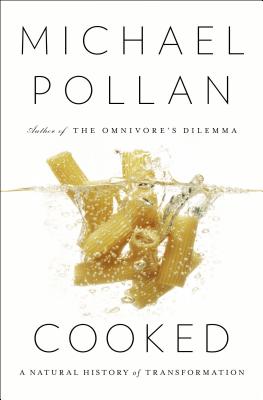
ISBN 9781594204210Obviously I’m a fan of food science and curious about the history of food and cooking in any culture. Michael Pollen’s Cooked: A Natural History of Transformation is a good read; a fascinating review of cooking origins, history, and consequences of both cooking and not cooking.

As usual, Pollen’s style makes this book easy reading, but raises interesting questions about the role of cooking in the development of Homo sapiens.

The book follows Pollen as he attempts to master four cooking techniques: fire, air, water, and earth and describes the place of the cook in relation to nature and culture.

He raises questions about what cooking is, what cooking does for us, and the place we have let processed food assume in our modern culture. It’s an interesting synthesis of history, food science, and archeological discoveries. The implications of NOT cooking, allowing the food processing industry to assume the role of the cook, are something we all need to consider.

This is not a recipe book but it certainly increases understanding of food preparation—cooking—using heat (barbecue), air (baking), water (braising), and earth (fermentation).

The links will take you to an independent book shop were you can order it in various editions—but I get nothing—it’s not affiliate marketing of anything like that.

Supermarket special….

Andrea is passing close to us and the rain is the kind that makes you want to have quality time with the cat and a good book–so glad to be indoors.  But, my unpreparedness did make me venture out (cat litter very low–very serious problem!); fortunately, out and back before the heavy rain started.

tuna medalions

tuna

I came home with an impromptu purchase–the local HT had lovely looking tuna (wild caught) on sale.  I’m going to make a small batch of tuna confit to use with my summer salads, though I suspect that one of the small “steaks” is going to supplement the grilled or griddled shrimp for supper.

I’m really intrigued by the sous vide cooking technique–and I’m constantly drooling over recipes from Stefan’s Gourmet Blog!  Such perfectly cooked meat, and the veggies, too. But, as Stefan points out, it takes equipment!  I’d love to try tuna like that as it seems that fish do well that way.

For now,  I  will settle for the very slow “poaching” as an alternative.  It certainly beats the average canned tuna (unless you can get one of the canned variety that is hand packed, and cooked only once.

I keep wondering if there are any low-budget ways of trying the sous vide  technique! I think some research is called for here.

Spinach and Roasted Red Pepper Hash

A very rainy day (Andrea is passing through here–or close at least)–the kind that promotes leisurely activity and thoughts of good food–warm but not too heavy. I’m being leisurely and browsing food blogs–and have found some very appealing recipes that I thought would be good to share.

Flamusse aux Pommes (Burgundian Apple Flan)

Looks awesome! Burgundian food and wine are some of my favorites!

StefanGourmet's avatarStefan's Gourmet Blog

For the Burgundian evening there also had to be a traditional dessert from Burgundy. I decided to prepare flamusse, an apple flan that is similar to clafoutis (made with cherries). This is a very an quick simple cake/dessert to make, but really tasty. The important thing is to use only a bit of batter and not to beat too much air into it, otherwise the flan will rise too much and although it will still taste good, it will look quite messy.

View original post 248 more words

Chocolate is Your Friend

As confirmed chocoholic, I just had to pass this on by reblogging it. Love goat cheese, love chocolate….must try.

Rufus' Food and Spirits Guide's avatarRufus' Food and Spirits Guide

Take two thick slices of ciabatta, slather with goat cheese, top with chopped dark chocolate (an ounce of each per slice) pop in the oven at 350 until they get all gooey, about 10 minutes and viola. If you’d like, sprinkle on some sea salt or sliced strawberries to end.

View original post

Eating hostas

Great articles here!

Alan Carter's avatarOf Plums and Pignuts

One of my favourite seasonal treats from the forest garden is the hostas. No, no spelling mistake: hostas are really edible. In fact, they are a near perfect forest garden crop. Woodland is the natural habitat of many hosta species, so they like moist soil with plenty of organic matter and tolerate a considerable amount of shade. A friend tells me that they have a positive allelopathic relationship (i.e. they secrete chemicals that help each other) with apples, and since the research on it is published in Russian I’ll have to take her word for it. Hostas are no novelty nibble: they have the potential to be a major productive vegetable.

hosta clump

The best part of the hosta is the ‘hoston’, the rolled up leaf as it emerges in the spring, although many varieties are still pretty good even once they have unfurled. The best way of cooking them depends on the…

View original post 522 more words

Check out this recipe….

We’re into hot, humid weather now so I’m always looking for hearty, meal-type salads.  I just found this one which has gone into my must-try category.  From The Honor System:  Chipotle Chicken Salad.

Food for body, and for the spirit.

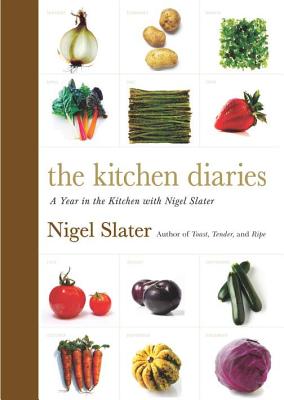
cover of the kitchen diariesI’ve had an indolent–well, honestly let’s say lazy, slothful, shiftless, do-nothing morning.  This entails sitting on my deck watching the Brown-headed Nuthatches,  Downy Woodpeckers, and Carolina Chickadees (all fledglings in various stages of do-it-yourself development) with parents occasionally feeding them while they flit about and practice eating and perching. (I’m taking lessons from Frankie, the cat, on relaxation.)Between hefting the binoculars and sipping café au lait, I’ve been perusing Nigel Slater’s The Kitchen Diaries.

If you like to eat good food, this is a book that you should at least check out of the library and read.  After reading one of his other books, I bought it (hard copy, not Kindle).  I suspect that it’s a book that will never make it onto the bookcase shelf–rather it will wander from living room, to bedside table, to kitchen table, to the office, and back again, to be picked up and read for any number of reasons–fun and inspiration included. In just a brief perusal, it’s gone to very close to the top of my favorite food books, right up there with M.F.K. Fisher’s The Art of Eating and Roy Andries de Groot’s In Search of the Perfect Meal (contents selected by Lorna J. Sass).

This is food for the spirit,  the kind of recipes that lead to improvisation–no long lists of ingredients, no really complicated techniques; just a remarkable reverence for excellent quality seasonal ingredients–be it fruit, vegetable, or animal, prepared with a love of good food and appreciation of nature.  It is imbued with a sense of appreciation for food–not all of it actually cooked for a sit-down meal.  The author recognizes something that all of us who cook and put “leftovers” in the refrigerator do–grazing–with  the same appreciation, given the appropriate circumstances, for food, even when grazing.

Nigel Slater has a wonderful writing style–easy to read, but full of food for thought with a great turn of phase (British to the Nth degree).  Recipe instructions are clear, and concise; grazing and casual creations are often to be found “buried” in a paragraph, which makes a delightful discovery as you read–a bit like a treasure hunt! (There is an index as well where you can find recipes, or just read through to see what’s available–I know, I do have a “thing” about indexes–I sometimes actually read them!).

Don’t misunderstand, the recipes here are not what you’re likely to find in Gourmet or Bon Appetite.  This is food that isn’t architecture, and doesn’t look as if it’s “too good to eat”. It’s not a creation, or restaurant food–it’s comfort for both the body and for the soul.

Lentil & couscous salad with cherry tomatoes, mint and goat cheese

As you can tell, I like lentils!  And tomatoes.

It’s getting to the kind of weather where I begin to think about “salads” for hot-weather meals.   I know it’s a bit early for this since tomatoes not  ready to pick yet.  While I was writing about lentils, shortly after planting some tomato seeds (Black Krim, Japanese Black Trifle, Black Pearl, Brandywine, Indigo…..) I couldn’t help but think of this salad with some anticipation as I planted the Black Pearl cherry tomato seeds.

Lentil & Couscous Salad with Cherry Tomatoes, Mint and Goat Cheese

This is my adaptation of the recipe from Gourmet 1995, retrieved from Gourmet on Epicurious with a few changes from me.  (This is a great place to browse for salad inspirations.  You don’t need to follow the recipes–just look at the ingredients and make a salad.)

Ingredients

  • 1 cup lentilles du Puy (French green lentils) or brown lentils (or any small lentil that will hold its shape well)
  • 3 tablespoons sherry vinegar  (The original recipe calls for white wine vinegar–but I prefer sherry; use what you have at hand.)
  • 1-1/4 cups water
  • 1 cup couscous
  • 1/2 teaspoons salt
  • 1/4 cup olive oil (preferably extra-virgin)
  • 1 large garlic clove, minced and mashed to a paste with 1/4 teaspoon salt
  • 1/2 cup finely chopped fresh mint leaves (spearmint, rather than peppermint)
  • 1 bunch arugula, stems discarded and leaves washed well, spun dry, and chopped
  • 2 cups vine-ripened cherry tomatoes, halved.
  • 1/4 pound feta, crumbled (about 1 cup)

Preparation

  • Cook the lentils in a small pan, covered by about 2 inches of water until tender but not getting mushy.  The lentilles du Puy cook more slowly than other varieties, so if you substitute, watch them carefully to keep from over-cooking them.  My preference is for the french, Spanish brown, or black lentils instead of the brown.
  • When tender, drain well and transfer to a bowl.  Stir in 1 tablespoon of the vinegar, salt and pepper to taste.
  • Prepare the couscous:  bring water to a boil and couscous and salt (use the package directions).  Remove from heat and let stand until the water is absorbed.  Fluff and transfer to a bowl. Stir in 1 tablespoon of the extra-virgin olive oil and cool.
  • Dressing:  Whisk together the garlic paste, remaining vinegar (to taste), and oil.  Add salt and pepper to taste.
  • Add the lentils and dressing to the couscous and mix well. Chill well–about 2 or 3 hours.
  • Before serving, add the crumbled goat cheese and the mint leaves.

One problem I’ve found is that the cherry tomatoes can give off a lot of liquid and make this salad too juicy.  I like to toss the halved cherry tomatoes with about 1/2 teaspoon kosher salt and let them stand in a colander for about 15 or 20 minutes before I add them  to avoid the excess juice.  This doesn’t make them “salty”–but do taste before you add the last salt to taste.  This will hold well in the fridge for about 24 hours if you’ve  gotten some of the excess liquid from the cherry tomatoes.

My favorite garnish for this is crispy slices of European style cucumbers and crispy, crunchy radishes on the side as well.