Celebrating the autumnal equinox.

I woke up to a lovely fall morning–sunny, breezy, cool–absolutely lovely day, some leisurely time over coffee in the sunny kitchen, and realized that I’ve gradually been shifting into autumn cooking mode–cooking urges that are very different from the hot, humid weather of summer.

I’ve been making meals in the multitasking rice cooker lately: whipped up a great spicy lamb and garbanzo bean stew and another of braised pork and collard greens.  Some of immediate use today, and some of each of those to stash in the freezer for quick meals on a cold winter day when I need serious comfort food.

The lamb and garbanzo “stew” was one that I literally threw together in about 15 minutes while I was finishing an index to send to a client. A good friend who knows how much I like to use chili peppers gave me a wonderful chile powder from Made in New Mexico.  I used lamb shoulder chops, a healthy batch of chile powder, some Mexican oregano,  Goya garbanzo beans, and a can of diced tomatoes. The lamb chops came out of the slow-cooking melt-in-your-mouth tender, with just enough spice to accumulate a bit of burn by the time you’ve eaten a bowl of it, but not enough to rip you taste buds out by the roots.  This chili powder is the best I’ve ever used–I’ll be ordering more of that one.

Another job that just could not be put off any longer was cleaning the gas stove. It is one of my very least favorite things to do so I do tend to procrastinate about it; that does not make the task any easier and I know that but I still procrastinate about it. (I think that a house elf would be a wonderful thing to have around!)

Now the stove has at least had a  lick and a promise as my grandmother would have said. Well, at least the lick, but still needs the promise though that is going to happen today. (Definitely no pictures here!)  So happy that the oven is self-cleaning since it gets lots of use in cool weather for carefree braising while I’m working at home.

Now I’m ready for a plate of braised pork and collard greens!

Turnip greens…

Loose mustard greens

While having leisurely Sunday morning coffee I was browsing through the Huffington Post and discovered a presentation on rediscovering mustard greens (though I didn’t realize that they were lost or misplaced). If mustard greens need rediscovery, then perhaps turnip greens need rediscovery (or just discovery) too. One of my favorite things to do with heartier greens (those that need longer cooking, unlike spinach) like collards, mustard, kale, dandelion, or chard is to braise them with sausages for a one-pot meal that is easy to make in any quantity–and reheats and freezes well.

Just recently I was the happy recipient of a LOT of turnip greens from a gardener who likes the bottoms–the turnips and not the green tops. Some of these were older–so a bit spicier, with some of the “horseradish” tang that you find in mustard greens as well.

Even though it was warm weather, I had just started an intense indexing project and wanted some easy food–braised greens with sausage.  No need for a recipe and certainly not labor-intensive or needing a lot of attention while it cooked. (I thought about using the pressure cooker, or the slow cooker but just did this on the stove-top this time)

hot italian sausage IMG_6092I started by dicing and sautéing a large onion, then added a mix of sweet and hot Italian sausage, removed from the casings, to brown lightly.  Of course it needed garlic–about half a dozen large cloves, minced. (The garlic mellows a lot during cooking.)  Since the greens had their own “heat” and I had used hot Italian sausage, I didn’t add the hot red pepper flakes that I would have used with other sausages, or other greens–e.g. kale or collards.

Once the garlic had sautéed enough to become aromatic, I added the washed and cut up greens (still wet from washing) and a can of diced tomatoes. In a tightly lidded pot, I left this over low heat until the greens were almost tender–about 45 minutes. (Since these were older turnip greens, I did remove the stems before cooking.)

In went one can (rinsed) of pinto beans (not on the low-carb diet, but…) and continued to cook about 30 minutes more to let the beans pick up some of the flavor of the greens and the sausage. Home-cooked dried beans would have been better, but since I didn’t have any of those in the freezer, and hadn’t planned ahead–canned ones had to do for now.

And there you have it, a quick supper, and a couple of servings for the freezer for several more quick, comforting meals.  Since the greens were spicy, the sweet Italian sausage added a nice counterpoint. I’m glad to have some tucked away in the freezer since I suspect that will be the last of the turnip greens for the summer–as the weather gets hotter the greens get a bit more assertive. If I’m lucky and there are more, I’ll probably do this again, but omit the hot Italian sausage. Or think about doing this with lamb sausage…so many possibilities, and so easy–and reasonably healthy as well.

All you need to add is a glass of a nice sassy, robust red wine, and maybe some good crusty bread (if you’re not on a low-card diet). A son goût!

Get Cooked…

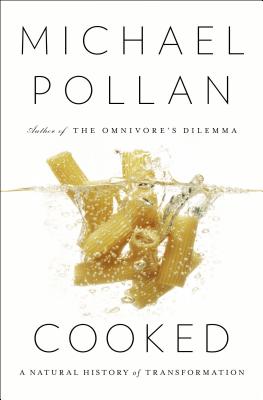
ISBN 9781594204210Obviously I’m a fan of food science and curious about the history of food and cooking in any culture. Michael Pollen’s Cooked: A Natural History of Transformation is a good read; a fascinating review of cooking origins, history, and consequences of both cooking and not cooking.

As usual, Pollen’s style makes this book easy reading, but raises interesting questions about the role of cooking in the development of Homo sapiens.

The book follows Pollen as he attempts to master four cooking techniques: fire, air, water, and earth and describes the place of the cook in relation to nature and culture.

He raises questions about what cooking is, what cooking does for us, and the place we have let processed food assume in our modern culture. It’s an interesting synthesis of history, food science, and archeological discoveries. The implications of NOT cooking, allowing the food processing industry to assume the role of the cook, are something we all need to consider.

This is not a recipe book but it certainly increases understanding of food preparation—cooking—using heat (barbecue), air (baking), water (braising), and earth (fermentation).

The links will take you to an independent book shop were you can order it in various editions—but I get nothing—it’s not affiliate marketing of anything like that.

Supermarket special….

Andrea is passing close to us and the rain is the kind that makes you want to have quality time with the cat and a good book–so glad to be indoors.  But, my unpreparedness did make me venture out (cat litter very low–very serious problem!); fortunately, out and back before the heavy rain started.

tuna medalions

tuna

I came home with an impromptu purchase–the local HT had lovely looking tuna (wild caught) on sale.  I’m going to make a small batch of tuna confit to use with my summer salads, though I suspect that one of the small “steaks” is going to supplement the grilled or griddled shrimp for supper.

I’m really intrigued by the sous vide cooking technique–and I’m constantly drooling over recipes from Stefan’s Gourmet Blog!  Such perfectly cooked meat, and the veggies, too. But, as Stefan points out, it takes equipment!  I’d love to try tuna like that as it seems that fish do well that way.

For now,  I  will settle for the very slow “poaching” as an alternative.  It certainly beats the average canned tuna (unless you can get one of the canned variety that is hand packed, and cooked only once.

I keep wondering if there are any low-budget ways of trying the sous vide  technique! I think some research is called for here.

Flamusse aux Pommes (Burgundian Apple Flan)

Looks awesome! Burgundian food and wine are some of my favorites!

StefanGourmet's avatarStefan's Gourmet Blog

For the Burgundian evening there also had to be a traditional dessert from Burgundy. I decided to prepare flamusse, an apple flan that is similar to clafoutis (made with cherries). This is a very an quick simple cake/dessert to make, but really tasty. The important thing is to use only a bit of batter and not to beat too much air into it, otherwise the flan will rise too much and although it will still taste good, it will look quite messy.

View original post 248 more words

Cooking monkfish

TGIEOT—yes, that’s a bit more than TGIF!  It’s end-of-term.  The Spring term was the school term from hell, starting right at the end of Fall term!  Over the winter break I had unexpected course preparation to do for two online classes—switching from Blackboard to Sakai—for content management.  Top that off with an ongoing indexing project, and it’s—well, let’s just say it left very little time for cleaning, cooking, or writing!  Then, add to that a hard-drive failure for my computer….but it’s over now.

I’ve taken some time to work on revising the on-deck herb garden since I had plants that needed to go into their home pots, and a couple of days to do nothing but have quality time with the cat.  All that has left me yearning for some relaxation time and some really good food—cooked by me.

My day was absolutely made when I got my email delivery of the “Fresh Catch” specials from my local Harris Teeter this morning: they had monkfish! In terms of favorite fish, that’s right up there with Chilean sea bass for me.  Needless to say, I scarfed down my morning coffee and headed right off to HT.

fennel, leeks and garlic ready to roast

fennel, leeks and garlic

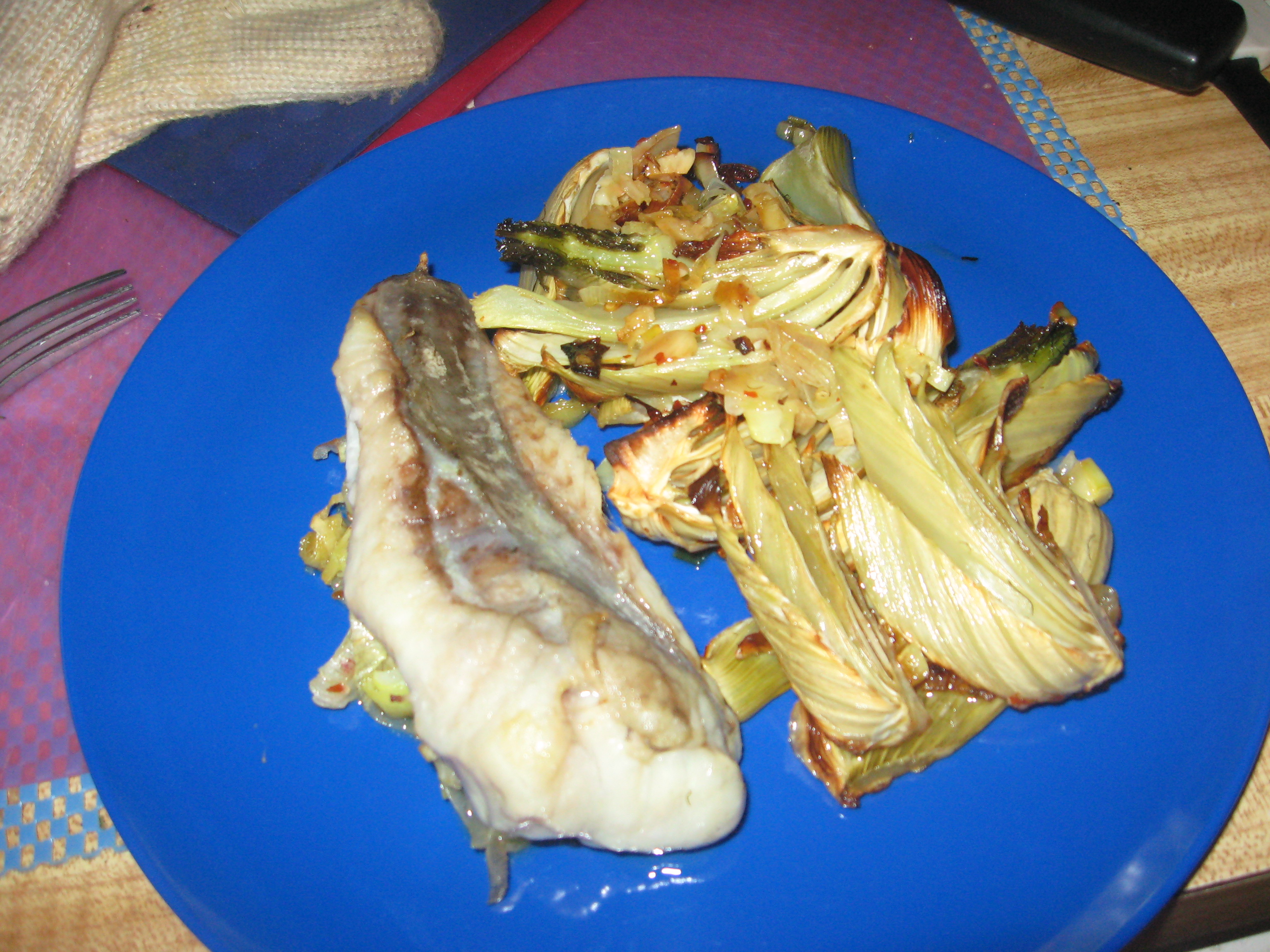
Supper this evening was roasted monkfish, with roasted fennel with leeks, garlic, and a dash of red pepper flakes, with a nice un-oaked chardonnay.  The fennel was an in-store, spur of the moment thing since it looked so gorgeous.

Even though it is warm this afternoon, I opted to cook in the oven because I wanted roasted fennel as well. I’ve done monkfish in hobo-pack style before but I thought I’d try roasting it this time and see if I couldn’t have a one-pot dinner.

monkfish

monkfish

I’d seen a post by Edward Schneider in Mark Bittman’s NY Times column (Diner’s Journal) about roasting monkfish, and the differences in monkfish on both sides of the Atlantic. After reading that I salted my monkfish for about an hour, and then roasted it.  I did manage to make a one-pan meal out of it. Since I had to allow about 40 minutes for the fennel to roast, I started that first.  After about 15 minutes, I laid the monkfish on top of the leeks, pushing the fennel wedges to the side, and popped it back into the oven for about 15 minutes.  I used very simple seasoning on the fish—olive oil and salt before going into the oven, and nothing for than fresh-ground black pepper and a pat of unsalted butter after it came out of the oven. So very simple—so very good, and even healthy.

(The only thing I wish I had done differently would have been to add some sweet red (or orange or yellow) bell pepper with the fennel. A glass of un-oaked chardonnay complemented the meal very nicely.)

IMG_7553

Baked cod fillet with vegetables

The “leftover” cod to which I alluded in a previous post was the result of beginning-of-term course preparation frenzy (always happens no matter how well I think that I’ve planned).  It was an OMG-I’m-starving-what-have-I-got-in-the-fridge, what-can-I-put-into-the-oven-so-I-don’t-have-to-watch-it, panic situation.

cod filet in a baking dish

cod & vegetables ready for oven

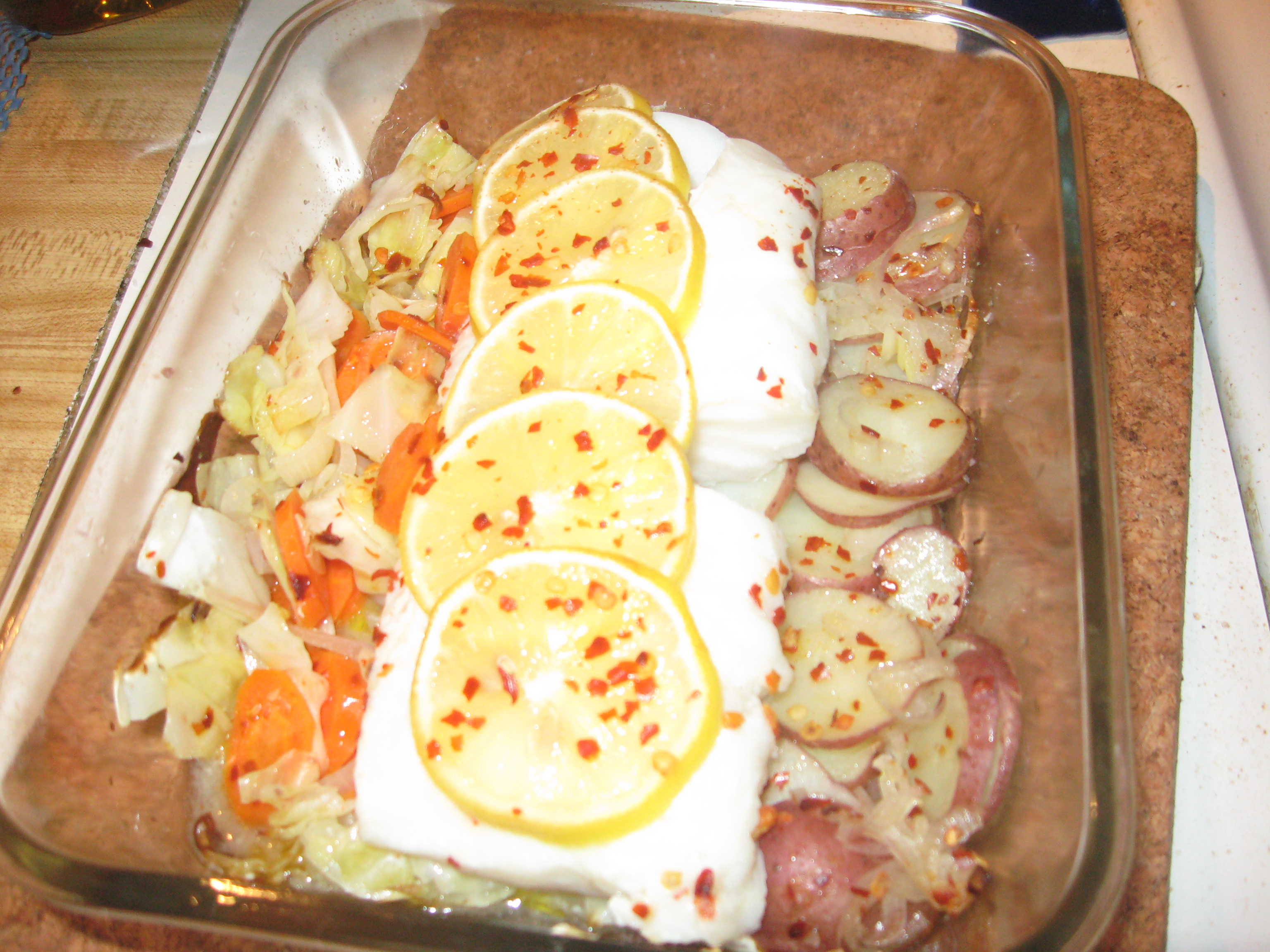
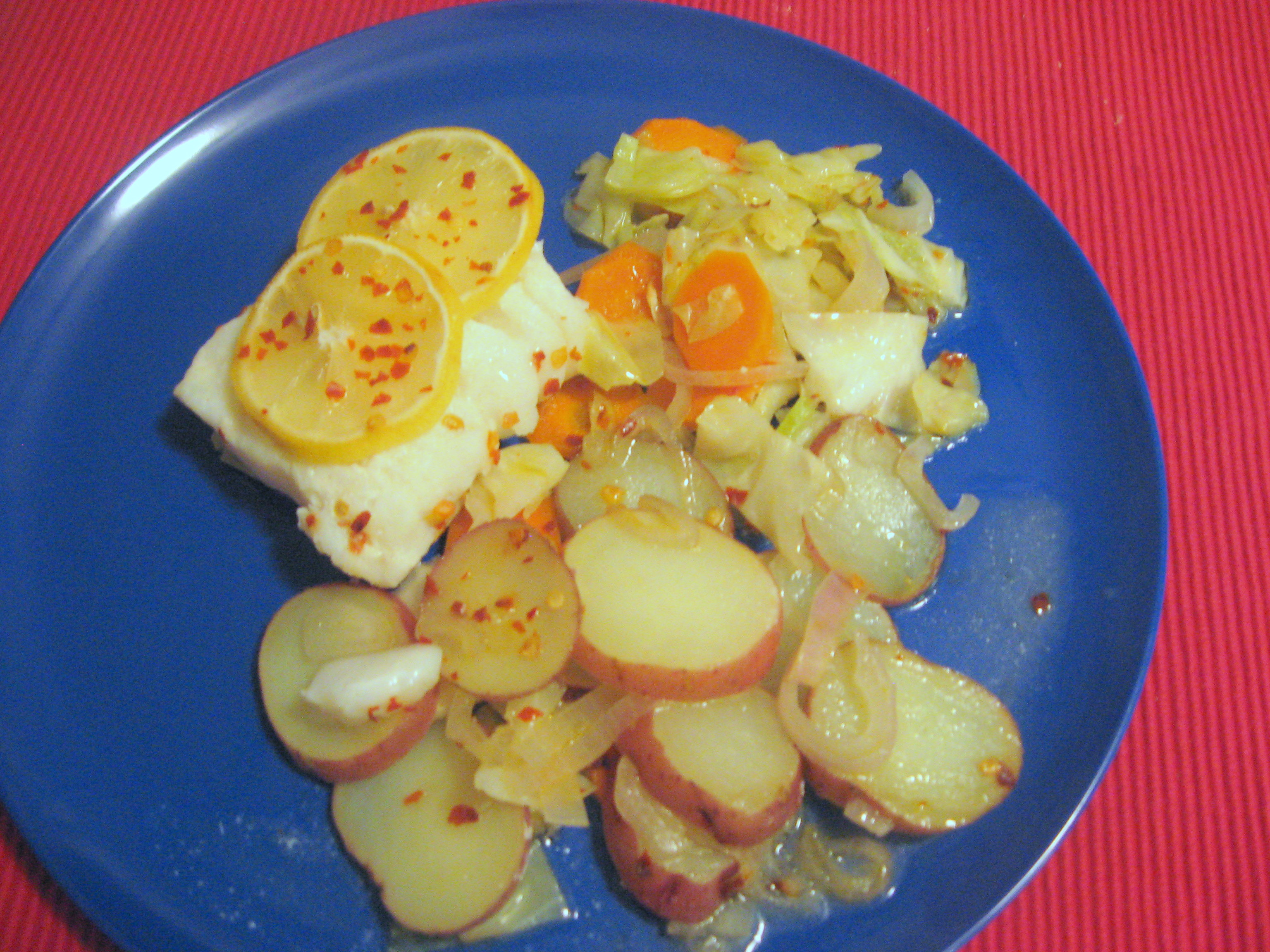
I had the cod fillet, but I was really pressed for time.  After madly rummaging in the vegetable crisper, and came up with cabbage, carrots, potatoes, lemons, and onions.  The cabbage got cut into bite-size pieces, the carrots and potatoes sliced into about 3 mm (1/8-inch) pieces.  I tossed the cabbage and very thinly sliced onions with some extra-virgin olive oil and a pinch of salt.  I gave the carrots and the potatoes the same treatment, threw in one of the few herb mixes that I keep on hand–herbes de Provence (my go-to in panic mode), some red pepper flakes put the fillet on top, plopped some lemon slices in, covered it, and stuck it in the partially preheated 325°F oven for about 45 minutes since it was a very thick cod fillet–and set a timer! (Since there were lemon slices, and the cabbage was still damp from rinsing, the cover for this baking dish fit very well, and I knew there would be a bit of liquid from the fish, I didn’t add any water.)

plated cod fillet with cabbage, carrots and potatoes

one-dish meal

When the timer went off I went back to see what I had–the thinly sliced carrots and small red potatoes were tender, the cabbage was tender but still slightly crisp, and the fish flaked nicely–success on the fly!  If you don’t like a little crunch with your cabbage, you might remove the heavier ribs.

Good results for minimal effort, and a really healthy meal.  The lemon and extra-virgin olive oil complemented all the veggies and the fish.  The red chili pepper flakes spiced things up just a little.  Yes, pretty simple, but tasty.  Good food doesn’t have to be complicated if you have good things to start with.

Poached fish

This is so simple, and so easily adapted to cooking for one that I just had to share it.

Rufus' Food and Spirits Guide's avatarRufus' Food and Spirits Guide

Poaching fish is my favorite way to cook fillets. The liquid used can be very simple or very complex. Sometimes I will reduce it into a sauce afterward, and sometimes I like to leave it as a thin broth. This recipe is very quick and is perfect for a nice weekday meal or second course in a large dinner party. Always use fresh fish with firm flesh.

I like to buy whole fish and fillet them myself. Then I use the bones and heads to make a quick fish stock. The butcher should be able to cut the fish into fillets for you if that is too much work.

Poached Fish

  • 1 1/2 lbs fish fillets, skin still on
  • 3 cups fish stock
  • 4 garlic cloves sliced into long slivers
  • 2 tbsp chopped fresh cilantro
  • Salt/pepper
  • 1 tbsp olive oil

Season fillets with salt and pepper. In a saute…

View original post 102 more words

Treasure from the “manager’s special” grocery cart!

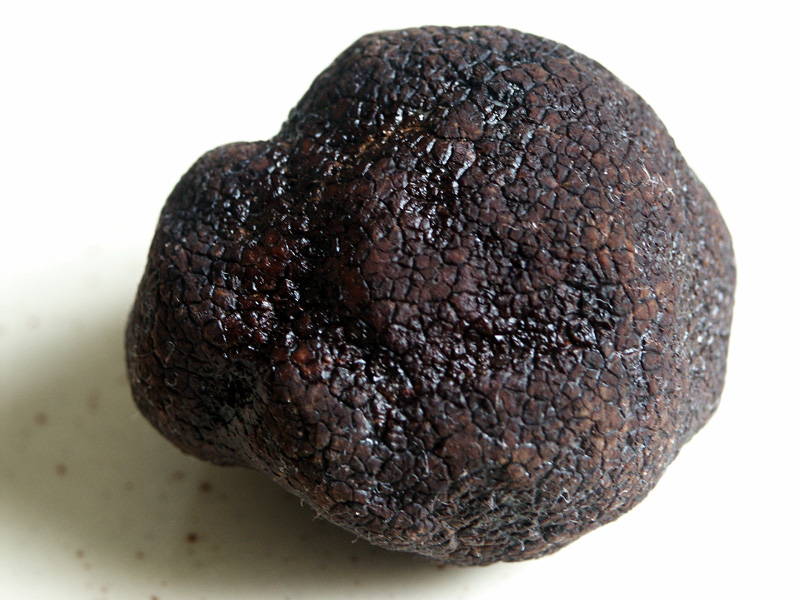
Sometimes I stop at the front of the grocery store and rummage through that end-of-season, after-holiday stuff: the green and red candied cherries, and the like.  I seldom find anything that I want to bring home with me so I’m not always consistent about checking it out.  I have to thank an observant friend and neighbor for a “find” in that cart recently: truffle oil (from Tuber melanosporum, the Perigord black truffle)!  She thought I might like to know about it–and a phone call sent me scurrying off to the grocery store to check it out.

image from Wikipedia

black Perigord truffle

I was pleasantly surprised to find two  8.54-ounce cans of La Tourangelle black truffle oil languishing amongst the mounds of candied cherries, candied pineapple, and other post-Christmas goodies.

Even at the price marked before it ended up in the manager’s special cart,  I would have tried it–but at half that, it was a true no-brainer–$4 and a little change.  I came home with two cans–one to share with a fellow foodie so that we can be creative with it. So did I bring home treasure or not?

I’ve had the good fortune, in one of my previous careers, to have had experience with freshly harvested black truffles from Garland Truffles here in North Carolina, so I know that they should smell like. I was trying not to expect too much from my little bargain–a bit of the expect-the-worst pessimism, so that I might be pleasantly surprised.

It’s hard to describe the aroma of fresh black truffles–but I’ve experienced it, so I was almost expecting to be disappointed when I opened that can of truffle oil. I guess it was a bit of you-get-what-you-pay-for, and I sure didn’t pay much for this. I was hoping for that rather ethereal, woodsy, moist, warm aroma, that makes you say “Wow, what is that?”   It’s just unforgettable once you’ve experienced it.

When I popped the seal and smelled that truffle oil,  I was even more pleased with this find–the aroma was all it should have been–woodsy, earthy, moist (not damp, moldy, or musty though), and warm,  in a way that set me right out in the woods in the sunshine.

A little searching on the Internet I found the La TourangelI website--with an amazing array of artisan flavored oils.  After checking prices on the web, I realized that I really had an amazing bargain.  I’m not sure what the original price was in the grocery store, but I spent $4 and some change for the can, that had another price of a bit more than $8.  The cheapest price I found online was at least double that latter price, and I’d say that’s not overpriced given the per-pound price of Tuber melanosporum!

I love truffles, but they aren’t usually on my budget, so this is fantastic to have that much truffle oil–truly a rare treat.  I’m still thinking of things to do with it–incredible fun for a foodie!

What have I done so far?  Well, one of my favorite combinations is truffles and potatoes.  My favorite decadent treat?  Take one properly baked russet potato (no foil anywhere near it and not microwaved either), and add some truffle butter.  Okay, I didn’t have truffle butter, but this oil had a strong enough flavor that mixed with some softened butter, I came very close to the truffle butter than I had made  when I had access to fresh truffles.  Then, add some earthy, yeasty Champagne, and it is awesome.

Then, I’ve drizzled a bit over a lovely steak–yum!  And added a few drops to my omelette–and (as claimed by La Touranglle) the flavor stood up well to the heat necessary to cook  the omelette, though I’d certainly not expose the truffle oil to high heat.

What next?  Well, I’m contemplating possibilities for combining this with another of my favorite foods, oysters.  I’ve looked at recipes for truffled oyster stew, and found some possibilities…but who knows what will be next…maybe a bit added to a grilled cheese sandwich (preferable made with raclette).

It’s time for improvisation in the kitchen.  A son goût! 

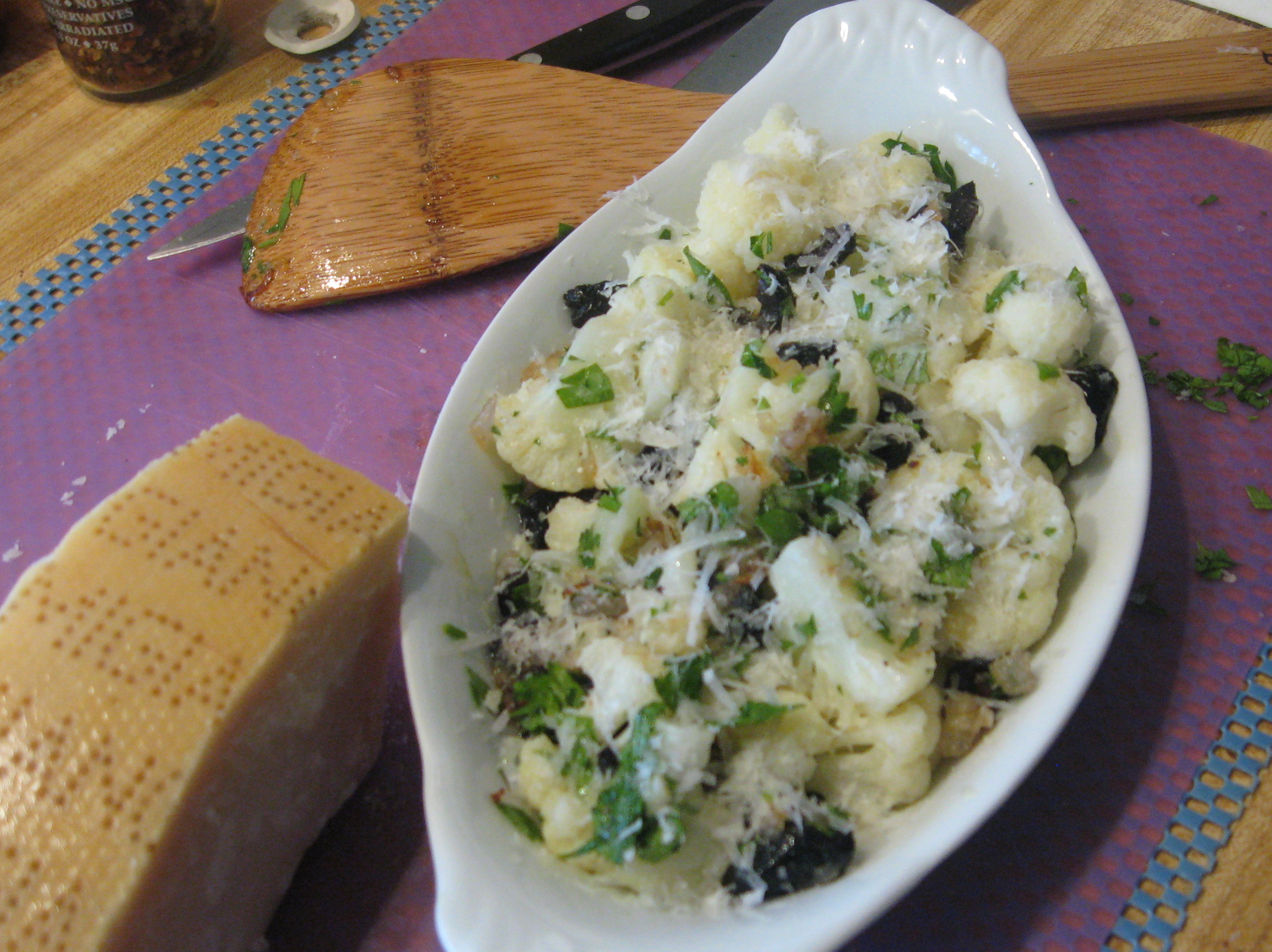
Cauliflower-black olive gratin (for one)

I started with the recipe from The New York Times that I had mentioned in an earlier post–and adapted it for single-serving cooking.

cauliflower, black-olives, garlic, shallot

just a few ingredients

My first “adaptation” was NOT to buy a whole head of cauliflower–I like it but I usually waste some of it, so I purchased 250 grams from the salad bar at my local Harris Teeter store already cut.  This was about 1/4 of what the original recipe called for (900 to 1000 grams).

My second adaptation was to use the rice cooker to blanch the cauliflower!  Put water in, add salt, close the lid and set the “rice cooker” mode.  In just a few minutes when I opened the lid I had boiling water.  I added the cauliflower, close the lid and blanched for about 5 minutes, then proceeded with the recipe–faster than a pan of water on the stove top!

My third adaptation is one I use often in cooking for one–I used shallot instead of onion since I don’t like bits and pieces of cut onion loitering in the fridge–so one medium to large shallot, prepped as for the onion in the above recipe.

gratin dish with cauliflower

oven ready

That recipe called for 16 olives–well four olives just didn’t look like enough, so I used six. Garlic–well, I used two very small cloves. The rest of the ingredients were “measured” by eye: parsley, the Parmigiano-Reggiano were whatever looked like enough for the amount of cauliflower–maybe my adaptation is a bit cheesier than the original, but  that’s okay with me!

The results were fantastic, maybe even awesome! (Please note past tense–well, there was a tiny bit left, but that’s probably because of the rather large cod fillet–a leftover as I define leftovers–re-warmed in sugo alla puttanesca.)   This was one of the best things that I’ve ever done with cauliflower. It’s a keeper with lots of room to improvise: some red pepper flakes added to the shallot-olive mixture, or maybe some roasted red peppers.

browned gratin of cauliflower

ready to eat

I think that I might step down to 150 grams of cauliflower next time, and bake it in a slightly deeper dish–but it will definitely be made again. I do need to add more garlic, though. I can’t believe how easy it was.  This is my kind of recipe–not at all fussy and open to modification to fit my mood, the weather, and what else is served.

<><o><>

The cod fillet was a “leftover”–meaning planned.  The method of the “rerun” was unplanned.  After several days of intensive course preparation for online courses, I suffered a serious case of cabin fever.  On impulse, I called a friend, and we went out to dinner at one of my favorite causal places, Meelo’s Ristorante, here in Durham, since I had a serious craving for Andre Chabaneix’s spagetti alla puttanesca.  There was a bit of the puttanesca sauce left in the bottom of my plate, so I brought it home with me.  I used it to gently re-warm the cod fillet for supper this evening–now I’m going to have to see if I can match his sauce so that I don’t have to go out every time I want puttanesca sauce.

cod with puttanesca sauce

cod with puttanesca sauce