Today seems to be my day for articles on food waste. This article on gleaning from The Guardian is worth reading.
Category Archives: Food for thought
Summer plenty
Walking through the farmers’ market we see an abundance of fresh produce. We cook and eat without thinking about the food waste between seed and plate. I’ve posted and reblogged articles about this issue: what has been done in other countries, tips on how not to waste food, making efficient use of leftovers, mindful eating, and grocery shopping for one, all with thoughts about food waste.
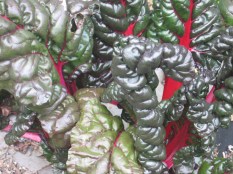 This morning I read an article from Food 52 on kitchen scraps–with some statistics on food waste. This post gave a lot of recipes using those things that we often consider “scraps”–and some information on how long those (sometimes) impulsive purchases from the farmers’ market will last once you’ve gotten them into the kitchen.
This article has links to 125 (yes–one hundred twenty-five) recipes that focus on using that whole bunch of greens (even the stems) and things we often don’t consider for cooking and eating–radish tops, and even peels and skins of fruits and vegetables. We often discard the stems from chard and other greens when we cook the tender leaves but those stems are just as nutritious if treated just a bit differently–added first to the pot, or even used separately rather than discarded.
I’ve not tried all these recipes, but from my experience, the recipes from sources cited here are usually good. Even if you don’t use the recipes per se I think perusing them can show many ways that we can better use our food.
Õ¿Ó
On a related note, while we are enjoying the benefits of pollinators–honey bees included- -those ladies of the hive are experiencing a decrease in the nectar and pollen that they can
gather–what we beekeepers call a “dearth” (scarcity or lack of something). We are eating and putting by the “fruits” of their work in the spring–and we don’t think about what is available for them at this time of the year.
I’ll be inspecting my hives tomorrow to see how much honey and pollen is stored. Most likely my ladies are consuming stored honey and pollen while awaiting the start of the goldenrod and aster seasons here in the Piedmont region of North Carolina. If necessary, I’ll be providing supplemental food (sugar syrup with supplements added) for them until the fall nectar flow starts and they can store honey and pollen for the winter.
I’m not planning a second harvest from hive Rosemarinus, or a first harvest from Salvia–they will get to keep all they produce from the autumn nectar flow to see them through the winter.

Ô¡Ó
Happy Bastille Day!
Butter
Margarine does not come into my kitchen. I would rather have a bit of butter in moderation, but the real thing. I was skulking about on the web this afternoon I found this article on butter from Food Republic and though I’d share it. There’s some fun browsing if you interested in fish eggs in Japanese cuisine, or whether it’s a food fad or trend.
There’s some fun browsing on lots of other topics: fish eggs in Japanese cuisine, or whether it’s a food fad or trend, Filipino food, or maybe butchery or charcuterie questions.
Always Hungry: Convention food.
I’m back home after a very good convention. Good to meet other indexers, but also good to be home. Now to get back on track with the Always Hungry? style of eating, which, unfortunately, wasn’t well maintained while away. I can cope with a la carte ordering in a restaurant, but with meals provided without choice it just wasn’t possible. Lots of good food, but lots of pastries, sandwiches, and “white” things. I can really feel the effect of the infractions, though I did manage to maintain the weight loss I’ve gotten so far.
I’m not in any way complaining about the food provided at the convention–I’m just acknowledging the fact that I didn’t manage to hang with the meal plan. I can really feel the effect of the infractions, though I did manage to maintain the weight loss I’ve gotten so far.
I’m looking forward to getting back into my home cooking and using dishes I’ve got in the freezer as soon as I do my back-home grocery shopping.
Persillade
Gallery
This gallery contains 8 photos.
Another “green sauce” to liven up all sorts of things–just the thing if you want a bit of a change from gremolata.
A little food history
I do enjoy Facebook! Because my friends have such diverse interests, I get to read articles that I might never have encountered were it not for perusing Facebook posts. In this case, I’ve been overwhelmed with work (love that) which cuts into my skulking about the internet looking for fun stuff.
Here’s a link to an article from NPR on the Eastern and Western use of spices that I just read (no it’s not new–only new to me) and enjoyed.
Hiatus: Always Hungry?
Yes, there has been a dearth of posts here–not because of unwillingness, but because of my work schedule. I’ve had back-to-back books to index. As a result, my time at the apiary has been limited to what is strictly necessary, and my time in the kitchen for cooking has been about zilch, zip, nada, and none except for egg-based things like a quick variation of the frittata–transformed into scrambled eggs with greens, tomatoes, onions, and some cheese.
I maintained the weight loss from Phase 1, but I haven’t added to it. My maintenance of the meal plan has obviously slipped–just because I’ve not been trying any new recipes. Friends have told me that I really need to make the Shepherd’s Pie–maybe in about a week. Then, perhaps, the eggplant parmesan.
Fortunately, my freezer was stocked with the “leftovers” from Phase 1–recipes that could be used in all phases. The cabbage casserole freezes quite well–and so does the red lentil soup.
My freezer had some other things that were in keeping with the spirit of the plan and those got eaten as well. I did progress to Phase 2 (adding whole grains) by using some soups and one-pot dishes from my usual cooking–combinations of greens, meat, and whole grains.
Black bean pasta
I’ve had a long work week, which ended in frustration this evening in–I’m hungry, but the planned meals just don’t DO it. After staring in the fridge for a while, and going back to take a few of those silly online quizzes, I still hadn’t the foggiest idea what I wanted to eat. More peering into cabinets (sardines–nope, tuna–NOT).
While skulking through the pantry, I realized that what I’d most likely cook were I not trying to be really serious about weight loss would be pasta. Obviously, that won’t do–at least not pasta, as we most commonly think of it.
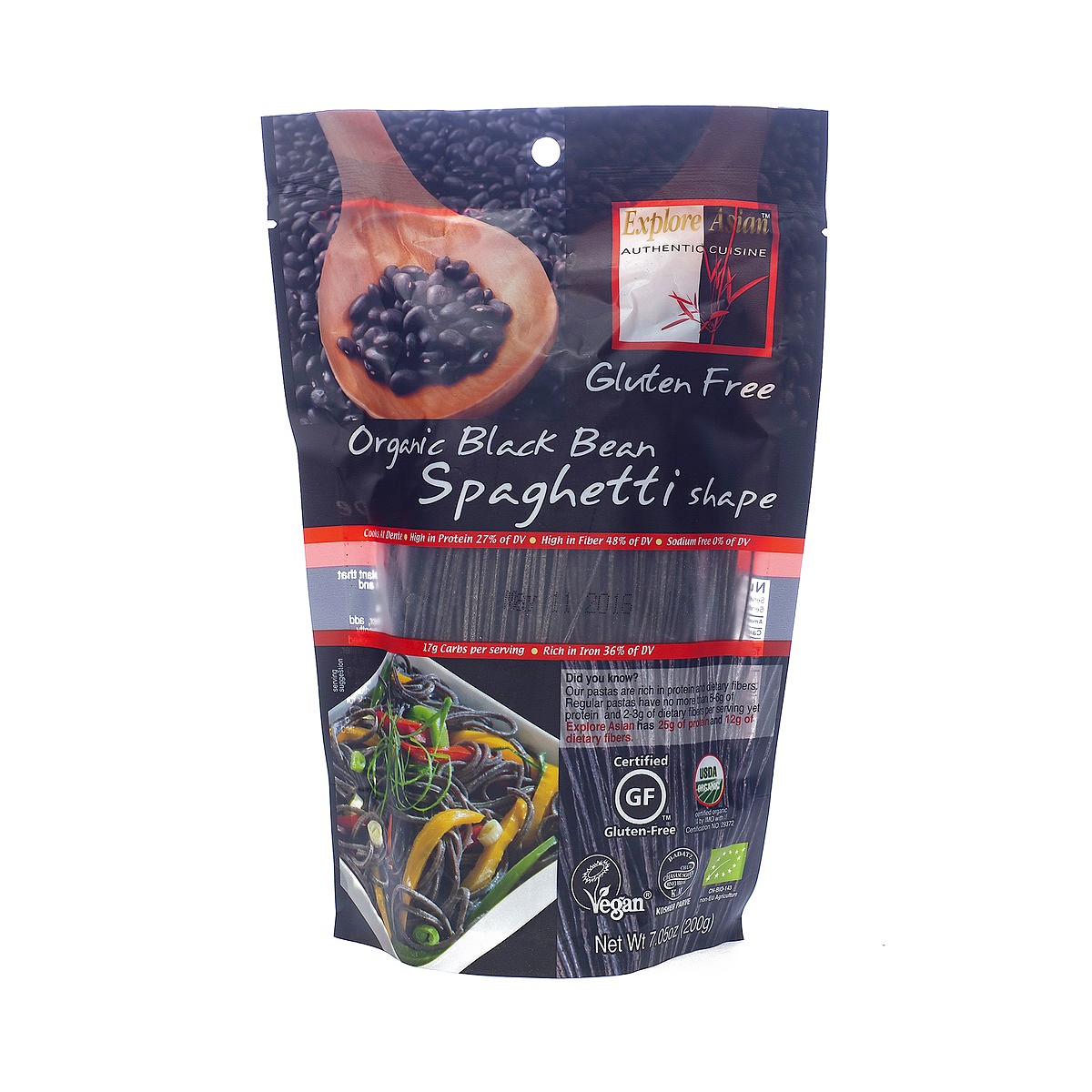
On my grocery rounds day before yesterday, I noticed that there was a new section of pasta displayed with lots of signage designed to attract attention–it was gluten-free pasta. I’m not gluten intolerant so I usually don’t pay attention to that (and I get really irritated when I see fruits and vegetables touted as gluten free–but I won’t go there now). As I stood perusing the boxes, I had a faint memory of a friend telling me that her grandchildren liked black bean pasta, so I read the ingredients list–and it was only black beans. I found that rather amazing, since so many gluten free products have potato starch or other things that are off limits to me right now. I succumbed–I bought a package of black bean pasta.
I stashed the black bean pasta (pasta?) in the pantry and went straight to the Merriam-Webster unabridged dictionary to look up pasta. I discovered that it was defined as “an alimentary paste in processed form”. While spaghetti was given in an example nothing was specified as to what the paste was made of. Ok–it’s black bean pasta.
I spend a little time thinking about why I eat pasta. It’s because I like pasta. I like the different shapes, too. I like the flavor of pasta made from wheat, but there is a texture factor there as well. Maybe there is more than that–maybe there is something about twirling spaghetti or angel hair pasta around a fork to get it into my mouth–part of the process of eating that’s satisfying–more than just the flavor.
What I’d usually make is spaghetti aglio e olio–sorry, that just sounds better that plain olive oil and garlic–so I decided to give the black bean pasta a trial that way. I got out my favorite pasta-cooking gadget. For this to keep with the meal plan in some remote fashion, I needed to add some vegetables. Spinach! I sautéd the and spinach in the olive oil and dumped it over my black bean pasta. (I know I had a bigger serving of carbohydrate than I should have, even though it was black bean pasta, but at least I had veggies with it.)
The result? A pleasant surprise! It was remarkably satisfying (maybe just because I was hungry); the texture was good though not quite like pasta made from wheat flour. It’s not overwhelmingly “beany” either. It was so satisfying that I had to think that there is more to my liking pasta than just the flavor. Would I rather have had “real” pasta? Yes, but this was good. Black bean pasta is not going to replace the traditional stuff made of durham wheat flour. It certainly beat trying to fake it with spaghetti squash (though I like that too, but it’s definitely NOT pasta–it’s a vegetable so don’t tell me to use it instead of spaghetti).
The final call? I’ll cook pasta made from black beans again until I can have the traditional kind that we usually think about. I don’t know why I had this resistance to this as pasta since I like soba and rice noodles. It’s a good stand in for this meal plan. After eating that I find that there is also pasta made of chickpeas (garbanzo beans). I’m sure I’ll find some other uses for it as well, and I’ll explore other “alimentary pastes” to add to the soba and cellophane noodles as well. But I’ll still want that plate of “real” spaghetti aglio e olio!
Õ¿Õ
Always Hungry? Oops!
I hate to have to admit this, but I fell off the meal plan, not because I was hungry, but just because I wasn’t thinking.
The Always Hungry? plan cautions you to be strict about following in the first fourteen days. Well, that is serious advice that should be heeded. I tried–really I did, but being away from home at a meeting in Alexandria, VA, lead to a couple of deviations in the balance. Frist was a snack of cheese and crackers during a break in our meeting. The second was a glass of wine with dinner; the third was eating a small quantity of pasta with the entree I ordered, and finally that sandwich I had when I stopped to eat on my drive home.
The cheese was not the problem–it was the crackers as they are carbohydrates in a form not allowed on this plan. The second big problem was the pasta. This plan is doable in a restaurant, with just a bit of though. My problem was that I wasn’t thinking. I was enjoying good conversation with colleagues and good food.
After out meeting we had a delicious meal at Vaso’s Mediterranean Bistro. The entrée that I ordered had clams, mussels, shrimp, calamari, and scallops in a tomato sauce. There is nothing there that would “undo” the Always Hungry? meal plan–except for the pasta that was buried under all that lovely seafood. Just because it was there, didn’t mean I had to eat it–with the cup of avgolemono and the side salad, the seafood would have been a generous serving. But, I was just enjoying the meal and the company and ate some of the pasta! That alone was probably not a huge issue, except in conjunction with the crackers that I’d eaten with the cheese (St. Andre and Cambazola) earlier, and the added “insult” of the sandwich–yes, with white bread.
The result of these infractions? Well, I had not realized how good I felt for past week until I woke today. Until this morning, I had posted 7 pounds off my weight–now back up to 5 pounds off the weight. That wasn’t the real problem, though–I’m sure most of that was fluid and will go away quickly. It was how I felt–it’s hard to describe, but that week of no starchy things, except for legumes, made a huge difference in energy and well-being. It will be interesting to see how long it will take to recover from this lapse. This interlude has certainly impressed me with the effect of what I eat with how I feel–and not just hunger (or not), or satiety.
Õ¿Õ
.
 a-single-serving.com