Black pepper is underappreciated!

Black pepper is about as ubiquitous as any spice can possibly be.  It would probably be hard to find a kitchen without it.  Sometimes is preground (yuck) and doesn’t really have much except enough heat to make you sneeze.  It’s something many probably pick up in the grocery store without thinking about it.  But, black pepper is black pepper is black pepper is not true.  It is often added as kind of an afterthought amongst other spices and herbs.
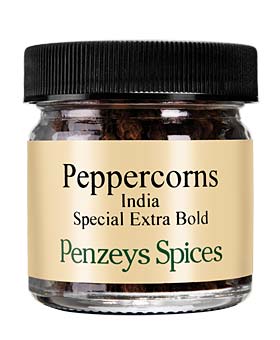
Whole Special Extra Bold Indian Black PeppercornsI’ve always been picky about my black pepper–my favorite is from Penzeys.  I’ve been mail-ordering it from there for ages–and have kept on even with the local store since I’ve got my established list of herbs and spices there.

If you peruse the list of black peppers from Penzeys, you’ll find quite a selection:  India Tellicherry, India Malabar (both excellent) and then there’s the Special Extra Bold Indian Black Peppercorns.  True more expensive than either of the others, but worth every penny more.

However, as much as I liked black pepper (over eggs, in mashed potatoes, with strawberries, balsamic, and black pepper), I didn’t really appreciate black pepper as the main seasoning until I made fårikål.  The seasoning is black pepper!  Lots of whole black peppercorns that cook right with the cabbage and the lamb. And should get eaten rather than picked out; after the long cooking they still have some tooth but are soft enough to eat easily and the flavor is just amazing.

Black pepper is worth exploring as something other than an add-on to other herbs and spices.  It should always be bought whole rather than ground or cracked.  While you can spend a small fortune of a pepper mill, you can also get a reasonably inexpensive one.  It will open a whole new world of flavor.  The highly recommended mill from America’s Test Kitchen was from Cole and Mason, and surprisingly, very reasonably priced.

Another tasty dish featuring lots of black pepper that you should make once you have some really good black whole peppercorns to go with you pepper mill is cacio e pepe (cheese and pepper pasta).  But do try it with good ripe strawberries, too.  Or on a lusciously ripe muskmelon or watermelon.

A son gôut!

—Ô¿Ô—

Chilly weather food

Summer is not my favorite time of the year: I just don’t like hot, humid weather. It makes me kind of listless and wilted.  I don’t mind seeing winter come around because it’s my favorite cooking time.

One of my fall and winter favorites is fårikål.    That’s what I started out to make today since it’s chilly, damp, grey, and seriously pluvial but I got distracted and stumbled on a similar recipe that looked so good. From the North Wild Kitchen, I found slow-roasted lamb shoulder with cabbage.

That seemed easy to adapt to cooking for one.   Since my shoulder chops were nice and thick and it eliminated me having to trim them into chunks–just the thing for a lazy cook.

I have to admit that I didn’t do the apples, although I’m sure that would have been very good with it;  I just didn’t want to go back out into the rain to the grocery store to retrieve an apple! ( I did say “lazy cook”.)

My only modification here (other than using chops) was to cook it in my Romertopf instead of a covered baking dish since I was making a smaller quantity for just me (and the cat).

This is another keeper for cooking lamb and cabbage!

A son gôut!

—Ô¿Ô—

Holiday gift shopping

book

for the wine lover

Do you have someone for whom you can’t decide on a gift for this holiday season?   With exception of the last item on the list, these are all products that I use and admittedly, they reflect my personal preferences.  I have no affiliate connection with any of these; I receive no consideration or remuneration for promotion.

With that said, here are a few suggestions:

  • For the wine lover you know who would like to get off the beaten track and find uncommon grapes and explore obscure wines Godforsaked Grapes by Jason Wilson is a delightful, slightly irreverent when it comes to the mainstream wines that we hear so much about. It’s a delightful, easy to read book.  Available in Kindle, hardcover, paperback, or audio.
  • For the working person who would like hands-off cooking or rapid meals after work, you could go for an Instant Pot.  The different functions can replace lots of other small appliances that might be already in the kitchen.   It’s not going to replace the dutch oven, but it does a lot of things.  Here’s information on what is available.  You can find them at a number of specialty stores like Williams-Sonoma
  • of if there is already an Instant Pot in that kitchen, how about some cookbooks to help really getting into using it.?
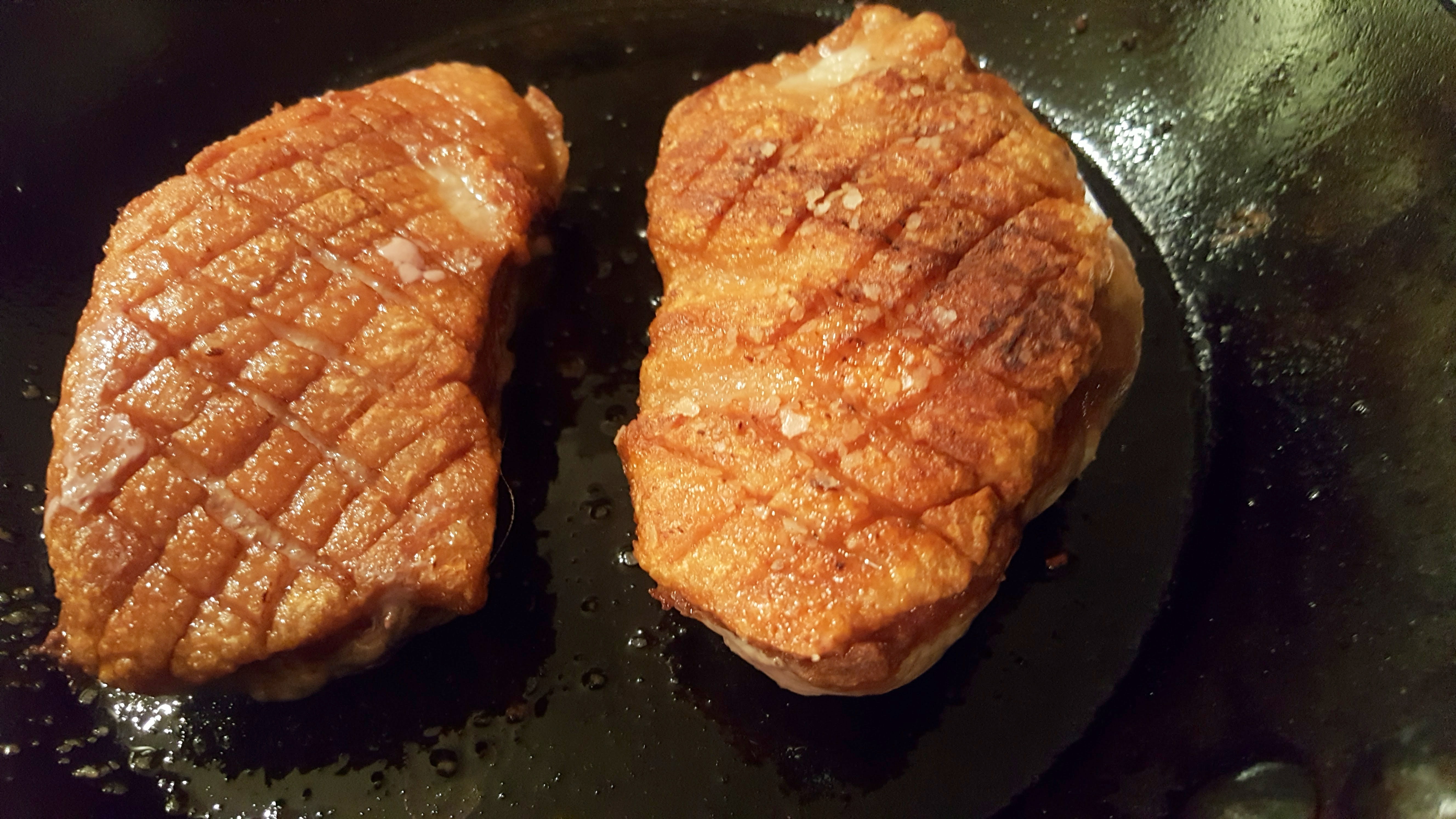
  • If you know someone who loves good olive oils, Bull City Olive Oil has a great selection of fused, infused, and ultra premium extra virgin oils, as well as flavored balsamic vinegars.  For some heat and green chili flavor, the Baklouti green chili fused oil is fantastic.  Or blackberry-ginger dark balsamic is wonderful with seared duck breasts.  Salad lover?  Well, to make a salad special the herbs de Provence infused olive oil with lavender balsamic vinegar can make an outstanding vinaigrette dressing.  There is also sherry vinegar and roasted sesame oil that nothing like what you’ll find on the grocery store shelves. Then, there is truffle oil too.
  • For some kitchen basics, consider some traditional cast iron.  Lodge is a brand that you can probably even find at your local hardware store.  Once cured or seasoned, it can be used on the stovetop or in the oven.  For a perfectly seared steak, cast iron is a must; it allows stovetop searing and then finishing in the oven for perfectly cooked steak.  A 6.5-inch skillet is great for roasting spices, and for cooking one or two eggs in the flavorful olive oil without using a lot of oil.
  • The adventurous cook will always love trying new herbs and spices.  Penzys has a great selection and you can get small jars (1/4 cup) which are wonderful if you’re cooking for one.  Pick one of the selections of gift boxes, or make up your own.
  • Give some relaxation with a selection of tea or tisanes from Harney and Sons.  You’ll find a wide selection of black and green teas, as well as fruit and herbals infusions.  Wu Li Quing green is lovely. Peach and the mango fruit tea are warm and cozy, or great iced in hot weather.  Ginger licorice herbal is a favorite of mine.
  • How about some chocolate?  Chuao Chocolate is my go-to for me and for gifts.  There are bars (Honeycomb and Spicy Maya are favorites).  Or check out the organic lavender blueberry,  hibiscus rose combinations.
  • To give a vicarious trip around the world, a subscription to Milk Street magazine (digital or print) will provide you with recipes with a definite 0mandarin-mninternational flair but adapted for the American kitchen.  I still love Cook’s Illustrated and Cook’s Country, but Milk Street has become my new favorite because of the variety.
  • For someone who loves citrus fruit, Mixon Fruit Farms provides the best grapefruit (either red or white), mandarin oranges, tangerines, and a variety of oranges from Florida.  Absolutely luscious!
  • Last but not least, if you’ve been hearing about sous vide cooking consider one of the immersion heaters from Joule or Anova.  (Sorry, no recommendations from personal experience (yet) but here’s a review from Epicurious).  I noticed that Instant Pot also has a sous vide circulator that I think I would consider after reading the review.  I’ve not finished research on these but I’m hoping that the cat will give me one for my holiday gift.  I’ve tried some jury-rigged sous vide cooking including the beer cooler method and I really do like the results.


A son gôut!

—Ô¿Ô—

Instant Pot recipe sources

My Instant Pot (IP) is now a kitchen fixture (as was my multicooker before)–it has a special spot on the counter since it is in almost daily use. The more I use it the better I like it.   It’s a great addition to the kitchen and has replaced several other small appliances; however, that does not mean I’m ready to give up the dutch oven for some slow cooking in the oven on winter days.  That kind of braise is not something that I expect the IP to replicate.

I’m working on a list of credible recipe sources for it.   By credible, I mean those that seem to be aware of what this appliance can really do, without unrealistic expectations.  Some books that I’ve looked at seem to suggest that the IP can replace any other way of cooking, so I’d not judge them to be useful recipe sources.

My inbox popped up useful information from a favorite source (Kitchn): a whole gallery of different things that are kind of IP basics   like rice, steel-cut oats (important breakfast stuff here), cooking dried beans (one of the main reasons for getting the IP), stock-making (pressure and slow cooker), and not-so-basic: risotto, braised cabbage, plus a lot more. This gallery includes the slow-cooker function of the IP (which seems to be somewhat ignored in many books and online groups).

Cookbooks by authors that I’ve found useful while adapting to the way the Instant Pot works include:

  • The Essential Instant Pot Cookbook: Fresh and Foolproof Recipes for Your Electric Pressure Cooker by Coco Marante, 2017, Kindle or hardcover.
  • Comfort in an Instant: 75 Comfort Food Recipes for Your Pressure Cooker, Multicooker, and Instant Pot®, by Melissa Clark, 2018, Kindle or hardcover.
  • Dinner in an Instant: 75 Modern Recipes for Your Pressure Cooker, Multicooker, and Instant Pot® by Melissa Clark, 2017, Kindle or hardcover.
  • Indian Instant Pot Cookbook by Urvashi Pitre, 2017, paperback, and free to read via Kindle Unlimited.
  • The Essential Indian Instant Pot Cookbook: Authentic Flavors and Modern Recipes for Your Electric Pressure Cooker by Archana Mundhe, 2018, Kindle and hardcover.
  • The Ultimate Instant Pot Cookbook: 200 Deliciously Simple Recipes for Your Electric Pressure Cooker by Coco Marante, 2017, Kindle and hardcover.
  • The Keto Instant Pot Cookbook: Ketogenic Diet Pressure Cooker Recipes Made Easy and Fast bu Urvashi Pitre, 2018, Kindle and paperback.
  • Instant Pot Miracle: From Gourmet to Everyday, 175 Must-Have Recipes by The Editors at Houghton Mifflin Harcourt, 2017, Kindle and paperback.

There are a couple others coming out in 2019 that I’m looking forward to taking a look at:

  • Madhur Jaffrey’s Essential Indian Instant Pot Cookbook by Madhur Jaffrey, to be released May 2019, Kindle and hardcover.  
  • Instant Pot Fast & Easy: 100 Simple and Delicious Recipes for Your Instant Pot by Urvashi Pitre, January 2019


A son gôut!

—Ô¿Ô—

.

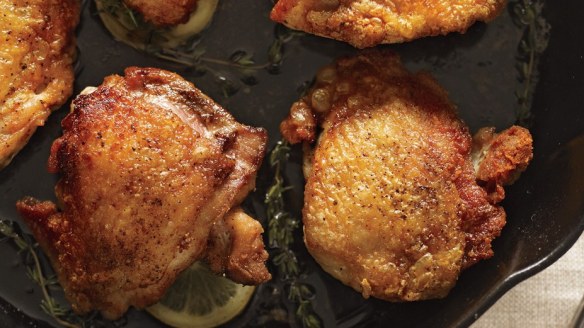
Best roasted chicken thighs

brown crispy skin on chicken thighs

From Bon Appetite–mine looked just as lovely.

It’s a grey, chilly, snowy day here.  That makes it a perfect day to have the aroma of chicken roasting wafting through the house.  Since I’m cooking for one and don’t particularly care for white meat (though chicken breast if better than turkey), I usually choose to cook thighs, drumsticks, or whole leg quarters.

While it’s not something that really takes a recipe, the “Perfect Cast Iron Skillet Chicken” from Bon Appetit seems to be about as foolproof (or idiot-proof) as you can get: it’s quick, easily adjusted to suit one person, requires no brining or other preparation, and it gets you one of the best parts of roasted chicken.  The skin comes out really crispy. (Even if you doing LCHF or even ketogenic diet it’s suitable.   Yes,  I do eat the skin; I’m not worried about the fat–besides most of it’s rendered out.)

Since we’re between T-day and Christmas, and I should be able to find turkey thighs in the grocery store, I think I might try this method on one of those since that is the part of the turkey that I like best; well, I do like the even-darker drumstick, but I can’t see those browning as nicely as the thigh.

Just the thing for a day when you need something warm, cosy, and homemade for supper.  It smells good enough to get the cat to pay attention!

A son gôut!

 —Ô¿Ô—

Seasoning cast iron

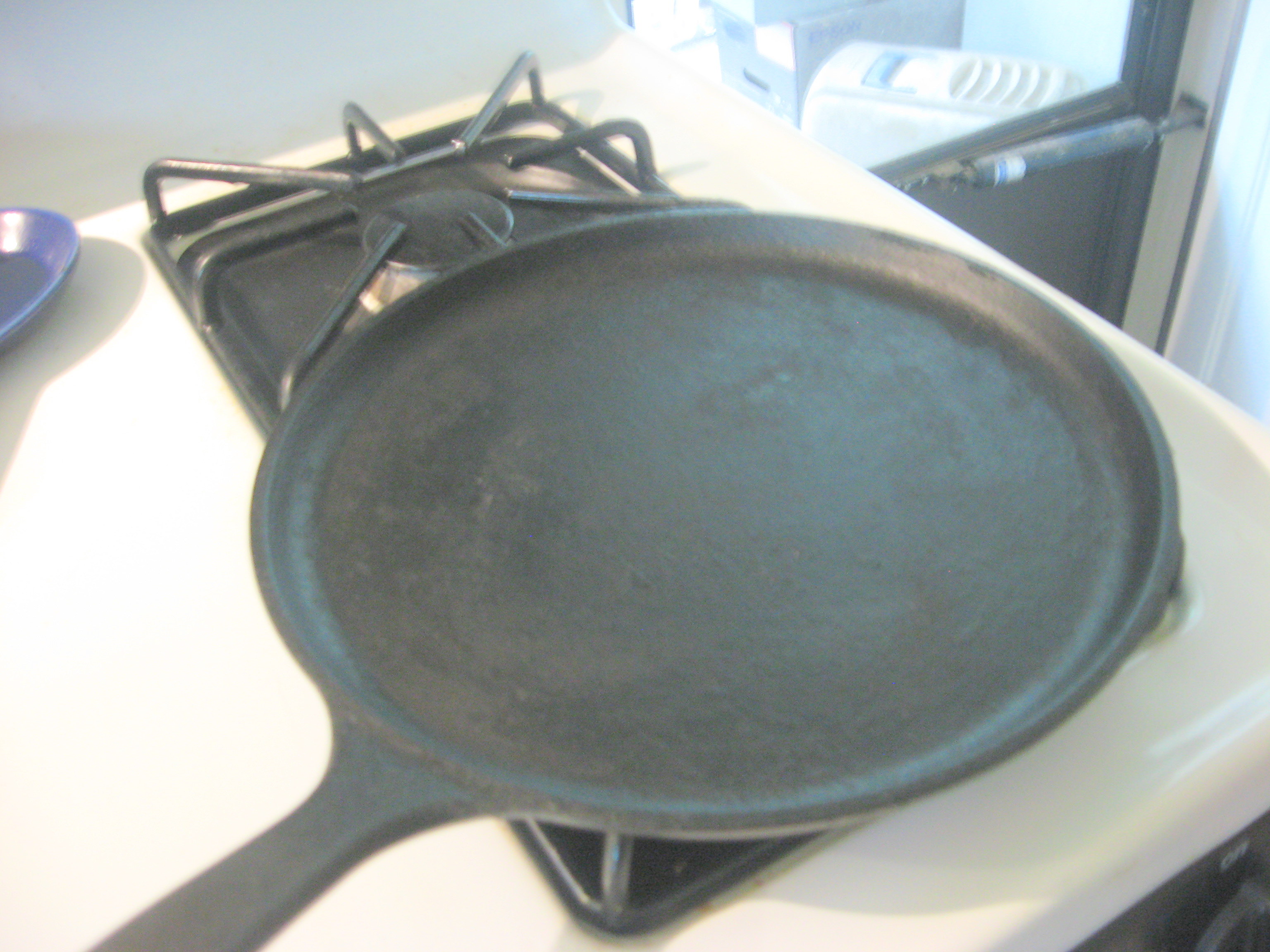
I have cooking equipment in my kitchen that needs seasoning: double-burner cast iron grill/griddle, a round single-burner griddle, two small skillets (the two-egg size), and a carbon steel skillet.  Once seasoned these take little care.

I’ve always used vegetable oil to season mine. I was interested to find an article recommending beeswax.  Now that I have bees, perhaps I will try that next time my seasoning needs refreshing.  It seems as if it might have some advantages.

—Ô¿Ô—

Eating alone is OK

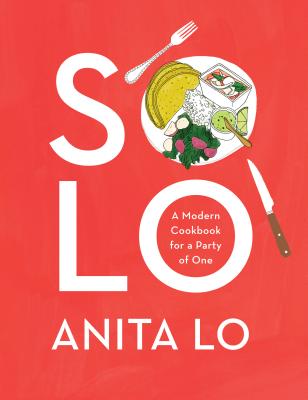
9780451493606As a single person who cooks, I often find myself eating alone–and I don’t find that to be a problem.  Eating alone doesn’t mean that you are lonely.  It simply means you can please yourself as to what you cook and eat.  Many seem to think that it’s a barren occasion and one that does not deserve much attention to the food.  I disagree.  It’s when there can be the most attention to food.

What Do You Cook When No One Is Watching? from Taste magazine sums it up nicely.  True it’s promoting a cookbook (SOLO by Anita Lo) which I suspect I will buy after I’ve seen the sample on my Kindle.  There are not many cookbooks addressed to cooking for one so it’s delightful to think there is another to peruse.

A son gôut!

—Ô¿Ô—

Instant Pot cottage cheese! Awesome.

I’m one of those people who grew up with homemade cottage cheese and everything out of the grocery store is a real washout after that.  I’ve made it at home occasionally, on the stovetop, but that takes more attention than I’m sometimes ready to give to it.

I just got my email from Taste magazine and there was an article on cottage cheese. It’s from the point of view of a “life-long southerner” (which I’m definitely not) but even some northerners did the homemade cottage thing.  Somehow I missed the concept that with the Instant Pot yogurt cycle I could make cottage cheese easily until I saw this article and the recipe.

—Ô¿Ô—

.


Food fraud?

I’ve been reading about “fake” food or fraud.  What’s in the package may not be what’s claimed on that catchy label.  Olive oil?  Yes, so I have a favorite specialty shop where I buy my olive oil (Bull City Olive Oil that I’m sure I’ve mentioned before).  But tomatoes?  Hadn’t crossed my mind until my email from Taste appeared in my inbox with an article on that:  The Fake Rolex of Canned Foods.  It’s definitely worth reading since I’d guess that we all have canned tomatoes living in our kitchen cabinets.

—Ô¿Ô—

.

Autumn delight: quinces

Now I really feel as if fall is here!  I found quinces in the market!  You don’t often see them (they appear in late fall (just before frost), but when you find them, you just have to

quinces on tree

from elderflower orchards

do something with them.  One of the things to do with them is to let them sit around in your fruit bowl and simply perfume the room.

Although they are considered by most to be inedible uncooked, they are wonderful to cook with.  Simply poaching them turns them a lovely rosy shade, and makes them absolutely luscious. Or there is membrillo (quince paste) which is lovely with cheese–particularly manchego

Here is a favorite recipe from David Lebovitz.  I’ve included the recipe below, but you really should read the additional information from his blog.

—Ô¿Ô—

Poached Quinces

(From David Lebovitz’s living the sweet life in paris)

Quince are not usually raised commercially so you won’t find many picture-perfect specimens. Expect a few bruises and scrapes, but avoid fruits with soft, dark spots. Like pears, quince ripen from the inside out, so later in the season, you might find fruit that’s past its prime when you cut them open. I look for firm quinces and lift them to my nose; if they have a nice fragrance, there’s a good chance they’re good candidates for poaching.

Some recipes advise soaking the peeled quince slices in lemon-tinged water to avoid browning. I’ve never done that, but instead, I simply slip them into the warm poaching liquid and any trace of discoloration soon disappears. Of course, this recipe can be halved, or increased.

7 cups (1.75l) water
1 cup (200g) sugar
1/2 cup (150g) honey
1 lemon (preferably unsprayed), cut in half
1 vanilla bean, split lengthwise

6 large, or 8 medium, quince

1. Mix the water, sugar, honey, lemon and vanilla bean in a large non-reactive pot and turn it on to medium-to-high heat. You can add any additional spices or seasonings, as indicated above, if you wish.

2. While the liquid is heating, quarter, peel, and remove the cores of the quince. Make sure to removed anything tough for fibrous, being very careful with the knife. (The intrepid can wear one of these.)

3. As you peel and prepare the quince quarters, slip each one into the simmering liquid. Once they’re all done, cover the pot with a round of parchment paper with a walnut-sized hole cut in the center and place it on top.

4. Simmer the quince (do not boil) for at least an hour, until the quince are cooked through.

Cooking time will vary, depending on the quince. They’re done when they are cooked through, which you can verify by piercing one with the tip of a sharp paring knife. It’s not unusual for them to take up to 2 hours, or more.

Serve warm, or at room temperature. To store, pour the quince and their liquid into a storage container and refrigerate for up to one week.

You can also use these poached quince to make my Quince tarte Tatin.

♦♥♦

Thank you, David Lebovitz!  Wonderful recipes on this website.  It’s a go-to for desserts.

—Ô¿Ô—