
From Taste magazine, some fun information on a hidden treat that probably often gets tossed out–the little crabs (pea or oyster crabs): Pea Crabs: Offal of the Sea.
Cabbage pudding (Kålpudding) – A Swedish classic
Gallery

This gallery contains 8 photos.
Originally posted on Cookies & Beans:
Every time I opened my fridge a big head of white cabbage, getting closer and closer to be on its last leg, glared at me, reminding me of this miserable so-called summer that had…
Hive report: OMG! Bees everywhere!
The weather finally warmed up just enough so that I could open the hives for a quick peek. Both hives have snarfed down most of the candy board though there is a little left around the edges. I’ve removed quilt boxes from both hives.
Both colonies have drawn comb where the candy board was. There looks to be a lot of brood in both hives, although I didn’t pull individual frames because it was cool enough that I didn’t want the hive open long enough for that–didn’t want to risk chilling brood but I did rotate the supers enough for me to see into the second and into the brood box. Lots of bees all through the hive.
Now I’m feeling really pressured to be able to do a full inspection. Meanwhile, I’m setting up another hive to be ready to do a split if swarming seems imminent.
.

—Ô¿Ô—
.
Hive report: waiting–not patiently!
Somehow work seems to get in the way of hobbies and sometimes even cooking–to a frustrating extent (you’ve noticed no recent posts, huh?). But one must work in order to cook, eat, and in order to support the creatures of the hive.
Although I did see bees on the quick January check when we had few rather unseasonably warm days in February and I saw bees flying in and out of the hive I was really, really happy. Both hives!
Now we have gone back to more seasonable weather for March but I’ve noticed despite rather cool (temperature currently 50°F), breezy (sometimes very windy) weather that the girls are in and out bearing a little pale greenish-white pollen–though their corbiculi are certainly not overflowing–in fact, they are downright skimpy. But there is traffic in and out despite the cool weather.
I’m a bit twitchy about what is really going on inside the hives since a friend has already had a swarm from one of his hives on the 6th of March–despite the cool weather. I’ve had that very early swarm experience before and I don’t want to have it again so I need to prepare some woodenware to set up a new hive in case I need to do an urgent split, instead of having my bees wander off into the wild blue yonder!
Another thing that adds to my frustration of not knowing exactly what the girls are up to is that I’m in the midst of doing some equipment switches to change how I manage brood in my hives. As a “new-bee” I started with all medium eight-frame equipment. Last spring I switched to single deeps for my brood boxes since I just didn’t like how the medium frames split up the brood pattern.
All winter I’ve been debating whether I want to manage my colonies with one or two deep boxes for brood. After reading and talking to other beekeepers I have decided (almost) that I want two deeps for brood in my colonies. Now I’m trying to plan how that switch is going to take place. I somehow think that the girls are not going to make this a simple case of just putting another deep in place on the hive. I think planning a strategy would be a lot easier were I privy to what the girls are actually doing inside the hive.
But I’m a coward so I won’t open a hive in 50°F weather other than for just a quick peek to see if there still candy board for them to nosh on during our still-chilly and rainy weather. I don’t want to take the chance of chilling brood. I only hope that they are not busily preparing to swarm since I saw a lot of bees in January. So, I remain in ignorance, looking at a weather forecast that’s not going to let me find out much more for at least another week–highs in the 40s and rain at times.
—Ô¿Ô—
…
Hive report: catching up
If you are wondering, the bees seem to be doing well. It’s not that they have been neglected–it’s just that work has kept me from writing about the bees–or much of anything for that matter–as you’ve noticed.
As I watch the snow blowing around in our recent unusual cold snap (which it seemed as if it would never end) I’ve been reviewing my notes in the Hive Tracks software that I use for record-keeping the successes and failures, and ideas for next year. I keep thinking of what’s going on in the hives at this time of the year and I \need to do my monthly readings from the hive scales to upload for the Bee Care hive studies. I have “candy boards” on both hives to supplement the honey stores from the summer if the bees need more food.
It was a relief to see bees flying from both hives yesterday and even a few toting some pollen–not much though. Since the temperature was in the upper 60s I did have a quick peek into the upper super of honey and there were lots of bees. As we get ready for the next wave of cold weather to move through I’m glad to have supplemental food available and the quilt boxes on to help control moisture in the hive.
Ò¿Ó
A question often asked (especially in wintertime and especially when we have weather extremes (at least for here) like this is about what is happening with the bees: do you start again next spring, do the bees hibernate or die?
 One of the specializations of honeybees is that they are driven to store honey–that’s not true of many native bees, and it is something that has lead to “beekeeping. Some keep bees for honey production, some for pollination, and some of likely just because they are such fascinating creatures but no matter why this involves doing things to keep the bees healthy and well fed.
As beekeepers, we hope that we will be able to see the colonies successfully over the winter so that we won’t have to start again in the spring. That’s the hope of the beekeeper: we hope that there has been honey and pollen stored by the bees to use in the cold weather and if not, then we will supplement what the colony has been able to store as needed, mostly with granulated sugar (sucrose). Thus, keeping records of the weight of the hive and judging how much honey remains for consumption when there is no nectar brought into the hive is necessary.
The “work” for the bees in the winter time is taking care of the queen and a small amount of brood (developing bees)–in cold weather, that means keeping the hive warm. To accomplish this the worker bees (remember, all girls) “cluster” or “huddle” over the comb surrounding the queen. The honey in the comb is eaten to provide energy to “shiver” the wing muscles (without moving the membranous wings) to generate heat to keep the hive warm (around 93 to 95°F).
The queen stays in the center of this winter cluster–being fed and kept warm. The workers that surround her move from the outer edges of the cluster inward, and back again so that everyone stays warm enough to survive. (Think about the male Emporer penguins in “March of the Penguins.”) The more active inner bees move outward and push colder bees that cannot move well inwards to warm up and eat.

candyboard
As winter approaches, the bees do a number of things to get ready for winter, in addition to storing honey: metabolism changes and the winter bees (that live longer than summer working bees) store food reserves to become “fat winter” bees. Vitellogenin is stored in fat bodies in the abdomen of winter bees—and is triggered by the decline in available “brood food”–as winter comes on. This provides the protein necessary to start spring brood rearing as the days get longer. Our winter bee care means that we must see that there is enough food (honey) since the bees are active all winter within the hive.
We also try to make it easier for the bees to keep hive temperatures up by making sure ventilation is adequate, that moisture from the respiratory activity of the bees does not collect and drip back down on the cluster. (Think about having cold water splashed on you when you’re trying to keep warm.) One of the things I use to stop excess moisture dripping onto the bees is a “quilt box”–a layer of cedar shaving that will catch the moisture that drips from the hive top. When it’s very humid, I have to check and sometimes replace shavings if they are really wet.
Because the bees do such a good job of keeping the hive warm, it also becomes a very cozy place for other critters (e.g. mice) to spend the winter. As beekeepers we take physical measures to make that impossible–make the entrances to the hives small– to keep pests out.
With those preparations done, we beekeepers overwinter ourselves by thinking about plans for the spring, fretting about the bees and trying to stay warm when the weather is extreme, enjoying some of the honey from our hives, and (like gardeners) anticipating the first bloom that will start our colonies growing again.
Ò¿Ó
.
Cast iron cooking
I grew up with cast iron–and I still love it. I have some enamel cast iron cookware (Le Creuset), but I also use the plain black cast iron stuff that is a workhorse in the kitchen, for example, my griddle. Lodge is a readily available brand., likely even at your local hardware store.
Plain black cast iron is a great way to add some useful items to your batterie de cuisine inexpensively. Sure, it does have some limitations, but lots of advantages, too. Sure, Le Cruset enameled cast iron is wonderful, colorful, but not an inexpensive way to get the advantages in your kitchen (and it also has some disadvantages). One thing about cast iron: it is heavy! Seriously heavy–that’s part of what makes it desirable, but can make it difficult to handle; skillet-shaped pans can with dual handles rather than the long handle of the skillet can be a good idea if you are concerned about the weight.


There seem to be some misconceptions and myths surrounding this versatile cookware. The concept of “seasoning” seems to induce a particular hesitancy for some. Even though I’ve used it for a long time (not willing to give away how long) and feel comfortable with it, there is an online course with Clifford A. Wright (a favorite food person of mine) on cooking with cast iron (through Craftsy).
One of the things I’ve always liked about Clifford Wright’s recipes is the focus on flavor, without a bunch of frou-frou stuff–it’s like black cast iron–just the basics. He also stresses looking and tasting as part of the cooking so that you can learn to improvise as you cook what you want to eat as you like it. This orientation carries right into this course. If you need an introduction to the care and feeding of cast iron, this is worth every penny. The recipes that are demonstrated are available to download as PDF document.
This really gets to the heart of single-serving, simple, delicious, easy cooking for one! One of my favorite “helpers” for this kind of cooking has become fused and infused olive oils. I especially like Bull City Olive Oil as a source since I can taste the oils before I bring them home. If I’m unsure how I’ll like it in actual cooking, I’ll get a “mini”–just enough to try a few different ways in my kitchen: new addition for me is dill infused oil. I like dill, but it’s not a flavor that’s at the top of my list–so it will be interesting to see if I want (need) a bigger bottle of the oil–(I’m thinking just a drizzle to finish off griddled salmon).


Another thing I liked that there is no focus on high-tech equipment–the recipes are demonstrated using kitchen equipment like an old-fashioned, hand-cranked egg beater. You won’t watch the videos and then feel you need to run to the cookware store for equipment!
Basic techniques are explained and demonstrated very well, and recipes that are easy to adjust for cooking for one. There are recipes from around the world to bring some adventure to your cooking for one–all this with inexpensive black cast iron.
(Disclaimer: no affiliation or monetary considerations from anything mentioned here–just personal opinion and my (opinionated) preferences here).
Improvise! A son gôut!
Holiday wishes
 It’s been a busy time of year, but I hope all of you have joyful and happy holidays–whichever you choose to celebrate. May you find lots of good food, wine, and friends in the season.
The Instant Pot cult
I admit that I’ve succumbed and now have an Instant Pot (IP). I’m pleased with everything I’ve done in it so far, but I think I’m cognizant of what its capabilities are so I’m not going to ask it to do things that just aren’t realistic. I don’t expect the same results from a braise done in the Instant Pot as I would from a braise done in my Le Creuset enamel cast iron dutch oven over hours in the conventional oven, and to be perfectly frank, I’ll not quit doing braising in that conventional oven even though the results from the IP can be very good but definitely not the same.
I’ve been looking at cookbooks oriented to cooking with the instant pot–and I find that a lot of them need a healthy dollop of skepticism about what the IP should–not can–do. The IP is, after all, a kitchen tool. There is no such thing as one-tool-does-it-all. My expectations of the IP are based on what I know about the cooking environment inside that appliance–just as were my expectations of what my Krups multifunction cooker would do.
The article from Taste titled “Don’t Cook With an Instant Pot Just Because You Can” (a discussion of Melissa Clark’s IP cookbook titled “Dinner in an Instant“) has that healthy bit of skepticism–no one tool does it all. The book confines itself to recipes which the IP does really well making it a good addition to the library if you are learning about an IP–it will help with a realistic expectation about what this kitchen tool does really well.
The other cookbooks that I’ve added to my library since acquiring the IP are “The Essential Instant Pot CookbookThe Essential Instant Pot Cookbook” by Coco Marante and “The Instant Pot Miracle” (authorised by Instant Pot). These two books provide a good introduction to the IP and to pressure cooking, as well as an array of recipes that have been tested in the IP. So, good additions.
I guess my point in this ramble is that the IP is an expensive kitchen gadget and you don’t want to be disappointed and relegate it to a dusty corner somewhere to be with the “fry baby” that also never gets used. So far I think it is well worth the price so long as I have realistic expectations of what it does well.
I know that it’s not going to put out anything crispy or crunchy, and I haven’t really figured out why I’d want to use it to cook fish. I do like steaming some vegetables in it, and I love the way hard-cooked eggs peel when cooked in it. Rice was fine too, although I did mine with the pot-in-pot technique which is wonderful for cooking for one–so far a very happy addition to the kitchen!
Another Beet Soup
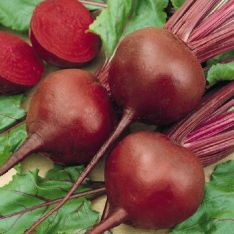
beets
It’s no secret that I love beets, beet soups (cold or hot) and salads so any recipe for beets catches my eye, and may evoke some interesting gustatory imagery as well as an urge to run to the kitchen and cook.
Perusing my email this morning I found a recipe for a beet soup from Will Frolic for Food that sounded so intriguing that I just had to add it to the collection. I’ll confess to total ignorance about hemp hearts until reading this recipe, but I did note that they may be omitted if they don’t occupy a place in your pantry.
The list of ingredients really sparked my interest–lots of things that I have in my herb and spice collection, but that I hadn’t thought to combine with beets. And if you’re wondering I haven’t made this yet, but I’ve updated my grocery list for a few of the things that I need to make it–including the pink peppercorns for garnish.
Cyber Monday!
The season for gifts is approaching. I’ll admit that I don’t do many holiday gifts–if I find something I want to give a friend, I’ll just do it so I’ve very little “Christmas” shopping to do–and it’s already done! But that doesn’t mean that I don’t have some things that would make great gifts for the right person:
- For the beekeeper or pollinator enthusiast on your list: some beautiful ceramics from www.honeybeeceramics.com--and I’ll admit that I don’t often find ceramics that I really like. There are clocks, decorative tiles of various sizes, and more utilitarian things like switch covers and outlet covers that are still beautiful.
- If you know a honey fan (who doesn’t keep bees but loves varietal honeys) there is a great selection from Old Blue Raw Honey –admittedly not a new suggestion, but there are so many possibilities here or from www.beeraw.com.
- For the “foodie” not honey- or bee-oriented Bull City Olive Oil has a wonderful selection of extra virgin olive oil–all harvest dated. I’ve found some excellent ones from places that I had not even thought of as producing olive oil, e.g. Australian Hojiblanca. The selection will vary with the seasonal harvest. You’ll also find a selection of fused and infused oils that are very tasty, varietal honeys, and balsamic vinegars. Not in Durham? Orders can be shipped.
- If you have a beekeeper on your list who complains about how hot it is in the summer when using protective clothing, here is a real gem. From Beetle Jail the really cool (figuratively and literally) there’s the Cool Blue beekeeper’s jacket. It really lives up to is name–you really can feel breeze through it, and I’ve had no stings while working in it.
- Another that’s not new, but it’s unusual: the Potato of the Month Club. What can I say–I just love potatoes.
- Then, there is always the Instant Pot. I finally succumbed and after a lot of research on the pros and cons, I bought an Instant Pot–and I love it. It adds a new set of functions to what I had in the Krups multi-cooker with the third-generation pressure cooking function.
- Should you opt for the Instant Pot you might include a cookbook (or two) that provides a good introduction to using that kitchen appliance. The Essential Instant Pot Cookbook by Coco Marante fills that slot nicely.
- Melissa Clark’s Dinner in an Instant is a wonderful book to start using the pressure cooker or Instant Pot. It’s a realistic look at what you can do with these multifunction appliances.
- For chocolate lovers, Chuao Chocolatier is one of my favorites–good chocolate and some pretty fantastic flavor combinations. I’m especially fond of the Spicy Mayan bar and the Enamored collection–especially the blueberry and lavender combination.
- Valrhona chocolate has a collection of single estate origin bars that provide a lot of sensual delight for the chocolate lover.
There are more gift suggestions here, here, and here–with some redundancy because some things are just too good to give up.
Disclaimer: I have no affiliate links and receive no monetary or other considerations from any of the sources I’ve listed in these pages. They are strictly my personal preferences.
A son gôut!
 a-single-serving.com