Homemade Chipotles in Adobo Sauce

I just have to pass this along–chipotle peppers are something I use rather often. I think this will beat the tinned ones from the supermarket.

StefanGourmet's avatarStefan's Gourmet Blog

DSC07025
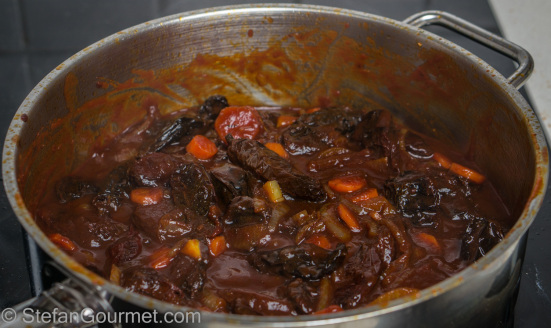
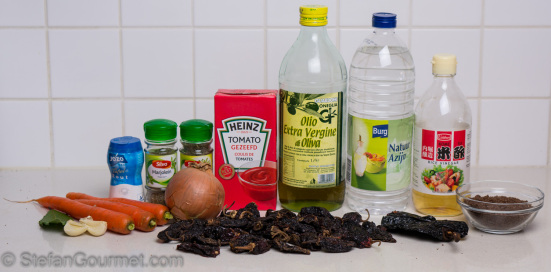
My favorite kind of chiles are chipotles because of their smokiness. Chipotles in adobo sauce, a sauce made from tomatoes and ancho chiles, are a great condiment. I love them for instance with chicken, mushrooms and cream. Chipotles in adobo sauce are available in cans, but since I like to make everything from scratch, I wanted to try making my own chipotles in adobo. I used a recipe by Pati’s Mexican table. It wasn’t hard at all, and the result was amazing. Chipotles in adobo from a can are great, but these homemade chipotles in adobo sauce have a more complex and well-rounded flavor. I will definitely make them again. I made a few adjustments, most importantly not using fresh tomatoes because they are out of season (and even if they were in season, tomatoes here are not that great). Here’s my version.

Ingredients

DSC06983
For about 850 ml (3…

View original post 349 more words

Perfect homemade pasta every time

A simple recipe for homemade pasta. If you don’t have a kitchen scale, you really should get one. They are not really expensive and make a lot of cooking so simple.

homecookexplorer's avatarhomecookexplorer

This is going to be my shortest blog ever.

But it will show how you can make perfect homemade pasta each and every time.

Here is the trick. I’ll assume you have a pasta maker already.

Start by weighing your eggs (not your flour). 1 egg per person eating your wonderful ooh! and aahhh! homemade pasta.

Next divide the weight of the eggs by .6. This will be the weight of flour to use.

So if you are making pasta for 4 and your eggs weigh out to 215g, then 215/.6 = 358 which would be how much flour to add. The more precise you can be, the better will be your result.

This quite precise ratio will give you the precise amount of hydration to your dough so that when you put it through your pasta roller, it will be perfect. No extra flour needed, no extra water, no…

View original post 67 more words

A thousand names for eggplant

I’ve always wondered about all the different names and wide use of eggplant. Here is a great post to answer some of those questions.

Aneela Mirchandani's avatarThe Odd Pantry

Eggplant display (source: via Wikimedia Commons, user Phoebe (Own work)) Eggplant display (source: via Wikimedia Commons, user Phoebe (Own work))

Writing the eggplant post last week left me in a quandary. Since I live in the US, calling it eggplant seems natural. But then all through my childhood I called it baingan in Hindi and brinjal in English. Some of my readers from the UK will probably want to call it aubergine, while Australians, I hear, prefer the term egg fruit.

United by a common language indeed!

Well it turns out that the names of this humble vegetable have come about through a global game of Telephone (Chinese Whispers in India) involving empires and migrations of peoples. Sometimes the names have gone around the world and even come back to the source, changed, to go another round.

Intriguing.

Wight, R., Illustrations of Indian botany, or figures illustrative of each of the natural orders of Indian plants, vol. 2: t. 166 (1850) [Goovindo] (Source: http://plantillustrations.org) Wight, R., Illustrations of Indian botany, or figures illustrative of each of the natural orders of Indian plants, vol. 2: t. 166 (1850) [Goovindo] (Source: http://plantillustrations.org)…

View original post 1,372 more words

Baked Feta Cheese with whatever you are growing in your veggie patch

I love feta cheese–I’d never thought to do something so simple and easy for a summer lunch or supper.

Promenade Claire's avatarPromenade Plantings

The allotment sorely needs my attention right now, it will be planting time soon and a) I haven’t done any preparation and b) and even more pressing is that until today I haven’t sown any seeds.

I have a To Do List in my head – clearing the winter debris, tidying jobs abound, a new path to be cleared between the greenhouse and shed and talking of the greenhouse it’s on my to do list too!  But I’m not going to dwell on the To Do List as there’s a tendency for it to all start feeling a bit overwhelming. I remind myself this is a hobby, a pleasure and an escape from TO DO lists. Instead I accept that a busy life means it’s a case of do what and when I can and while I’m there pick a few leaves of winter greens like Chard and Kale, dig…

View original post 412 more words

A good home-cooked steak

Steak is not something that I order when I splurge for a meal in a fine restaurant; it’s too easy to do at home and good for single-serving cooking since it’s portioned when it comes home, and it’s easy to cook.

A good thick-cut, home-cooked steak is one of the things that I don’t mind having left over, since it’s usable as “roast beef” for a yummy sandwich.  (No, the roast beef from the deli simply does not do it.) My favorite way to cook the steak is from Cook’s Illustrated, 01 May 2007–it does take a little time and minimal effort, but it’s well worth it.

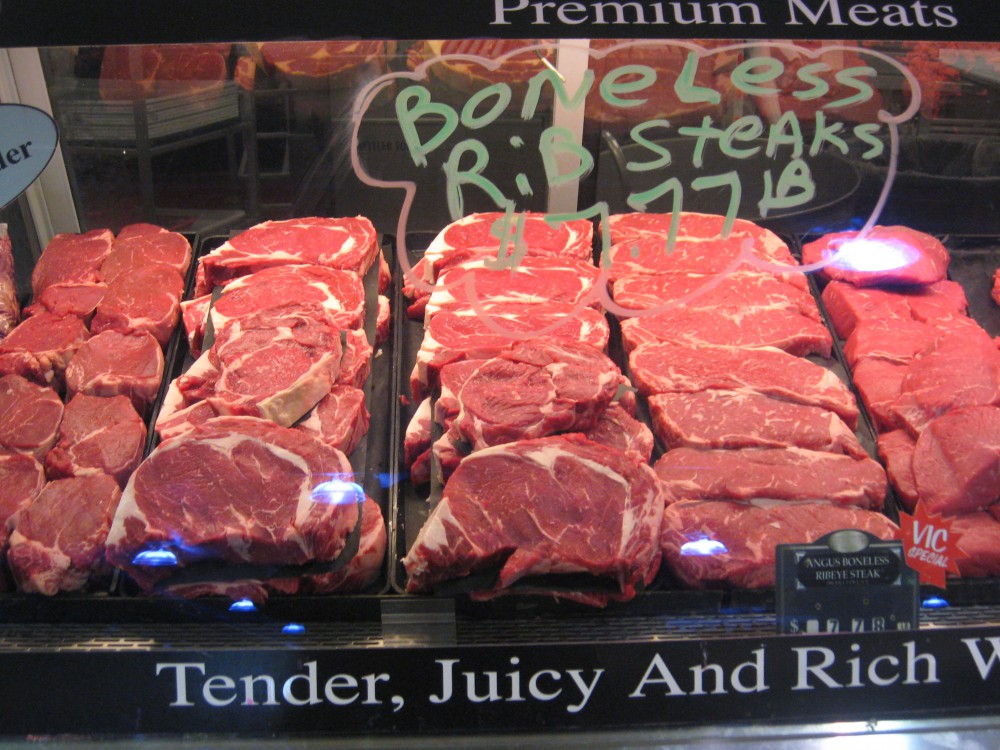
steaks in butcher caseMy usual choice of steak is a strip, or New York strip, cut 1-1/2 to 1-3/4 inches thick, with fat cap intact.  If I don’t find one lolling about   in the butcher case (you won’t likely find this in the pre-packaged section)  ask to have it cut the way you want it; my local Harris Teeter will cut to order but generally has thick-cut steaks in the butcher case.

This works fine with rib eye or with filet mignon, as long as it is thick-cut. Personally, I prefer strip or rib-eye to filet. Even with rib eye, it’s still not a substitute for real prime rib roast, but a good “second” so that I plan to have “leftovers”.

Ingredients

  • 1 boneless steak (1 1/2 to 1 3/4 inches thick (about 1 pound), strip or rib eye
  • Kosher salt and fresh ground black pepper
  • 1 tablespoon vegetable oil for searing

Preparation

  1. Adjust oven rack to  mid-position and pre-heat oven to 275 °F .
  2. Pat steaks dry with paper towel and season liberally with salt and freshly ground black pepper.
  3. Place steak on wire rack set in rimmed pan and place in oven.  (Steak does need to be raised rather in contact with pan).
  4. Cook until instant-read thermometer inserted in center of steak registers 90 to 95°F for rare to medium-rare, 20 to 25 minutes  (or 100 to 105°F  for medium, 25 to 30 minutes).
  5. Heat oil in  heavy-bottomed skillet over high heat until smoking.
  6. Place steak in the skillet and sear until well-browned and nicely crusty–about 1-1/2 to 2 minutes, lifting once halfway through to redistribute fat under the steak.
  7. Using tongs, turn steak and cook until well browned on the other side, about 2 to 2-1/2 minutes.
  8. Use tongs to stand steak on the sides and sear on all sides. (This really is worth the effort–and it really does not take long.
  9. Transfer to cooling rack, tent with foil, and let rest for about 10 minutes–this also is really worth the wait.
  10. You can prepare a quick pan sauce while the steak is resting, or simply add a pat of herb butter, horseradish,  or some blue cheese crumbles to the warm steak.

Add some simple sides like salad or baked potato. Now pour yourself a another glass of that luscious  red wine that was  breathing while you were cooking, and enjoy.

A son goût!

Instant Stew

I’ve just recently started looking at what can be done with a pressure cooker; this looks like a good place to start so I thought I would share this.

Russ's avatarThe Domestic Man

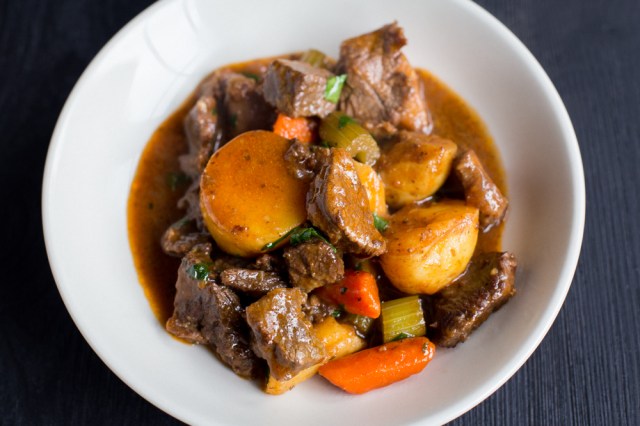
First of all, sorry about that title. Just like the elusive free lunch, there is no such thing as an “Instant Stew”. You see, I recently asked my Facebook followers what dish they’d like to see me develop, and I received several requests for pressure cooker and stew recipes. We use (and love) an electric pressure cooker called an Instant Pot, so that’s what I used for this recipe (and hence the name).

At its heart, this dish is similar to many of my other stew recipes, but with a new approach. When it comes to simple weeknight recipes, many folks like the idea of crockpot stews (wherein you leave the ingredients to slow-cook while away at work). But I’ve found that more often than not, the vegetables become too mushy and tired after a long simmer. This is where a pressure cooker really shines, as it shaves a…

View original post 130 more words

Trying a new recipe….

As much as I’ve talked about improvisation in the kitchen when you’re doing single-serving cooking, I do occasionally like to have a recipe, at least for starters.  Trying to cut a recipe serving six or eight to one-person size is really frustrating.  The major ingredients are not that hard to do–it’s the seasonings that are hardest.  You’ve a much smaller quantity so you do need to cut them, but usually NOT by the same proportions as the main ingredients, so I was excited to see that the editors at America’s Test Kitchen had come out with Cooking for Two 2013, in addition to the Cooking for Two 2011.

In perusing  these (Kindle editions), I though the recipes looked like a good starting place for single-serving cooking: many looked as if the second serving would freeze well, and that’s a bonus. (If you’ve read much at all here, you’ll know I don’t “do” leftovers, nor do I do the cook-one-thing-and-eat-it-all-week scene.) For me, having one serving to eat now, and one in the freezer is good. Other recipes looked as if I could prepare a single chop or chicken breast, with the full recipe, freeze that, and then just add the meat later after thawing the base.

One of the appealing things about the recipes in these books is that they are not terribly involved–like weeknight suppers, and not all-weekend cooking marathons–and shouldn’r leave you with a sink overflowing with dishes, pots and pans.  Definitely worth a try since I’ve always had good results with recipes from Cook’s Illustrated and Cook’s Country.

When making a recipe for the first time, I do follow it–otherwise how would I know how I need to change it?  For my first exploration from the 2013 Cooking for Two I picked a dish that I though sounded tasty and fun, and that the second serving could be put in the freezer: “Moroccan-Style Quinoa with Chickpeas and Kale”.  I like quinoa, I like chickpeas, and kale so this seemed a good one to try.  I honestly did follow the recipe.  Really I did, despite some temptations to tweak the seasonings…like put in extra garlic–that sort of thing.

I’m going (since I’ve given you the attribution above) to reproduce the recipe here with a little adaptation (because I don’t want to key in the entire thing).  It was easy to follow, and –very little cleanup afterwards–all good points.

Moroccan-Style Quinoa with Chickpeas and Kale

  • 2 tablespoons olive oil
  • 1 small onion, chopped fine
  • 1 carrot, peeled and cut into 1/4-inch pieces
  • 2 garlic cloves, minced
  • 1/4 teaspoon ground coriander
  • 1/8 teaspoon red pepper flakes
  • 1/2 cup quinoa, rinsed (if not prewashed)
  • 1-1/2 cups vegetable broth
  • 3/4 can of chickpeas, rinsed
  • 2 tablespoons golden raisins
  • salt and pepper
  • 6 ounces kale, stemmed and chopped into 1-inch pieces
  • 2 tablespoons pine nuts, toasted
  • 1/4 teaspoon lemon zest plus 1 teaspoon juice
  • 2 tablespoons crumbled feta cheese
  1. Heat 1 tablespoon oil in medium saucepan over medium heat until shimmering. Add onions, carrot and cook until onion softens. Stir in garlic,  coriander, pepper flakes and cook until fragrant. Add quinoa and cook stirring often until lightly toasted.
  2. Stir in broth, chickpeas, raisins, 1/8 teaspoon salt.  Place kale (still wet from washing) on top and bring to a simmer.  Cover, reduce heat to low, and simmer until quinoa to  is transparent and tender (18 to 20) minutes.
  3. Off heat, add the remaining 1 tablespoon oil, pine nuts, lemon zest and juice. Sprinkle with feta, season as needed with salt and pepper to taste.  Serve.

-<>^<>-

I’m likely to make this again, because it did go together easily, and cleaning up afterward was easy; but there will have to be some serious modification! The quinoa and chickpeas part of it is okay–except for being  very bland–and I really, honestly did follow the quantities given in the recipe so I’d know. Well, now I do!

I’m not really familiar with Moroccan style seasonings, but I don’t think that this was it.  Even with the added lemon zest and juice, garlic, red pepper flakes, raisins, and coriander, it’s definitely not even approaching complexity. It’s missing something.

Then there was the kale. The recipe didn’t say anything about what kind of kale.  When I went to the  market, I did look for Toscano (Lancinato, Nero) or Russian red kale, but I could find only the curly, redbor kale; I picked out the smallest, youngest looking leaves in the bin. But it still wasn’t what this dish needed–at least for me. The kale completely overwhelmed the flavor of the rest of the dish–I had kale-flavored quinoa and chickpeas.  For me it  just did not fit with the quinoa and chickpeas.

I liked the idea of a one-dish meal (since it’s something I’ve posted about here a number of times), but I’ll not do it with that particular kale again.  I think I’m more likely to do spinach, or maybe arugula, though I might try it with Toscano or Lancinato kale, hoping that would be a bit milder.  (No pictures either–even with the smaller leaves, the kale was a rather icky green by the time it was tender.)

My other frustration with the recipe–supposedly for two–was that the servings were huge–I  have at least two more  servings sitting in the fridge now, even after having had a very reasonable portion for supper. Another piece of information for when I try another of the “for-two” recipes.

I know that when writing recipes public consumption, you do have to be moderate with seasonings, but this was downright bland, not something that I expect from recipes from this source–I’ll be looking out for that with other recipes. I guess I was expecting to taste and think that I’d need more garlic, or maybe more red pepper flakes next time, but I wasn’t expecting what I got from this.

You think I sound frustrated?

You’re right–because I have come to expect better from the recipes from American’s Test Kitchen–and now I have two more servings to try to make more palatable. I’ll try to add more seasoning when I reheat, but I don’t want the quinoa to be total mush.

I will do the quinoa and chickpeas combo again, but likely replacing the vegetable broth with at least part chicken broth, definitely increasing the coriander, red pepper, lemon juice and zest, and figuring out some other spices to add for more complexity–while trying to still keep it simple. (That’s my rationalization for going in search of a Moroccan cookbook now.)

Bottom line for me, it’s a starter–now to see where I can go with it. But, I’ll be trying another recipe from the book….but I’ll definitely feel free to make adjustments right from the start on a few things.

Garlic mashed potatoes

My assigned dish for the Thanksgiving dinner that I always have with friends is garlic mashed potatoes…I love them, but don’t make mashed potatoes for one.  One of the reasons is that I want my mashed potatoes to be unctuous, with lots of butter and (at least) half-and-half–not something I should be adding to my diet often.

This year, I made my Thanksgiving garlic mashed potatoes as described inCook’s Country recipe for garlic mashed potatoes–it’s a one-pot method that produced a lovely result–with less effort that the way I had done them.  It’s always been my contention that I don’t want to cook potatoes for mashing in the jackets–I hate having to peel them while still hot, and I certainly don’t want to boil peeled potatoes in water–I want all that lovely starch to be available to absorb cream and butter–so I’ve always steamed them and then let them dry out just a bit before I start mashing.

This recipe took a different approach:  the potatoes were cooked with the minced garlic (after it was sautéed in butter) and then cooked in the half-and-half with a bit of water added.  Once tender the potatoes were mashed right in the pot, adding some more butter, and half-and-half.

I’ve looked at this recipe and wondering if this approach could be adapted to making mashed potatoes (decent ones) for one, or maybe two.  It would certainly be faster than baking a potato and then making mashed potatoes, since the potatoes are cut into 1/2-inch cubes before cooking and you do the mashing right in the same pot that you cooked them in–less clean-up to do, as well.

Adapting this recipe for one seemingly would involve just a ratio adjustment–but that will take a test run to see if it is so simple.  Since the original recipe called for four pounds of potatoes (designed to serve about 6 or so), it might take some tinkering, but sometimes mashed potatoes (like risotto) are necessary even when doing single-serving cooking.

Fig and fennel caponata!

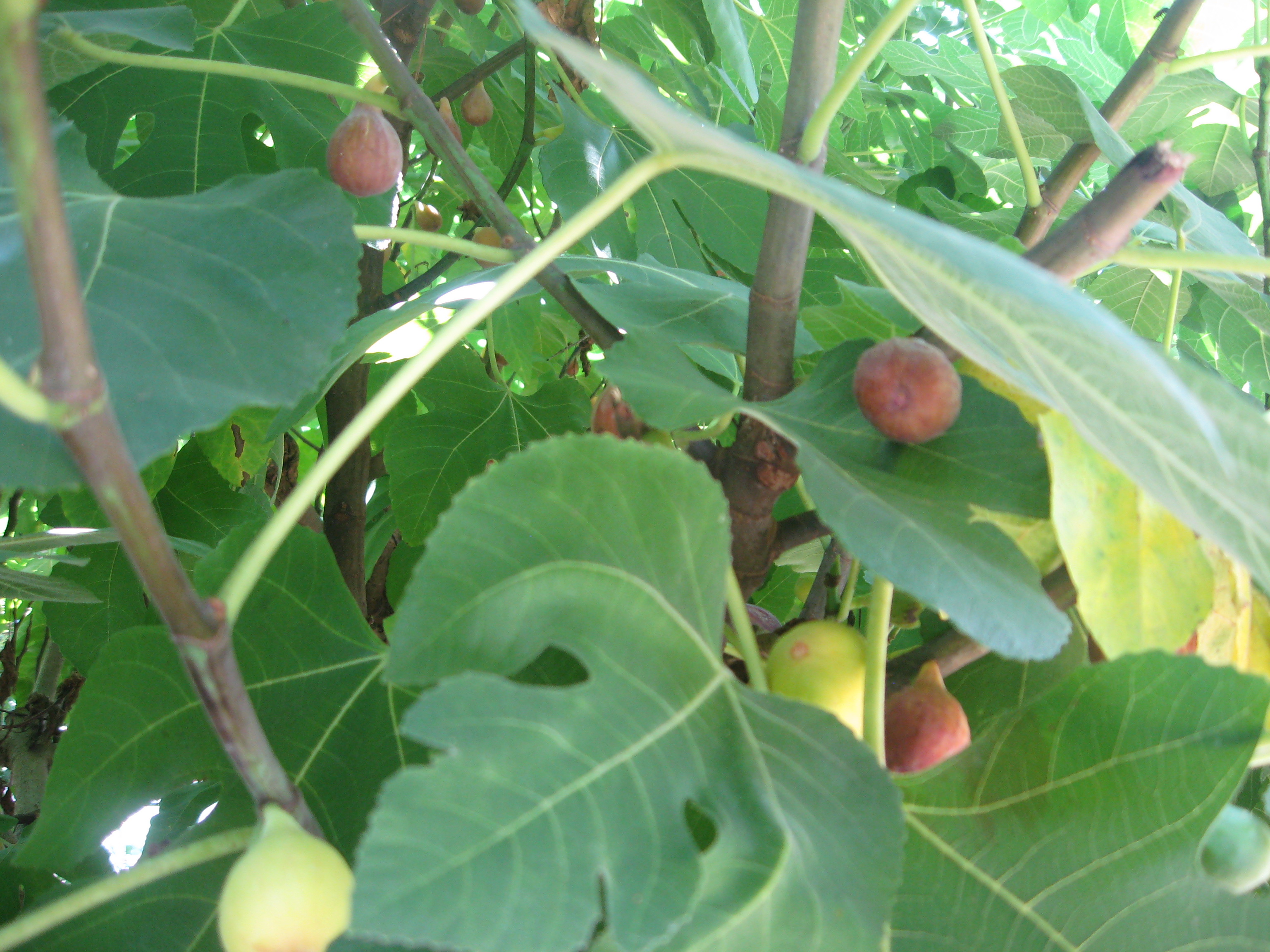
figs on tree

ripe and unripe figs on tree

My kitchen smells SO good right now–fennel, oranges, garlic…tartness of balsamic vinegar….

I’ve finished the most recent BIG indexing project, and I’m supposed to be deep in course preparation for my medical terminology courses that start a bit after mid-August.

I’m playing hooky from that for a bit.  I found a recipe for fig and fennel caponata that wouldn’t wait.  You’ll find the recipe at jjbegonia.com.

Caponata of any sort is one of my favorite summer things, no matter how served, and this was a combination I just had to try. Though mostly we think of caponata as a dish made with eggplant, tomatoes, etc., it is really a cooked vegetable salad–and as much as I love fennel and figs, I just had to try this one NOW.

I took a few liberties with the recipe, but I think that I kept to the spirit–the flavor was certainly good.  The only real modification I made was to substitute diced (drained) fire-roasted tomatoes for the crushed in purée since that’s what I had in the pantry, and after tasting, I added more figs. Whether my figs were less sweet, or my balsamic was more acidic, I’m not sure, but it seemed to need a bit more of the figgy-ness.  I held back most of the parsley since I’m not serving immediately.

Despite my liberties, it’s a fantastic recipe–obviously great on toasted bread just as a nibble (maybe with a glass of cava or prosecco), but I’m looking forward to it as a side for a grilled lamb (shoulder or leg) chop, though I’ll have some left to try on sandwiches as well, and maybe with pasta…and probably to share with neighbors and friends.

(Given that both the recipe from jjbegonia.com and mine were changes from the Barefoot Contessa, here is the link to that recipe for fig and fennel caponata as well. I’ll probably try this when fresh figs are not available, but I do like the freshness of this recipe.)

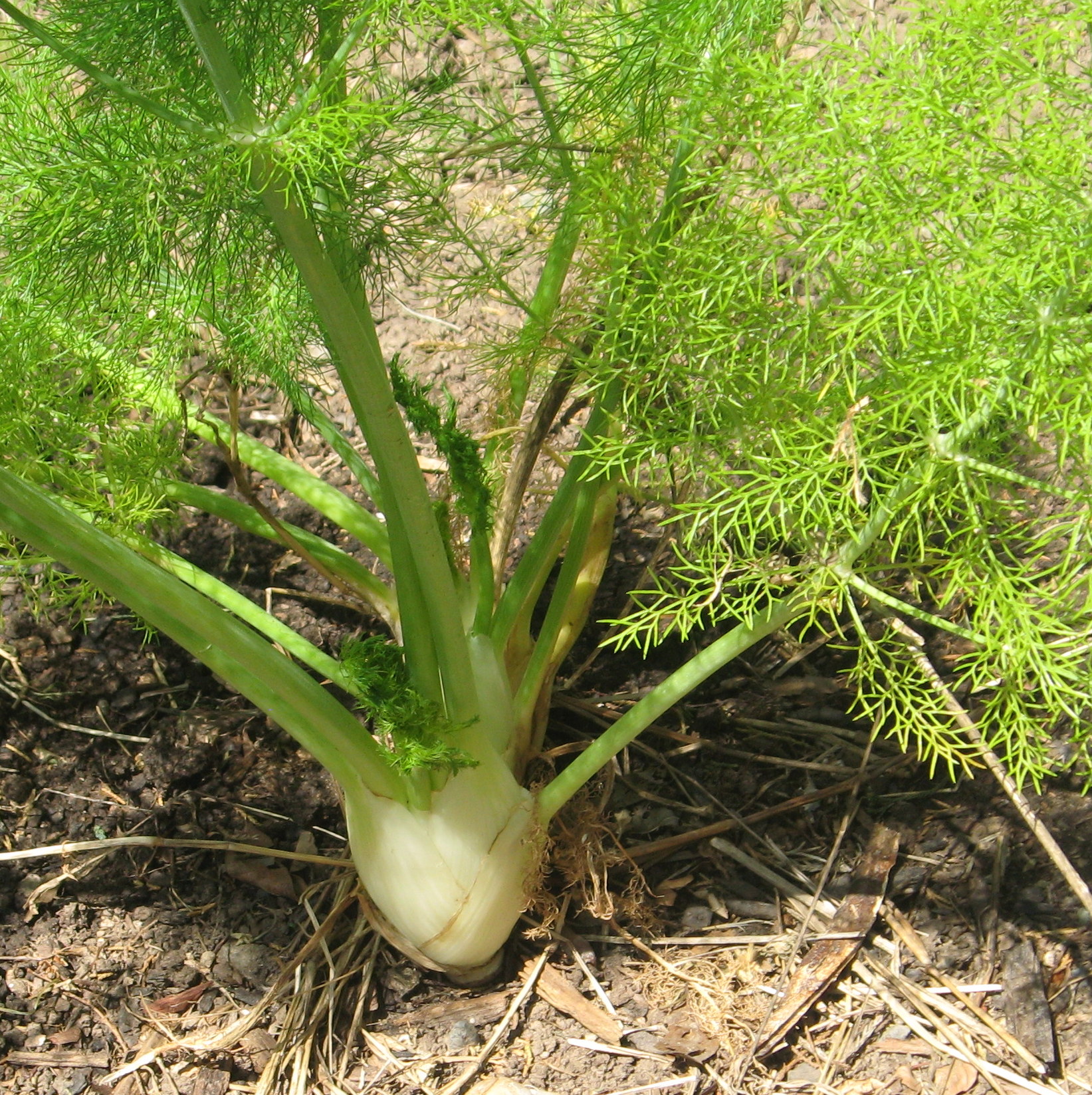
fennel (Foeniculum vulgare)

Foeniculum vulgare

Flamusse aux Pommes (Burgundian Apple Flan)

Looks awesome! Burgundian food and wine are some of my favorites!

StefanGourmet's avatarStefan's Gourmet Blog

For the Burgundian evening there also had to be a traditional dessert from Burgundy. I decided to prepare flamusse, an apple flan that is similar to clafoutis (made with cherries). This is a very an quick simple cake/dessert to make, but really tasty. The important thing is to use only a bit of batter and not to beat too much air into it, otherwise the flan will rise too much and although it will still taste good, it will look quite messy.

View original post 248 more words