Baba ghanoush

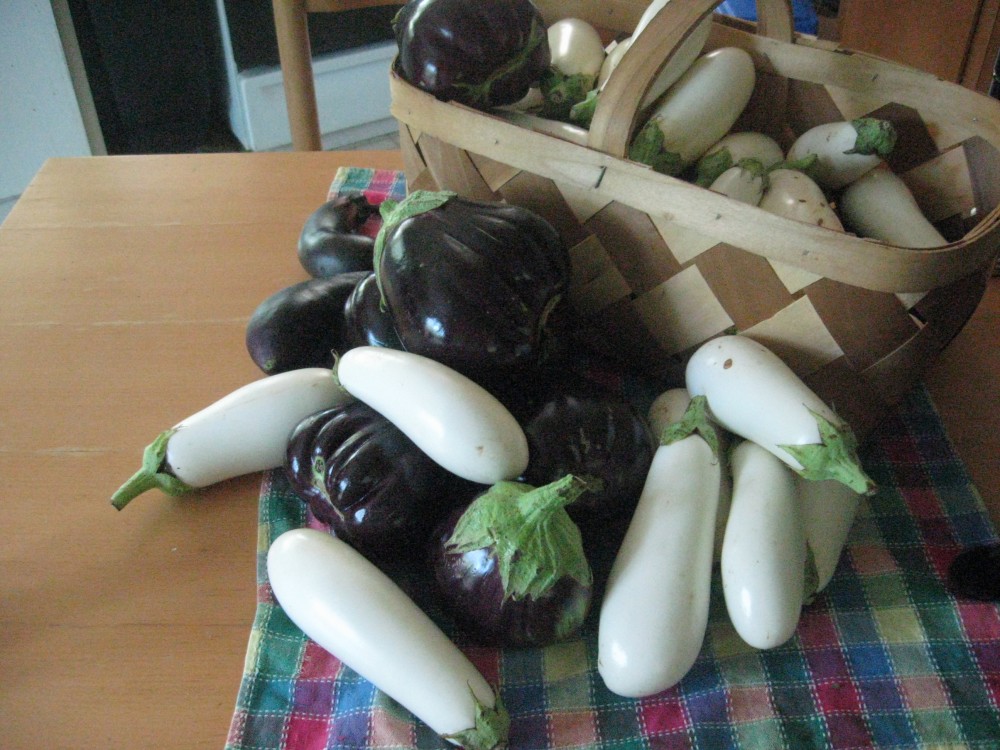
Market was a bit slow this past Saturday with the unrelenting rain most of the morning.  I had  lots of lovelyWhite and purple eggplants white and purple eggplants left so I’m going to make baba ghanoush.  No matter how you spell it, this creamy garlic- and lemon-spiked dip (frequently served as part of a mezze platter in Middle Eastern countries) is a delightful and simple dish to prepare when eggplants are abundant.

I started with my bookshelf on Eat Your Books to survey recipes…most were very similar.  The biggest differences were in the preparation of the eggplant.   Since I have a penchant for those that explain the whys of the recipe, I elected to use one from Perfect Vegetables (from the editors of Cook’s Illustrated magazine.  That recipe noted that  the eggplants must be more than just soft–they needed to be cooked until the insides were “sloshy”.  This can be done on the grill (preferable) or in the oven (acceptable alternative).  Broiling seemed not to be an option as the outsides would be charred too much and the insides not sloshy.

See “Eggplant….” for how to select appropriately mature eggplants of good quality.

This recipe is adapted from Perfect Vegetables, page 105 (Master Recipe for Baba Ghanoush).  I used white eggplant to make this batch of baba ghanoush–they are proported to be sweeter than purple ones.

Ingredients (makes about 2 cups)

  • 2 pounds eggplant
  • 1-2 tablespoons lemon juice  or to taste
  • 1 small clove garlic (minced or pressed)
  • 2 tablespoons tahini paste
  • 1 tablespoon extra-virgin olive oil
  •  1/4 teaspoon salt and  1/4 teaspoon fresh-ground black pepper or to taste
  • 2 teaspoons chopped fresh parsley leaves

Preparation

Prick the eggplants evenly over the surface with the tip of a paring knife (to prevent exploding in the oven) and place on a foil-lined baking sheet.  It’s best not to have them touching each other in order to roast most evenly. (I did spread these out more before they actually went into the oven to roast.)

Eggplant ready to go into the oven to roast

white eggplant ready to roast

Roast on the middle rack of the oven preheated to 500 ° F, turning every15minutes.  (Globe eggplants, about 60 minutes; Italian eggplants, 50 minutes; oriental/Japanese eggplants 40 minutes). Let cool until you can handle them.

Roasted white eggplant just out of the oven

roasted white eggplant just out of the oven

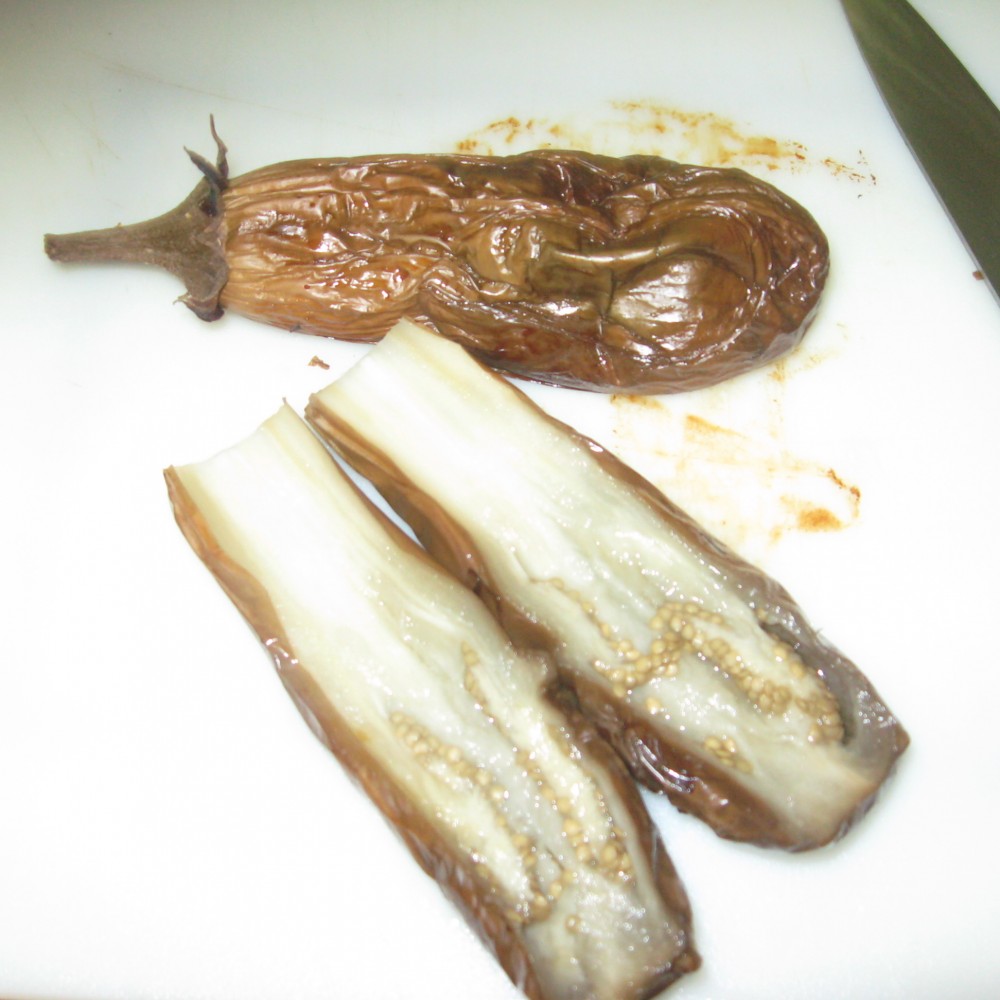
The eggplants should be more than just soft–they should be squishy (or sloshy as described in the recipe) after the roasting.

a very soft roasted eggplant and one cut in half

squishy eggplant

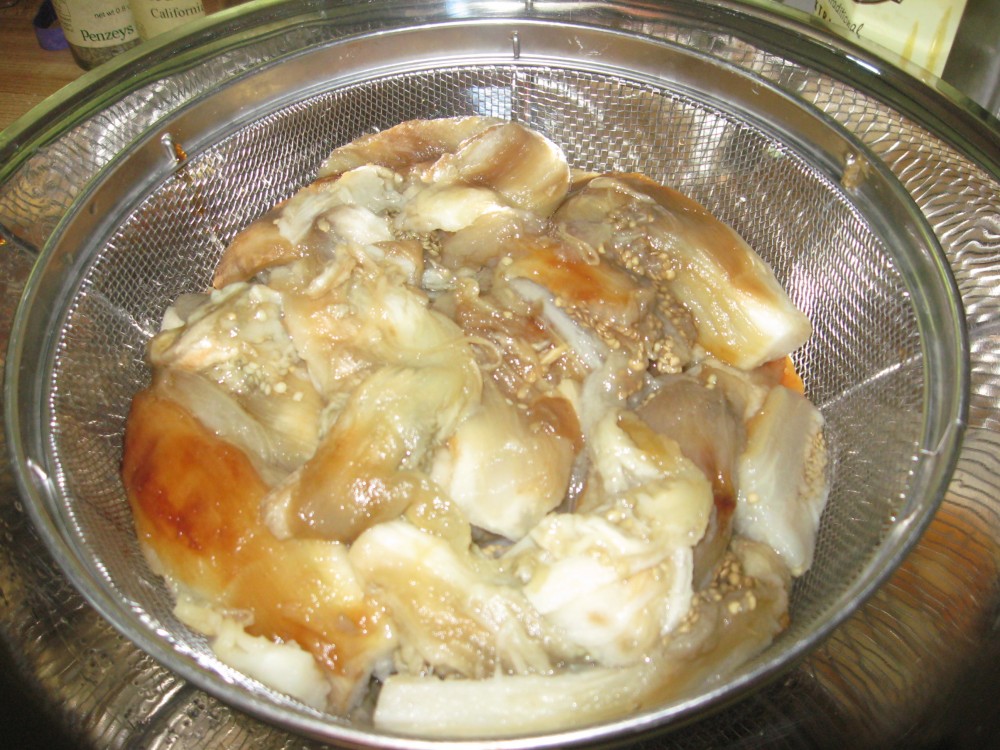
Over a colander set in a bowl, trim off  top and bottom of eggplant and slice lengthwise in half.  Using a spoon, scoop out the hot pulp into the colander.  You should have about 2 cups packed pulp.  Let the pulp drain for 10 to 15  minutes

draining eggplant flesh in colander

eggplant flesh draining in colander

Transfer the pulp to food processor bowl.  Add lemon juice, garlic, tahini, oil, 1/4 teaspoon salt, 1/4 teaspoon pepper. Process using 1-second pulses (about 8 to 10) until the pulp has a coarse, chopped texture.  Adjust seasoning as needed.

Transfer to serving dish or storage container, covering the surface with plastic film and chill lightly (about 45 to 60 minutes) before serving.

To serve

Baba ghanoush is typically served as part of a mezze platter (or like Italian antipasto) with pita bread, but crudities (peppers, cucumbers, small tomatoes, celery, et cetera) can be used as well to dip as well.

If the baba ghanoush has been thoroughly chilled, the flavor will be best if it is allowed to warm slightly before serving.

Sprinkle with chopped/minced parsley. Make a depression in the center and add a bit of extra-virgin olive oil.

Enjoy!

baba ghaoush with Sicilian olive oil and parsley

garnished with Sicilian extra-virgin olive oil and parsley

Cook’s notes

I did find that the white eggplant have more body and take longer to roast than comparable size purple ones.  The flesh is, indeed, sweeter than purple ones, so I added just a bit of extra lemon juice to the baba ghanoush than the recipe called for.  I think that I prefer the white eggplants for slicing or using whole as they do seem sturdier and to have a bit more “tooth” to them.

I  prefer a bit more garlic and lemon than this recipe calls for, as well as a pinch of cayenne pepper–not enough to be hot–just as a flavor enhancer.  If you like really lemony flavor, use a microplane grater or zester  to get some very fine zest and add just a bit to give it a real lemon kick.

Caponata!

The first time I tasted “caponata” it was mostly eggplant, and it was absolutely buried in tomato sauce.  I liked the concept, but it had kind of languished until I was looking around the kitchen at the tomatoes and eggplants that I had there.  This has been such hot, humid, torrid weather that I’m turning into a very picky eater…must be flavorful, room temperature or cold.  Needless to say I’ve eaten a lot of melons and fruits…and raw tomatoes in caprese salad, but I really needed to do something with the tomatoes and eggplants.

I decided to go looking for a recipe for caponata that looked like something I want to eat with grilled or griddled king klip since that was on special in the market today.  I started by going to EatYourBooks.com to search for caponata recipes among the books that I own (that I’ve put on my bookshelf there).  I found that I had 6 recipes for caponata.  I don’t know if it’s the weather, or what, but none looked like something I wanted to tackle this afternoon.  So I went searching online in the blogs that I like to check on.

On All Things Sicilian and more, I found a recipe that “felt” like something to do this afternoon, and it seemed loose enough that I could do it with what I had–oriental-type eggplants and little grape tomatoes.  It involves several steps, but it’s seemed approachable. A slight variation put a little garlic and some red pepper flakes into the mix as the olives that I had were marinated in those things.   Admittedly I did take a few liberties with the recipe but I think it worked well.  I did not improvise with the agro dolce–I kept those proportions.

My only real variation (other than the tomatoes) was that I treated the eggplant as described in my post on how to cook eggplant (as suggested by Cook’s Illustrated: salted very lightly, microwaved it, pressed it) and I was able to sauté all the eggplant in about a tablespoon of olive oil.

Here is the recipe from All Things Sicilian blog–the best I’ve ever tasted.  (You should go to this blog and read for more information about caponata.)

Ingredients

  • extra virgin olive oil, 1½ cups (more or less – depending how much the vegetables will absorb)
  • eggplants, 1-2  large, dark skinned variety,
  • peppers, 3, preferably 1 green, 1 red, 1 yellow (variation of colour is mainly for appearance, but the red and yellow ones taste sweeter)
  • onion, 1, large, sliced thinly
  • red tomatoes, 2 medium size, peeled and chopped, or 2 tablespoons of tomato paste and a little water
  • capers, ½ cup, salted or in brine
  • green olives, ¾ cup, stoned, chopped
  • celery, 2-3 tender stalks and the pale green leaves (both from the centre of the celery)
  • white, wine vinegar, ½ cup
  • sugar, 2 tablespoons
  • salt and freshly ground pepper 

Preparation

For caponata vegetables

  1. Cut the eggplant into cubes (approx 30mm) – do not peel. Place the cubes into abundant water with about 1 tablespoon of salt. Leave for about 30 minutes – this will keep the flesh white and the eggplant is said to absorb less oil if soaked previously.
  2. Prepare the capers – if they are the salted variety, ensure they have been rinsed thoroughly and then soaked for about 30 minutes before use, and then rinsed again.
  3. Cut the peppers into slices (approx 20mm) or into rectangular shapes.
  4. Slice the onion.
  5. Slice the celery sticks and the green leaves finely.
  6. Peel, and coarsely chop the tomatoes (or use tomato paste).
  7. Drain the eggplants and squeeze them to remove as much water as possible – I use a clean tea towel.
  8. Heat a large frypan over medium heat with ¾ cup of the extra virgin olive oil.
  9. Add eggplant cubes and sauté until soft and golden (about 10-12 minutes). Place the drained eggplants into a large bowl and set aside (all of the vegetables will be added to this same bowl). If you want to, drain the oil from the eggplants back into the same frypan and re-use this oil to fry the next ingredients – the peppers.
  10. Add new oil (to the left-over eggplant oil) plus a little salt and sauté the peppers,until wilted and beginning to turn brown (about 10-12 minutes). Remove the peppers from the pan and drain the oil from the peppers back into the same frypan. Place the peppers in the bowl with the eggplants.
  11. Add a little more oil to the pan and sauté the celery gently for 5-7 minutes, so that it retains some of its crispness (in more traditional recipes, the celery is always boiled until soft before being sautéed). Sprinkle the celery with a little salt while it is cooking.
  12. Remove the celery from the pan and add it to the eggplants and peppers.
  13. Sauté the onion having added a little more oil to the frypan. Add a little salt and cook until translucent.
  14. Empty the contents of the frypan into the bowl with the other cooked vegetables.

For the agro dolce sauce

  1. Add the sugar to the frypan (already coated with the caramelised flavours from the vegetables).
  2. Heat it very gently until it begins to melt and bubble. Add the vinegar and evaporate.
  3. Incorporate the cooked vegetables into the frypan with the agro dolce sauce.
  4. Add ground pepper, check for salt and add more if necessary. Gently toss all of the ingredients over low heat for 2-3 minutes to blend the flavours.
  5. Remove the caponata from the pan and cool before placing it into one or more containers.

Ò¿Ó
It should hold well in the refrigerator–and I know it will be even better tomorrow when the flavors have melded  more.  I’m looking forward to this with some griddled king klip tomorrow.

Eggplant….

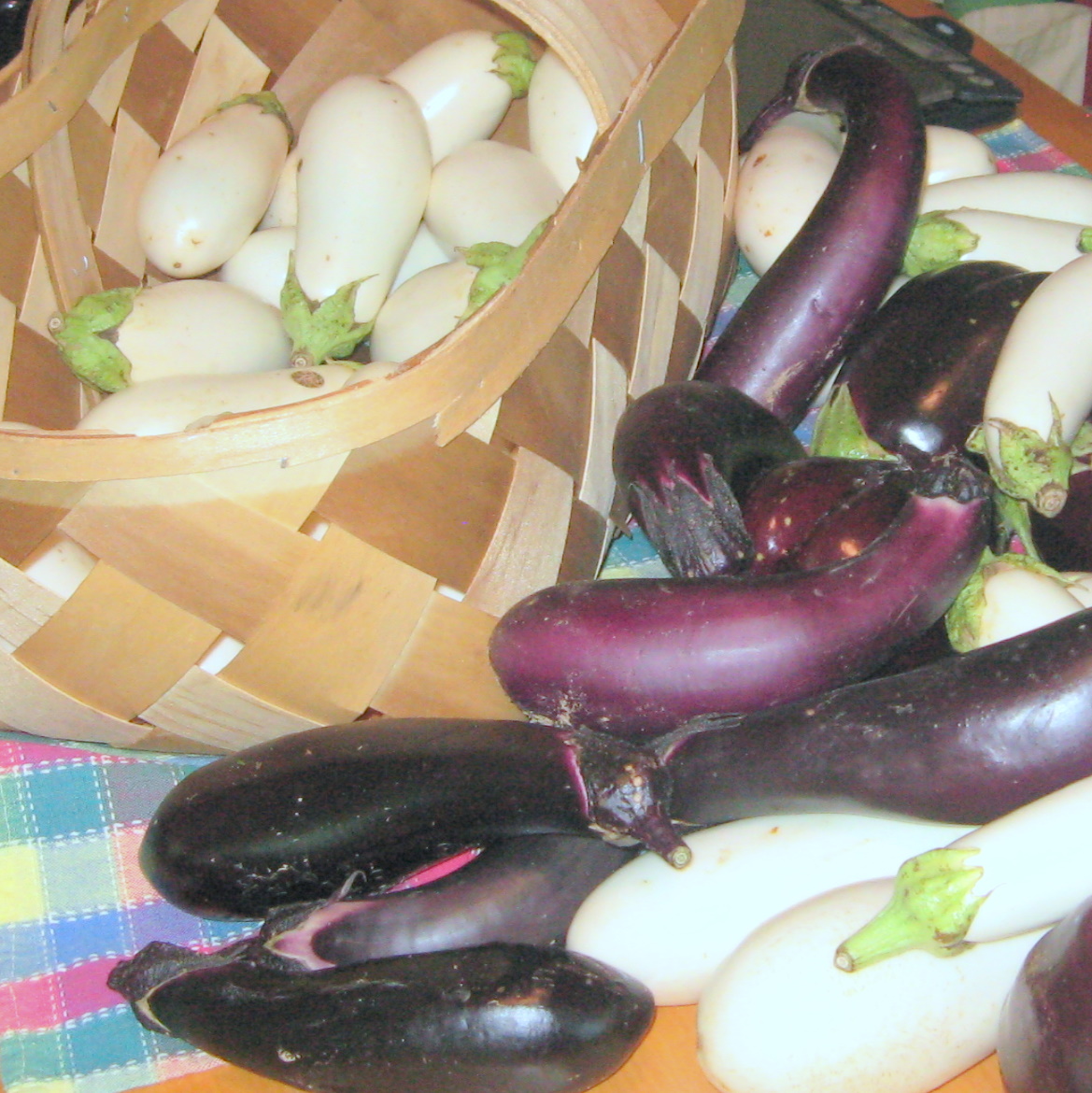
Eggplant is a lovely vegetable from the blooms to the fruit.  What’s not to love about this glossy purple vegetable, especially from an artistic point of view?  Beautiful color, highlights and shadows….

From a cook’s standpoint, at the farmers’ market I hear lots of “What do I do with eggplant?” questions. This seems to be another vegetable that needs to be looked up in a vegetable cookbook to get some basic information.   I’d recommend checking out The Victory Garden Cookbook at the library if you don’t want to own it.  The author is Marian Morash.

I’m going to try to condense some information from various sources here to give you a bit better idea about what eggplant is and what you can do with eggplant.

For any of you who might want to think about growing your own next summer, keep in mind that it’s a hot-weather plant.  The nighttime temperatures need to be about 55 ° F before you put the plants out in the garden; otherwise they just kind of sit there and never do anything–even after the temperatures warm up.  So don’t rush it–wait until it’s warm enough.  Then you’ll have a plant that is very productive (if you keep harvesting the fruits).  Come peak season, you’ll find eggplant a bit like zucchini…you will have an abundant (maybe even excessive) supply of this lovely stuff. Maybe you neighbors would like some…especially if you can tell them some things to do with it when you give it to them.

It’s a widely used vegetable in Middle East and Mediterranean cultures.  It seems to be less familiar to the average American cook shopping at the farmers’ market.  So here is some basic information on yields (from The Victory Garden Cookbook, page 102-103):

  • one pound of cubed, peeled eggplant is about 4 cups.
  • for 1 cup of cooked, cubed eggplant you’ll need about 6 cups of raw, cubed eggplant.
  • for 2 cups of puréed eggplant, you’ll need about 6 cups of raw, cubed eggplant
  • for 4 servings, you’ll need about 1-1/2 pounds of eggplant.

Now for choosing your eggplant:  If you’re harvesting your own, size is not a good indicator of maturity–big is not necessarily better.  Older eggplants can become bitter, with many seeds, and skins will be tough.   First, look for glossy skin.  Then lightly press on the fruit.  If it’s hard, the eggplant is not ready.  If the flesh presses down, and bounces back–it’s ready.  Flesh of a too-old eggplant will press down very easily and will keep the depression from your pressure.   Eggplants that you buy should have the “cap” and part of the stem on them.

Eggplants are easily bruised so handle with care–when checking for maturity be gentle.

Eggplants also are not “fond” of refrigeration; best storage temperature is about 50 ° F.  Stored colder than that, the eggplant will rapidly develop soft brown spots (rotting) and will become bitter.   Plan to cook your eggplant as soon as possible after purchase or harvest and store in a plastic bag with a damp paper towel, at room temperature.

One of the down sides of cooking eggplant is that it’s a bit like a sponge–it can absorb large quantities of oil–which most of us don’t want in our diet because of the calories (at least).  A properly harvested eggplant does not need salting in order to remove bitterness.  Salting and draining, however, removes moisture from the eggplant.

Traditional salting uses about 1-1/2 to 2 teaspoons salt per pound of eggplant.  Let stand for 30 to 60 minutes.  Then press between paper towels to get more moisture out and compress the eggplant so that it’s not so porous or “spongy”.

You can also get help from the microwave:  add the salt 1/2 teaspoon per pound, place on paper towels sprayed with nonstick spray, and cook on high power for about 10 minutes until it feels dry and is slightly shriveled.  Press to compress the eggplant so that it’s dense, and doesn’t absorb oil.  Proceed with sautéing, and it will not absorb  nearly so much oil; you should be able to sauté a pound of eggplant with about 1 tablespoon of oil.  (I love this method–I have been able to sauté a pound of eggplant in less than a tablespoon of oil.)  See post on Caponata!  This will work with sliced eggplant as well as cubed.  I’d recommend doing this instead of the traditional salting, but the pressure compressing the eggplant is important.

There are other things to do with eggplant than make eggplant parmesan but that seems to be a dish that everyone has heard of.  Even if you’re going to make eggplant parmesan, I recommend using one of the procedures for removing moisture and compressing this vegetable.

If you’re going to broil or grill (a favorite of mine) you won’t need to do the salting or compressing–just brush the slices, of halves of the oriental-type eggplant with olive oil, sprinkle on some salt and pepper and grill/griddle/broil until tender.

There’s a wonderful Middle Eastern dip to make using eggplant too: baba ghanoush (many alternative spellings which I’m not going to include here).   This usually starts with a whole globe eggplant baked or grilled whole before being mashed with extra-virgin olive oil and seasonings.

Another popular eggplant dish which you may encounter in restaurants is Iman Bayidi–eggplant sautéed  and braised with onions, garlic, and tomatoes.  Ratatouille is a popular Provençal dish which uses eggplants.

Baking or sautéing is often a preliminary step in eggplant dishes, but you can serve it just like that with a squeeze of lemon juice, or one of many toppings.

When you’re searching for eggplant recipes, try looking at Mediterranean (Italian, Greek, southern France), Chinese, Japanese, Middle Eastern  cuisines as this vegetable is frequently used in these.    Just some thoughts on where to go to find things to do with eggplant now that you know how to buy it and some of the basic techniques for cooking it.

Mind your peas and beans….

Main Entry: leg·ume    Pronunciation Guide
Function: noun
Inflected Form(s): plural legumes \-ümz, -m\
Etymology: French légume, from Middle French, from Latin legumen, from legere to gather — more at LEGEND
1 a : the fruit or seed of a leguminous plant (as peas or beans) used for food b : a vegetable used for food — used chiefly in menus
2 : a leguminous plant; especially : one grown as a forage or green-manure crop (as clover, alfalfa)
3 : a dry dehiscent one-celled fruit developed from a simple superior ovary and usually dehiscing into two valves with the seeds attached to the ventral suture : POD — compare FRUIT 1d, LOMENT; see FRUIT illustration

“legume.” Webster’s Third New International Dictionary, Unabridged. Merriam-Webster, 2002. http://unabridged.merriam-webster.com (17 Jul. 2011).

-♦♦♦-

I brought up the subject of purple-hulled peas since they are seasonal.  Unless you are a native Southerner you likely don’t know about this vegetable.  I’m not–and it took me a lot of research to find out what I wanted to know about peas and beans, which is which, and what is what.

At the risk of being a bit didactic, let’s start with legumes, which are ancient foods–good sources of protein, carbohydrates and fiber.  We should all eat more of them!  A list of legumes would include  beans, peas, soybeans, peanuts and lentils.

For now, lets just talk about peas (Pisum sativum).  When I say peas, you probably think of “garden” peas–those lovely bright green vegetables that are harbingers of spring.  There are English peas (shelled as the pod is inedible) and the edible-pod peas (snow peas, sugar snap peas or mange-tout).  There are also “field peas”–which are really the form of  pea  that is grown to be dried (on the vine) and would include yellow and green split peas.

Beans include broad beans (Vicia faba) and the common or horticultural bean (Phaseolus vulgaris)–also in pods–again legumes.  When I say “bean”, you likely think of those green things meant when we say “green beans”, “snap beans” or “string” beans.   Then you might think of dried beans.  But did you think of “shell” beans?  Bet you didn’t–unless you’re a Southerner or unless you grew up on a farm where you grew your own food.

Those are all life stages of beans–first comes the pod which we eat as the “green bean”, This is an immature form–picked very young these can be haricots verts; a bit more mature and they are string or snap beans.  The shell bean is the mature, but not dried, bean.  If you leave the pod on the plant to dry in the field, then you have dried beans–black beans, navy beans, pinto beans, et cetera.  For more detailed information on many varieties of Phaseolus vulgaris see The Versatile Grain and the Elegant Bean (bibliography).

Then there are lima beans: Phaseolus limensis (large lima beans frequently Fordhook, Phaseolus lunatus which are small lima beans (also called sieva beans, baby lima beans among other names) which are believed to have first been domesticated in the new world.

So, what are crowder peas, purple-hull peas, black-eyed peas, pigeon peas? Those are subspecies of cowpeas (Vigna unguiculata) sometimes called cowpea beans.   They do look more like beans than like peas, but pods are not edible as are the common (or horticultural) beans.   So these are really neither the common bean nor the peas we know as garden peas.  They are their “own thing”.

So who cares?  I just wanted to know–think of how you can make conversation at the next cocktail party!  The really important thing is that the legumes (lentils will come later) are an important source of protein, carbohydrates, and fiber for animals and we should use more of the as people food.

So, back to the questions that really started this:  how do you cook purple-hull peas?  You’re not going to find out by looking up purple-hull peas in the index of a cookbook.  Look for recipes for black-eyed peas or for fresh shell/shelled beans and you should be able to substitute you shelled purple-hull or black-eyed peas in those recipes.   I’d strongly recommend looking at a vegetable cookbook like The Victory Garden Cookbook.  (The information here has been gleaned from multiple sources, but is mainly from this cookbook).

Some guidelines for buying:  you can likely expect about 50% loss when you shell them–so if you have bought a pound of these in the shell, you will end up with about 1/2 pound shelled.

If you’re not going to cook them immediately after shelling, refrigerate in a zipper-lock bag with a very slightly damp paper towel to keep moisture even–it will soak up condensation or add a bit of moisture if needed.  I wouldn’t keep more than a week…the sooner you cook any vegetable after harvest the better.

  • You can blanch/boil/braisethem:  cover with water, add seaonings if desired, and simmer until tender or partially cook with minimal seasonings andthen finish with additional seasonings or ingredients with another cooking method.  For small beans/peas like these it may take no longer than 5 to 10 minutes to be tender, but they do keep their shape well even with longer cooking times. The braising is really just cooking in water at a gentle simmer, using a minimal amount of water so you’ll need to keep an eye on them to see that they don’t dry out/burn/scorch.
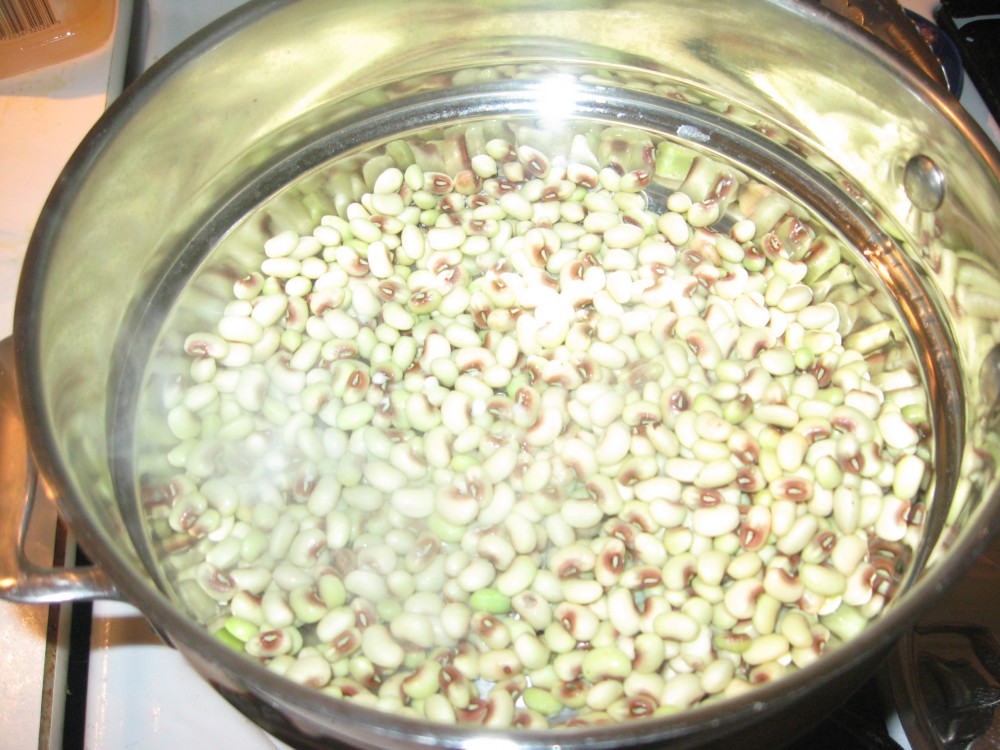
  • you can steam them:  cooking time will be about the same as for blanching–about 5-10 minutes. (Theoretically, you can cook them in the microwave, but I’ve not ever been satisfied with how they turn out if cooked in the microwave, so I’m leaving that out.)

purple-hull peas in steamer

Once they are cooked, you can add some “finishing touches”.  If you cook them without much seasoning, you may be able to use them in a number of different ways.

  • after boiling or blanching, add some butter, salt and pepper to taste, and maybe a squeeze of lemon juice.
  • you can add cream and reduce it to a thicker sauce.
  • bake with a Béchamel/velouté sauce, topped with cheese, until bubbly.
  • add olive oil and herbs…e.g. savory which is sometimes known as the “bean” herb, dill, or sage, or other favorite.  Let stand for a bit to allow herbs and oil to meld with the beans.
  • you can add them to cooked snap/string/green beans, or other green veggies.
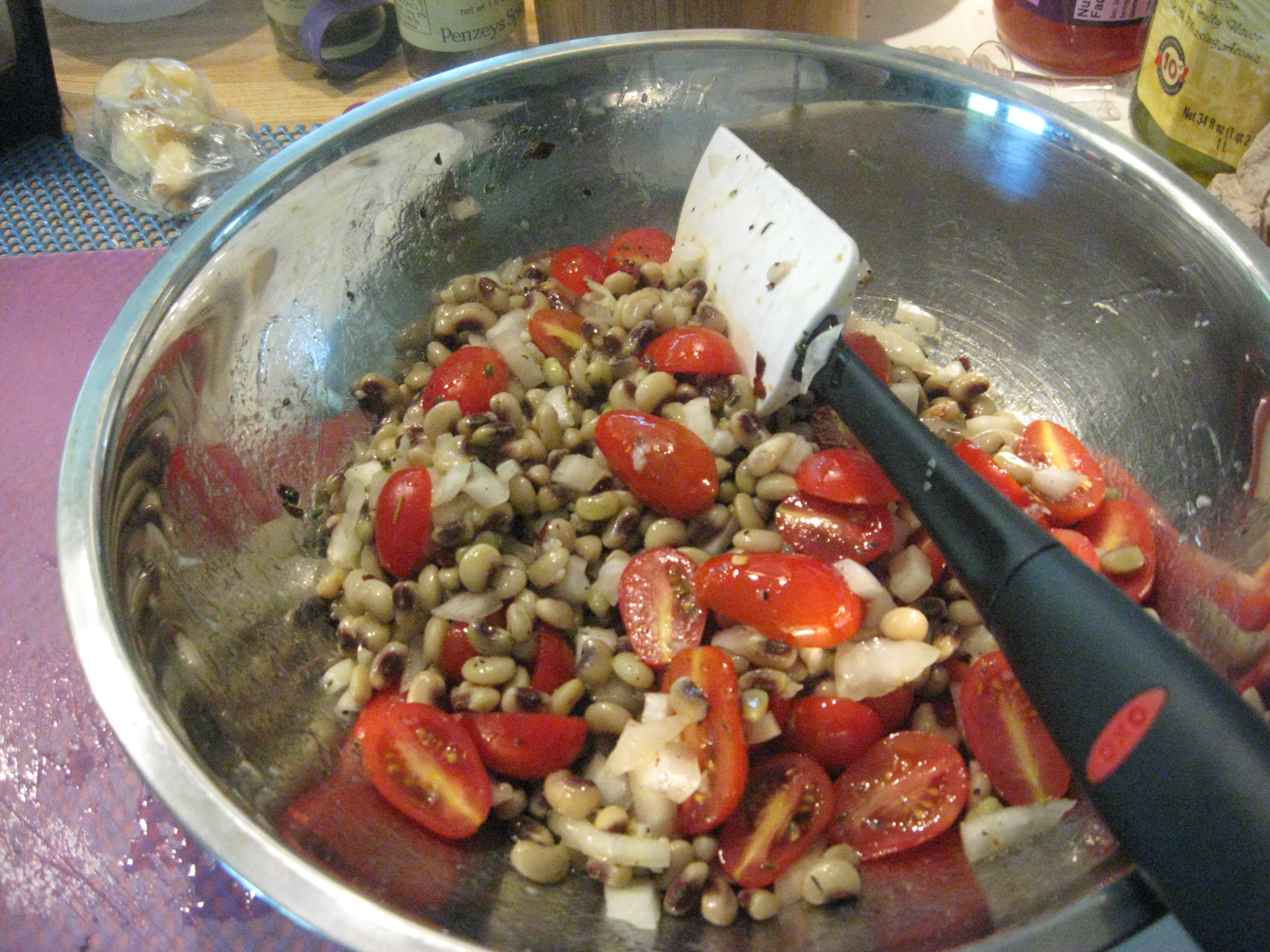
  • use cold or at room temperature with tomatoes to make a “bean salad”….
  • you can add them to rice.  Remember that the combination of legumes and grains does provide good quality, complete proteins.
  • then there’s “hoppin’ john”–Here’s a link to Emeril Legasse’s recipe.  If you’re a Southerner, you probably have a variation of this.  I’m not–but this one looks pretty good to me.

They are versatile–and underappreciated veggies.  My personal favorite for hot summer weather is to use them at room temperature for a “salad”.  Here’s a rough guide to making this dish.

  • steam beans/peas until tender–about 5-15 minutes.
  • While the beans/peas are steaming, dice some sweet onion, halve or quarter
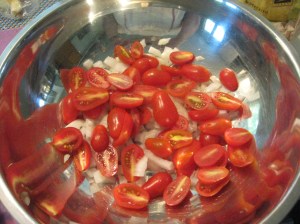
  • some cherry tomatoes, or dice large tomatoes, and place in a bowl.
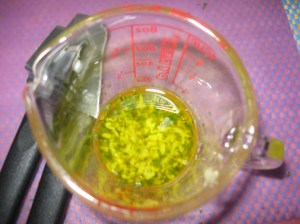
  • take enough extra-virgin olive oil to lightly coat the veggies and the beans (about 1 tablespoon per pound of beans) to a small skillet over very low heat and add crushed or very finely minced garlic and herbs of choice (savory, oregano, mint, ….) and allow to infuse for about 10 to 15 minutes; you don’t want the garlic to brown–so keep the heat very low–you just want the oil infused well with the flavors of the seasoning.  Or  heat the oil with the herbs and crushed garlic in a microwave safe container on low for about 4 to 5 minutes and let stand until cooled to infuse.
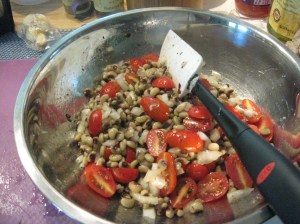
  • combine ingredients and add salt and fresh-ground black pepper to taste.
  • add a squeeze of lemon or a dash of vinegar (rice wine or sherry) to brighten it up and contrast with the earthiness of the beans/peas.
  • toss with the extra-virgin olive oil, herbs and garlic.  (I’ve used about 1 to 1-1/2
  • tablespoon of very finely minced winter savory here.)
Some other additions or variations that are possible would include:
  • if you have “leftover” rice in the fridge or freezer, you could add that to the mix to make this a light meal that has complete proteins.
  • sprinkle with crumbled feta cheese; be careful how much salt you add if you’re going to use feta cheese with this.
  • add chunks of good quality tuna (canned) or from “leftover” tuna steak (this would be worth planning to have some extra grilled tuna steak around).
Now you say you have some lingering in the fridge and you’re tired of eating it? Well, try putting it into some rice as you’re cooking it–the purple-hulled peas usually hold shape well, and the tomatoes and onions will cook with the rice.  Now use it as a side dish with grilled/griddled meat; you might want to add additional herbs to this.

Offal: beef tongue

Offal:  1 : material that is left as waste or by-product of a process of preparation or manufacture: as a : the stalks and dust from tobacco leaves b : less valuable portions (as the belly, head, and shoulders) of a hide c : the by-products of milling (as of wheat or barley) used especially for stock feed d : the parts of a butchered animal that are removed in dressing, that consist largely of the viscera (as brain, heart, sweetbreads, liver) and the trimmings (as tail, hooves, blood, skin, head meat), and that are used as edible products or as raw material in the manufacture of by-products e : small or inferior or unmarketable fish

(Webster’s Third New International Dictionary, Unabridged. Merriam-Webster, 2002. http://unabridged.merriam-webster.com (20 Jun. 2011).

♦♦♦

I am fortunate to have a wonderful supplierof organ meats, such as tongues, hearts, beef cheeks, and other offal at my local farmers’ market.  While it’s not a regular part of my diet it’s certainly a treat to cook some once in a while.  It can be hard to find recipes for organ meats.

Since I now have a ready supply of offal, I’ve recently discovered two delightful cookbooks dealing with offal.  The Whole Beast:  Nose to Tail Eating and Beyond Nose to Tail:  More Omnivorous Recipes for the Adventurous Cook by Fergus Henderson.  The onset of cool weather makes me want to do more serious cooking so I’ve searched for recipes for beef heart and beef cheeks, which reside in my freezer awaiting cooking.   My own cookbook library provided me with some, but wanting to be a bit more adventurous, I decided to see what other recipes I could find.  It would seem that offal is gaining favor, at least with adventurous cooks, judging from the results of my search for blogs and recipes.

Since I grew up on a farm where we butchered our own meat, I’ve never been squeamish about organ meats, either preparing or eating.  Beef tongue is really pretty tame when it comes to offal.  Some of my old stand-by recipes are found in Mastering the Art of French Cooking (Volume 2) by Julia Child, and in Glorious French Food by James Peterson.  Since I’ve been cooking beef tongue for so long, I don’t always do a fancy preparation–love it cold, sliced for sandwiches in the summer time; for that I break out the slow-cooker and just poach it.  I’m fortunate that the tongues I get from my supplier (Meadow Lane Farms) are extremely clean, I don’t have to do a lot of the cleaning and soaking that many recipes call for.  I sometimes salt, but sometimes I don’t and the results either way are excellent.

I usually poach the tongue with bay leaves, juniper berries, brown mustard seeds, or maybe herbs de Provence:  just pop it into the slow cooker and cover with water for really carefree cooking.  If you don’ t have the slow cooker, it can be simmered on the stove-top, but it does need monitoring so that it does not boil. You could also cook this in a slow oven so that you don’t have to do so much monitoring–bring to a simmer on the stove top and then move to the oven.

The tongue is simmered in the slow cooker for two or three hours, and then I check to see if the outer covering peels easily.  If so, I’ll pull it out of the slow cooker and peel it.  If you’re doing this on the stove-top, or even in the oven, it may be ready to peel in about an hour.  Since I want to use some of it for sandwiches or in a salad, I’ll return the peeled tongue to the slow-cooker for another hour or so, until it’s tender; then let it cool in the cooking liquid and chill it, since it’s easier to slice when cold. The cooked tongue is very tender and beefy in flavor.

A great hot meal can be made if you take thicker slices of the tongue and quickly brown them in butter, and then serve with the brown butter over as a sauce.  Great with asparagus, or haricots verts, and some potatoes.  In the summertime, when the tomatoes are really lush, the cold sliced tongue with a good sweet-tart tomato slice, on bread brushed with a bit of olive oil is wonderful.   As with other beef, horseradish complements it nicely, too.

Health-wise, it’s not something I’d have every week, but I doubt seriously that it is any worse for me than some of the things I might find in the local delicatessen, and I know exactly what is in it.  While it may not sound like something to prepare when you’re cooking for one, it’s so versatile that leftovers are never a problem!

A simple supper

When I did the smoked lamb and goat shanks for the Fourth of July I deliberately added some extras, even after I had allowed for the appetites of my guests.  What was left after our dinner was not “leftover” but was planned (even though I had nothing specific in mind just then) as future food since I thought that these would lend themselves well to improvisation.

I sliced some of the meat very thinly from the cold shanks and used it in a salad.  The goat meat was especially good here, but the lamb made a nice salad addition too.  There was still enough for one all-meat meal, or two meals if supplemented with a grain or beans.

Lamb and beans heating in skilletI had envisioned using the rest of the meat with some cannellini beans  to make a kind of mini-cassoulet that would be topped with bread crumbs and baked briefly to meld the just-added seasonings. That was just not on the program!  It’s been so hot lately that I just did not want to have the oven on even with the air conditioning running, so I opted for a “skillet” meal.

My first step was to sauté some chopped onion (1 medium) until soft and starting to brown, then add  garlic (2 large cloves, minced).  Next I added the chopped meat from the lamb and goat shanks.  I had enough for two servings–and I decided to use it all in this concoction as I though I would like two meals from this as it would only improve with reheating. I added about 1 teaspoon of herbs de Provence(seemed rather cassoulet-like) and a healthy dash of crushed red chili peppers for some spice, and about 2 tablespoons of water.  Finally I drained, rinsed and added one can of cannellini (white) beans to the skillet, which I covered and allowed warm over low heat to hydrate the herbs de Provence and the pepper flakes.

Without further ado it was time to eat. With the last of the bottle of wine that was Lamb with white beans and sliced tomatoesserved with the original meal  it was a very satisfying, and easy, meal. There will be one more serving (and that’s not a “leftover” either–maybe that will make it into the baking dish with the bread crumbs and some rosemary added. This could adapt well to any extra pork, beef or chicken that happened to be hanging about the fridge as a leftover.  All this needed was a salad to complete the  meal.  Dessert was just some fresh fruit.

18 July 2011

Just a quick update here.  I’m glad I made two serving of this.  The improvement on re-heating was fantastic.  The smokey flavor came out more–next time I do something like this, I’ll plan to make it one day and reheat it later.  I’d love to try this with goat!

Vegetable cookbooks….

At the Wake Forest Farmers’ Market today, purple-hull peas made an appearance. There were lots of questions about them.  What are they? They certainly don’t look like what most folks are used to as “peas”.  How do you cook them?  Do you eat the pods? What do they taste like?

One of the joys…or perhaps frustrations, for some…of a trip to the farmers’ market is that you find “new” vegetables–uncommon ones, or simply regional ones–like purple-hull peas which are not necessarily included in a vegetarian cookbook.  So you need general, basic information–not fancy recipes; just the basics for starters.  Where to go?

There are lots of vegetarian cookbooks out there–some very sophisticated with wonderful recipes that make vegetables into worthy main courses or entrées; however, that’s not what you need to begin cooking a vegetable that is completely new to you.  For that what you want is the nitty-gritty information of how to prepare it–do you shell it, peel it–or how best to cook it.  The more sophisticated vegetarian books may just call for the ingredient and not give you the those basics or even just some simple recipes.

One of my favorite vegetable (note that I didn’t say vegetarian) cookbooks (and gardening information too) is The Cover of The Victory Garden CookbookVictory Garden Cookbook by Marian Morash.  It’s organized by veggies in alphabetical order so you can go directly to beets, kohlrabi, cauliflower or whatever, and find information on growing, preparing, buying the vegetable.  There’s a highlighted section of special information that includes yields (how much usable vegetable do you have after preparation/trimming or peeling), how to store and preserve, microwave instructions, and even suggestions for things to do with what is left from your first use (especially useful if you’re doing single-serving cooking).  Now that’s a vegetable cookbook!  The recipes given go from the most basic to more advanced. Terms (e.g. string and snap beans) are explained.  It’s a great place to start with a new vegetable.

The one I have in my library was published in 1982– I guess it’s time for me to go to the Regulator Bookshop and browse through the cookbooks again to see if there’s a new edition and if it has significant additions.  As for pink-eyed purple-hull peas…well, unfortunately, the closest this book came was black-eyed peas. True, they’re a Southern thing…and that’s another post coming up.

Another cookbook for single-serving cooking

Cover of Serve YourselfI’m always browsing cookbooks–especially those that appear to deal with single-serving cooking.  A friend recently mentioned Serve Yourself: Nightly Adventures in Cooking for One to me. True to form, I immediately went in search of it–and was pleased to find it available in Kindle format.

I really identified with a statement made in this book: “…we solo artists deserve just as varied a diet as anyone.  While I love having some leftovers around that can morph into new dishes, I also appreciate the beauty of starting and finishing a single cooking project on a given night.” (Kindle location 173)

One of the things that I find delightful is that there are suggestions and recipes that are incredibly helpful in allowing morphing leftovers.  These include condiments (to use not only on leftovers) but suggestions on using those extra ingredients that seem to be the bane of single-serving cooking–such as what’s left of that bottle of wine that you opened to go with dinner yesterday evening.  Personally I think that this is a book worth having in your library if you cook for one, but I suggest that, at least, you check the local library and peruse this one.

I’d also recommend his website for fun reading of his “Cooking for One” column for more thoughts on cooking for one, and more recipes.  Even cooking for one it can still be a son goût!  

Healthy eating & living

I’m back from the Wake Forest Farmer’s Market–with blackberries, blueberries, sweet corn and other goodies.  One of the things I enjoy about selling at that market is the people I’m meeting.  In chatting with one of my customers today, a Health Coach, I discovered a website that has some good health and nutrition information.   Recipes here are simple, healthy and focus on good ingredients.

Independence Day smoked lamb shanks

After seeing the photograph and reading about smoked lamb shanks I decided that was what I needed for the Fourth of July.  It took some searching but I did finally find some shanks.  Unfortunately, they were not as large as those shown in that photograph, but I decided to give it a try with the smaller ones.  I also included two goat shanks to see how those tasted smoked. (These were from Two Bridges Farm, Louisburg NC)

I took the basic seasoning  from Rufus’s post:  lots of rosemary, garlic, some chili powder, some cinnamon, and added a healthy dollop of Colman’s mustard powder, salt, and added enough oil to make a very thick paste–heavy on the rosemary.  The shanks were rubbed all over with this, and then allowed to stand (refrigerated) for about 18 hours (overnight until ready to start the smoking process).

The Weber kettle grill was set up with a pan in the middle with water in it; then added hardwood charcoal briquettes (unlit on both sides of the pan.  These were topped with lit briquettes, and the soaked hickory wood chunks.  Vents were adjusted for a nice slow fire.  I opted not to use a mop sauce this time–may well try that on the next round!  But soon there were wonderful smells wafting from the grill–smoke, rosemary and lamb.

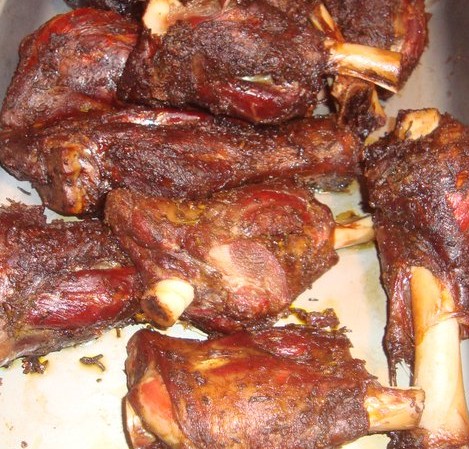
Smoked lamb and goat shanksIn an effort to keep the day as simple as possible (read to avoid dish washing, either by guests or me) there were disposable plates. Although I really did have a platter set out on which to serve the shanks, they never made it into a serving dish since we were being so casual; hence, picture of shanks in the pan that was used to bring them from the grill.  The results were fantastic.  (The goat shanks are the two in the front of the pan–the rest are lamb). The seasoning was there, but not intrusive but complementing the meat– the hot mustard added some “spice” and “zing” without ever seeming “hot”.

Mojitos started us off; then we had a very eclectic meal–one of the guests prepared Padrón peppers for starters–I’d never tasted them before, but I certainly hope that it will not be the last time.  Those wereplate with lamb corn on the cob and potatoes followed by wonderful gazpacho, then by crab cakes, with some melon interspersed.  Then,  the main course:  lamb shanks, corn on the cob, and several kinds of newly dug potatoes steamed and then tossed with extra-virgin olive oil, salt and peppers.  There were Purple Majesty, Red Thumb, and Russian banana potatoes mixed.  (Unfortunately, the Red Thumbs lost their pink color during the steaming, but there were the lovely red skins to make it red, white(ish), and blue!)

For those of us who wanted wine with the meal, we had a 2008 Marcillac Rouge “Lo Sang del Pais” (Domaine du Cros)…this was not the wine that I had bought to serve.  My mistake–it was a bottle from my cellar that I  considered before I decided to go visit the Wine Authorities.  They suggested 2008 Rouge “Cuvee Jericho” Vin de Pays (Mas Montel (Mas Granier), France, that I bought.  When I was setting up the serving area, I put out the Marcillac (my original intention) instead of the Jericho (80% Syrah and 20% Grenache)!  The Marcillac was awesome with the lamb shanks–it’s 100%  from Mansois (Fer Servadou) grape.   So I still have a bottle of the Jericho (and some “leftover” lamb shanks–that may well be supper this evening.

This is something I’ll do again, soon…the smoke flavor was not overwhelming, but very complementary to both the lamb and the goat and it was low-maintenance cooking, thought it took about 3-1/2 hours, that let me visit and relax while preparing it.  Perhaps the next thing to get smoked will be a goat leg.  The vendors from whom the goat shanks were purchased said that they had recently tried smoking a leg and it was excellent.  I’m glad that I discovered the post on smoking lamb shanks–and the associated information on smoking.

If there are “leftovers” after this evening, I think that those might end up in something with white beans for sort of a mini-cassoulet (for a hot dish) or maybe even a white bean salad–we’ll see what evolves.

I think there’s more smoking in  my future–and I’ll be learning to make the gazpacho that we had with this meal too!