Unknown's avatar

About sa.fifer

Lover of good, wholesome food and wine. Cooks for one and the cat. Likes to paint-- a frustrated botanical illustrator and amateur (photographer) and fledgling birdwatcher, beekeeper, and Kindle addict. Works as a freelance indexer.

Leftovers. . . and second servings

One of the banes of refrigerator maintenance is leftovers. I work hard to avoid them, but I’m often defeated in my efforts, especially when eating out. So often restaurant servings are HUGE, and, sucker that I am, I don’t just leave the excess on my plate.  I bring it home, tuck in into the refrigerator, and then likely at some too-far-in-the-future date I get an odoriferous reminder that I now have to do something with the leftovers, which are likely to be found in the back of the refrigerator. They will most likely be unidentifiable now, so they go into the garbage.

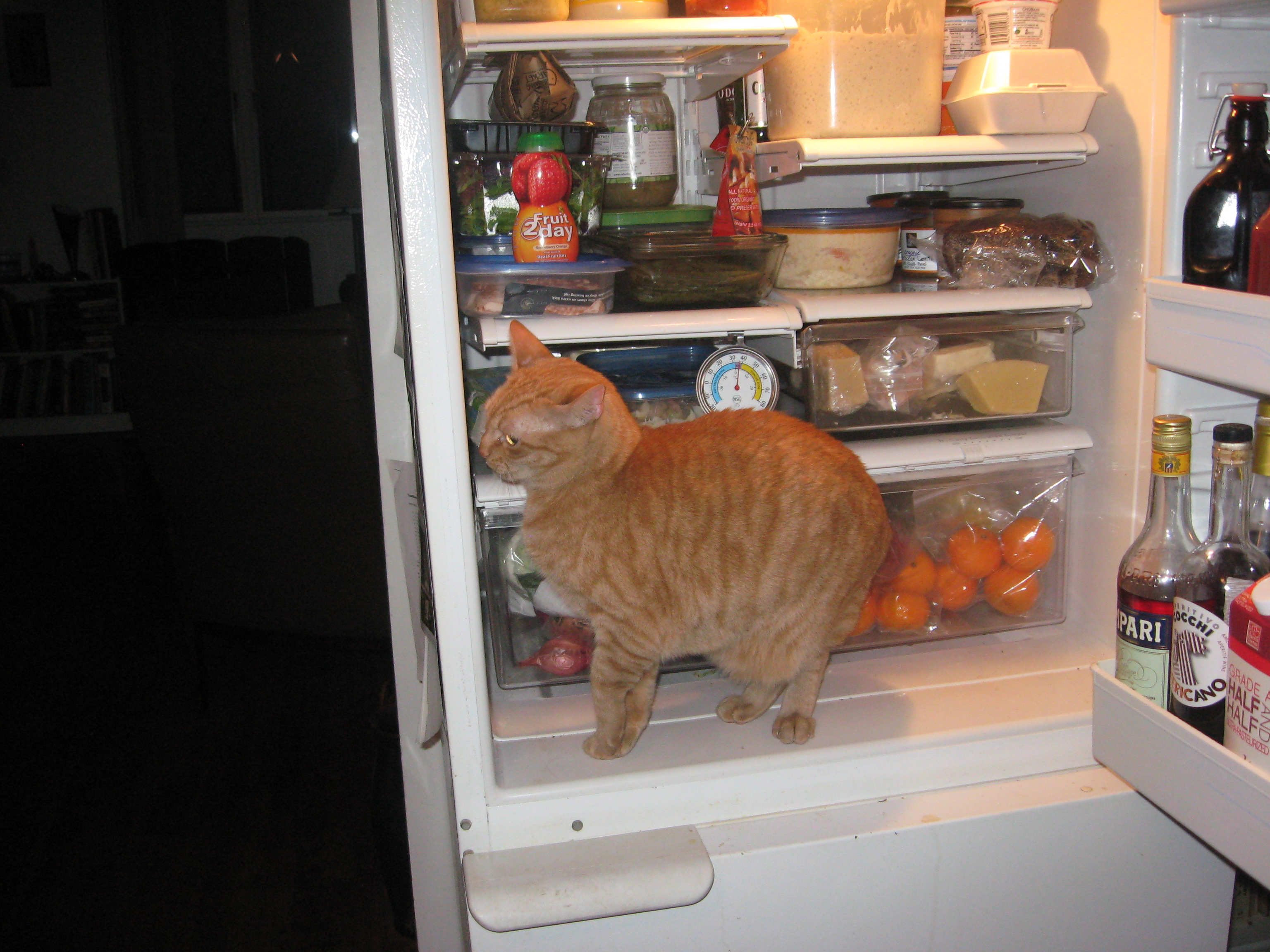
cat in refrigerator

lookin’ for leftovers

The obvious first step is to think carefully about bringing home restaurant leftovers: Will it reheat well enough that you really want to eat it?  After all it probably doesn’t make much difference when it gets thrown out–then or a week later. If I decide to tote it home (and I already know that the cat won’t eat it), then I need to label it, and be sure that it doesn’t end up in the back-most corner of the fridge.  I have used masking tape (which comes off easily–often too easily), Sharpies (which can be removed from some things with rubbing alcohol).  I recently found a suggestion to use dry erase crayons (which I didn’t even know existed).  Might be worth a try, but better yet for me would be to be much more judicious in what I put into the fridge as a “leftover”.

“Leftovers” from my own cooking aren’t as much of a problem, but I’m always looking for ways to use the bits and pieces of produce or the last part of that can of beans. I’ve got a handle on the bits and pieces of bags of frozen vegetables and even partially on the celery.  But there are still bits  and pieces….

The Cook’s Illustrated books on cooking for two and Joe Yunan’s book (see bibliography) is the cross-indexing of recipes that use the same ingredient so you have a suggestion for what to do with the other half  of that head of cauliflower.

I’ve found several tools to help reduce waste in single-serving cooking. First from the kitchn is an article titled What to Do With…? 75 Tips for Leftovers and IngredientsThere is a long list of things from produce market, the refrigerator, and the pantry with suggestions of what to do with the extras. For a lot, the suggestions are “freeze it” which does not necessarily solve the problem–just moves it to some point in the future; however, there are some good suggestions.

The flip side of this is throwing away things that could reasonably be used. For some examples, see 10 Foods You Should Never Throw Away. I can agree with the cheese rinds and chicken bones, but here again, I think it’s easy to fall into the trap of just changing where you stash the leftovers. When you’re doing single-serving cooking you do need to consider carefully what you bring home and what you keep.  Also useful might be Top 10 Ways to Use Up Overripe Fruit.

Another article that is useful 15 Foods You Should Freeze in an Ice Cube Tray. There are lots of other things to freeze as “ice” cubes, and the put into zipper-lock bags for freezing.  Having these portioned out can make it easier to use them. One of the things I do with excess celery and carrots is to make mirepoix (soffrito) in a big batch, then freeze it in ice-cube trays. One or two cubes will be what you need for small-time cooking–and it cuts time from preparation, and should reduce waste!

Planning use as in having thought about possibilities for that second serving (no, not meal planning–I don’t do that), and shopping with single-serving cooking in mind should help. One way to manage what gets pushed to the back is to add a triage box to the fridge.  Triage  refers to the process or sorting, or assigning priority to something.  In the fridge it would be an eat-me-first box where you put things that have a short shelf-life, or perishables so that they don’t get pushed to the back of the fridge.

 

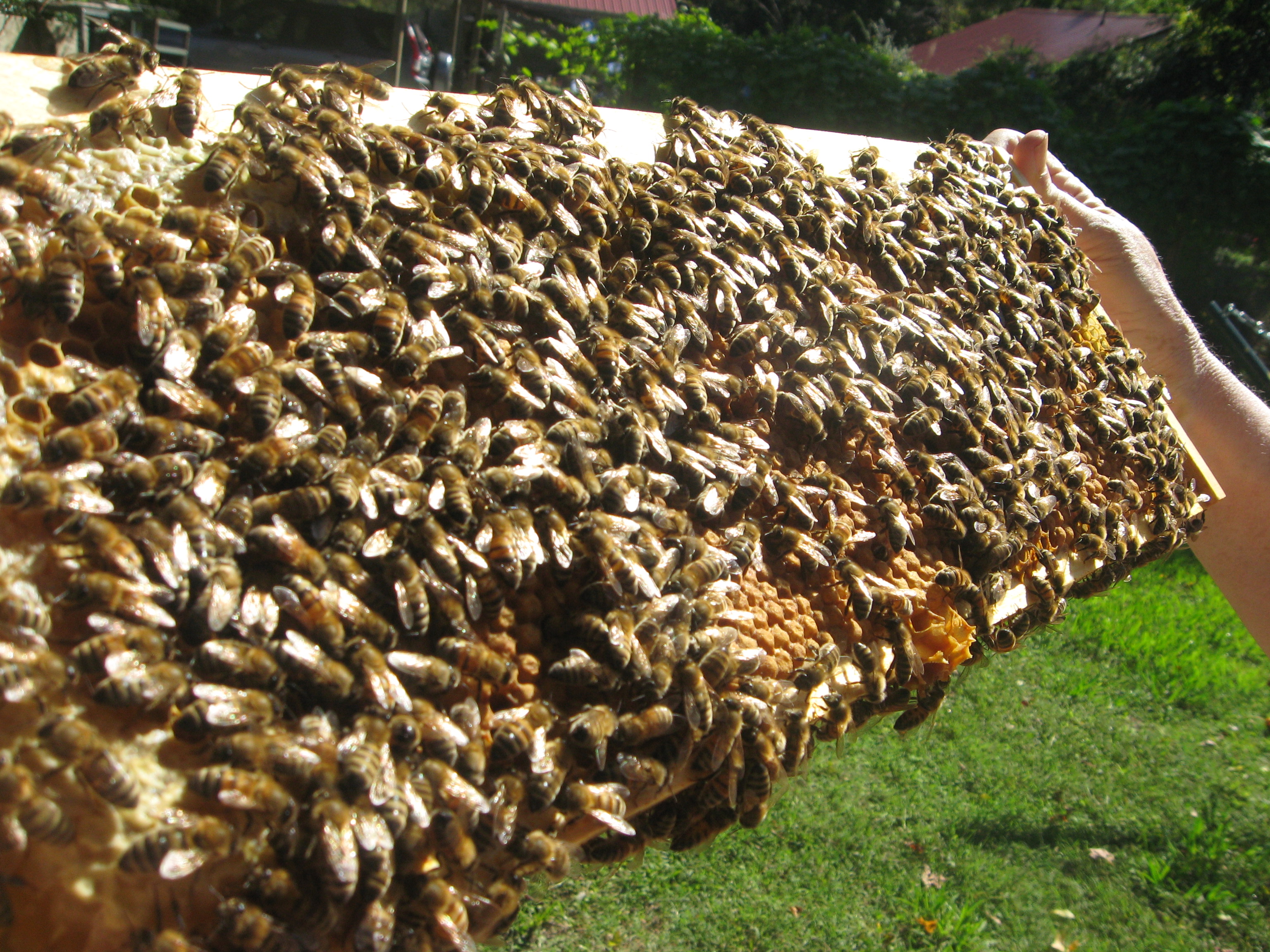
D-day at the hive.

With a lull in the rain, I went out to see what the girls were up to.  Not expecting a lot of activity with the cloudy day and the rain, but I was greeted with activity–just looking it certainly was not the usual in and out traffic. It looked a lot like utter pandemonium and chaos, but with closer observation I did  figure out what was happening.

Thanks to a video posted just yesterday on Bee Sweet Bee Farm I realized that I was seeing drones being ejected from the hive.  I think it’s considered house cleaning for the winter. On closer look at the landing board, there were a number of drones, lots of scuffling, and kicking butt–and the drones were not winners.  It was rather awesome to watch. Certainly makes you aware of ruthless side of survival!

Ò¿Ó

.

Hot Chocolate–with Krupnikas

In anticipation of National Chocolate Day–drink up!

I love chocolate, and I would be unlikely ever to turn down good hot chocolate or cocoa. I’m glad fall is finally here with relief from the hot humid, muggy weather; however, today is the ninth day of measurable rain in a row, and what with hurricane Joaquin making its way north along the coast, we’ve got several more days of gray, rainy weather coming–maybe a record-breaking string of rainy days. Well, after a brief lull this afternoon, the rain is back. As I listen to the rain on the metal roof, what better to do on chilly, grey, soggy, damp, rainy days than make hot chocolate or hot cocoa?  A real comfort beverage even if you don’t enhance it with spirits. So start with a good cup of hot chocolate or hot cocoa. . . .

First, let’s be clear about the definitions of hot cocoa, and hot chocolate. These terms are often used interchangeably by Americans and use the terms to apply to some really atrocious mixes. If you’re really “into” this beverage there’s a whole lingo you should know. however there is a difference (Amano chocolate page). In a nut shell: hot cocoa is made with cocoa powder, milk and/or water. It’s a thinner beverage. Hot chocolate (also called drinking, or sipping, chocolate) is made with chocolate (often shaved or ground to melt faster) which, because of the natural fat in chocolate makes it a richer beverage.

So, when I say hot chocolate that’s what I mean–and I do distinguish that from hot cocoa–not that I don’t like both in different situations. (This really excludes most ready-packaged mixes–especially the “grocery store shelf” ones.)

So first you must make hot chocolate:

Simplest creamy hot (sipping) chocolate

Ingredients (1 serving)

  • 2 ounces of premium chocolate dark chocolate (unsweetened and/or semisweet) pieces
  • 1 cup half-and-half
  • pinch salt
  • vanilla to taste (optional)
  • honey to sweeten to taste

Preparation

  • Place chocolate (cut if in large block) into microwave-save container. The container needs to be large enough to allow you to whisk the warmed mixture vigorously.
  • Add honey and pour half-and-half over.
  • Microwave for about 2 minutes–until milk/half-and-half is steaming, but not boiling.
  • Add pinch of salt, and whisk vigorously until the chocolate is emulsified and mixture is slightly thickened.
  • Taste and add more honey if needed, and vanilla if desired.
  • Pour into a carefully warmed mug, sit back, and enjoy.

Ò¿Ó

Don’t serve this in a thin, fancy cup–even though it’s rather decadent. I use a mug warmed thoroughly with almost-boiling water so that this creamy, sensuous beverage will stay warm while i sip it slowly. Don’t bother with whipped cream–it’s rich enough without.

Ò¿Ó

Now you have a very dark creamy cup of chocolate. Good as is, but it’s fun to add some different flavors. With all this cold rainy weather, I’ve been experimenting with additions. One of my favorite inspirations was to add a splash of Krupnikas–a spiced honey liqueur. Awesome!

Another liqueur from the Vilgalys Brothers Jabberwock–a very spicy–with coffee, chicory, lemongrass, eucalyptus, manzano and chipotle peppers–makes a spicy cup of hot chocolate–probably my favorite so far.  A splash of Chambord would not be amiss either! if you want fruit rather than spice.

Ò¿Ó

Kupnikas_crop_IMG_8320

Ò¿Ó

Sunday with simple pleasures. . .

Not doing much at all today–just enjoying the October weather, fall and the color that’s starting to show.

I’ve been out to the hive to see what’s happening–so relaxing to sit there watching, with the bees buzzing by (and around me).  They are carrying in pollen and nectar at a great rate–they’ve not taken much of the sugar syrup from the feeder.  They know where the good stuff is. IMG_7250

Made a comfort food lunch: grilled cheese sandwich and tomato soup.  But–not the American processed cheese and Campbell’s Cream of Tomato soup.  I still like the combination, but I’ve kicked it up a notch.  Today the grilled cheese was Vermont extra sharp cheddar and pumpernickel bread.  The soup?  No, I didn’t make it myself. My local Harris Teeter had a BOGO on their “chef’s recipe” soups so I indulged.  Their tomato basil is a favorite: it’s not overwhelmed with basil, it’s not too salty, and it has chunks of tomato in it. (It’s not cheap, but reasonable at BOGO, and it can be frozen! It’s good, and easy.  Sometimes easy is necessary–but can’t give up good for easy!

Nice comfort lunch, lazy day…the cat approves!

Ö¿Ô

What I learned in the kitchen

Source: What I learned in the kitchen

I found this while perusing the blogs that I follow (Cooking without Limits). If we were to follow these in the kitchen, cooking might cease to be frustrating, and something that we don’t want to do.


Quince Ratafia and Other Home-made Hooch

This really says fall.

Linda Duffin's avatarMrs Portly's Kitchen

Image of temperance poster Picture: Wellcome Library, London.

It is not illegal to own a still in the UK but it is illegal to make alcohol unless you have a distiller’s licence: I believe penalties for a first offence include a fine of up to £6,500, five years in jail or both. I would submit that this draconian punishment has more to do with the tax man than it does with any temperance movement. There’s nothing to stop us, though, buying booze someone else has made legally and putting our own spin on it.

Sloe gin is an annual favourite. Last year we made bullace gin for the first time and it is stonkingly good, alone or as a cocktail ingredient. The blood orange shrub (an old name for an an acidulated alcohol) is a bit too marmalade-y for my taste.

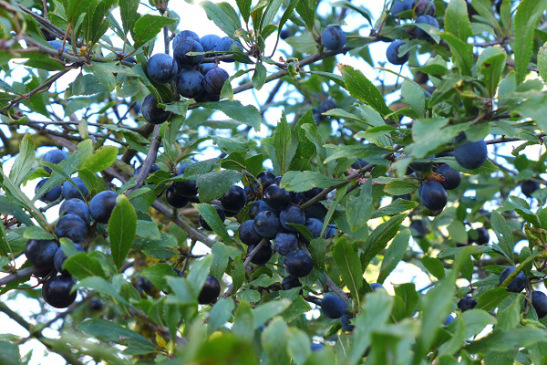
Image of sloes growing in hedgerow

The general rule of thumb when making sloe or bullace gin (or vodka or…

View original post 255 more words

Honey Bee Highways

I’ve been having a “bee binge” today–a look into my hive (which appears to be thriving) yesterday had an effect somewhat like the arrival of seed catalogs in winter–got me thinking about next summer, which engendered a search about producing comb honey. While I was searching, I found this post. It’s just too good not to pass on.

Ron Miksha's avatarBad Beekeeping Blog

This is how Canadians set out baskets of flowers along the road for bees.This is how Canadians set out baskets of flowers for bees.

Norway – the 2nd most liveable country in the world* – has yet another feather in its woolly cap. Or super on its hive, if you will. The Norwegians have a Honey Bee Highway.  That’s a trail of flower pots brimming with bee-friendly plants. (As opposed to bee-unfriendly plants like venus flytraps.) But no highway is ever perfectly paved, so there is a website which Oslo residents may visit to learn where the gaps in the beeway are. (The site is hosted by little Polli Pollinator, a nondescript creature who introduces herself with: “Hei! Jeg er Polli Pollinator!”) The idea of the bee highway is to provide bees with natural pollen at stations located no more than 250 meters apart.

Very well, then. Norway’s honey bee highway is strewn with stuff that Polli is expected to love…

View original post 441 more words

Hive report 14 Oct. 2015

beekeeper holding Langstroth frameThis is late for my routine inspection–but with all the cloudy, windy, grey, chilly days it hasn’t been appropriate for me to be ripping the roof of the girls’ home. Then when the weather improved and the sun came out, we still had some days that were too windy for me to want to open the hive. Something about the girls clinging madly to the landing board in the gusts that suggested maybe not good time either. Then we finally had days that were not too windy and sere sunny, so I thought I’d do the inspection.

When I got to the hive, there were bees flying everywhere, circling the hive, and for the first time meeting me on the way to the hive. I wasn’t sure what was up with the ladies, but something said it might not be a good time to stick my nose into the hive.  The day following, same thing, except that I think I picked up what was causing the problem–lots of banging, thumping, nose, and some unusual traffic by the hive brought them out again; so another deferred inspection.

Langstroth fram with honey and beesToday, it all fell into place–sunny, warm, and the traffic to and from the hive was as usual.  No sign of alert bees buzzing all around the hive.

I had three boxes to inspect this time–and I came away glad that I decided to do all 8-frame mediums. Two of the boxes were heavy!  That’s not a complaint, just an observation; heavy is good. It means honey for the winter.  I didn’t have another OMG-so-many-bees reaction this time–I was expecting lots of bees.  That is what I found–but even more bees than I expected. Again, happiness.

Despite the time and manipulation it takes to check each frame in three boxes/bodies, the girls handled it well–there were more Langstroth frame with capped honey and beesthan usual flying around us by the time I was putting the last frame back in the bottom box, but I call them alert, not aggressive. This time I had an extra set of hands so I got some pictures of some of the frames as I pulled them–I was hoping to see more detail on the frames.  Guess I need to work on another way to get pictures.

I’m pleased with how the hive looks (to my inexperienced eye); bees were working in the upper body–mostly drawing comb, but starting to see a little nectar and pollen there too; no brood.  I found brood in both the middle and the lower body.  I did place strips to treat for mites (Varroa destructor).  When I go back to take that out, I think I’m going to need to re-arrange some of the frames to consolidate the brood.  This inspection raised a lot of what-do-I-need-to-do-now questions.  I’m middle outerglad there’s a meeting of the Durham County Beekeepers Association soon–I should find some answers there.

I do hope that these ladies are doing as well as I think they are–It should be interesting to take the beekeeping course after a season (well, part of a season) with already having hands on experience. The online materials (e.g. Brushy Mountain Bee Farms webinars and videos) and blogs (Scientific Beekeeping.com, Tales from the Bee Hive, Bee Sweet Bee Farm, My Latin Notebook, and many more) have provided good information.  Conversations with Facebook friends and beekeeping groups have also helped through difficulties like the sugar syrup spill bringing hornets and yellowjackets, and found me a feeder that works so well!

5th middle outerÔ¿Ô

Today I got my first sting–even though for everything except installing the nuc, I’ve worked only wearing a veil. I know it would happen sooner or later…and it finally did. No big deal.

Confit taste without the labor

From The Deluxe Food Lovers Companion, you’ll find that the term “confit” is the from the method of cooking meat slowly, at low temperature. This (in South-West France) is frequently duck or goose.Yes–you read that correctly: it’s cooked in fat after being salted and seasoned, and is stored in fat. Before refrigeration it was a method of preserving meat–duck or goose, or pork in their own fat.  Cooking killed microbes and sealing in fat and sealing in the fat (similar to putting paraffin over jam or jelly) prevented exposure to additional microbes. The temperatures usually given for traditional confit are below boiling (212°F or 100°C) but high enough that the internal temperature of the meat will be over 140°F (60°C)–usually around  160 °F to 180°F (60 °C to 80°C) leave the confit more tender (McGee).

If you’re thinking g “Ewww, fat”, not to worry. Fat does not penetrate into the meat. I’ve seen suggestions in several blogs that you can get the same effect by braising in liquid very slowly, and then rubbing fat onto the meat afterwards. I’ve not tested this; I know that the texture and flavor of confit (e.g. tuna) is very special, so I’m not likely to change my method anytime soon. Either way, we are not taking fast food here, at least until after we get the confit made). We are talking long, very slow cooking.

If you’re adding the traditional salting/seasoning, then we’re talking even longer–requires planning several days ahead. Then there’s the aging of the confit–the flavor does mature as it stands, and I, personally, would hate to lose that really great flavor and the lush texture of the traditional method. Time well spent, in my opinion.

Note that the image here is thanks to NPR, the salt website.

A friend recently emailed me a link for Counterfeit Duck Confit (NPR) since she knows that I like that sort of thing–in other words, I like a peasant cooking. I’ve not tried this recipe yet–weather is just too damn hot to even think of turning on the over or even having a burner on for very long (induction cooking is a help) but my appetite isn’t set for duck yet–later when the weather is cool. Despite my lack of appetite for duck confit right now, this is a recipe that I do want to share and that I’ll be making when the weather is cooler.

You’re asking why I’m sharing this if I haven’t tried it?  Well looks like an excellent recipe to me, and it’s from David Lebovitz–I pay attention to his recipes, since I’ve never made on that was anything but excellent. My reservation is that although the duck legs are going to taste very good, that I will not measure up to traditional duck confit.  It’s my excuse to get a bunch of duck legs (which I almost always have to special order so it’s a lot of duck legs) and taste this side-by-side with my traditional confit. The caption is a link to the NPR site and the full recipe and the commentary.  You’ll note that this is still not fast food, though is easier than the traditional method.

One of the important things for the texture of confit is “slow and low” cooking. While this is slow (3 hours probably begins to qualify for “slow”), I don’t think it qualifies for the “low” as the temperatures used are 300 °F for 2-1/2 hours of the baking, and 375 °F for 15 minutes.  I have no doubt at all that these duck legs will taste wonderful–but as Lebovitz stated–it’s not true confit. Some serious comparisons are in order here–but pleasurable since I love duck!

. . . .a son goût

Refrigerator and freezer use

Admittedly we need a stove in the kitchen, but we also need the refrigerator–and it’s probably the appliance that we misuse most often. When I stop and think about the times that I’ve had to clean out the refrigerator because something got “lost” back there and made its presence known in a rather aromatic way, I know I need to work on this problem–yes, I’m writing this because I have to clean out the fridge again. . . .

We don’t usually stop to think about the micro-environments inside. I know that I often just open the door and plop something in without much thought to where it would keep best.

Just recently I found a series of articles on the kitchn on using and maintaining the refrigerator for best performance.  I thought I’d share these–I know that I do misuse mine–and I suspect (hope) I’m not alone.

Of course, then there is the freezer which can be wonderful, or a trap cooking intentions. Again, I’m facing the necessity of cleaning out the freezer after the recent kitchen disaster which was directly attributable to me just opening the freezer door and chucking stuff in–I think I need to stop and think about why I’m putting something in the freezer, and make a huge effort at organization.

This is a list of main articles–within each, there are links to other useful tips for managing the cold spots in the kitchen. Now,  off to the kitchen to attack the fridge!

Cat in fridge