A pork and kale braise

It’s been chilly, cloudy, and grey–just the kind of weather for soups, stews, and braises. It’s also time to get the freezer stocked with some quick, easy food as I’ve got indexing projects coming in–some while I’m still teaching this Fall term.  With lots of grading to do as well, I wanted something that would take care of itself while I worked–so out comes the all-purpose “rice” cooker for some slow-cooked food.

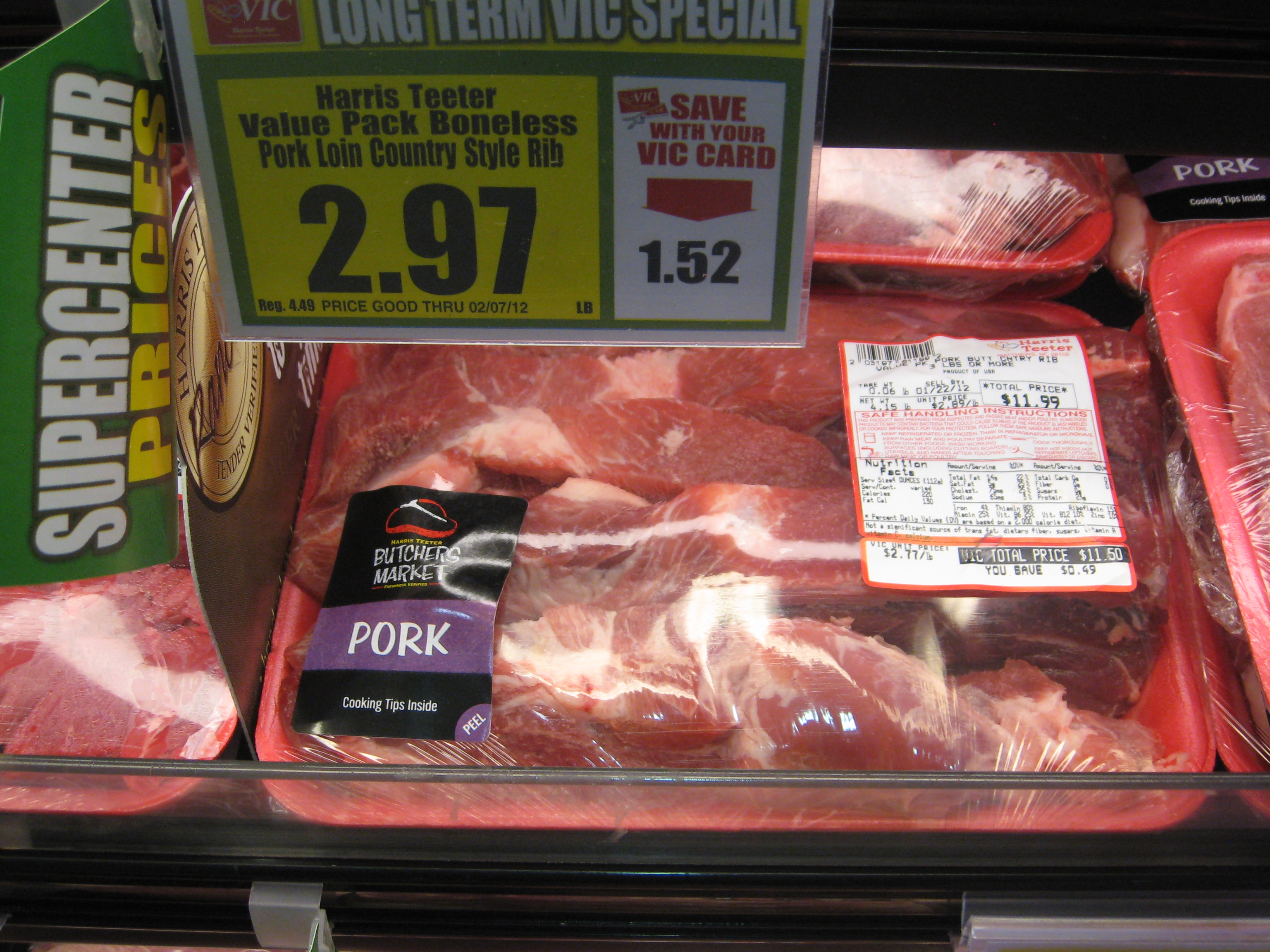
I’m a great fan of pork almost any way you fix it so when I found a package of boneless pork ribs–just the ticket for the slow-cooker–while I was doing my grocery shopping on Thursday it obviously went into the cart. Big package, but on special, so it came home with me to make a lazy meal, and some to go into the freezer for quick meals when I’m really busy, or when I need comforting, peasant-style food. Can’t pass up inexpensive on something I really like.

Braised pork and kale from the slow-cooker

Ingredients

  • boneless pork spare ribs, about 2 pounds
  • 1 packaged of frozen, chopped onions
  • chopped kale, one frozen “family” pack
  • 6 large garlic cloves
  • 1 14.5-ounce can of fire-roasted tomatoes
  • 2 tablespoons of Hatch chili powder
  • 2 teaspoons of kosher salt, adjust to taste as needed when cooking is finished

Preparation and cooking

  • cut pork into about 2-inch pieces
  • add half package of kale and onions, mixing
  • layer in pork, sprinkle with salt, chili powder
  • add remaining kale and onions
  • add fire-roasted tomatoes with juice
  • close the lid and set for 8 hours
  • shred pork using two forks (if desired)
  • check seasoning and adjust as necessary.

No, no pictures as  this is NOT a photogenic dish, but it sure is tasty! And there’s certainly nothing like complicated technique involved here.

Great served with a side of spicy black beans, or garbanzo beans, or just a big bowl on its own. This particular time I had a roasted winter squash as a side with it. (Now, to turn the rest of the winter squash into another meal–maybe stuffed with some Sicilian sausage that also went into the grocery cart.)

There was more liquid than I had anticipated when this was finished cooking, so after packing some in zipper-lock bags to go into the freezer (with SOME juice), the extra juice with some kale and some shredded pork is going to turn into soup–details will evolve when it’s used–but that’s an additional meal out of that pack of spare ribs!

Celebrating the autumnal equinox.

I woke up to a lovely fall morning–sunny, breezy, cool–absolutely lovely day, some leisurely time over coffee in the sunny kitchen, and realized that I’ve gradually been shifting into autumn cooking mode–cooking urges that are very different from the hot, humid weather of summer.

I’ve been making meals in the multitasking rice cooker lately: whipped up a great spicy lamb and garbanzo bean stew and another of braised pork and collard greens.  Some of immediate use today, and some of each of those to stash in the freezer for quick meals on a cold winter day when I need serious comfort food.

The lamb and garbanzo “stew” was one that I literally threw together in about 15 minutes while I was finishing an index to send to a client. A good friend who knows how much I like to use chili peppers gave me a wonderful chile powder from Made in New Mexico.  I used lamb shoulder chops, a healthy batch of chile powder, some Mexican oregano,  Goya garbanzo beans, and a can of diced tomatoes. The lamb chops came out of the slow-cooking melt-in-your-mouth tender, with just enough spice to accumulate a bit of burn by the time you’ve eaten a bowl of it, but not enough to rip you taste buds out by the roots.  This chili powder is the best I’ve ever used–I’ll be ordering more of that one.

Another job that just could not be put off any longer was cleaning the gas stove. It is one of my very least favorite things to do so I do tend to procrastinate about it; that does not make the task any easier and I know that but I still procrastinate about it. (I think that a house elf would be a wonderful thing to have around!)

Now the stove has at least had a  lick and a promise as my grandmother would have said. Well, at least the lick, but still needs the promise though that is going to happen today. (Definitely no pictures here!)  So happy that the oven is self-cleaning since it gets lots of use in cool weather for carefree braising while I’m working at home.

Now I’m ready for a plate of braised pork and collard greens!

Get Cooked…

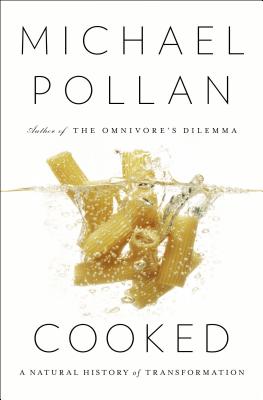
ISBN 9781594204210Obviously I’m a fan of food science and curious about the history of food and cooking in any culture. Michael Pollen’s Cooked: A Natural History of Transformation is a good read; a fascinating review of cooking origins, history, and consequences of both cooking and not cooking.

As usual, Pollen’s style makes this book easy reading, but raises interesting questions about the role of cooking in the development of Homo sapiens.

The book follows Pollen as he attempts to master four cooking techniques: fire, air, water, and earth and describes the place of the cook in relation to nature and culture.

He raises questions about what cooking is, what cooking does for us, and the place we have let processed food assume in our modern culture. It’s an interesting synthesis of history, food science, and archeological discoveries. The implications of NOT cooking, allowing the food processing industry to assume the role of the cook, are something we all need to consider.

This is not a recipe book but it certainly increases understanding of food preparation—cooking—using heat (barbecue), air (baking), water (braising), and earth (fermentation).

The links will take you to an independent book shop were you can order it in various editions—but I get nothing—it’s not affiliate marketing of anything like that.

Chilli con carne redux update

I’ve finished the “fast” version of the chilli con carne that I posted about in Chilli Con Carne Redux!  I’ll concede that it’s only sort of faster in terms of the active prep time–it still needs to cook long and slowly, but it is a success.  I don’t think that I can tell the difference (tasted side-by-side with the more laborious version from the freezer) and friends have given it the nod of approval.  So here are the changes and additions to the original chilli con carne that I posted.

  • After the bacon browned, 3 tablespoons of tomato paste was added while the onions were sautéed, and this was browned–again to enhance the umami, not to add tomato flavor.
  •  None of the meat (pork or beef) was browned before adding liquids.
  •  Added bay leaves to increase the earthiness (used five large for this 6 pounds of meat).
  •  Added Mexican oregano–about 2 rounded teaspoons. (You really do want Mexican oregano for this–much different flavor than Turkish or Greek (Mediterranean) oregano–after all it is an unrelated plant, but worth having in the kitchen if you like chili.)
  •  Sun-dried tomatoes (about 1/2 cup chopped) were added for more umami even though this was NOT made in a slow cooker, I was not aiming for tomato-flavored chili.
  • During the cooking time I tasted some in a bowl with a little fish sauce added (yep, I did get up the nerve to try this) and it tasted wonderful; so I added about 4 or 5 tablespoons of fish sauce.  (I suspect that if you don’t have fish sauce a couple of anchovy filets thrown in would have the same effect.)
  • The final thickening was one with a brown roux made with masa harina.  For the fat in this roux I reserved about 1/4 cup of the fat from the de-fatting step.  I heated this and made sure that all liquid was evaporate, then added about 6 tablespoons of masa harina and cooked it until it was a medium brown and toasty smelling.
  • Because of my work schedule, this was cooked in a lower oven (about 195° F) for about 10 hours.

After another run on this I’ll have to post a revised recipe for the “fast” and easier version, but if you feel so inclined you can work with these changes–after all chili con carne is one of those things that really doesn’t need a recipe to be followed strictly.

Dandelion greens

I finished my teaching week this afternoon and found myself in need of an attitude adjustment.  It’s been a busy, hectic week but I still can’t figure out what I supposedly accomplished in all that business.  Still laundry to do and other household chores….

dandelion greens bunched in the Harris Teeter produce department

dandelion greens

In prowling through the grocery store (my local Harris Teeter) the other day I found absolutely lovely dandelion greens.  I haven’t had dandelion greens very often since I was a kid growing up on the farm.  Then they were a springtime treat–the young tender ones in a wilted salad with bacon dressing.  I thought that I’d try them in a one-dish meal based on a recipe from Jacques Pepin’s Shortcut Cook–quick, easy, and in the comfort-food category.  I decided that a good complement to the bitterness of the dandelion greens would be Siciliansausage which Harris Teeter makes in the meat department.  It’s a bit like Italian, but spicier and with much less fennel.

fresh store-made sausages

freshly made sausages

Remove sausage from casing, brown; add chopped onion and continue with the browning, then add a couple of garlic cloves, minced.  Add the chopped dandelion greens, stems about 10 minutes before the leafier parts (still wet from washing), cover and simmer. Depending on the spiciness of the sausage you might want some red pepper flakes. This particular sausage is strongly enough flavored that I did not add anything else.  When the greens are almost cooked, add some cooked pinto beans (in this case I’m resorting to canned ones). For a change from beans, add some diced potatoes to cook with the sausage and the greens.

Finish with a tiny drizzle of good fruity extra-virgin olive oil and it’s good to go, add some of my homemade oat bread, and ripe and fragrant Bartlett pears.

It’s certainly easy, reasonably quick–it takes about 15 to 20 minutes for the greens to cook, but it sure does contribute to attitude adjustment!  (Sorry, no pictures–it’s not photogenic.)  It’s good for single-serving cooking since I can buy the sausages individually, and if I’m using mustard, kale, I can buy those loose in the amount needed I don’t have leftovers.  If there is more than I’m going to use at once, I’ll take out some of the sausage and greens to be used later, perhaps as an omelette filling.

A son goût! 

Umami in the slow cooker…

flats of plants on tailgate of truck to be loaded for the farmers' market.

for market

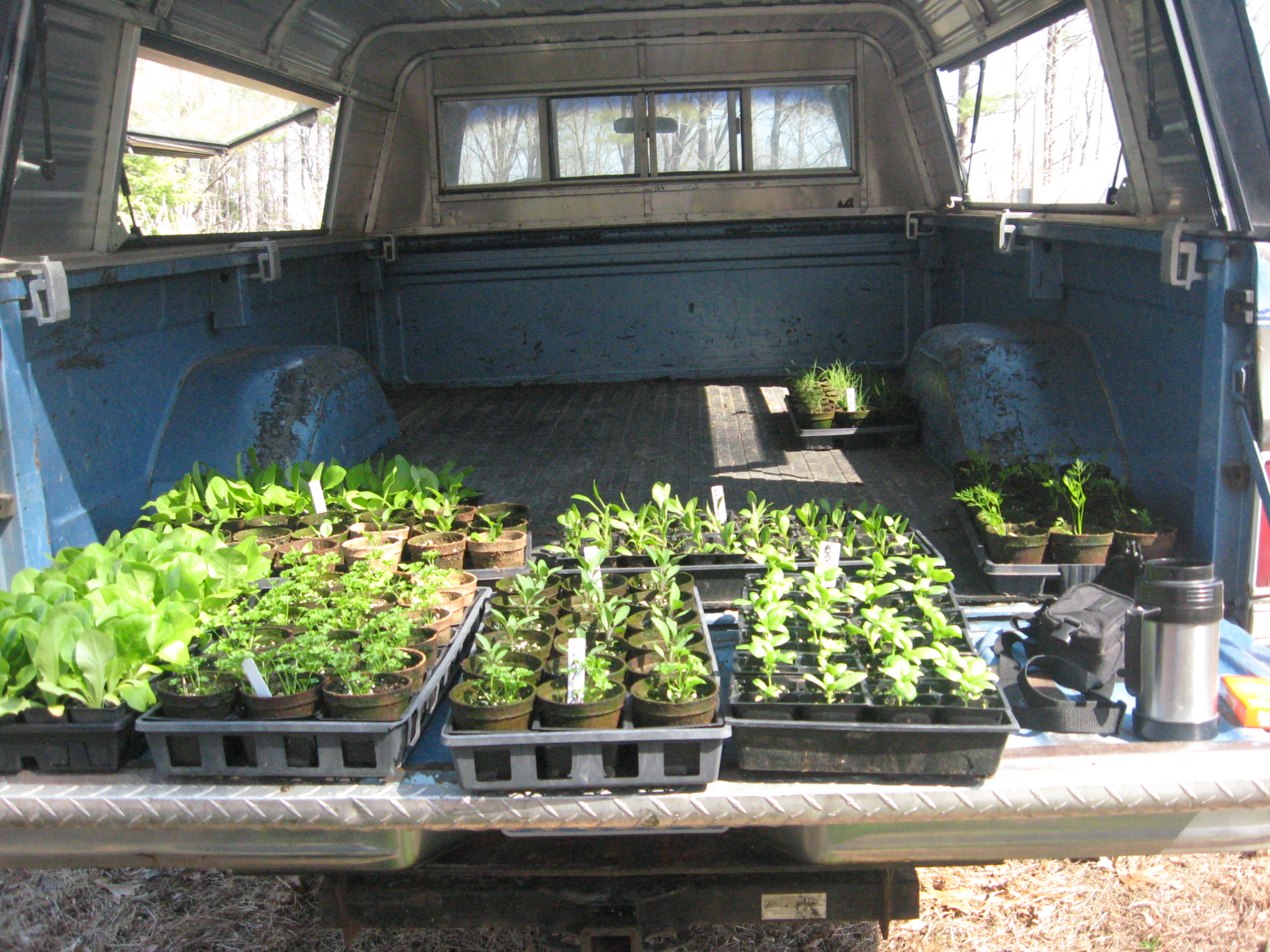
Obviously I’ve not been giving a lot of thought to cooking  things lately–it’s been end-of-term grading, indexing and proofreading, or getting  ready for the farmers’ market, or actually being at the farmers’ market, with more energy going to planting things, both for later harvest and for selling at the market than into cooking.

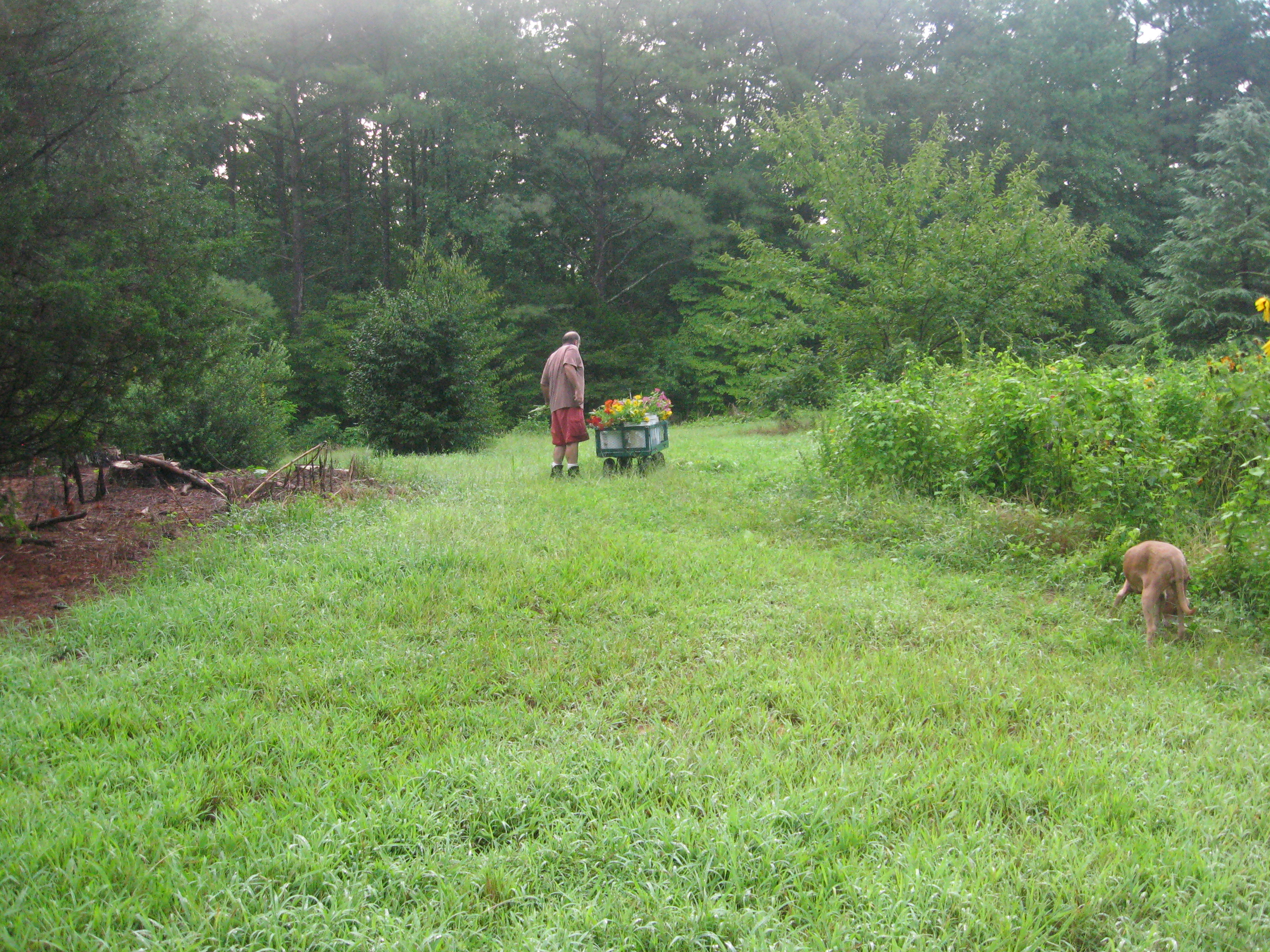
One of the down sides of working the farmers’ market is that I’m one of those people who wake up like a compact fluorescent bulb–pretty dim at first–so getting to the farmers’ market on time on Saturdays involves getting up before the birds just to give me time to be awake and functional. Even Fridays demand early rising, especially as the weather gets hotter–flowers to cut early in the morning and produce to be harvested before the heat of the day sets in and thing wilt…and just to avoid being out in the worst of the heat.

wagon of flowers in buckets

cutting flowers

I’m getting into the swing of that now but it still takes time for my lights to come on, though less painful now.  That early rising on Friday and Saturday makes me into a really lazy slob on Sunday.  Now that the Spring term is over, I’m not meeting classes during the week so I’m enjoying the summer hiatus from lecturing, but still working at freelance indexing so the absolute laziness has to be confined to Sundays and Mondays through Thursdays are still busy.

All this means that for Friday, Saturday, and Sunday cooking is likely to be focused on one-dish meals, and dishes that are good (or even better) when reheated.  Sometimes Saturday meal is not even something reheated–it’s my treat-yourself day–OnlyBurger for after-market meal before I devote the rest of the day to quality time with the cat!  (This past Saturday the treat was a Texan (burger with braised brisket on it) and a peach ice cream sandwich (handmade at OnlyBurger) after the market.  The evening meal was Carolina Moon cheese and strawberries–both from the farmers’ market.)

packaged cross-cut beef shank

beef shank

This weekend schedule means that I try to do some planning and cooking on Thursday to have reheatable food on Friday and Sunday.

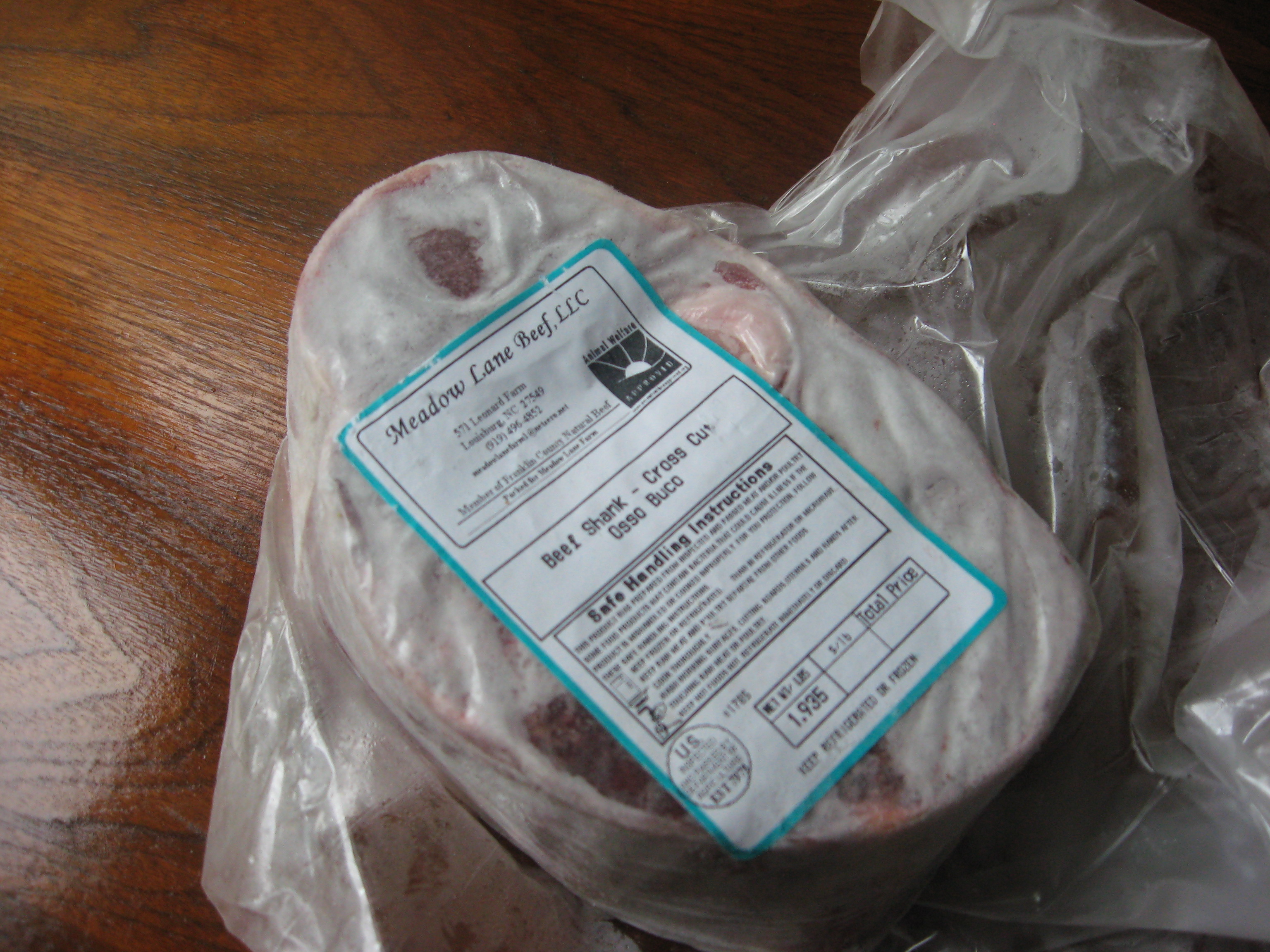
This weekend’s meals are going to feature an absolutely lovely cross-cut beef shank from Meadow Lane Farms (also from the Durham farmers’ market)  in an easy dish that can cook mostly unattended: osso bucco, but with beef shank rather than veal shank. (The osso bucco really just means “bone with a hole” or marrow bone.)

It’s a dish that’s easily adapted for one person–there’s nothing fussy about it–no need to be exact or tedious in measuring ingredients, and to make even more “unattended”, it will go into the slow cooker (also serving as rice cooker and steamer) while I’m out working on the farm.

Krups rice cooker/slow cooker and steamer

Krups rice cooker

I have to admit that I’ve not been a fan of the slow cooker until recently, at least for anything much more than cooking dried beans, or poaching a beef tongue. The flavors and textures just aren’t the same as when the slow cooking was done in the oven where some evaporation, browning and concentration takes place even in a covered dutch oven.

My attitude about slow cookers has changed since I found the Cook’s Illustrated Slow Cooker Revolution (See Bibliography) and learned some techniques for making food out of the slow cooker more flavorful.  I’m not ready to quit slow-cooking in the oven despite that, but in hot weather I’ll certainly use the slow cooker more often with some of the “tricks” I learned from that cookbook.

What I missed most in slow-cooker dishes was that savoriness that comes from browning (Maillard reaction)  when you slow-cook in a traditional oven or brown/sear on the stove-top.  In the slow  cooker, you can make this absence less noticeable by adding ingredients that contribute “umami“.

Some of the most useful things I learned from that Slow Cooker Revolution are ways to use the microwave oven to facilitate the slow cooker, and using some “unusual” ingredients  in recipes–not esoteric ingredients, just pantry staples that boost  the umami flavor:

  • precooking aromatics like onions in the microwave so that they don’t stay crispy-crunchy in the slow cooker,
  • using tomato paste (for umami) by browning it with the aromatics either in a skillet or in the microwave before adding it to the slow cooker,
  • using dried mushrooms to boost flavor (again, umami),
  • using foil packets in the slow cooker to keep some ingredients from over cooking.
  • using soy sauce or fish sauce to add more of that umami that many slow-cooker dishes don’t get without the evaporation and browning as in the traditional oven.
  • using the microwave to precook some ingredients to get rid of excess moisture that would otherwise dilute the dish in the slow cooker.

These are all easy to do–they really don’t add significant extra prep time or effort, and do really make a difference in the flavor.  I expect an easy, flavorful meal (or two) from the braised beef shank that is going to emerge from my slow cooker on Friday evening, thanks to some added umami!

Braise-roasted sausages, potatoes, and Brussels sprouts

Another dreary, rainy, winter day…not particularly cold, but as usual on a day like this I’m in need of comfort food.  In trying to keep one of my New Year’s resolutions to be sure and use what’s in my freezer, I was rummaging through the freezer to see what was there.  Interesting package of four plump sausages.  Only problem, I don’t know what they are–except that they are labeled “hot”.   But I’m sure they are due to be used–probably a sample that I got at one of the farmers’ markets this summer.  So we’re going to cook those this evening.  (I usually try to be careful to label things that get put into the freezer–I suspect that these were frozen when I brought them home, so I just tossed them into the freezer and…now I don’t know for sure what I’ve got.  But–they look like the should turn into a luscious meal once cooked.

Looking through the vegetable drawer in the fridge I found Brussels sprouts, potatoes (yes, I do keep my potatoes in the fridge because they aren’t in there long enough to change taste or texture.)

Onions, garlic, chili peppers, potatoes, sausages…and sprouts.  I’m being lazy today so I want easy food, but flavorful and satisfying.  Since there are four sausages I think that I should just do about 4 serving of this dish: one for another day this week, and maybe one for the “ready-to-eat” part of the freezer, along with the soup and the chilli.

I took four medium size Yukon Gold potatoes scrubbed but not peeled, cut into 1-1/2-inch chunks, mixed with about 6 or 8 garlic cloves, one medium onion chopped into 1-inch chunks, about 15 trimmed Brussels sprouts, all sprinkled with a three-finger pinch of salt.  On top of that go the four sausages, skins pierced so that they won’t explode, and some herbs. (Being in truly lazy mode, I used herbs de Provence since that’s got a variety of herbs so likely something will connect with the sausage seasoning.

I added about 1/4 cup of water, covered the baking dish tightly, and popped it into a 350 ° F oven.  I’ll check it in about 45 minutes.  When the potatoes are close to being done,  the cover comes off and  it finish cooking uncovered.  Add one green salad, or maybe just the sprouts, and there’s comfort food, and lazy comfort food at that!

Braised pork and cabbage (Caribbean seasoning)

I’m of the opinion that cabbage is a much under-appreciated vegetable!  It’s good for so many things besides the traditional “coleslaw”.  One of my favorite things is to use it in braises.  Here is one of my favorites:  Braised pork and cabbage.  Again, it’s versatile, freezer-friendly, and the quantities are flexible.

Heads of savoy cabbage

Savoy cabbage

A particular favorite is from Jacques Pepin’s Cuisine Economique.  I’ll give you the basic recipe here ingredients as given in that recipe and summary of the preparation.  If you’re interested in ways to take economical cuts of meat and make them into something really good, this is a book worth looking at (See Bibliography).  The recipe is here not to give you quantities, but to suggest seasoning.  While this recipe suggests a larger cut of pork, I usually get the boneless country ribs to use for this–they are really more like pork butt than are loin chops.

Braised Pork and Cabbage (p. 247)

Ingredients

  • 2 teaspoons salt
  • 2 teaspoons dried oregano
  • 1/2 teaspoon allspice powder
  • 1 teaspoon cumin powder
  • 1/4 teaspoon cayenne pepper
  • a 4-pound pork roast (loin tip, shoulder, or pork butt)
  • 1 tablespoon virgin olive oil
  • 1 large or 2 medium-size heads Savoy cabbage (about 2-1/2 pounds), leaves cut into 2-inch pieces and core cut into 1/2-inch pieces
  • 2 large onions (about 1 pound), peeled and sliced
  • 1 tablespoon of sugar
  • 1/2 cup cider vinegar
  • 1 tablespoon dark soy sauce
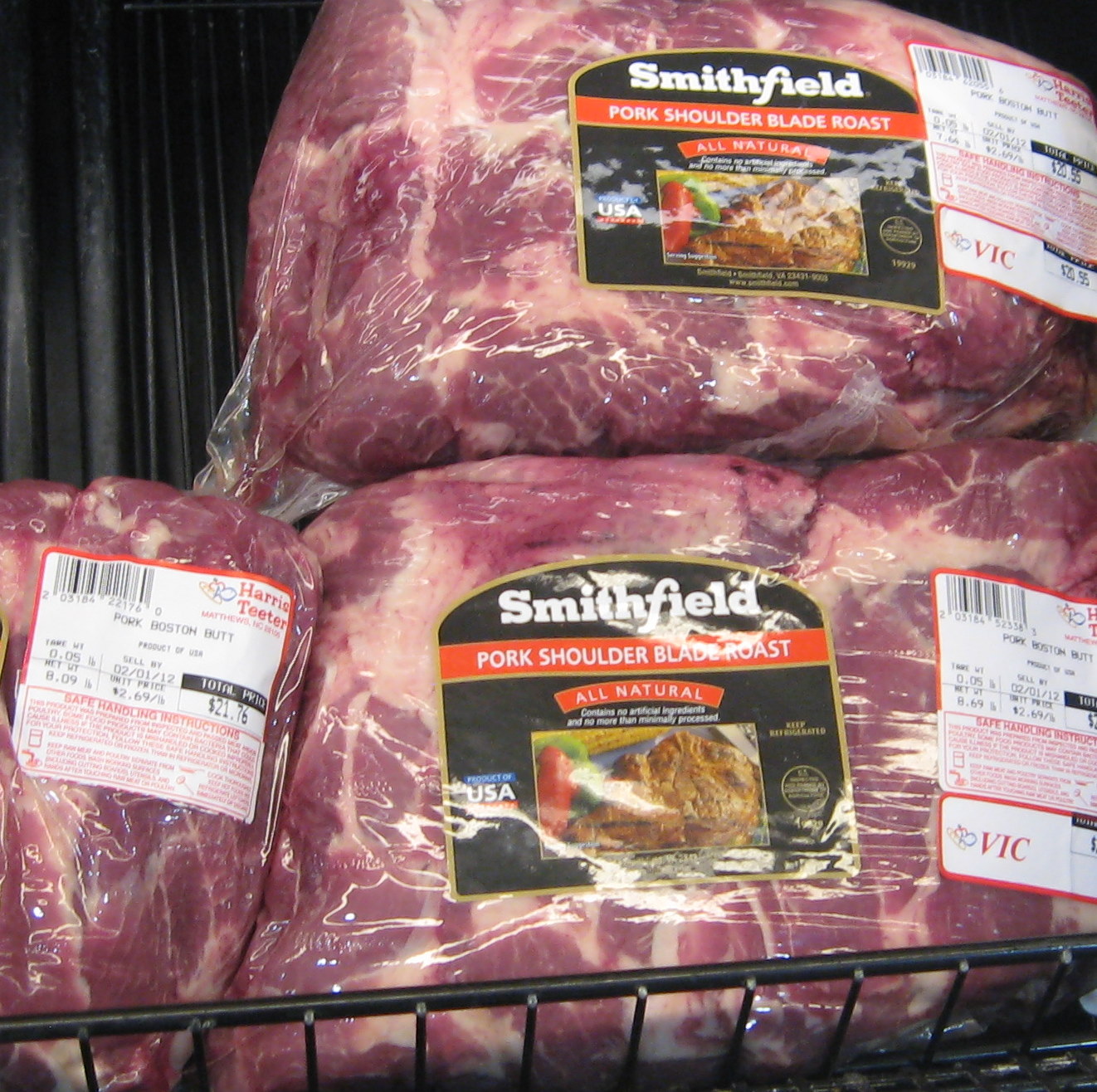
packaged pork boston butt

boston butt shoulder roast

Preparation

  • Mix the salt, oregano, cumin, allspice, cayenne, and rub the mixture all over the meat.  (See Notes.)
  • Heat the olive oil in a heavy pot.  When hot, brown the meat over medium-to-high heat for about 30 minutes (See Notes) until well browned on all sides.
  • Cover tightly and place in a preheated 325 ° F oven and cook for 45 minutes to a hour.
  • Remove the meat and transfer to a platter.
  • Combine the cabbage, onions, sugar, vinegar, and soy sauce in the pot.
  • Put the meat on top of the cabbage, cover, and return to the oven for about 2 hours until the roast has released juice and is fork tender.
  • Slice the meat and serve with the cabbage and juices from the pot.

Notes:

  • The cooking times will vary to some degree with the type of meat you use–shoulder, butt and ribs have enough fat and connective tissues to need long slow cooking. A supermarket loin roast, which I would not use, can easily become dry with long cooking unless brined.   I do not usually make this with a roast, but with big, meaty,  country-style spare-ribs, with about  1 to 1-1/2 pounds.  Even using about a quarter of the meat, your cooking time will still be longer than a quarter of these times–you just need to check the doneness)

    country ribs

    butt country ribs

  • You’ll probably want to use the quantities given for the rub ingredients–and I like to put these on the meat for at least several hours (if not a day before) browning it.  There is a lot of surface area to cover with the ribs.
  • This is also a freezer-friendly dish–I love to have a single-serving sized portion to pull out when I need comfort food on a cold day or I’m just in a hurry for food.
  • I like to serve steamed potatoes with it–or add one of those single servings to a  single-serving amount of rice as it cooks (in the rice cooker) for a complete meal.
  • A Riesling or Gewürztraminer wine is excellent with this dish.

Cornish hen braised in milk

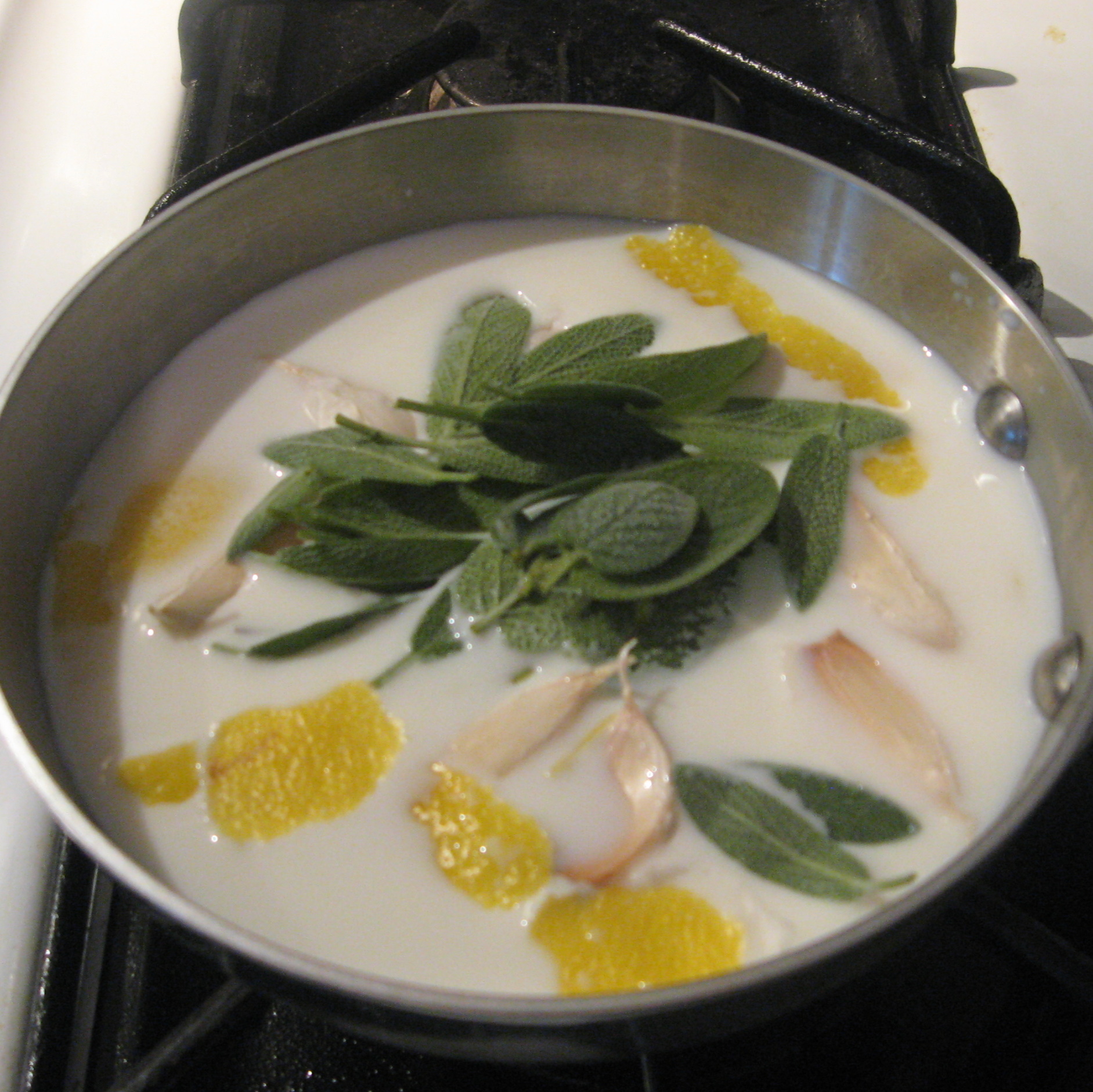
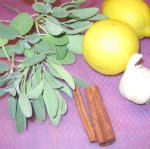
sage, cinnamon, garlic and lemon

I had an earlier post about braising chicken in milk, when I tried the recipe using chicken pieces since that gave me something more like a single serving.  Flavor was great, but I thought that for something a bit scaled down, but more in keeping with the original recipe, I would try this with a Cornish  hen and see how that worked. One of the advantages of these little birds is that they are more in keeping with  Jamie Oliver’s recipe, rather than the chicken parts that I tried originally. This might be a way to keep with the spirit of the original recipe, but scale it down to something closer to single-serving size.  While this is a recipe that might do well on second runs, I really don’t want as much as whole chicken would make.

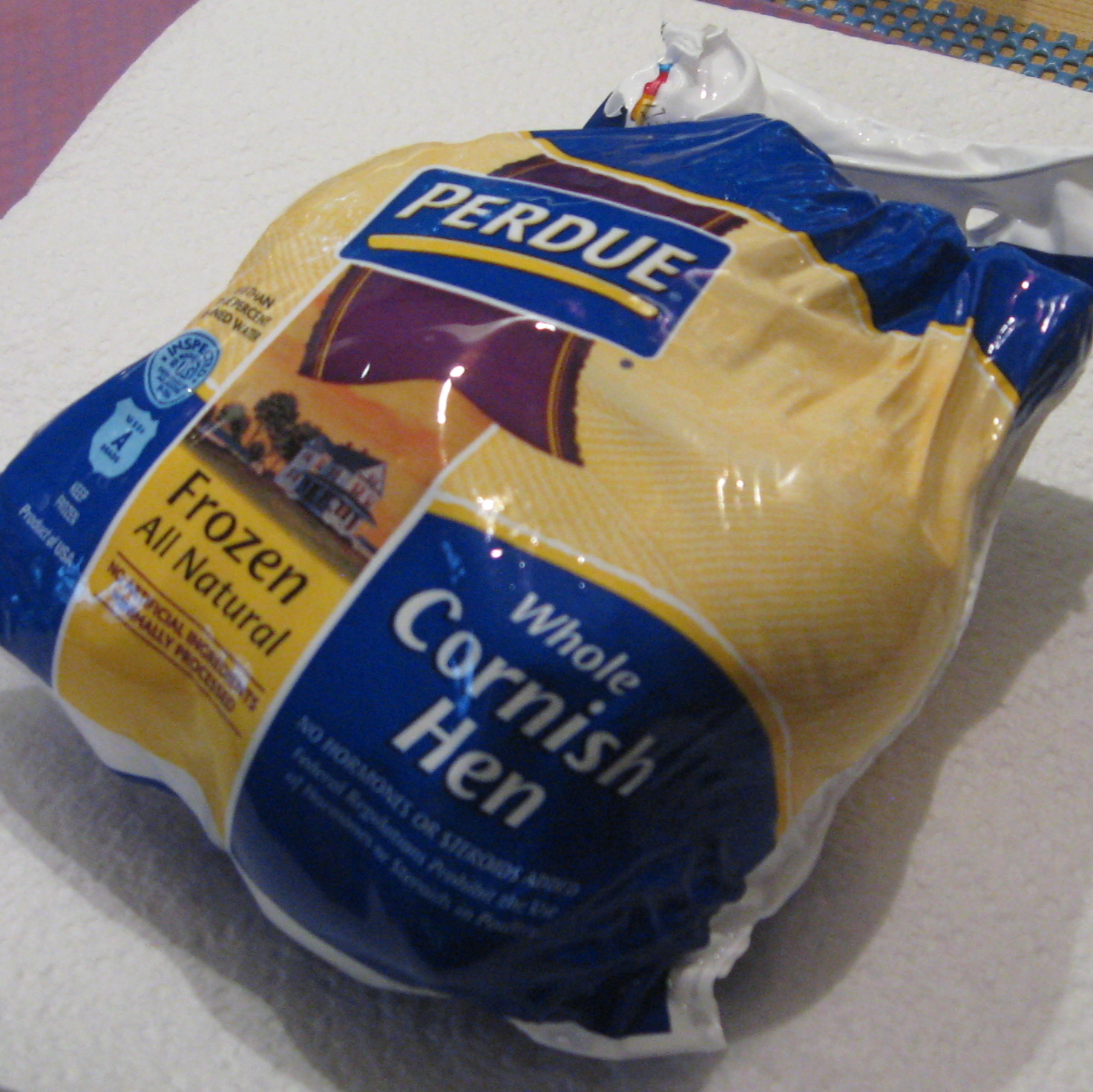
Well, the weather has turned to fall with blowing leaves, and chilly temperatures so this seems an excellent time to try this again…and my grocery shopping provided me with a lovely price on a pair of (frozen) Cornish hens–about 1 to 1-1/4 pounds each.

A Cornish hen–either male or female regardless of calling it a “hen”–is a special breed of chicken (in the USA sometimes also called a poussin, though that is really French for a very young, small chicken that is usually about a pound in weight).  Since my supermarket does not offer poussins, but does have the Cornish hen (which is a young, hybrid chicken–of Rock Cornish with some other breed–not over 2 pounds by USDA specifications) that’s what I’ll use; I was fortunate enough to find some hens that were just about a pound or a pound and a quarter each.

While browsing some of my favorite blogs, I found a discussion of Jamie Oliver’s recipe–where an oversight  of lid on instead of off for part of the time was compared to the bird braised in an open pot.  This made me think of the French chicken in a pot that I had cook recently–one of the things that was  impressive about that was how the flavors seemed to permeate the meat itself.  I decided to try this with the  lid on for part of the time just for that reason.  (I do have two Cornish hens–so maybe I need to do the same here–one each way!

One of the things I discovered when doing the chicken parts was that just because you are using 1 pound of chicken instead of 4 pounds, you might not want to just take a quarter of the seasoning ingredients–the flavor was good, but perhaps a bit on the wimpy side; so I have to find a way to optimize that when cutting the recipe to single-serving size.  I decided that this time, I will make up the seasonings and milk as if I were doing the large chicken (in the 2 cups of milk).  I thought I’d simmer the seasonings in the milk and taste to see what that was like, cool it and add what seemed appropriate for the size of my bird and my pot.

The petit brasier was a no go–too big around–so I used my 4-quart All-Clad pot as being the closest thing to a “small” dutch oven.  The whole stick of butter was obviously not necessary so I used just enough (about 2 tablespoons) with the olive oil (about 2 tablespoons as well) to brown the hen.  (One thing I did discover is that the skin on a Cornish hen is much more fragile and has much less fat under it than does a more mature chicken.)  Just the smell of the hen browning in the butter and the olive oil is fabulous!

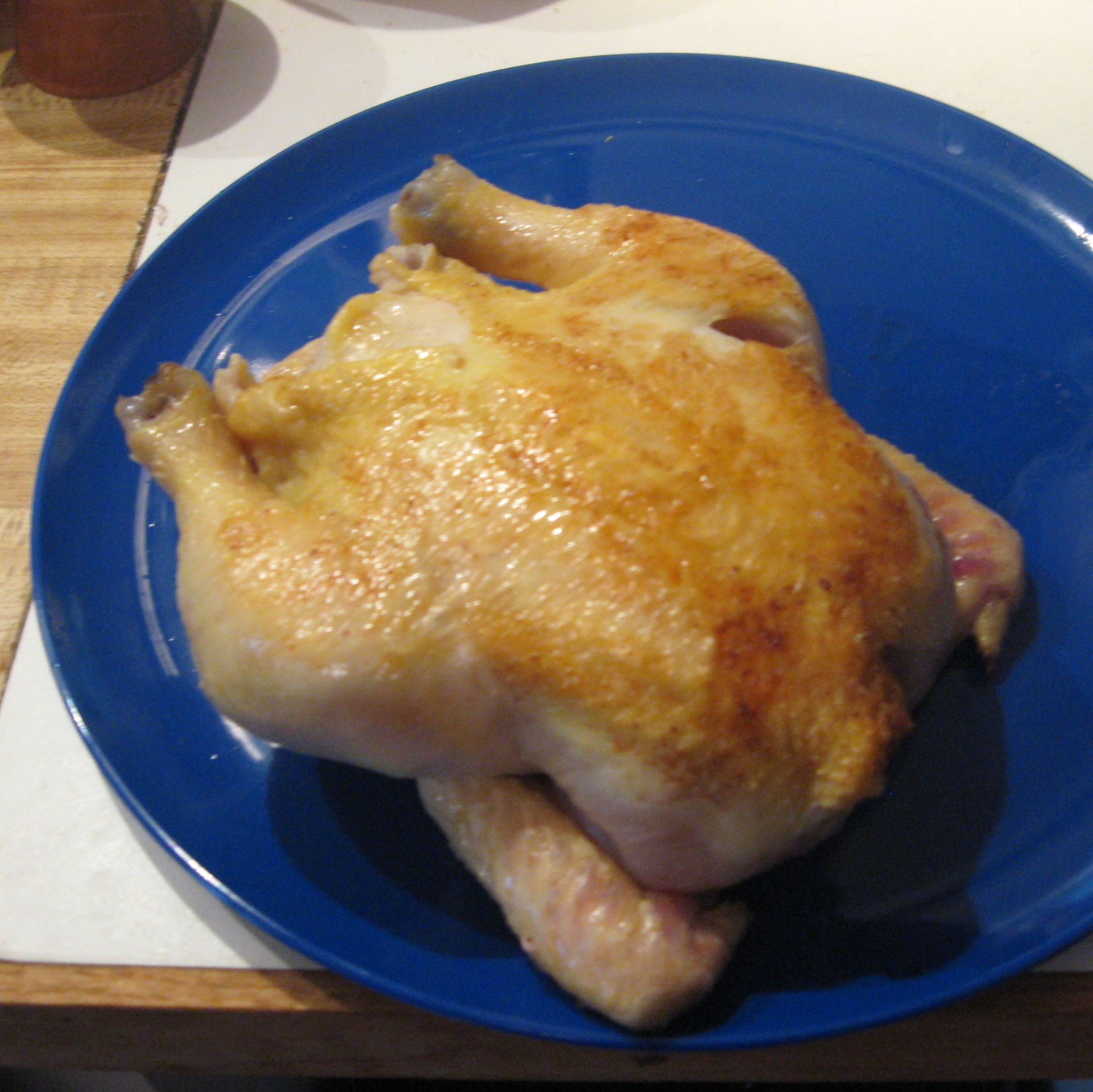
browned bird on plate

There was not much fat in the cavity either so I returned about half of the butter/olive oil mixture to the pot with the chicken.  Giblets were mostly not included–just the neck, but I browned that and included it in the braising pot for  extra flavor.

So here’s my bird, browned, and ready to go back into the pot to braise with the seasoned milk.  (Next time I’m doing a Cornish hen or poussin, I think that I’ll try using just half the milk with half to three-quarters of seasonings even though these birds are only about a quarter the weight of the chicken called for in the original recipe.)

browned bird in the pot with milk and seasonings

After steeping the other seasonings in the warm milk, and then letting it cool a bit, I tasted it–very lemony and sage-y, but not much garlic or cinnamon yet; (that came out later in the braising process).  I divided the milk and the other seasonings in about half since that looked like about the right amount of liquid (the eyeball test!!).  It took about 1 cup of milk (and I added half the solids) so the rest went into the freezer for a repeat, or perhaps just to braise some chicken thighs or poach some breasts. ( I did put the cinnamon into the braising pot with this bird).

braised Cornish hen

Since it was a smaller bird and the braising liquid was already warm, I reduced the oven temperature to 325 ° F since I wanted enough braising time to let the flavors actually get into the meat (as it did in the French chicken in a pot).  I decided to go with lid-on for about 30 or 35 minutes and see how it looked then, and finish the braising with the lid off so that the liquids reduced more.
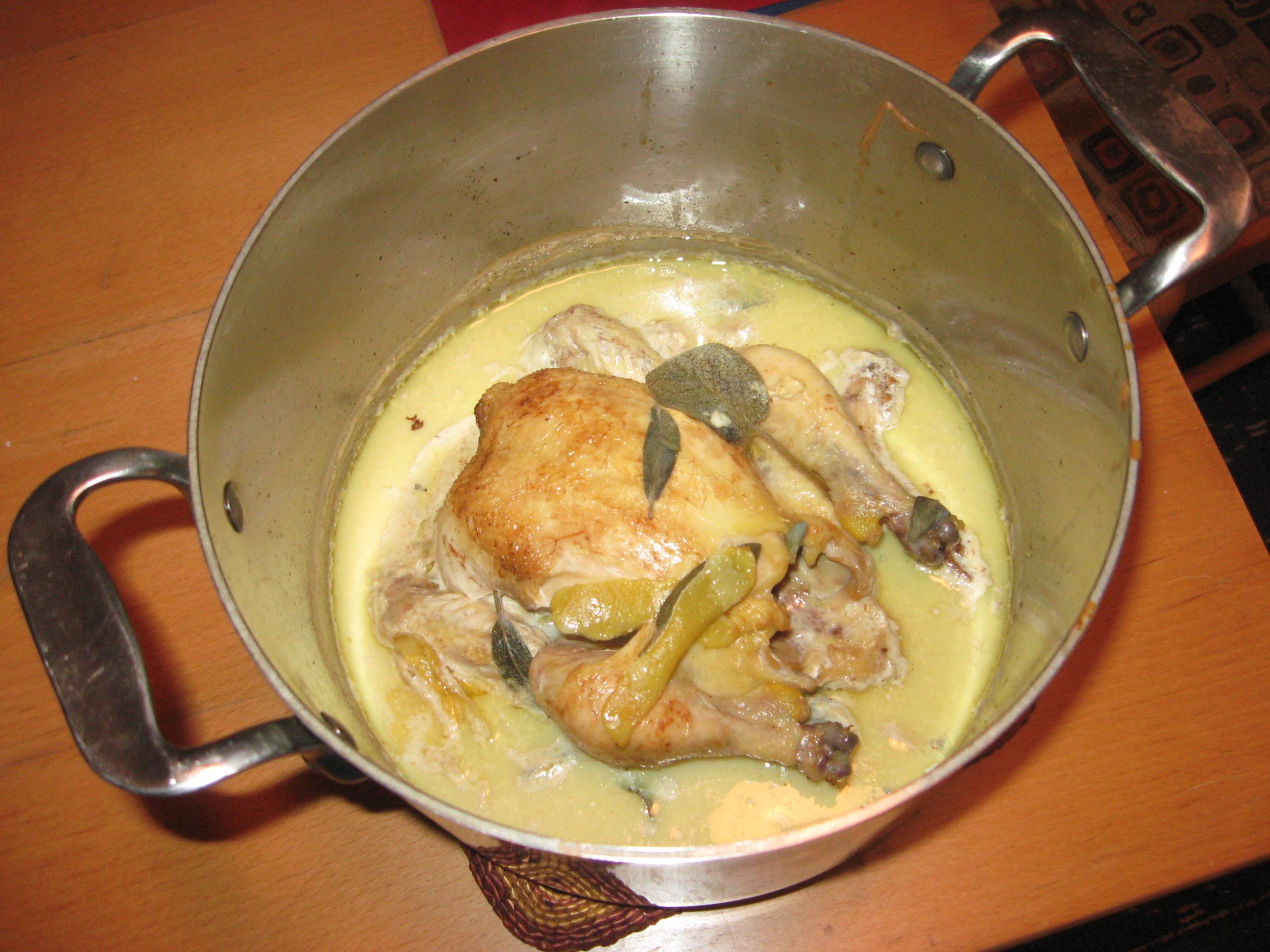
bird in pot after 30 minutes in the oven with lid off

lid off for about 30 minutes

After another 30 minutes in the oven with the lid off, the sauce has reduced some and it looks falling-off-the-bone tender.

Somewhere along the way, all those unlikely, highly individual, and potent seasonings have turned into a complex, earthy  taste and aroma.

I’m ready to eat!

Admittedly this does not look like it’s going to be a dish that lends itself to elegant presentation, but it’s certainly a keeper for comfort food.  Braised in a container that could go directly to the table it would make a nice casual presentation as the skin does brown more after the lid comes off.

•♦•«»•♦•

The  pot  that I used was just a bit deeper than I might have liked, but better too deep than too wide since that would need too much liquid to reduce by the time the hen was done.  Unfortunately, the bird was just a bit too tall to fit into my small chef’s pan–but this was close enough.  The sauce does look “curdled” but tastes wonderful!  Just the thing for a damp, drizzly, autumn or winter evening!

chocolate mug with sage-lemons IMG_4796The original recipe for a whole chicken would be great for causal company–this is definitely a keeper!   I had this with basmati rice, roasted baby carrots and baby zucchini.  Sautéed  spinach, or maybe broccoli raab would be good too.  I think that the slight bitterness of the broccoli raab would be a great contrast to the way that these seasonings meld into a very earthy background to the chicken.

A son goût!

French chicken in a pot

I’ve been wanting to try this method of cooking a chicken for a long time, but just haven’t wanted to pay the price of a free-range chicken this big.  While marketing the other day I found on marked down so I thought it was finally time to try this out.

The basic recipe is from Cook’s Illustrated (Published January 1, 2008. )  Since this was the first time that I’ve cooked a chicken by this method, I wanted to follow the recipe rather closely before I try  changes, so all that I altered was the herbs and vegetables:  I used shallots instead of onions and garlic, and  sage instead of the rosemary).  The chicken is browned and in the oven now.

♥♦♥

Later, after the chicken is out of the pot…It’s definitely a keeper recipe.  I’m amazed at how well the seasonings penetrated the bird.  With it sealed up in the pot you don’t get to smell it as you would open roasting, but when you open the pot, it’s a real blast of wonderful smells.

We had this with roasted potatoes and haricots verts, and baked figs for dessert…a simple, but delicious meal.  We had this with Paul Lehrner cuvée Claus 2007 which is 85% Zweifelt and 15% Blaufränkisch.  Wonderful!

Next step is to try this with a game hen or petit poussin to adapt this for single-serving cooking.