Gremolata

A simple, quick way to add some kick and freshness to lots of dishes: gremolata.  It’s an Italian classic served with osso buco, but can be used with almost any grilled, roasted, or even boiled meats, fish, or with vegetables. It’s especially delightful in the winter when food is a bit heavier and lacks that spring and summer freshness. Great taste, and it is so simple and quick.

It’s one of those things you don’t really need a recipe for. It’s just lemon zest, parsley, and garlic. Here is a nice post from The Kitchn that should give you all the information you need to whip up this condiment.

Once you’ve got this basic condiment down, you’ll find lots of uses for it, and here are some variations for different dishes.

So many variations!

A son goût.

Snow day. . .

Well, not really a snow day (I wish!), but an ice and wind day, the second in a row here. It’s a grey day with a few snowflakes fluttering around. It’s not so far been a productive day. I’ve been wandering from room to room, fighting the urge to take a lesson from the cat. Neither did he go with me to make morning coffee nor did he get out of bed when I started rattling around in the kitchen. He simply got under the duvet instead of on top.

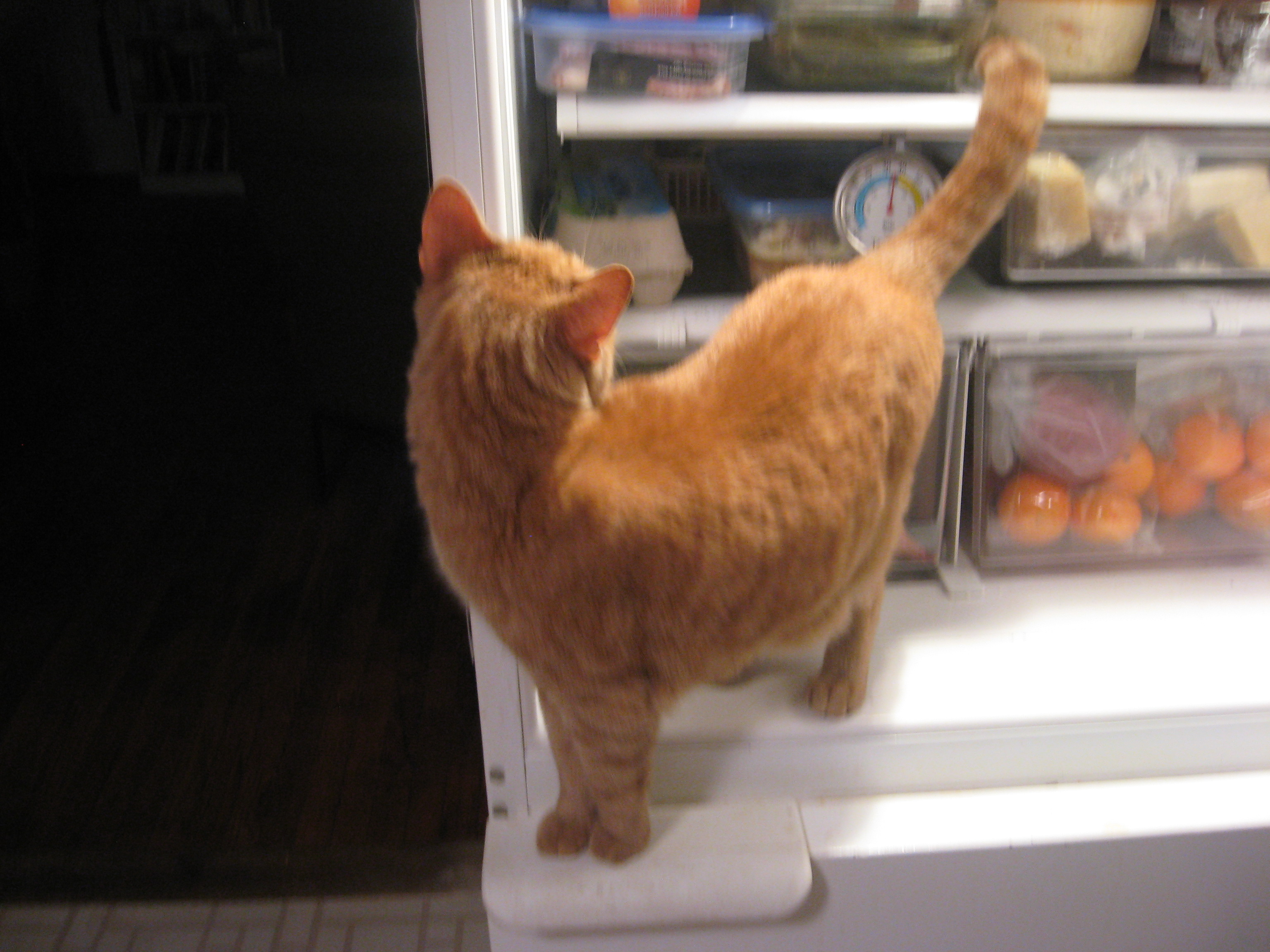
Cat looking into refrigeratorSo I’ve resisted the lure of book and duvet to try to accomplish something, even if not useful or productive, just something I can say that I did. The motif today seems to be opening, peering inside, and closing doors, figuratively and literally, including internet browsing–opening a site and then just passing on to another. I’ve peered into the cabinet where all the plastic storage containers live and close the door tightly and firmly, then opened the internet door (Google search) on organizational ideas for empty containers.

Peering into the refrigerator led to the conclusion that I didn’t want to eat anything that was already in there. The threat of power outage led me to follow a link on what foods were safe after a power outage, but that didn’t catch my interest either (no new information, and no power outage here yet). My list of blogs that I follow l did provide something that held my attention: posts on one taste at a time caught my interest–food waste and eating mindfully. After reading (and reblogging those) my meandering led me back to the kitchen with thoughts of something warm and cozy to eat this afternoon.

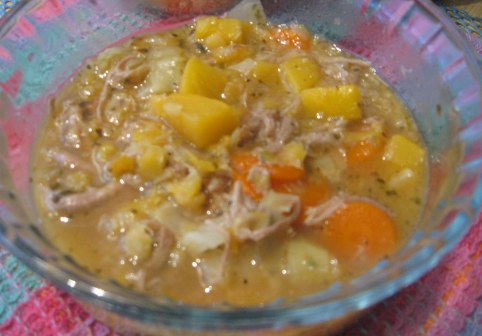
This recurring theme eventually led to the freezer compartment of the refrigerator which has been needing organization and sorting for a while. Gazing at a container of stock finally got my interest. What better way to start sorting and organizing that to make something from what I found in the freezer that was approaching its end-of-life-even-if-frozen state.  Thus: mostly freezer soup happened–with additions from the crisper drawer.

Ingredients

  • pulled pork (from a large pork butt, slow-roasted in the Schlemmertopf)
  • two packages of stock (one pork, one chicken)
  • the last package of sofrito (a staple, but needing to be used and replaced)
  • carrots (the last of a bag that had been vacuum packed for later use)
  • 1/2 small rutabaga, diced
  • two handsful of cabbage, in bite-size pieces (a crisper staple)
  • about 1 cup yellow split peas
  • about two teaspoons Hatch red chili powder
  • a dash of dried oregano
  • (a retained bay leaf from the pulled pork)

Preparation

  • thaw and sauté the sofrito to brown lightly (frozen with olive oil)
  • add chili powder and oregano to bloom in olive oil
  • add frozen stock
  • add pork
  • add rutabaga, cabbage, and split peas
  • simmer until rutabaga and split peas are tender (about 40 minutes)

Supper is on! IMG_8880

As is typical of all soup making, there is more than I’m going to eat, but some will go back into the freezer for a quick meal on another grey day–carefully labeled, and dated.

Ò¿Ó

.

Jabberwock

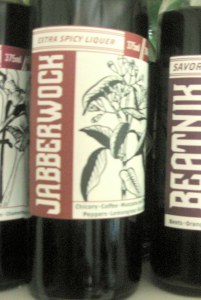
Jabberwok liqueurI love the names of the liqueurs from the Brothers Vilgalys. Jabberwock conjures up some interesting images for me–something dark, smoky,  and exciting, and maybe just a tad bit scary.

I can’t say which of these liqueurs I like best–they are all so different, so I  have them all, but this one is close to the top of the list–partly because I love strong, black coffee and I like the spice of chilies.

The ingredient list for this one includes coffee, chicory, lemongrass, eucalyptus, manzano & chipotle peppers. Just like the other liqueurs from Brothers Vilgalys the flavors just unfold as you sip. There is definitely some heat–it’s going to make your mouth feel warm. With the first sip there is the “brightness” of the lemongrass and the eucalyptus, then the heat starts to build, but the heat doesn’t hide the “dark” coffee and chickory. The lemongrass and the eucalyptus come through in the nose. There’s a long, warm finish where the smokiness of the chipotles lingers, even as the heat fades. Another winner!

(It’s a fantastic addition to hot drinking chocolate–the coffee and the chickory enhancing the chocolate flavor and the chilies adding some spice.)

Hot Cocoa

It’s been a chilly, damp, drippy Monday–the kind of day that takes an inordinate amount of caffeine to achieve a minimally functional state. The day’s to-do list included taking the cat to the vet. Of course it was raining  when I toted Frankie out to the car, and it was raining when we came out of the veterinarian’s office. Frankie was lucky–he was in the carrier and dry (not that he was at all appreciative of that).  Now we’re back indoors.  It’s still chilly, damp, drippy Monday–but now dark.  It’s time for a warm beverage that must have chocolate in some form in it–but there must be lots of if.  That means hot coca!

The hot chocolate is sipping chocolate–thick, rich, creamy–for when you feel truly decadent and in need of something sensuous as well as chocolate. There are times when chocolate is required–after a long walk in the snow, or after you’ve finished all the errands that made you go out on a cold, damp, grey, and miserable day. Those are the times when I want hot cocoa–a lighter beverage that comes in a BIG mug (and maybe even whipped cream) to warm me up. It has to be lighter than drinking chocolate because I want to drink more just because. I don’t want the stuff from the grocery store shelves that is supposedly “hot cocoa” but is usually too sweet and lacking in cocoa/chocolate flavor (e.g. Swiss Miss or Nestle’s).

Some chocolatiers have cocoa or drinking-chocolate prepared mixes that are very good–Chuao chocolate Spicy Mayan (expensive and really drinking chocolate), Starbucks, Ghiradelli, to mention a few of the up-scale ones. Even with these, I feel that the cocoa flavor is a bit lacking–I end up using more than suggested on the package,  and they are often sweeter than I like–I’m paying for lots of sugar and powdered milk. For a review of a hot cocoa mixes see Serious Eats.

Scharffen Berger does have sweetened cocoa powder–though more flexible, you’re paying for sugar (that you can get at the grocers inexpensively and you probably already have it in the kitchen).  So, how do I get my great big, steaming, warming mug of hot cocoa?

I’ll start with a premium cocoa: Valrhona is a favorite, Ghiradelli but  you can use the cocoa powder of your choice. The basic recipe for hot cocoa for one is from Epicurious. (On particularly miserable days, I recommend doubling the recipe even if it is just for one.)

Simple Hot Cocoa for One

Ingredients

  • 2 tablespoons unsweetened cocoa powder
  • 1 to 2 tablespoons sugar (depending on how sweet you like it
  • Pinch of salt
  • 1 cup milk or any combination of milk, half-and-half, or cream
  • 1/4 teaspoon vanilla extract

Preparation

  • Whisk together the cocoa, sugar, salt, and about 2 tablespoons milk in a small saucepan over medium-low heat until cocoa and sugar are dissolved.
  • Whisk in the rest of the milk and heat it over medium heat, whisking occasionally, until it is hot.
  • Stir in the vanilla and serve.
  • If you like it frothy, blend it in the blender
  • This recipe multiplies easily. When you get up to a quart of milk, use 1/4 teaspoon salt

For a bit more oomph, you can use both chocolate and cocoa together–and if you don’t want to do more that heat milk to get you cocoa and chocolate fix, here is a recipe for The Best Hot Chocolate Mix from Cook’s Illustrated, November/December 2014, page 23 that makes enough mix for 12 one-cup servings. Frankly, I get less than 12 since I usually use a big mug.

The Best Hot Chocolate Mix

Ingredients

  • 1 cup (7 ounces) sugar
  • 6 ounces unsweetened chocolate, chopped fine
  • 1 cup (3 ounces) unsweetened cocoa powder
  • 1/2 cup (1-1/2 ounces) nonfat dry milk powder
  • 5 teaspoons cornstarch
  • 1 teaspoon vanilla extract
  • 3/4 teaspoon kosher salt

Preparation

  • Process all the ingredients in food processor until ground to powder (30 to 60 seconds, or as needed)
  • Store in airtight container at room temperature for up to 2 months.

Making hot chocolate

For 1 serving:

  • Heat one cup milk (whole, 2%, or 1% low fat) over medium heat until steaming and bubbles appear around the edge of the pan.
  • Add 1/4 cup (4 tablespoons) hot chocolate mix
  • Continue to heat, whisking constantly, until simmering (another 2-3 minutes)
  • Pour into a heated mug and serve

Ò¿Ó

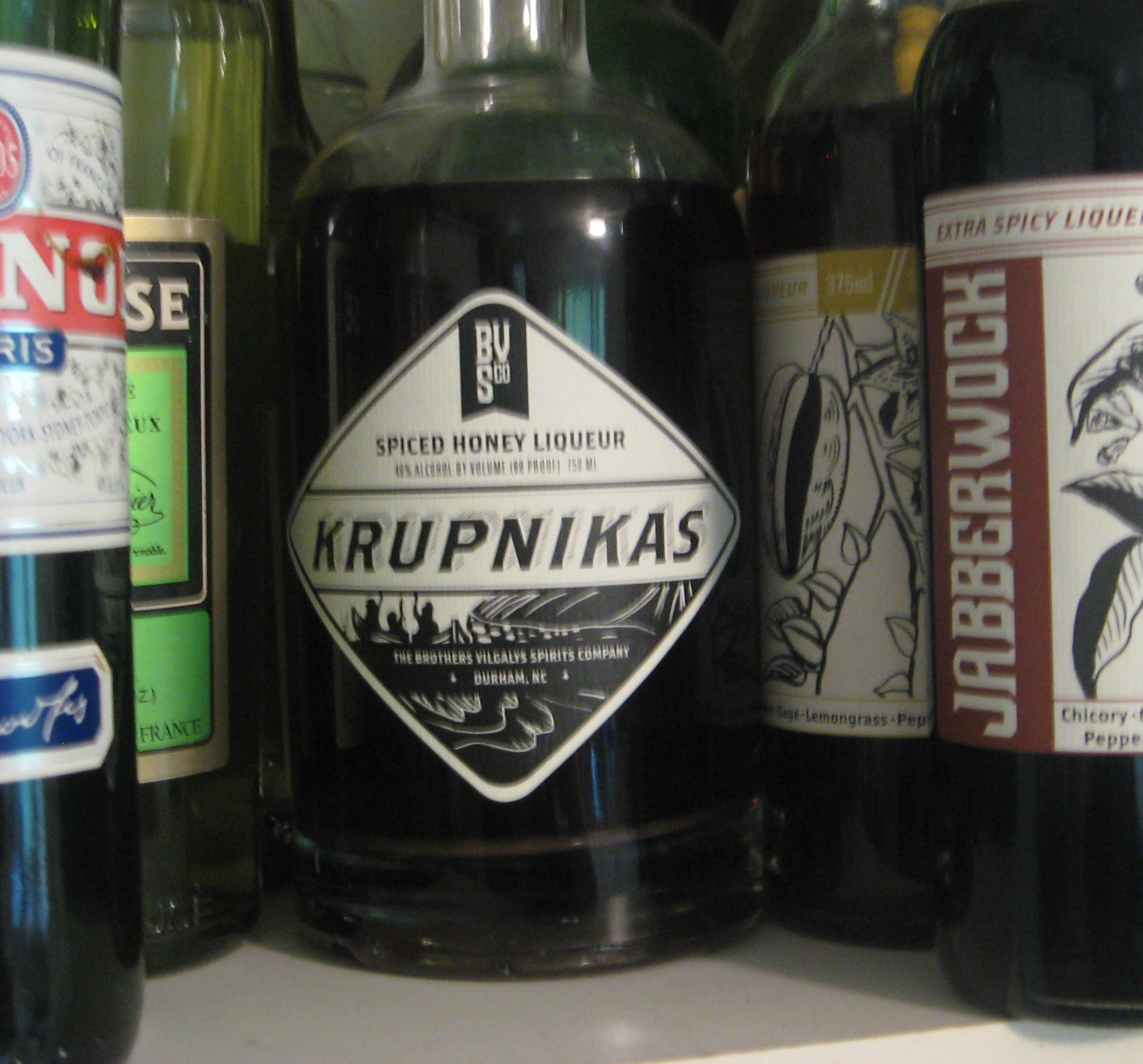
Hot chocolate or hot coca sometimes begs to be dressed up with some additions like Krupnikas or perhaps Jabberwok. If you’re going to add a sweetened liquor like Krupnikas, you may not want to use a mix (as above) that contains sugar. You can only tell by tasting.

Other liqueurs that to dress up hot chocolate or cocoa beverages:

Ò¿Ó

It’s always fun to dress up your hot cocoa–but for me, forget the marshmallows (unless they are homemade), and the whipped cream (unnecessary when you use at least part half-and-half), but adding some spices or other flavors can be fun. Sometimes I make hot chocolate with favorite chocolate bars:  Chuao Spicy Mayan bars, and I sometimes use that to make hot chocolate. My local Harris Teeter has a “house” dark chocolate with orange that makes a great cup of hot chocolate, and the pear and dark chocolate is a way to get a boost if your bar doesn’t include the liqueurs.

Ò¿Ó

Breakfast

Nutritional information—or what passes for it—abounds on the internet and in books that you can check out from the library, or find as you pass through the checkout line at the grocery store, but it’s frustrating. It’s constantly changing. Many—really most of us—don’t have the background in physiology, medicine, or the time to do our own detailed research to assess it. You can read the books, e.g. Good Calories, Bad Calories ( (Taubes, Good Calories, Bad Calories 2007), Why We Get Fat ( (Taubes, Why We Get Fat: And What to Do About It 2010), or The Big Fat Surprise (Teicholz 2015) which are extensively researched and well documented. But it still can be confusing, especially if you want more specific information. There’s the Paleo diet, the Atkins diet, the Mediterranean diet….and even The New Atkins for a New You (Westerman and Phinney 2010). So much information, so much controversy. . .

Then there are the things that our grandmothers told us—eat your veggies, and your fruits—but the one that I remember most is that breakfast is a must-have meal. That seems to be one of the less controversial bits of advice out there. There’s only one problem—breakfast is supposed to happen when you wake up. Now, according to the Merriam-Webster Unabridged Dictionary, wake up, awake or awaken, means to “stop sleeping”. The problem is that for some of us awakening is not the same as achieving a state of functioning (“performing a group of related acts and process” according to the dictionary). We awaken, and the functioning state is bestowed later–sometimes much later and only with an appropriate amount of caffeine.

Every time I have to say whether I’m a “morning person” I face a quandary—I love early mornings—the cool part of the day, with the inspiration of the sunrise. So in that sense, I’m a morning person. Add functionality to that and there is a problem. Until I’ve had my morning cafè latte or espresso function is simply out of the question. Making breakfast requires functioning—albeit minimal. I can manage the kind of functioning required to get the espresso machine to spit out the liquid caffeine portion of my latte. Actual breakfast is another issue.

Another issue for me is that first thing in the morning, even as much as I love breakfast food, I don’t want to eat. Food? Yuck! So I have my two café lattes, and by then I should be at my computer working on the current index—breakfast gets another miss.

Every New Year (and probably again this coming one) my resolutions include eating more healthily. That would include giving my body morning fuel. Every year it goes by the wayside because of non-functioning in the morning. So I’m attuned to things that will get me food with least effort in the morning. I’m willing to admit that cooking eggs seems pretty simple, but diet-wise I doubt the nutritional wisdom of bacon and eggs daily partly from the caloric point of view.

In the winter (especially if the view from the kitchen window reveals a cold, grey, damp, day) a breakfast favorite is oatmeal (don’t DO cold cereals on a taste or nutritional basis). Specifically, I want oatmeal with some tooth to it—which really eliminates the quick stuff. I want the steel-cut, slow-cooking stuff. It’s the slow-cooking part that hurts. So I’m constantly on the lookout for things that might help me keep that New Year’s resolution—and maybe even contribute to more healthy eating (and weight loss.

If you search the web, you can find numerous suggestion on how to cook steel-cut oats—some reducing the cooking time to 30 minutes. Even with that, it’s still not in my range of morning functionality—I won’t enumerate the number of ways is possible to screw up when your functioning is barely above brain-dead.

In my recent perusal of the blogs that I follow I was delighted to see a post entitled How To Make Oatmeal in Jars: One Week of Breakfast in 5 Minutes. First of all, it promised make-ahead, and then you’ve probably gathered that I’m a fan of Ball/Mason jars so I have lots of those around.

The prep is simple (see full post for discussion and details)

  • Combine 1-2/3 cups steel-cut oats with 4 cups water, ¼ teaspoon salt.
  • Bring to boil and cook for 3 minutes.
  • Put it into jars, and when it reaches room temperature, cap and refrigerate.
  • To eat, microwave 2 to 3 minutes, add whatever you wish and eat.

My only change to this is something I’ve done for a long time when I’m cooking oatmeal—substitute milk or oat milk for 3 cups of the water and divide into 7 servings since I just don’t eat that much in the morning. The three-minute boil gives chewy kernels; I actually prefer just a bit less chew, so I boil for 5 minutes.

I like to use 1/2-pint jars for this as they will sit in a coffee mug so I don’t have to handle the hot jar or put it into something else to eat–admittedly I do at times end up taking my breakfast on my “commute” into the office and eating at my desk. (I know–not a good thing to do, but it happens when deadlines are close.) Filled only to about 2/3 there’s still room to add things on top–then this recipe works for about 7 days.

Another alternative to “quicken” up the steel-cut oats is to do an overnight soak at room temperature; Maria Speck, in her book on ancient grains, suggests that this will reduce cooking time to about 7 minutes.  My issues with this are that it requires planning ahead. Once the oats are soaked, they need to be cooked. I am, admittedly, a very temperamental, picky eater: I might wake up not wanting to eat oats for breakfast. By precooking and refrigerating, I do give myself a little leeway to be picky without throwing something out.

On more relaxed mornings, I’ll make other versions of steel-cut oats. A favorite is from Alton Brown via the Food Network. Love the toasting before adding liquid. Adding the milk and buttermilk adds richness and tanginess. His point here about stirring in the dairy does make a difference. I’ll admit to not being the owner of a true Scottish-style spurtle but a Holland-style spoodle to be a bit gentler with my steel-cut oats.

Now, for breakfast. . . a drizzle of some luscious varietal honey like French lavender, tupelo, sourwood, or maybe leatherwood, or thyme, or just wildflower or clover, or orange blossom, or maybe just some butter, or possibly milk, or…it may well depend on what I see from my kitchen window!

Ò¿Ó

Grocery shopping for one

Do you think about advertising while you’re grocery shopping?  Most likely not! I know that I don’t–but I try to do “perimeter” shopping, making a foray into the center of the store only for specific items–like drain cleaner, paper towels, or dish detergent.  Where I shop, the immediate thing from the entrance is produce (with a big display of locally grown goods), which leads to the meat and fish/seafood counters; a left turn there takes me past the dairy, and refrigerated juices; another left leads me to frozen goods. If I take a right turn at the butcher/fish/seafood counter, I find myself at a counter of prepared fruits and melons (usually in big quantities that are too much for one).  Next in line is the bakery and then the delicatessen.  Continuing through those, I end up at the Asian food bar,  the rotisserie chickens and other prepared meats, and the salad bar.  My usual trek through the grocery store most often involves only a quick dash to the dairy case, then meat and deli. I don’t see a lot of processed food on this circuit. I’d never really given much thought to whether or not my shopping was being manipulated by sales-motivated display methods.  The links below contain some information about store layout and methods used to induce us to buy “stuff”–things that we did not come into the store to purchase: impulse purchases.

Õ¿Õ

links of hot Italian sausageMeat purchases are pretty easy–thanks to chops, steaks, and a butcher/fish counter that will cut to order; packages of  chicken parts, rather than whole birds, and house-made sausages that I can buy one or two at a time. Careful consideration of the dish that I want to make can allow alternative cuts of meet: beef shank instead of large chuck roast for post roast.

The real difficulties come in produce where things are sold bunched, bagged, or otherwise in quantities that don’t fit single-serving cooking. Some produce just grows in too large a quantity–heads of cauliflower, heads of cabbage or lettuce, a whole stalk of Brussels sprouts…waste just waiting to happen unless we make a serious effort to prevent it.

Ò¿Ó

One of the difficulties of cooking for one (or even two) is the produce that goes bad while waiting quietly in the refrigerator for you to do something with it.  I love peppers–and I like variety, but I simply cannot use a whole red and orange or yellow bell pepper before they begin to get a little mushy around the edges, no matter how carefully I store them.  So do I do without them?  Even  some ready-to-use packages that are available in the produce department are still more than I want. Buying more than I can use is like throwing money away–and it gets worse if you consider the amount of food waste by consumers after purchase, let alone the waste between harvest and the appearance in the supermarket.

My supermarket likely has something that will help with this dilemma:  a salad bar.

green on the salad barIf you’ve always thought of it as a place to make a salad with all sorts of veggies and trimmings, and pour salad dressing on it, top it with some croutons, and take it back to the office to eat  you need to look at the salad bar from a different perspective. Take a closer look at what’s available there to purchase by the pound–thinking about what you need for a meal, rather than making a salad.

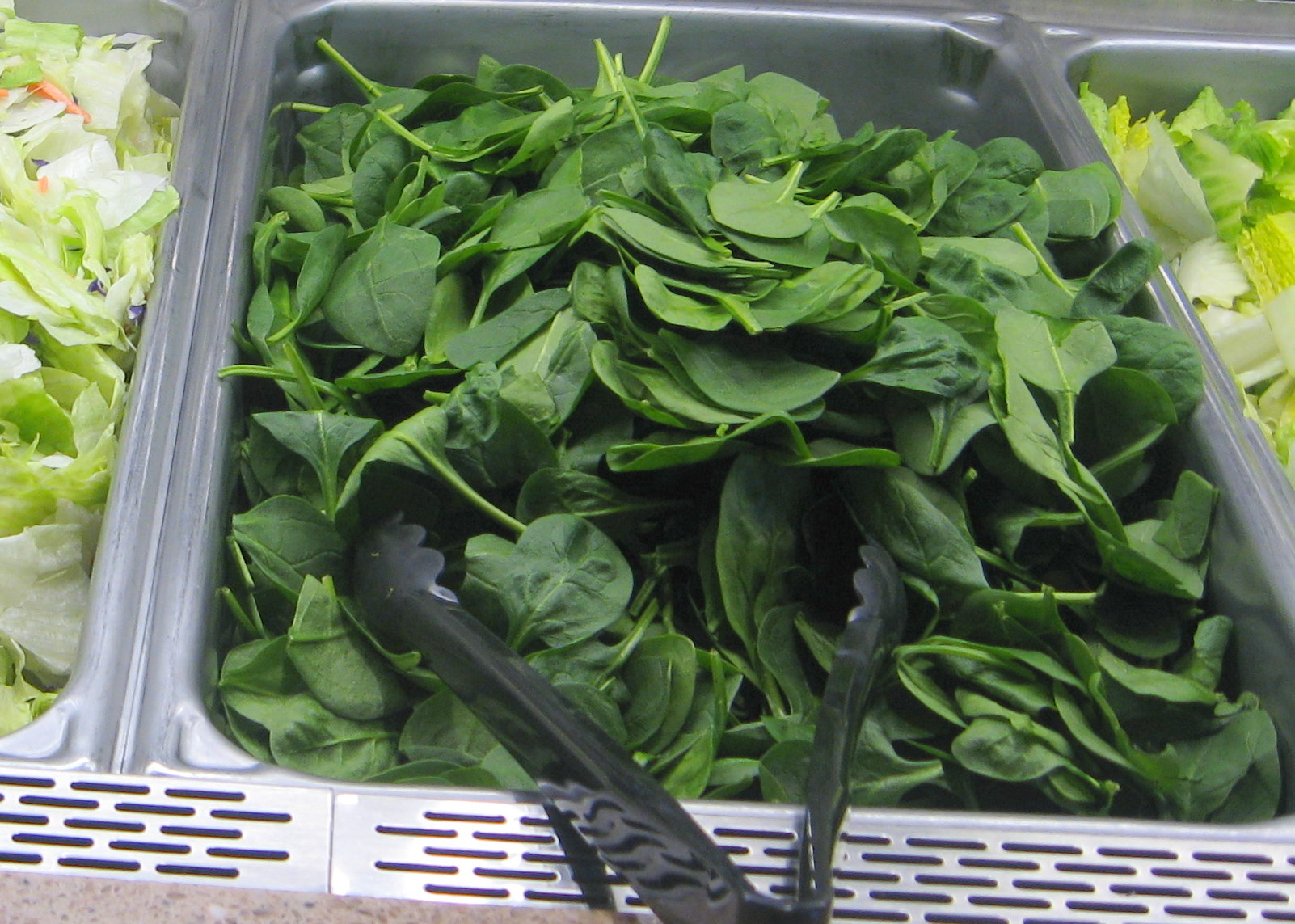
As much as I love salads, packaged greens often go bad before I use all of them. My other objection to big prepared baby spinach on the salad bar (Harris Teeter)packages of greens is the lack of variety–I simply don’t want spinach as my greens for a whole week.  If your market has a salad bar, you can get single-servings of mesclun, spinach, and other greens from the salad bar. I can also get some that loose greens in the produce department–I’ll purchase that either place, depending on what my schedule is and how salad-crazy I am at the time. Since the salad bar usually has several kinds of greens out, I can have mixed salad greens without buying lots of each kind.

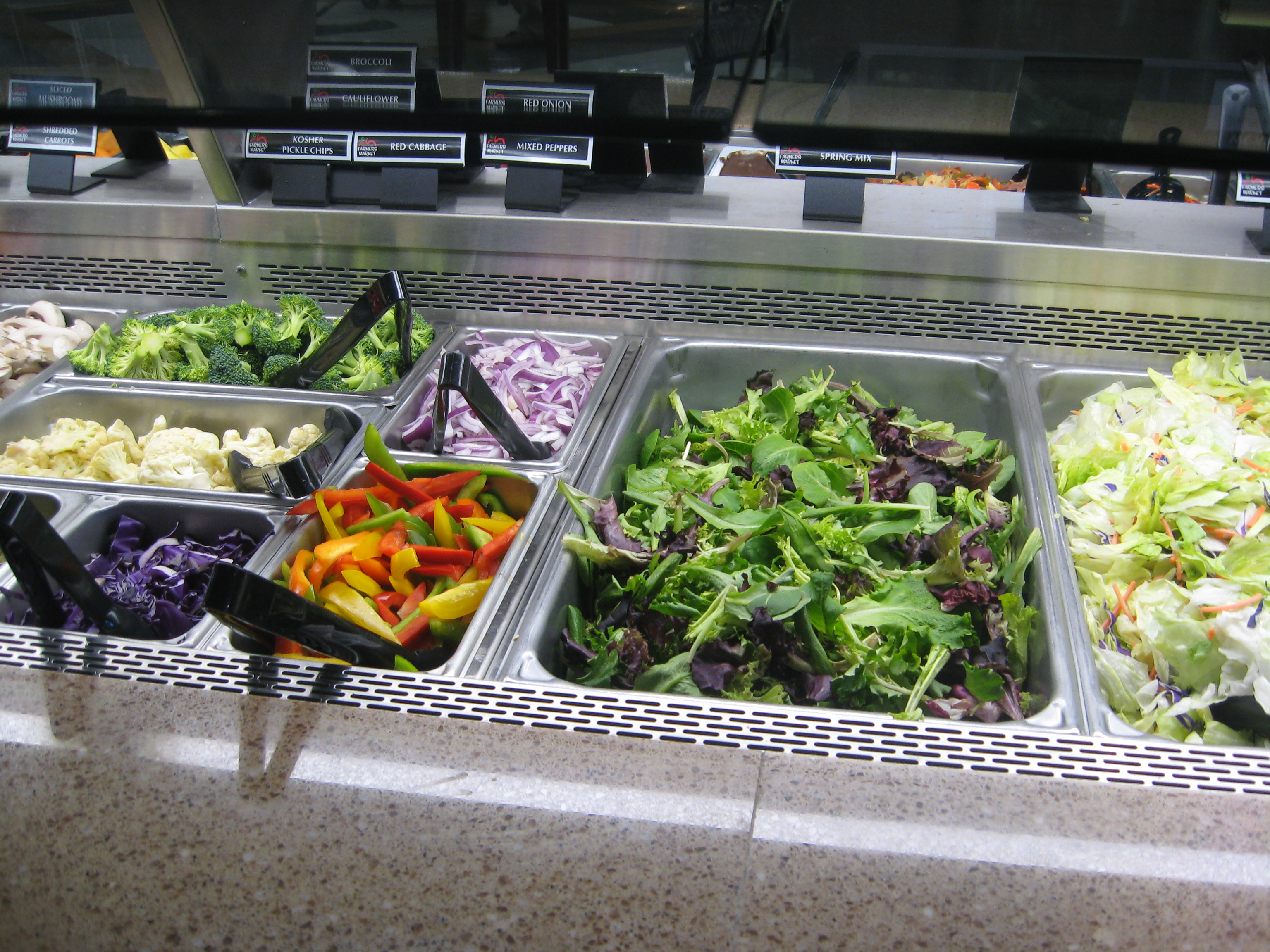
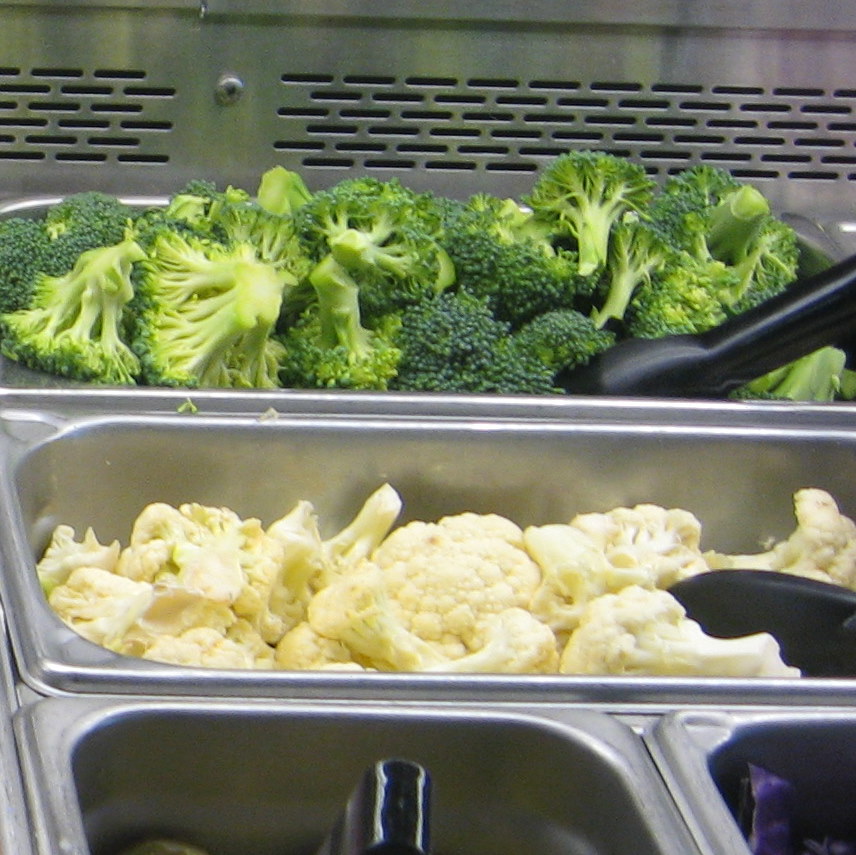
salad bar-broccoli-cauliflower IMG_6051I like cauliflower and broccoli too, but again a head of cauliflower is a bit much, so even at $3.99 a pound it is less wasteful and probably cheaper in the long run for me to buy what I need for a single meal from the salad bar–and I avoid having to do the prep myself–added benefit.

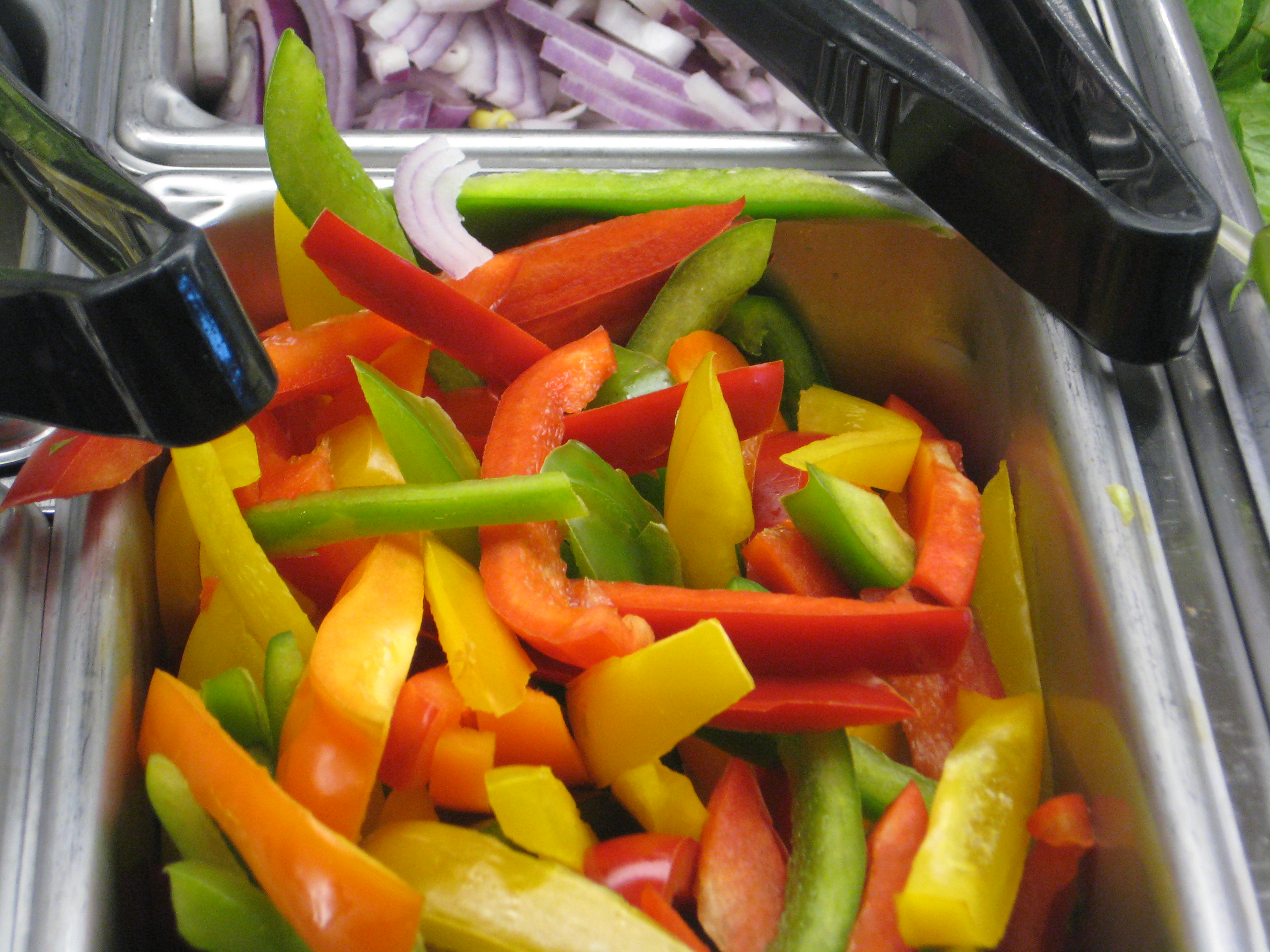
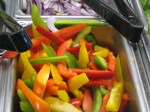
My most frequent purchase from the salad bar is bell pepper strips, for salads, and sometimes for seasonings.  If I need a lot, for example making the dandelion greens and sausages or  chicken with sweet peppers, I will either buy whole peppers, or use frozen ones since they are to be cooked.  The salad bar that I frequent usually has a variety of colors, so I can have that without red, yellow, orange, and green going bad in the fridge. (I prepared bell peppers on the salad bar (Harris Teeter)have to admit, somewhat shamefacedly, that I’m one of the people who will stand there and pick out the red, orange, and yellow and leave the green ones behind.)
I don’t buy tomatoes off the salad bar–I think that the refrigeration changes the texture of them, so I usually get grape/cherry tomatoes from the produce section. They seem to be one thing that I use easily before they get funky.

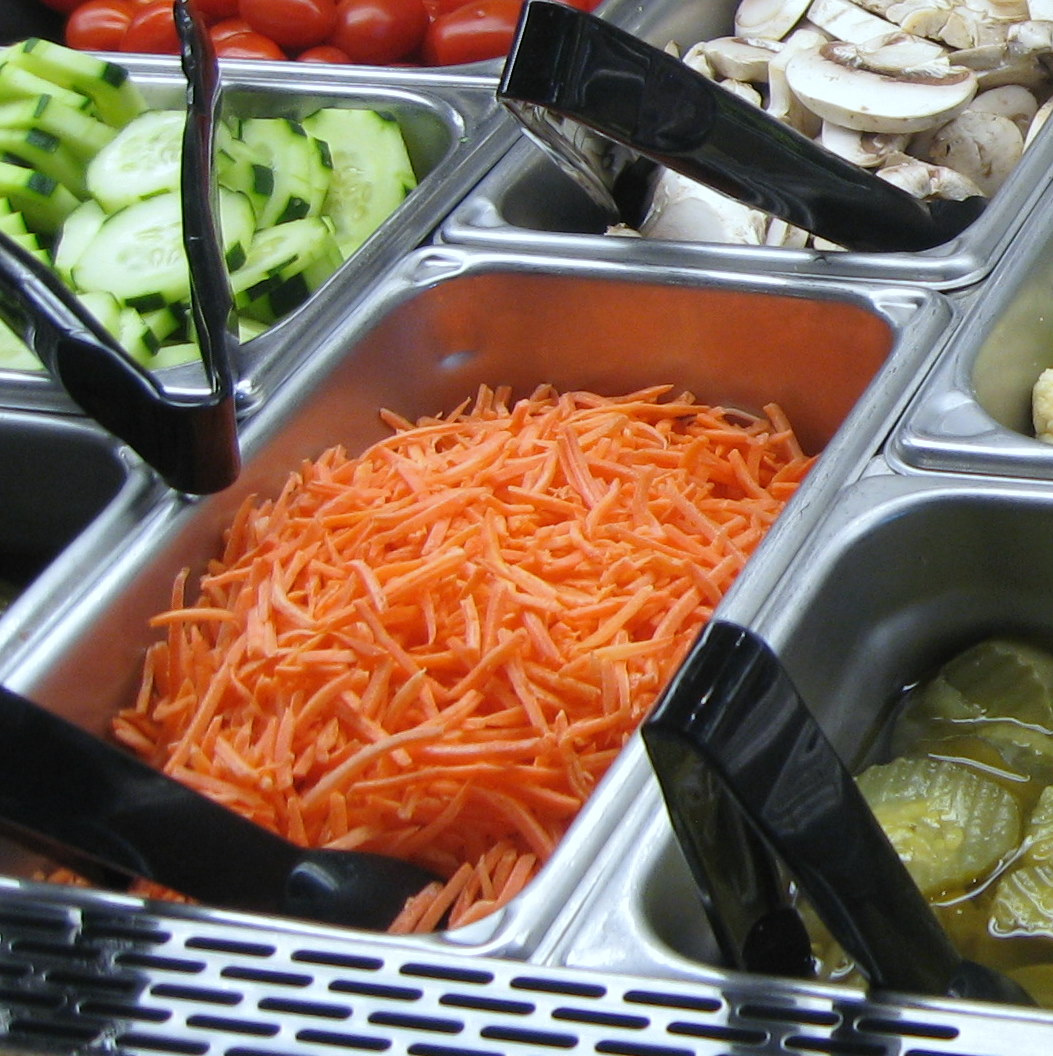
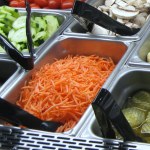
Onions and whole carrots keep well julienned carrots on the salad barenough that I buy those in the produce department most of the time and keep them in the fridge; but if I want  julienned carrots to make a quick serving for a meal or for a salad–I may just take the lazy way out and use the salad bar rather than the packaged ones in the produce department. That’s my idea of convenience food.
I don’t often by cucumbers from the salad bar since I prefer the English ones–and the salad bar usually features the American slicers so they are not worth the per pound price. Other things that may be purchased from the salad bar include sliced mushrooms, julienned radishes, or fresh mozzarella when you want just enough for one serving.

Another frustration of buying produce for one is fruit. As much as I like cantaloupe, honeydew, berries and other fruit, getting variety leads me to use the fruit side of the salad bar often. I can usually find assorted berries, mangoes, pineapple, and melons there.

Most of the items on the salad bar really aren’t that heavy–and considering that you have avoided the waste of unused produce, it seems to be a reasonable price.  Even some of the heavier items like melons, broccoli and cauliflower, are a bargain for me since it allows me to have variety in my meals and minimizes waste.

Not everything I want is on the salad bar, so the solo cook has to deal with more produce than you’re going to use quickly. What are the options?


Kitchen disaster. . .

. . . but a happy, tasty ending.

Cat looking into refrigeratorI’m feeling a cold draft–very cold draft–around my ankles!

I know I’m not dreaming though it’s the middle of the night or somewhere in the wee hours of the morning–I’ve come to the kitchen (without turning on the light) to get a drink of water. . . .

Cold draft? Really, really cold draft–on my ankles.

Reality gradually seeps into consciousness:  I’m standing in front of the refrigerator–which has a bottom freezer, which I have stuffed pretty full.. . .

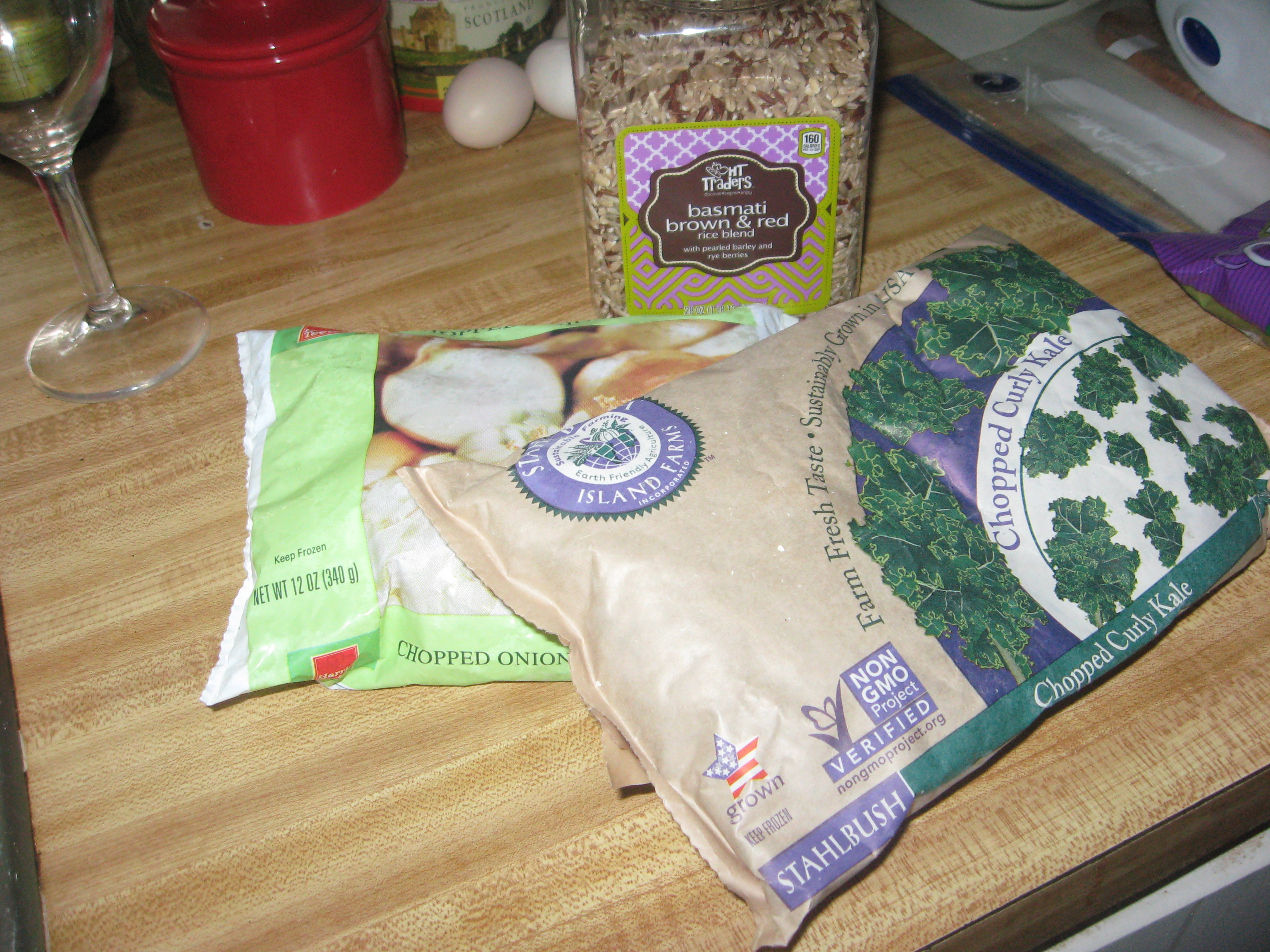
Light on. Obviously I’ve stuffed the freezer a little too full or something has fallen out of place. The freezer door is very slightly ajar. Even in my rather sleep-befuddled state, brain clicked on. Several epithets which should not be printed. Open freezer door and palpate the front packages: kale, butternut frozen onions, kalesquash, chopped onions. Soft, but not obviously completely thawed, but destined to turn into a huge clump of re-frozen vegetables.The only meat even close was a game hen which was still hard as a rock.

I closed the freezer door and checked that it shut completely, and tightly. Back to bed, knowing that I would have to do something with those veggies in the morning. (The ice cream was far enough back and in a corner that it was still hard or I guess I’d have been compelled to eat it right then and there–hmmmmm, should I go do a careful check on the ice cream?)

Morning after: I’ve got work that that to be done NOW so spending a bunch of time in the kitchen or skulking through cookbooks isn’t on my agenda. It’s time for some improvisation: take chopped onions, chopped kale and cubed butternut squash. . . .add some bratwursts that are in the fridge. Add a portion of mixed grains (brown basmati rice, red rice, barley, rye berries) and one multipurpose rice cooker.

I’m sure you’re not surprised that I’d resort to the rice cooker, given all the other things I have it to cook. Once you understand the physics of its function, it’s really easy to make it do what you want. So here we go again with the rice cooker.

Ò¿Ó

Kale, butternut squash with bratwurst

Cook’s note: first this is not a recipe–it’s an improvisational happening. Secondly, it’s recommended that you deliberately thaw the vegetables in the refrigerator or on the counter instead of the method described here if you wish to have them unfrozen. You can put frozen vegetables in the rice cooker without thawing unless you have a great big blob of frozen stuff. You can adjust the proportions of kale, onions, and squash as desired.

Ingredients

  • one standard-sized package chopped kale, thawed
  • one standard-sized package chopped onions, thawed
  • one standard-sized package butternut squash, cubed
  • 4 fresh bratwursts
  • 1 tablespoon olive oil
  • 1/2 teaspoon salt
  • 2-1/2 cups water (or amount called for in the cooking instructions of your grain)
  • dash of red pepper flakes
  • 1/4 to 1/2 teaspoon of oregano or herb of choice

Preparation

  • add olive oil to rice cooker bowl
  • add thawed onions and let sauté briefly
  • push the onions to the sides of the rice cooker
  • lay fresh sausages in a single layer and then redistribute the onions evenly over the bottom and partly over the sausages; they will brown lightly on the side in contact with the bottom of the rice cooker bowl
  • add 1 cup of grains
  • add kale and distribute evenly over grain and sausages
  • add red pepper flakes and herbs
  • add scant 2 cups of water; your rice cooker may need more or less, adjust as needed
  • close rice cooker and leave until it switches to “warm” function
  • stir contents (grains should be a bit underdone)
  • add remaining water
  • add butternut squash on top of greens, grain, and sausages
  • close rice cooker and leave until it switches to “warm” function a second time
  • check doneness of grain; if needed add a bit more water and wait again
  • when grains are cooked as you like them, serve!

Ò¿Ó

Despite the ridiculous circumstances that gave rise to this recipe, it was very tasty, and I’m sure some version of it will be made again. The combination of kale with the butternut squash was delightful. The combination of grains gives some interesting texture and flavor to the dish.

A son goût!

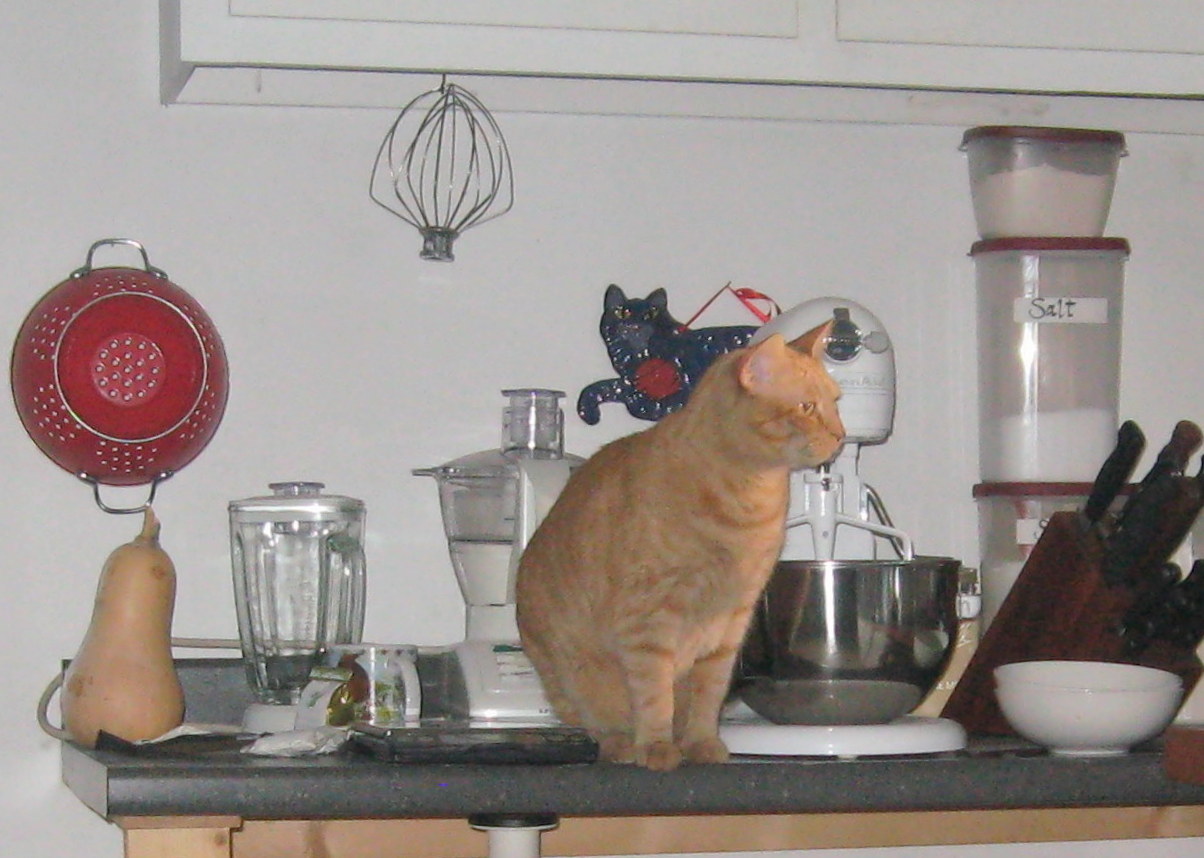
cat on kitchen counter

Leftovers. . . and second servings

One of the banes of refrigerator maintenance is leftovers. I work hard to avoid them, but I’m often defeated in my efforts, especially when eating out. So often restaurant servings are HUGE, and, sucker that I am, I don’t just leave the excess on my plate.  I bring it home, tuck in into the refrigerator, and then likely at some too-far-in-the-future date I get an odoriferous reminder that I now have to do something with the leftovers, which are likely to be found in the back of the refrigerator. They will most likely be unidentifiable now, so they go into the garbage.

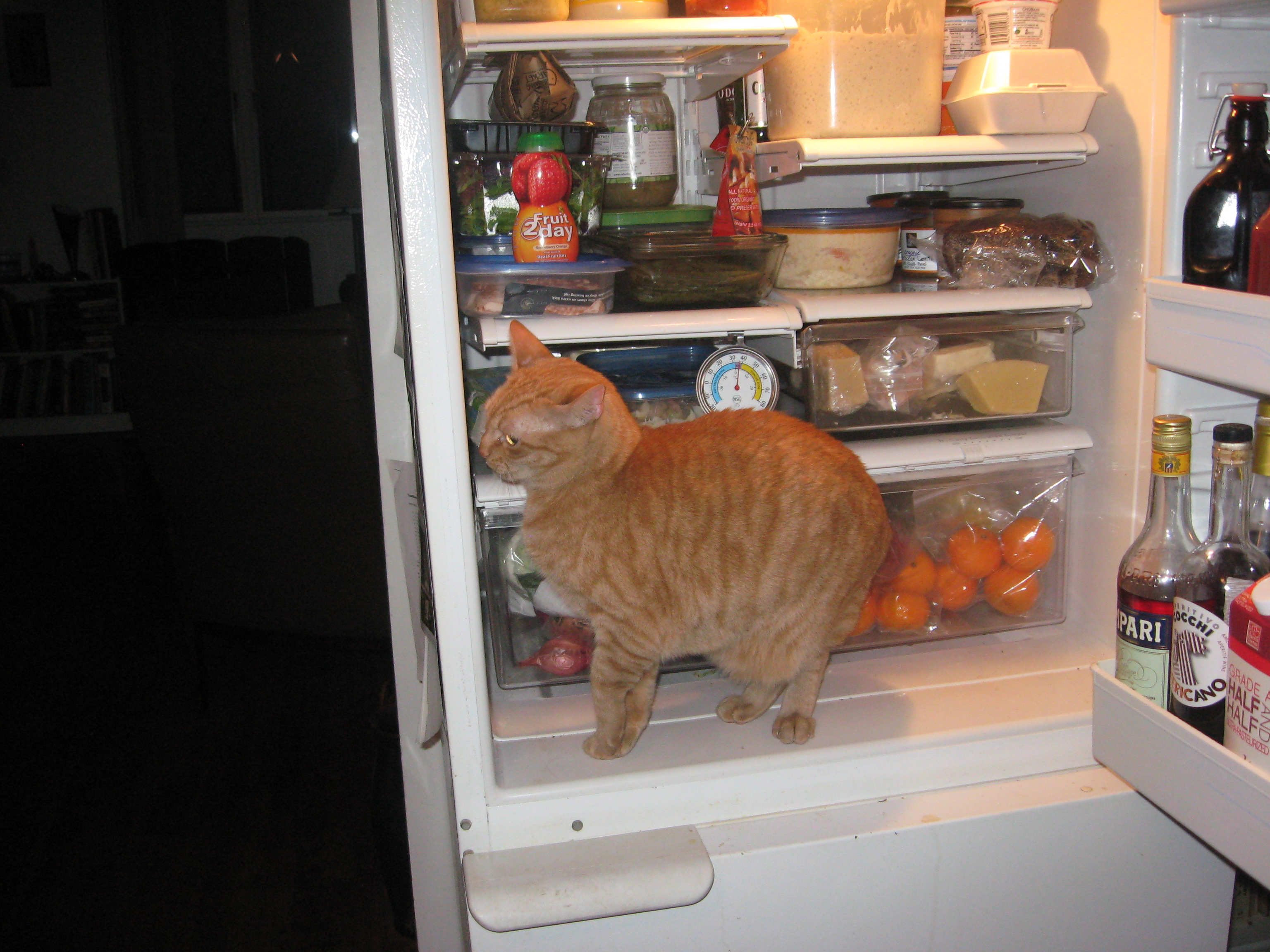
cat in refrigerator

lookin’ for leftovers

The obvious first step is to think carefully about bringing home restaurant leftovers: Will it reheat well enough that you really want to eat it?  After all it probably doesn’t make much difference when it gets thrown out–then or a week later. If I decide to tote it home (and I already know that the cat won’t eat it), then I need to label it, and be sure that it doesn’t end up in the back-most corner of the fridge.  I have used masking tape (which comes off easily–often too easily), Sharpies (which can be removed from some things with rubbing alcohol).  I recently found a suggestion to use dry erase crayons (which I didn’t even know existed).  Might be worth a try, but better yet for me would be to be much more judicious in what I put into the fridge as a “leftover”.

“Leftovers” from my own cooking aren’t as much of a problem, but I’m always looking for ways to use the bits and pieces of produce or the last part of that can of beans. I’ve got a handle on the bits and pieces of bags of frozen vegetables and even partially on the celery.  But there are still bits  and pieces….

The Cook’s Illustrated books on cooking for two and Joe Yunan’s book (see bibliography) is the cross-indexing of recipes that use the same ingredient so you have a suggestion for what to do with the other half  of that head of cauliflower.

I’ve found several tools to help reduce waste in single-serving cooking. First from the kitchn is an article titled What to Do With…? 75 Tips for Leftovers and IngredientsThere is a long list of things from produce market, the refrigerator, and the pantry with suggestions of what to do with the extras. For a lot, the suggestions are “freeze it” which does not necessarily solve the problem–just moves it to some point in the future; however, there are some good suggestions.

The flip side of this is throwing away things that could reasonably be used. For some examples, see 10 Foods You Should Never Throw Away. I can agree with the cheese rinds and chicken bones, but here again, I think it’s easy to fall into the trap of just changing where you stash the leftovers. When you’re doing single-serving cooking you do need to consider carefully what you bring home and what you keep.  Also useful might be Top 10 Ways to Use Up Overripe Fruit.

Another article that is useful 15 Foods You Should Freeze in an Ice Cube Tray. There are lots of other things to freeze as “ice” cubes, and the put into zipper-lock bags for freezing.  Having these portioned out can make it easier to use them. One of the things I do with excess celery and carrots is to make mirepoix (soffrito) in a big batch, then freeze it in ice-cube trays. One or two cubes will be what you need for small-time cooking–and it cuts time from preparation, and should reduce waste!

Planning use as in having thought about possibilities for that second serving (no, not meal planning–I don’t do that), and shopping with single-serving cooking in mind should help. One way to manage what gets pushed to the back is to add a triage box to the fridge.  Triage  refers to the process or sorting, or assigning priority to something.  In the fridge it would be an eat-me-first box where you put things that have a short shelf-life, or perishables so that they don’t get pushed to the back of the fridge.


Hot Chocolate–with Krupnikas

In anticipation of National Chocolate Day–drink up!

I love chocolate, and I would be unlikely ever to turn down good hot chocolate or cocoa. I’m glad fall is finally here with relief from the hot humid, muggy weather; however, today is the ninth day of measurable rain in a row, and what with hurricane Joaquin making its way north along the coast, we’ve got several more days of gray, rainy weather coming–maybe a record-breaking string of rainy days. Well, after a brief lull this afternoon, the rain is back. As I listen to the rain on the metal roof, what better to do on chilly, grey, soggy, damp, rainy days than make hot chocolate or hot cocoa?  A real comfort beverage even if you don’t enhance it with spirits. So start with a good cup of hot chocolate or hot cocoa. . . .

First, let’s be clear about the definitions of hot cocoa, and hot chocolate. These terms are often used interchangeably by Americans and use the terms to apply to some really atrocious mixes. If you’re really “into” this beverage there’s a whole lingo you should know. however there is a difference (Amano chocolate page). In a nut shell: hot cocoa is made with cocoa powder, milk and/or water. It’s a thinner beverage. Hot chocolate (also called drinking, or sipping, chocolate) is made with chocolate (often shaved or ground to melt faster) which, because of the natural fat in chocolate makes it a richer beverage.

So, when I say hot chocolate that’s what I mean–and I do distinguish that from hot cocoa–not that I don’t like both in different situations. (This really excludes most ready-packaged mixes–especially the “grocery store shelf” ones.)

So first you must make hot chocolate:

Simplest creamy hot (sipping) chocolate

Ingredients (1 serving)

  • 2 ounces of premium chocolate dark chocolate (unsweetened and/or semisweet) pieces
  • 1 cup half-and-half
  • pinch salt
  • vanilla to taste (optional)
  • honey to sweeten to taste

Preparation

  • Place chocolate (cut if in large block) into microwave-save container. The container needs to be large enough to allow you to whisk the warmed mixture vigorously.
  • Add honey and pour half-and-half over.
  • Microwave for about 2 minutes–until milk/half-and-half is steaming, but not boiling.
  • Add pinch of salt, and whisk vigorously until the chocolate is emulsified and mixture is slightly thickened.
  • Taste and add more honey if needed, and vanilla if desired.
  • Pour into a carefully warmed mug, sit back, and enjoy.

Ò¿Ó

Don’t serve this in a thin, fancy cup–even though it’s rather decadent. I use a mug warmed thoroughly with almost-boiling water so that this creamy, sensuous beverage will stay warm while i sip it slowly. Don’t bother with whipped cream–it’s rich enough without.

Ò¿Ó

Now you have a very dark creamy cup of chocolate. Good as is, but it’s fun to add some different flavors. With all this cold rainy weather, I’ve been experimenting with additions. One of my favorite inspirations was to add a splash of Krupnikas–a spiced honey liqueur. Awesome!

Another liqueur from the Vilgalys Brothers Jabberwock–a very spicy–with coffee, chicory, lemongrass, eucalyptus, manzano and chipotle peppers–makes a spicy cup of hot chocolate–probably my favorite so far.  A splash of Chambord would not be amiss either! if you want fruit rather than spice.

Ò¿Ó

Kupnikas_crop_IMG_8320

Ò¿Ó

Refrigerator and freezer use

Admittedly we need a stove in the kitchen, but we also need the refrigerator–and it’s probably the appliance that we misuse most often. When I stop and think about the times that I’ve had to clean out the refrigerator because something got “lost” back there and made its presence known in a rather aromatic way, I know I need to work on this problem–yes, I’m writing this because I have to clean out the fridge again. . . .

We don’t usually stop to think about the micro-environments inside. I know that I often just open the door and plop something in without much thought to where it would keep best.

Just recently I found a series of articles on the kitchn on using and maintaining the refrigerator for best performance.  I thought I’d share these–I know that I do misuse mine–and I suspect (hope) I’m not alone.

Of course, then there is the freezer which can be wonderful, or a trap cooking intentions. Again, I’m facing the necessity of cleaning out the freezer after the recent kitchen disaster which was directly attributable to me just opening the freezer door and chucking stuff in–I think I need to stop and think about why I’m putting something in the freezer, and make a huge effort at organization.

This is a list of main articles–within each, there are links to other useful tips for managing the cold spots in the kitchen. Now,  off to the kitchen to attack the fridge!

Cat in fridge