It’s turkey time–again!

At the risk of being considered heretical, perhaps even un-American, and definitely not in the proper holiday spirit, I’m going to come right out and say that turkey would be my last choice for the main course of a holiday feast.  I’d much rather have duck, goose, roast pork, prime rib, or even roast chicken, (unless we’re going to talk wild turkey).  The problem is that it’s an achievement to get a whole turkey to be edible (and I do have a friend who does that well, so I eat her turkey–it’s the best I’ve had when the bird is roasted whole). The problem is the turkey–not the cook!

It seems to me that turkey is all about presentation, and NOT about cooking it to the best advantage. We’ve bred turkeys to have a huge chunk of breast meat, which really isn’t that flavorful. That white meat is attached to the legs, dark meat.  Now dark and white meat cook very differently, and here they are attached to the same bird, so that you have to cook them together–a real cooking dilemma.

Not to mislead you, some of the same problems exist with chicken, or Cornish game hen/poussin, though it’s easier to find ways to have both come out reasonably well on the smaller bird. The white meat still is not as flavorful as the dark, even on free-range chickens. I do use the breast meat–I usually cook it separately from the dark meat, but do sometimes roast a whole bird (French style in a dutch oven, in the Romertopf, or sometimes just uncovered in the oven). 

It’s not that I don’t like turkey–at least occasionally–even the white meat.  I just want it like I want all my food–to have the best taste and texture possible. It’s always seemed to me that when you have two things as different as turkey legs and breast, that you should not try to cook them together–neither will be at its best.  Cook’s Illustrated has provided a recipe for optimizing turkey, and it involves taking it apart, but it also provides for stuffing, and presentation, too. I’d like to try this out with a whole turkey to see how complicated it is to get it done.

I’ll buy turkey breast fillets almost any time for a quick sauté–just like I’d do chicken breasts, but I still like dark meat best. I’m actually glad to see turkeys in the market–especially the pieces–light and dark meat separately. While you can almost always get turkey breast and sometimes even the drumsticks, what I really like are the thighs–without the drumsticks attached. I was happy to find turkey thighs at Harris Teeter when I went to do my marketing yesterday.

roasted turkey thigh in roasting pan

turkey my way

Yes, even though turkey-eating season is about to get into full swing, I came  home with a package of turkey thighs–and tonight I had roast turkey–thigh that is.

It’s ideal for cooking for one–and inexpensive as well. One roasted turkey thigh will give me several meals: hot roast turkey, a cold turkey sandwich, and a serving of turkey soup.

-<>^<>-

Since I was working on an indexing job today, I really did not get fancy with my turkey thighs. I just let the thighs sit for a couple hours in the refrigerator, uncovered, so the skin would dry.  I plopped them into the roasting pan with some wedges of potatoes, and salted the skin liberally so it would be crisp and golden brown. Then, into the oven (350°F) for about an hour, and out came my roast turkey.

roast turkey thigh partially carved

ready to serve

I let it rest just like a whole bird, and then carved off my supper. Since I was after as few dishes to wash as possible, I made a cabbage dish that I wanted to try, and had potatoes roasted right along with the turkey–no gravy or stuffing tonight. (Cook’s Illustrated did give instructions for making stuffing with the disassembled bird, and I do want to try to adapt that for my single-serving quantity–but just not today. It was an easy, inexpensive, and tasty meal.

I’d eat more turkey if I were able to get thighs year round.  I’m looking forward to more roast turkey in the next few days as I have another thigh that’s been roasted.  I suspect there will be more than one turkey sandwich, and some will end up in with the bones in some hearty turkey, barley or lentil, and mushroom soup from my tiny single-serving size slow-cooker.


plate of turkey

Oven-braised lamb and garbanzo beans

It’s another grey day–unseasonably warm, but at least not hot, sticky, and terribly humid today–the kind of day when you need to smell something cooking–long, slow, and tantalizing.   I found lamb shoulder chops on special (2-1/2-pound package) at the grocery store, I decided to try the lamb/garbanzo slow-cooker thing in the oven since it’s not too hot (and I’ll use the oven to prepare a second dish for reheating tomorrow (acorn squash stuffed with Sicilian sausage).

Book coverThe slow cooker version of this concoction was really good, but I thought it could be improved by doing it in the oven. Even after reading the Cook’s Illustrated Slow Cooker Revolution (volume 1), I am still not a wild fan of the slow-cooker.  I use it because it does some things well, and is necessary at times to fit cooking into a working schedule.  The Slow Cooker Revolution has improved my slow-cooker results immensely, mostly because I’ve discovered some unusual ingredients that can improve flavor.

My impression was that many of these recipes required more preparation time than I would be able to put into a slow cooker recipe, given that I use it for utter simplicity.  I’m interested in seeing what comes from volume 2 of the Slow Cooker Revolution.  If I have to do a lot of preparation for the recipe, then I might as well not use the slow cooker.  I still find that I like over-braising when possible; however, I do find I’m using the slow cooker even more since I read the first volume of this book. That said, I still prefer oven braising, especially if I’m working at home.

Romertopf clay baker (oval)I had intended to do this in the Romertopf, (one of my favorite things for roasting and baking hearty, peasant-style comfort food in the winter) but by the time I had boned the lamb and added other ingredients, it wouldn’t fit in either of my small ones (great for single-serving cooking), and was not enough to fit in my large Romertopf (for roasting whole chicken, for example)–so it was the Dutch oven for today.

(Shoulder chops are reasonably priced, and the boning doesn’t take long if you use a boning knife rather than trying to do it with a paring knife or chef’s knife.  Those bone went into a saucepan with a tad of salt and some bay leaves to make stock.  After boning out, I had about 2 pounds of lamb, so that’s what I started with.)

Oven-braised lamb and garbanzo beans

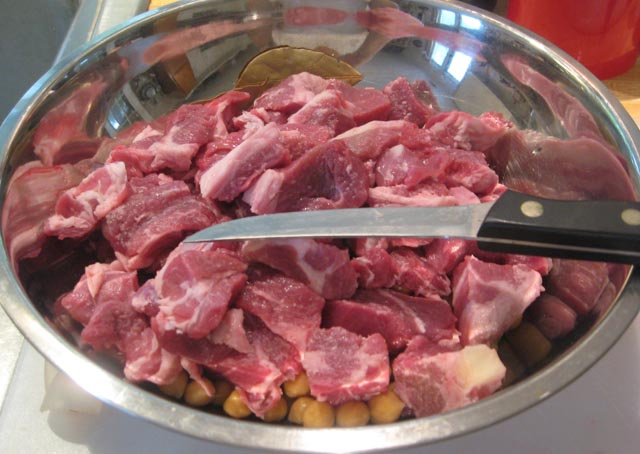
lamb from chopsIngredients

  • 2 pounds lamb (from boned shoulder chops)
  • 2 14.5-ounce cans of garbanzo beans, drained and rinsed
  • 3 large onions, chopped
  • 1 14.5-ounce can of fire-roasted, diced tomatoes with juice
  • 2 tablespoons of Hatch chilli powder (used for the slow cooker), but more added after tasting this halfway through cooking
  • 2 teaspoons of salt, or to taste
  • 1 tablespoon fresh Mexican oregano, minced
  • 1 cup water

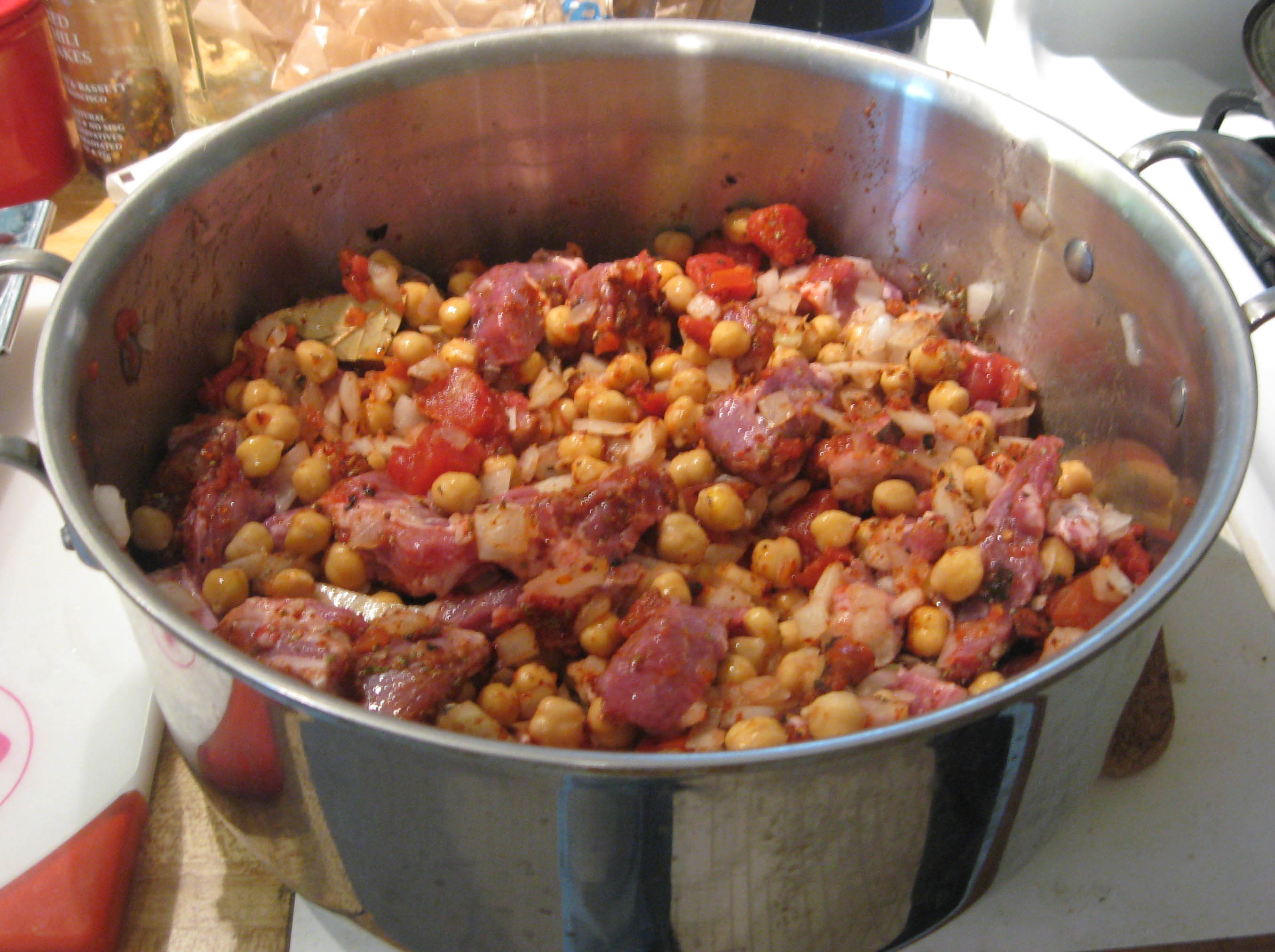
PreparationIMG_7667

  • Put everything in pot
  • Cover
  • Pop it into the oven, and check for liquid in an hour
  • Go get laundry or whatever, then check liquid again

-<>^<>-

In order to be as much like the slow-cooker, I did not brown the meat or cook the onions separately–just combined everything, covered, and put in a preheated, 300-degree Fahrenheit oven.  I added 1 cup of water to start, and checked in one hour but there was plenty of liquid.

On tasting, I found it needed more than the 2 tablespoons of chili powder so I added about 1 tablespoon more, stirred, covered, and let it continue to cook. There was plenty of liquid, so next time, I’ll not add any water–just rely on the juice from the tomatoes, onions, and meat.

-<>^<>-

The stock made with the bones smelled really good–if more liquid had been needed during baking, I would use some of the stock.  There was some meat from the bones in the stock, but I not enough to spend time picking off, although I’m not compulsive about trying to get every bit off when I bone meat like these chops. Since I started the stock in cold water, the meat that was left was pretty flavorless, but the stock was good.

-<>^<>-

There will be a next time for this–and unless I’m really pushed for time, or can’t leave the oven while I’m out, I’ll opt for the oven method to cook this–a much more complex flavor with the same ingredients, likely attributable to the bit of evaporation that takes place in the oven but not in the closed slow-cooker.

Getting this added flavor lead me to consider the energy used in the various cooking methods–the energy required for cooking is certainly part of the energy required to make that food edible–the energy  of production and transportation, and the cooking is all part of the picture: the footprint of feeding me. We cannot ignore the energy used for cooking when we talk about other energy costs associated with our food so I spent some time browsing to find information on different cooking methods.

In trying to research this issue, I’ve perused many different sources–and the gas/slow cooker comparison is difficult, and I get the feeling that the answer to which is more efficient is an “it depends” situation.

Interestingly, an article on slow cookers versus electric ovens from the University of Connecticut Sustainable Living suggests that there may not be a significant difference in energy use.  SFGate discusses gas versus electric energy use, which gets more complicated, but I’m not sure that there difference is significant enough to make me give up oven braising, even though I’d like to minimize my “carbon footprint” as much as possible. If my slow cooker requires eight or so hours of cooking, and my oven braise requires only two or three hours on low to medium heat, then it may be a toss-up, since the slow cooker doesn’t cycle, and the oven (gas or electric) does.

Oven braising in the wintertime helps warm the house so probably cuts my heating use some, but I’m certainly NOT going to oven braise in the summer and increase the use of air-conditioning.  There is lots of conflicting information out there on the ‘net.  The “best” I found was from the Consumer Energy Center (California Energy Commission)–from that information, I’m not going to give up oven braising for the slow cooker anytime soon, but I’ll still use the slow cooker for some things.

Cover, pressure cooker perfectionOne comparison that I’d really be interested in is slow cooker versus pressure cooker energy use, and taste of the same dish prepared in both. Most data that I found suggested that the slow cooker wins on convenience, and the pressure cooker on energy saving. A taste comparison would certainly be interesting.  I’m almost certain that a pressure cooker can’t replace a good old-fashioned slow braise in the over.

I’ve recently started playing with a pressure cooker–it’s a lot different than what my mother used. The recipes in Pressure Cooker Perfection have been a good starting point. I suspect that I’ll be using a pressure cooker more  in the future, as well as the slow-cooker. Climate, air conditioning, and heating, are all things that will enter into my decisions. I’m also trying out an portable induction unit which is supposed to be ore energy efficient.

So many options for energy efficiency–but what about taste?  I doubt that any other method is going to come out tasting like an oven braise, no matter how many umami-enhancing ingredients you add.

A son goût!

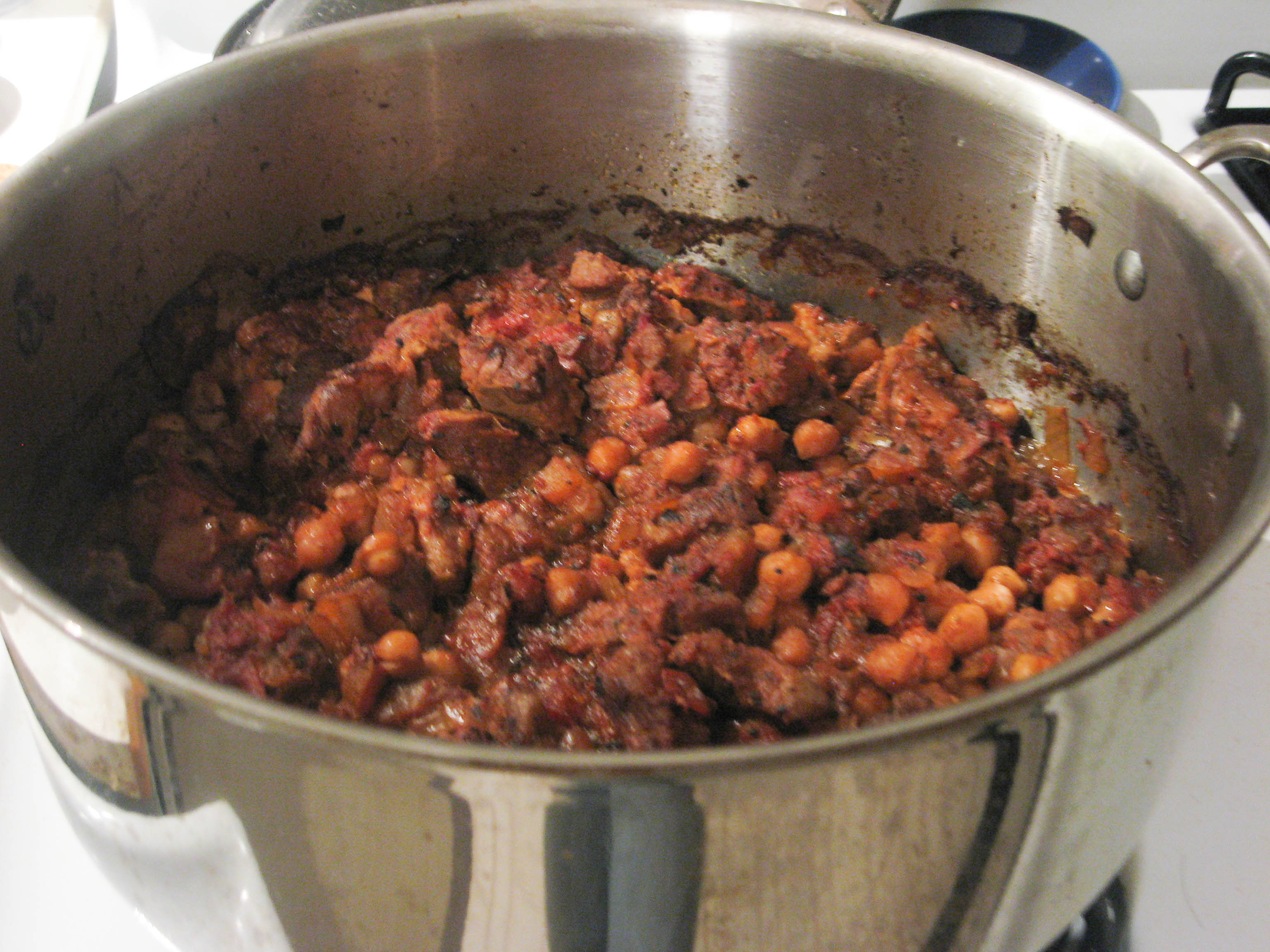
Dutch oven with lamb and garbanzos

very simple, very tasty

A pork and kale braise

It’s been chilly, cloudy, and grey–just the kind of weather for soups, stews, and braises. It’s also time to get the freezer stocked with some quick, easy food as I’ve got indexing projects coming in–some while I’m still teaching this Fall term.  With lots of grading to do as well, I wanted something that would take care of itself while I worked–so out comes the all-purpose “rice” cooker for some slow-cooked food.

I’m a great fan of pork almost any way you fix it so when I found a package of boneless pork ribs–just the ticket for the slow-cooker–while I was doing my grocery shopping on Thursday it obviously went into the cart. Big package, but on special, so it came home with me to make a lazy meal, and some to go into the freezer for quick meals when I’m really busy, or when I need comforting, peasant-style food. Can’t pass up inexpensive on something I really like.

Braised pork and kale from the slow-cooker

Ingredients

  • boneless pork spare ribs, about 2 pounds
  • 1 packaged of frozen, chopped onions
  • chopped kale, one frozen “family” pack
  • 6 large garlic cloves
  • 1 14.5-ounce can of fire-roasted tomatoes
  • 2 tablespoons of Hatch chili powder
  • 2 teaspoons of kosher salt, adjust to taste as needed when cooking is finished

Preparation and cooking

  • cut pork into about 2-inch pieces
  • add half package of kale and onions, mixing
  • layer in pork, sprinkle with salt, chili powder
  • add remaining kale and onions
  • add fire-roasted tomatoes with juice
  • close the lid and set for 8 hours
  • shred pork using two forks (if desired)
  • check seasoning and adjust as necessary.

No, no pictures as  this is NOT a photogenic dish, but it sure is tasty! And there’s certainly nothing like complicated technique involved here.

Great served with a side of spicy black beans, or garbanzo beans, or just a big bowl on its own. This particular time I had a roasted winter squash as a side with it. (Now, to turn the rest of the winter squash into another meal–maybe stuffed with some Sicilian sausage that also went into the grocery cart.)

There was more liquid than I had anticipated when this was finished cooking, so after packing some in zipper-lock bags to go into the freezer (with SOME juice), the extra juice with some kale and some shredded pork is going to turn into soup–details will evolve when it’s used–but that’s an additional meal out of that pack of spare ribs!

Turnip greens…

Loose mustard greens

While having leisurely Sunday morning coffee I was browsing through the Huffington Post and discovered a presentation on rediscovering mustard greens (though I didn’t realize that they were lost or misplaced). If mustard greens need rediscovery, then perhaps turnip greens need rediscovery (or just discovery) too. One of my favorite things to do with heartier greens (those that need longer cooking, unlike spinach) like collards, mustard, kale, dandelion, or chard is to braise them with sausages for a one-pot meal that is easy to make in any quantity–and reheats and freezes well.

Just recently I was the happy recipient of a LOT of turnip greens from a gardener who likes the bottoms–the turnips and not the green tops. Some of these were older–so a bit spicier, with some of the “horseradish” tang that you find in mustard greens as well.

Even though it was warm weather, I had just started an intense indexing project and wanted some easy food–braised greens with sausage.  No need for a recipe and certainly not labor-intensive or needing a lot of attention while it cooked. (I thought about using the pressure cooker, or the slow cooker but just did this on the stove-top this time)

hot italian sausage IMG_6092I started by dicing and sautéing a large onion, then added a mix of sweet and hot Italian sausage, removed from the casings, to brown lightly.  Of course it needed garlic–about half a dozen large cloves, minced. (The garlic mellows a lot during cooking.)  Since the greens had their own “heat” and I had used hot Italian sausage, I didn’t add the hot red pepper flakes that I would have used with other sausages, or other greens–e.g. kale or collards.

Once the garlic had sautéed enough to become aromatic, I added the washed and cut up greens (still wet from washing) and a can of diced tomatoes. In a tightly lidded pot, I left this over low heat until the greens were almost tender–about 45 minutes. (Since these were older turnip greens, I did remove the stems before cooking.)

In went one can (rinsed) of pinto beans (not on the low-carb diet, but…) and continued to cook about 30 minutes more to let the beans pick up some of the flavor of the greens and the sausage. Home-cooked dried beans would have been better, but since I didn’t have any of those in the freezer, and hadn’t planned ahead–canned ones had to do for now.

And there you have it, a quick supper, and a couple of servings for the freezer for several more quick, comforting meals.  Since the greens were spicy, the sweet Italian sausage added a nice counterpoint. I’m glad to have some tucked away in the freezer since I suspect that will be the last of the turnip greens for the summer–as the weather gets hotter the greens get a bit more assertive. If I’m lucky and there are more, I’ll probably do this again, but omit the hot Italian sausage. Or think about doing this with lamb sausage…so many possibilities, and so easy–and reasonably healthy as well.

All you need to add is a glass of a nice sassy, robust red wine, and maybe some good crusty bread (if you’re not on a low-card diet). A son goût!

Chilli con carne redux update

I’ve finished the “fast” version of the chilli con carne that I posted about in Chilli Con Carne Redux!  I’ll concede that it’s only sort of faster in terms of the active prep time–it still needs to cook long and slowly, but it is a success.  I don’t think that I can tell the difference (tasted side-by-side with the more laborious version from the freezer) and friends have given it the nod of approval.  So here are the changes and additions to the original chilli con carne that I posted.

  • After the bacon browned, 3 tablespoons of tomato paste was added while the onions were sautéed, and this was browned–again to enhance the umami, not to add tomato flavor.
  •  None of the meat (pork or beef) was browned before adding liquids.
  •  Added bay leaves to increase the earthiness (used five large for this 6 pounds of meat).
  •  Added Mexican oregano–about 2 rounded teaspoons. (You really do want Mexican oregano for this–much different flavor than Turkish or Greek (Mediterranean) oregano–after all it is an unrelated plant, but worth having in the kitchen if you like chili.)
  •  Sun-dried tomatoes (about 1/2 cup chopped) were added for more umami even though this was NOT made in a slow cooker, I was not aiming for tomato-flavored chili.
  • During the cooking time I tasted some in a bowl with a little fish sauce added (yep, I did get up the nerve to try this) and it tasted wonderful; so I added about 4 or 5 tablespoons of fish sauce.  (I suspect that if you don’t have fish sauce a couple of anchovy filets thrown in would have the same effect.)
  • The final thickening was one with a brown roux made with masa harina.  For the fat in this roux I reserved about 1/4 cup of the fat from the de-fatting step.  I heated this and made sure that all liquid was evaporate, then added about 6 tablespoons of masa harina and cooked it until it was a medium brown and toasty smelling.
  • Because of my work schedule, this was cooked in a lower oven (about 195° F) for about 10 hours.

After another run on this I’ll have to post a revised recipe for the “fast” and easier version, but if you feel so inclined you can work with these changes–after all chili con carne is one of those things that really doesn’t need a recipe to be followed strictly.

Chilli con carne redux….

I love my chilli con carne–but it’s very a very time-consuming kitchen project so after considering umami in the slow cooker I though I’d try a few shortcuts, with some umami boosts.

I usually buy a big chuck roast and cut it up myself, but I found that my local Harris Teeter had stew mean which was chuck roast already cut up, so I bought a big package of that.  Some time saved there.  I did have to cut the pork, but I bought  spare ribs so that all I had to do was cut them into chunks–another bit of time saved.

One thing that takes a lot of time is browning that much meat, so I thought I try bypassing that step since I still plan to cook it in the conventional oven very slooooowly, letting evaporation and concentration happen so there should get a little browning as the liquid reduces.

I toasted all the spices (cumin and coriander) and the chilli peppers that went into the pot and added a little tomato paste that had been browned.  I know that fish sauce (nam pla) and soy sauce are supposed to boost umami, but I just couldn’t put either of them into the pot.  If this doesn’t work, I guess I’ll try that next time.

The pot of chilli con carne is ready to go into the oven as soon as the oat bread comes out.  So some hours from how, I’ll know if this worked or not….

Beans & greens–soup!

close-up of rapini or broccoli raab

rapini

This is one of my favorite recipes for the seasons when cool weather crops are easy to find.  It’s modified from “Marcella Cucina” (Bibliography)–it’s four servings as a main course, but it freezes well, and reheats well.  For best results, I recommend cooking your own dried beans, but canned will always work as well.  If you can’t find borlotti or cranberry beans, pinto beans would be a good substitute. If you can’t find the rapini (broccoli raab, or broccoletti) you can use broccoli–but the taste won’t be the same.  Rather than broccoli, I’d opt for other winter greens such as mustard greens or kale.

Cranberry Bean and Cime de Rapa Soup

Ingredients

  • 1-1/2 cups dried, soaked, cooked borlotti (cranberry) beans
  • 1-1/2 pounds greens, stemmed if large
  • 1/4 cup extra-virgin olive oil
  • 1 tablespoon chopped garlic
  • 1/4 pound pancetta, chopped fine (about 1 cup).

Preparation

Beans

  • Soak beans overnight in brine.
  • Drain and bring to a boil in a fresh change of water.
  • Reduce the heat and cook at a very low boil until for about 30 minutes
  • Add 1-1/2 teaspoons salt and continue to cook until tender.
  • Let them steep in the cooking liquid until ready to use.

Greens

  • Wash the greens in several changes of water and stem the leaves if they are large.
  • In a covered saucepan, with 2 cups water,  bring to a boil over high heat.
  • Add salt to taste and cook until tender.
  • Drain the greens.
  • When cool enough to handle, chop coarsely.

The soup

  • Put olive oil and pancetta (or bacon) in saucepan and cook, stirring frequently, until browned.
  • Add the garlic and sauté until the garlic just begins to color.
  • Add the chopped greens and cook for about 5 minutes, turning frequently to coat with oil and mix with the bacon.  Be sure to scrape the fond (all the good brown stuff) from the bottom of the pan.  If needed, add 1/4 cup water to help with this.
  • Drain the beans (do not discard the cooking liquid).
  • Purée half the beans and enough cooking liquid to make a medium dense consistency.
  • Add to the remaining beans and the greens and cook for about 10 to 15 minutes to blend flavors.
  • Taste and correct seasoning, and serve.

The original recipe suggests that this not be refrigerated since a night in the refrigerator will give the vegetable a “grassy, metallic” taste.  I don’t think that is an issue–you’ll only be able to tell if you try it yourself.  I would package some in zipper-lock freezer bags (single-serving amounts) and put it directly into the freezer.

Chicken sausage

Chicken Italian sausage

I’ve made this substituting sausage cut in pieces for the pancetta or bacon to make it a heartier soup.  Italian sausage (hot or mild according to taste) works well, but I’ve use other sausages from the store-made ones at Harris Teeter, such as lamb. There are a number of chicken sausages available if you’d like to avoid beef or pork.  Even without adding meat it’s still a hearty warming light supper.

A son goût!

Cool-weather one-dish meals

links of hot Italian sausage

hot Italian sausage

Come cool (or cold weather) I’m ready  for hearty, warming food (healthy and simple is fine too).  One of my favorites because it  will reheat well if there are leftovers, it’s easily modified if there are second runs,  there’s nothing fixed about the quantity, and there are SO many variations with seasonal ingredients is a recipe from Jacques Pepin’s The Short-cut Cook for a stew of sausage, greens and beans.  It can be made from ingredients found in your supermarket (Harris Teeter, in my case).

This serves six, but it’s easily halved and it’s freezer-friendly for later use.  I’m reproducing and adapting the basic recipe here for you:

loose mustard greens (Harris Teeter Fresh Market)

mustard greens

Sausage Stew with Mustard Greens and Beans (p. 178)

Ingredients

  • 1-1/4 pounds of hot Italian sausage
  • 2 onions (about 8 ounces total) peeled and quartered.
  • 2 cans (1 pound each) red kidney beans
  • 1 small jalapeño pepper, minced (optional)
  • 1 teaspoon ground cumin
  • 1 package (10 ounces) frozen chopped mustard greens

Preparation

  • Divide the sausage meat and form into balls with your hands (dampened).
  • In  a heavy pot, over medium-to-low heat, cook the meatballs for about so minutes covered, turning about every 5 minutes, until they begin to brown.
  • Add the onions and cook for 10 minutes.
  • Add the beans (with their liquid), the jalapeño pepper, the cumin.
  • Bring to a boil and cook gently for about 10 minutes.
  • add the mustard greens, allowing them to thaw in the hot liquid for a few minutes and then break them up.
  • Cover and cook for about 10 minutes longer (or for a total of 50 minutes)
dried beans

dried beans

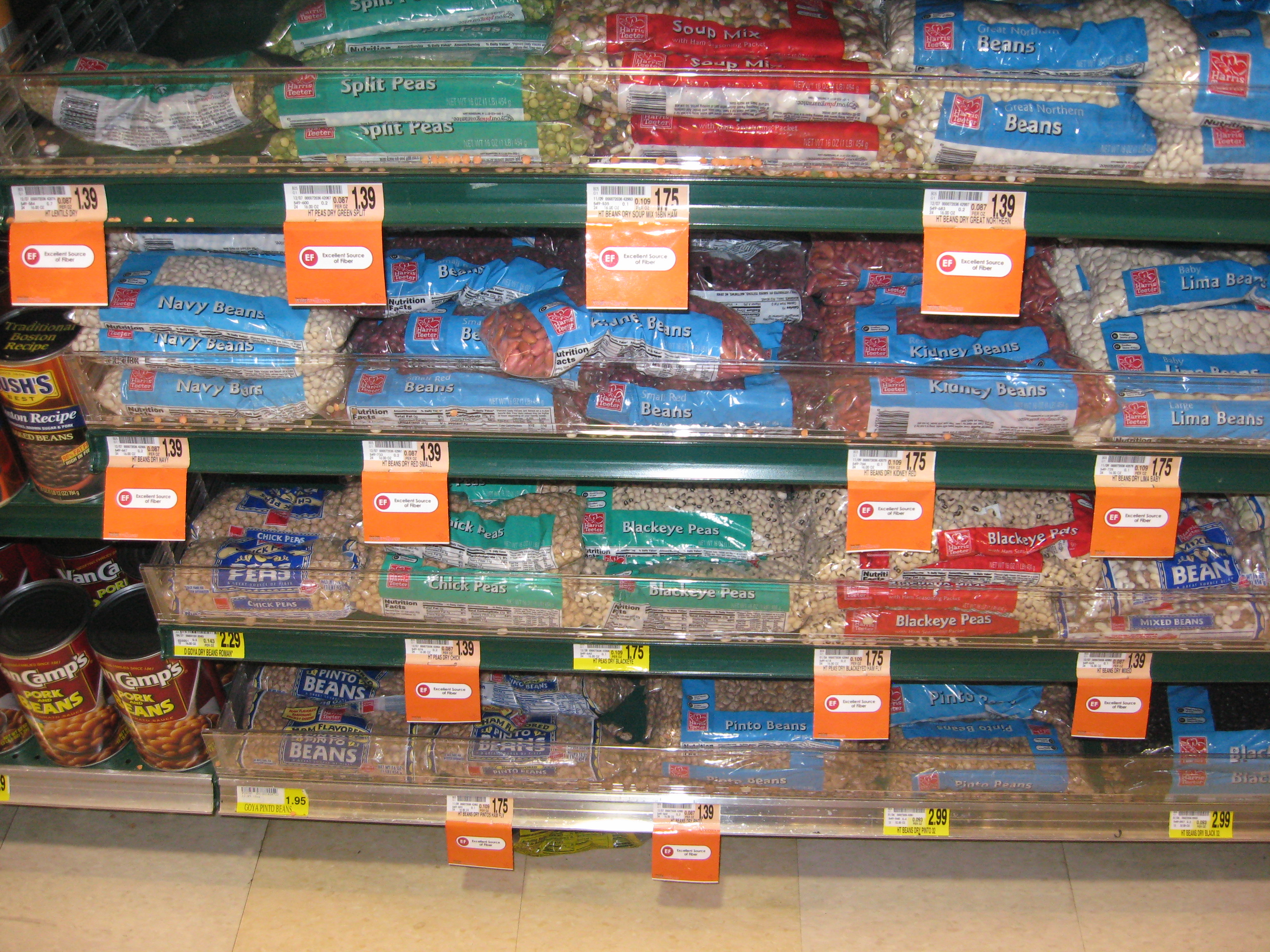
Now, how many variations are there on this basic recipe?  Well, go look at the canned beans or the dried beans…there are so many possibilities.  Even though this recipe calls for the liquid from the canned beans, I really don’t like the taste so I drain and rinse the beans and substitute an equal amount of water or chicken stock instead…but do whatever works for you.  If you’ve cooked your own dried beans, then by all means use the liquid from the beans.

produce displace of winter greens

winter greens

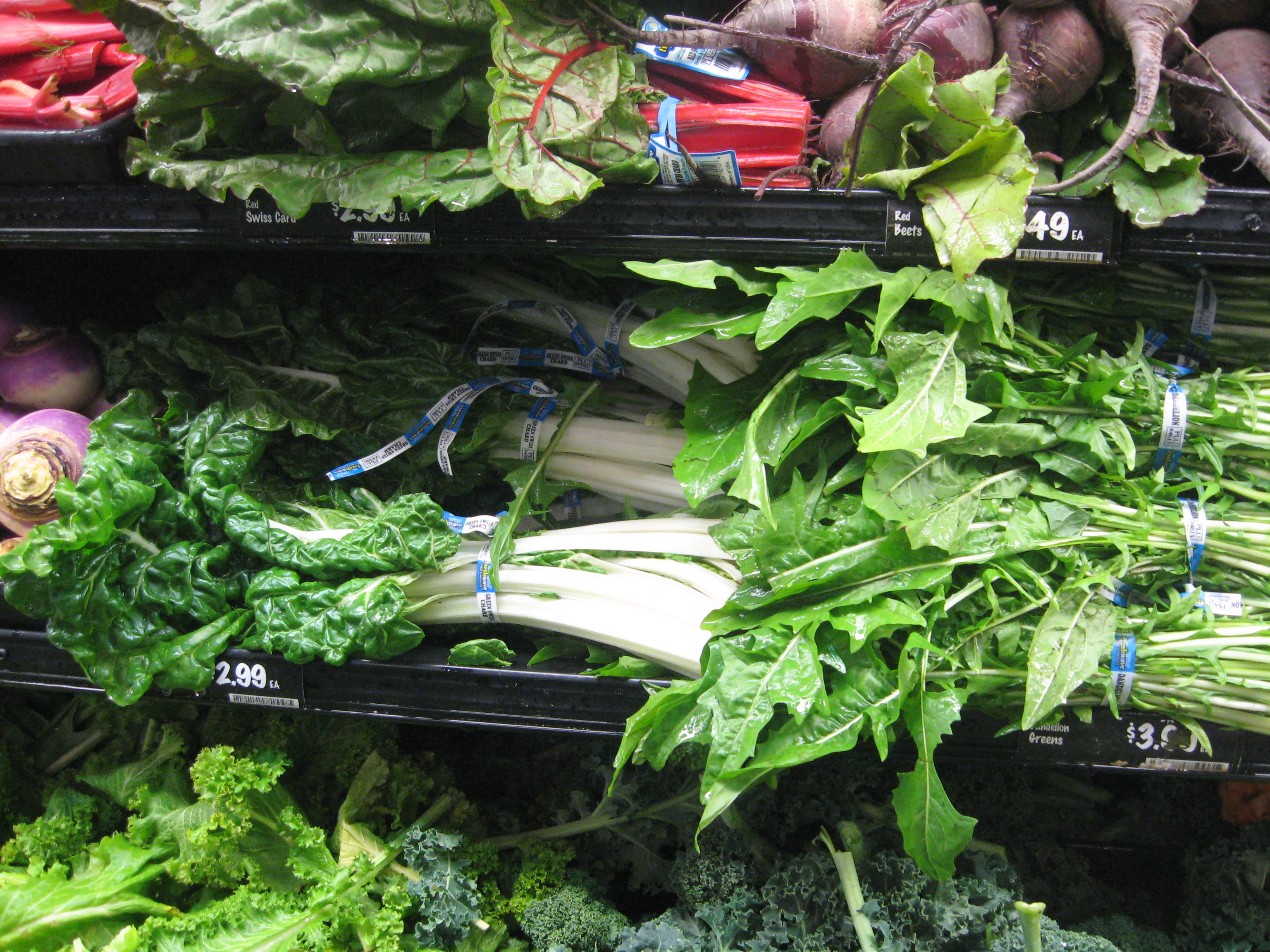
Now go check out the frozen greens in the supermarket–or the fresh ones in the produce department. (I don’t like spinach in this since it’s so tender that  it cooks to slime–but kale, collards, mustard, even cabbage will work–any of the “tough” greens that need longer cooking).

You want more variations?  Okay go to the meat department and check out the varieties of sausage that are available–polish sausages, bratwurst, and if you’re lucky, you’ll find store-made fresh sausages: bangers, lamb sausages, chicken sausages, bratwurst, et cetera.  So there are lots of variations with some minor changes in seasoning.  I know that If I ask, I can find out what seasoning is in the sausages, and adjust the seasoning of my one-dish meal accordingly.  When you want to make a single-serving, you can buy just one or two sausages.

sausages in display case in meat department of Harris Teeter

sausages

If you like this sort of thing, here a link to The Kitchn where you’ll find a great sounding recipe for beans and greens with a slightly different touch.  These are such versatile ingredients–and just add a bit of rice or pasta and you’ve got a whole meal, with or without the meat.

Braised pork and cabbage (Caribbean seasoning)

I’m of the opinion that cabbage is a much under-appreciated vegetable!  It’s good for so many things besides the traditional “coleslaw”.  One of my favorite things is to use it in braises.  Here is one of my favorites:  Braised pork and cabbage.  Again, it’s versatile, freezer-friendly, and the quantities are flexible.

Heads of savoy cabbage

Savoy cabbage

A particular favorite is from Jacques Pepin’s Cuisine Economique.  I’ll give you the basic recipe here ingredients as given in that recipe and summary of the preparation.  If you’re interested in ways to take economical cuts of meat and make them into something really good, this is a book worth looking at (See Bibliography).  The recipe is here not to give you quantities, but to suggest seasoning.  While this recipe suggests a larger cut of pork, I usually get the boneless country ribs to use for this–they are really more like pork butt than are loin chops.

Braised Pork and Cabbage (p. 247)

Ingredients

  • 2 teaspoons salt
  • 2 teaspoons dried oregano
  • 1/2 teaspoon allspice powder
  • 1 teaspoon cumin powder
  • 1/4 teaspoon cayenne pepper
  • a 4-pound pork roast (loin tip, shoulder, or pork butt)
  • 1 tablespoon virgin olive oil
  • 1 large or 2 medium-size heads Savoy cabbage (about 2-1/2 pounds), leaves cut into 2-inch pieces and core cut into 1/2-inch pieces
  • 2 large onions (about 1 pound), peeled and sliced
  • 1 tablespoon of sugar
  • 1/2 cup cider vinegar
  • 1 tablespoon dark soy sauce
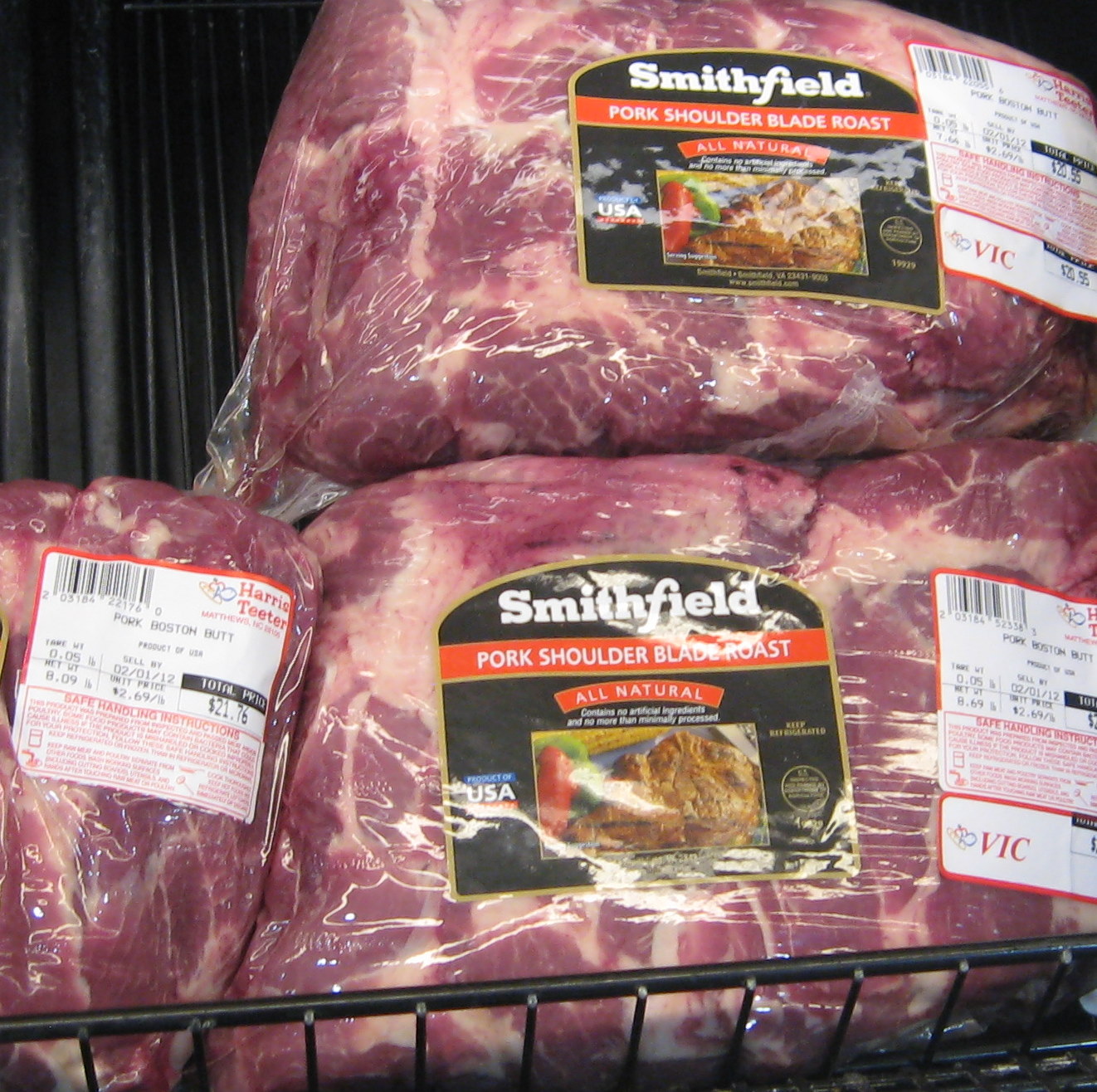
packaged pork boston butt

boston butt shoulder roast

Preparation

  • Mix the salt, oregano, cumin, allspice, cayenne, and rub the mixture all over the meat.  (See Notes.)
  • Heat the olive oil in a heavy pot.  When hot, brown the meat over medium-to-high heat for about 30 minutes (See Notes) until well browned on all sides.
  • Cover tightly and place in a preheated 325 ° F oven and cook for 45 minutes to a hour.
  • Remove the meat and transfer to a platter.
  • Combine the cabbage, onions, sugar, vinegar, and soy sauce in the pot.
  • Put the meat on top of the cabbage, cover, and return to the oven for about 2 hours until the roast has released juice and is fork tender.
  • Slice the meat and serve with the cabbage and juices from the pot.

Notes:

  • The cooking times will vary to some degree with the type of meat you use–shoulder, butt and ribs have enough fat and connective tissues to need long slow cooking. A supermarket loin roast, which I would not use, can easily become dry with long cooking unless brined.   I do not usually make this with a roast, but with big, meaty,  country-style spare-ribs, with about  1 to 1-1/2 pounds.  Even using about a quarter of the meat, your cooking time will still be longer than a quarter of these times–you just need to check the doneness)

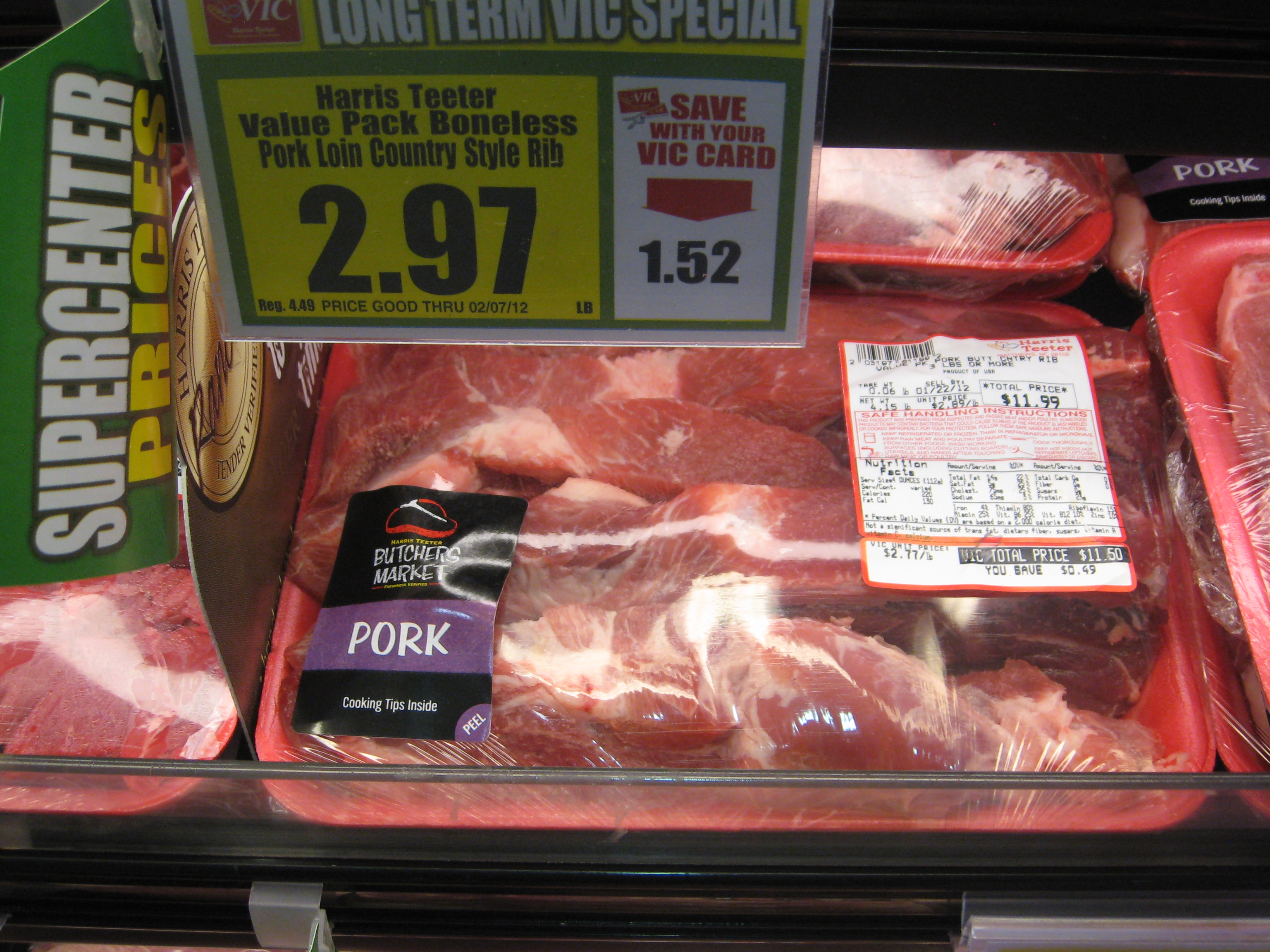
    country ribs

    butt country ribs

  • You’ll probably want to use the quantities given for the rub ingredients–and I like to put these on the meat for at least several hours (if not a day before) browning it.  There is a lot of surface area to cover with the ribs.
  • This is also a freezer-friendly dish–I love to have a single-serving sized portion to pull out when I need comfort food on a cold day or I’m just in a hurry for food.
  • I like to serve steamed potatoes with it–or add one of those single servings to a  single-serving amount of rice as it cooks (in the rice cooker) for a complete meal.
  • A Riesling or Gewürztraminer wine is excellent with this dish.

Oyster-corn chowder

I’m an oyster lover!  One of the few Christmas traditions that I do keep is Christmas eve with Handel’s Messiah, and oysters in some form.  I got this tradition from my grandmother–Christmas was oyster time.  My uncle would drive to the coast and bring home a bushel of oysters on Christmas eve day.  We had oyster stew (more like poached oysters the way my grandmother made it) on Christmas eve, and fried oysters on Christmas day.  I don’t do the fried oysters, but I’ve staunchly held onto the tradition of having oyster “stew” of some sort on Christmas eve with friends who also love oysters.

I’m always looking for recipes for oyster chowder, or the like, so that I can try something new while oysters are in season.

This year’s oyster chowder is one of my absolute favorites from Jacques Pepin Celebrates (pp.19-21).  I’m so taken with this recipe that I wanted to share it with any of you out there who love oysters.  I think that you’ll also like the little cornbreads with it.

Oyster-and-corn chowder with small cornbreads 

Small cornbreads (8 individual servings)

Ingredients

  • 2 tablespoons unsalted butter
  • 1/2 cup sliced leek (or shallots)
  • 1/3 cup all-purpose flour
  • 1/2 cup cornmeal
  • 1/2 teaspoon salt
  • 1 teaspoon sugar
  • 1 teaspoon double-acting baking powder
  • 1 large egg
  • 3 tablespoons milk

(To make preparation easier, you can combine all the dry ingredients ahead of time so that all you have to do is add the wet, mix, and spoon into muffin tins. )

Preparation

  • Preheat the oven to 425 ° F
  • Using 1/2 tablespoon of the butter, butter your muffin tins or pans.
  • Melt the remaining butter in a small skillet and sauté the leeks or shallots over medium heat about 90 seconds, and cool.
  • Mix the dry ingredients in a bowl
  • Add the wet ingredients:  egg, milk, and finally the sautéed leeks or shallots and stir well.
  • Divide among your pans.
  • Bake for 10 to 12 minutes until set and nicely browned.

Chowder

Ingredients

  • 3 dozen oysters, shucked with liquid retained
  • 3 cups corn kernels
  • 3 tablespoons unsalted butter
  • 1 medium leek, trimmed, quartered, and thinly sliced
  • 1 medium onion, peeled and chopped
  • 3 or 4 large garlic cloves, peeled, crushed and finely chopped
  • 3 cups milk
  • 1 cup heavy cream
  • 1 teaspoon salt (more or less depending on the saltiness of the oysters)
  • 1/2 teaspoon fresh-ground black pepper
  • 1 tablespoon minced chives

Preparation

  • Check the oysters, removing any shells, and return to the liquid
  • Heat the butter in a heavy pan, and add onion and leeks.
  • Sauté over medium heat for 3 or 4 minutes, or until translucent, but NOT browned
  • Add garlic, stir for 20 or 30 seconds until it smells fragrant.
  • Add milk and cream.
  • Bring to a boil. (You can quit here, cool, and hold in refrigerator until you’re ready to make the chowder.)
  • Bring back to a strong boil (if you’ve prepared this in advance).
  • Add corn (in winter, substitute frozen for fresh–I think that it’s better than supermarket corn-on-the-cob.  I particularly like the white shoe-peg kernels. For frozen, I rinse in a strainer under cold water and drain well to at least partially thaw it.)
  • Turn the heat down to medium to medium low–you do not want to boil this again now.
  • Add oysters and the oyster liquid.
  • Heat until the temperature reaches about 170 or 180 ° F  at the most.
  • If you’re not using a thermometer your want the edges of the oysters to just begin to curl.  Don’t boil it–the oysters will turn tough and harshly flavored.
  • Should any scum come to the surface, skim it away.
  • Add the chives, mix well, and serve with the cornbreads.

(This recipe is easily cut down or doubled, but I usually make the whole amount and just have it as the main course, with a salad (bitter greens, mesclun, and fruit and shaved Parmigiano-Reggiano to follow).  I like champagne with this–as awesome treat for a special evening.

Variations:

  • Add some chipotle chili power or ancho chili powder to taste.
  • Add minced red bell pepper, and/or poblano for a red and green touch.  I would  not add green bell pepper to this as their flavor is too bitter/green  to complement the oysters.
  • Add minced ripe jalapeños or Serrano to give just a hint of heat.  This is not a chowder that you want to have much heat.  It should be gentle on the tongue!
  • Substitute shallots for the leeks.

A son goût!