
I grew up with cast iron–and I still love it. I have some enamel cast iron cookware (Le Creuset), but I also use the plain black cast iron stuff that is a workhorse in the kitchen, for example, my griddle. Lodge is a readily available brand., likely even at your local hardware store.
Plain black cast iron is a great way to add some useful items to your batterie de cuisine inexpensively. Sure, it does have some limitations, but lots of advantages, too. Sure, Le Cruset enameled cast iron is wonderful, colorful, but not an inexpensive way to get the advantages in your kitchen (and it also has some disadvantages). One thing about cast iron: it is heavy! Seriously heavy–that’s part of what makes it desirable, but can make it difficult to handle; skillet-shaped pans can with dual handles rather than the long handle of the skillet can be a good idea if you are concerned about the weight.


There seem to be some misconceptions and myths surrounding this versatile cookware. The concept of “seasoning” seems to induce a particular hesitancy for some. Even though I’ve used it for a long time (not willing to give away how long) and feel comfortable with it, there is an online course with Clifford A. Wright (a favorite food person of mine) on cooking with cast iron (through Craftsy).
One of the things I’ve always liked about Clifford Wright’s recipes is the focus on flavor, without a bunch of frou-frou stuff–it’s like black cast iron–just the basics. He also stresses looking and tasting as part of the cooking so that you can learn to improvise as you cook what you want to eat as you like it. This orientation carries right into this course. If you need an introduction to the care and feeding of cast iron, this is worth every penny. The recipes that are demonstrated are available to download as PDF document.
This really gets to the heart of single-serving, simple, delicious, easy cooking for one! One of my favorite “helpers” for this kind of cooking has become fused and infused olive oils. I especially like Bull City Olive Oil as a source since I can taste the oils before I bring them home. If I’m unsure how I’ll like it in actual cooking, I’ll get a “mini”–just enough to try a few different ways in my kitchen: new addition for me is dill infused oil. I like dill, but it’s not a flavor that’s at the top of my list–so it will be interesting to see if I want (need) a bigger bottle of the oil–(I’m thinking just a drizzle to finish off griddled salmon).


Another thing I liked that there is no focus on high-tech equipment–the recipes are demonstrated using kitchen equipment like an old-fashioned, hand-cranked egg beater. You won’t watch the videos and then feel you need to run to the cookware store for equipment!
Basic techniques are explained and demonstrated very well, and recipes that are easy to adjust for cooking for one. There are recipes from around the world to bring some adventure to your cooking for one–all this with inexpensive black cast iron.
(Disclaimer: no affiliation or monetary considerations from anything mentioned here–just personal opinion and my (opinionated) preferences here).
Improvise! A son gôut!
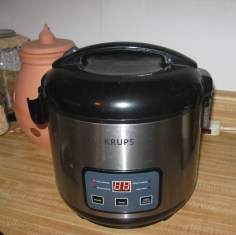 I’m sure that you’ve gathered from my posts that I really like my Krups multifunction pot: rice cooker, steamer, slow cooker, and even a bit of sous vide thrown in. It was a good kitchen friend…and I hope to pass it on to someone who will care for it as much as I did since it’s still in good working condition.

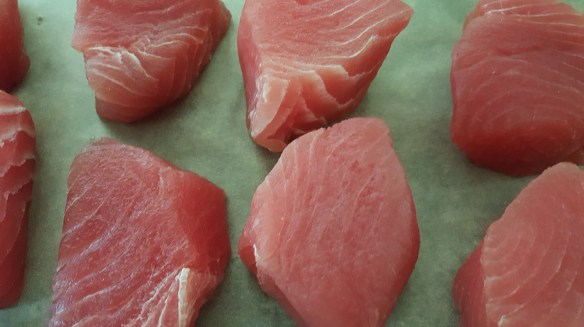


 how many servings you need. (I wanted to have some extra to put in the freezer for quick side to grilled meat.)
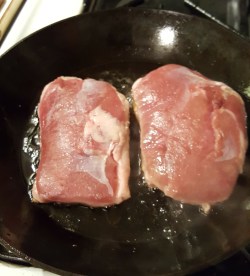 I had thought that perhaps just a drizzle of one of the infused vinegars would be good, but after tasting the vinegars with a piece of breast that was loose in the package, I decided it needed more complexity, so I started with extra-virgin olive oil infused with mushroom and sage–awesome as a condiment in its own right, but for nice fatty duck it needs to be brightened a bit with one of the infused balsamic vinegars. Decisions, decisions!
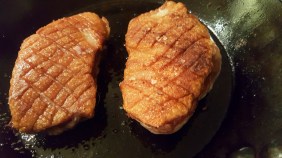 To prep the breasts I patted them dry and scored the skin side, careful not to cut into the meat–just to help the fat render while pan-searing. You need a very sharp knife so that just the weight of the knife pulled across the skin will cut into it. Then I salted the meat side of the breasts and let them sit for about 20 minutes to season.

 happen for supper–it’s a no-recipe event this evening.
 the above-mentioned items went into the soaked Romertopf–with bite-size Yukon gold potatoes added. I did my lazy herb seasoning (herbs de Provence), lots of garlic cloves, and then those cherry tomatoes that had wrinkles. Add a couple bay leaves, salt and water, and put it into a cold oven set for 350ºF–a kitchen happening. Had I soaked the larger Romertopf, I would have added some rutabaga and carrots too–but those looked as if they could linger for just a bit longer in the fridge. Now–to work!
 It may not be styled and truly photogenic, but the beef shank was very tender–but very beefy–it’s one of the things that is great about some of the less popular cuts of the cow. The smoky, earthiness of the shiitake mushrooms, the mellow flavor of the roasted garlic made a great contrast to the bitterness of the collard greens (these took a lot of cooking to get them really tender). The healthy dose of bay and herbs de Provence really added a lot of flavor. I did finish my plate with a drizzle of herbs de Provence infused olive oil (
 a-single-serving.com