It’s amazing how easy it is to ignore what the scales, the mirror, the doctor, and clothes are telling you–until you get a look as others see you–a video of you going about your normal activity. As you watch, it’s more like watching another person, and you have a sudden OMG-it’s-really-true moment. You suddenly know that the time has come–that repeated New Year’s resolution that you’ve “renewed” umpteen times and not kept must finally be faced. (Hotel bathroom mirrors are almost as revealing–big, usually with door mirrors too so you get an all-around look in really bright light, too.)
You review all the experience that you’ve had with “diets”–the Atkins (worked like a charm but not sustainable because of the ban on fruit, beans, milk, and dairy products except cheese. The New Atkins–for the same reasons. You read the books evaluating low-carbohydrate and low-fat diets, high-protein, Mediterranean diet, and the French Paradox and feel like a real wuss because you’ve not been able to keep to the latest thing you’ve tried. You even check sites that have BMI computations available–everyone gives you the same answer: you’ve moved over from the overweight into the “obese” range. Then there’s the video–wonderful hive inspection but the beekeeper.
 I bought the latest diet book on the market–the day it was released–Always Hungry?. I read it, and think about it, and then I saw myself in a video, And the jig is up! You know you’ve deluded yourself when looking in the mirror, looking at photographs, and feeling how your clothes fit.
So reread the book–really read the book (including the recipes and the meal plans). To add motivation, (since the book discusses movement) I’ve dug in the “junk” basket on the bookcase shelf, and in the drawer where stuff accumulates and, finally, found the pedometer. Now I have numbers to show how truly sedentary I truly am! Scary.
Back to this food plan. Refined sugars are a no=no, but that’s not a real problem because your sweet tooth is chocolate dependent. Soft drinks are not in the in this house fridge anyway. But there are pasta and beans on the pantry shelf. From experience I know I like (maybe even love) complex carbohydrates, aka starches. Those and milk have been the stumbling blocks every time before–but this food plan allows legumes and milk even in the initial phase. There’s one ounce of dark chocolate allowed daily even in Phase 1. This “diet” for weight loss is a plan for moderation. Phases 2 and 3 (essential since you really, truly like food) allows judicious reintroduction of some of the things you most like (baked white potatoes), at least on an occasional basis and still maintain weight loss.
Since some basic sauces are essential for the food plan, I decided to start with some that would need routine weekly preparation and those that I thought I would like particularly well, to give me an idea of how things the recipes are seasoned.
After reviewing the list of permitted foods (again), this book moves to the kitchen. Trying some of the recipes since in the past food plans have always seemed too contrived. Well, the recipe for Blue Cheese Dressing (All Phases) on page 263 seems like a good place to start since it is a favorite. Can’t you eat the lettuce so you can have the blue cheese dressing? Recommended to make a wide-mouth mason jar (have) and immersion blender (have). The prep time estimate was accurate–really fast and easy.. (Since blue cheese is a strong flavor, I prefer more tartness, so I replaced the tablespoon of water with an additional tablespoon of lemon juice. Tastes splendid so score one for the food plan Bring on the crudities. This sauce is a keeper even if it is on a food plan for weight loss!
So one tasty recipe doesn’t make it acceptable. I like (and make at home often) vinaigrettes and use oil and vinegar dressings. The Lemon Olive Oil Dressing (All Phases), page 269, is straightforward and a good balance of olive oil, lemon juice, salt, and pepper. If you make this in tandem with the blue cheese, you don’t have miscellaneous bits of leftover lemon.
[There’s a bonus to using mason jars–they have gradations on the sides so with just a bit of planning you won’t even have to wash a measuring cup. If you use a kitchen scale, you might not even need measuring spoons. (I’ve noted weights of things like 2 tablespoons of lemon juice with the recipes).]
Next for testing, I chose Creamy Dill Sauce (All Phases). This sauce is a bit more complicated than the first two but noted to keep for 1 to 2 weeks in the refrigerator. Again, using a mason jar and scales it was easy to put together.Knowing that I tend to find many recipes under-seasoned, and over-salted, I did use 2 small garlic cloves, substituted 1/4 teaspoon of smoked Spanish paprika for the “dash of paprika” called for in the recipe. I found it a bit lacking in the lemon flavor with only the lemon juice, so I added 1/2 teaspoon of lemon zest. After allowing it to stand for a few hours, I was pleased with the tart dill, lemon, and slightly smoky flavors. (This is easily modifiable without changing the balance of protein/fat–ancho chili or Aleppo pepper could be used.
The final sauce that I made to test was Lemon Tahini (All Phases), page 269. Taking my taste for garlic and tartness into account, I used a large clove of garlic, 2 tablespoons extra lemon juice, and 1 teaspoon of lemon zest.
My clean up after making these sauces (in very close to the prep time given in the book and with a little more experience and organization I’m sure I can decrease that):
- one chef’s knife
- one cutting board
- one set of measuring spoons
- one spatula for scraping down the side of jars
- immersion blender
- microplane grater (for lemon zest)
- one citrus reamer
I can certainly deal with that. Leftover from this prep, one lemon minus zest (lack of organization on my part–next time I’ll just zest all the lemons before squeezing them)
I didn’t have to buy anything that wasn’t already in my pantry except dill and parsley, but since it’s winter, that’s not a negative thing. I’m certainly not going to have to rearrange my kitchen to accommodate, although the immersion blender will need to live somewhere slightly more accessible.
Sauces, as important as they are, don’t make a meal plan. The recipe for Broiled Fish with Garlic and Lemon (All Phases), page 232, looks like a good way to start testing the main dish recipes. It is simple, and besides, it’s very easy to cook fish, although I don’t use the broiler much–but this recipe works as well as those for the sauces. The serving of cod fillet that I cooked with this recipe was for one–so only about 6 ounces. In order not to overcook the fish, I seared on only one side and then finished under the broiler. . I broiled the fish for 8 minutes (the minimum time suggested in the recipe). Broiling it on the lemon slices with the olive oil and garlic worked: nicely garlicky and great lemon flavor. This is another keeper!
Three things that are called for frequently are mayonnaise and Ranchero Sauce, page 272. I’m going to opt out of those since I can get a palatable mayonnaise made without sugar (that I usually buy anyway) and I have a favorite salsa that lacks sugar in the ingredient list.My local Harris Teeter grocery has a store brand hummus that is without sugar, so I’ll likely also opt to use that instead of making it at home.(There are resources on the website to facilitate the plan.)
Now that I have a feel for the seasoning used in these dishes I think I can use many of the recipes provided with the meal plan without having to alter my pantry much at all. After looking at other recipes, I find several that I am looking forward to trying: Ginger-Carrot Soup (All Phases), Red Lentil Soup (All Phases), Chocolate Sauce (All Phases), and Cabbage Casserole (All Phases). A lot of these recipes lend themselves easily to improvisation with herbs and spices, too–another plus for preventing boredom.
There’s only one “special” thing I have to buy–whey protein for the occasional Phase 1 Power Shake. Because of the stress on the balance of macronutrients emphasized in each phase, I will do that. (The thing sounds good when you consider what else is in it).
After rereading the permitted foods, I’ve decided I can do without pasta if I can have legumes and the prospect of adding some pasta and bread in later Phases 2 and 3. With my physician’s words bouncing around in my brain, and that horrible BMI, I CAN do this. It’s about moderation–and chocolate, whipped cream, and wine (after Phase 1) are allowed. It’s about moderation and balance of the amount and quality of protein, carbohydrate, and fats consumed. It’s also about not having to revamp my pantry or suffer deprivation.
This project has to involve getting off my butt and doing more walking and movement, too! That’s likely to take more effort than eating the right things, given how sedentary my work is. But, needs must!
Ò¿Ó
°
There is a lead-in phase where you get ready–for three of those days I’ll be on the road or at a convention, but once back home, this starts. No more procrastination! After sampling the sauce recipes and the broiled fish, I certainly feel more positive about the meal plans that I ever have about any other weight-loss meal plan. (The blue cheese sauce added to egg salad is good–lots of room for improvisation with the recipes, still keeping the macronutrient balance.
I’ll admit to one slight frustration with this book: recipes are listed by name under an entry for “recipes”. Cabbage Casserole appears just where you’d expect it. Coleslaw you will find only if you look for “Tangy Coleslaw”. When trying to locate the recipe for the fish, I couldn’t remember the specific name–fortunately, broiled was in the title so it was close to the first of the list.
Though the main focus is not as a cookbook, but on nutrition and weight loss (index very useful for this), just a few simple entries throughout for main ingredients such as “cabbage”, “polenta”, or “shrimp” would be helpful. But, I shouldn’t complain–I know space considerations often dictate what can be included or what must be cut. I’d happily settle for smaller print in the index (even if it meant getting out my reading glasses) to have those extra entries.

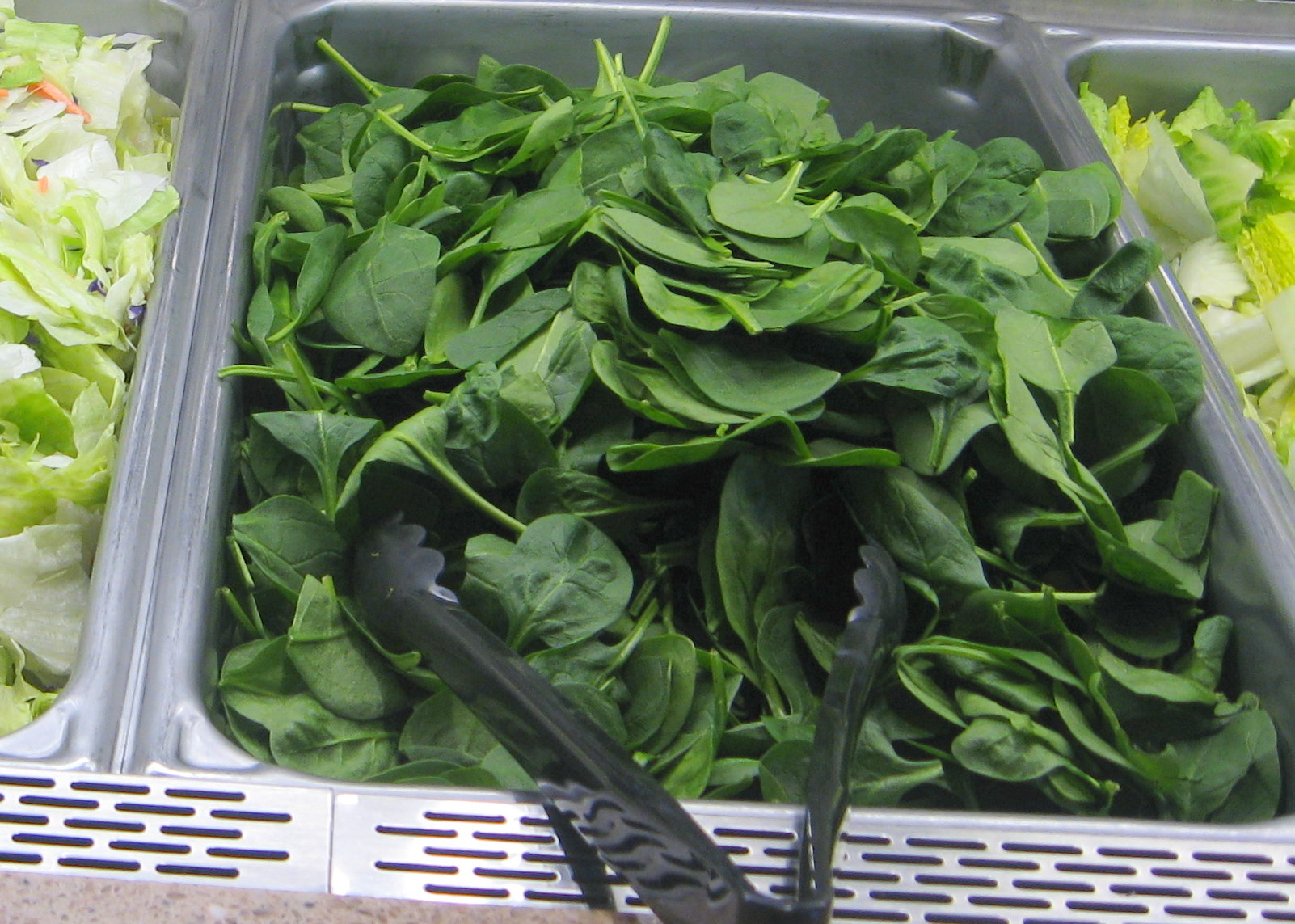
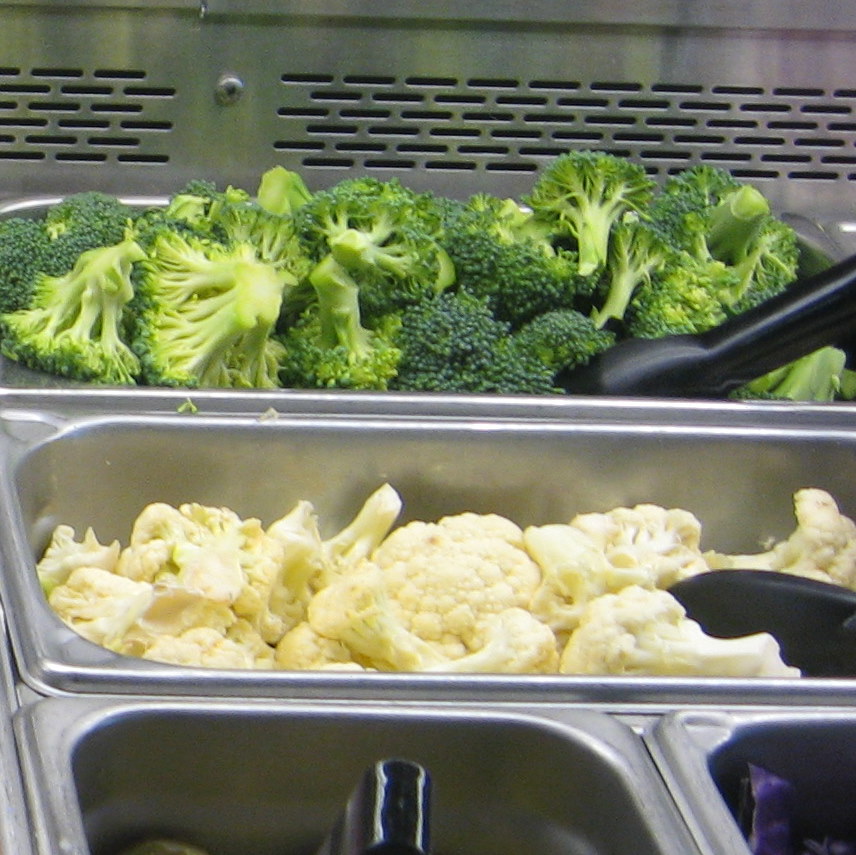
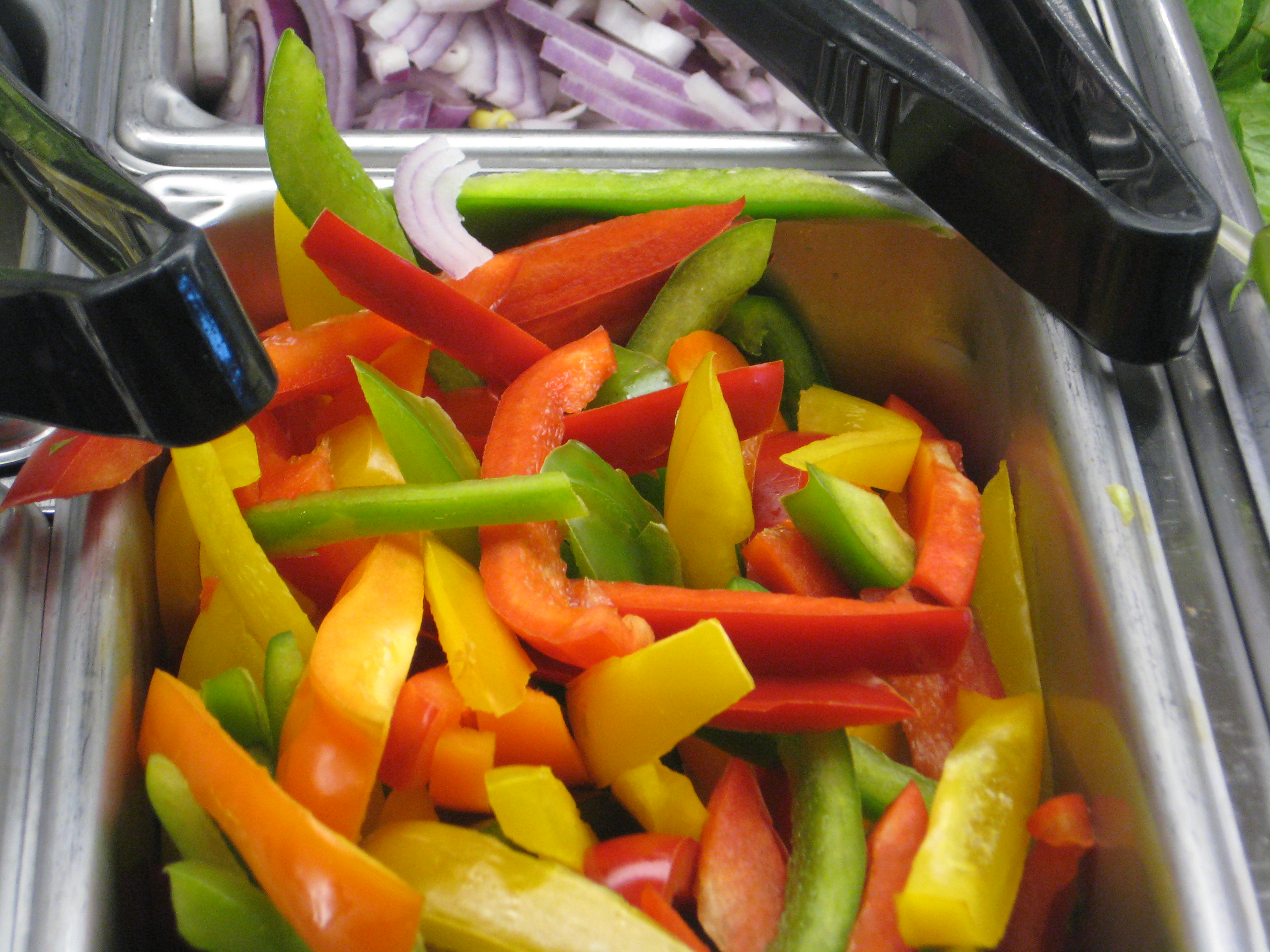
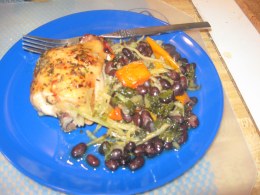 After seeing a post on slow roasted kale on Stefan’s Gourmet Blog, I decided I could make a one-dish meal that met those Phase 1 requirements. Using a bag of salad greens (broccoli, Brussels sprouts, kale, and some others) I put enough into the clay cooker to give me the amount of cooked greens that I needed for two meals (two of the thighs were for other uses). Since I’m such a fan of greens and beans, I added enough black beans for two servings. Since bell peppers are on the okay list, I added red and orange mini bell sweet peppers to the mix. Finally, I topped that huge pile of greens with the chicken thighs sprinkled with salt, red pepper flakes, and oregano. The soaked clay cooker went into a cold 400 °F oven for a little over one hour and out came a meal that had the protein, vegetables, and the carbohydrates (the beans). All I had to add was dessert. (Yes, this meal plan includes dessert–in this case a cup of fruit and 1/2 ounce of dark chocolate.)
 Consider the dandelion. It is the bane of many lawns–and people go to great lengths to get rid of it. From having grown up on a farm where part of our food was obtained from foraging (wild asparagus, lambs quarter, et cetera), I already had an appreciation of the dandelion. The brilliant yellow flowers and green leaves that appear early in the spring (or even when it warms up just briefly in late winter) signaled fresh greens on the table–a reprieve from canned food. While “harvesting” those precious greens we would find the bees sharing our interest–busily mining those bright yellow flowers for nectar and pollen.
 So I’ve resisted the lure of book and duvet to try to accomplish something, even if not useful or productive, just something I can say that I did. The motif today seems to be opening, peering inside, and closing doors, figuratively and literally, including internet browsing–opening a site and then just passing on to another. I’ve peered into the cabinet where all the plastic storage containers live and close the door tightly and firmly, then opened the internet door (Google search) on organizational ideas for empty containers.
 Finally a let up in rain and warm enough for me to play at the hive. There’s still traffic in and out of the hive, but less than during warmer weather when there was nectar and pollen in more plentiful supply. I didn’t see much pollen coming in at all. When I removed the syrup feeders, there were lots of the girls up there slurping up syrup.
 once I get it cut down to 8-frame size.
 So–do I place an Imrie shim to keep an upper entrance? Or am I going to have to lift the bottom box and change the orientation of the entrance reducer, or just substitute the mouse guard. I miss having the class before the bees arrived; however from the looks of the colony, they are training me pretty well. From
  All my questions aside, it was good to see so many bees working in the honey super and drawing and filling even the outermost frames. They’ve obviously been busy since my last inspection. That should give them a good honey supply for the winter. Being the “newbee” that I am, I am glad that the candy-board is on the hive. Much better safe than sorry come spring.
 a-single-serving.com