Kitchen disaster. . .

. . . but a happy, tasty ending.
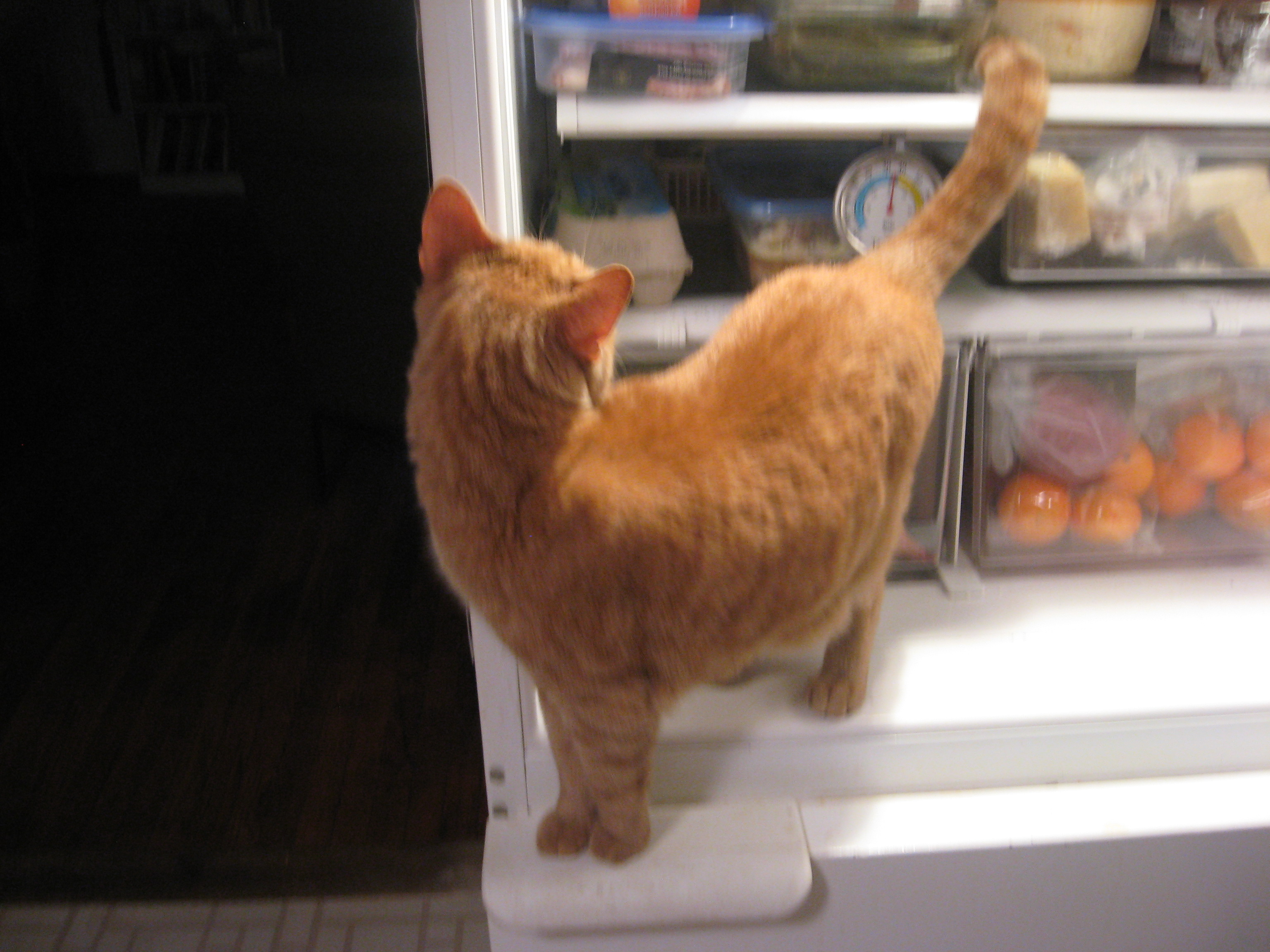
Cat looking into refrigeratorI’m feeling a cold draft–very cold draft–around my ankles!

I know I’m not dreaming though it’s the middle of the night or somewhere in the wee hours of the morning–I’ve come to the kitchen (without turning on the light) to get a drink of water. . . .

Cold draft? Really, really cold draft–on my ankles.

Reality gradually seeps into consciousness:  I’m standing in front of the refrigerator–which has a bottom freezer, which I have stuffed pretty full.. . .

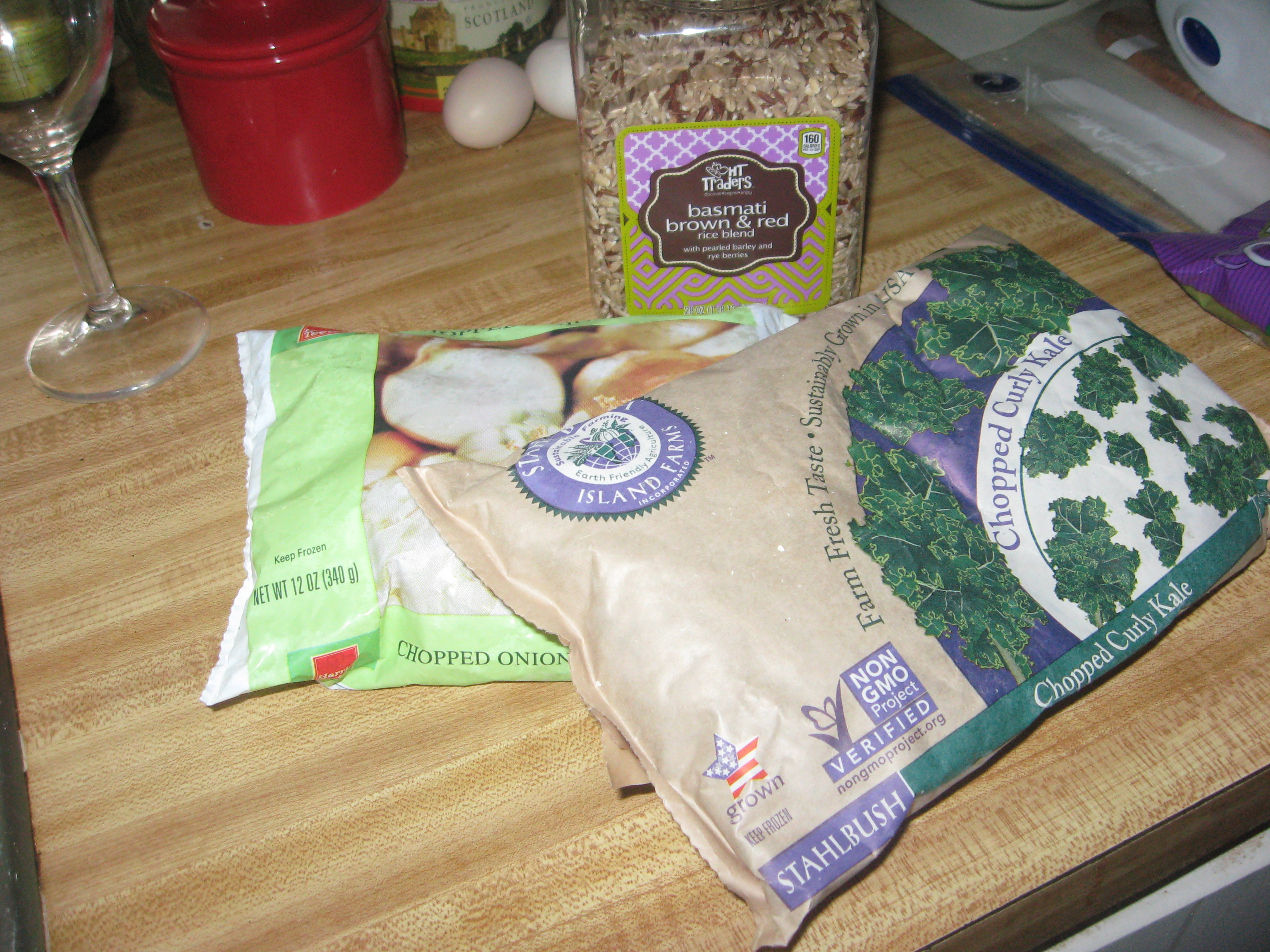
Light on. Obviously I’ve stuffed the freezer a little too full or something has fallen out of place. The freezer door is very slightly ajar. Even in my rather sleep-befuddled state, brain clicked on. Several epithets which should not be printed. Open freezer door and palpate the front packages: kale, butternut frozen onions, kalesquash, chopped onions. Soft, but not obviously completely thawed, but destined to turn into a huge clump of re-frozen vegetables.The only meat even close was a game hen which was still hard as a rock.
I closed the freezer door and checked that it shut completely, and tightly. Back to bed, knowing that I would have to do something with those veggies in the morning. (The ice cream was far enough back and in a corner that it was still hard or I guess I’d have been compelled to eat it right then and there–hmmmmm, should I go do a careful check on the ice cream?)

Morning after: I’ve got work that that to be done NOW so spending a bunch of time in the kitchen or skulking through cookbooks isn’t on my agenda. It’s time for some improvisation: take chopped onions, chopped kale and cubed butternut squash. . . .add some bratwursts that are in the fridge. Add a portion of mixed grains (brown basmati rice, red rice, barley, rye berries) and one multipurpose rice cooker.

I’m sure you’re not surprised that I’d resort to the rice cooker, given all the other things I have it to cook. Once you understand the physics of its function, it’s really easy to make it do what you want. So here we go again with the rice cooker.

Ò¿Ó

Kale, butternut squash with bratwurst

Cook’s note: first this is not a recipe–it’s an improvisational happening. Secondly, it’s recommended that you deliberately thaw the vegetables in the refrigerator or on the counter instead of the method described here if you wish to have them unfrozen. You can put frozen vegetables in the rice cooker without thawing unless you have a great big blob of frozen stuff. You can adjust the proportions of kale, onions, and squash as desired.

Ingredients

  • one standard-sized package chopped kale, thawed
  • one standard-sized package chopped onions, thawed
  • one standard-sized package butternut squash, cubed
  • 4 fresh bratwursts
  • 1 tablespoon olive oil
  • 1/2 teaspoon salt
  • 2-1/2 cups water (or amount called for in the cooking instructions of your grain)
  • dash of red pepper flakes
  • 1/4 to 1/2 teaspoon of oregano or herb of choice

Preparation

  • add olive oil to rice cooker bowl
  • add thawed onions and let sauté briefly
  • push the onions to the sides of the rice cooker
  • lay fresh sausages in a single layer and then redistribute the onions evenly over the bottom and partly over the sausages; they will brown lightly on the side in contact with the bottom of the rice cooker bowl
  • add 1 cup of grains
  • add kale and distribute evenly over grain and sausages
  • add red pepper flakes and herbs
  • add scant 2 cups of water; your rice cooker may need more or less, adjust as needed
  • close rice cooker and leave until it switches to “warm” function
  • stir contents (grains should be a bit underdone)
  • add remaining water
  • add butternut squash on top of greens, grain, and sausages
  • close rice cooker and leave until it switches to “warm” function a second time
  • check doneness of grain; if needed add a bit more water and wait again
  • when grains are cooked as you like them, serve!

Ò¿Ó

Despite the ridiculous circumstances that gave rise to this recipe, it was very tasty, and I’m sure some version of it will be made again. The combination of kale with the butternut squash was delightful. The combination of grains gives some interesting texture and flavor to the dish.

A son goût!
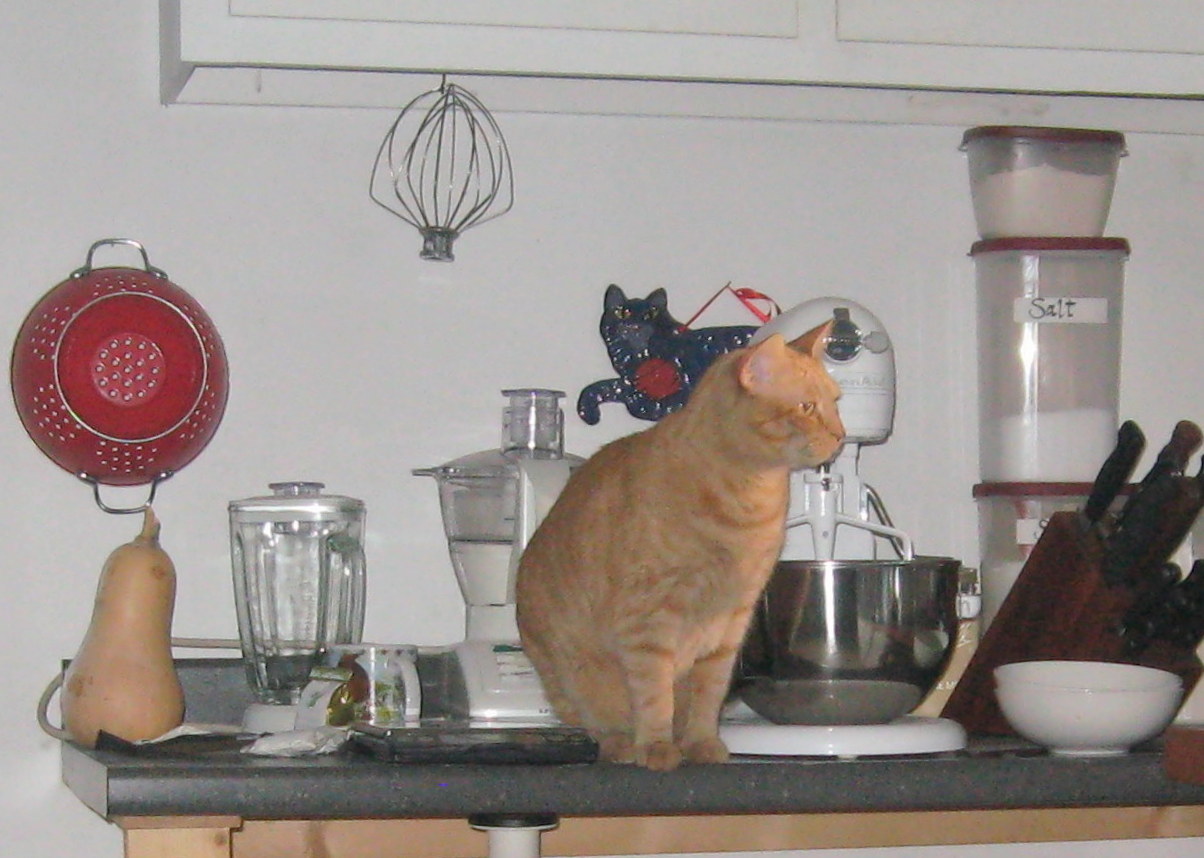
cat on kitchen counter

Leftovers. . . and second servings

One of the banes of refrigerator maintenance is leftovers. I work hard to avoid them, but I’m often defeated in my efforts, especially when eating out. So often restaurant servings are HUGE, and, sucker that I am, I don’t just leave the excess on my plate.  I bring it home, tuck in into the refrigerator, and then likely at some too-far-in-the-future date I get an odoriferous reminder that I now have to do something with the leftovers, which are likely to be found in the back of the refrigerator. They will most likely be unidentifiable now, so they go into the garbage.

cat in refrigerator

lookin’ for leftovers

The obvious first step is to think carefully about bringing home restaurant leftovers: Will it reheat well enough that you really want to eat it?  After all it probably doesn’t make much difference when it gets thrown out–then or a week later. If I decide to tote it home (and I already know that the cat won’t eat it), then I need to label it, and be sure that it doesn’t end up in the back-most corner of the fridge.  I have used masking tape (which comes off easily–often too easily), Sharpies (which can be removed from some things with rubbing alcohol).  I recently found a suggestion to use dry erase crayons (which I didn’t even know existed).  Might be worth a try, but better yet for me would be to be much more judicious in what I put into the fridge as a “leftover”.

“Leftovers” from my own cooking aren’t as much of a problem, but I’m always looking for ways to use the bits and pieces of produce or the last part of that can of beans. I’ve got a handle on the bits and pieces of bags of frozen vegetables and even partially on the celery.  But there are still bits  and pieces….

The Cook’s Illustrated books on cooking for two and Joe Yunan’s book (see bibliography) is the cross-indexing of recipes that use the same ingredient so you have a suggestion for what to do with the other half  of that head of cauliflower.

I’ve found several tools to help reduce waste in single-serving cooking. First from the kitchn is an article titled What to Do With…? 75 Tips for Leftovers and IngredientsThere is a long list of things from produce market, the refrigerator, and the pantry with suggestions of what to do with the extras. For a lot, the suggestions are “freeze it” which does not necessarily solve the problem–just moves it to some point in the future; however, there are some good suggestions.

The flip side of this is throwing away things that could reasonably be used. For some examples, see 10 Foods You Should Never Throw Away. I can agree with the cheese rinds and chicken bones, but here again, I think it’s easy to fall into the trap of just changing where you stash the leftovers. When you’re doing single-serving cooking you do need to consider carefully what you bring home and what you keep.  Also useful might be Top 10 Ways to Use Up Overripe Fruit.

Another article that is useful 15 Foods You Should Freeze in an Ice Cube Tray. There are lots of other things to freeze as “ice” cubes, and the put into zipper-lock bags for freezing.  Having these portioned out can make it easier to use them. One of the things I do with excess celery and carrots is to make mirepoix (soffrito) in a big batch, then freeze it in ice-cube trays. One or two cubes will be what you need for small-time cooking–and it cuts time from preparation, and should reduce waste!

Planning use as in having thought about possibilities for that second serving (no, not meal planning–I don’t do that), and shopping with single-serving cooking in mind should help. One way to manage what gets pushed to the back is to add a triage box to the fridge.  Triage  refers to the process or sorting, or assigning priority to something.  In the fridge it would be an eat-me-first box where you put things that have a short shelf-life, or perishables so that they don’t get pushed to the back of the fridge.


Spice is a state of mind: cabbage thoran

Good information for all of us who cook using spices.

Aneela Mirchandani's avatarThe Odd Pantry

Cabbage thoran Cabbage thoran

Sometimes spice is just a state of mind. Plants don’t come with Dymo-printed labels that say ‘Spice use recommended’.

Now you might think I’m making an issue out of nothing. Obviously, plants that produce a strong appetizing smell can be used as spices, and others not, right? No mind tricks necessary.

But consider what happens during the process of blooming spices, otherwise known as tempering, or tadka. A sequence of spices are thrown into hot oil. They may be seeds — like cumin or black mustard, dry leaves like the bay, or even bits of bark — like cinnamon.

If the temperature is too low, nothing particular happens, while if the temperature is too high, the spice burns. But if the temperature is just right, two things happen. One, the outer surface of the spice browns. This browning, known as the Maillard reaction, is the perfect state of cooked food…

View original post 396 more words

Vacuum pack it!

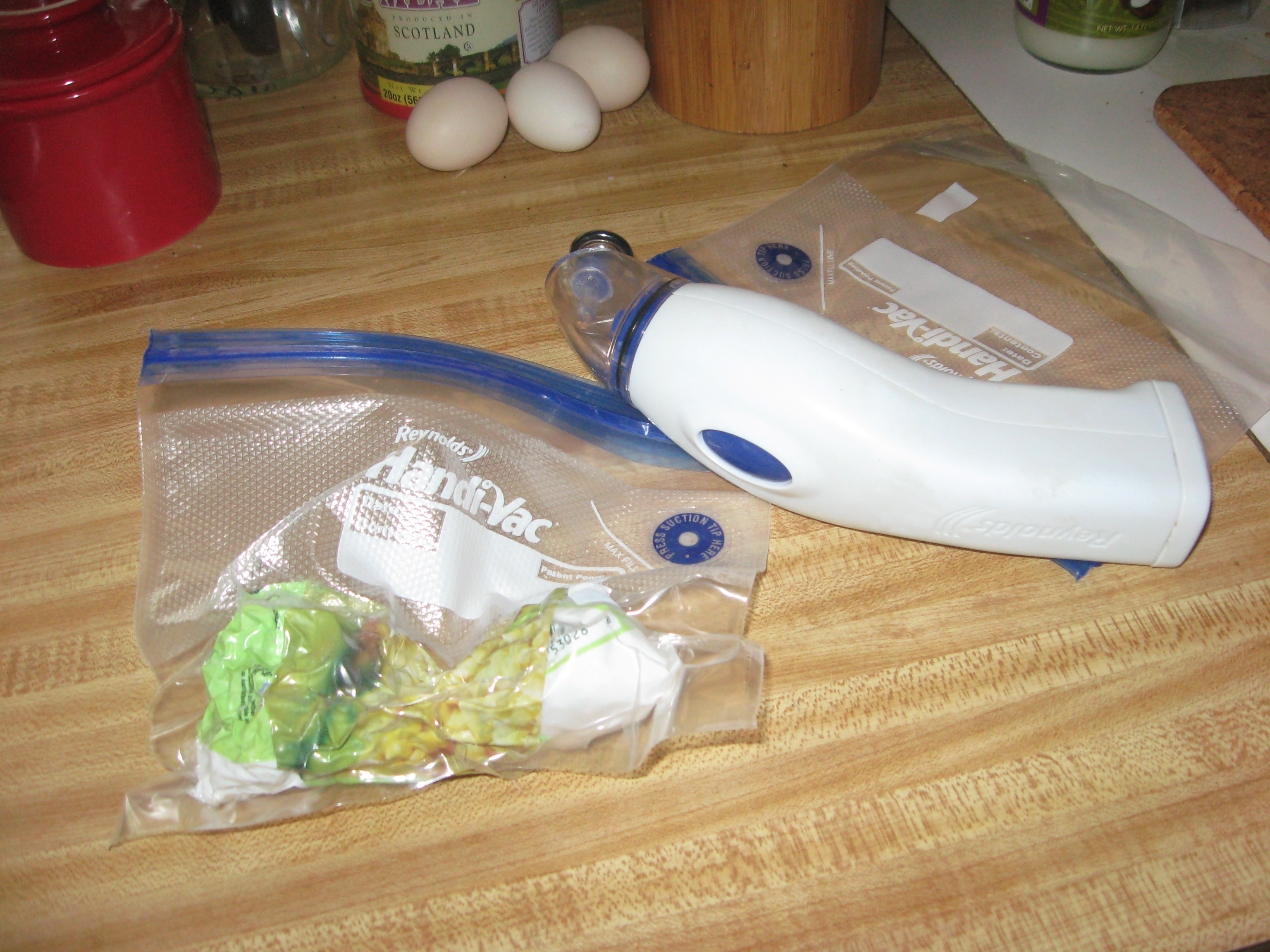
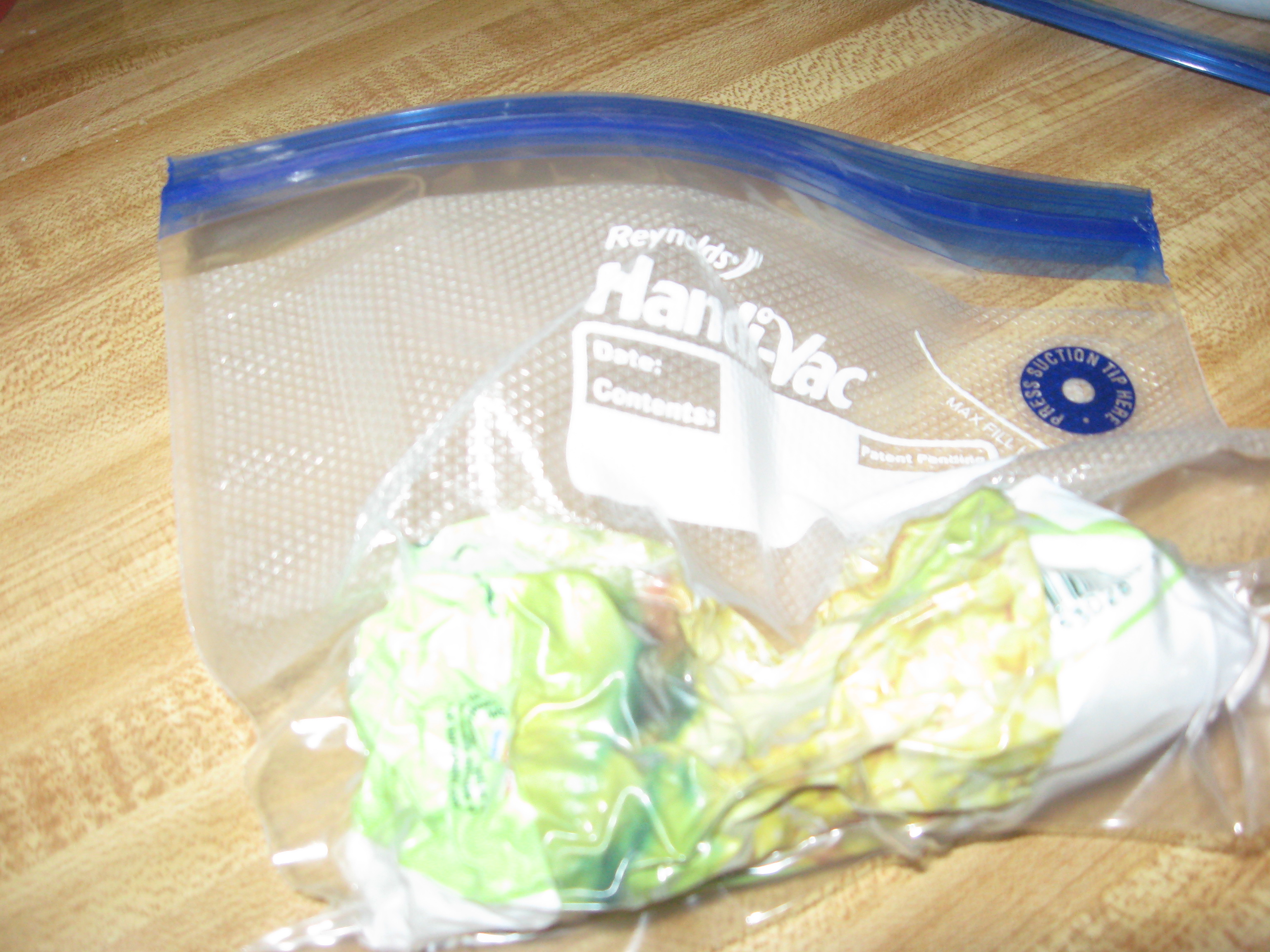
Reynolds Handi-Vac and bagWe all know about “freezer burn” that can happen when you put opened bags of stuff back into the freezer.  I’ve found something that ameliorates that. We’ve all observed that products that are vacuum-packed hold much better than those that are not. So–when I put opened bags vegetables back into the freezer, I use a clever gadget from Reynolds®.  Lest you cringe thinking expense–I’m not talking about the “big” vacuum sealing system.  I’m talking about the little hand-held pump and bags with a valve on them.

This is the Reynolds® Handi-Vac® system (reported to be discontinued, but still available from eBay and Amazon). It operates on AA batteries. For storing opened frozen products, I put the original bag, folded and air squeezed out into the vacuum bag, and vacuum! This is not as “hard” a vacuum as achieved with the counter-top vacuum sealing products, but it hides in a drawer and is inexpensive–no lost counter space which can be important.

vacuum sealed cornIt does help extend the freezer-life of opened packages of frozen products. If it’s something I use a lot of (e.g the petits pois, or “baby” peas that only come frozen–we’re ignoring canned), then I may buy the family size package and portion and vacuum those in serving size.  For the most part, I leave the veggies in the original bag–this way I can reuse the vacuum bags. For meats or seafood, I generally don’t reuse the bags. I just don’t feel I can be sure that they are sufficiently clean.

Here is a partial bag of frozen corn (another thing I like to buy in bigger packages). I confess that I’ve not done any scientific studies here, but using this seems to have decreased the number of times I dump a partial bag because of the freezer burn.

I’ve also discovered that using this really helps with the celery dilemma common to single-serving cooking: wash and cut celery into length that fit into these bags (you can also get bigger bags), wrap in a damp paper towel, and vacuum seal. It’s’ amazing how long it lasts that way. When you wish to freeze servings of big-batch cooking you can use these if there is not much liquid, but it can be tricky. What I usually do for those is to put the food into a “light” storage zipper-lock bag, squeezing out most of the air, and then into one of these.  Again, I can reuse the bags; they seem to stand up to reuse quite well.

corn in vacuum sealed bagMy only experience has been with the Reynolds® Handi-Vac® though I’ve noted that Ziploc® and FoodSsaver® both now have hand-held systems (as well as the counter-top). Just from trawling the internet, I can’t tell if the Handi-Vac can be used with the Ziploc® or the FoodSsaver® bags; there’s contradictory information (what a big surprise).  Of note, the Ziploc® pump is manual rather than battery operated, and I would suspect that it will create a less strong vacuum than battery-operated pumps.

There’s an advertisement for an adapter for the Handi-Vac® pump to be used on Ziploc® bags. It’s called the “ReynLock Adapter™”; I’m NOT including a link because of the contradictory information I’ve found, and the price of the gizmo, and I’ve not used it so I don’t know anything other than the advertisement. (See My Opinion page, please).

Updates when I have more information because I will be looking for another product to do this.  Maybe I’ll be lucky and the Ziploc® bags will work!

Slow-roasted pork

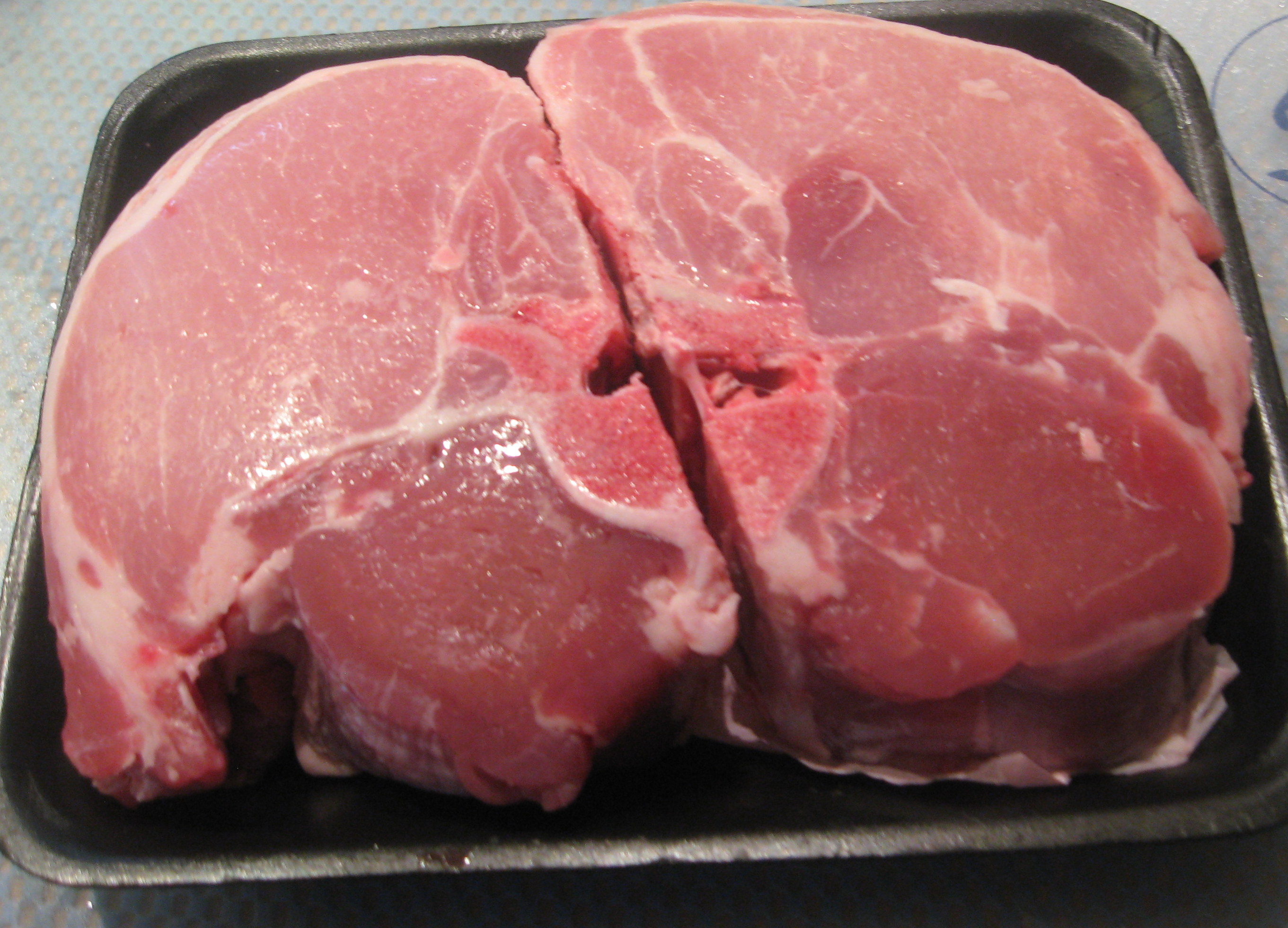
It’s a day that shouts that fall is finally, really here–steady, gentle rain, cool breeze, a bit dreary–the kind of day that says cook something savory and warming.  As the weather has been getting cooler, I’ve been anticipating this kind of day, so on yesterday’s trip to the market, I had the butcher cut me two extra-thick, bone-in, loin end pork chops.  When I got home, I “prepped” them for roasting–a generous sprinkle of salt (for a dry brine) and let them stand overnight in the fridge. Though it’s not cool enough to turn on the heat, just what I get from the oven while these roast will be cozy, and the smell of roasting pork….almost as good a baking bread.

I’ve gotten two chops because I actually want to have extra meat. Leftovers in this case are welcome (which is, admittedly, unusual for me).  This kind of weather brings out a desire for soup-making and other hearty fare, and roasted meat is a good starter!

Slow-roasted loin-end pork chops

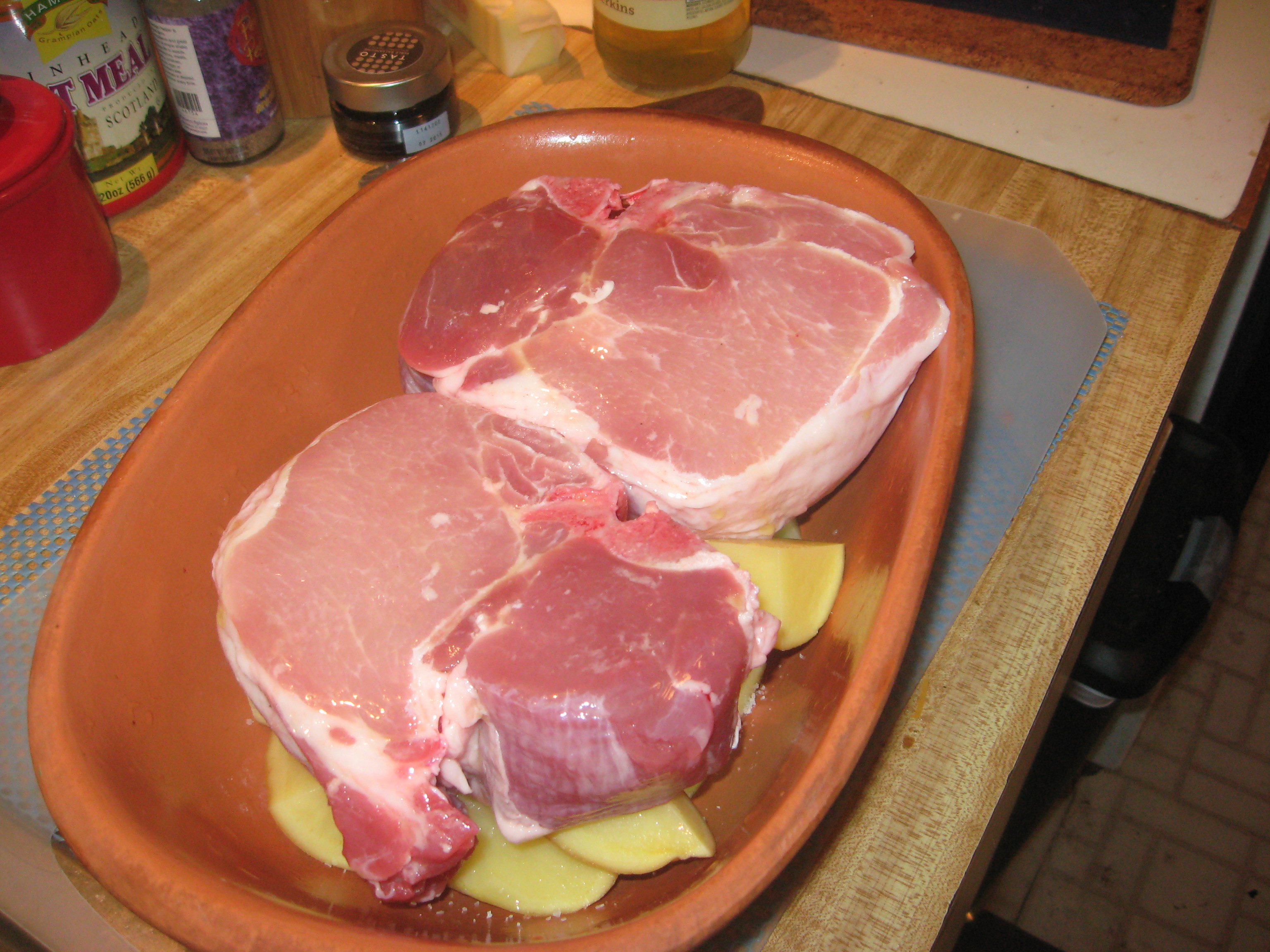
Note: The pork was roasted in the clay cooker–with very simple seasoning. I just wanted some big roasted pork flavor. I used loin-end chops here, but thick-cut shoulder chops, or country-style spare ribs will also work. I love the Schlemmertopf/Romertopf for cooking, but you can do this in a Dutch oven if you don’t have a clay cooker.  It will still taste good!

loin end pork chopIngredients

  • 1 or 2 extra thick (1-1/2 to 2 inches) loin-end pork chops
  • a generous tablespoon kosher salt (for the two chops)
  • 2 large Yukon Gold potatoes scrubbed, cut into large chunks (eighths)

pork chops and potatoesPreparation

  • Pat chops dry and sprinkle kosher salt evenly over the chops.
  • Refrigerate overnight or for about 8 hours (up to 24)
  • Soak clay cooker for at least 20 minutes, add chops and place in cold oven set for 295 °F until easily shredded with a fork (about 3 hours).
  • Serve with roasting juices from cooker.

Ò¿Ó

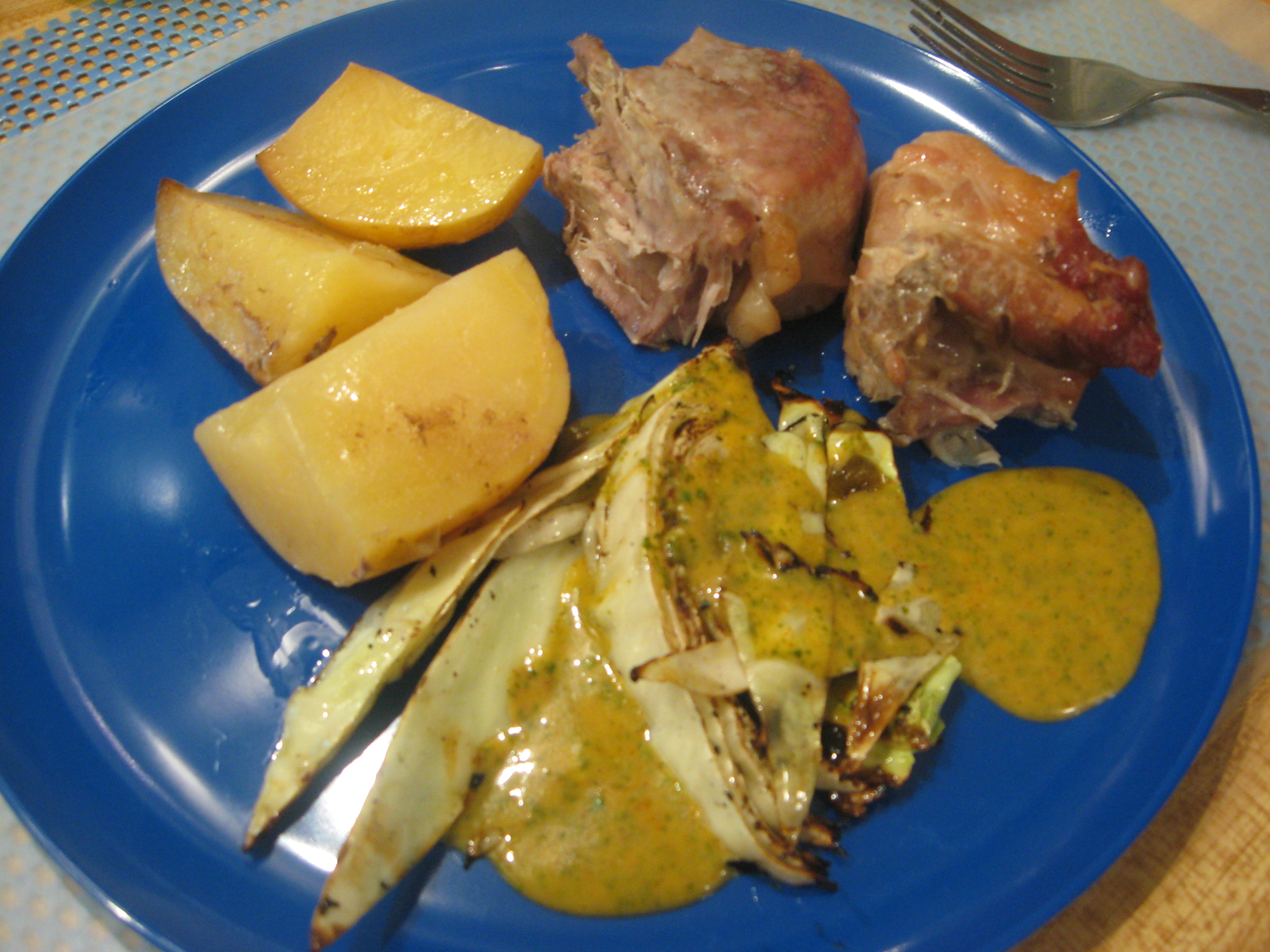
roasted pork and potatoesI made the spicy grilled cabbage from The Kitchn, to go with this. The weather didn’t permit grilling (and lack of planning the oven, therefore the broiler, was in use) so I did a thinner wedge on a smoking hot cast-iron griddle. It was fantastic–no doubt this would be even better on the grill. The spicy lime sauce is yummy (and the bit that found it’s way onto the pork was good there, too).

I did make a couple changes to the sauce: since I was lacking the “smoky” grill, I added chipotle chili powder as well as the cayenne, and I used honey instead of sugar. (I would love to try this sauce with buckwheat honey in it, but none in the house today.)  Definitely a keeper of a sauce!

Ò¿Ó

There are leftovers–but I’ve planned how to use them. The pork is seasoned only with salt at this point–deliberately so that I have lots of flexibility in using the rest of it.  I want to try a pasta dish with the “pulled” pork, sage and brown butter sauce. There are roasting juices that will contribute to some good soup–maybe hot and sour soup, or maybe something with hominy and sort of southwestern flavor. I suspect that a serving of basic roast pork is headed to the freezer for a quick comfort-food meal in colder weather.

pork, potatoes, cabbageA son goût!

Moroccan-Style Quinoa with Chickpeas and Kale redux

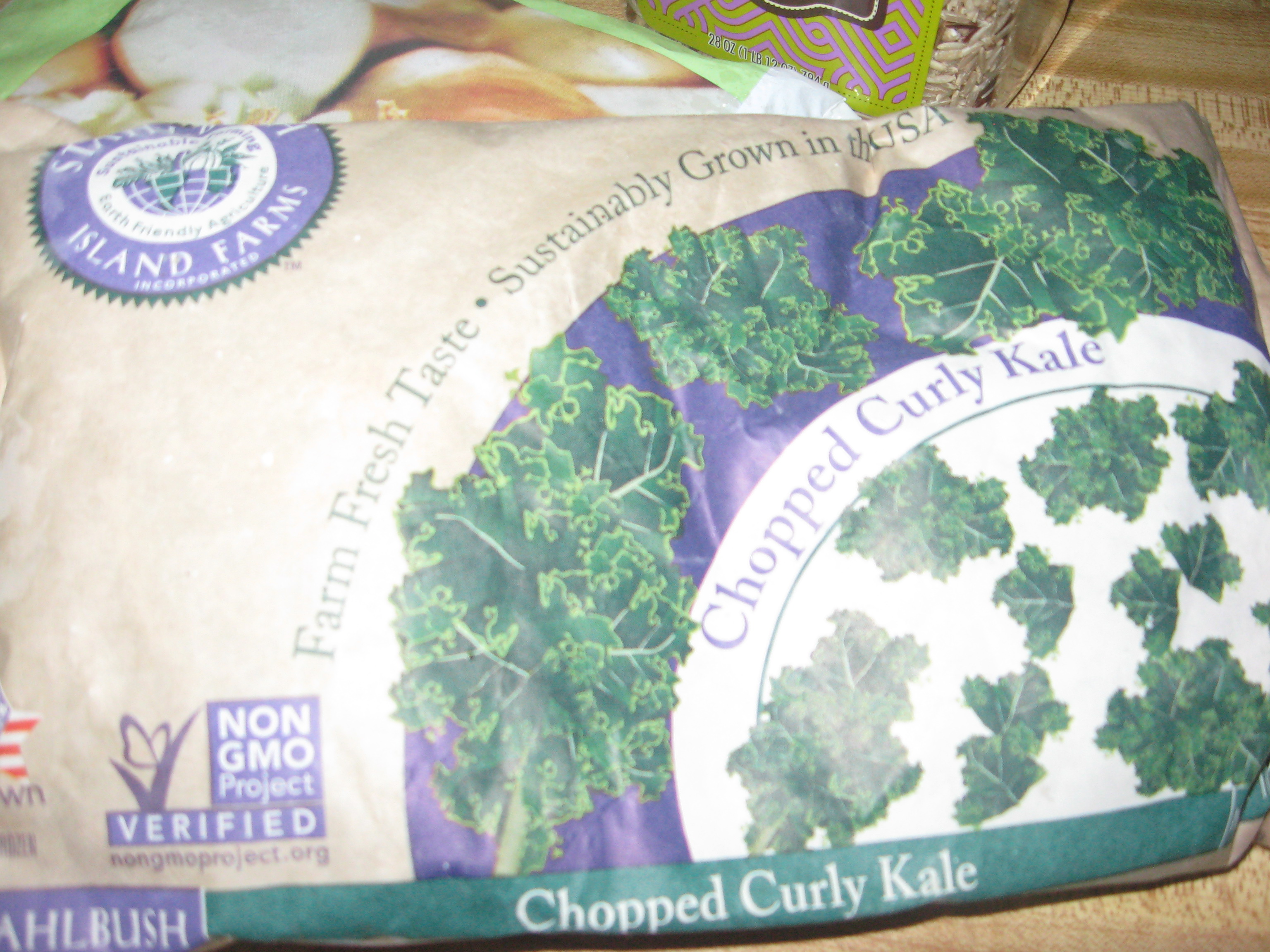
Frozen kaleIn my post about trying a recipe from an America’s Test Kitchen (ATK) I expressed my dissatisfaction with the balance between the kale and the rest of the ingredients.  I think I may have stumbled on a partial solution.

I’m admitting that in single-serving cooking I use frozen vegetables. One reason is that I can put the “leftovers” back into the freezer and not be pressured to use the rest of it right away–I’ll also admit to being a picky eater, par excellence as you’ve probably figured out.  Note my comments on meal planning.

Another is the nutritional value and quality of GOOD frozen products–we’re not talking “heat-‘n’-eat” here.  We’re talking fruits, vegetables, perhaps fish, etc. I don’t mean that I don’t buy fresh from local suppliers, but probably frozen is better than not bringing home fresh kale because it’s packaged (even at the Farmers’ Market) in a huge bunch that just doesn’t work for me.  (Cat just doesn’t eat enough vegetables for that to work, just like he doesn’t help with dust-bunny control).

I made this again, adjusting the seasoning–mostly just adding more of what was called for–but using the frozen kale from Stahlbush Island Farms and it was not overwhelmed by the kale. (Their website says it’s curly kale, but it must be younger leaves that what I had before.)  There will definitely be more of their kale in my freezer and I’ll make this again with these adjustments.


Lamb leg steak–continued

lamb leg steak on plate with ratatouilleThat lamb leg steak that I cooked a couple days ago was a big steak–weighing in just a bit under a pound. That’s a lot of meat–couldn’t possibly eat all that at one time.  As vehement as I’ve been about not liking, or dealing well with leftovers,  that does not apply here.  I don’t really consider the part of this steak that I didn’t eat then as undesirable. I couldn’t have that luscious steak without some left for other uses–not when it needs to be at least an inch thick to cook well. You’re wondering what happens to the rest of this steak?

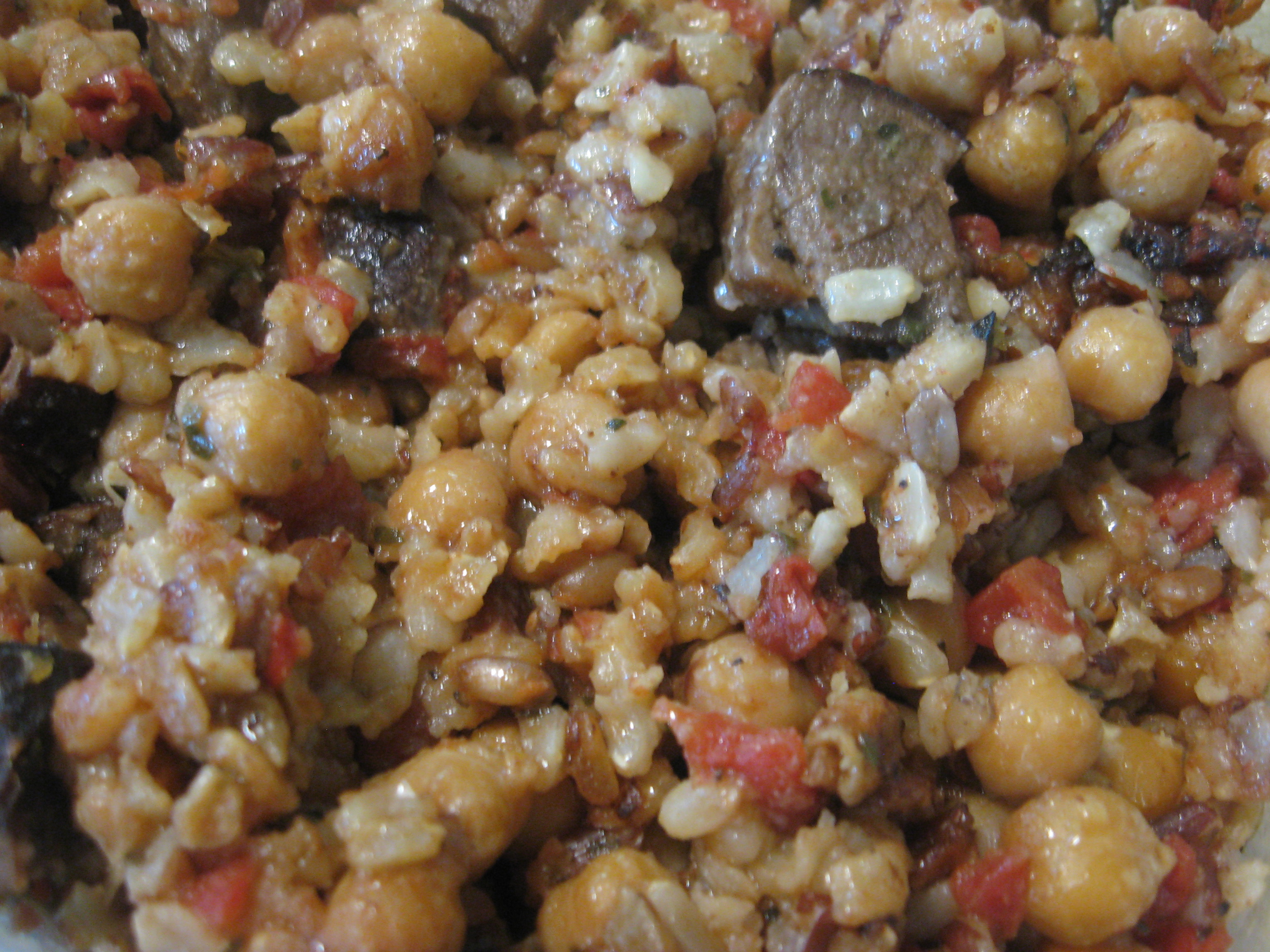
Often the remains of a beef steak or a pork chop goes into a sandwich–since roast beef, lamb, or pork is not on the single-serving menu. Other times it does some metamorphic changes.  The remainder of this steak went into the rice cooker with a convenience mix of grains,  some garbanzo beans to give me some additional meals that were not meat-centric.

Ingredients

  • about 1/2 pound of cooked lamb steak, cut into 1/2-inch pieces
  • one 15-ounce can garbanzo beans with liquid
  • one 10 ounce can of diced tomatoes with jalapeños with liquid
  • 1 cup of brown basmati rice, red rice, barley, and rye berry mixture (uncooked)
  • 1 tablespoon olive oil
  • 2 bay leaves
  • 2 teaspoons dried Turkish oregano
  • 1/2 to 1 teaspoon garlic powder
  • 1 to 1-1/2 teaspoon onion powder
  • 1 cup water (to bring total liquid to amount required for grains)

Preparation

  • Add all ingredients to rice/multi-cooker, stir well.
  • Set on rice cooking mode.
  • When cycle finishes, check grain for doneness.  If needed add more water in 1/2 cup increments until grains are done.

Ò¿Ó

Since the lamb steak had been well-browned on the griddle, it provided good rich flavor for the grains and the garbanzo beans.  Some of this was an extra meal (with a side of ratatouille), and the rest was packed (with the Handi-Vac®) for the freezer for later (especially cooler weather) meals.

mixed grains with tomatoes and lamb

angel hair pasta with raw tomato sauce

I’ve always like angel hair pasta with a very light, fresh sauce. Since it’s tomato season, at least for a bit yet, I wanted to share this one–The recipes (and commentary) from this blog (Smitten Kitchen) are always good–and this is SO easy.  I’ve found that angel hair pasta cooks so well in the microwave pasta cooker which means no hot steamy, boiling pot in the  kitchen in this hot weather.

Enjoy!

angel hair pasta with raw tomato sauce from the Smitten Kitchen.

. . . more Ratatouille (Provençal vegetables)

dark purple eggplantRatatouille is a summer dish that gets us over the hump of too many zucchini, and maybe tomatoes. It’s enjoyable warm, cold, or room temperature–but it’s not an especially memorable dish.  Not usually–however, I’ve one recipe for it that is memorable.This is not the ratatouille that you put together in the slow cooker, or quickly; however, if you like ratatouille, you should take the time and effort to make this one. Go ahead and splurge on the saffron.That’s part of what makes this memorable.

The recipe from Simply French: Patricia Wells presents the cuisine of Joël Robuchon (see bibliography) gave entirely new meaning to ratatouille.

Provençal Vegetables (Ratatouille)

Adapted from Simply French, pp. 229-230. Serves: 8 to 10

Ingredients

  • 10 medium tomatoes
  • 2 medium onions finely chopped
  • 1 cup extra-virgin olive oil
  • Sea salt to taste
  • 1 green bell pepper, peeled and thinly sliced
  • 1 red bell pepper, peeled and thinly sliced
  • Bouquet garni: several parsley stems, celery leaves, sprigs thyme, wrapped in the green part of a leek and fastened with kitchen twine
  • 4 garlic cloves minced
  • Freshly ground white pepper to taste
  • 1 teaspoon tomato paste (optional)
  • 6 to 7 small zucchini scrubbed, trimmed, and cut into matchsticks (about 1-1/4 pounds)
  • 2 teaspoons fresh thyme leaves
  • 3 small eggplants peeled and cut into matchsticks (about 1-1/2 pounds)
  • Pinch of saffron threads (optional)

Preparation

  1.  Core, peel, and seed the tomatoes. Save as much juice as possible and strain. If strained juice does not measure 1 cup, add water as needed to bring to 1 cup. Finely chop the tomatoes and set aside.
  2. In a large skillet, combine onions, 1/4 cup oil, and pinch of salt. Cook over low heat until soft and translucent.
  3. Add peppers and pinch salt. Cover and continue cooking about 5 minutes more.ÒΛÓ
  4. Add chopped tomatoes, stir and continue cooking for about 5 minutes more.
  5. Stir in the tomato juice, bouquet garni, and garlic.  Taste for seasoning.
  6. Cover and simmer gently for about 30 minutes–don’t over cook–vegetables should not be mushy!
  7. If the tomatoes lack flavor, add tomato paste.
  8. In another skillet, while the tomatoes, onions and seasonings cook, heat 1/2 cup oil over moderate heat. When hot add zucchini and sauté until lightly colored (about 5 minutes). Transfer to colander and drain excess oil. Season with thyme and salt.
  9. In the same skillet, heat the remaining 1/4 cup of oil and sauté the eggplant until lightly colored. Transfer to colander and drain excess oil.
  10. Add zucchini and eggplant to the tomato mixture and taste for seasoning, add saffron if desired, and simmer gently for about 30 minutes.
  11. Serve warm, room temperature, or cold. Will keep covered and refrigerated for several days.

ÒüÓ

This is not you everyday, get rid of the zucchini, ratatouille. It’s special occasion, peak tomato season, and it take time and effort, but if you invest the time and effort, I think you’ll agree that it is a fantastic dish. This best made when tomatoes are at their peak–you don’t want to expend this effort and use canned tomatoes or supermarket ones that have no flavor–that would be a waste of effort. Neither the tomato paste nor the saffron can overcome that deficit.

Heirloom Tomato Panzanella

Hot weather, summertime, tomatoes, and panzanella is just a natural.  It’s worth looking for heirloom tomatoes to make this salad. There are so many different flavors–it’s not just “tomato”.

This post from Savory Simple brings up an issue that we should all be aware of: we are moving toward homogeneous taste as we give up the heirloom varieties.  Check out Save the Flavors and Seeds of Change.

Heirloom Tomato Panzanella.