A simple supper

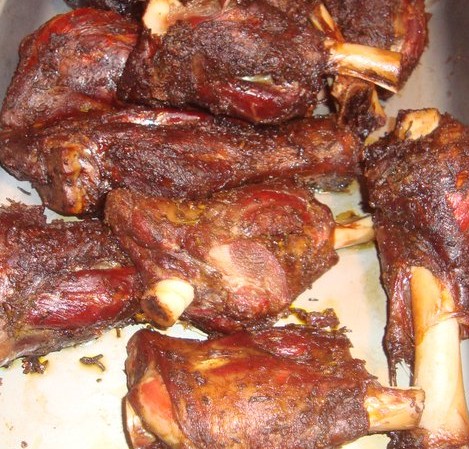
When I did the smoked lamb and goat shanks for the Fourth of July I deliberately added some extras, even after I had allowed for the appetites of my guests.  What was left after our dinner was not “leftover” but was planned (even though I had nothing specific in mind just then) as future food since I thought that these would lend themselves well to improvisation.

I sliced some of the meat very thinly from the cold shanks and used it in a salad.  The goat meat was especially good here, but the lamb made a nice salad addition too.  There was still enough for one all-meat meal, or two meals if supplemented with a grain or beans.

Lamb and beans heating in skilletI had envisioned using the rest of the meat with some cannellini beans  to make a kind of mini-cassoulet that would be topped with bread crumbs and baked briefly to meld the just-added seasonings. That was just not on the program!  It’s been so hot lately that I just did not want to have the oven on even with the air conditioning running, so I opted for a “skillet” meal.

My first step was to sauté some chopped onion (1 medium) until soft and starting to brown, then add  garlic (2 large cloves, minced).  Next I added the chopped meat from the lamb and goat shanks.  I had enough for two servings–and I decided to use it all in this concoction as I though I would like two meals from this as it would only improve with reheating. I added about 1 teaspoon of herbs de Provence(seemed rather cassoulet-like) and a healthy dash of crushed red chili peppers for some spice, and about 2 tablespoons of water.  Finally I drained, rinsed and added one can of cannellini (white) beans to the skillet, which I covered and allowed warm over low heat to hydrate the herbs de Provence and the pepper flakes.

Without further ado it was time to eat. With the last of the bottle of wine that was Lamb with white beans and sliced tomatoesserved with the original meal  it was a very satisfying, and easy, meal. There will be one more serving (and that’s not a “leftover” either–maybe that will make it into the baking dish with the bread crumbs and some rosemary added. This could adapt well to any extra pork, beef or chicken that happened to be hanging about the fridge as a leftover.  All this needed was a salad to complete the  meal.  Dessert was just some fresh fruit.

18 July 2011

Just a quick update here.  I’m glad I made two serving of this.  The improvement on re-heating was fantastic.  The smokey flavor came out more–next time I do something like this, I’ll plan to make it one day and reheat it later.  I’d love to try this with goat!

Smoked salmon salad

It was  just hot enough this evening that I didn’t really want to cook–not all that hungry, but wanted something easy and light.  Rummaging in the pantry, I found that I had Chicken of the Sea wild-caught, smoked Pacific (Alaskan) salmon in the pouches, so I made a salad to have with some good crisp flatbread and fruit (melon and cherries) on the side.

Quantities are approximations–precise measurement is certainly not necessary to make something like this–use your judgement.

Ingredients: 

  • approximately 1/3 to 1/2 cup sweet onion, diced
  • approximately 1/3 to 1/2 cup cucumber (seeded if needed), diced
  • two packages (6 ounces) smoked salmon slightly broken up into chunks
  • lemon juice to taste
  • lemon zest to taste (about 1/8 to 1/4 teaspoon
  • drizzle of extra-virgin olive oil sufficient to moisten
  • fresh-ground black pepper to taste
  • salt to taste  (taste before adding any
Assembly:  combine all ingredients and mix gently.  Taste and adjust seasoning.
Variations:
  • replace extra-virgin olive oil with a dollop of sour cream and add chopped fresh dill
  • if you have leftover grilled or griddled salmon steak or fillet this is even better
  • if you are not using smoked salmon, a dash of chipotle chile powder gives a bit of smoky taste and zip
  • add minced green or red chile pepper (jalapeño, poblano or serrano) to taste.
There are all sorts of possible variations here…fix it to suit yourself.
A son goût!  

King klip

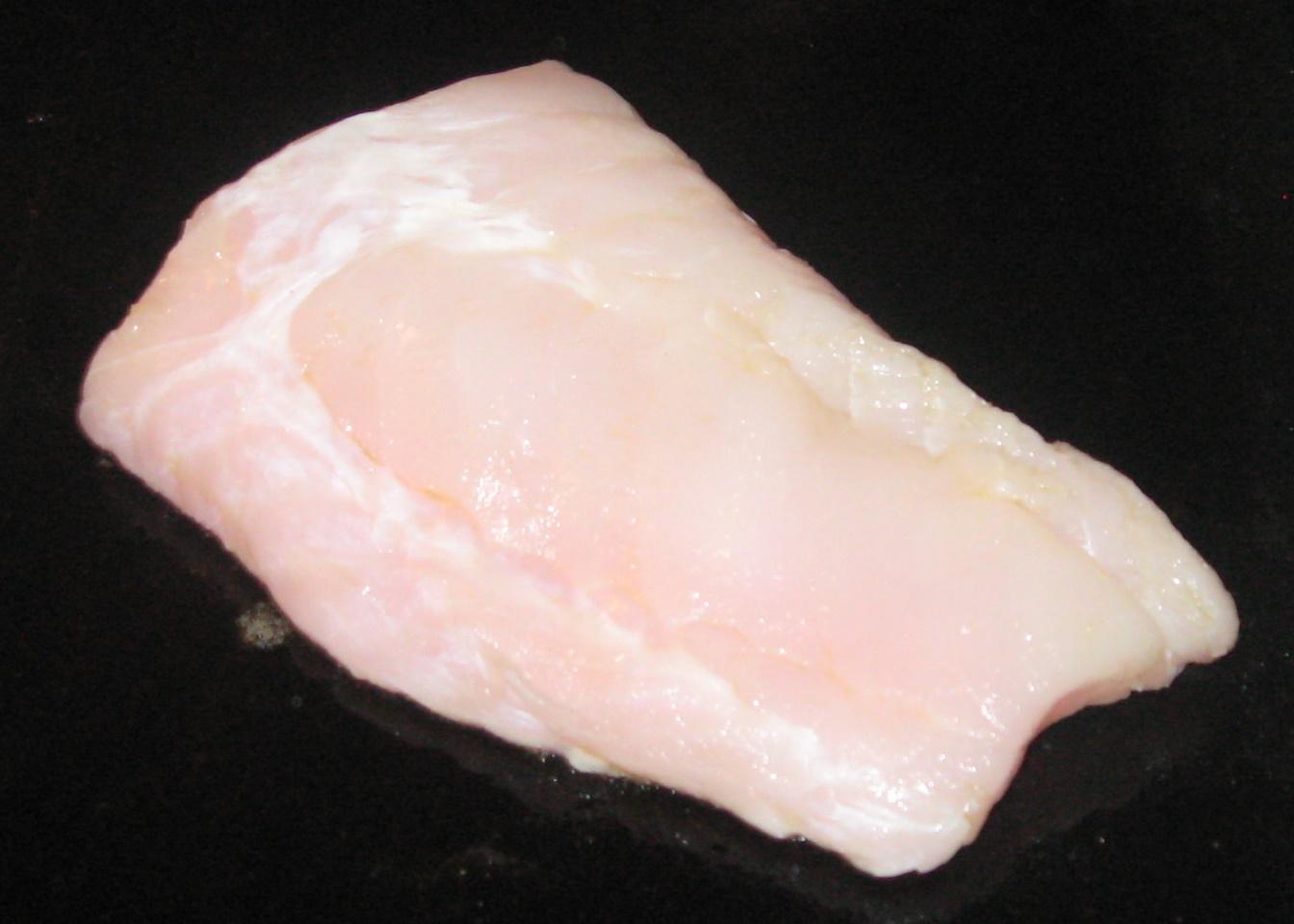
I went to Harris Teeter (affectionately known as the Teeter or HT) this morning looking for something to cook for  dinner (or supper if you prefer).  I was scoping out the fish contemplating salmon, tuna, or one of the standbys when  saw something that I was not familiar with, but look great.  The sign said it was  King klip.  My cooking curiosity being what it is, I had to bring some home with me, particularly as it  was inexpensive.

The fishmonger told me it was sort of like grouper and would do well grilled.  The heat being what it was this afternoon (my thermometer in the shade said 97 ° F ), I thought that grilling was out of the question so I opted for the cast-iron griddle –my standby.

I portioned my fish (I was a little overzealous when I said how much to cut so I have King klip filet portionedanother portion to try cooking a different way tomorrow), patted it dry, and rubbed itwith a tiny bit of olive oil.   Then I started wondering what I was going to have with this lovely fish…looking around the kitchen I saw the kaboka squash that I’d brought home from the Compare market the other day and decided that was going to be part of dinner tonight.  (I now have to figure out what to do with the rest of this thing as well, since I used only about a quarter of it.)  I attacked it with my chef’s knife, halved it, seeded half, and then took off several slices to use this evening.

I decided that I needed some green stuff with this as well, so I make a trip to a neighbor’s garden(yes, she had previously offered)  for some of  the last of the snow peas–it’s really the last–the heat has gotten to them for sure.

I decided that I’d steam sauté the squash, extravagantly with a bit of butter since the rest of the meal would be “lean”.  I used a paring knife to remove the skin and cut it into chunks so it would cook fairly quickly.

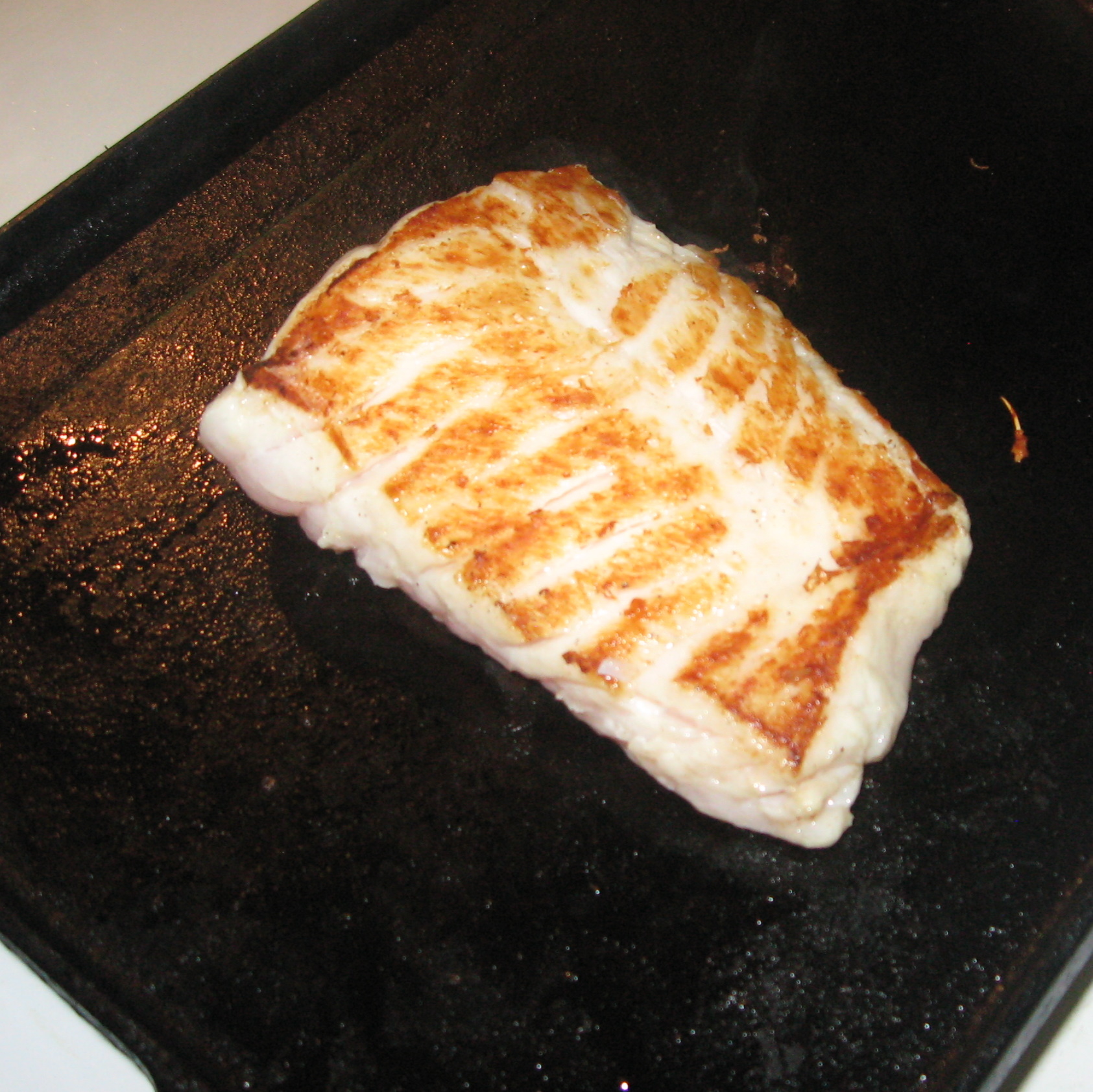
I topped and tailed my snow peas and since they were feeling the heat I put them into some cold water until I was ready to cook them.  I started the  squash in my small sauté pan with a bit of butter and about a tablespoon of water, covered tightly.  It was time to heat up the griddle.  Once it was hot, I rubbed just a light coat of oil onto the surface and put my filet on to start cooking.

Meanwhile, a quick check on the squash–not quite ready to let the water evaporate yet, but close.  Back to the fish–not quite ready to turn yet–still resisted my sliding the spatula under the edge, so it needed a bit more browning to “release” by itself.   It was smelling really good by now.  About the time it was ready to turn, the squash should be read to be uncovered to finish cooking while the water evaporated, and then to start sautéing to finish.

   The fish released and turned easily on the griddle.  I removed the lid from the squash and let the water evaporate from the pan; turned the heat down to hold while the fish was finishing.  I could see the opaque line moving toward the middle.

I put the snow peas into the pan on top of the squash and put the lid back on so that they would get just a bit of steaming .  By the time this thick filet was opaque to the center, the squash and peas were ready to eat as well.

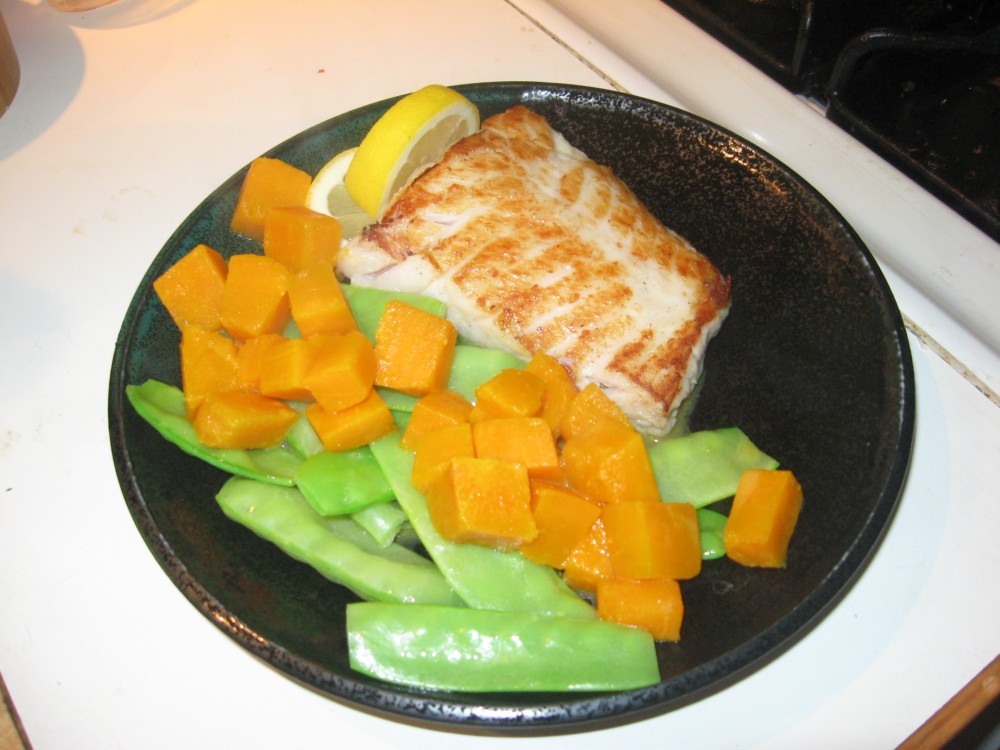
I warmed my plate under hot water and dried it, and put my dinner on it!  Simple, and really pretty healthy–I did put just a small pat of butter on top of the fish to finish it off with the lemon.  That was about 30 to 40 minutes start to finish.  Since this was my first time with this fish, I wanted to cook it as simply as possible to get to know its basic taste.  It was a very mild fish, but it held together well during the grilling.  It’s going in my “standby” category with tilapia for a good all-purpose white fish.  (It’s line-caught, by the way; I was pleased to see that HT signs indicated how all of the fish in the case had been caught)!   It was a simple, but good, quick, healthy meal!

I think that I’ll try baking the other half of that filet in foil with some veggies.  As for the rest of that kaboka, I have a neighbor  who I’m sure will be able to make use of at least part of the other half.  (If you’re doing single-serving cooking, it’s always good to find out what your neighbors like to eat–so you can share when you get really big things like winter squash or watermelons.)  I’ll share, and still have a bit more of the squash for me.  The second portion of fish will probably be a hobo pack with some fresh tomatoes and herbs–maybe tarragon. The rest of the kaboka squash is likely going to get a “classic” treatment:  baked with some butter and brown sugar.

One of the good principles of single-serving cooking is to share the big stuff.  Most of my single (or cooking for two) neighbors always seem really please to be able to get a portion of something like the kaboka–especially if you give cooking instructions if it’s unfamiliar to them.)

A must-try dessert

Since I’ve gotten Trillian installed I get all these quick updates from Twitter and Facebook zipping across my desktop. This one, given that it’s berry season,  looked like something I should pass on.

I’m not usually “into” cakes particularly, but I do have a weakness for good pound cake, especially with fresh berries, figs, and good ice cream.  (Good pound cake means one that does not shy away from the good stuff like butter.)

It’s from David Lebovitz. If this recipe is anywhere near as tasty as the recipes in The Perfect Scoop, it will be a real keeper! Take a look at this Bay-leaf-infused Pound Cake!

Pork stock

Not an instance of absolutely great planning, but here I am as the thermometer hits the 90s making pork stock.  Well…I never said that I was the greatest planner in the world–strawberry ice cream and stock-making in the kitchen all at one time.  My favorite meat supplier (Meadow Lane Farm, Louisburg NC)  had great meaty pork neck-bones at the market this past Saturday so I had to bring some home–so despite the heat it’s stock-making time.

These are very meaty bones, so I’ll have some meat to use after the stock is finished.  Since there is so much meat on these bones, and I want to use it, I’m not doing the quick stock–but rather the stove-top method (now you’re sure I’m not great at planning, right?).  But when you have the opportunity to get pork neck-bones, you take it.  Meadow Lane farms is doing more pork (as well as beef) so next time I can plan to do this is cold weather.  (I’m glad I’ll have more access to pork…love that “other white meat”.)

Basic Stove-top Pork (or Meat) Stock

Ingredients: 

  • about 4 pounds meaty pork neck bones
  • 2 medium onions, chunked up
  • 2 medium carrots, chunked
  • 3 bay leaves (dried ones)
  • about 2-3 teaspoons salt
Preparation:
  • Rinse the bones well.  If you feel that there is any old, or “off” odor, or they’re very bloody, blanch quickly in one change of water.
  • Add aromatics–onions, carrots, and bay leaves
  • Add water to cover.
  • Bring to a boil quickly, and then reduce to keep a bare simmer, and leave for about  2 or 3 hours.  Test after about 2 hours–when the meat is fork-tender and “fallin’ off the bone” (a country expression that means really tender), remove from heat.
  • Strain to remove bones/meat and aromatics.
  • Cool stock quickly in an ice bath, stirring frequently to help cool evenly;  then freeze or refrigerate. (Do not put the hot stock in the freezer or refrigerator as it will (1) warm up the refrigerator and affect everything in it, and (2) it does not cool evenly and quickly so that you could have bacterial growth.)
  • When the bones are cool enough to handle, remove the meat and save for another use.
I want a neutral white stock, so I’m not roasting bones.  The meat from making this stock may be a bit less flavorful than had it not been used to make stock, but it will still be good to use for  eating.  I don’t add celery to my stock unless I’m making stock for a specific recipe that needs it.  Carrots and onions, and bay leaves provide some sweetness and depth.  Because I may want to use the stock in a recipe calling for reducing it, I don’t add much salt; I do add a little, because I think that helps develop flavor of the stock as it cooks.   (Salt is for more than just making things taste salty!)  The meat and the stock will both likely need to have additional salt added to taste, but now I have stock that I can use in a reduction sauce if I wish. 

There was a bit of cursing in the kitchen as I removed the meat from the bones because I tried to do it before they had cooled quite enough, but for my efforts (sweaty through they were) I have bit over a gallon of pork stock that is cooling in the refrigerator to be de-fatted.

I have about a pound of very tender, succulent pork to use for another purpose, maybe a chili verde since the garden is rife with green chili peppers.  The meat recovered after making stock is not as flavorful as it would be had I cooked it primarily to use  just the meat, but it’s certainly great for a dish that is supplemented with herbs and spices like that.  I could also use it in hot and sour soup, or posole.

My active cooking time was about 45 minutes from setting the stockpot on the stove to washing the stock pot.  That includes the time to remove the meat from the neck bones!  Although not the ideal time of the year to make stock–it’s well worth the effort.  (Have to have some priorities–right?)  In the winter, I’d have put the pot in the oven for the cooking time, but I thought that, perhaps, the stove-top (very low simmer) would be a bit cooler way to do this. (No, I’m NOT planning to check that out any time soon!)

Lemon cake

Seems that a lot of thing lately have been absolutely screaming summertime to me.  I was browsing some of my favorite websites this afternoon and came across a recipe that looked just fabulous.  As you can tell from most of my posts, I’ve not said much about sweets…but this was one that really made me salivate: Meyer Lemon Lavender Cake.

That link will take you to the recipe on one of my favorite blogs, Former Chef.  That’s a great website to look for recipes.

Growing your own herbs

Whether you have a huge garden, or just a deck with some pots, you can grow herbs.  For me having fresh herbs makes cooking for one easy and exciting.  Just having the herbs around where you smell them when you brush against them can be inspirational.

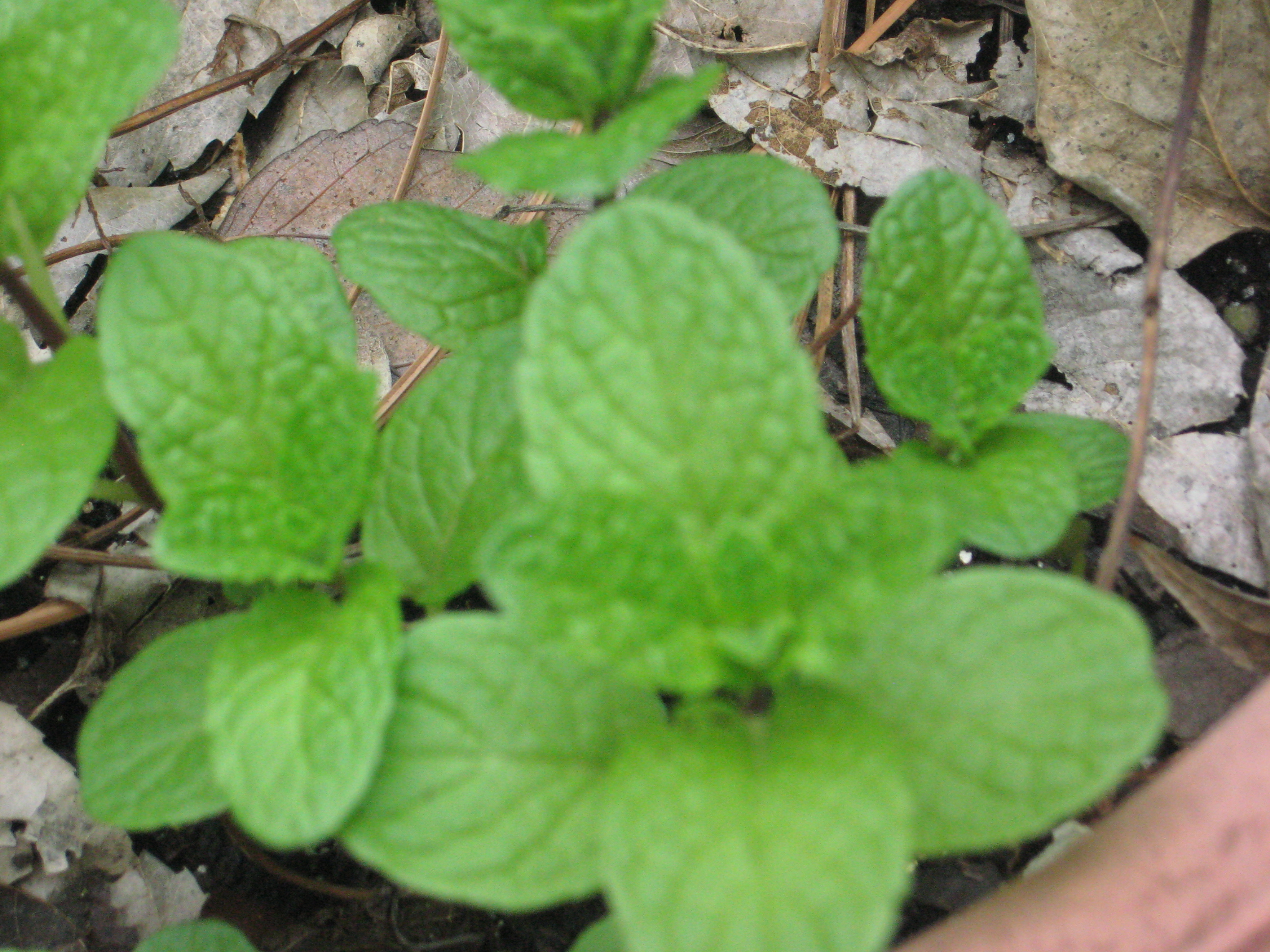
Mentha spicata 'Kentucky Colonel'

Mentha spicata 'Kentucky Colonel'

Herbs pretty unfussy plants to grow–generally they like sun, and want the soil to be well drained.  Some are more drought-tolerant than others and some are more sun-tolerant than other; a few even like a bit of shade.

You can use a wide variety of containers–plastic, ceramic, wood…just be sure that there are holes in the bottom for good drainage.  Herbs really do not like wet feet.  I prefer to put my herbs in fairly large plastic containers since it reduces the need for watering in hot weather–a six-inch pot is about the smallest that I will use. Smaller than that and you’ll spend a lot of time watering in hot weather.

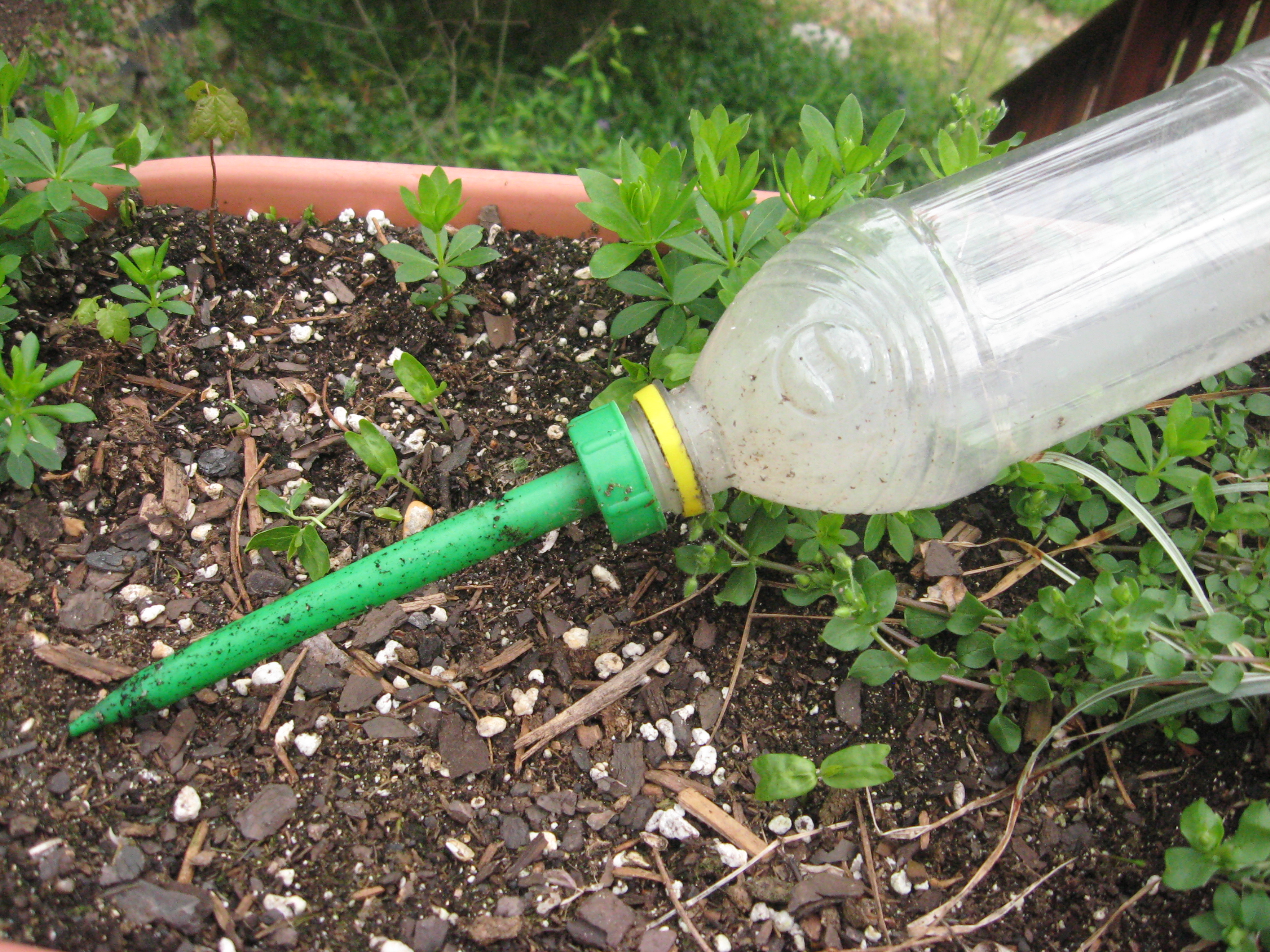
Though not glamorous, my favorite device for keeping herbs happy in hot weather is a spike that screws onto a one-liter (or two-liter) soft-drink bottle which is then stuck into the pot.  It delivers water slowly to the roots where it’s needed.   I catch rainwater in a five-gallon bucket to fill the bottles rather than using tap water.  You’ll see these in use in some of the pictures.  Locally, I can find these at Stone Bros. & Byrd.  They are also available in garden supply catalogs and seed catalogs.

We usually hear herbs characterized as “full sun” plants–that really means that most of them need at least six hours of sun a day; many are happy sitting around in the sun all day–but you have to take your climate into account.  An herb that might be wonderfully happy in all-day sun in the Pacific Northwest might not survive all-day sun in the southern U.S.  As you grow herbs you will learn to look at them and know if they are happy or not.
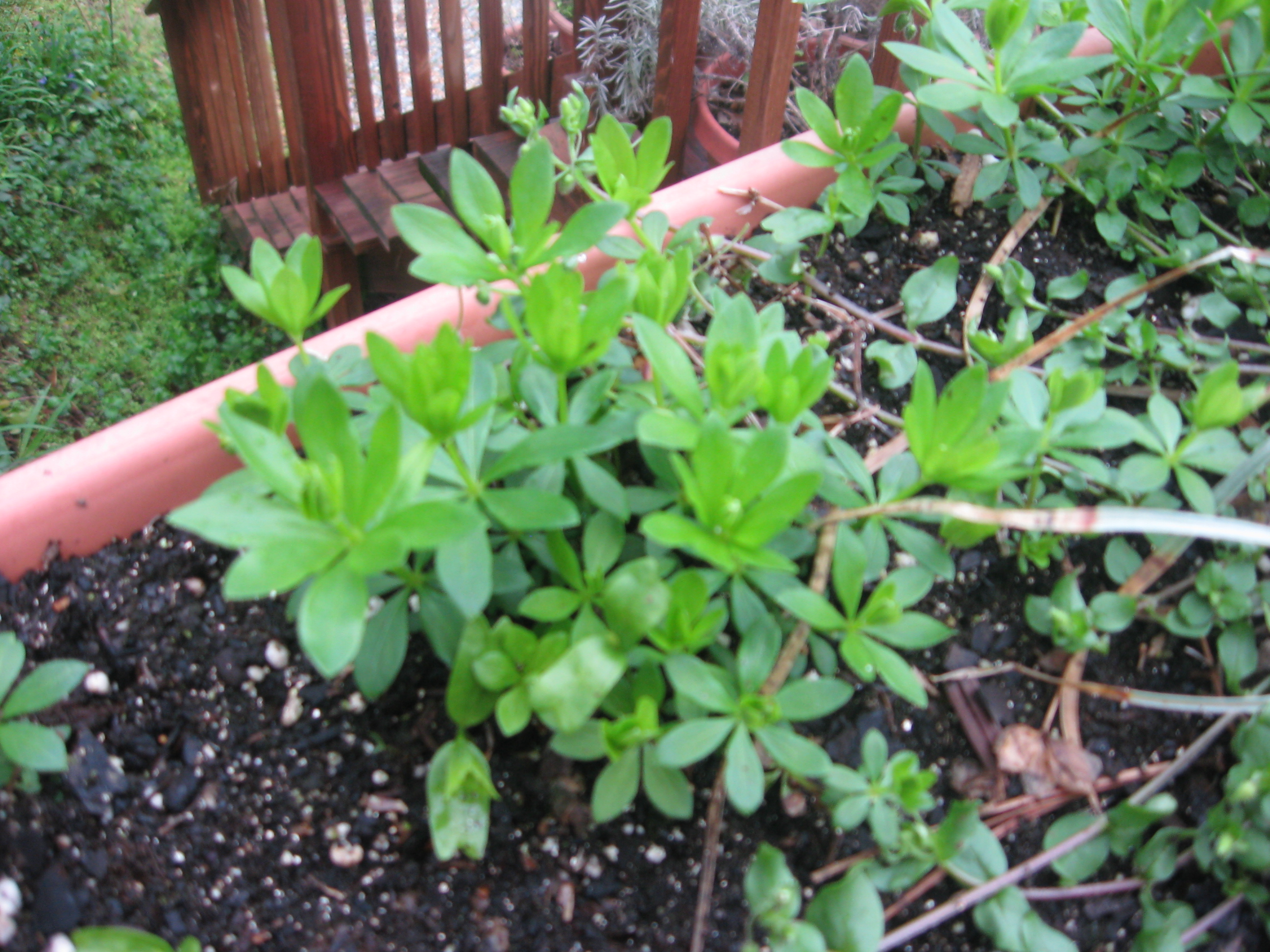
Herb-Gallium Odorata IMG_3834-1

Sweet Woodruff (Gallium odorata)

Some herbs such as sorrel, chervil, sweet cecily, sweet woodruff, and lemon balm would rather have some shade.  If you are planting them in the garden, you need to consider the position of the sun in all seasons of the year, and the presence (or absence) of trees that will leaf out in the summer.  One of the advantages of growing herbs in containers is that you can move them around to give them optimal sun and shade. No matter what the soil you use, if the sun is not there you’ll have spindly, leggy herbs without much flavor and  they will be prone to disease.

Soil is next in importance to sun for growing herbs.  An additional advantage of growing herbs in containers is that you control the soil. Herbs must have good drainage whether in the garden or in containers. (I suspect that many of us who cook for one will be growing them in containers, so that will be my focus.) I use potting soil from a reputable garden supply center.  I know that it’s not going to have diseases carried in it, and I know that it’s formulated to drain well as long as I put it in a  pot with appropriate drain holes, and that it will also hold water in an appropriate manner as well.  It’s a happy medium that I don’t have to fuss with–I can just plant herbs and cook with them.

Many of the herbs that we grow are perennials, so they won’t be moved and may not even be repotted every year, so it’s important to have good soil.  If they are planted in a large pot they may need only top dressing between times when they become root-bound and need to be divided or repotted.  I may fertilize more in the second year that they are in the same pot if it looks as if it is needed.

For many herbs I plant several in a much bigger pot–12 to 14 inches.  It looks great and watering frequency is reduced.  You do need to consider what herbs to plant together because of the differences in their likes for soil moisture and feeding.  Many of the Mediterranean  herbs (oregano, marjoram, thyme, rosemary, lavender) are very drought tolerant once established and need less water. Not so with basils:  basil likes sun, but likes evenly moist soil; I might plant several varieties of basil together in a large pot, or even have a basil plant share a large pot with a tomato plant, but I’d not mix basil with oregano and marjoram because of the differences in watering needs.

Basil (a fast-growing annual herb) is, in contrast to perennials (sage, oregano) is a heavy feeder as well; it will need to be “fed” more often–perhaps a dilute (quarter-strength) solution of all-purpose plant food or fish emulsion monthly. You need to consider the appetites of your herbs, as well as their proclivity for sitting in the sun, before you put them all together in a big pot.  Once you get perennials established they will provide much enjoyment with very little effort.

Some herbs which can be very invasive should be kept in separate pots: lemon balm (Melissa officinalis) and mints, for example.  Other herbs simply do not do well in pots because they develop deep taproots, e.g. dill–and you cannot provide depth enough in a reasonable sized pot for them to do  well.  Others are simply too big for planting in containers (e.g.  angelica and borage) that we’d use here.  More varieties are being developed that are “dwarf” and are suited to containers.  While many dills (such as Anethum graveolens ‘Mammoth’)  do not do well in containers, there are some dwarf varieties (Delikat and Fernleaf) that are suitable for containers.

You’ve got containers, and soil.  Do you start with seeds or with plants?  Many garden centers will have herb plants, but they may not have a large selection of different varieties–you may only be able to get a generic “sage” or “thyme”.  One of the joys of herbs is seeking out different flavors and those that are especially  aromatic, with high levels of essential oils.  The “tarragon” that you find in the big-box garden center may not be French tarragon (Artemesia dracunculus, var. sativa) which is what you want.  The oregano that you find there may not be Greek oregano, but Italian oregano, which is really sweet marjoram (Origanum marjorana).  You’ll want to find a good garden center, or try farmers’ markets in the spring.  Those growers will likely know more about the varieties of herbs that they have.

Buying plants is probably the best way to start growing herbs.  Starting from seeds gives you more possibilities, but you have extra seeds, the difficulties of getting them to germinate; some are slow growing, so you won’t be able to use them as quickly.  It can literally take weeks for some to germinate, the germination rate may be poor (e.g. Stevia), and then many more weeks before you can harvest for use in cooking, and that is really the point of growing your own herbs.  You want to smell and taste them, and season your food with them.

I’m addicted to having fresh herbs at my doorstep…I’m also picky about what varieties I have, so I usually start with seeds.  It also means that I wait impatiently to see if the seeds are going to germinate, and for the tiny  plants to get big enough to transplant, and then to harvest.  It’s always fun to try new varieties.  You do find out that all plants labeled “sage” are not the same.  Starting from seeds, there is always variability in the plants so some may be more aromatic than others.  When you are purchasing a plant, you should crush a leaf and smell it to be sure that it’s what you want–fragrant and potent.  Only plants taken from cuttings will be exactly the same.  Some herbs can only be propagated by cuttings (French tarragon, for example) so you want to be sure that is what you get. (That’s why I’m giving you the botanical names with the common names of the herbs.)

If you get to the point where you hanker to try a new variety of mint, or basil, there are suppliers from whom you can order plants that you cannot find locally.   Just for fun you might want to browse Richters Herbs , Johnny’s Selected Seeds, or Mountain Valley Growers just to get an idea of the wonderful variety that is available.  (Mountain Valley Growers has some wonderful recipes on their website for herbs too.)

There will be more on selecting plants and growing specific herbs coming soon.

Griddled dinner

I was recently scanning through my e-mail update from CliffordAWright.com and I saw “Griddled Broccoli”.  It was one of those keep-scanning moments, and then (when the brain caught up with the eyes)–back up and look again, and read carefully.  This looked like something that would be great for single-serving cooking .  I set out to cook my whole meal as a griddled dinner.  The house supervisor was on duty, approved  and was waiting anxiously to see how this was going to turn out.

A favorite cooking tool in my kitchen is my cast iron griddle which goes across two burners of my gas stove.  It’s not a pre-seasoned one–but that’s really easy to do.  I got it from mycast -iron griddle
local garden store which also carries Lodge cast iron.  Sometimes I contemplate getting a grill-pan, but I, despite needing two burners, I really like the flexibility of being able to have the grill/griddle combination.  It’s certainly not a glamorous piece of cookware, but it’s functional and not all that expensive either.

I have found that trying to use it with only one burner lit really does not let it heat well.  It does not have a non-stick finish since I’m concerned about the effects of high heat on that, but it’s well seasoned and non-stick in effect.  Besides I also has doubled as a broiler pan too, and I certainly could not do that with non-stick coatings.

I’ve got a lovely rib-eye steak for a red-meat splurge.  I could do on my Weber Kettle Grill, but given the uncertainty of the weather now and finding the griddled broccoli recipe, I decided I’d try my whole meal on the griddle.

The griddled broccoli recipe calls for parboiling the broccoli for a few minutes before the actual griddling, but that seems simple enough, even for a quick meal.   I want some other vegetables as well as the broccoli with my steak, so I though I’d add some mushrooms, some sweet potato slices, and maybe some red bell pepper to my griddling.

I started by salting the steak as recommended in Cook’s Illustrated; it’s really worth the time to do this.  While the steak was Rib-eye steakresting with the salt, I prepared broccoli almost according to Wright’s instructions,  sliced the mushrooms, part of  a yellow bell pepper (the red ones at the market just didn’t look or feel really good), peeled and sliced the sweet potato into 1/2-inch thick cross-sections.  Because I wanted a variety of vegetables, with two of them that needed a bit of pre-cooking, I opted for steaming instead of blanching for the par-cooking. I steamed the broccoli for only about two minutes since it was cut in fairly small pieces.  I steamed the sweet potato slices for about three minutes and then set these aside for griddling a bit later.  Because I wanted to cook the whole sweet potato and the more of other vegetables for some planned leftovers, I started on the vegetable a bit before I put the steak on the griddle. I preheated the griddle until I got a good “bounce and sizzle” when a drop of water was flicked on the surface; we were good to go.

I thought that the mushroom and peppers could be easily reheated while my steak was resting and the broccoli was finishing, so I started with those and the sweet potato slices which were still firm.  I patted the sweet potatoes dry, since they had been put into cold water to stop the cooking after steaming.  I tossed the vegetables with a bit of  olive oil, and put them on the hot griddle.

Once the mushrooms and peppers were nice and brown, I removed them from the griddle, moved the sweet potatoes to the front since they would require more attention than the steak.

I patted the steak dry (a little moisture accumulates while it is stand with the salt, and I put the steak on the griddle to start cooking.  Since the broccoli has been steamed and put into cold water, I drained it and let it rest on paper towels to dry a bit.  While the steak was browning on the first side, I attended to the sweet potatoes and sliced some zucchini which I had decided to add as last-minute addition while looking in the refrigerator for something else.   After about  seven minutes, I peeked at the underside of the steak.  It was a lovely brown, so I turned it over and continued cooking it.  Since I like my steaks on the rare side of medium rare, I thought it would take about another five or six minutes, so I put the now-drained broccoli into a bowl and tossed it with a little olive oil.  I wanted the steak to rest for about five minutes after coming off the griddle to let all those lovely juices redistribute–evenchecking temperature that short of a rest does make a difference.

Now for the broccoli.  I put that on the griddle to finish the cooking, and I used an instant-read
thermometer to check the temperature of the steak since it was a very thick one.  It showed 115 ° F  on the thermometer, so I turned the heat down under the griddle and  put all the vegetables back on to rewarm.  I took the steak off and set it aside on my plate to rest.  After a five-minute rest the vegetables were reheated, and it was time to eat.

Even allowing for the salting time for the steak, I was sitting down to eat in about an hour and twenty minutes.  I spent some extra  time cooking veggies while the steak was “salting”, but I have plans for those–some can be reheated, and some can go into a salad for another meal.   And…yes, there is left-over steak–that thing was huge! That will be good in a sandwich for lunch with some horseradish, or perhaps in a salad; but I won’t try to reheat that.

Had I not wanted the extra vegetables for planned leftovers, all this could easily have been prepared on the griddle at the same time and easily tailored to provide even a mix of vegetables in a single-serving quantity.

The clean-up was really minimal–the steamer, two small bowls, and the plate!  The griddle, when cooled just needs a quick rinse under hot water, and drying over  flame for a few minutes.  It really is non-stick, and it’s easy to keep it properly cured.  It does get a lot of use: grilled cheese sandwiches, grilled chicken or pork chops.  The red meat aside (and that is a rare splurge) it was a pretty healthy meal: lots of veggies, and very little oil involved in the cooking…but it was really good.  I’m definitely a fan of griddled broccoli.

Empty plate

Chicken braised in milk.

Always on the lookout for a new taste experience, while checking out favorite blogs and  websites, I found a recipe that I just had to try:  chicken braised in milk from Jamie Oliver’s website.  I’ve made pork braised in milk (a recipe from one of Marcella Hazan’s cookbooks) and it was scrumptious!  Reading the recipe for “Chicken in Milk” I was intrigued by the seasoning–sage, garlic, cinnamon, and lemon.  Not a combination that I had thought, but considering the source I thought it worth a try.  Not wanting a whole chicken, I decided to try it with my favorite chicken parts–thighs.  It seemed like another great dish to test out the petit brasier.  I even found a friend willing to test the results with me.

Since I had about half the weight in thighs of the chicken called for in the recipe, I went halves on the seasonings as well.  What I learned was that chicken parts were okay, but maybe not the way to go with this recipe, and that halves on the seasoning was too big a cut.  The flavor combination was a success–it was somewhat earthy, and “round” and balanced, but I think I need to try it again with more than half the amounts of seasoning. We both felt that it could have been more highly seasoned, but it was a recipe that definitely goes into my “keepers” file.  Work on modifying it as a one-person meal is going to continue.

This was one of the times that I broke a rule that I usually follow:  make the recipe just “as is” before you try modifying it; so it’s back to the kitchen with this one–probably going to have to invite friends and do a whole chicken before I try cutting it down again;  I need  to know  what it would be like as intended so that I know how to modify the seasoning.  It’s not always easy to modify a recipe for single-serving cooking, but it’s a worthwhile endeavor.

Now that the holidays are past and things are settling down a bit, I think I’ll give it another try–my friends are used to me having a “food crisis”–and usually willing to participate.  I think it would be a good time to check out a bottle of good white Burgundy wine as well.    Since I’ve been considering this, I nabbed a couple of Cornish game hens on one of my trips through the grocery store, thinking that this might work as a single serving adaptation.  You can expect updates on this to follow–the full recipe and adaptations for one or two servings. If you need (or want) to serve four, it’s a recipe worth making!

Pot roast with brown gravy

You’ll notice that I said “gravy”–this is too much of a comfort food to use “sauce” because what you’re getting is plain, down-home gravy that needs bread or potatoes to complement it.

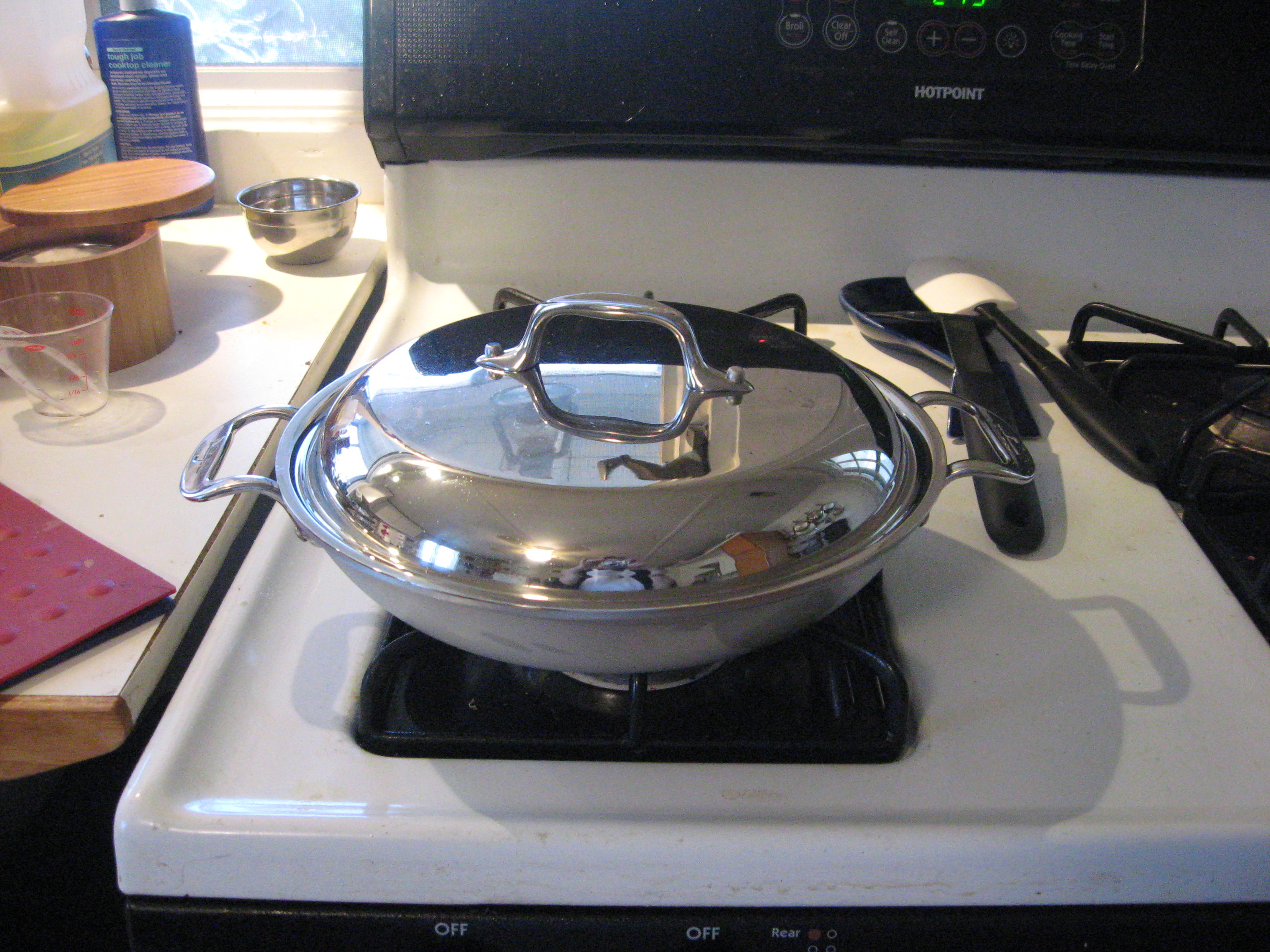
After I got my Christmas present (See The Petit Brasier) I had to give it an immediate test run.  What better to test than a favorite braised dish:  pot roast.  This was nothing fancy at all.  You’ll note that I’m not even saying it had a sauce–I really did mean good, old-fashioned, down-home, satisfying brown gravy, lots of onions, and good tender beef.

Even though I say I dislike leftovers, there are some exceptions and pot roast is one of the exceptions.  Sometimes I get the great big chuck roast and make a lot of it and put it in the freezer in single-serving packages, right with the chili, the stock, and some soups so that I can have an “instant” meal–the microwave is great for defrosting and individual portion.  I don’t always want to have to pack and freeze leftovers, so with the small braiser, and a cooperative butcher or meat department at the supermarket, I can make a small pot roast that’s good for two, or maybe three meals since there are some very easy ways to kind of spiff it up for the reruns.

This is really not a recipe–it’s a happening–quantities are approximate as the amount of oil you need will vary with the size of you pan, the amount of mushrooms and onions you are going to sauté–just use what you need.  (Improvise! Wing it!  Just do it–it will work.)

Ingredients

  • 1-1/2 to 1-3/4 pound piece of chuck roast
  • 4 or 5 small onions (or 3 medium to large ones) sliced moderately thinly
  • 2 teaspoons flour, plus flour for dredging the beef
  • about 3 tablespoons olive oil (divided as needed for  sautéing mushrooms and onions.
  • 8 ounces of mushrooms, sliced (more if you really like mushrooms)
  • 1 to 1-1/2 cups of water or stock
  • salt and fresh-ground black pepper to taste
  • about 8-10 medium garlic cloves.

Preparation

  1. Pat the pot roast dry with paper towels and dredge in a flour seasoned with salt and pepper.  Let it stand while you cook the onions and mushrooms.
  2. Slice the mushrooms and sauté in a little of the olive oil until they release their liquid and brown.  When brown and liquid has evaporated, remove to a bowl.
  3. Add a bit more olive oil, and sauté the sliced onions until they start to brown and caramelize.  When partly browned, remove to a bowl with the mushrooms.
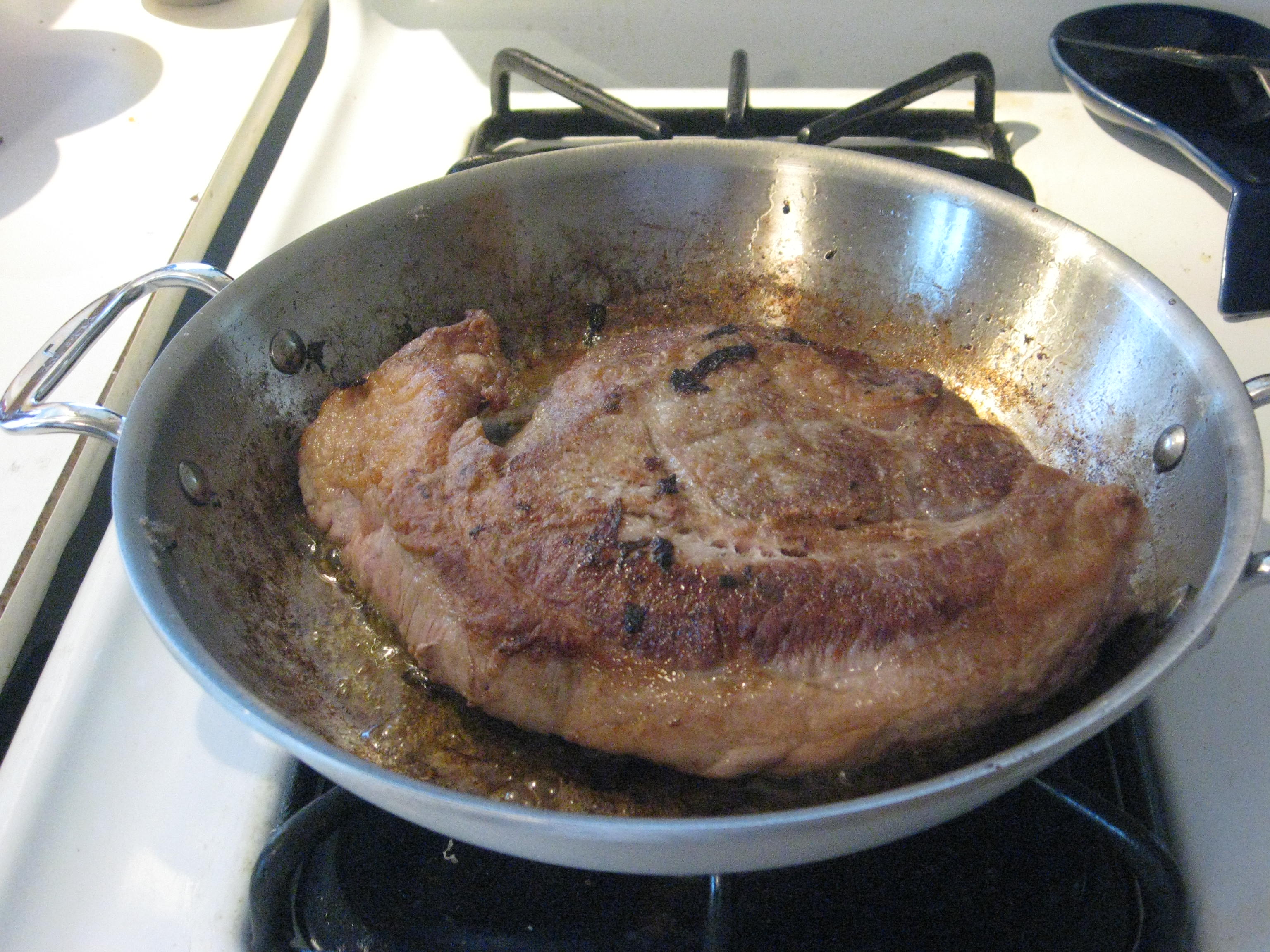
  4. Add the additional olive oil, as needed, and brown the beef well on both sides. Put it to the side for final assembly.
  5. Take the rest of the olive oil, and the 2 teaspoons of flour, and brown the flour in the oil until it turns a nice golden brown and smells toasty.  Turn the heat down, add the stock or water to the browned flour.
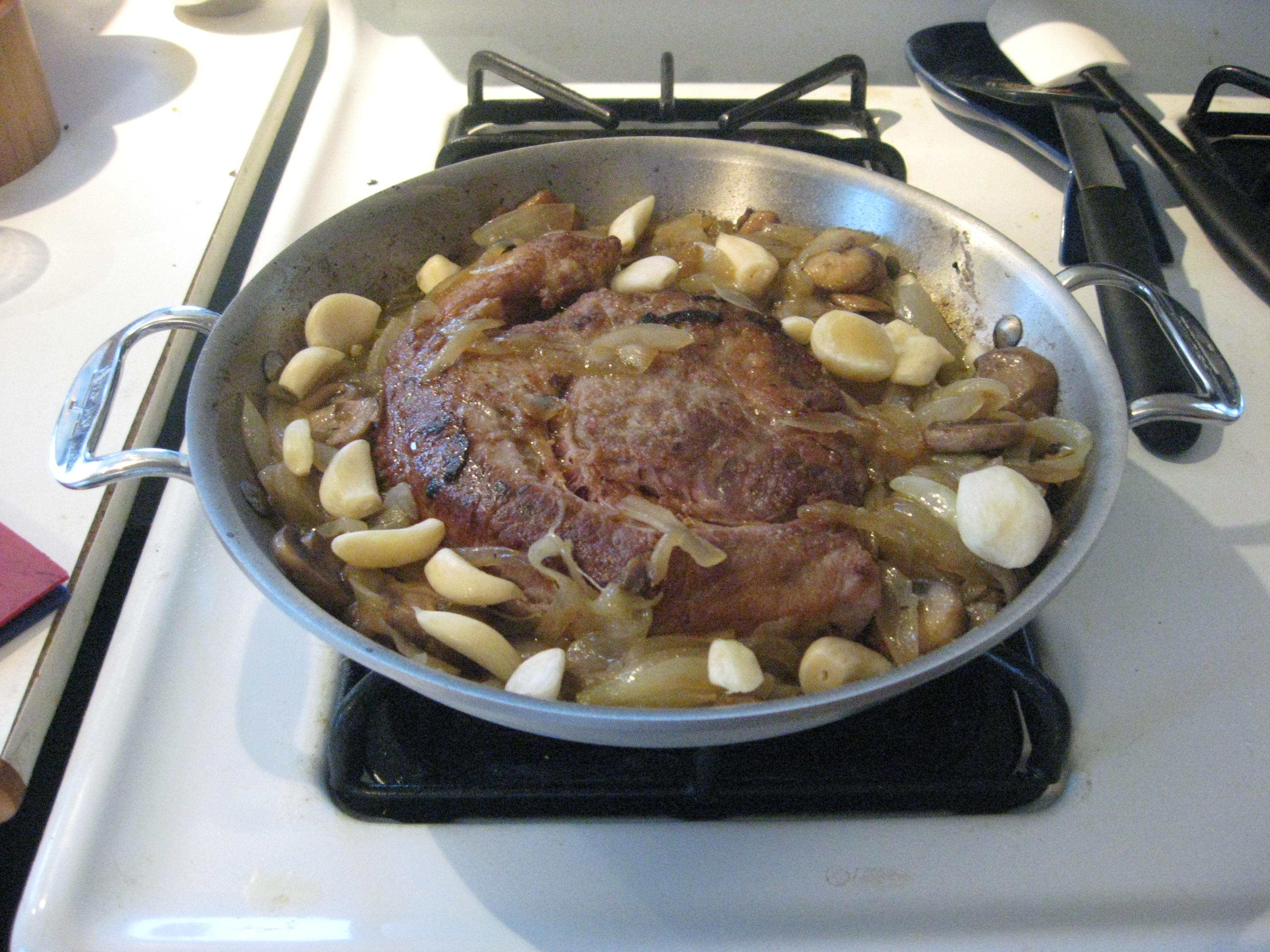
  6. Add the sautéd onions and mushrooms, and return the browned roast to the pan, with the onion/mushroom mixture around the sides, sprinkle the garlic cloves over the top.
  7. Bring to a simmer on the stove top, cover and place in a 295-300 ° F oven and cook until fork tender–about 2-3 hours (unattended).  Check periodically to see if you need to add more liquid.  You need just enough to make nice thick gravy, and the onions are going to cook down to help thicken the gravy.

For that first meal, all you really need is a salad, maybe a baked potato….or some noodles.For the second serving, stir a tiny dollop of sour cream into the portion of brown gravy for this serving to add some tang and be a bit “stroganoff-ish”, add some steam-sautéd (See Cooking Vegetables Quickly) carrots, or spinach as a side.   What about the third?  As you reheat, add some tomato paste, or some tomato sauce to the last bit for a different taste.

It’s pure unadulterated comfort food.  Even if it’s not a single serving, it’s an appropriate quantity for small-time cooking, but it sure has big-time taste.  It’s great what having the right size pan does for cooking for one.

A son goût!