Cabbage steaks

As a fan of cabbage in many forms other than coleslaw, I was delighted to find this recipe on Avocado Pesto for Vegan Cabbage Steaks with Tahini sauce. Try it–you’ll have a very pleasant surprise.

Addendum:  In reviewing my notes I realize I used only 2 teaspoons of mustard rather than 2 tablespoons  called for in the recipe. The dijon mustard that I have is REALLY potent. I think with 2 tablespoons that would have been the only flavor you’d get.

Always Hungry? Another improvisation

Pork is one of my favorite meats, and it is not on the list of approved protein sources, although I assume it is in the category of “game and other meats” so I’m improvising a Phase 1 meal with a pork chop this evening. After reading a recipe from The Kitchn for 20160322_163300“Sweet and Spicy Braised Cabbage” my mouth was set for pork. The sweet part is going to prevent me from having that to go with my pork chop this evening (save this one for Phase 2 or 3).

I thought about taking  the lazy way out for vegetables and carbohydrate–use some of the mixed greens and borlotti beans that I had with my tuna steak, with  an addition of a little extra seasoning for the second time around, but that just did not tingle my taste buds today. So, sautéed kale this evening. I have a large bag of kale that I’m first going to sauté  simply with olive oil and then add seasonings to what I’m going to have with the pork chop–leaving the “extra” for later use to season differently  for later use. (I do quite often to avoid wasting food because I’m a picky eater who doesn’t want the same thing over and over.)

Supper this evening was part of this pork chop cooked on my cast iron griddle as described for pork neck steak–smoking hot griddle, first two minutes on each side, then turned at minute intervals until it reached an internal temperature of 130 degrees to allow for continued cooking while resting. Kale sautéed with black-eyed peas, and a side of sautéed apple (not good enough to eat out of hand, but fine when cooked). The sautéed apple replaced dessert with this meal. The contrasts of the slight bitterness of the kale, the earthiness of the black-eyed peas, and the sweetness of the apple with the pork did make my taste buds sit up and take notice.

20160322_171559

Ò¿Ó

This slideshow requires JavaScript.

Always Hungry? An improvised meal

One of the problems I have with rigorous meal plans is that I refuse to shop for my food according to a menu! Even though I’m shopping in the supermarket, I want the freedom to buy what looks good–not what I need for a menu. When I find lovely ahi tuna for a measly &7.99 per pound, you be I’m having that for a meal. That was what I found on Friday, so I had an ad lib meal constructed from the simplified meal plan (page 152).

My high-quality protein was the tuna–pan seared to medium rare. The carbohydrate and vegetable were spicy mixed greens (a mix of radicchio, shredded broccoli stems, kale, and a few other robust greens) steam-sautéed with borlotti beans, seasoned with just a dab of bacon fat and red pepper flakes. Since tuna is not as oily/fatty as sardines, salmon, or mackerel, I followed the “pour on the fat” instruction by adding with a dollop of the lemon dill sauce.  YUM! Dessert? Raspberries and heavy cream (though these were not on the menu for today  either but I used the quantities suggested in the meal plan elsewhere.

(The dill sauce thins and spreads quickly when it hits something hot–next time it will go on the side!) The tuna steak that I had was close to a half pound, so there will be some for a lettuce wrap or salad tomorrow.

20160319_161611

Ò¿Ó

Always Hungry? Meal Plan

Since I seem to be unable to stick to a recipe, am a picky eater, and have a lot of difficulty with breakfast, I’ve downloaded the Simplified Meal Plan from Always Hungry? website, and very carefully read the requirements for the “Building a Phase 1 Meal” (pages 151-152).  Since I was having a lazy day I did some adaptation on the “Herb-Roasted Chicken Thighs” since chicken thighs often show up on my house menus. I decided to make this a one-pot meal.

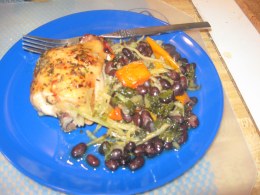
roasted chicken thigh, greens, black beansAfter seeing a post on slow roasted kale on Stefan’s Gourmet Blog, I decided I could make a one-dish meal that met those Phase 1 requirements. Using a bag of salad greens (broccoli, Brussels sprouts, kale, and some others) I put enough into the clay cooker to give me the amount of cooked greens that I needed for two meals (two of the thighs were for other uses). Since I’m such a fan of greens and beans, I added enough black beans for two servings. Since bell peppers are on the okay list, I added red and orange mini bell sweet peppers to the mix.  Finally, I topped that huge pile of greens with the chicken thighs sprinkled with salt, red pepper flakes, and oregano. The soaked clay cooker went into a cold 400 °F oven for a little over one hour and out came a meal that had the protein, vegetables, and the carbohydrates (the beans). All I had to add was dessert. (Yes, this meal plan includes dessert–in this case a cup of fruit and 1/2 ounce of dark chocolate.)

One of these thighs is going to find its way into chicken salad with grapes and pecans (substitution for walnuts) for one of the prescribed lunches and another into the freezer to pull out when I need a quick dinner ready with the vegetable, meat, carbohydrate quantities already worked out.

Parmesan, Chive and Truffle Madeleines and a Paris Snapshot

Despite Paris being so close to London – three hours on the Eurostar – we had never been with big A and little Z. Mr B and I had been on numerous occasions in the past both for work and…

Source: Parmesan, Chive and Truffle Madeleines and a Paris Snapshot

Braised lamb shanks

Continuing my freezer clean-out, I discovered two lovely lamb shanks that I must admit, I had forgotten were in there.  The weather that we’re having now just begs for comfort food, so I decided to make braised lamb shanks and the shanks beg for white beans to accompany them.

Starting with a recipe for braised lamb shanks and white beans that I knew worked well I still perused recipes from some other reputable sources (Williams-Sonoma, Food and Wine, and The New York Times). My lazy side came to the front and I decided that I wanted to do this all in one pot–so I went with the New York Times recipe–except I used thyme instead of rosemary and scaled the recipe for two lamb shanks.

Then I decided to follow a favorite principle of mine in cooking: never do on the stovetop what you can do in the oven (extremely hot weather will modify this). After bringing the pot to a simmer on the stovetop, I popped the pot into a 275°F oven for a few hours–low and slow since this is supper for tomorrow, likely with a grilled (well, broiled given the weather) cabbage wedge for a side.

Even for two shanks, this comes out to be a lot of food, so I’m looking forward to putting some into the freezer for another rainy day meal when I’m feeling indolent.

#LovePulses and take the pledge

Another informative post on an underutilized and versatile food source. Even if you don’t wish to take the pledge, please read! Look at the nutrition data. If you cook your own, the preparation  may take planning and time but it’s not labor intensive. Canned beans are an option to help use this food group.

Holiday time again….

Like it or not the holiday season approaches. I’ve one Christmas gift to order yet, but then I’m through. I thought I’d pass on a few suggestions for gifts for those of you who still have a cooking person on your list to shop for:

  • Volrath French carbon steel skillet: probably my most-used, it has the advantages of cast iron, without the weight.
  • Romertopf clay cooker: a go-to especially for one-dish meals in cold weather.
  • Home espresso machine: Can’t start the morning without my jolt of caffeine either straight espresso or café latte.
  • Clever Coffee Dripper: If I’m not wanting quite the jolt of espresso this gets something more like French press, with the benefit of a filter to eliminate the sediment.
  • Kunh Rincon garlic press: If garlic is a cooking necessity, a garlic press can be a time-saver, or it can be a total nuisance when you have to clean it, so you don’t use it. This is a good one, recommended by Cook’s Illustrated after testing lots of them.*
  • Max Burton Portable Induction cook unit: Live where it’s hot and humid in the summer? You just hate to turn on the stove? Induction cooking is much cooler–though it does require cookware that is either stainless steel or iron.  If a magnet won’t stick on your cookware, then you need the Hob Heat Diffuser that will allow you to use other cookware with the induction unit.
  • Pressure cooker: The Fissler FSSFIS5859 Vitaquick Pressure Cooker was the winner of the Cook’s Illustrated testing* and is pricey.  The runner-up was the Fagor Duo line, less pricey, highly recommended and noted as “best buy”. (This is the one I’ve used.) This cooker does work with induction cook units–a real plus in hot, humid weather when you still want those dried beans cooked.
  • Fasta Pasta Microwave pasta cooker: This is a real gem to have in the kitchen! So much easier than boiling that big pot of water–again great in hot, humid weather, but once you start using it, you’re hooked. Again this is a kitchen “gadget” that was tested by Cook’s Illustrated.*
  • If the cook you’re shopping for is just getting a kitchen set up, there’s always some of the essentials for good cooking: Penzeys herbs and spices, either basic, for bakers or for the cook starting to branch out, a do-it-yourself box of specialty herbs and spices.  If you have someone on your list who has to watch sodium intake, there are lots of salt-free blends. If you buying for a cook pressed for time, seasoning blends can be real time-savers–in my kitchen I don’t want to be without herbes de Provence for that time when I’m just too rushed to think blending my own.
  • For relaxation and enjoyment,  either alone or with company, a selection off teas to have on a leisurely morning, or relaxing afternoon break.  Harney & Sons Master Tea Blenders have a fantastic selection–black, green, herbal, flavored, and all the accessories necessary to make a special occasion. Teas can be ordered individually, or there are collections ready made.  If you’re unsure what tea would please your “giftee” most, then send a selection of samples–for a modest $2 you can send enough to brew a decent pot of many teas. Some very expensive ones–e.g. Black King which rings up at $240.00/pound–the sample may run $5. What a great way to let someone explore fine teas–treat yourself.
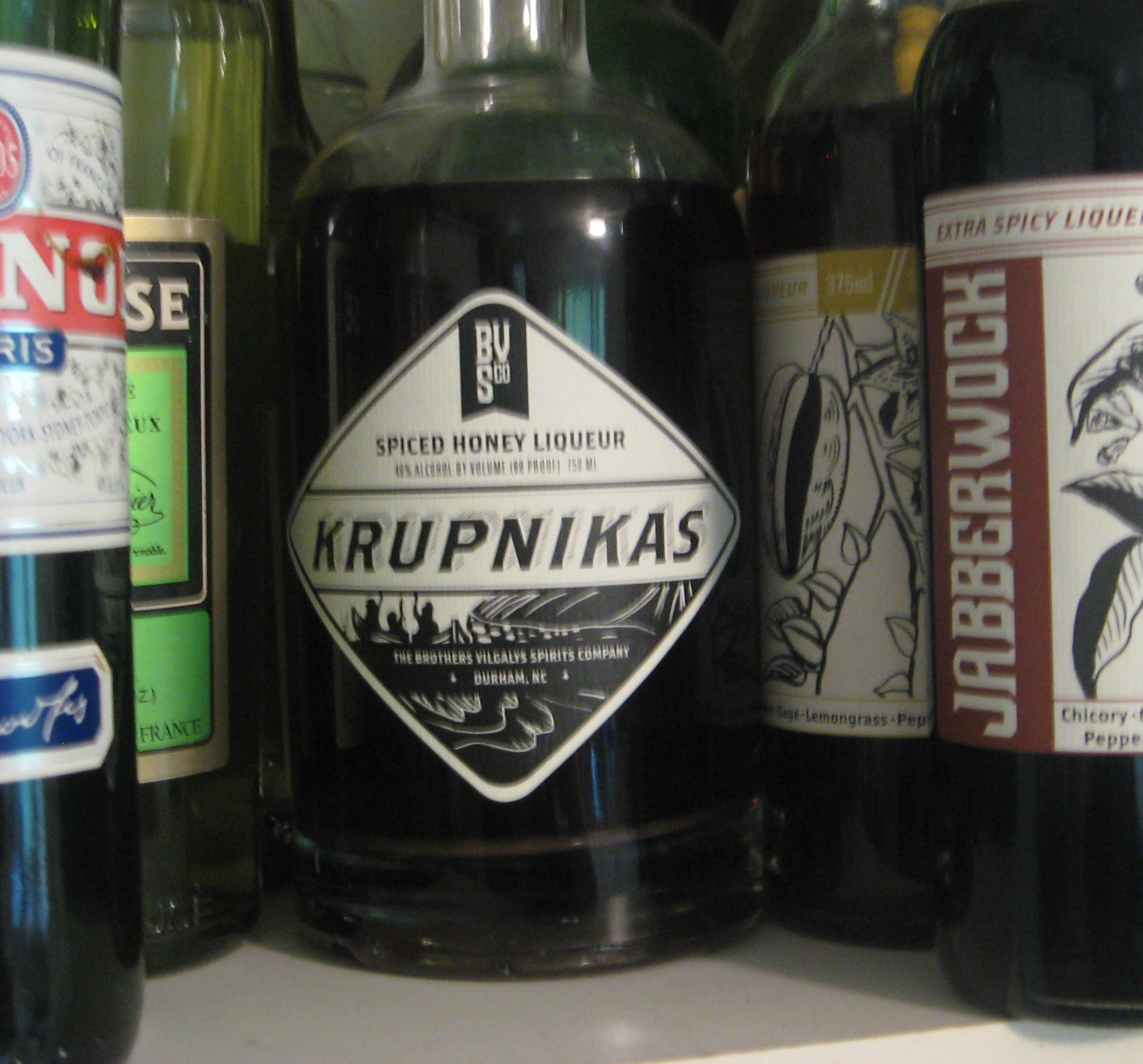
  • Like a liqueur to sip while relaxing? If you’re in North Carolina, there are some lovely liqueurs made in Durham by the Brothers Vilgalys: Krupnikas, a spice honey liqueur would be a real treat, or look at the unusual liqueurs they make: Beatmik, Beebop, Zaphod, and Jabberwok.  All are great in cocktails, for just sipping straight, added to hot chocolate or hot cocoa.  If you’re not in North Carolina you may still be able to get these delightful liqueurs through other distributors.

Wishing you and your favorite cook very happy holidays–lots of good food, friends, conversations, as well as wines and spirits!

__________________________________________________________

*Cook’s Illustrated equipment testing is done without manufacturers knowledge until after publication, and products tested are chosen for consumer benefit. They do not accept requests for testing from manufacturers.

.

Ò¿Ó

.

Grocery shopping for one

Do you think about advertising while you’re grocery shopping?  Most likely not! I know that I don’t–but I try to do “perimeter” shopping, making a foray into the center of the store only for specific items–like drain cleaner, paper towels, or dish detergent.  Where I shop, the immediate thing from the entrance is produce (with a big display of locally grown goods), which leads to the meat and fish/seafood counters; a left turn there takes me past the dairy, and refrigerated juices; another left leads me to frozen goods. If I take a right turn at the butcher/fish/seafood counter, I find myself at a counter of prepared fruits and melons (usually in big quantities that are too much for one).  Next in line is the bakery and then the delicatessen.  Continuing through those, I end up at the Asian food bar,  the rotisserie chickens and other prepared meats, and the salad bar.  My usual trek through the grocery store most often involves only a quick dash to the dairy case, then meat and deli. I don’t see a lot of processed food on this circuit. I’d never really given much thought to whether or not my shopping was being manipulated by sales-motivated display methods.  The links below contain some information about store layout and methods used to induce us to buy “stuff”–things that we did not come into the store to purchase: impulse purchases.

Õ¿Õ

links of hot Italian sausageMeat purchases are pretty easy–thanks to chops, steaks, and a butcher/fish counter that will cut to order; packages of  chicken parts, rather than whole birds, and house-made sausages that I can buy one or two at a time. Careful consideration of the dish that I want to make can allow alternative cuts of meet: beef shank instead of large chuck roast for post roast.

The real difficulties come in produce where things are sold bunched, bagged, or otherwise in quantities that don’t fit single-serving cooking. Some produce just grows in too large a quantity–heads of cauliflower, heads of cabbage or lettuce, a whole stalk of Brussels sprouts…waste just waiting to happen unless we make a serious effort to prevent it.

Ò¿Ó

One of the difficulties of cooking for one (or even two) is the produce that goes bad while waiting quietly in the refrigerator for you to do something with it.  I love peppers–and I like variety, but I simply cannot use a whole red and orange or yellow bell pepper before they begin to get a little mushy around the edges, no matter how carefully I store them.  So do I do without them?  Even  some ready-to-use packages that are available in the produce department are still more than I want. Buying more than I can use is like throwing money away–and it gets worse if you consider the amount of food waste by consumers after purchase, let alone the waste between harvest and the appearance in the supermarket.

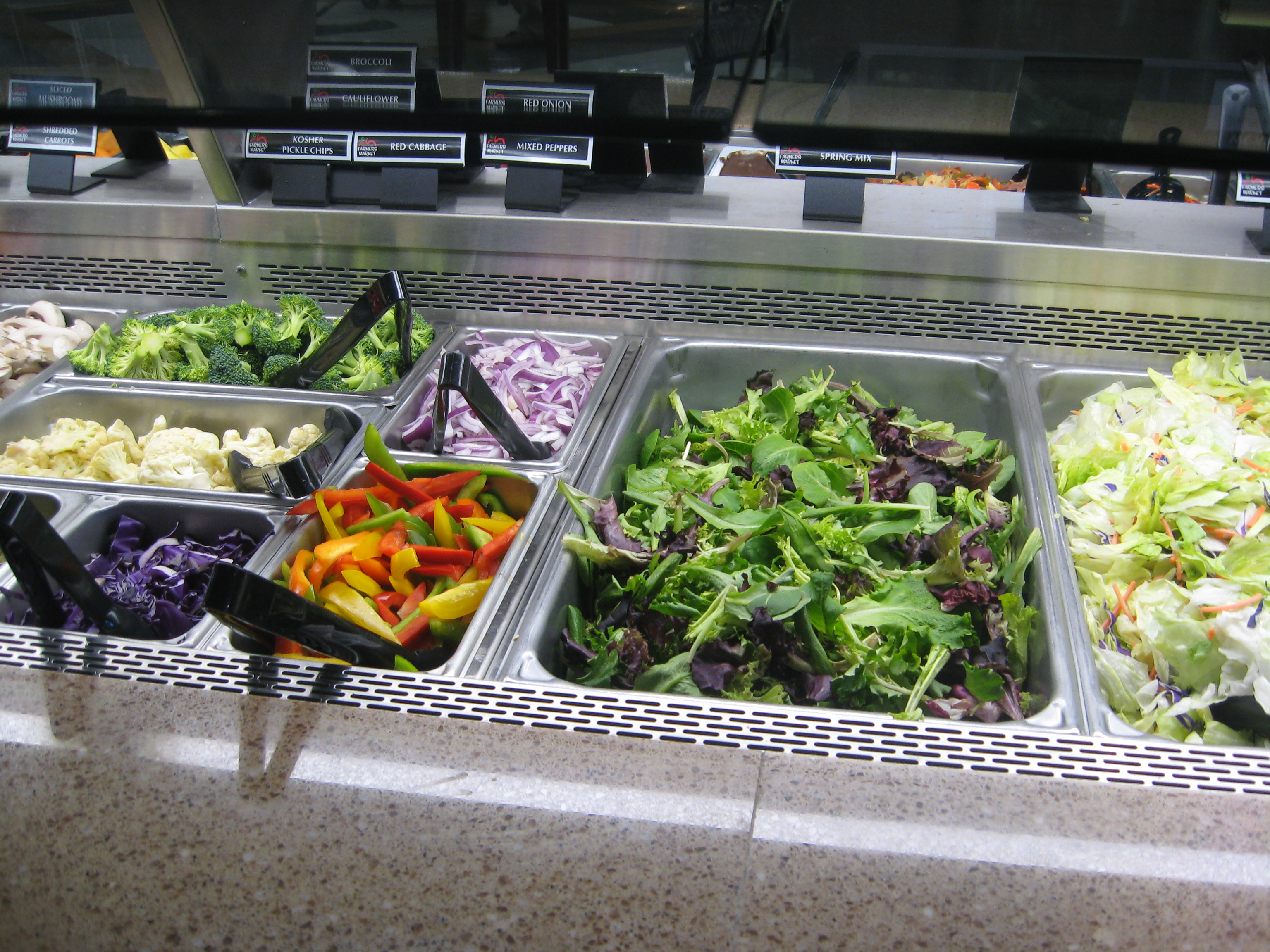
My supermarket likely has something that will help with this dilemma:  a salad bar.

green on the salad barIf you’ve always thought of it as a place to make a salad with all sorts of veggies and trimmings, and pour salad dressing on it, top it with some croutons, and take it back to the office to eat  you need to look at the salad bar from a different perspective. Take a closer look at what’s available there to purchase by the pound–thinking about what you need for a meal, rather than making a salad.

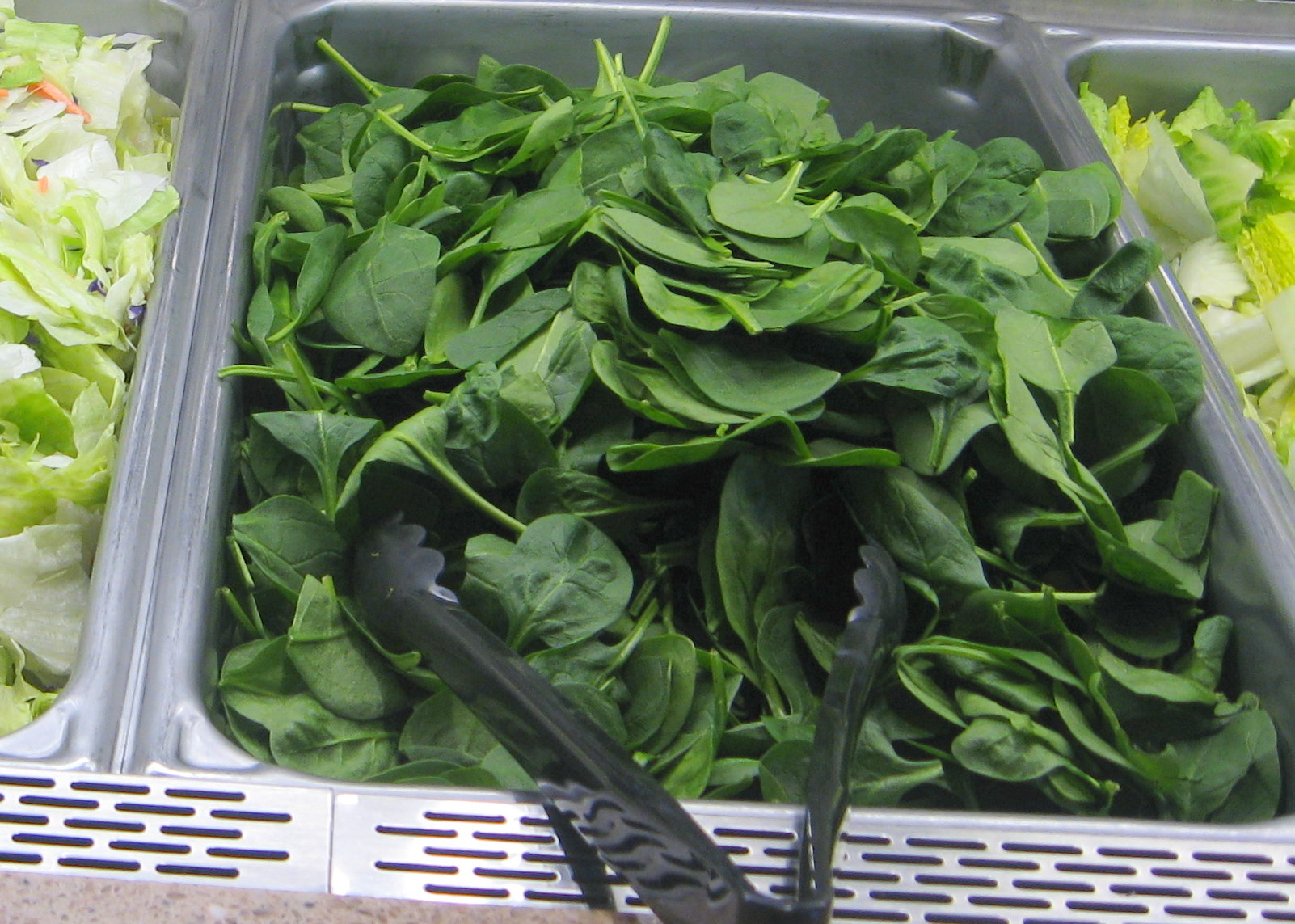
As much as I love salads, packaged greens often go bad before I use all of them. My other objection to big prepared baby spinach on the salad bar (Harris Teeter)packages of greens is the lack of variety–I simply don’t want spinach as my greens for a whole week.  If your market has a salad bar, you can get single-servings of mesclun, spinach, and other greens from the salad bar. I can also get some that loose greens in the produce department–I’ll purchase that either place, depending on what my schedule is and how salad-crazy I am at the time. Since the salad bar usually has several kinds of greens out, I can have mixed salad greens without buying lots of each kind.

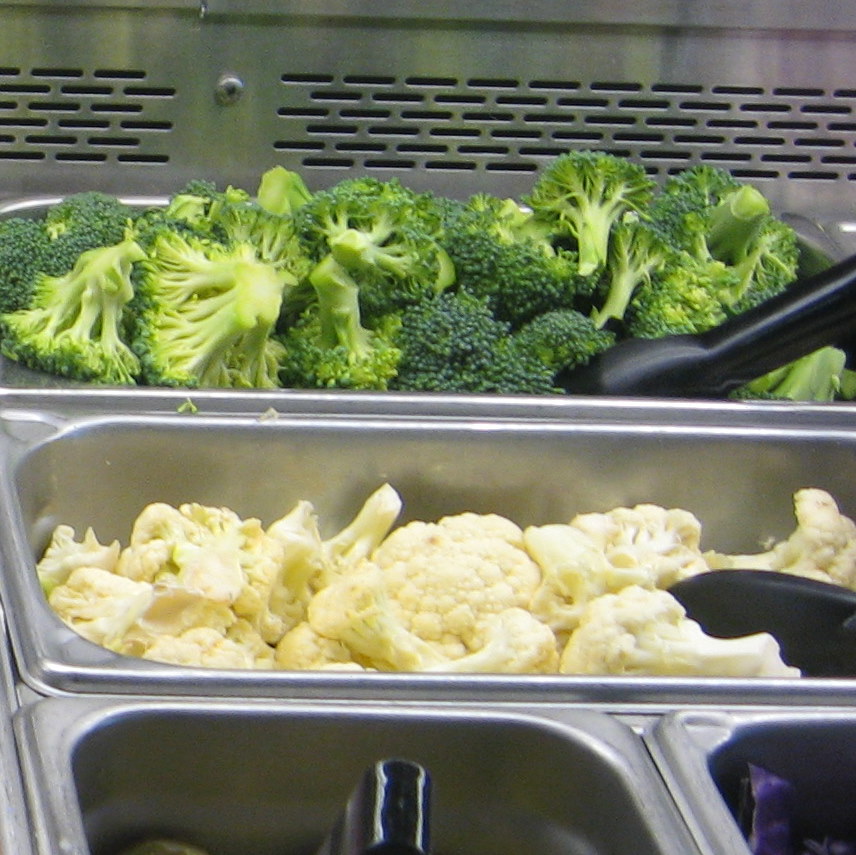
salad bar-broccoli-cauliflower IMG_6051I like cauliflower and broccoli too, but again a head of cauliflower is a bit much, so even at $3.99 a pound it is less wasteful and probably cheaper in the long run for me to buy what I need for a single meal from the salad bar–and I avoid having to do the prep myself–added benefit.

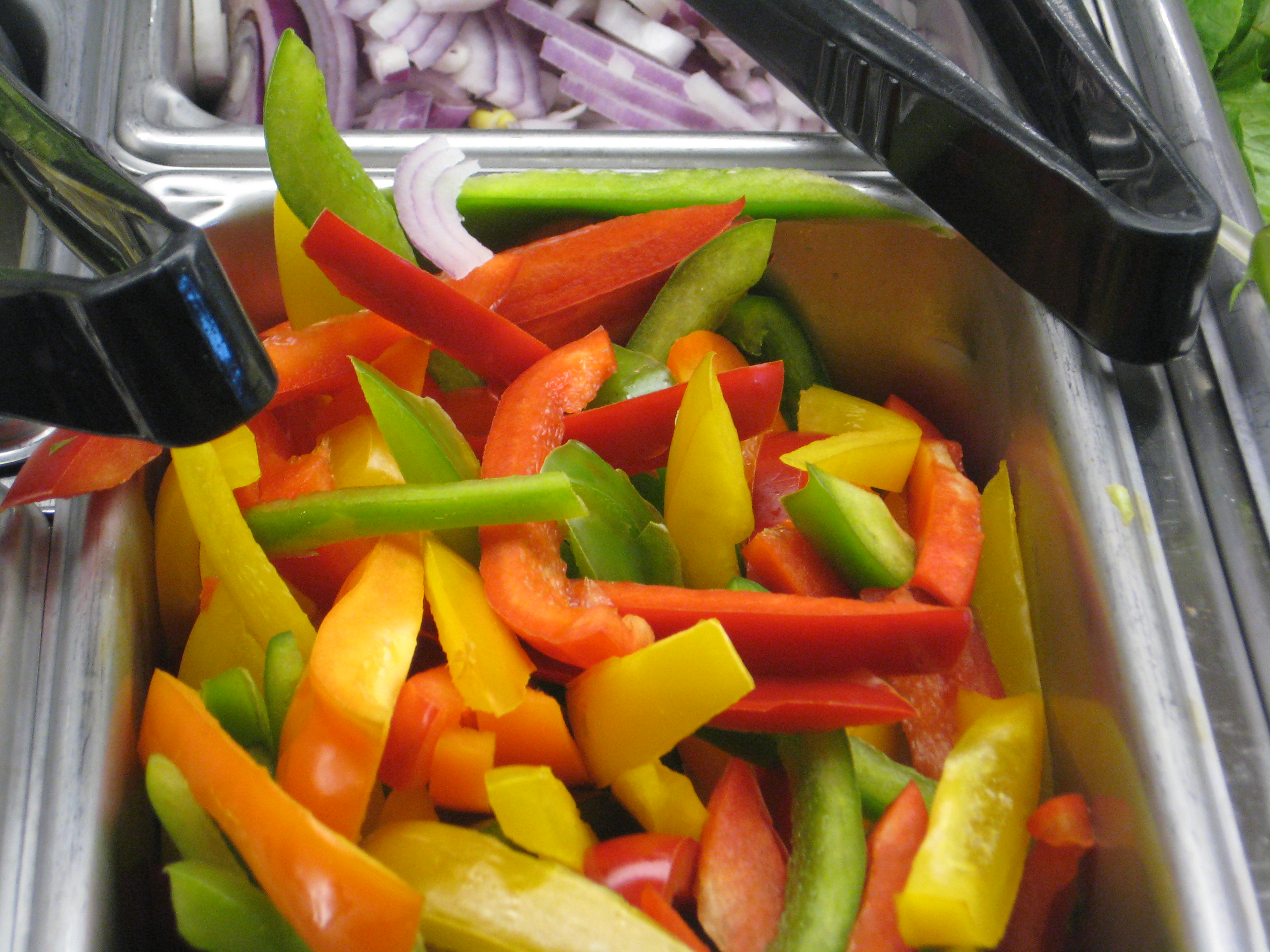
My most frequent purchase from the salad bar is bell pepper strips, for salads, and sometimes for seasonings.  If I need a lot, for example making the dandelion greens and sausages or  chicken with sweet peppers, I will either buy whole peppers, or use frozen ones since they are to be cooked.  The salad bar that I frequent usually has a variety of colors, so I can have that without red, yellow, orange, and green going bad in the fridge. (I prepared bell peppers on the salad bar (Harris Teeter)have to admit, somewhat shamefacedly, that I’m one of the people who will stand there and pick out the red, orange, and yellow and leave the green ones behind.)
I don’t buy tomatoes off the salad bar–I think that the refrigeration changes the texture of them, so I usually get grape/cherry tomatoes from the produce section. They seem to be one thing that I use easily before they get funky.

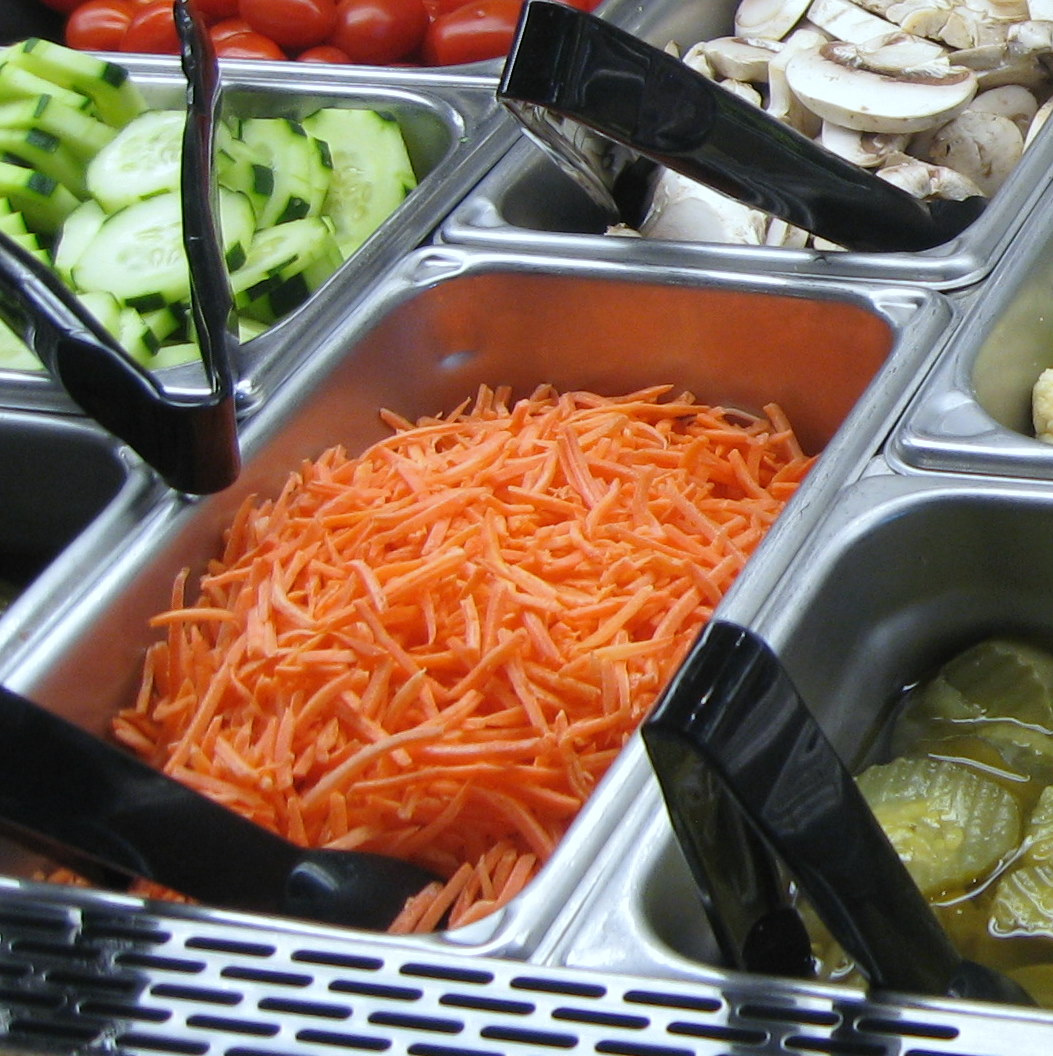
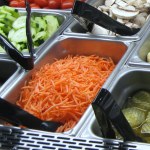
Onions and whole carrots keep well julienned carrots on the salad barenough that I buy those in the produce department most of the time and keep them in the fridge; but if I want  julienned carrots to make a quick serving for a meal or for a salad–I may just take the lazy way out and use the salad bar rather than the packaged ones in the produce department. That’s my idea of convenience food.
I don’t often by cucumbers from the salad bar since I prefer the English ones–and the salad bar usually features the American slicers so they are not worth the per pound price. Other things that may be purchased from the salad bar include sliced mushrooms, julienned radishes, or fresh mozzarella when you want just enough for one serving.

Another frustration of buying produce for one is fruit. As much as I like cantaloupe, honeydew, berries and other fruit, getting variety leads me to use the fruit side of the salad bar often. I can usually find assorted berries, mangoes, pineapple, and melons there.

Most of the items on the salad bar really aren’t that heavy–and considering that you have avoided the waste of unused produce, it seems to be a reasonable price.  Even some of the heavier items like melons, broccoli and cauliflower, are a bargain for me since it allows me to have variety in my meals and minimizes waste.

Not everything I want is on the salad bar, so the solo cook has to deal with more produce than you’re going to use quickly. What are the options?

Hot Chocolate–with Krupnikas

In anticipation of National Chocolate Day–drink up!

I love chocolate, and I would be unlikely ever to turn down good hot chocolate or cocoa. I’m glad fall is finally here with relief from the hot humid, muggy weather; however, today is the ninth day of measurable rain in a row, and what with hurricane Joaquin making its way north along the coast, we’ve got several more days of gray, rainy weather coming–maybe a record-breaking string of rainy days. Well, after a brief lull this afternoon, the rain is back. As I listen to the rain on the metal roof, what better to do on chilly, grey, soggy, damp, rainy days than make hot chocolate or hot cocoa?  A real comfort beverage even if you don’t enhance it with spirits. So start with a good cup of hot chocolate or hot cocoa. . . .

First, let’s be clear about the definitions of hot cocoa, and hot chocolate. These terms are often used interchangeably by Americans and use the terms to apply to some really atrocious mixes. If you’re really “into” this beverage there’s a whole lingo you should know. however there is a difference (Amano chocolate page). In a nut shell: hot cocoa is made with cocoa powder, milk and/or water. It’s a thinner beverage. Hot chocolate (also called drinking, or sipping, chocolate) is made with chocolate (often shaved or ground to melt faster) which, because of the natural fat in chocolate makes it a richer beverage.

So, when I say hot chocolate that’s what I mean–and I do distinguish that from hot cocoa–not that I don’t like both in different situations. (This really excludes most ready-packaged mixes–especially the “grocery store shelf” ones.)

So first you must make hot chocolate:

Simplest creamy hot (sipping) chocolate

Ingredients (1 serving)

  • 2 ounces of premium chocolate dark chocolate (unsweetened and/or semisweet) pieces
  • 1 cup half-and-half
  • pinch salt
  • vanilla to taste (optional)
  • honey to sweeten to taste

Preparation

  • Place chocolate (cut if in large block) into microwave-save container. The container needs to be large enough to allow you to whisk the warmed mixture vigorously.
  • Add honey and pour half-and-half over.
  • Microwave for about 2 minutes–until milk/half-and-half is steaming, but not boiling.
  • Add pinch of salt, and whisk vigorously until the chocolate is emulsified and mixture is slightly thickened.
  • Taste and add more honey if needed, and vanilla if desired.
  • Pour into a carefully warmed mug, sit back, and enjoy.

Ò¿Ó

Don’t serve this in a thin, fancy cup–even though it’s rather decadent. I use a mug warmed thoroughly with almost-boiling water so that this creamy, sensuous beverage will stay warm while i sip it slowly. Don’t bother with whipped cream–it’s rich enough without.

Ò¿Ó

Now you have a very dark creamy cup of chocolate. Good as is, but it’s fun to add some different flavors. With all this cold rainy weather, I’ve been experimenting with additions. One of my favorite inspirations was to add a splash of Krupnikas–a spiced honey liqueur. Awesome!

Another liqueur from the Vilgalys Brothers Jabberwock–a very spicy–with coffee, chicory, lemongrass, eucalyptus, manzano and chipotle peppers–makes a spicy cup of hot chocolate–probably my favorite so far.  A splash of Chambord would not be amiss either! if you want fruit rather than spice.

Ò¿Ó

Kupnikas_crop_IMG_8320

Ò¿Ó