Chilean sea bass (sous vide)

Supper this evening was Chilean sea bass (Patagonian toothfish. or Dissostichus eleginoides if you prefer). I’ve been skulking through cookbooks again–especially those that have sous vide recipes. (No, I haven’t bought anything special for sous vide cooking–yet, though I will confess to looking at immersion circulators and thinking a birthday present to self.)

In The Food Lab: Better Home Cooking Through Science by J. Kenji López-Alt I foud a lot of recipes for sous vide cooking–and a method of doing it without any special equipment (at least for foods requiring only a short cooking time). It’s done with a beer cooler.  I do have a beer cooler so this seems like a method to try, as an alternative to the multifunction pot that I used before because I was too lazy to try the beer cooler method.

First I decided to check out the beer cooler to see how well it held temperature. I put about 2-1/2 gallons of hot tap water into it (118ºF) and checked the temperature over several hours.  Two hours later, the water temperature was 113ºF, and at four hours, 110ºF. I decided that would certainly do for “short” cooking times. Seems most fish recipes call for cooking times under one hour.

The recommended temperature that I found for Chilean sea bass ranged from 122ºF to 140ºF so I decided to go with 130ºF. Since my sea bass was frozen (individually packaged filets from Costco), I thawed it in cold water, seasoned it lightly with salt and black pepper, a tiny splash of fennel fused olive oil (olives and fennel are crushed together), popped it into a zipper-lock freezer bag, and after squeezing out the air, plopped it into my beer cooler for 45 minutes. (Water temperature was 131ºF when I put the fish into the water and 129ºF one hour later.)

Results? Well, satisfactory. Obviously, the temperature in the cooler held well for the necessary time. The sea bass wasn’t quite as done as I’d prefer–though perfectly evenly cooked (even though this piece had one end that was definitely thinner than the rest). I think for my next–there’s more in the freezer–I’ll go with the 134ºF temperature or maybe just a tad higher.

I’ve also read lots of warnings about over-seasoning for sous vide cooking (and I came close to over-seasoning with the monkfish) this was bordering on under-seasoned. Next time, a bigger pinch of salt, and a bit more fennel oil, and a little lemon zest.

Ò¿Ó


Eggs, egg salad, etc

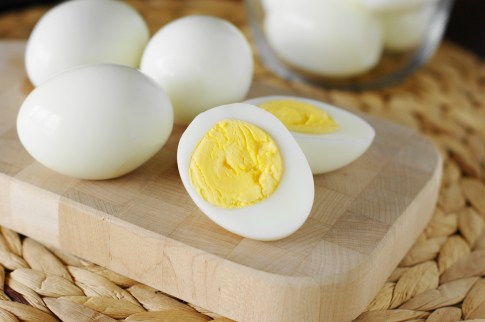
It’s amazing what you find whilst skulking about on the internet. The latest “odd” thing was a novel method of making lots of hard-cooked eggs at one time: in the oven.  It sounds simple–I may have to try it just to see if the texture is as good as reported.

But one thing leads to another–I guess that’s why it’s called browsing. On a chilly, rainy day with a big mug of not cocoa in hand, it’s not possible to simply check one link, so this one relating to cooking eggs lead me to a link on pickled eggs and other eggy links, including “All About Eggs” which covers eggs other than chicken, as well as information about color and size, and printed stuff on the carton, just in case you want to know about cage free or natural.


6-Pack-Chicken-EggsEggs (and milk) seem to be among the necessities in my kitchen. Whether working–or have a lazy hiatus between jobs–eggs get used in so many ways. Some of the less frequent uses include deviled eggs and pickled eggs. If I’m in a mad rush to meet a deadline an egg (or two) are easy to turn into a quick meal in so many ways. Omelettes, scrambled, poached, egg salad, or just added to soup or as a “dressing” for veggies.


Although I don’t make deviled eggs often, I do collect recipes for those occasions that call for them. Mostly deviled eggs call for mayonnaise. I’ve got no problem using mayo in them but I like some options for flavoring.  Following the Food52 link lead me to a recipe calling for yoghurt which sounds kind of interesting (though it does include some mayo).

I almost always have mayonnaise in the fridge–but a recent reluctance to venture out in the rain to go to the grocery store left me without mayo and a need for some quick egg salad, which like deviled eggs seems to almost always call for mayo.  I had the onion and celery, and capers so I decided to “wing” it: chopped up my eggs, and carefully, bit by bit while tasting added Arbequina extra-virgin olive oil (again from Bull City Olive Oil–love that place) that is a medium intensity but still rather delicate, and then just (again by taste) a bit of apple cider vinegar, and finished with salt and freshly ground black pepper.  Definitely not southern-style egg salad, but very good. It’s likely that I’ll do it again even if there is mayo in the fridge. (I did eventually find an egg salad recipe using olive oil.)

That little experiment got me looking for other recipes for egg salad made without mayonnaise–some recipes that I found just use mustard (I do sometimes put some mustard in egg salad), others used Greek yoghurt (though I don’t “do” non-fat–and I use Skyr as starter for my homemade). Another recipe that I found interesting was one using avocado for the “fat” part of the egg salad–so intriguing that I may have to try that when next I have a ripe avocado on hand. And then, the delightful post from Food52 on “How to Make Egg Salad Without a Recipe” which I think will elicit a smile (at least) if you’re an egg salad fan. If you want to really take your egg salad to another level, take a look at “Mediterranean Egg Salad” or “Egg Salad: The True Breakfast of Champions“.

Why my foray into egg salads? Well, hot weather is approaching, and I know I’ll be looking for more meals involving minimal heat–and I really like eggs, but always looking for new ways to use them–maybe even graved eggs!

Wondering about other things to do with eggs? Try here.  A son gôut!

from wikipedia

 …..Ò¿Ó…..

..


A one-dish oven meal

It’s time to do the weekly (at least I try to make it weekly) troll through the fridge to see what is left from last week, to use for the first two or so meals this week. There’s some kohlrabi, radichio, fresee, lettucepart of a rutabaga, a head of radicchio, and there’s part of a bag of frozen butternut squash in the freezer that should be used as well since it’s already open. There are also two boneless, skinless chicken thighs and two black pepper and onion sausages.

The chilly, drippy, damp and grey weather calls for something warm and colorful. This weather has left me feeling like I really want quality time with the cat and a good book, so I’m thinking oven type meal. It can’t be a stew–already did that quite recently. So a roasted supper seems like a good idea–and something with lots of flavor!

I’ve been wanting to try roasted radicchio, butternut squash is good roasted too–and that certainly would be cheerful and colorful. Although I usually use bone-in chicken thighs for roasting, a little perusing of recipes from The Kitchn I found a suggestion for roasting the boneless, skinless ones as well.

  • A little further browsing suggested 425ºF.for about 20 minutes for the thighs.
  •  From Bon Appetit for roasted radicchio suggested 450ºF for 12 minutes for a head cut into six wedges–I think I’ll cut mine a little thicker
  • For the butternut squash, a recipe from Food & Wine suggested 425ºF for about 40 minutes for 1-inch dice of raw squash. The frozen squash is par-cooked, so I think the 20 minutes should work for that. Since this is frozen, I’m not expecting it to brown in the oven–it will be too wet, but better than dealing with way too much squash. It should still taste good.

Ò¿Ó

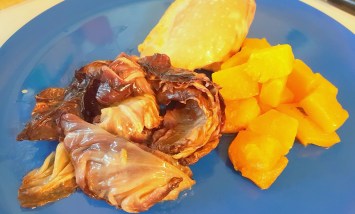
It was a pretty good result for a trial run with just whatever was in the fridge, and went into the oven all in one baking dish.  It’s a combination that will likely even happen as a planned meal in the future.

The chicken thighs didn’t brown much but were tasty; however, I definitely my chicken thighs bone-in and skin-on–especially if you salt and air dry the skin so that it gets crispy and brown. I may have to give bone-in a bit of a head start on cooking, then add the other stuff.

The butternut squash did as expected–cooked fine but didn’t brown. Again, still tasted good and it was great with the radicchio.

I didn’t get part of the core with the radicchio, so my wedge fell apart–oh well, a learning experience. But roasted radicchio is now right up there with grilled or roasted cabbage. The edges a little brown and almost charred, but tender (though still some texture. The bitterness of this against the sweetness of the squash was great. That’s a combination I’ll come back to again.

It wasn’t particularly photogenic since the radicchio fell apart as I removed it from the baking dish to my plate and the chicken wasn’t browned, but it was a very tasty meal with some good taste contrasts.

20170329_1811381.jpg

 A son gôut!

Ò¿Ó

.


Just have to share this duck recipe!

I love duck breasts–it’s a great way to have duck when you are trying to do single-serving cooking since the breasts are readily available frozen from the supermarket. There are some in my freezer now, and one of my favorite citrus fruits is a lovely blood orange.

I was just perusing the WordPress and my FaceBook updates and saw this recipe for “Duck and Orange Salad with Duck Crackling”  from Mrs Portly’s Kitchen.  The pictures came very close to having me drooling all over by keyboard–such perfectly cooked duck and that jewel-like blood orange gel!

I’ve never tried cooking duck breasts without the skin–but that would make it much simpler than searing them with the skin on but this looks like it would be well worth every bit of effort. And the crackling–yum!

I think I saw blood oranges at The Fresh Market last time I was there!

Red Cabbage and Beet Salad

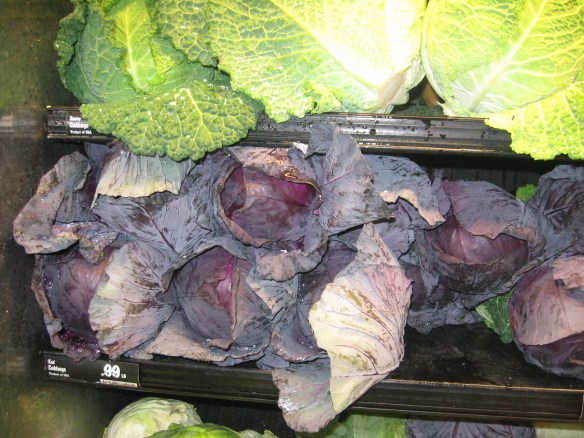
It is probably obvious that I consider beets and cabbage both to be under-appreciated vegetables. After making  cabbage steaks this recipe for Warm Roasted Red Cabbage and Beet Salad from Will Frolic for Food just really clicked with me.

It’s not  complicated, nor does it take that long even with the separate preparation for the beets and the cabbage–but well worth doing. It’s a veritable symphony of flavors with the roasting providing all sorts of additions to the flavor. This has been added to my list of awesome recipes!

I’d agree it could be a meal with the chickpeas added. I omitted the chickpeas with part of it and used it as a side (only the one) for both roasted chicken leg quarters, as well as for griddled pork steak and I’d do it with lamb steak, too.

If you have not got red cabbage on hand, it’s worth doing with plain old white cabbage–though not quite as striking in color–still very tasty!

IMG_6035

Spring is here?

20170307_115628

Mertensia virginicia

Here in NC it’s beginning to feel a lot like spring! The maple outside my house is well into bloom; on my deck there are Virginia bluebells or cowslip (Mertensia virginica) blooming, and other green shoots (including the sorrel) are starting to peek out of the ground.

The birds are acting like it’s springtime, too; the Pine, and the Yellow-rumped Warblers that suddenly appeared (just in time for the Great Backyard Bird Count) seem to have disappeared as quickly as they appeared, and as I write I’m listening to a juvenile Red-tailed Hawk calling close by . Other harbingers of spring, catalogs from Johnny’s Selected Seeds, Brushy MountainBailey Bee Supply, and Dadent, have arrived, too (and I’ve ordered my package of bees to restart by beekeeping career).

I’ve been happily indexing with the doors and windows open on some days (like today) when the temperature rose into the 70s, and my cooking thoughts have turned to more spring-y things–like shad roe, fresh garden peas, and asparagus–instead of things like pot roast, chicken and dumplings that are so comforting in cold, winter weather. That was until I looked at the weather forecast this morning while I was imbibing my morning quota of caffeine. On my second cup of café au lait, doing my Facebook catch-up, I spotted a post from a friend about possible snow on Sunday–that’s right on 12 March 2017–after days of warm weather and blooming flowers!

Ever on the lookout for “fake” news these days, I pulled up the Weather Channel, and WRAL for local forecasts–sure enough–after daytime temperatures of 70 to 75ºF until Friday the forecast highs plummet to mid-40 to 50ºF for the weekend–and freezing (to below freezing) nighttime lows for the weekend and Monday. Yes, there were those cute little snowflakes in the graphics with the raindrops!  Here’s hoping that whatever we get, it’s not one of the infamous “ice storms” with freezing rain and all its complications.

That shifted my cooking thoughts in a rather abrupt manner: one last fling of winter food before we get to the kind of weather that makes me cringe at the thought of things like beef stew, pot roast, or beef and barley stew just because it hot and humid.

9780393081084Those specific things came to mind because I’ve just been reading  The Food Lab: Better Home Cooking Through Science by J.Kenji Lopez-Alt. Yes, food science with attached recipes (and experiments to demonstrate his points)–a good book to get you started with cooking by understanding the science (without too much science detail to bore you).

Considering that my freezer is already pretty well stocked with pot roast to get me through the damp, drizzly spring weather, I decided that wasn’t my option for my last winter cooking fling.

(So you’re asking why I’m doing one last bit of winter cooking instead of just pulling some pot roast out of the freezer? Well,  for me, part of the satisfaction of winter cooking is all about the the aroma of whatever is cooking in the oven (that’s also helping make the kitchen warm and cozy). It’s not all about putting stuff in the freezer for later although that’s good–it’s about the immediate experience, too. That’s what I mean by “comfort food”!).

Õ¿Õ

I’ve decided that I’ll try the recipe for Beef and Barley Stew. This may be the first time that I’ve ever used a recipe for it but this one looks interesting, and maybe, an improvement on my usual throw-together version. So–from The Food Lab (Kindle location 3875), here’s what I’m going to try (though I’ll adjust the quantities since it’s to serve only me–and the cat). The recipes in this book are very easy to follow–instructions complete, and the science explained before the recipe, thought it’s easy reading and not so tedious as some food science can be. The recipe below is a good example of what’s in this book.

Beef and Barley Stew

from The Food Lab (Kindle location 3875-3896)

Ingredients

  • 2 pounds boneless beef short ribs, cut into 1-inch chunks
  • Kosher salt and freshly ground black pepper
  • 2 tablespoons canola oil
  • 2 medium carrots, peeled, split in half lengthwise and sliced into 1/2-inch pieces (about 1 cup)
  • 2 medium stalks celery, split in half lengthwise, and sliced into 1/2-inch pieces (about 1 cup)
  • 1 large onion, finely diced (about 1-1/2 cups)
  • 1/2 teaspoon Marmite
  • 1 teaspoon soy sauce
  • 2 medium cloves garlic, minced or grated on a Microplane [grater/zester] (about 2 teaspoons)
  • 1 tablespoon tomato paste
  • 4 cups homemade or low-sodium canned chicken stock
  • one 14-1/2 ounce can whole tomatoes, drained and roughly chopped
  • 1 cup pearl barley
  • 2 bay leaves
  • 4 cups loosely packed roughly torn kale leaves

Preparation/assembly

  1. Toss the short ribs in a large bowl with salt and pepper to coat. Heat the oil in a Dutch oven over high heat until smoking. Add the beef and cook without moving it, until well browned on first side, about 5 minutes. Stir and continue cooking, stirring occasionally, until browned all over, about 10 minutes total; reduce heat if necessary to keep from scorching. Return the meat to the bowl and set aside.
  2. Return the pot to medium-high heat. Add carrots, celery, and onion. Cook, stirring frequently, until the vegetables begin to brown, about 4 minutes. Add the Marmite, soy sauce, garlic, and tomato paste and cook, stirring, until fragrant, about 30 seconds.
  3. Add the stock and scrape up the browned bits from the bottom of the pot with a wooden spoon. Add the tomatoes, barley, and bay leaves, then return the beef to the pot, increase the heat to high, and bring to a boil. Reduce to the lowest possible heat and cover the pot, leaving the lid slightly ajar. Cook, stirring occasionally, until the beef is completely tender and the barley is cooked through, about 2 hours.
  4. Stir in the kale and cook, stirring constantly, until wilted, about 2 minutes. Season to taste with salt and pepper. Serve, or, for best flavor, cool and refrigerate in a sealed container for up to 5 days before reheating and serving.

ô¿ô

Why did I decide to try this recipe? Well, in a word, umami. Good food is all about flavor–and I’m investigating an ingredient that I’ve never tried before: Marmite. I’ve read that it’s a love-or-hate thing with Marmite, but it’s supposed to enhance umami. I don’t think I’ll hate it–after all I’m not going to eat it straight, and I do use anchovies and nam pla (fish sauce) so why not try this one?

I’m not dissatisfied with my usual beef and barley stew or soup (which does contain most of the ingredients here except for tomatoes and Marmite), but I’m feeling adventurous–my ever-present curiosity about ingredients that I haven’t tried rears its head.

However, I’m thinking of one modification here–depending on my work schedule for Sunday. If an anticipated manuscript arrives for indexing, ending my hiatus of goofing off and spending quality time with the cat–meaning I’ll actually be working–the 2-hour cooking may take place in a slow (275 ºF) oven–with the lid slightly ajar as suggested in this recipe since it reduces the watching necessary with stove-top cooking; it’s usually my preferred method because it eliminates the possibility that I’ll get involved and not give the pot proper attention; nothing worse that a scorched pot to clean up–not to mention ruining good food!

There’s one other deviation that I’ll use with this recipe–because I’m only cooking for one and bunches of greens tend to be a bit overwhelming (read just too damn much of even a good thing), I’ll be getting my kale out of a freezer package (my usual  Stahlbush Island Farms chopped curly kale) so that I don’t have to deal with the excess. Since I’ve got a few “winter” veggies in the crisper that need to be used I’m planning  different vegetable sides for the week–something with rutabaga, and kohlrabi.

.

Õ¿Õ

..

 

More oysters!

oyster-stew-with-trufflesSince my last oyster fest occurred on the same days as the Women’s March, one of my guests couldn’t be here so, since there was a “leftover” truffle, it’s happened again. Fortunately I was able to get more oysters though they seem to be in very short supply around Durham these days.

It was oysters poached in their liquor and black truffle and black pepper cream poured over them just as the edges curl. Immediately popped into warmed bowls. No waiting around for anything–they need to be eaten right away! Fresh briny bites of ocean with earthy black truffle, and just a hint of black pepper piquancy.

The wines  that we had today–since there were three of us–the 2013 vintage of the one we had last time, with a verdicchio (never had it before, but it was recommended by a good wine shop as likely to be good with this dish).

Domaine des Gandines, Macon-Peronne Blanc, Burgundy, 2009 vintage with the last batch of oysters just a couple weeks ago was excellent. Today it was the 2013 vintage was “fresh” and not nearly so complex as the 2009–it certainly wasn’t bad (is it possible to have a “bad” white burgundy?) but I’ll look for an older one to go with the next batch of oyster stew (if it has truffles in it).

385762The Tenuta del Cavaliere, Verdicchio dei Castelli di Jesi, Marchetti, 2013  was very slightly fizzy and excellent with the oyster stew. It was the unanimous favorite of all of us of the two this evening; however, I think that my favorite so far is an older burgundy that is more complex.

We ended with a sampling of liqueurs from Brothers Vilgalys  and a tiny taste of blueberry/lavender chocolate from Chuao Chocolates. Definitely satisfied and replete!

It seems that I’m lucky enough to have found two oyster eaters who also enjoy conversing about food and wine! The makings of a perfect meal though the search for the perfect wine goes on, and oysters offer so many possibilities. There will be oysters next winter, but who knows how they will be fixed. That’s part of the pleasure–planning and then eating!

Ò¿Ó

The oysters that I had today put out much more liquid than the last batch, so I have a “leftover” to deal with: cream infused with black truffle and black pepper. I’m thinking potato soup, perhaps? Or…we’ll just see what evolves. It will be good whatever happens. And now the planning starts for next year’s oyster tradition.

 A son gôut!

..

.

Winter oyster tradition continues

As I’ve posted before, oysters with special wine are a Christmas and New Year’s tradition in my home. When I finally got it back together from the C. difficile, it was way past prime oyster season. But it is again prime oyster season so my thoughts are turning to oysters and wine. Eating oysters on the half-shell recently at Burger Bach (yes, they “do” excellent burgers, and oysters) really got me thinking about oysters in a very serious way. Even though I’ve not made it for either Christmas eve or New Year’s eve, I still intend to have my winter oysters. I’d arranged to share with two good friends who are also oyster lovers–but we had to reschedule first because of snow and horrendous cold, and then, again, because all the snow and cold left Durham essentially without oysters!

I’ve done some fun things with oysters: oyster and corn chowder, and a in 2013-2014, with black truffle (good friend gave me truffles) and experimented with some wines.  I liked the “surf & turf” combination so well that I’m continuing it this year as well.

I’ve started the hunt for wine for this winter’s oyster feast. So far the wines recommended are:

2011 Pouilly-Fuisse (Gilles Noblet, France)

“Gilles Noblet, Pouilly-Fuisse, Burgundy, France, 2011{sustainable} 100% Chardonnay EXOTIC FRUITS, DRIED CITRUS & WHISP OF VANILLA Thirty year old Chardonnay vines provide the heart and soul of Noblet’s Pouilly Fuissé, right from the village of Fuissé. This area was originally comprised of negociant producers and Gilles Noblet was the first in his region to independently bottle his wine under his own name. This style is racy, rich and elegant with hints of kiwi and pineapple fruits. The finish goes on and on and on… Serving Suggestion: White Burgundy is the home of Chardonnay and this one is extremely versatile. A perfect match for dishes with heavy cream sauces.”  From Wine Authorities.

2013 Macon-Peronne (Gandines, Domaine des, France)

domaine-des-gandines-macon-peronne-burgundy-france-10338034“100% Chardonnay FULL & FLAVORFUL, LEMON, HAZELNUT, CARAMEL. SERIOUS! Gandines really surprised us with this compelling, and serious White Burgundy. Fully ripe and lush, but with juicy acidity and complex minerality. This kind of power usually comes from the big boys north of the Macon in the Cotes de Beaune. Aged in enormous 3000 liter old oak barrels that soften the wine without giving it any oak flavor, it is possibly the most impressive Chardonnay available at this price! Serving Suggestion: Steamed or raw oysters. Black sea bass poached in olive oil with fresh thyme. Roast turkey with truffles or chanterelles.”  From Wine Authorities.
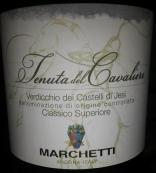
Tenuta del Cavaliere, Verdicchio dei Castelli di Jesi, Marchetti, 2013 

385762“Verdicchio is central Italy’s most distinctive white varietal. The mineral-rich soils of the Classico Superiore sector of the Marches’ Castelli di Jesi zone – just a few miles from the Adriatic Sea – imbues the finest Verdicchios with extra complexity and a deeply etched soil signature. A radiant green-gold in the bowl, Marchetti’s Verdicchio shows all the minerally snap pea and smoky white pepper notes that we so love in the very finest Verdicchios. The wine’s smoky mineral expression yields to a fleshy core of pear and melon fruit backed by riveting acidity, a tactile mineral expression, and suggestions of green tea, grapefruit zest and sappy dried herbs. Full bodied yet balanced and elegant, Marchetti’s Verdicchio begs for rich vegetarian recipes and fish steaks. Pair it now and over the coming five years with hearty fare that calls for a bold white wine, like swordfish, fresh albacore tuna, rabbit, zucchini casseroles, white pizzas, and pastas dressed with olive oil, garlic and seasonal vegetables. Impressive Verdicchio! ” Found this one at Hope Valley Bottle Shop.
Finally, the weather is cooperating, and I’ll be eating oysters on Saturday evening. I haven’t yet decided which wine will accompany this round of oyster stew with black truffles!  I keep reading the descriptions of each and just can’t decide, but I do know that three is too many–I have to make a decision.


Duck breast salad

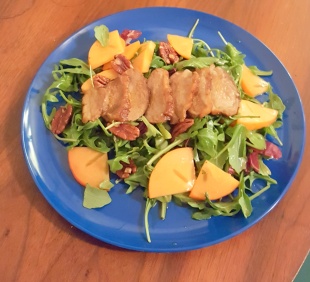
For my Christmas Eve supper I fixed pan-seared duck breast–there were two in the package and that meant leftovers. I could have had a second meal had I not been a bit greedy and 20170107_182359eaten part of the second one. So leftovers–just enough for a salad.

A very simple salad made with arugula and radicchio for the greens (just a bit of bitterness to counter the fat of the duck),  Fuyu persimmon, pecans, and the thinly sliced duck breast.

For the dressing, I decided that the leftover sauce that was used for the cabbage and rutabaga side dish for Christmas dinner could make a second appearance–with a little help from an infused oil from Bull City Olive Oil. (Yes, I’ve gotten into infused oils since I discovered some quality ones.) The sauce was lime juice, lime zest, and buckwheat honey but I needed something more–I tasted it with plain (but very good olive oil). That gave me an excuse to go back and do some more tasting and shopping. I tasted several infused oils and decided that the chipotle infused oil would add just the right bit of spark to the leftover sauce.

I made a vinaigrette using about 2:1 proportions of oil and sauce, tossed the greens, persimmon, and some pecans with it; making a perfect bed for the sliced duck breast that was quickly warmed in a skillet. The finishing touch was just a bit more chipotle oil–just a few drops–on the sliced duck breast.

Yum! A great light supper from recycled leftovers, although I’d be more than happy to serve a freshly cooked duck breast this way as well.

Ò¿Ó


Lamb Stew (Alentejo-style)

My bargain shopping got me a butterflied leg of lamb that was on special. Rather than roast it whole, I decided our chilly, grey, damp weather needed stew.

I cut the lamb leg into 3 cm cubes; I decided that I wanted some variety in my stews so since I had two pounds of lamb so all I needed to do was halve the recipes.Since I’ve not done much Iberian cookery I got out The Food of Spain & Portugal: The Complete Iberian Cuisine by Elizabeth Lambert Ortiz (page 152).  

pimenton-de-la-veraThere are a lot of lamb stew recipes in this book. I finally made a decision based on seasonings that sounded interesting: garlic, parsley, pimenton de la vera (smoked), cayenne, and cloves. (The recipe only said “paprika”–which I’m sure would work fine, but I particularly like the smokiness of the pimenton de la vera, but I used the amount called for.)

.

.

Carneiro à Alentejana

Ingredients

  • 4 cloves garlic, crushed
  • 1 tablespoon finely chopped parsley
  • salt and freshly ground pepper
  • 900 g (2 pounds), lean, boneless lamb, cut into 3.5 cm/1-1/2 inch pieces
  • 6 tablespoons olive oil or lard
  • 2 medium onions, finely chopped
  • 1 tablespoon paprika
  • 1/8 teaspoon cayenne
  • 1/8 teaspoon ground cloves
  • 175 mL/ 3/4 cup dry white wine

Preparation

  • Mix garlic, parsley, salt, and pepper. Add the lamb to the garlic mixture and marinate about 2 hours. (I left mine overnight)
  • In a large skillet, heat the oil or lard and brown the lamb pieces all over.
  • Transfer lamb to a flameproof casserole.
  • In the remaining oil and sauté the onion until soft and add to the casserole.
  • Add paprika, cayenne, cloves to the casserole. (I like to “bloom” dry spices in oil before adding liquid so I added the paprika while sautéing the onions)
  • Bring to a simmer on the stovetop.
  • Cover and put in a moderate oven (180ºC/350ºF) and cook until the lamb is tender (about 1-1/2 hours).

The author recommends serving with a light red wine (red Vinho Verde or Dão, and notes that in Portugal meats are usually served with both potatoes and rice.

õ¿õ

I halved the recipe above and used the other pound of lamb to make my favorite lamb and cabbage stew (Fårikål) with the other half. I considered being very energy conscious and making both at the same time; however, my hedonism won and I made them on different days because I love to luxuriate in the aromas of cooking–that’s part of the anticipation and enjoyment of cooking and eating. I just didn’t think I would get to enjoy them in the same way if I were to cook both at the same time. I would have missed some of the pleasure of cooking had I done that. The smell (especially of the pimenton de la vera) was particularly appetizing.

The combination of the pimenton, cayenne, and clove was wonderful. I don’t often use the “sweeter” spices with meats but that little dash of clove has made me wonder why I haven’t used them more with meat. I need to broaden my perspective on the “appropriate” spices to use with meats.

The balance of the seasoning in this recipe (I didn’t change anything) was wonderful–just enough cayenne to give a little “burn” as you eat your way through a serving, but not every getting to the point where you felt as if you had blisters on your taste buds–and the clove didn’t smack you in the face either. All in all a very well-balanced seasoning. I’ll probably try this with lamb shoulder chops–even without cutting them up.

Oh, wine? Well since there was a bottle of my “house wine” already open, I used that–it’s one of the things I like about that wine: it’s very versatile. Rice? Potatoes? Nope–garbanzo beans.

There is one modification I think I’ll make next time–I’ll add more onions they were luscious after cooking with the lamb and seemed just right with the pimenton.