
Mertensia virginicia
Here in NC it’s beginning to feel a lot like spring! The maple outside my house is well into bloom; on my deck there are Virginia bluebells or cowslip (Mertensia virginica) blooming, and other green shoots (including the sorrel) are starting to peek out of the ground.
The birds are acting like it’s springtime, too; the Pine, and the Yellow-rumped Warblers that suddenly appeared (just in time for the Great Backyard Bird Count) seem to have disappeared as quickly as they appeared, and as I write I’m listening to a juvenile Red-tailed Hawk calling close by . Other harbingers of spring, catalogs from Johnny’s Selected Seeds, Brushy Mountain, Bailey Bee Supply, and Dadent, have arrived, too (and I’ve ordered my package of bees to restart by beekeeping career).
I’ve been happily indexing with the doors and windows open on some days (like today) when the temperature rose into the 70s, and my cooking thoughts have turned to more spring-y things–like shad roe, fresh garden peas, and asparagus–instead of things like pot roast, chicken and dumplings that are so comforting in cold, winter weather. That was until I looked at the weather forecast this morning while I was imbibing my morning quota of caffeine. On my second cup of café au lait, doing my Facebook catch-up, I spotted a post from a friend about possible snow on Sunday–that’s right on 12 March 2017–after days of warm weather and blooming flowers!
Ever on the lookout for “fake” news these days, I pulled up the Weather Channel, and WRAL for local forecasts–sure enough–after daytime temperatures of 70 to 75ºF until Friday the forecast highs plummet to mid-40 to 50ºF for the weekend–and freezing (to below freezing) nighttime lows for the weekend and Monday. Yes, there were those cute little snowflakes in the graphics with the raindrops! Here’s hoping that whatever we get, it’s not one of the infamous “ice storms” with freezing rain and all its complications.
That shifted my cooking thoughts in a rather abrupt manner: one last fling of winter food before we get to the kind of weather that makes me cringe at the thought of things like beef stew, pot roast, or beef and barley stew just because it hot and humid.
 Those specific things came to mind because I’ve just been reading The Food Lab: Better Home Cooking Through Science by J.Kenji Lopez-Alt. Yes, food science with attached recipes (and experiments to demonstrate his points)–a good book to get you started with cooking by understanding the science (without too much science detail to bore you).
Considering that my freezer is already pretty well stocked with pot roast to get me through the damp, drizzly spring weather, I decided that wasn’t my option for my last winter cooking fling.
(So you’re asking why I’m doing one last bit of winter cooking instead of just pulling some pot roast out of the freezer? Well, for me, part of the satisfaction of winter cooking is all about the the aroma of whatever is cooking in the oven (that’s also helping make the kitchen warm and cozy). It’s not all about putting stuff in the freezer for later although that’s good–it’s about the immediate experience, too. That’s what I mean by “comfort food”!).
Õ¿Õ
I’ve decided that I’ll try the recipe for Beef and Barley Stew. This may be the first time that I’ve ever used a recipe for it but this one looks interesting, and maybe, an improvement on my usual throw-together version. So–from The Food Lab (Kindle location 3875), here’s what I’m going to try (though I’ll adjust the quantities since it’s to serve only me–and the cat). The recipes in this book are very easy to follow–instructions complete, and the science explained before the recipe, thought it’s easy reading and not so tedious as some food science can be. The recipe below is a good example of what’s in this book.
Beef and Barley Stew
from The Food Lab (Kindle location 3875-3896)
Ingredients
- 2 pounds boneless beef short ribs, cut into 1-inch chunks
- Kosher salt and freshly ground black pepper
- 2 tablespoons canola oil
- 2 medium carrots, peeled, split in half lengthwise and sliced into 1/2-inch pieces (about 1 cup)
- 2 medium stalks celery, split in half lengthwise, and sliced into 1/2-inch pieces (about 1 cup)
- 1 large onion, finely diced (about 1-1/2 cups)
- 1/2 teaspoon Marmite
- 1 teaspoon soy sauce
- 2 medium cloves garlic, minced or grated on a Microplane [grater/zester] (about 2 teaspoons)
- 1 tablespoon tomato paste
- 4 cups homemade or low-sodium canned chicken stock
- one 14-1/2 ounce can whole tomatoes, drained and roughly chopped
- 1 cup pearl barley
- 2 bay leaves
- 4 cups loosely packed roughly torn kale leaves
Preparation/assembly
- Toss the short ribs in a large bowl with salt and pepper to coat. Heat the oil in a Dutch oven over high heat until smoking. Add the beef and cook without moving it, until well browned on first side, about 5 minutes. Stir and continue cooking, stirring occasionally, until browned all over, about 10 minutes total; reduce heat if necessary to keep from scorching. Return the meat to the bowl and set aside.
- Return the pot to medium-high heat. Add carrots, celery, and onion. Cook, stirring frequently, until the vegetables begin to brown, about 4 minutes. Add the Marmite, soy sauce, garlic, and tomato paste and cook, stirring, until fragrant, about 30 seconds.
- Add the stock and scrape up the browned bits from the bottom of the pot with a wooden spoon. Add the tomatoes, barley, and bay leaves, then return the beef to the pot, increase the heat to high, and bring to a boil. Reduce to the lowest possible heat and cover the pot, leaving the lid slightly ajar. Cook, stirring occasionally, until the beef is completely tender and the barley is cooked through, about 2 hours.
- Stir in the kale and cook, stirring constantly, until wilted, about 2 minutes. Season to taste with salt and pepper. Serve, or, for best flavor, cool and refrigerate in a sealed container for up to 5 days before reheating and serving.
ô¿ô
Why did I decide to try this recipe? Well, in a word, umami. Good food is all about flavor–and I’m investigating an ingredient that I’ve never tried before: Marmite. I’ve read that it’s a love-or-hate thing with Marmite, but it’s supposed to enhance umami. I don’t think I’ll hate it–after all I’m not going to eat it straight, and I do use anchovies and nam pla (fish sauce) so why not try this one?
I’m not dissatisfied with my usual beef and barley stew or soup (which does contain most of the ingredients here except for tomatoes and Marmite), but I’m feeling adventurous–my ever-present curiosity about ingredients that I haven’t tried rears its head.
However, I’m thinking of one modification here–depending on my work schedule for Sunday. If an anticipated manuscript arrives for indexing, ending my hiatus of goofing off and spending quality time with the cat–meaning I’ll actually be working–the 2-hour cooking may take place in a slow (275 ºF) oven–with the lid slightly ajar as suggested in this recipe since it reduces the watching necessary with stove-top cooking; it’s usually my preferred method because it eliminates the possibility that I’ll get involved and not give the pot proper attention; nothing worse that a scorched pot to clean up–not to mention ruining good food!
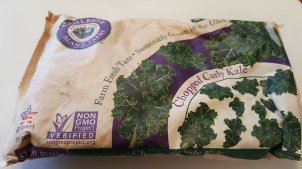
There’s one other deviation that I’ll use with this recipe–because I’m only cooking for one and bunches of greens tend to be a bit overwhelming (read just too damn much of even a good thing), I’ll be getting my kale out of a freezer package (my usual Stahlbush Island Farms chopped curly kale) so that I don’t have to deal with the excess. Since I’ve got a few “winter” veggies in the crisper that need to be used I’m planning different vegetable sides for the week–something with rutabaga, and kohlrabi.
.
Õ¿Õ
..

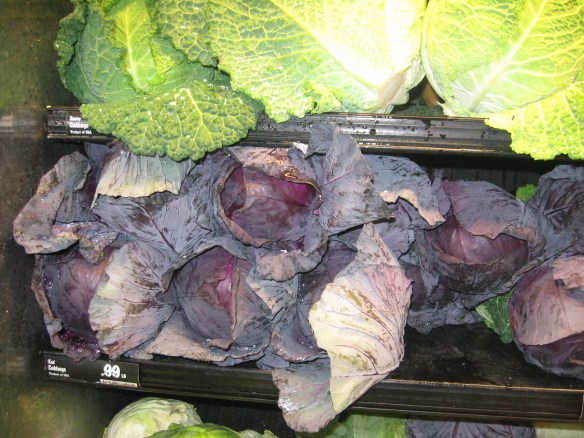


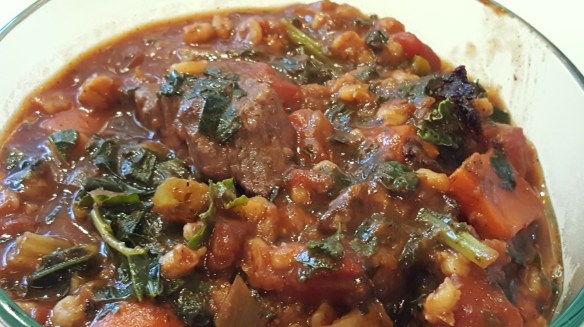

 Since my last oyster fest occurred on the same days as the Women’s March, one of my guests couldn’t be here so, since there was a “leftover” truffle, it’s happened again. Fortunately I was able to get more oysters though they seem to be in very short supply around Durham these days.
 The
The  “Gilles Noblet, Pouilly-Fuisse, Burgundy, France, 2011{sustainable} 100% Chardonnay EXOTIC FRUITS, DRIED CITRUS & WHISP OF VANILLA Thirty year old Chardonnay vines provide the heart and soul of Noblet’s Pouilly Fuissé, right from the village of Fuissé. This area was originally comprised of negociant producers and Gilles Noblet was the first in his region to independently bottle his wine under his own name. This style is racy, rich and elegant with hints of kiwi and pineapple fruits. The finish goes on and on and on… Serving Suggestion: White Burgundy is the home of Chardonnay and this one is extremely versatile. A perfect match for dishes with heavy cream sauces.” From
  “100% Chardonnay FULL & FLAVORFUL, LEMON, HAZELNUT, CARAMEL. SERIOUS! Gandines really surprised us with this compelling, and serious White Burgundy. Fully ripe and lush, but with juicy acidity and complex minerality. This kind of power usually comes from the big boys north of the Macon in the Cotes de Beaune. Aged in enormous 3000 liter old oak barrels that soften the wine without giving it any oak flavor, it is possibly the most impressive Chardonnay available at this price! Serving Suggestion: Steamed or raw oysters. Black sea bass poached in olive oil with fresh thyme. Roast turkey with truffles or chanterelles.” From
 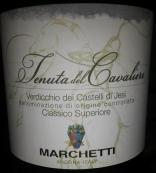 “Verdicchio is central Italy’s most distinctive white varietal. The mineral-rich soils of the Classico Superiore sector of the Marches’ Castelli di Jesi zone – just a few miles from the Adriatic Sea – imbues the finest Verdicchios with extra complexity and a deeply etched soil signature. A radiant green-gold in the bowl, Marchetti’s Verdicchio shows all the minerally snap pea and smoky white pepper notes that we so love in the very finest Verdicchios. The wine’s smoky mineral expression yields to a fleshy core of pear and melon fruit backed by riveting acidity, a tactile mineral expression, and suggestions of green tea, grapefruit zest and sappy dried herbs. Full bodied yet balanced and elegant, Marchetti’s Verdicchio begs for rich vegetarian recipes and fish steaks. Pair it now and over the coming five years with hearty fare that calls for a bold white wine, like swordfish, fresh albacore tuna, rabbit, zucchini casseroles, white pizzas, and pastas dressed with olive oil, garlic and seasonal vegetables. Impressive Verdicchio! ” Found this one at
 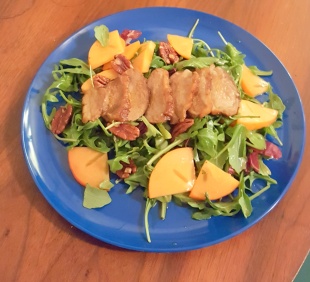 eaten part of the second one. So leftovers–just enough for a salad.
 a-single-serving.com