The Instant Pot cult

I admit that I’ve succumbed and now have an Instant Pot (IP).  I’m pleased with everything I’ve done in it so far, but I think I’m cognizant of what its capabilities are so I’m not going to ask it to do things that just aren’t realistic. I don’t expect the same results from a braise done in the Instant Pot as I would from a braise done in my Le Creuset enamel cast iron dutch oven over hours in the conventional oven, and to be perfectly frank, I’ll not quit doing braising in that conventional oven even though the results from the IP can be very good but definitely not the same.

I’ve been looking at cookbooks oriented to cooking with the instant pot–and I find that a lot of them need a healthy dollop of skepticism about what the IP should–not can–do. The IP is, after all, a kitchen tool. There is no such thing as one-tool-does-it-all. My expectations of the IP are based on what I know about the cooking environment inside that appliance–just as were my expectations of what my Krups multifunction cooker would do.

The article from Taste titled “Don’t Cook With an Instant Pot Just Because You Can”  (a discussion of Melissa Clark’s IP cookbook titled “Dinner in an Instant“) has that healthy bit of skepticism–no one tool does it all. The book confines itself to recipes which the IP does really well making it a good addition to the library if you are learning about an IP–it will help with a realistic expectation about what this kitchen tool does really well.

The other cookbooks that I’ve added to my library since acquiring the IP are “The Essential Instant Pot CookbookThe Essential Instant Pot Cookbook” by Coco Marante and “The Instant Pot Miracle” (authorised by Instant Pot). These two books provide a good introduction to the IP and to pressure cooking, as well as an array of recipes that have been tested in the IP.  So, good additions.

I guess my point in this ramble is that the IP is an expensive kitchen gadget and you don’t want to be disappointed and relegate it to a dusty corner somewhere to be with the “fry baby” that also never gets used. So far I think it is well worth the price so long as I have realistic expectations of what it does well.

I know that it’s not going to put out anything crispy or crunchy, and I haven’t really figured out why I’d want to use it to cook fish. I do like steaming some vegetables in it, and I love the way hard-cooked eggs peel when cooked in it. Rice was fine too, although I did mine with the pot-in-pot technique which is wonderful for cooking for one–so far a very happy addition to the kitchen!


Another Beet Soup

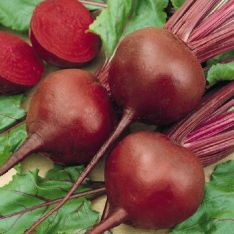
Beets image from Swallowtail Garden seeds

beets

It’s no secret that I love beets, beet soups (cold or hot) and salads so any recipe for beets catches my eye, and may evoke some interesting gustatory imagery as well as an urge to run to the kitchen and cook.

Perusing my email this morning I found a recipe for a beet soup from Will Frolic for Food that sounded so intriguing that I just had to add it to the collection. I’ll confess to total ignorance about hemp hearts until reading this recipe, but I did note that they may be omitted if they don’t occupy a place in your pantry.

The list of ingredients really sparked my interest–lots of things that I have in my herb and spice collection, but that I hadn’t thought to combine with beets. And if you’re wondering I haven’t made this yet, but I’ve updated my grocery list for a few of the things that I need to make it–including the pink peppercorns for garnish.


Beans & Rice

This was a kitchen happening–not really a recipe with given quantities of anything–just because I wanted rice and beans. Everything is flexible, depending on your taste and how many servings you need. (I wanted to have some extra to put in the freezer for quick side to grilled meat.)

It’s SO hot here that cooking just isn’t very appealing even with air conditioning on. One of my solutions is to eat things can be prepared without turning on the stove. I did this in the Krups multi-function pot that I love and use in so many different ways. (Tomorrow I’ll be using it to make tuna confit since my supermarket had lovely tuna medallions on a really special sale. That will keep me in tuna for my summer salads for a bit.)

Black Beans & Rice with Chorizo

Ingredients

  • rice (about 1 cup)
  • olive oil (healthy dollop)
  • onions, chopped (lots)
  • black beans
  • salt and freshly ground black pepper
  • canned diced tomatoes with green chilis
  • red pepper flakes (dash)
  • pimenton (dash)
  • Mexican oregano (good healthy pinch)
  • pork chorizo (about 1/2- to 3/4-pound fresh)
  • water or extra tomato juice/V8 juice as needed for the rice

Preparation

  • Sauté onions in olive oil until translucent and starting to soften
  • Add red pepper flakes, pimenton, oregano, salt and pepper and sauté until the spices are aromatic
  • Add chorizo and sauté until it starts to turn opaque
  • Add canned tomatoes
  • Add rice and black beans (canned or frozen)
  • cook until rice is tender

Ô¿Ô

It’s hot and humid here, and I was being particularly lazy, despite my desire for food so I did this in the multifunction pot. I did make this as easy as possible–frozen chopped onions, canned tomatoes, and frozen black beans (these from 13 Foods) but Stahlbush Island Farms also has black beans and brown rice that make a good starting place for this. The result with frozen legumes is much better than with canned, though those will work as well.

A note on the oregano–it was Mexican oregano which is definitely not the same as Greek or Turkish oregano. If you don’t have Mexican oregano, then I would substitute thyme or cilantro. I can’t get my head around the Greek or Italian with this mix of flavors.  The pimentón (smoked Spanish paprika) adds a bit of smoky flavor.

I first measured my rice so that I’d know how much liquid needed to be added to have it cook to proper doneness. Everything else was added (as indicated) by the dash, dollop, or pinch.

The chorizo that I used was fresh, made in-store from my Harris-Teeter supermarket, and not in casings so all I had to do was break it up into the pot to sauté.  Couldn’t get any easier. If you can’t find “loose” then just remove from the casing, or put the whole sausages in to make this a meat-centric dish.

Everything was sautéed using the rice cooker setting with the lid open. Quite quick and easy although it does require a little attention. Once the tomatoes (with juice) and beans were added, with just a bit of spicy V8 juice to give enough liquid to cook the rice, the lid was closed, and I went away to do something else–until my meal was done. The caveat here is that you do need to be sure that the amount of liquid is appropriate for cooking the rice–too much and you’ll have “blown out”, mushy rice; too little and it will still be crunchy–you’ll need to add more liquid and continue to cook until tender.

Quantities and totally flexible–maybe you like more rice than beans–or the other way round. I love lots of onions, but if you don’t, then just don’t use many.  The proportion of chorizo depends on how meat hungry you are–it can vary too, from almost a seasoning to a lot. Next time I make this I will add just a bit more than I used this time, although it was quite good this way.

A son gôut!

Ò¿Ó

A one-dish oven meal

It’s time to do the weekly (at least I try to make it weekly) troll through the fridge to see what is left from last week, to use for the first two or so meals this week. There’s some kohlrabi, radichio, fresee, lettucepart of a rutabaga, a head of radicchio, and there’s part of a bag of frozen butternut squash in the freezer that should be used as well since it’s already open. There are also two boneless, skinless chicken thighs and two black pepper and onion sausages.

The chilly, drippy, damp and grey weather calls for something warm and colorful. This weather has left me feeling like I really want quality time with the cat and a good book, so I’m thinking oven type meal. It can’t be a stew–already did that quite recently. So a roasted supper seems like a good idea–and something with lots of flavor!

I’ve been wanting to try roasted radicchio, butternut squash is good roasted too–and that certainly would be cheerful and colorful. Although I usually use bone-in chicken thighs for roasting, a little perusing of recipes from The Kitchn I found a suggestion for roasting the boneless, skinless ones as well.

  • A little further browsing suggested 425ºF.for about 20 minutes for the thighs.
  •  From Bon Appetit for roasted radicchio suggested 450ºF for 12 minutes for a head cut into six wedges–I think I’ll cut mine a little thicker
  • For the butternut squash, a recipe from Food & Wine suggested 425ºF for about 40 minutes for 1-inch dice of raw squash. The frozen squash is par-cooked, so I think the 20 minutes should work for that. Since this is frozen, I’m not expecting it to brown in the oven–it will be too wet, but better than dealing with way too much squash. It should still taste good.

Ò¿Ó

It was a pretty good result for a trial run with just whatever was in the fridge, and went into the oven all in one baking dish.  It’s a combination that will likely even happen as a planned meal in the future.

The chicken thighs didn’t brown much but were tasty; however, I definitely my chicken thighs bone-in and skin-on–especially if you salt and air dry the skin so that it gets crispy and brown. I may have to give bone-in a bit of a head start on cooking, then add the other stuff.

The butternut squash did as expected–cooked fine but didn’t brown. Again, still tasted good and it was great with the radicchio.

I didn’t get part of the core with the radicchio, so my wedge fell apart–oh well, a learning experience. But roasted radicchio is now right up there with grilled or roasted cabbage. The edges a little brown and almost charred, but tender (though still some texture. The bitterness of this against the sweetness of the squash was great. That’s a combination I’ll come back to again.

It wasn’t particularly photogenic since the radicchio fell apart as I removed it from the baking dish to my plate and the chicken wasn’t browned, but it was a very tasty meal with some good taste contrasts.

20170329_1811381.jpg

 A son gôut!

Ò¿Ó

.


Red Cabbage and Beet Salad

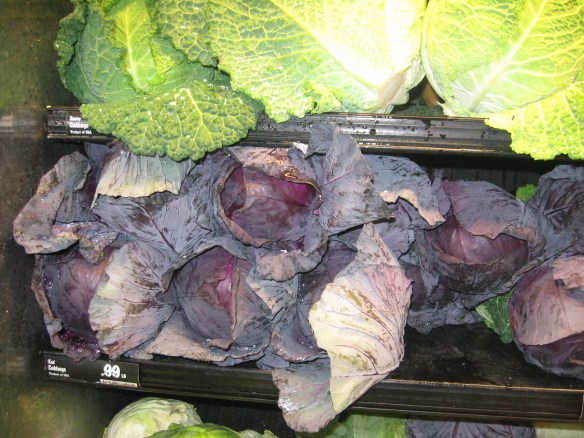
It is probably obvious that I consider beets and cabbage both to be under-appreciated vegetables. After making  cabbage steaks this recipe for Warm Roasted Red Cabbage and Beet Salad from Will Frolic for Food just really clicked with me.

It’s not  complicated, nor does it take that long even with the separate preparation for the beets and the cabbage–but well worth doing. It’s a veritable symphony of flavors with the roasting providing all sorts of additions to the flavor. This has been added to my list of awesome recipes!

I’d agree it could be a meal with the chickpeas added. I omitted the chickpeas with part of it and used it as a side (only the one) for both roasted chicken leg quarters, as well as for griddled pork steak and I’d do it with lamb steak, too.

If you have not got red cabbage on hand, it’s worth doing with plain old white cabbage–though not quite as striking in color–still very tasty!

IMG_6035

Beef and barley stew redux

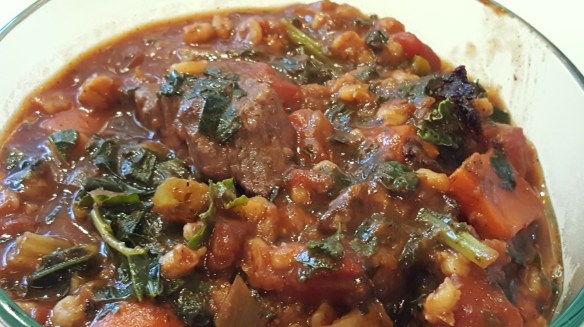
The snow happened, and melted quite rapidly but with the temperature only reaching into the mid 40s, it’s still a good day for beef and barley stew. Just from browning the meat and the vegetables (including the garlic, tomato paste, and the Vegemite), it already smells like comfort food. I did opt to be lazy and finish cooking the stew in the oven (275ºF).

Now I’ve experienced the jar of Vegemite (Marmite wasn’t available at my local supermarket) although I’ve not gotten to the point of trying it spread on toast. I like the aroma from the jar–but that really didn’t come as any surprise because I already knew I liked the aroma of yeast-y thing: certain champagnes, bread dough….

The prep for this is really easy–most of the time spent browning the meat and vegetables but the hands-on work is still minimal, especially since I bought boneless short ribs, so chunking them up was quick and easy. To my dismay, I did find that I hadn’t any whole canned tomatoes–only diced, so diced was what I used.  I did “cheat” and use frozen chopped onions (probably my favorite “convenience” thing except for mirepoix (homemade and put in the freezer), and the kale will be from a bag as well. For now,  it’s time to wait, and anticipate!

Since I’m cooking this for only one person–and this half recipe should be two quite generous servings, I’m going to add the kale (frozen) to only what I’m going to eat today. Whether I decide to freeze half or simply reheat in a couple days, I’ll add the kale to that serving then so it not overcooked. That’s one of the advantages of frozen stuff when it comes to cooking for one.

20170312_161745

…Ò¿Ó…

…and finally, it’s time to eat! This is the first time for tomatoes in beef and barley stew, but I like it as an alternative to the more stripped down version that I usually do (read beef and barley with seasonings)–but I think I’ll try adapting mine by adding the extra umami sources and the kale but omitting the tomatoes. Beef and barley stew, for me, is a bit like lentil soup: you can never have too many variations.

I’ve not used short ribs often for stews, but in cooking for one when I don’t want to volume that I’d get with chuck, I think I’ll me using them more often–even though they are not really cheap, the have the advantage of being available in quantities suitable for single-serving, or two-serving, cooking.  Another adaptation that I’ll make is to increase the proportion of barley (and, obviously, the liquid) in my efforts to shift toward using less meat.

I suspect it would taste really good even without the Vegemite, but that jar of yeasty stuff is going to hang out with the fish sauce, anchovies, and soy sauce because it certainly is tasty with it.

This was a yummy meal for a chilly day!

20170312_164807

…Ò¿Ó…

.

Lamb Stew (Alentejo-style)

My bargain shopping got me a butterflied leg of lamb that was on special. Rather than roast it whole, I decided our chilly, grey, damp weather needed stew.

I cut the lamb leg into 3 cm cubes; I decided that I wanted some variety in my stews so since I had two pounds of lamb so all I needed to do was halve the recipes.Since I’ve not done much Iberian cookery I got out The Food of Spain & Portugal: The Complete Iberian Cuisine by Elizabeth Lambert Ortiz (page 152).  

pimenton-de-la-veraThere are a lot of lamb stew recipes in this book. I finally made a decision based on seasonings that sounded interesting: garlic, parsley, pimenton de la vera (smoked), cayenne, and cloves. (The recipe only said “paprika”–which I’m sure would work fine, but I particularly like the smokiness of the pimenton de la vera, but I used the amount called for.)

.

.

Carneiro à Alentejana

Ingredients

  • 4 cloves garlic, crushed
  • 1 tablespoon finely chopped parsley
  • salt and freshly ground pepper
  • 900 g (2 pounds), lean, boneless lamb, cut into 3.5 cm/1-1/2 inch pieces
  • 6 tablespoons olive oil or lard
  • 2 medium onions, finely chopped
  • 1 tablespoon paprika
  • 1/8 teaspoon cayenne
  • 1/8 teaspoon ground cloves
  • 175 mL/ 3/4 cup dry white wine

Preparation

  • Mix garlic, parsley, salt, and pepper. Add the lamb to the garlic mixture and marinate about 2 hours. (I left mine overnight)
  • In a large skillet, heat the oil or lard and brown the lamb pieces all over.
  • Transfer lamb to a flameproof casserole.
  • In the remaining oil and sauté the onion until soft and add to the casserole.
  • Add paprika, cayenne, cloves to the casserole. (I like to “bloom” dry spices in oil before adding liquid so I added the paprika while sautéing the onions)
  • Bring to a simmer on the stovetop.
  • Cover and put in a moderate oven (180ºC/350ºF) and cook until the lamb is tender (about 1-1/2 hours).

The author recommends serving with a light red wine (red Vinho Verde or Dão, and notes that in Portugal meats are usually served with both potatoes and rice.

õ¿õ

I halved the recipe above and used the other pound of lamb to make my favorite lamb and cabbage stew (Fårikål) with the other half. I considered being very energy conscious and making both at the same time; however, my hedonism won and I made them on different days because I love to luxuriate in the aromas of cooking–that’s part of the anticipation and enjoyment of cooking and eating. I just didn’t think I would get to enjoy them in the same way if I were to cook both at the same time. I would have missed some of the pleasure of cooking had I done that. The smell (especially of the pimenton de la vera) was particularly appetizing.

The combination of the pimenton, cayenne, and clove was wonderful. I don’t often use the “sweeter” spices with meats but that little dash of clove has made me wonder why I haven’t used them more with meat. I need to broaden my perspective on the “appropriate” spices to use with meats.

The balance of the seasoning in this recipe (I didn’t change anything) was wonderful–just enough cayenne to give a little “burn” as you eat your way through a serving, but not every getting to the point where you felt as if you had blisters on your taste buds–and the clove didn’t smack you in the face either. All in all a very well-balanced seasoning. I’ll probably try this with lamb shoulder chops–even without cutting them up.

Oh, wine? Well since there was a bottle of my “house wine” already open, I used that–it’s one of the things I like about that wine: it’s very versatile. Rice? Potatoes? Nope–garbanzo beans.

There is one modification I think I’ll make next time–I’ll add more onions they were luscious after cooking with the lamb and seemed just right with the pimenton.

Pheasant soup

Immediately after Christmas dinner, while I was still sipping my wine, I took care of the leftover pheasant. Since there was a carcass, there just had to be soup!

  • remove meat from the carcass when the meal is over,  refrigerate for later use
  • break up the carcass as much as possible
  • put in slow-cooker and flatten out as much as possible
  • add water to barely cover
  • add healthy pinch of salt
  • set for 6 hours–in other words, until morning
  • strain stock and put back in slow-cooker
  • add any leftover truffled au jus 
  • add a generous handful of barley and  generous handful of lentils
  • taste for salt and seasonings; add a dash of soy sauce and nam pla
  • add one pasilla chilli pepper, whole
  • add generous dash of herbs de Provence and/orle any other seasonings you wish
  • set slow-cooker for about 4 hours
  • when lentils and barley are tender, refrigerate or use immediately.
  • add pheasant meat to hot broth and reheat.

Now if you have leftover soup (from your first round of soup) and leftover cabbage and rutabaga from the side, and any remaining pheasant meat, add those and you have soup that’s a bit different for the final day of soup.

A son gôut!

Christmas dinner

I’m having my usual lazy Christmas day–just me and Frankie (the cat). After having brunch of scrambled eggs with truffle butter, I turned my attention to fixing supper.

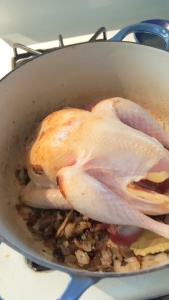
It seems that I’ve inadvertently created another Christmas tradition (aside from the oysters): chicken (or at least fowl) in a pot. I guess it has something to do with it being an easy and tasty dish that I really like. This year, though, there was a variation–it’s pheasant in a pot. It’s been awhile since I’ve had pheasant so that’s what came to mind for this Christmas supper. After-holiday sales, and sometimes specials in between, are great for eating higher-on-the-hog with lower prices–so there was a plump McFarlane pheasant, just a bit shy of 2.5 pounds, lurking in the freezer.
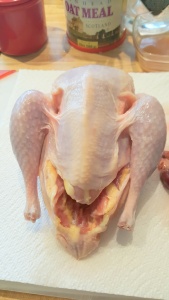
20161225_134929

…giblets removed

I toyed with cooking the pheasant with milk as I had done before with cornish game hen, but somehow I just couldn’t picture the pheasant-milk combination. So, just plain pheasant in a pot.

I couldn’t think of any reason that pheasant wouldn’t work just as well as chicken for this treatment–but since a pheasant isn’t a chicken, I thought there would have to be a little adjustment.I little skulking about (via Google) suggested that my pheasant should cook in less time than the bigger chicken (duh! About an hour or a little more). Cook’s Illustrated has a basic recipe for chicken in a pot; that seemed a good place to start since there’s always a rationale included that should make the recipe easy to modify as needed though it seems that none of that series (Cook’s Illustrated, Cook’s Country, or America’s Test Kitchen) addresses pheasant.

So, next, seasonings for the bird. Pheasant may be considered one of the “other white meats”, but it’s still more like the dark meat of the chicken: bay leaves (certainly), onion (can you cook without onion?), garlic (often used with pheasant), thyme, sage, and juniper berries (good with game) were the final seasonings that went into the pot. I also added some sliced button mushrooms with the onions while they were sautéing. These are eye-ball measurements:

  • one large onion, chopped
  • 2 bay leaves
  • one basket sliced mushrooms
  • 1/2 teaspoon thyme
  • large pinch rubbed sage
  • 1-1/2 tablespoon minced garlic

20161225_140238

After browning the pheasant breast-side with the onions and mushrooms, the pheasant was flipped, seasonings added, and the pot  covered with foil and the tight-fitting lid, and it went into a 250ºF oven. Time to consider what I wanted for sides to this lovely bird.

My peasant side is showing–well, right along with bird-in-a-pot which isn’t exactly haute cuisine unless you are eating in in a US restaurant–I  rummaged through the vegetable bin and decided that something with cabbage and rutabagas would fit with the dark meat.

After some more Google use and letting my imagination run wild for a bit, it seemed something quick and easy would be a sautéed combination of those two vegetables, spruced up with a bit of a sauce of some sort. Something sweet-tart–maybe some dark buckwheat honey and lime juice and zest of one lime). I did a little shredding, julienne work (mandoline), and zesting  I left those veggies sitting in water to await cooking time; the buckwheat honey and lime zest melding; then I was off for some more quality time with the cat for an hour (until time to check the temperature of the meat (one of J.J. Salkeld’s  Lakeland mysteries).

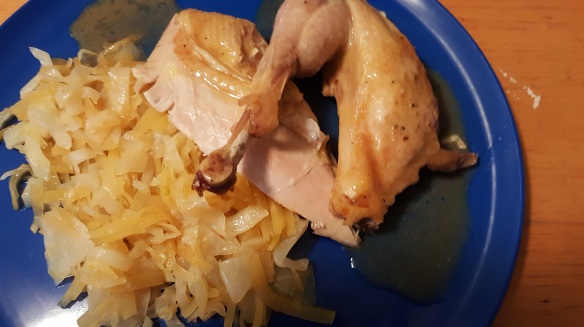
While the bird rested (about 15 minutes or a bit more), I put the drained cabbage and rutabaga in a sauté pan with a dollop of butter (salted) and covered them–sort of a steam-sauté–until almost tender then removed the lid to let moisture evaporate while I tossed this mixture around a bit with my sauce (about 10 or 12 minutes altogether).

After scraping up all the good brown stuff from the pot, the juices from the roasting pot were strained, and enriched with a blob of truffle butter. End of cooking–time to eat!

Just a word about en coquette cooking: the meat is absolutely luscious, but don’t expect the same kind of browning that you’d get with dry-heat roasting. I can attest that it works very well–as well as braising–with farm-raised pheasant. I’ll most likely do it again with the next pheasant I decide to eat.

The cabbage/rutabaga combination turned out to be even better than I had expected–always a pleasant surprise–even before the sauce went on. Just with the butter it would have been an admirable side to the pheasant. The mandolin made short work of both the shredding and the julienne work and the cooking time was only about about 10 or 12 minutes. I have to admit that there are leftovers from the 1/2 rutabaga and 1/4 head of cabbage. (I’m thinking that they could be turned into rösti or fritters for a main course since I didn’t add the sauce to the entire batch of cabbage and rutabaga.)

Wine? Of course, but since I had some of the Les Hérétiques left from last night, I decided I’d just go with that–it’s a good all purpose wine–maybe not what I’d have chosen were I giving it a lot of thought, but sometimes it’s a needs-must situation–I love my wine vinegar but there’s a limit to how much good wine I’m going to pour into that jar. So–I finished that bottle this evening. The “leftover” wine was quite good with this combination of food–the blackberry was a nice contrast to the other flavors here.

Ò¿Ó

If I want to sound really fancy, I guess I just ate pheasant en coquette with truffle  au jus–whatever you call it it was a fine meal, even if I can’t get the cat to say so though I’m not that modest. I’m still listening to Christmas music and enjoying a another glass of wine. The other half pheasant has been boned and stashed, and the carcass is in the slow-cooker making pheasant broth. I’m not sure what is going to evolve out of the Christmas Eve and Christmas Day leftovers, but I would guess that there is going to be some pheasant soup, among other things.

The kitchen is tidy–only the roasting pot left to soak with baking soda overnight–and only clean things to put away from the drainer in the morning. Altogether a most pleasant day with the cat, low-intensity, undemanding cooking, music, and reading.

I was contemplating starting to filter my chocolate/cardamom/ancho/golden rod-aster honey liqueur this evening, but I’m just too full and lazy. I decided it would be better to start that in the morning since it is a long process–so now to quality time with the cat and Kindle since I’m happily fed and still enjoying wine.

I hope all of you had as pleasant a day as I did. A final happy holidays to you if you happen to be celebrating something just now.

20161225_162137

20161225_163944

Ò¿Ó

.

Christmas evening supper

Christmas eve–what’s for supper? Your basic duck breast, pan-seared and dressed with some of the spoils of my visit to Bull City Olive Oil. Just a take-off on a vinaigrette, but what fun. A nice fatty duck breast pan-seared so that the skin is cracklin’ crispy–with a very simple sauce–fruity.

Turn off the smoke alarm so you won’t be interrupted while cooking. You need to start with a skillet that will tolerate high heat–it needs to be almost smoking hot to begin–and no worries about sticking given the fat in the duck skin. I used my favorite carbon steel skillet–very well cured (now black and nonstick), and has the advantages of cast iron, without the weight. Just the right size for two duck breasts.

20161224_173256I had thought that perhaps just a drizzle of one of the infused vinegars would be good, but after tasting the vinegars with a piece of breast that was loose in the package, I decided it needed  more complexity, so I started with  extra-virgin olive oil infused with mushroom and sage–awesome as a condiment in its own right, but for nice fatty duck it needs to be brightened a bit with one of the infused balsamic vinegars. Decisions, decisions!

I had black mission fig, black cherry, and blackberry with ginger. After tasting I decided that blackberry-ginger was what I wanted this evening, though any of these would have been good with duck. I didn’t use typical vinaigrette proportions but I did emulsify the oil and the vinegar (1:1). The mushroom-sage oil is very earthy and a great contrast to the fruitiness of the blackberry with that little spark of ginger.

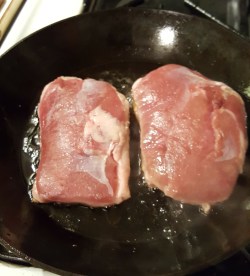
20161224_174026To prep the breasts I patted them dry and scored the skin side, careful not to cut into the meat–just to help the fat render while pan-searing. You need a very sharp knife so that just the weight of the knife pulled across the skin will cut into it. Then I salted the meat side of the breasts and let them sit for about 20 minutes to season.

After patting them dry I put them into a  very hot skillet, skin side down, and cooked until most of the fat rendered and the skin side was brown and crispy (about 5 to 8 minutes), reducing the heat a bit to keep them from getting too brown before a sufficient amount of fat had rendered. Then turned them and continued to cook until the temperature was 135ºF by instant read thermometer (about 5 minutes).

While the breasts were searing, I whisked the oil and vinegar together, and got the roasted potatoes out of the oven. While the breasts rested (and continued with carry-over cooking), I poured off the excess fat from the pan, left just enough to  sauté a mix of  baby arugula and radicchio for a side. Very quick. Very tasty!

The bitterness of the arugula and radicchio was a great contrast to the richness of the duck, and the blackberry-ginger/mushroom-sage sauce. (Blackberry and sage are awesome together–makes me want to try a sorbet with that combination.)  The Les Hérétiques wine (old vine Carignane grapes) has lots of berry fruit (blackberry  with some earthiness, and minerals) all in all a great wine for this meal even though it’s just my “house” wine.

All together a very flavorful supper for no more time than it took.  So many possible flavor variations possible with this simple sauce. A son gôut!

Ò¿Ó

.